

P0088 on 2022-2026 Jeep Compass: Fuel Rail Pressure Too High Causes and Fixes
On a 2022-2026 Jeep Compass with the 2.0L Turbo engine, code P0088 is most often caused by a software issue requiring a Powertrain Control Module (PCM) update from a Jeep dealer, as cited in Technical Service Bulletin (TSB) 18-106-23. This issue is also common in platform-mates like the Dodge Hornet and Alfa Romeo Tonale. If software is ruled out, the next most likely causes are a faulty fuel rail pressure sensor or, more rarely, a failing high-pressure fuel pump.
- P0088 on a 2022-2026 Jeep Compass means fuel pressure is too high, most often on the 2.0L Turbo engine.
- Before replacing any parts, have a Jeep dealer check if your vehicle needs a PCM software update, as this is the most common fix documented in TSBs.
- If a hardware part has failed, the most likely culprits are the fuel rail pressure sensor or, less commonly, the high-pressure fuel pump.
- Do not continue driving for an extended period with this code, as it can lead to more severe engine and exhaust system damage.
What's Unique About the 2022-2026 Jeep COMPASS
For the 2023-2026 Jeep Compass with the 2.0L Turbo GME-T4 engine, this code is frequently linked to software calibration rather than a hard part failure. Jeep has issued TSB 18-106-23 indicating that the primary fix is to reprogram the PCM with the latest software. This suggests the system's monitoring parameters are overly sensitive and may falsely report high pressure. This same issue is reported by owners of platform-mates like the Dodge Hornet and Alfa Romeo Tonale, which share the same engine and electronics, reinforcing the software-based nature of the problem. 🎬 Watch: Understanding P0088 symptoms and common fixes A trip to the dealer for a software check is a crucial first step before replacing any parts.
Diagnostic Flowchart
Tap your situation to follow the diagnostic path that matches what you're seeing on this vehicle.
Generation note: The 2022-2026 range covers the second generation (MP) of the Jeep Compass. A significant update occurred for the 2023 model year with the introduction of the 2.0L Turbo GME-T4 engine, replacing the previous 2.4L. The P0088 code and its associated software-related TSBs are most relevant to this direct-injected 2.0L Turbo engine and its platform mates.
Symptoms You May Notice
- Check Engine Light is on
- Reduced engine power or entering "limp mode"
- Rough idling or stalling
- Hesitation or stuttering during acceleration
- Black smoke from the exhaust
- Strong smell of unburnt fuel
- Decreased fuel economy
- Engine misfire codes (e.g., P0300) may also be present
- Replacing the high-pressure fuel pump before verifying the PCM software is up to date per TSB 18-106-23.
- Replacing the fuel rail pressure sensor without checking the wiring harness for shorts or damage first.
- Replacing the in-tank low-pressure fuel pump, which is not typically the cause for a high-pressure code.
Most Likely Causes
- Powertrain Control Module (PCM) Software Issue 🔴 High Probability → Shop Engine Control Module (ECM) Manufacturer TSB #18-106-23 explicitly states that reprogramming the PCM is the required fix for this DTC on 2023-2024 models. This indicates the original software calibration is too sensitive. Forum discussions with owners of the Compass, Dodge Hornet, and Alfa Romeo Tonale confirm a dealer reflash is the most common solution.
How to confirm: A Jeep dealership or a qualified shop with access to OEM software (wiTECH) can check if the vehicle's PCM calibration is outdated by referencing your VIN against TSB 18-106-23.
Typical fix: Reprogramming the PCM with the latest available software.
Est. part cost: $0 (if under warranty) - Faulty Fuel Rail Pressure Sensor 🟡 Medium Probability → Shop Fuel Pressure Sensor The sensor provides the pressure reading to the PCM. If it fails, it can send an erroneously high voltage signal, tricking the computer into thinking the pressure is too high. This is a common failure point in many modern direct injection systems.
How to confirm: Use a scan tool to monitor live fuel rail pressure data. Compare the sensor's reading to a mechanical fuel pressure gauge connected to the high-pressure line (professional recommended). If the scan tool shows high pressure but the mechanical gauge shows normal pressure, the sensor is likely bad.
Typical fix: Replace the fuel rail pressure sensor.
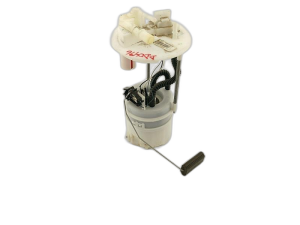
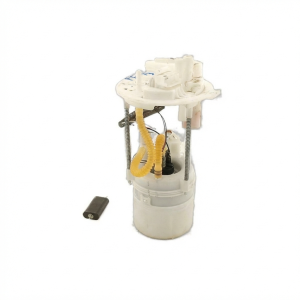
Est. part cost: $50-$150 - Failing High-Pressure Fuel Pump (HPFP) ⚪ Low Probability → Shop Fuel Pump The 2.0L Turbo engine uses a mechanically driven high-pressure pump. A mechanical failure within the pump or its internal volume regulator can cause it to generate excessive pressure. However, this is far less common than the software or sensor issue.
How to confirm: This is diagnosed by exclusion. If the PCM software is up to date, the fuel rail pressure sensor is confirmed to be accurate, and a mechanical gauge confirms that fuel pressure is genuinely too high, the HPFP is the likely culprit.
Typical fix: Replace the high-pressure fuel pump.
Est. part cost: $800-$1200
Rare But Worth Checking
- Clogged or Restricted Fuel Return Line: Though less common on modern returnless-style systems, a restriction in any pressure relief path could cause pressure to spike. This is an unlikely cause on this platform.
- Wiring Harness Damage: A short circuit in the fuel rail pressure sensor's wiring (e.g., short to voltage) can cause a constant high voltage signal to be sent to the PCM, mimicking a high-pressure condition. This should be inspected before replacing the sensor.
Diagnosis Steps
- As the very first step, contact a Jeep dealer with your VIN to check for open recalls or applicable TSBs. Specifically ask about TSB 18-106-23 for P0088. This is the most likely and least expensive fix.
- Connect an OBD-II scanner to confirm the P0088 code and check for any other accompanying codes like P0087 or P0089.
- Use the scanner's live data function to monitor the 'Fuel Rail Pressure' and 'Desired Fuel Rail Pressure' PIDs. Observe if the actual pressure is consistently and significantly higher than the desired pressure.
- Inspect the wiring harness and connector for the fuel rail pressure sensor. Look for any visible damage, melting, corrosion, or loose connections. Rodent damage to harnesses on top of the engine is a known issue.
- If software and wiring are ruled out, the next step is to test the fuel rail pressure sensor. This is best done by a professional who can compare the live scanner data to a reading from a mechanical pressure gauge to see if the sensor is reporting accurately.
- If the mechanical pressure is normal but the scanner reading is high, the fuel rail pressure sensor is the primary suspect and should be replaced.
- If the mechanical pressure is confirmed to be excessively high and the PCM software is up to date, the high-pressure fuel pump (HPFP) is the most likely cause.
Parts You'll Likely Need
- Fuel Rail Pressure Sensor
(OEM #68616938AA)— This sensor is a common failure point that can send incorrect high-pressure readings to the computer. It is a more likely hardware failure than the pump itself.
Trusted brands: Mopar, Bosch, Delphi
OEM price range: $100-$180
Aftermarket price range: $50-$120 - High-Pressure Fuel Pump
(OEM #68441339AB)— If the PCM software and sensor are good, the pump itself may be mechanically failing and producing too much pressure. This is the most expensive common repair for this code.
Trusted brands: Mopar, Bosch
OEM price range: $900-$1200
Aftermarket price range: $600-$900
Related Codes That Often Appear With This One
- P0087 — This code for 'Fuel Rail Pressure Too Low' can appear alongside P0088 if the fuel pressure is fluctuating erratically or if the sensor is failing, causing both high and low incorrect readings. TSB 18-106-23 addresses both codes.
- P0089 — This code for 'Fuel Pressure Regulator Performance' is also listed in related TSBs and relates to the overall performance of the fuel pressure control system, which can be triggered by the same root causes as P0088.
Technical Service Bulletins (TSBs) & Recalls
- TSB 18-106-23: Flash: Powertrain Control Module (PCM) Updates for P0087/P0088. This is the key document for this issue, recommending a software update as the fix.
- TSB 14-002-26: Lists P0088-00 (Fuel Line Pressure Sensor - Bank 1 - Pressure Above Limit) among other fuel pressure codes, indicating a pattern of fuel pressure issues.
- TSB 14-001-25: Also lists P0088 (Fuel Line Pressure Sensor - Bank 1 - Pressure Above Limit) with related codes, corroborating the issue across service documents.
Platform-Specific Known Issues
- Mandatory Software Update (TSB 18-106-23): A known software issue exists that can cause this code to be set incorrectly. Per TSB #18-106-23, the fix involves reprogramming the PCM with the latest available software. This TSB is the primary resolution for 2023-2024 models.
- Owner Repair Story: Dealer Reflash Success: Owners on forums like
jeepcompassclub.comandhornetforums.comreport taking their vehicle to the dealer for P0088. In many cases, a PCM reflash per TSB 18-106-23 resolved the issue completely. Some owners noted that dealers initially suspected the high-pressure fuel pump, but the software update proved to be the correct fix, avoiding a costly and unnecessary hardware replacement.
Mechanic-Grade Diagnostic Values
- Fuel Rail Pressure Sensor (FRPS) Signal Voltage — expected: Typically 0.5V at Key On, Engine Off (KOEO) and rises towards 4.5V as pressure increases.. Failure: A constant reading near 5.0V suggests a short to voltage in the wiring or a faulty sensor. A reading above 4.75V for more than 0.14 seconds will set the code.
- FRPS 5-Volt Reference Voltage — expected: Steady 5.0V from the PCM.. Failure: Voltage significantly higher than 5.0V indicates a short to voltage on the supply circuit. No voltage indicates an open circuit or PCM fault.
- FRPS Ground Circuit Voltage — expected: Near 0V (less than 500mV).. Failure: Voltage significantly above 0V indicates high resistance or an open in the ground circuit.
- High-Pressure Fuel System Pressure (Direct Injection) — expected: Can reach up to 200 bar (2,900 PSI) under load.. Failure: Actual pressure (measured with a mechanical gauge) consistently exceeding the PCM's desired pressure indicates a mechanical fault with the HPFP or its regulator.
Scan Tool Commands That Help
- wiTECH (or equivalent high-level scanner): Fuel System Pressure Test — This function allows a technician to command the fuel pumps and regulator to specific duty cycles to observe the system's response. It is used to verify if the high-pressure pump is capable of building pressure and if the pressure regulator is responding correctly to PCM commands, helping to isolate a faulty component from a software or sensor issue.
- wiTECH: PCM Reprogramming/Flash — This is the specific service function required to execute the fix outlined in TSB 18-106-23. It updates the PCM's software with revised, less sensitive thresholds for monitoring fuel pressure, which is the most common fix for P0088 on this platform.
Wiring & Ground Locations
- Fuel Rail Pressure Sensor (FRPS) Connector — Located on the high-pressure fuel rail on the top of the 2.0L GME-T4 engine.. This is the primary data source for the P0088 code. Damage to its connector or wiring harness (e.g., from rodents) can cause a short to voltage, resulting in a false high-pressure reading.
- K181 (Circuit ID) — This is the Fuel Pressure Sensor Signal wire running between the sensor connector and the PCM.. A short to voltage on this specific circuit will cause the PCM to see a voltage above 4.75V, triggering the P0088 code. Diagnostic procedures involve checking this wire for shorts.
- PCM Grounds — The PCM has multiple ground pins and its case must be firmly grounded to the vehicle body. Specific ground points (e.g., G901a on similar Jeep platforms) are typically located in the engine compartment near the firewall or inner fender.. A poor ground connection for the PCM or the sensor's ground circuit (K359) can cause floating voltages and incorrect sensor readings, potentially leading to a false P0088 code.
Real Owner Repair Stories
- HornetForums.com user report (2023 Dodge Hornet R/T (platform-mate with 2.0L GME-T4 engine)) — Check Engine Light with code P0088.
❌ Tried (didn't work) Initial dealer diagnosis suggested replacing the high-pressure fuel pump.
✅ What actually fixed it The owner insisted the dealer check for TSBs. The dealer found and performed the PCM software update (reflash) as specified in TSB 18-106-23, which resolved the code without replacing any hardware.
OEM Part Supersession History
Not specified, but early versions existed.→68441339AB (High-Pressure Fuel Pump)— Part revisions are common to improve reliability or address known failure modes. Given the complexity of the HPFP, updates are expected over a vehicle's life cycle.68445162AB→68616938AA (Fuel Rail Pressure Sensor)— The part number for the fuel pressure sensor was updated. Using the latest superseded part number is critical to ensure compatibility with the latest software calibrations.
Heads up: An older sensor might not be fully compatible with a PCM that has been updated per TSB 18-106-23, potentially causing continued issues.
Model Year Variations Within This Range
- 2023-2026: The 2023 model year marked the introduction of the 2.0L Turbo GME-T4 engine as the standard powertrain for the North American Jeep Compass. This is the primary engine affected by TSB 18-106-23. Earlier 2022 models used a different engine (2.4L) and do not fall under this specific TSB or have the same common cause.
Helpful Videos
We Have This Part in Stock

The information in this article is provided for general reference and educational purposes only. Vehicle specifications, procedures, and part compatibility can vary by production date, trim level, and region. Always consult your vehicle's factory service manual and verify part numbers before purchasing or performing repairs. Safety-critical components such as airbags, seat belts, and braking systems should be installed by a qualified professional.
- Jeep COMPASS:
- 🧭 Diagnostic Flowchart
- 🎬 Helpful Videos
- 🛍️ Shop This Part
- What's Unique About the 2022-2026 Jeep COMPASS
- Symptoms You May Notice
- Most Likely Causes
- Rare But Worth Checking
- Diagnosis Steps
- Parts You'll Likely Need
- Related Codes That Often Appear With This One
- Technical Service Bulletins (TSBs) & Recalls
- Platform-Specific Known Issues
- Mechanic-Grade Diagnostic Values
- Scan Tool Commands That Help
- Wiring & Ground Locations
- Real Owner Repair Stories
- OEM Part Supersession History
- Model Year Variations Within This Range
- 🎟️ Get 5% Off