

P0088 on 2021 Jeep Wrangler: Fuel Rail Pressure Too High Causes & Fixes
On a 2021 Jeep Wrangler with the 3.0L EcoDiesel engine, this code is most often caused by a failing High-Pressure Fuel Pump (HPFP), which is subject to a major safety recall (FCA 01A). This failure can destroy the entire fuel system. For the 2.0L Turbo, the cause is often a software glitch requiring a dealer update. For both engines, a faulty fuel rail pressure sensor is another possibility. Do not drive the vehicle; have it towed to a dealer for diagnosis.
- If you have a 2021 Wrangler with the 3.0L EcoDiesel, P0088 is a critical warning. Stop driving immediately and contact a Jeep dealer about the HPFP recall.
- Do not assume the expensive High-Pressure Fuel Pump is bad without proper diagnosis. The much cheaper fuel rail pressure sensor can also cause this code.
- Diagnosis requires a scan tool that can read live data to compare desired vs. actual fuel pressure.
- This is not a DIY-friendly repair. High-pressure fuel systems are dangerous, and the most likely cause is tied to a manufacturer recall.
What's Unique About the 2021-2021 Jeep WRANGLER
For the 2021 Jeep Wrangler, this code is critically important, especially on models equipped with the 3.0L EcoDiesel engine. These specific vehicles are part of a major safety recall (FCA recall 01A / NHTSA 23V-263) due to premature failure of the Bosch CP4.2 High-Pressure Fuel Pump (HPFP). This isn't just a minor component failure; a failing HPFP can disintegrate internally, sending metallic debris ('glitter') throughout the entire fuel system, leading to catastrophic and extremely expensive repairs often exceeding $10,000 if not covered by the recall. While the code can also appear on the 2.0L Turbo engine, the known, widespread issue with the EcoDiesel's HPFP makes it a top priority to investigate.
Diagnostic Flowchart
Tap your situation to follow the diagnostic path that matches what you're seeing on this vehicle.
Symptoms You May Notice
- Check Engine Light is on
- Reduced engine power or entering "limp mode"
- Engine stalling or hesitation, especially under load
- Rough or inconsistent idle
- Hard starting
- Black smoke from the exhaust
- Decreased fuel economy
- Excessive noise (whining or ticking) from the high-pressure fuel pump
- Diesel fuel smell in the cab (can indicate a leak from high-pressure lines, possibly after a repair)
- Replacing the fuel rail pressure sensor when the high-pressure fuel pump is the actual cause of the high pressure (a very common mistake).
- Replacing the fuel rail pressure sensor when the actual issue is a wiring fault or a PCM software glitch.
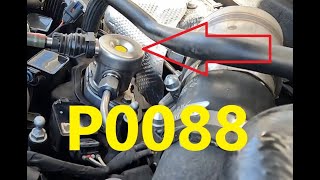
- Replacing fuel injectors when the issue is pressure regulation, not injection itself. 🎬 Watch: A quick breakdown of P0088 causes and common fixes.
Most Likely Causes
- High-Pressure Fuel Pump (HPFP) Failure (3.0L EcoDiesel) 🔴 High Probability → Shop Fuel Pump 2021-2023 Wranglers with the 3.0L EcoDiesel use a Bosch CP4.2 HPFP prone to premature failure, prompting safety recall FCA 01A / NHTSA 23V-263.
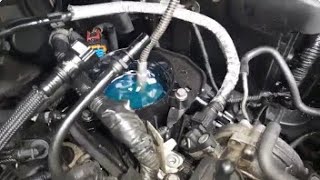
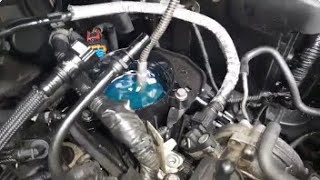
How to confirm: A dealership must diagnose this. They will check the VIN for recall applicability. A key diagnostic sign is finding fine metallic 'glitter' in the fuel filter housing, which confirms the pump is disintegrating. 🎬 See how to check your fuel filter for metal shavings.
Typical fix: Replacement of the High-Pressure Fuel Pump under the recall. If the pump has failed and contaminated the system, the fix is a complete fuel system replacement: new pump, fuel tank, fuel lines, and all injectors. This should be covered by the recall.
Est. part cost: $0 (if covered by recall), $8,000-$12,000+ (for the full system replacement otherwise) - Powertrain Control Module (PCM) Software Issue (2.0L Turbo) 🔴 High Probability → Shop Engine Control Module (ECM) The 2.0L Turbo engine family in other Jeep/Stellantis models is known to set P0088 erroneously. TSB 18-106-23 was issued for the Jeep Compass with this engine to fix the issue with a software update, making it a highly likely cause for the Wrangler.
How to confirm: A Jeep dealership can check the vehicle's VIN against their database for applicable Technical Service Bulletins (TSBs) or software updates.
Typical fix: Reprogramming the PCM with the latest available software. This is a dealer-only procedure.
Est. part cost: $0 (if covered under warranty), $150-$250 (for a dealer reflash otherwise) - Faulty Fuel Rail Pressure Sensor (FRPS) 🟡 Medium Probability → Shop Fuel Pressure Sensor
How to confirm: Use a scan tool to monitor live data for fuel rail pressure. If the reading is stuck at a maximum value or doesn't correlate with desired pressure and engine RPM, the sensor is suspect. A technician can compare the sensor's reading to a mechanical gauge; a mismatch confirms a bad sensor. Be aware of misdiagnosis; owners have replaced the sensor only to find the problem was wiring or the HPFP itself.
Typical fix: Replacement of the fuel rail pressure sensor.
Est. part cost: $50-$200 - Faulty Fuel Pressure Regulator / Volume Control Valve ⚪ Low Probability → Shop Fuel Injection Pressure Regulator The regulator is often integrated into the HPFP on the EcoDiesel. Its failure is typically tied to the failure of the entire pump assembly.
How to confirm: Diagnosis involves using a scan tool to command the regulator and check its response. If it's part of the HPFP, and the pump is the original recalled unit, it's almost certainly a pump issue.
Typical fix: If integrated into the HPFP, the entire pump assembly must be replaced.
Est. part cost: $100-$300 (if separate), $1000+ (if part of HPFP) - Blocked or Restricted Fuel Return Line ⚪ Low Probability
How to confirm: Visually inspect the fuel return lines for any kinks, damage, or blockages that would prevent excess fuel from returning to the tank, causing pressure to build up.
Typical fix: Clear the blockage or replace the damaged section of the fuel line.
Est. part cost: $20-$200
Rare But Worth Checking
- Wiring Harness Issue: A short to power or an intermittent open/ground on the fuel rail pressure sensor's signal wire can cause the ECM to see a false high-pressure reading. One owner on EcoDieselRam.com reported this was the likely cause after a $650 sensor replacement failed to fix the code. Inspect the harness for chafing, especially near the engine.
- Powertrain Control Module (PCM) Software Glitch (3.0L EcoDiesel): → Shop Engine Control Module (ECM) Even on the EcoDiesel, a software update can sometimes be the fix. TSB 18-001-22 REV. A involves a PCM flash to address P0088 among other codes, which can resolve logic errors without replacing hardware.
Diagnosis Steps
- Verify the code with a quality OBD-II scanner. Check for any other stored codes.
- For 3.0L EcoDiesel models, immediately contact a Jeep dealership with your VIN to check for recall FCA 01A / NHTSA 23V-263. Do not proceed with DIY diagnosis if the recall is open.
- For 2.0L Turbo models, contact a dealer to check for TSBs related to PCM software updates for P0088 before replacing any parts.
- For 3.0L EcoDiesel, carefully open the fuel filter housing and inspect the fuel for fine, shiny metallic particles ('glitter'). Presence of this debris is a definitive sign of HPFP failure.
- Using a scanner's live data, monitor 'Actual Fuel Rail Pressure' vs. 'Desired Fuel Rail Pressure'. With P0088, the actual pressure will be significantly higher than desired.
- Visually inspect the wiring harness and connector for the fuel rail pressure sensor. Look for any signs of damage, corrosion, or chafing.
- If pressure is confirmed high and the HPFP is ruled out, inspect the fuel pressure regulator and fuel return lines for blockages.
Parts You'll Likely Need
- High-Pressure Fuel Pump (HPFP)
(OEM #68525736AA (Recall Replacement Part))— This is the most common cause for the 3.0L EcoDiesel engine due to a widespread manufacturing defect in the Bosch CP4.2 pump, leading to recall FCA 01A.
Trusted brands: Mopar, Bosch
OEM price range: $0 (Recall) / $1200-$2500 (Pump only)
Aftermarket price range: $800-$1800 - Fuel Rail Pressure Sensor
(OEM #68247772AA (For 3.0L EcoDiesel))— The sensor can fail and send incorrect high-pressure signals to the computer, triggering the code even if the pressure is normal.
Trusted brands: Mopar, Bosch
OEM price range: $100-$200
Aftermarket price range: $50-$120
Related Codes That Often Appear With This One
- P0087 — Fuel Rail/System Pressure - Too Low. This code may appear intermittently if a failing HPFP provides erratic pressure, or it may be stored in history.
- P0191 — Fuel Rail Pressure Sensor Circuit Range/Performance. This code points more directly to a problem with the sensor or its circuit rather than the actual fuel pressure.
Technical Service Bulletins (TSBs) & Recalls
- 18-001-22 REV. A: For the 3.0L EcoDiesel, this TSB involves a PCM software update to address a list of DTCs, including P0088, and may fix issues like slow acceleration without hardware replacement.
- 18-106-23: For the Jeep Compass 2.0L Turbo, this TSB addresses an erroneous P0088 with a PCM software update, indicating a likely similar fix for the Wrangler with the same engine.
Platform-Specific Known Issues
- Safety Recall for High-Pressure Fuel Pump (3.0L EcoDiesel): → Shop Fuel Pump 2021-2023 Jeep Wranglers with the 3.0L EcoDiesel engine are under safety recall FCA 01A (NHTSA 23V-263) for a Bosch CP4.2 high-pressure fuel pump that can fail prematurely. This failure contaminates the entire fuel system with metal debris, requiring a complete fuel system replacement, which should be covered under the recall.
- PCM Software Update (2.0L Turbo): On the 2.0L Turbo engine, P0088 can often be triggered by a software logic error. A similar issue on the Jeep Compass 2.0L is addressed by TSB 18-106-23, which calls for a PCM reflash. This should be the first diagnostic check for any 2.0L Wrangler with this code.
Mechanic-Grade Diagnostic Values
- Low-Pressure Fuel System Pressure (All Engines) — expected: 50-65 PSI at idle or with key-on, engine-off.. Failure: Pressure is significantly below 50 PSI, indicating a weak in-tank pump or restriction.
- 3.0L EcoDiesel High-Pressure Fuel System (Idle) — expected: Approximately 5,000 PSI.. Failure: Pressure is significantly higher than the desired value shown on a scan tool.
- 3.0L EcoDiesel High-Pressure Fuel System (Cranking) — expected: Must exceed 3,500 - 4,000 PSI for the engine to start.. Failure: While not a direct indicator for P0088 (high pressure), knowing the minimum threshold is crucial for overall system diagnosis.
- 2.0L Turbo High-Pressure Fuel System — expected: 500 - 2,500 PSI, increasing with engine load.. Failure: Actual pressure on a scan tool is significantly higher than commanded pressure.
- Fuel Rail Pressure Sensor (FRPS) Signal Voltage — expected: Typically 0.5V to 4.5V scale. For the 2.0L Turbo, expect around 2.0V to 2.5V at idle.. Failure: A reading stuck at or near 5.0V indicates a short to power or a bad ground in the sensor circuit, which will falsely trigger a P0088 code.
Scan Tool Commands That Help
- wiTECH (Dealer Tool): PCM Reprogramming / Flash — This is the required procedure to apply software updates specified in TSBs 18-001-22 (for EcoDiesel) and the likely fix for the 2.0L Turbo based on TSB 18-106-23 for a similar engine. It should be performed before hardware replacement if a relevant update is available.
- Professional Scan Tool: Fuel Pressure Regulator / Quantity Control Valve Test — To test the regulator on the high-pressure pump. A technician can command changes in pressure to see if the regulator responds. Alternatively, unplugging the electrical connector to the quantity control valve should cause the system to default to maximum pressure (e.g., ~23,200 PSI), confirming the pump's mechanical ability to generate pressure and isolating the control side.
Wiring & Ground Locations
- Fuel Rail Pressure Sensor (FRPS) Connector — On the 3.0L EcoDiesel, it is located at the end of the fuel rail, just below the air intake tube. On the 2.0L Turbo, it is mounted on the fuel rail assembly.. The connector pigtail can be damaged by engine heat or rodents. A forum user identified the wire colors for a replacement pigtail as Blue/Black, Black/Blue, and Yellow. Incorrect wiring will cause short-circuit codes and incorrect pressure readings.
- G901a (Ground) — Likely located at the right rear corner of the engine compartment (based on similar Grand Cherokee platform).. A poor ground for the FRPS circuit can cause a floating voltage and lead the PCM to read an artificially high pressure, triggering P0088 even if the actual pressure is normal.
Real Owner Repair Stories
- JLwranglerforums.com user 'DMT' (Jeep Wrangler JL EcoDiesel (year not specified, but post is from 2023)) — Check Engine Light with code P0088 appeared after performing a fuel filter change.
✅ What actually fixed it The code cleared itself after 4 or 5 engine restarts without any parts being replaced. This suggests air may have entered the fuel system during the filter service, causing a temporary pressure anomaly that was eventually purged.
OEM Part Supersession History
Bosch CP4.2 (Original Fitment)→Mopar 68525736AA (Recall Kit)— The original Bosch CP4.2 pump was prone to internal failure due to cavitation, where rollers could rotate and grenade the pump.
Heads up: The recall replacement is an updated version of the Bosch CP4.2, not a conversion to a CP3 pump. The updated design features enlarged internal fuel passages to lessen the risk of cavitation. It is not just a like-for-like replacement.
Helpful Videos

Used OEM Parts in Stock
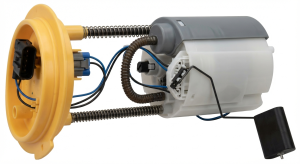
New Aftermarket Parts Available

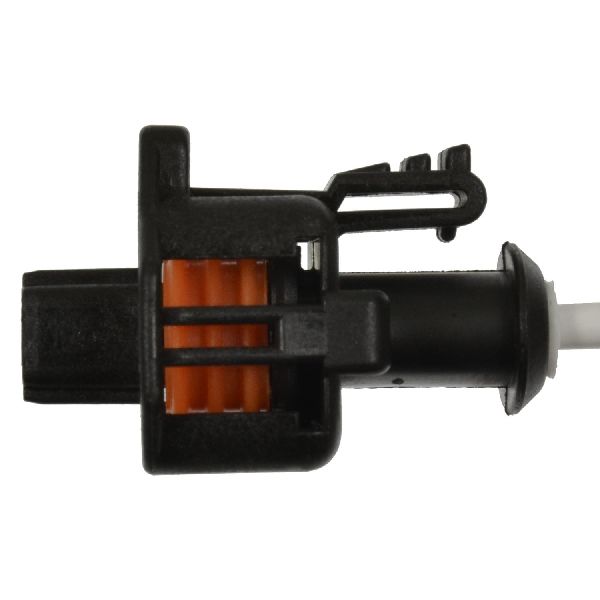
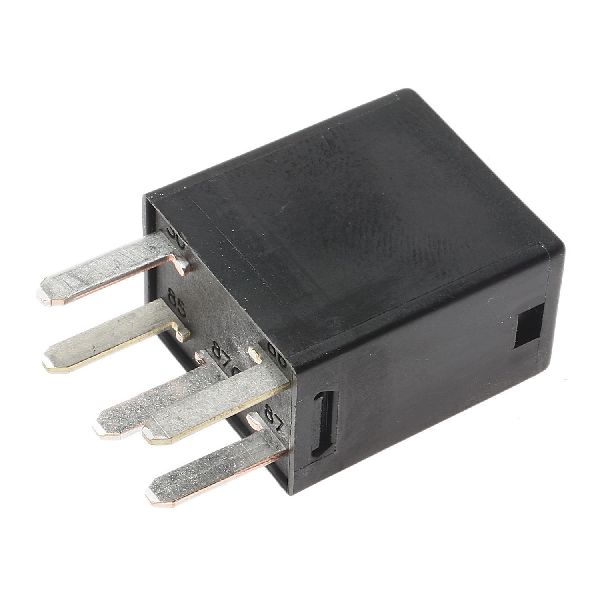


The information in this article is provided for general reference and educational purposes only. Vehicle specifications, procedures, and part compatibility can vary by production date, trim level, and region. Always consult your vehicle's factory service manual and verify part numbers before purchasing or performing repairs. Safety-critical components such as airbags, seat belts, and braking systems should be installed by a qualified professional.
- Jeep WRANGLER:
- 🧭 Diagnostic Flowchart
- 🎬 Helpful Videos
- 🛍️ Shop This Part
- What's Unique About the 2021-2021 Jeep WRANGLER
- Symptoms You May Notice
- Most Likely Causes
- Rare But Worth Checking
- Diagnosis Steps
- Parts You'll Likely Need
- Related Codes That Often Appear With This One
- Technical Service Bulletins (TSBs) & Recalls
- Platform-Specific Known Issues
- Mechanic-Grade Diagnostic Values
- Scan Tool Commands That Help
- Wiring & Ground Locations
- Real Owner Repair Stories
- OEM Part Supersession History
- 🎟️ Get 5% Off