

P0088 on 2016-2023 Mazda CX-9 2.5T: Causes and Fixes for High Fuel Pressure
On the 2016-2023 Mazda CX-9, code P0088 almost always points to a failing high-pressure fuel pump (HPFP). This is a known issue on SKYACTIV-G engines. The fix involves replacing the pump and associated one-time-use fuel line, costing approximately $800-$1200 at a shop.
- P0088 on a 2016-2023 CX-9 is almost certainly a failed high-pressure fuel pump (HPFP).
- This is a known issue acknowledged by Mazda in TSB 01-004/15 for similar engines.
- Do not confuse this with the low-pressure fuel pump recall (NHTSA 21V-904), which causes different codes and symptoms.
- The repair requires replacing the pump (latest part no. PY8V-20-3F0C), the single-use high-pressure fuel line (PY01-13-290A), and a rubber seal.
- This is not a beginner-friendly DIY repair due to the extreme pressures in the fuel system.
What's Unique About the 2016-2023 Mazda CX-9
While the code is generic, the cause on Mazda's SKYACTIV-G engines is often specific. Mazda issued Technical Service Bulletin (TSB) 01-004/15 for earlier 2.0L and 2.5L non-turbo engines, identifying a manufacturing defect in the high-pressure fuel pump (HPFP) that causes this exact code. Although the 2016+ CX-9 2.5T isn't explicitly named in that older TSB, owner experiences confirm that HPFP failure remains the primary cause for P0088 on this newer platform as well. The failure mechanism described in the TSB—an internal manufacturing error—is consistent with failures seen on the 2.5T engine.
Symptoms You May Notice
- Check Engine Light is on
- Engine hesitation or shuttering, especially during acceleration on the highway.
- Rough or fluctuating idle RPM, sometimes jumping by 500-600 RPM at a stop.
- Reduced engine power or 'limp mode'
- Hard starting
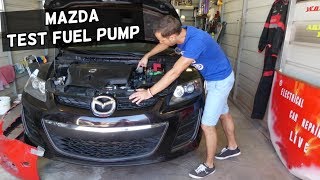
- Reduced fuel economy 🎬 See a breakdown of P0088 symptoms and common fixes.
- Replacing the in-tank low-pressure fuel pump. The low-pressure pump is covered under recall 5321K for some 2018-2019 models, but it typically causes a P0087 (low pressure) code, not P0088.
- Replacing fuel injectors. While high pressure can strain injectors, they are not the root cause of the P0088 code itself.
Most Likely Causes
- Failing High-Pressure Fuel Pump (HPFP) 🔴 High Probability → Shop Fuel Pump Mazda TSB 01-004/15 identified a 'manufacturing error of the inner parts' on SKYACTIV-G engines, causing the pump to fail and over-pressurize the fuel rail. This issue is known to affect the entire SKYACTIV-G engine family, including the 2.5T.
How to confirm: Use a scan tool to monitor 'Desired Fuel Rail Pressure' versus 'Actual Fuel Rail Pressure'. If the actual pressure is consistently and significantly higher than the desired pressure, especially under load, the HPFP is faulty. Freeze frame data will likely show a large discrepancy at the moment the code was triggered.
Typical fix: Replace the high-pressure fuel pump, the one-time-use high-pressure fuel pipe, and the pump's seal, as per Mazda's TSB for this issue.
Est. part cost: $400-$600
Rare But Worth Checking
- Faulty Fuel Rail Pressure Sensor: → Shop Fuel Pressure Sensor While much less common than pump failure, a faulty sensor can send incorrect high-pressure readings to the PCM. This is usually diagnosed by observing erratic or impossible pressure readings on a scan tool (e.g., stuck at max value, or readings that don't change with engine RPM).
- Blocked Fuel Return Line: A restriction in the fuel return system can cause pressure to build up in the rail. This is uncommon on modern returnless systems but could be caused by a blockage in the line or a faulty pressure relief valve within the pump assembly. This should be considered if a new HPFP does not resolve the issue.
- PCM or Wiring Issue: In very rare cases, a wiring short or a fault within the Powertrain Control Module (PCM) could cause false high-pressure readings. A diagnostic check of the sensor's wiring harness for continuity and shorts would be necessary before condemning the PCM.
Diagnosis Steps
- Connect an OBD-II scanner to confirm P0088 is the primary code. Check for other codes like P0191.
- Using the scanner's live data function, monitor 'Desired Fuel Rail Pressure' and 'Actual Fuel Rail Pressure'.
- At idle, the pressures should be relatively close. While driving and accelerating, observe if the 'Actual' pressure significantly exceeds the 'Desired' pressure. This points strongly to the HPFP.
- If pressure readings are erratic, nonsensical, or stuck at a specific value, inspect the wiring and connector for the fuel rail pressure sensor before condemning the sensor itself.
- If the HPFP is confirmed as the cause, proceed with replacement.
- After replacement, clear all codes and perform a test drive to ensure the repair was successful.
Parts You'll Likely Need
- High-Pressure Fuel Pump (HPFP)
(OEM #PY8V-20-3F0C (supersedes PY8V-20-3F0B and PY8V-20-3F0A))— This is the component identified by Mazda in a TSB as having a manufacturing defect that directly causes the P0088 code. The part has been revised multiple times, indicating ongoing design improvements.
Trusted brands: Mazda (OEM)
OEM price range: $400-$600
Aftermarket price range: $250-$450 - High-Pressure Fuel Pipe
(OEM #PY01-13-290A)— This is a one-time-use, 'torque-to-yield' part that connects the HPFP to the fuel rail. It must be replaced anytime it is removed to ensure a safe, leak-free seal. TSB 01-004/15 specifies this part for the 2.5L engine.
Trusted brands: Mazda (OEM)
OEM price range: $50-$100
Aftermarket price range: $40-$80 - Rubber Seal (for HPFP)
(OEM #PE01-13-555)— This seal ensures a proper connection between the HPFP and the engine. It is specified for replacement in TSB 01-004/15 whenever the pump is replaced.
Trusted brands: Mazda (OEM)
OEM price range: $10-$20
Related Codes That Often Appear With This One
- P0191 — This code for 'Fuel Rail Pressure Sensor Circuit Range/Performance' is also listed in Mazda TSB 01-004/15 and is often triggered by the same internal failure of the high-pressure fuel pump.
Technical Service Bulletins (TSBs) & Recalls
- 01-004/15 - 'MULTI-MODEL (WITH SKYACTIV 2.0L/2.5L) - CHECK ENGINE LIGHT ON WITH DTC P0191:00 OR P0088:00'. This TSB confirms the cause is a faulty high-pressure fuel pump due to a manufacturing error and outlines the replacement procedure, including replacing the fuel pipe and seal.
- Bulletin #01-004-15-3028 - This manufacturer bulletin notes that some vehicles may experience the Check Engine Light on with DTC P0191:00 or DTC P0088:00 stored in memory, specifically identifying a fuel pressure sensor circuit range/performance problem.
Platform-Specific Known Issues
- A known internal manufacturing defect in the high-pressure fuel pump is the most common cause, as documented in Mazda TSB 01-004/15 for SKYACTIV-G engines.
- Owners have reported this failure occurring at relatively low mileage, with one documented case on a 2017 CX-9 at 54,000 miles.
- Some owners have had partial success getting Mazda corporate to cover a portion of the repair cost out-of-warranty, but it is critical to contact them *before* authorizing and paying for the repair.
Mechanic-Grade Diagnostic Values
- Fuel Rail Pressure Sensor (FRP) Signal Voltage, Key On Engine Off (KOEO) — expected: Approx. 1.5V - 1.8V. Failure: Voltage is near 5.0V (indicates an open or short in the signal circuit) or below 0.5V.
- Fuel Rail Pressure Sensor (FRP) Reference Voltage — expected: 5.0V. Failure: Significantly less than 5.0V, indicating a PCM or wiring issue.
- High-Pressure Fuel Rail Pressure at Idle (Scan Tool) — expected: Approx. 500-600 PSI (40 bar). Failure: Actual pressure is significantly higher than desired pressure.
- High-Pressure Fuel Rail Pressure at Full Throttle (Scan Tool) — expected: Up to approx. 2900 PSI. Failure: Actual pressure significantly exceeds commanded pressure.
- Low-Pressure Fuel Pump Pressure (at service port, if available) — expected: Approx. 60-70 PSI. Failure: While not a direct cause of P0088, low feed pressure can strain the HPFP. This check helps verify the health of the overall fuel system. 🎬 Watch: How to test fuel pump health on Mazda CX-9.
- DTC Trigger Threshold (SKYACTIV-G 2.0L engine) — expected: Actual fuel pressure must not exceed target pressure by more than 1.2 MPa (174 PSI).. Failure: The PCM stores P0088 when the actual pressure is higher than the target pressure by 1.2 MPa or more.
Hidden / Shadow Codes Worth Checking
- Pending Code P0088: The PCM will store a pending code on the first drive cycle the over-pressure condition is detected. The Check Engine Light will only illuminate after the fault is detected on a second consecutive drive cycle. (see via Any standard OBD-II scanner that can read 'Pending' or 'Mode $07' codes.)
Scan Tool Commands That Help
- Professional Scan Tool (e.g., Mazda IDS, Autel, Snap-on): Fuel Pressure Regulator/Solenoid Duty Cycle Command — After verifying the sensor is reading correctly, a technician can use this bidirectional control to command the high-pressure pump's control solenoid to different duty cycles. This helps determine if the pump is mechanically stuck and unresponsive to PCM commands, confirming a faulty pump.
Wiring & Ground Locations
- G12 — Located in the driver-side footwell area, near or behind the A-pillar kick panel.. This is a common grounding point for multiple interior and dashboard-related components. While not directly tied to the fuel pump, a loose or corroded ground here can introduce electrical noise and cause erratic sensor readings, potentially leading to a misdiagnosis of a sensor or PCM fault.
- Engine Wiring Harness — The harness running across the top of the engine and near the firewall.. This area is susceptible to rodent damage. Mice chewing through the harness can cause a short in the fuel rail pressure sensor wiring, sending a false 5V signal to the PCM and tricking it into setting a P0088 code, even if the fuel pressure is normal.
OEM Part Supersession History
PY8V-20-3F0A→PY8V-20-3F0B, then PY8V-20-3F0C— Internal design revisions by Mazda to address the manufacturing defect that causes premature failure and the P0088 code. Each new part number represents an attempt to improve reliability.
Model Year Variations Within This Range
- 2018-2023: Beginning in 2018, the SKYACTIV-G 2.5T engine was updated with cylinder deactivation technology. This change also introduced different Powertrain Control Module (PCM) software calibrations. While it doesn't change the root cause of P0088 (the HPFP), it's important to ensure any PCM-related diagnostics or software updates use the correct file for the specific model year.
Diagnostic Flowchart
Other Known Issues on This Vehicle
Issues unrelated to this code that are worth knowing about as an owner of this generation:
- Cracked Cylinder Head Causing Coolant Leak 🔴 High — Affects earlier models (typically 2016-2020). A casting defect can cause a crack near the exhaust manifold, leading to an external coolant leak. Can lead to engine overheating and failure. (Ref: TSB 01-002/23 (supersedes 01-013/21, 01-007-22). Mazda has also offered warranty extensions for this issue.)
- Excessive Oil Consumption from Faulty Valve Stem Seals 🟠 Medium — Primarily reported in 2021 models. Defective exhaust valve stem seals allow oil to enter the combustion chamber, causing oil burning and low oil levels between changes. (Ref: TSB 01-012/21. A class-action lawsuit settlement provides for repairs and a warranty extension for affected vehicles.)
- Failing Low-Pressure Fuel Pump 🔴 High → Shop Fuel Pump — Affects certain 2018-2019 models. A deformed impeller in the in-tank (low-pressure) pump can cause the engine to run rough, stall at low speeds, or fail to start. (Ref: Recall 5321K / NHTSA 21V-904. This causes low fuel pressure codes (like P0087), not the P0088 high-pressure code.)
Used vs. New Parts: Buying Guide for This Vehicle
When a used part is the smart pick: For this specific repair, a used part is almost never a smart choice. The primary cause of P0088 is a known manufacturing defect in the high-pressure fuel pump. A used pump from a donor vehicle is highly likely to either have the same defect or be near the end of its service life.
What to inspect on the donor part:
- Not applicable. Avoid used high-pressure fuel pumps for this repair.
OEM-only on this vehicle (don't cheap out):
- High-Pressure Fuel Pump (HPFP): Due to the known manufacturing defect and subsequent part revisions, only a new OEM pump (latest part number PY8V-20-3F0C) should be used to ensure a lasting repair.
- High-Pressure Fuel Pipe: This is a one-time-use, torque-to-yield part. It must be replaced with a new OEM part anytime it is loosened or removed to prevent dangerous, high-pressure fuel leaks.
Brands owners have reported issues with on this vehicle:
- Unknown/white-box brands: The extreme pressures of a direct injection system require precise manufacturing tolerances. Unverified aftermarket pumps pose a significant risk of premature failure or, worse, fuel leaks.
Real Owner Stories
Aggregated from forums and TSBs cited above. Mileages and costs reflect what owners reported in those sources.
2017 Mazda CX-9 SKYACTIV-G 2.5T — 54000 miles
Symptoms: Engine hesitation and shuttering during highway acceleration, along with a rough idle where RPMs fluctuated by 500-600 RPM at stops.
What fixed it: Replacement of the high-pressure fuel pump (HPFP).
Source hint: Reddit (r/MazdaCX9) - A thread titled 'High pressure fuel pump failure @ 54k miles'
Related OBD-II Codes
Frequently Asked Questions
Does Mazda TSB 01-004/15 apply to my CX-9 with the SKYACTIV-G 2.5T engine?
Can I reuse the fuel pipe when replacing the high-pressure fuel pump?
Will Mazda cover the cost of the HPFP replacement if my vehicle is out of warranty?
Is the P0088 code related to the recent fuel pump recall (Recall 5321K)?
What is the specific part number I should use for the replacement pump?
How can I distinguish between a bad fuel pressure sensor and a bad HPFP?
Helpful Videos
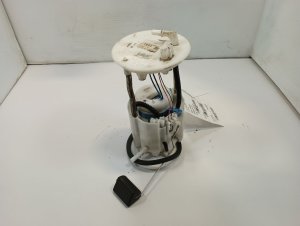
Used OEM Parts in Stock
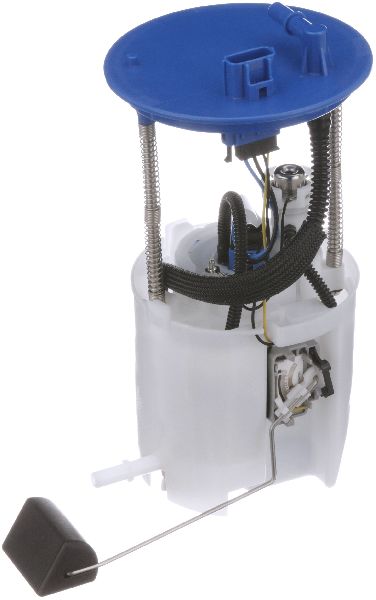
New Aftermarket Parts Available
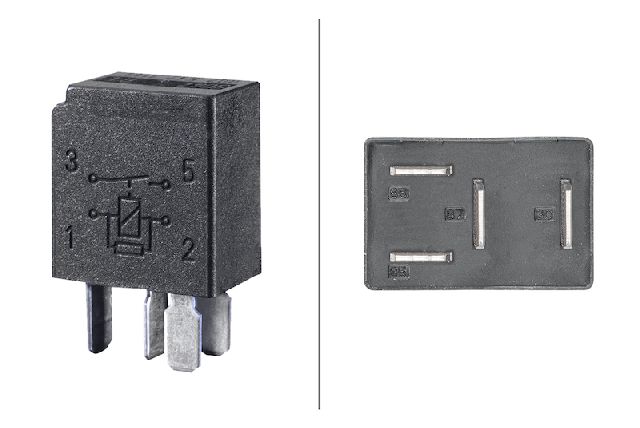

The information in this article is provided for general reference and educational purposes only. Vehicle specifications, procedures, and part compatibility can vary by production date, trim level, and region. Always consult your vehicle's factory service manual and verify part numbers before purchasing or performing repairs. Safety-critical components such as airbags, seat belts, and braking systems should be installed by a qualified professional.
- Mazda CX-9:
- 🧭 Diagnostic Flowchart
- 🎬 Helpful Videos
- 🛍️ Shop This Part
- What's Unique About the 2016-2023 Mazda CX-9
- Symptoms You May Notice
- Most Likely Causes
- Rare But Worth Checking
- Diagnosis Steps
- Parts You'll Likely Need
- Related Codes That Often Appear With This One
- Technical Service Bulletins (TSBs) & Recalls
- Platform-Specific Known Issues
- Mechanic-Grade Diagnostic Values
- Hidden / Shadow Codes Worth Checking
- Scan Tool Commands That Help
- Wiring & Ground Locations
- OEM Part Supersession History
- Model Year Variations Within This Range
- Other Known Issues on This Vehicle
- Used vs. New Parts: Buying Guide for This Vehicle
- Real Owner Stories
- 2017 Mazda CX-9 SKYACTIV-G 2.5T — 54000 miles
- Related OBD-II Codes
- Frequently Asked Questions
- 🎟️ Get 5% Off