

P0088 on 2022 Ram 1500: Fuel Rail Pressure Too High Causes and Fixes
P0088 on a 2022 Ram 1500 means the fuel pressure in the engine's fuel rail is dangerously high. The most common causes are a faulty fuel rail pressure sensor or a failing high-pressure fuel pump. Replacing the sensor is the most frequent fix, but diagnosis is key to avoid replacing the wrong part.
- P0088 indicates that fuel pressure is too high, not too low.
- The most likely cause on a 2022 Ram 1500 is a faulty fuel rail pressure sensor giving a false reading.
- Always diagnose before replacing parts. Use a scan tool and a mechanical gauge to determine if the pressure is actually high or just being reported as high.
- Due to the high pressures involved in GDI fuel systems, this repair is best left to a professional unless you are highly experienced.
- Check for damaged wiring to the fuel rail pressure sensor before replacing more expensive components.
What's Unique About the 2022-2022 Ram 1500
The 2022 Ram 1500 utilizes modern gasoline direct injection (GDI) systems on its 3.6L Pentastar and 5.7L HEMI engines, which require both a low-pressure in-tank fuel pump and a high-pressure, engine-driven fuel pump. This dual-pump setup adds complexity to the diagnosis of P0088 compared to older, simpler fuel systems. While the code can appear on any engine, it's particularly critical on these GDI engines where pressure is significantly higher and more precisely controlled. The PCM monitors the fuel rail pressure sensor and expects a specific voltage range; a signal that is higher than the calibrated limit for a set period of time will trigger the code.
Diagnostic Flowchart
Tap your situation to follow the diagnostic path that matches what you're seeing on this vehicle.
Symptoms You May Notice
- Check Engine Light is on
- Reduced engine power and sluggish acceleration
- Engine stalling or running rough, especially at idle
- Difficulty starting the engine, or extended cranking time
- Black smoke from the exhaust, indicating a rich fuel condition
- Decreased fuel economy due to excessive fuel delivery
- Remote start may be disabled by the PCM as a safety measure
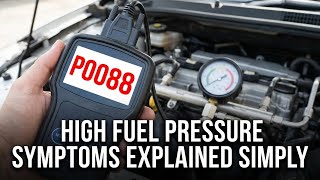
- Strong smell of raw gasoline from the exhaust 🎬 Watch: A quick breakdown of P0088 symptoms and common fixes.
- Replacing the high-pressure fuel pump when only the fuel rail pressure sensor is faulty. It's crucial to diagnose whether the pressure is actually high or just being reported as high. This is an expensive mistake based on forum reports.
Most Likely Causes
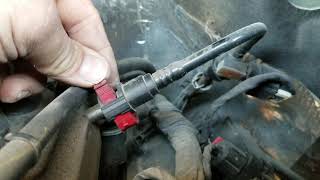
- Faulty Fuel Rail Pressure Sensor (FRPS) 🔴 High Probability → Shop Fuel Pressure Sensor The sensor can fail electronically, sending an incorrect high-voltage signal to the PCM, which is misinterpreted as high pressure 🎬 Watch this video to see a professional diagnosis and repair. even when the pressure is normal. This is the most common point of failure and a frequent cause of misdiagnosis.
How to confirm: Use a scan tool to compare the live fuel pressure data with a mechanical fuel pressure gauge. If the scan tool shows high pressure but the mechanical gauge shows normal pressure, the sensor is likely faulty. A sensor sending a constant 5-volt signal often indicates an internal short or a wiring problem.
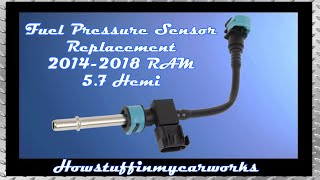
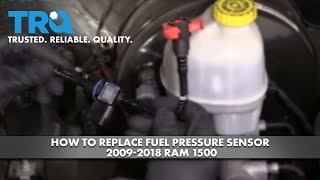
Typical fix: Replace the fuel rail pressure sensor. 🎬 See this walkthrough for replacing the sensor on a Hemi.
Est. part cost: $150-$350 - Failing High-Pressure Fuel Pump (HPFP) 🟡 Medium Probability → Shop Fuel Pump The mechanical pump, driven by the engine's camshaft, can fail internally, leading to unregulated pressure. While less common than a sensor failure, it is a significant possibility, especially if actual high pressure is confirmed.
How to confirm: If a mechanical gauge confirms that fuel pressure is actually too high, and the fuel pressure regulator (often part of the pump assembly) is not being commanded to a high state by the PCM, the pump itself is suspect.
Typical fix: Replace the high-pressure fuel pump.
Est. part cost: $400-$800 - Wiring or Connector Issue ⚪ Low Probability The wiring harness to the fuel rail pressure sensor can become damaged, corroded, or chewed by rodents, causing a short circuit that results in a high voltage signal being sent to the PCM. This mimics a failed sensor.
How to confirm: Visually inspect the wiring harness and connector for the fuel rail pressure sensor for any signs of damage, fraying, or corrosion. Test for continuity and shorts to power/ground using a multimeter.
Typical fix: Repair or replace the damaged section of the wiring harness or the connector.
Est. part cost: $20-$200 - Restricted Fuel Return Line ⚪ Low Probability A kinked or clogged fuel return line can prevent excess fuel from returning to the tank, causing pressure to build up in the rail. This is more common on systems with a return line from the rail itself.
How to confirm: Visually inspect the entire length of the fuel return line from the engine back to the fuel tank for any kinks, collapses, or blockages.
Typical fix: Repair the kinked section or replace the restricted fuel line.
Est. part cost: $50-$250
Rare But Worth Checking
- Faulty Powertrain Control Module (PCM): → Shop Engine Control Module (ECM) This is extremely rare. Before condemning the PCM, all other possibilities, including sensor, pump, and wiring issues, must be exhaustively ruled out. A software update may sometimes resolve the issue, so checking for TSBs is a critical first step.
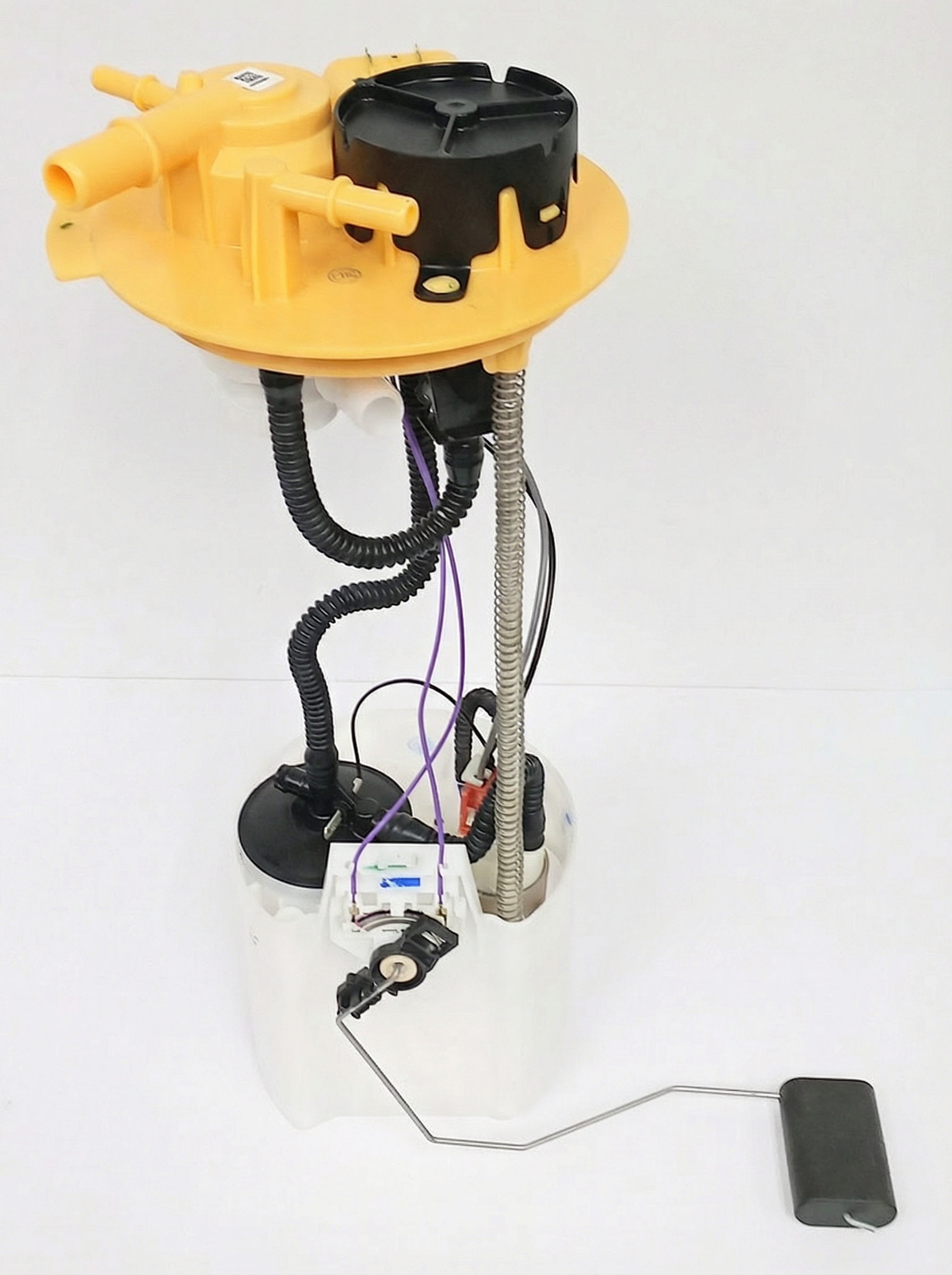
- Faulty Fuel Pump Control Module (FPCM): → Shop Fuel Pump The FPCM (also called a Fuel Pump Driver Module) regulates the voltage to the in-tank fuel pump. A failure in this module could theoretically cause the low-pressure pump to run at maximum duty cycle, potentially overwhelming the high-pressure system. This is an uncommon cause but should be considered if other components check out.
Diagnosis Steps
- Connect an OBD-II scanner and confirm the P0088 code is present. Check for any other related codes and check for any available PCM software updates via TSBs.
- Using the scanner's live data function, monitor the 'Fuel Rail Pressure' reading with the key on, engine off, and then at idle. Note the values.
- Safely connect a mechanical fuel pressure gauge to the fuel rail's service port.
- Compare the mechanical gauge reading to the scanner's live data. If the scanner reads high but the gauge is normal, the fuel rail pressure sensor is the primary suspect.
- If both the scanner and the mechanical gauge show excessively high pressure, the issue is likely mechanical. Inspect the fuel return line (if equipped) for any kinks or blockages.
- Thoroughly inspect the wiring and connector for the fuel rail pressure sensor. Look for any signs of damage, corrosion, or loose connections. Check for a 5-volt reference, ground, and signal wire integrity.
- If the sensor, wiring, and return lines are good, the high-pressure fuel pump or its integrated regulator is the most likely cause of the high pressure.
- Consider the Fuel Pump Control Module (FPCM) as a potential, though rare, cause if all other components test correctly.
- Before replacing any parts, check for any Technical Service Bulletins (TSBs) for your vehicle, as a software update for the PCM could be a potential fix.
Parts You'll Likely Need
- Fuel Rail Pressure Sensor
(OEM #68351152AA)— This sensor is the most common failure point for a P0088 code. It can send false high-pressure readings to the computer, triggering the code even if the mechanical pressure is correct. Part number 68351152AA is listed for the 3.6L V6 engine and supersedes older part numbers like 68240036AA and 5146432AF.
Trusted brands: Mopar, Bosch, Standard Motor Products
OEM price range: $240-$340
Aftermarket price range: $150-$250 - High-Pressure Fuel Pump
(OEM #05147042AE (for 5.7L HEMI))— If the actual fuel pressure is confirmed to be too high, the mechanical high-pressure pump is the next most likely culprit, as its internal regulator may have failed. This is a more involved and expensive repair.
Trusted brands: Mopar, Bosch
OEM price range: $600-$800
Aftermarket price range: $400-$600
Related Codes That Often Appear With This One
- P0087 — P0087 (Fuel Rail/System Pressure - Too Low) can appear intermittently if the high-pressure fuel pump or sensor is failing erratically, causing pressure to fluctuate between too high and too low.
- P018C — This code relates to the fuel pressure sensor circuit, indicating an electrical fault. It can appear alongside P0088 if the root cause is a wiring issue or a failing sensor.
- P008A — P008A (Low Pressure Fuel System Pressure - Too Low) could precede or accompany P0088 if the in-tank low-pressure pump is failing erratically, causing the high-pressure pump to overcompensate or report faults.
Technical Service Bulletins (TSBs) & Recalls
- Bulletin #1813322: Mentions P0088 - Fuel Rail Pressure Too High in a list of potential diagnostic trouble codes for 2022 gasoline fuel systems, confirming it as a recognized code for the platform.
- NHTSA Recall 21V-880 (Y78): While this recall is for the high-pressure fuel pump on EcoDiesel engines, it highlights the critical nature of the HPFP in Ram trucks and the potential for failure leading to fuel starvation or other fuel system issues.
Platform-Specific Known Issues
- Sensor and Wiring More Common Than Pump Failure: On the 5th generation Ram 1500 forums, owner experiences with P0088 more frequently point to an electrical issue (the sensor itself or its wiring) rather than a mechanical failure of the high-pressure fuel pump. Many owners report successfully fixing the code by replacing only the sensor after proper diagnosis, avoiding the high cost of a pump replacement.
Mechanic-Grade Diagnostic Values
- Low-Pressure Fuel System Pressure (at fuel rail inlet) — expected: 59 psi +/- 5 psi (407 kPa +/- 34 kPa). Failure: Pressure significantly higher than 64 psi could indicate a problem with the in-tank pump or its control module, potentially over-pressurizing the high-pressure pump.
- Fuel Rail Pressure Sensor Voltage (Signal Wire) — expected: Typically 0.5V at low pressure (key on, engine off) to 4.5V at maximum pressure.. Failure: A constant reading of 5.0V suggests a short to power in the wiring or an internally shorted sensor. A reading that does not correspond with mechanical gauge pressure indicates a faulty sensor.
- High-Pressure Fuel System Pressure (GDI) — expected: Can exceed 2,000 PSI under load. At idle, it will be significantly lower but much higher than the low-side pressure.. Failure: Pressure that exceeds the scan tool's 'desired' or 'commanded' pressure value by a significant margin for a set period of time will trigger P0088.
Scan Tool Commands That Help
- wiTECH (OEM FCA/Stellantis Tool): Fuel Control Actuator (FCA) Test — To check for a mechanically stuck Fuel Control Actuator on the high-pressure pump. The scan tool can cycle the actuator; a technician should listen for an audible click when the actuator is cycled off. No click suggests the actuator is stuck.
- wiTECH (OEM FCA/Stellantis Tool): PCM Reprogramming/Flash — If a Technical Service Bulletin (TSB) indicates a software update is available to correct erroneous P0088 codes. TSB 18-055-22 is an example for some Ram vehicles where a PCM flash addresses P0088, among other codes.
- wiTECH (OEM FCA/Stellantis Tool): View Live Data: Desired vs. Actual Fuel Rail Pressure — This is a primary diagnostic step. Comparing the pressure the PCM is requesting ('Desired') versus what the sensor is reporting ('Actual') is crucial. If 'Actual' is significantly higher than 'Desired' and a mechanical gauge confirms the high pressure, it points towards a mechanical issue (pump/regulator). If the mechanical gauge is normal, it points to a sensor/wiring issue.
Wiring & Ground Locations
- Fuel Pump Control Module (FPCM) — On older models, it was often located on the frame rail near the fuel tank. On 5th Gen Rams, it can be found above the spare tire, near the rear of the fuel tank, sometimes mounted to a crossmember.. The FPCM controls the in-tank low-pressure pump. A fault in the module or its wiring/ground can cause the low-pressure pump to run at full speed, potentially overwhelming the high-pressure system and contributing to a P0088 code.
- G916A (Example Ground) — A critical ground point (G916A) for the FPCM on some Ram trucks is located on the frame near the rear wheel.. A corroded or loose ground at this location can cause intermittent or complete failure of the FPCM, leading to various fuel pressure codes, including the potential for over-pressurization if the module fails in a 'full on' state. A video shows a technician diagnosing a no-start from a bad ground at this exact location.
- Engine/Chassis Ground Straps — There are multiple ground straps, including one from the battery to the chassis sidewall, and straps from the engine block to the frame, often at the rear of the cylinder heads.. A poor engine ground can affect the reference voltage for various sensors, including the fuel rail pressure sensor. An unstable ground can cause the sensor to send erratic or falsely high voltage signals to the PCM, triggering P0088 without any actual pressure problem.
Real Owner Repair Stories
- RamForum.com user report (2016 Ram 1500 5.7L Hemi) — Warm crank, no start. Cold starts were fine.
❌ Tried (didn't work) Replaced fuel pump with an aftermarket unit., Replaced fuel pressure sensor (P018D was also present)., Replaced the aftermarket pump with a second aftermarket pump.
✅ What actually fixed it The issue was diagnosed as the aftermarket fuel pumps causing excessively high fuel pressure (150 PSI instead of the specified ~55 PSI), which put the truck into a protective crank-no-start mode. The final fix was to install a used OEM fuel pump from a low-mileage vehicle. - EcoDieselRam.com user report (2018 EcoDiesel Ram 1500) — Check Engine Light with P0088, but no noticeable performance degradation. Remote start was disabled.
❌ Tried (didn't work) A repair shop replaced the fuel pressure sensor for $650, but the code returned within 10 miles.
✅ What actually fixed it The user's issue remained unresolved in the thread, but the experience serves as a valuable cautionary tale. A technician confirmed with a scan tool that all pressures were within normal operating values while driving, strongly suggesting the root cause was an intermittent wiring harness issue (open or grounding) and not the sensor or pump.
When the Usual Fixes Don't Work
- While the fuel rail pressure sensor is a common cause, one owner on an EcoDiesel forum reported having a shop replace the sensor, only for the P0088 code to return within 10 miles. Live data showed all pressures were normal, pointing towards a more elusive wiring or intermittent grounding issue as the likely, though unconfirmed, culprit. This highlights that even the most common fix isn't a guarantee and thorough electrical diagnosis is sometimes required.
Helpful Videos

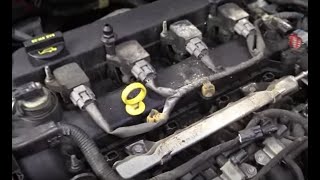
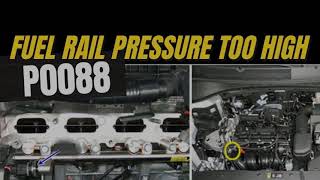
Used OEM Parts in Stock
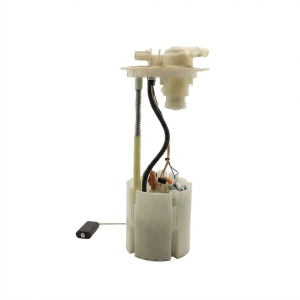
New Aftermarket Parts Available



The information in this article is provided for general reference and educational purposes only. Vehicle specifications, procedures, and part compatibility can vary by production date, trim level, and region. Always consult your vehicle's factory service manual and verify part numbers before purchasing or performing repairs. Safety-critical components such as airbags, seat belts, and braking systems should be installed by a qualified professional.
- Ram 1500:
- 🧭 Diagnostic Flowchart
- 🎬 Helpful Videos
- 🛍️ Shop This Part
- What's Unique About the 2022-2022 Ram 1500
- Symptoms You May Notice
- Most Likely Causes
- Rare But Worth Checking
- Diagnosis Steps
- Parts You'll Likely Need
- Related Codes That Often Appear With This One
- Technical Service Bulletins (TSBs) & Recalls
- Platform-Specific Known Issues
- Mechanic-Grade Diagnostic Values
- Scan Tool Commands That Help
- Wiring & Ground Locations
- Real Owner Repair Stories
- When the Usual Fixes Don't Work
- 🎟️ Get 5% Off