

P0088 on 2009-2016 Volkswagen CC: High Fuel Pressure Causes and Fixes
On a 2009-2016 VW CC with the 2.0T engine, code P0088 is most often caused by a failing High-Pressure Fuel Pump (HPFP). Before replacing the pump, it is critical to inspect the inexpensive cam follower for wear, as its failure can destroy a new pump. A faulty fuel rail pressure sensor or a stretched timing chain are also possible causes. Expect to pay $250-$450 for the most common parts.
- P0088 on a 2.0T VW CC means fuel pressure is too high, almost always due to a problem with the High-Pressure Fuel Pump (HPFP) system.
- Before replacing any parts, you MUST inspect the cam follower (Part #06H109311B). A worn follower is a cheap fix that can prevent catastrophic failure of a new, expensive HPFP.
- If code P1025 is also present, it's a very strong indicator that the HPFP itself has a mechanical failure.
- If code P0016 is present, the root cause may be a stretched timing chain, which is a more involved and expensive repair.
- Always replace the cam follower when replacing the HPFP, regardless of its apparent condition.
What's Unique About the 2009-2016 Volkswagen CC

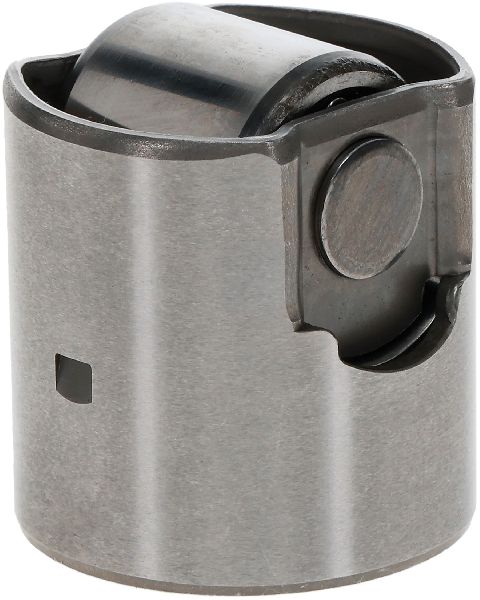
The VW CC's 2.0T TSI engine has a well-documented history of issues related to its camshaft-driven High-Pressure Fuel Pump (HPFP). The primary unique issue is the wear-prone 'cam follower,' a small bucket-shaped tappet that sits between the camshaft and the HPFP. A worn follower can alter the pump's stroke, leading to pressure regulation problems. Furthermore, a VW Technical Service Bulletin (TSB) directly links P0088 to the HPFP being 'out of time (sync),' which can be caused by a worn follower or even a stretched timing chain that affects the camshaft's position relative to the crank.
Diagnostic Flowchart

Tap your situation to follow the diagnostic path that matches what you're seeing on this vehicle.
Generation note: The 2009-2016 range covers the single generation of the Volkswagen CC, which received a significant facelift for the 2013 model year. However, the 2.0T TSI engine and its high-pressure fuel system design remained fundamentally the same, so the causes and fixes for P0088 are consistent across this entire year span. The primary engine codes are CCTA and CBFA, with the CBFA being a stricter emissions version, but fuel system diagnosis for this code is identical.
Symptoms You May Notice
- Check Engine Light is on
- Engine runs rough, hesitates, or stumbles on acceleration
- Reduced engine power or vehicle entering 'limp mode'
- Engine stalling unexpectedly
- Hard starting
- Noticeable decrease in fuel economy
- Strong smell of unburnt fuel from the exhaust
- Black smoke from the tailpipe
- High-pitched whining noise from the engine bay near the HPFP
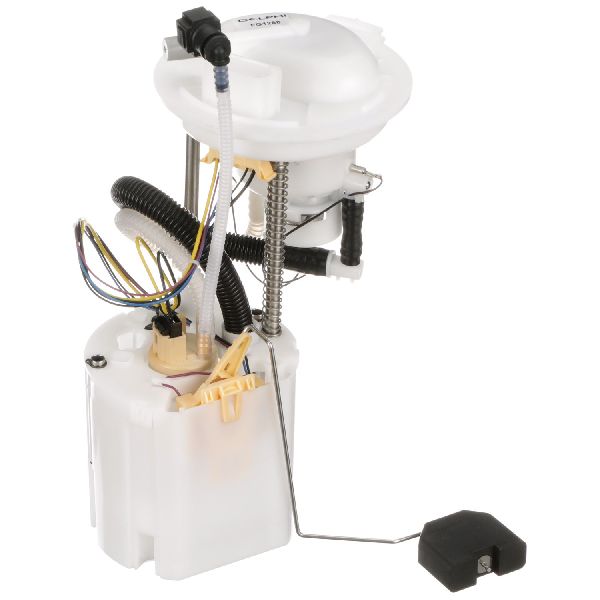
- Replacing the in-tank low-pressure fuel pump. This code is specific to the high-pressure side of the system, so the low-pressure pump is rarely the cause unless it's completely failing due to its own control module.
- Replacing fuel injectors. While high pressure can damage injectors over time, they are not the root cause of the P0088 code.
Most Likely Causes

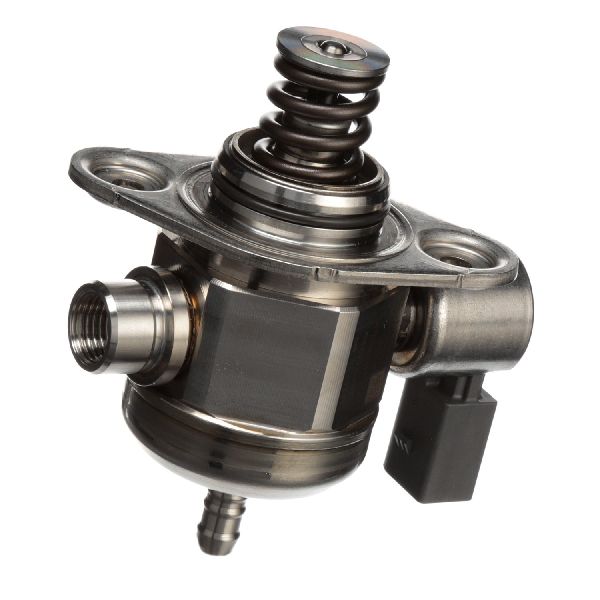
- Failed High-Pressure Fuel Pump (HPFP) 🔴 High Probability → Shop Fuel Pump The internal pressure regulating valve (N276) on the HPFP can fail mechanically, causing it to produce excessive pressure. This is a known issue on this platform, and can sometimes happen without warning.
How to confirm: Using a diagnostic scan tool (like VCDS), monitor the specified vs. actual fuel rail pressure in the measuring blocks. If actual pressure is consistently and significantly higher than specified (e.g., by 30 bar or more at idle), and the cam follower is intact, the HPFP is the likely culprit.
Typical fix: Replace the High-Pressure Fuel Pump and the cam follower as a set. It is critical to replace the follower to prevent premature failure of the new pump.
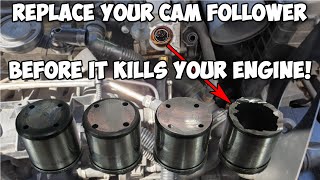
Est. part cost: $250-$450 - Worn Cam Follower 🔴 High Probability → Shop Engine Valve Tappet The cam follower is a sacrificial component designed to wear out. It is a very common failure point on the 2.0T TSI engine and should be inspected regularly (e.g., every 20,000-30,000 miles) to prevent catastrophic failure.
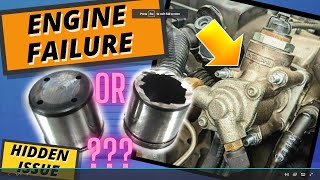
How to confirm: Remove the HPFP from the cylinder head. The cam follower is a small metal bucket that can be pulled out from its bore. Inspect the black coated surface for any wear, scoring, or a hole worn through it. Also inspect the camshaft lobe for corresponding damage.
Typical fix: Replace the cam follower. If it has worn completely through, you must also replace the HPFP and inspect the intake camshaft for damage. An oil change is also recommended to remove any metal shavings from the engine.
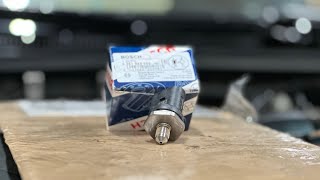
Est. part cost: $20-$40 - Faulty Fuel Rail Pressure Sensor (G247) 🟡 Medium Probability → Shop Fuel Pressure Sensor The sensor can fail and send an erroneously high voltage signal to the ECM, tricking it into thinking the pressure is too high when it is actually normal. This can happen intermittently.
How to confirm: Compare the scan tool's pressure reading with a mechanical fuel pressure gauge connected to the high-pressure rail (requires special equipment). A simpler check is to observe the pressure reading with the engine off; if it reads abnormally high or doesn't drop, the sensor is likely faulty. A diagnostic procedure involves checking for a signal voltage greater than 4.8V as a failure condition.
Typical fix: Replace the fuel rail pressure sensor located on the end of the fuel rail. 🎬 Follow this walkthrough to replace your fuel rail pressure sensor.
Est. part cost: $50-$100 - Stretched Timing Chain ⚪ Low Probability → Shop Engine Timing Chain Timing chains on early TSI engines can stretch over time, and the tensioners can fail. This alters camshaft timing relative to the crankshaft, which directly affects the HPFP's actuation by the cam lobe, causing pressure spikes.
How to confirm: This is often accompanied by code P0016 (Cam/Crank Incorrect Correlation). A mechanic can check camshaft adaptation values (phase shift) with a scan tool like VCDS; significant deviation (e.g., beyond +/- 8 degrees) indicates a timing issue. 🎬 See how a stretched timing chain causes high fuel pressure.
Typical fix: This is a major repair involving the replacement of the timing chain, tensioners, and guides.
Est. part cost: $400-$800
Rare But Worth Checking
- Kinked or restricted fuel return line, preventing excess pressure from bleeding off.
- Wiring issues, such as a short in the fuel pressure sensor harness, which can cause a false high reading.
- Faulty Fuel Pump Control Module (J538), which can fail and affect the low-pressure fuel supply, indirectly causing issues on the high-pressure side. A recall (NHTSA 17V-509) was issued for this module on 2009-2016 CC models for stalling risks.
Diagnosis Steps
- Connect an OBD-II scanner (preferably a VW-specific tool like VCDS) and confirm P0088 and any other stored codes.
- Using the scanner's live data function, monitor 'Fuel Rail Pressure (Specified)' and 'Fuel Rail Pressure (Actual)' (e.g., VCDS Measuring Block 106 or Advanced Measuring Values). Observe if the actual pressure is consistently much higher than specified, especially at idle and under light load.
- Perform a visual inspection of the wiring and connector for the fuel rail pressure sensor (G247) and the High-Pressure Fuel Pump (HPFP). Look for any signs of damage or corrosion.
- Crucial Step for 2.0T TSI: Depressurize the fuel system. Remove the HPFP from the cylinder head and carefully remove and inspect the cam follower for wear, scoring, or holes. Also, inspect the camshaft lobe for corresponding damage.
- If the cam follower is worn, replace it. If it is worn through, replace the follower and the HPFP. If the camshaft is damaged, it will also require replacement. Perform an oil change if the follower was breached.
- If the cam follower is in good condition, the HPFP itself is the next most likely cause. Replace the HPFP and the cam follower together as a preventative measure.
- If the issue persists, test the fuel rail pressure sensor (G247). Compare its readings to a mechanical gauge if possible. If a large discrepancy exists or the reading is erratic, replace the sensor.
- If code P0016 is present or you suspect timing issues, have the timing chain stretch checked by a qualified mechanic by reading the camshaft phase adaptation values. A value exceeding +/- 8 degrees indicates a problem.
Parts You'll Likely Need

- High-Pressure Fuel Pump (HPFP)
(OEM #06H127025Q)— This is the most common cause of P0088, due to internal failure of its pressure regulating valve. Part numbers are frequently updated; other versions include 06H127025N/P/M/K/G/E.
Trusted brands: Bosch (OEM), Hitachi (OEM)
OEM price range: $300-$450
Aftermarket price range: $200-$350 - HPFP Cam Follower (Tappet)
(OEM #06H109311B)— This is a mandatory replacement part when servicing the HPFP. It is a known high-wear item on the 2.0T TSI engine and inspecting it is the first step in diagnosis. Failure to replace a worn follower will damage a new pump.
Trusted brands: INA (OEM), Febi Bilstein
OEM price range: $25-$40
Aftermarket price range: $15-$30 - Fuel Rail Pressure Sensor
(OEM #06J906051D)— Can fail and send incorrect high-pressure readings to the ECM, causing the code to set even if the mechanical parts are working correctly.
Trusted brands: Bosch (OEM)
OEM price range: $70-$120
Aftermarket price range: $40-$80
Related Codes That Often Appear With This One
- P1025 — This is a manufacturer-specific code for 'Fuel Pressure Regulation Valve (N276): Mechanical Failure'. It points directly to a mechanical fault in the HPFP.
- P0087 — Fuel Rail Pressure Too Low. This can appear intermittently if the HPFP or cam follower is failing in a way that causes pressure to be both too high and too low at different times, as reported by owners.
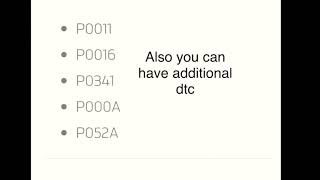
- P0016 — Camshaft Position / Crankshaft Position Correlation. This code strongly suggests the root cause is a stretched timing chain, which is affecting the timing of the camshaft that drives the HPFP.
- P053F — Cold Start Fuel Pressure Performance. This code is mentioned alongside P0088 in a TSB and indicates the pressure problem is particularly noticeable during cold starts.
Technical Service Bulletins (TSBs) & Recalls
- TT 01 20 05_4: Mentions that DTCs P0087 and P0088 may be set due to the high-pressure fuel pump being out of time (sync), which can be caused by timing chain stretch.
- TT011605_2045487: Titled 'ENHANCED DIAGNOSTIC ASSISTANCE FOR DTCS P0088 AND P1025', indicating a known issue requiring specific diagnostic focus.
- Audi TSB 2027306/4: Provides diagnostic assistance for fuel pressure sensor (G247) concerns when P0088 is present, suggesting replacement if scan tool data differs from a mechanical gauge by more than 500 kPa.
Platform-Specific Known Issues
- A Technical Service Bulletin (TT 01 20 05_4) explicitly states that P0088 can be set because the high-pressure fuel pump is out of time or synchronization, confirming a timing-related issue can be a root cause.
Mechanic-Grade Diagnostic Values
- High-Pressure Fuel Rail at Idle (VCDS) — expected: Approx. 40-50 bar (580-725 PSI).. Failure: Actual pressure is significantly higher than specified pressure (e.g., by 30+ bar).
- Fuel Pressure Sensor (G247) Signal Voltage — expected: Approx. 0.5V with Key On, Engine Off. Approx 2.2V at idle.. Failure: Signal voltage greater than 4.8V indicates a fault (short to power or internal sensor failure).
- Fuel Pressure Sensor (G247) Reference Voltage — expected: Constant 5V on Pin 3 (Black/Gray wire).. Failure: Voltage is absent or incorrect, indicating a wiring or ECM issue.
- Fuel Pressure Regulator Valve (N276) Resistance — expected: 1.5 to 11 Ω at approx. 20°C (68°F).. Failure: A reading outside this range indicates a faulty solenoid on the HPFP. Note: Some sources for the older FSI engine cite 25-35 ohms, which is incorrect for the TSI.
- Wiring Harness Resistance (G247 to ECM) — expected: Max 1.5 ohms.. Failure: Higher resistance indicates an open or corroded wire in the harness between the sensor and the Engine Control Module (J623).
Scan Tool Commands That Help
- VCDS (VAG-COM): Measuring Block Group 106 (or 140, 141, 230) — To monitor 'Fuel Rail Pressure (Specified)' vs. 'Fuel Rail Pressure (Actual)'. This is the primary screen for diagnosing P0088 to see if actual pressure is exceeding the requested value.
- VCDS (VAG-COM): Advanced Measuring Values (for UDS modules) — On newer models using the UDS protocol, this function replaces measuring blocks. Search for 'Fuel high pressure actual value' to monitor rail pressure.
- VCDS (VAG-COM): Output Test: Fuel Pump Electronics — To manually run the in-tank low-pressure fuel pump. This is useful for priming the system after replacing a filter or pump, or for testing the functionality of the low-pressure side.
Wiring & Ground Locations
- G247 Fuel Pressure Sensor Connector — On the end of the high-pressure fuel rail, underneath the intake manifold.. This is the primary sensor for the code. Pin 1 is ground (Brown), Pin 2 is signal (Gray/Blue), and Pin 3 is 5V reference (Black/Gray). Checking for 5V on pin 3 and ground on pin 1 is a key diagnostic step.
- J538 Fuel Pump Control Module — Under the rear passenger-side seat, mounted on or near the fuel pump access cover.. This module controls the in-tank low-pressure pump. A VW recall (20AE / NHTSA 17V-509) was issued for this part on 2009-2016 CCs as its failure can cause stalling. While it typically causes low pressure, an electrical fault could theoretically contribute to erratic fuel supply.
- T60 ECM Connector — The 60-pin connector at the Engine Control Module (ECM).. This is the termination point for the G247 sensor wiring. For example, Pin 41 on the T60 connector corresponds to the G247 signal wire, allowing for continuity checks of the harness.
Real Owner Repair Stories
- YouTube channel 'Simple Car Solutions' (Volkswagen Group vehicle with a common rail engine (TDI shown, but diagnosis is analogous)) — P0088 and P0087 codes, with a 30-100 bar difference between specified and actual fuel pressure, causing limp mode.
❌ Tried (didn't work) Initial diagnosis pointed to either the G247 sensor or the N276 regulator on the rail.
✅ What actually fixed it The entire fuel rail was replaced with a used unit that included both the G247 sensor and the N276 regulator. The narrator suspects the G247 sensor was the ultimate root cause.
OEM Part Supersession History
06H127025E, 06H127025G, 06H127025K, 06H127025M, 06H127025N, 06H127025P→06H127025Q— Multiple revisions by VW/Audi to improve reliability of the high-pressure fuel pump.
Heads up: Some older CBFA engine models may require special adapter fittings to use the newest revision (06H127025Q) pump. It is important to verify fitment.
Model Year Variations Within This Range
- 2009-2016: The 2.0T TSI engine came in two main versions: CCTA (49-state emissions) and CBFA (California/SULEV emissions). The CBFA has a secondary air injection system and other minor sensor differences. While this doesn't typically change the diagnosis for P0088, some replacement parts like the HPFP may have fitment notes specific to the CBFA engine code.
Helpful Videos

Used OEM Parts in Stock
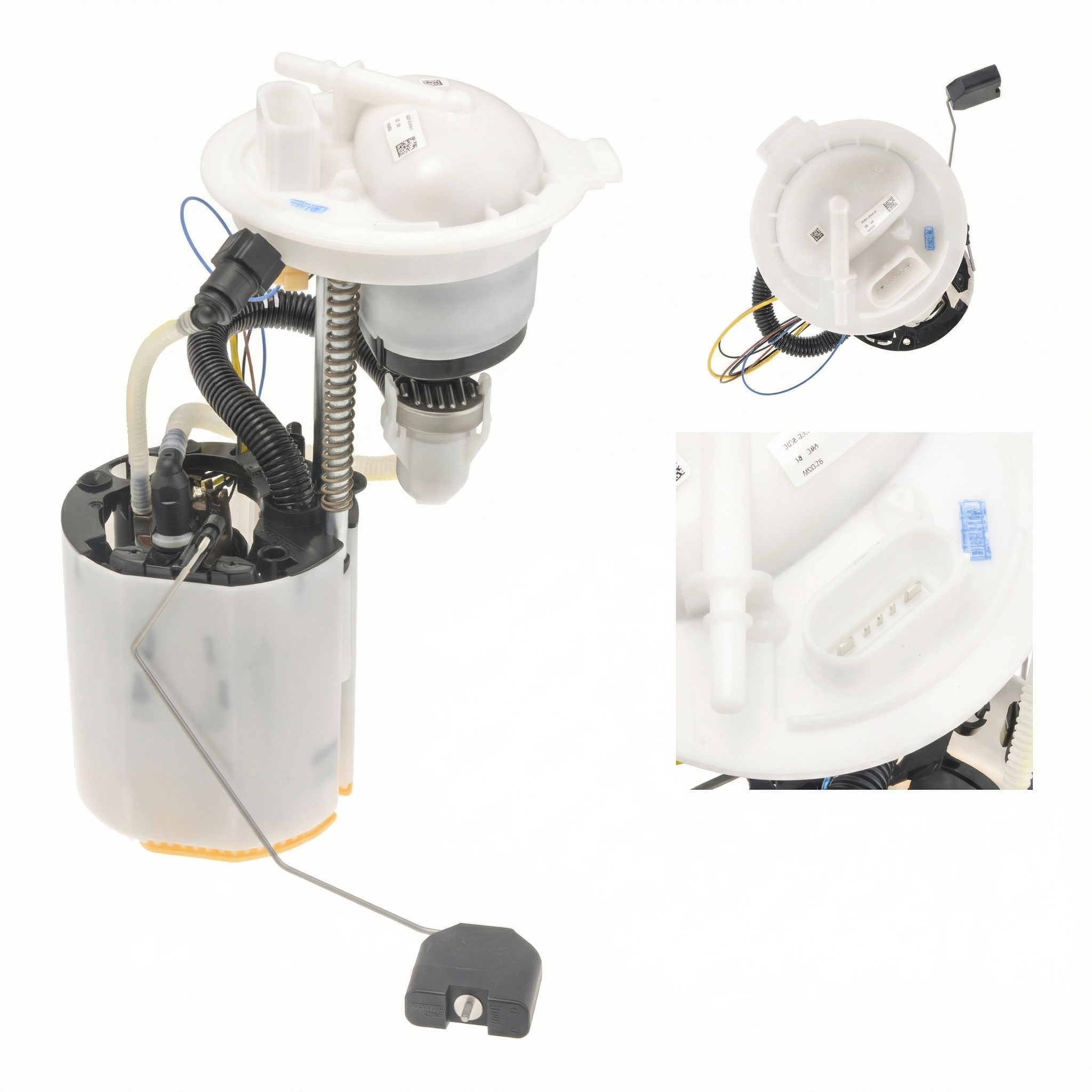
New Aftermarket Parts Available


The information in this article is provided for general reference and educational purposes only. Vehicle specifications, procedures, and part compatibility can vary by production date, trim level, and region. Always consult your vehicle's factory service manual and verify part numbers before purchasing or performing repairs. Safety-critical components such as airbags, seat belts, and braking systems should be installed by a qualified professional.
- Volkswagen CC:
- 🧭 Diagnostic Flowchart
- 🎬 Helpful Videos
- 🛍️ Shop This Part
- What's Unique About the 2009-2016 Volkswagen CC
- Symptoms You May Notice
- Most Likely Causes
- Rare But Worth Checking
- Diagnosis Steps
- Parts You'll Likely Need
- Related Codes That Often Appear With This One
- Technical Service Bulletins (TSBs) & Recalls
- Platform-Specific Known Issues
- Mechanic-Grade Diagnostic Values
- Scan Tool Commands That Help
- Wiring & Ground Locations
- Real Owner Repair Stories
- OEM Part Supersession History
- Model Year Variations Within This Range
- 🎟️ Get 5% Off