

P0088 on 2009-2014 Volkswagen GTI: Fuel Pressure Too High Causes and Fixes
On a 2009-2014 VW GTI, code P0088 is almost always caused by a failing High-Pressure Fuel Pump (HPFP). A faulty fuel rail pressure sensor (G247) is a less likely but possible cause. In some cases, especially if accompanied by code P0016, a stretched timing chain can be the root cause. Expect to pay $300-$500 for a new HPFP, with DIY replacement being moderately difficult (3/5).
- P0088 on your GTI means the high-side fuel pressure is too high.
- The most likely cause is a failing High-Pressure Fuel Pump (HPFP).
- Before replacing parts, use a scan tool to compare 'Requested' vs. 'Actual' fuel pressure to confirm the diagnosis.
- A faulty Fuel Rail Pressure Sensor is the second most likely cause.
- If you also have a P0016 code, the root cause is likely a stretched timing chain.
What's Unique About the 2009-2014 Volkswagen GTI
The EA888 engine in the Mk6 GTI uses a camshaft-driven High-Pressure Fuel Pump (HPFP) with an integrated electronic regulator (N276 valve). While these pumps are generally robust, P0088 is a well-documented code that often points directly to the HPFP failing internally. Unlike the older EA113 (FSI) engine, the cam follower is not considered a routine, high-wear maintenance item, though it can still fail. It's also crucial to note that aftermarket ECU tunes can sometimes trigger this code by requesting fuel pressures outside the stock parameters. Finally, because the HPFP is driven by the intake camshaft, a stretched timing chain—a known issue on the EA888 engine—can cause the pump to operate out of sync, leading to a real overpressure condition.
Generation note: This range covers the end of the Mk5 generation (late 2008-2009) and the entire Mk6 generation (2010-2014). Both use the 2.0T TSI (EA888) engine (codes CCTA/CBFA), and the causes and diagnostic procedures for P0088 are consistent across this year range for this specific engine.
Symptoms You May Notice
- Check Engine Light and/or EPC (Electronic Power Control) light illuminated
- Engine enters 'limp mode' with significantly reduced power and acceleration
- Hesitation or stumbling during acceleration
- Rough or unstable idle
- Engine stalling, especially under load or in stop-and-go traffic
- Hard starting
- Black smoke from the exhaust
- Smell of gasoline in the engine oil, and an oil level that appears too high on the dipstick
- High-pitched whining noise from the engine bay at idle
- Replacing the Fuel Rail Pressure Sensor (G247) when the HPFP is the actual cause. A faulty HPFP will generate real high pressure, which the sensor will accurately report. Always use scan tool data to compare requested vs. actual pressure before replacing the sensor.
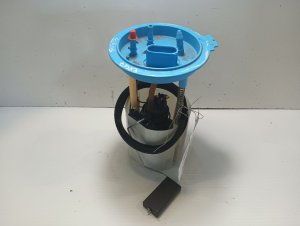
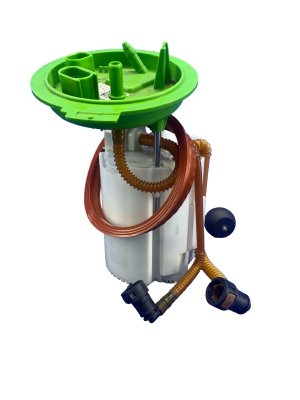
- Replacing the in-tank Low-Pressure Fuel Pump (LPFP). The LPFP supplies fuel to the HPFP; it cannot create excessive pressure in the high-pressure rail. P0088 is specific to the high-pressure side of the system. A faulty low-pressure sensor (G410) can cause other codes but is not a direct cause of P0088.
Most Likely Causes
- Failing High-Pressure Fuel Pump (HPFP) 🔴 High Probability → Shop Fuel Pump The internal pressure regulating solenoid valve (N276) on the HPFP can fail or stick, causing the pump to continuously build pressure beyond the specified target. This is the most common failure mode leading to P0088 on this platform, as confirmed by numerous owner experiences.
How to confirm: Use a diagnostic scan tool (like VCDS) to monitor live data for 'Requested Fuel Rail Pressure' and 'Actual Fuel Rail Pressure'. If the 'Actual' pressure is consistently much higher than 'Requested' (e.g., 100+ bar when 40-50 bar is requested at idle), the HPFP is the primary suspect. A dealership can also perform an output test on the N276 solenoid; if it clicks, VW considers the pump functional, though intermittent mechanical failures can still occur.
Typical fix: Replace the High-Pressure Fuel Pump. It is also wise to inspect the camshaft follower for wear when replacing the pump.
Est. part cost: $300-$550 - Faulty Fuel Rail Pressure Sensor (G247) 🟡 Medium Probability → Shop Fuel Pressure Sensor The sensor provides the pressure reading to the ECM. It can fail and send an incorrectly high voltage signal, tricking the ECM into thinking the pressure is too high even when it's normal.
How to confirm: With the ignition on but the engine off, the fuel rail pressure should read close to the low-pressure system's value (approx. 5-7 bar). If the scan tool shows a very high pressure reading in this state, the sensor is likely faulty. If the reading seems plausible but is incorrect, it can be confirmed by checking against a mechanical gauge, though this requires special tools.
Typical fix: Replace the Fuel Rail Pressure Sensor located on the fuel rail.
Est. part cost: $50-$100 - Stretched Timing Chain ⚪ Low Probability → Shop Engine Timing Chain The EA888 engine is known for timing chain stretch over time, especially with the original tensioner design. Since the intake camshaft drives the HPFP, incorrect cam timing can affect the pump's actuation and lead to pressure regulation issues, causing a real overpressure condition.
How to confirm: Check for companion code P0016 (Crank/Cam Position Correlation). Use a scan tool (like VCDS) to check the camshaft phase adaptation value (MVB 093 or IDE00182). A value of -5 degrees or more indicates significant chain stretch requiring replacement. One owner found the fix was a full timing service after a previous shop installed the cam one tooth off.
Typical fix: Replace the timing chain, tensioner, and guides. This is a significant repair.
Est. part cost: $400-$700 for a full kit
Rare But Worth Checking
- Aftermarket ECU Tune: Aggressive aftermarket software (tunes), such as those from REVO, can sometimes request fuel pressure targets that the stock system struggles to meet or regulate, occasionally triggering P0088, especially at low RPM. If the car is tuned, flashing back to the stock map is a useful diagnostic step.
- Wiring Harness Issue: A short or break in the wiring to the fuel rail pressure sensor (G247) or the HPFP's regulating valve (N276) can cause erratic signals and trigger the code.
- Boost Leak: In a documented forum case, a user found that a significant boost leak from a cracked intercooler pipe was the root cause of their P0088 code. The incorrect air metering likely confused the ECU's fuel calculations, leading to the over-pressure condition. The dealer had already replaced fuel system components to no avail.
Diagnosis Steps
- Scan for Codes: Read all stored fault codes with a VW-compatible scanner. Pay close attention to any other codes that may be present, especially P0016, P1025, or misfire codes.
- Analyze Live Fuel Pressure Data: Using a capable scan tool (VCDS, OBDeleven), graph the 'Requested Fuel Rail Pressure' and 'Actual Fuel Rail Pressure' at idle and during a short drive. At idle, requested pressure should be around 40-50 bar.
- Interpret Data: If 'Actual' pressure is significantly and consistently higher than 'Requested' (e.g., actual is 125 bar when 40 bar is requested), the HPFP is the primary suspect. If 'Actual' pressure is erratic, reads high with the engine off, or doesn't change, suspect the G247 sensor or its wiring.
- Check for Timing Chain Stretch: If P0016 is present or if fuel components seem okay, investigate timing chain stretch. Use a scan tool to view the camshaft phase adaptation value (e.g., VCDS Measuring Value Block 093 or Advanced Measuring Value IDE00182). A value greater than -4.5° to -5.0° indicates a stretched chain requiring service.
- Inspect Wiring: Visually inspect the wiring and connectors for the HPFP (N276 valve) and the G247 fuel rail pressure sensor for any signs of damage, corrosion, or looseness.
- Consider ECU Tune: If the vehicle has aftermarket software, temporarily flash it back to the stock file to see if the fault clears.
- Check for Boost Leaks: If fuel system diagnosis is inconclusive, perform a smoke test on the intake system to check for hidden boost leaks that could be affecting air/fuel calculations.
Parts You'll Likely Need
- High-Pressure Fuel Pump (HPFP)
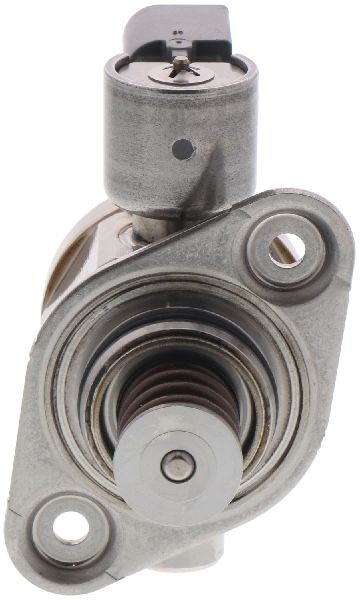
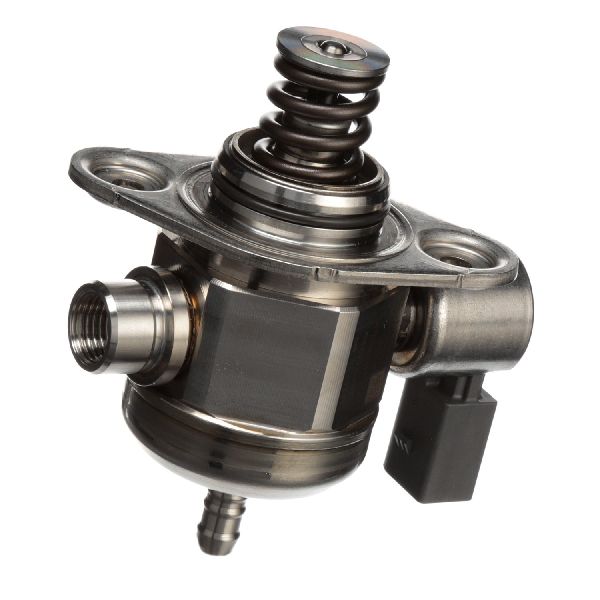
(OEM #06H127025Q (supersedes 06H127025P, 06H127025N, 06H127025M, etc.))— This is the most common cause of P0088 due to internal failure of the pump or its integrated pressure regulator (N276).
Trusted brands: Bosch (OEM), Hitachi (OEM), Genuine VW/Audi
OEM price range: $400-$550
Aftermarket price range: $300-$450 - Fuel Rail Pressure Sensor
(OEM #06J906051D (verify by VIN))— The second most likely cause. It can send false high-pressure readings to the ECM.
Trusted brands: Bosch (OEM), Standard Motor Products, Genuine VW/Audi
OEM price range: $50-$100
Aftermarket price range: $30-$70
Related Codes That Often Appear With This One
- P0016 — Indicates a correlation issue between the crankshaft and camshaft, which strongly suggests a stretched timing chain. Since the cam drives the HPFP, this timing issue can be the root cause of the P0088 pressure fault.
- P030x (Misfire Codes) — The incorrect fuel pressure can lead to poor combustion, causing misfires in one or more cylinders. A user on Reddit reported intermittent misfires along with P0088 before an HPFP replacement fixed the issue.
- P1025 — This is a VW-specific code for 'Fuel Pressure Regulation Valve (N276): Mechanical Failure'. Seeing it with P0088 is a very strong indicator that the HPFP has failed internally.
Technical Service Bulletins (TSBs) & Recalls
- VW TSB 2025746: Notes that P0088 can be stored due to voltage drop issues on some models, though less common for the GTI.
- VW TSB TT 01-20-05 (also 2060799): While primarily for the 3.6L engine, this TSB establishes the official link between stretched timing (camshaft adaptation values over 8 degrees on that platform) and P0088, a principle that also applies to the 2.0T.
- Bulletin #TT 01 20 05_4: A manufacturer service bulletin notes that DTCs P053F, P0087, P0088, and P1025 may set due to the high pressure fuel pump being out of time or sync.
Platform-Specific Known Issues
- Confirmed HPFP Failure on Stock GTI: A Reddit user on r/MechanicAdvice with a stock Mk6 GTI reported the P0088 code along with misfires. The shop confirmed the issue and a new HPFP resolved all faults.
- Intermittent P0088 After HPFP Replacement: A user on r/GolfGTI chased an intermittent P0088 for months on their 2012 GTI. They had already replaced the HPFP, which fixed it for 2,000 miles before the code returned. This highlights how intermittent the fault can be.
- Timing Chain as the Root Cause: → Shop Engine Timing Chain A Reddit user with a 2012 GTI ultimately found the solution to their persistent P0088 was a full timing chain overhaul. A previous shop had installed the camshaft one tooth advanced, and as the chain wore, the ECU could no longer compensate, causing the pressure fault.
- Gasoline in Oil: A user on golfmk6.com discovered their P0088 code was accompanied by a high oil level and a strong smell of fuel in the oil, indicating that the high-pressure condition was forcing fuel past the piston rings and into the crankcase.
Mechanic-Grade Diagnostic Values
- Low-Pressure Fuel System Pressure (Key On, Engine Off) — expected: 4.0 - 6.0 bar (58 - 87 PSI). Failure: Pressure below this range indicates a problem with the in-tank pump or its controller.
- High-Pressure Fuel Rail at Idle (VCDS Live Data) — expected: Approx. 40-50 bar (580-725 PSI). Failure: Actual pressure is consistently and significantly higher than specified pressure (e.g., spiking to 100-125 bar).
- Fuel Pressure Regulator Valve (N276) Resistance — expected: 1.0 to 11.0 Ω at ~20°C (68°F). Failure: A reading outside this range (especially 0 Ohms) indicates a shorted or failed solenoid coil within the HPFP.
- Fuel Rail Pressure Sensor (G247) Signal Voltage — expected: ~0.5V with Key On, Engine Off. ~2.2V at idle.. Failure: Voltage greater than 4.8V suggests a short to power or internal sensor failure.
- Fuel Rail Pressure Sensor (G247) Reference Voltage — expected: Constant 5V on Pin 3 (Black/Gray wire). Failure: Voltage is absent or incorrect, pointing to a wiring or ECM issue.
- Camshaft Phase Adaptation (VCDS MVB 093 or IDE00182) — expected: Between -5.0° and +5.0° at warm idle.. Failure: A value consistently outside +/- 5° (or an absolute limit of +/- 8°) is a strong indicator of a stretched timing chain.
Scan Tool Commands That Help
- VCDS / ODIS: N276 - Fuel Pressure Regulator Valve Output Test — This is a bidirectional test to verify the electrical function of the HPFP's internal regulator. When activated, an audible 'click' should be heard from the pump. A lack of a click points to a failed solenoid, condemning the HPFP.
- VCDS: Measuring Value Blocks (MVB) 106, 140, 141 — For non-UDS controllers, these blocks show specified vs. actual fuel rail pressure, which is the primary data needed to diagnose P0088.
- VCDS: Advanced Measuring Values (UDS) — For UDS controllers, search for values like 'IDE00182' (specified) and 'IDE00184' (actual) to compare fuel pressures.
Wiring & Ground Locations
- G247 Connector — On the left-hand side of the high-pressure fuel rail as it sits in the intake manifold.. This is the primary sensor reporting the pressure fault. Checking for 5V reference on Pin 3 and good ground on Pin 1 is a key diagnostic step before replacing the sensor.
- N276 Connector — On top of the High-Pressure Fuel Pump (HPFP).. This connector provides the signal from the ECM to regulate fuel pressure. Damage here can cause the pump to default to maximum pressure.
- J538 Fuel Pump Control Module — Under the rear passenger-side seat, near the fuel pump access cover.. This module controls the in-tank low-pressure pump. While its failure typically causes low pressure, an electrical fault could contribute to erratic fuel supply to the HPFP.
Real Owner Repair Stories
- Reddit user on r/golfgti (2012 GTI, Manual Transmission, 116,000 miles) — Intermittent P0088 code, especially in stop-and-go traffic. CEL would sometimes turn off on its own after a long drive.
❌ Tried (didn't work) Replaced High-Pressure Fuel Pump (HPFP), Replaced Fuel Rail Pressure Sensor (G247)
✅ What actually fixed it A full timing overhaul. A previous shop had replaced the timing chain tensioner but installed the exhaust cam one tooth advanced. This, combined with subsequent chain wear, caused the timing to be too far out of spec for the ECU to compensate, leading to the fuel pressure fault. - golfmk6.com forum user (MK6 GTI (year not specified)) — P0088 code would appear about once a week with normal driving, and could be forced to appear more easily.
❌ Tried (didn't work) Dealership tested the entire fuel system., Dealership replaced fuel pressure sensors.
✅ What actually fixed it Fixing a significant boost leak. The incorrect air metering was disrupting the ECU's air/fuel ratio calculations, causing it to command excessive fuel pressure. - NHTSA ODI #10661504 — An owner reported that their vehicle lacked any power and could barely pull after producing codes P1007, P0088, and P0087.
- NHTSA ODI #10659070 — An owner reported that their engine light came on and the dealer pulled codes P0087 and P0088, indicating fuel pressure was too high and too low at the same time, leading to a recommendation to replace the fuel rail.
OEM Part Supersession History
06H127025E, 06H127025G, 06H127025K, 06H127025M, 06H127025N, 06H127025P→06H127025Q— Standard part revisions by the manufacturer to improve reliability and performance.
Heads up: All previous revisions are superseded by 06H127025Q. It is critical to install the latest revision when replacing the pump.
Model Year Variations Within This Range
- 2009-2014: The 2.0T TSI engine came in two main variants: CCTA (49-state emissions) and CBFA (California SULEV emissions). The CBFA includes a secondary air injection system and a third oxygen sensor. While the core high-pressure fuel system and causes for P0088 are the same, be aware of these differences when ordering parts or tracing vacuum/exhaust lines.
Diagnostic Flowchart
Real Owner Stories
Aggregated from forums and TSBs cited above. Mileages and costs reflect what owners reported in those sources.
Volkswagen Mk6 GTI (Stock)
Symptoms: Experienced a persistent P0088 code accompanied by engine misfires.
What fixed it: Replaced the High-Pressure Fuel Pump (HPFP).
Source hint: reddit.com/r/MechanicAdvice: 'Does anyone know common causes for P0088 in the mk6 gti?' (2022)
2012 Volkswagen GTI 2.0T
Symptoms: Chased an intermittent P0088 code for months. Replaced the HPFP and sensor, which fixed the issue for 2,000 miles before the code returned.
What fixed it: A complete timing chain service. A previous shop had installed the camshaft one tooth advanced, and as the chain wore, the ECU could no longer compensate.
Source hint: reddit.com/r/GolfGTI: 'I'm chasing a code p0088 in my GTI...' (2022)
Volkswagen Mk6 GTI 2.0T
Symptoms: Triggered a P0088 fault code. The dealership initially replaced fuel system parts, but the code persisted.
What fixed it: Found and repaired a hidden boost leak, which was throwing off the air/fuel calculations.
Source hint: golfmk6.com: 'P0088 fault code' (2012)
Related OBD-II Codes
Frequently Asked Questions
Does TSB 2025746 apply to my 2009-2014 GTI for code P0088?
Can a stretched timing chain cause a P0088 fuel pressure code on the EA888 2.0T engine?
How can I check if my GTI's timing chain is stretched using VCDS?
Why does my oil smell like gasoline and show a high level on the dipstick with a P0088 code?
Can an aftermarket ECU tune cause a P0088 code on my Mk6 GTI?
What should the requested fuel rail pressure be at idle on my 2.0T TSI?
Used OEM Parts in Stock
New Aftermarket Parts Available



The information in this article is provided for general reference and educational purposes only. Vehicle specifications, procedures, and part compatibility can vary by production date, trim level, and region. Always consult your vehicle's factory service manual and verify part numbers before purchasing or performing repairs. Safety-critical components such as airbags, seat belts, and braking systems should be installed by a qualified professional.
- Volkswagen GTI:
- 🧭 Diagnostic Flowchart
- 🛍️ Shop This Part
- What's Unique About the 2009-2014 Volkswagen GTI
- Symptoms You May Notice
- Most Likely Causes
- Rare But Worth Checking
- Diagnosis Steps
- Parts You'll Likely Need
- Related Codes That Often Appear With This One
- Technical Service Bulletins (TSBs) & Recalls
- Platform-Specific Known Issues
- Mechanic-Grade Diagnostic Values
- Scan Tool Commands That Help
- Wiring & Ground Locations
- Real Owner Repair Stories
- OEM Part Supersession History
- Model Year Variations Within This Range
- Real Owner Stories
- Volkswagen Mk6 GTI (Stock)
- 2012 Volkswagen GTI 2.0T
- Volkswagen Mk6 GTI 2.0T
- Related OBD-II Codes
- Frequently Asked Questions
- 🎟️ Get 5% Off