

P0088 on 2012-2018 VW Passat: Fuel Pressure Too High Causes & Fixes
For a 2012-2018 Passat with a direct-injection gasoline engine (TSI/VR6), P0088 almost always points to a failing High-Pressure Fuel Pump (HPFP) or a faulty Fuel Rail Pressure Sensor (G247). On the 3.6L VR6, this code is also a strong indicator of a jumped HPFP timing chain. Expect to pay $400-$800 for a pump replacement or $150-$300 for a sensor replacement at a shop. A timing repair can exceed $1500.
- P0088 on a 2012-2018 Passat indicates dangerously high fuel pressure and should be addressed immediately.
- The most likely cause is a failed High-Pressure Fuel Pump (HPFP) or a bad Fuel Rail Pressure Sensor (G247).
- This is not a beginner-friendly DIY repair due to the high risk of fire and personal injury from the high-pressure fuel system.
- When replacing the HPFP, it is mandatory to also replace the cam follower to prevent damage to the new pump.
- Always check for VW-specific TSBs, as the manufacturer has provided specific guidance for diagnosing this exact code.
What's Unique About the 2012-2018 Volkswagen PASSAT

The direct-injection gasoline engines in this Passat generation (1.8T, 2.0T, 3.6L VR6) use a high-pressure fuel system that operates at thousands of PSI. This system is anchored by a camshaft-driven High-Pressure Fuel Pump (HPFP). These pumps are a known failure point and can even go 'out of time' with the engine, as noted in VW's own service bulletins, making them a primary suspect for the P0088 code. The older 2.5L 5-cylinder engine (found in models up to 2014) is port-injected and does not have this HPFP system, making it far less likely to experience this specific fault.
Diagnostic Flowchart

Tap your situation to follow the diagnostic path that matches what you're seeing on this vehicle.
Symptoms You May Notice
- Check Engine Light and/or EPC (Electronic Power Control) light on
- Engine enters 'limp mode' with drastically reduced power
- Rough running or unstable idle
- Engine stalling or difficulty starting
- Reduced engine power and poor acceleration
- Black smoke from the exhaust
- Noticeable gasoline smell
- High-pitched whining noise from the engine area
- Replacing the in-tank low-pressure fuel pump. P0088 is specific to the high-pressure side of the fuel system. While the low-pressure pump can cause other issues (like P0087 - pressure too low), it will not cause pressure to be too high.
- Replacing the G247 sensor when the HPFP is the actual cause. A faulty HPFP can produce real high pressure, which the sensor accurately reports. Always verify with live data before replacing the sensor.
Most Likely Causes

- High-Pressure Fuel Pump (HPFP) Failure 🔴 High Probability → Shop Fuel Pump The cam-driven HPFP is a known wear item on VW's direct-injection engines. Internal failure of the integrated pressure regulator (N276) or mechanical wear can cause over-pressurization. Using non-OEM or cheap aftermarket pumps is a common cause of repeat failures.
How to confirm: Use a scan tool to compare 'Requested Fuel Rail Pressure' vs. 'Actual Fuel Rail Pressure'. If 'Actual' is consistently and significantly higher than 'Requested' (e.g., actual pressure is 100+ bar when 40-50 bar is requested at idle), the HPFP is the primary suspect.
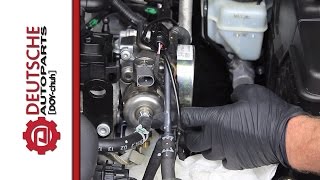
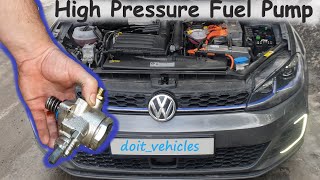
Typical fix: Replace the High-Pressure Fuel Pump and the cam follower that drives it. The follower is a small, inexpensive part that can cause catastrophic failure of the new pump if not replaced. Using a quality OEM or OEM-supplier 🎬 See this step-by-step guide for replacing the 2.0T HPFP. (Bosch, Hitachi) part is critical.
Est. part cost: $250-$600 - Faulty Fuel Rail Pressure Sensor (G247) 🟡 Medium Probability → Shop Fuel Pressure Sensor The sensor can fail and send an erroneously high voltage signal to the ECM, making the computer believe the pressure is too high even when it's normal.
How to confirm: If scan tool readings for fuel pressure seem stuck at a maximum value, are clearly illogical, or do not change when the engine is off, the sensor is suspect. You can also back-probe the sensor to check its voltage output against specifications.
Typical fix: Replace the fuel rail pressure sensor. This often requires removing the intake manifold for access on TSI engines and can be difficult to reach.
Est. part cost: $50-$150 - Timing Chain / HPFP Timing Issue (Especially 3.6L VR6) ⚪ Low Probability → Shop Engine Timing Chain As mentioned in TSB TT 01 20 05_4, the HPFP can become out of sync with the engine's timing, causing pressure issues. This is a well-documented issue on the 3.6L VR6, where the HPFP can jump time even if the main cam/crank timing is still correct.
How to confirm: This is an advanced diagnosis. A technician would first verify fuel pressure is excessively high at idle (>60 bar). Then, they would check the engine's primary timing (cam/crank). If that is correct, the HPFP's specific timing alignment must be physically inspected, which on the 3.6L requires removing the vacuum pump 🎬 Watch: Diagnosing high fuel pressure on the 3.6L VR6 engine. to see the drive shaft alignment.
Typical fix: If the HPFP has jumped time, the root cause (e.g., chain tensioner failure, chain stretch) must be addressed. This often involves a full timing chain service in addition to potentially replacing the HPFP.
Est. part cost: $600-$1500+
Rare But Worth Checking
- ECM Software Glitch: In some cases, an outdated Engine Control Module software version can cause false codes. It's worth checking with a dealer or qualified shop for any available software updates before replacing expensive hardware.
- Wiring Issue: Damage to the wiring for the fuel rail pressure sensor can cause a short to power, resulting in a constant high-voltage signal that the ECM interprets as maximum pressure. Rodent damage to harnesses is a known, albeit rare, cause.
Diagnosis Steps
- Connect a VW-specific scan tool (like VCDS) to read fault codes and view live data.
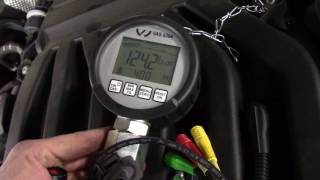
- Go to the engine measuring blocks. For CAN modules, use Group 106. For UDS modules, search for Advanced Measuring Values 🎬 Watch: How to check live fuel pressure data using VCDS. like 'IDE00182' (specified) and 'IDE00184' (actual).
- Monitor 'Requested Fuel Rail Pressure' vs. 'Actual Fuel Rail Pressure' at idle. If 'Actual' pressure is significantly higher than 'Requested' (e.g., 125 bar / 1800 PSI when 40-50 bar is requested), the problem is likely real over-pressurization from the HPFP or a timing issue.
- If the 'Actual' pressure reading is erratic, nonsensical, or stuck at a maximum value regardless of engine state, inspect the G247 fuel rail pressure sensor and its wiring connector for damage or corrosion.
- Visually inspect the HPFP area for any signs of fuel leaks.
- For the 3.6L VR6 specifically, if pressure is confirmed to be high, check cam/crank timing correlation. If correct, the next step is to inspect the HPFP timing alignment itself, as noted in TSB TT 01 20 05_4.
- Before replacing parts, check with a dealer or qualified shop for any available ECM software updates.
Parts You'll Likely Need

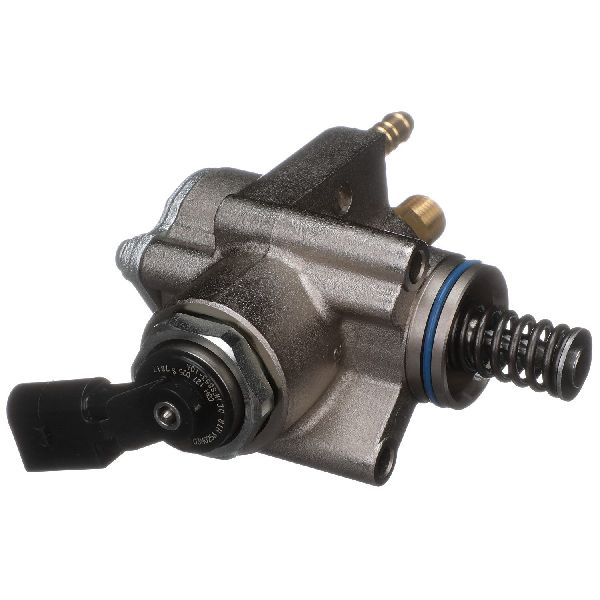
- High-Pressure Fuel Pump (HPFP)
(OEM #06L127025R (example for 2.0T, verify by VIN))— This is the most common mechanical failure point for P0088. The internal pressure regulator often fails, or the pump itself wears out.
Trusted brands: Bosch, Hitachi
OEM price range: $400-$650
Aftermarket price range: $250-$450 - Fuel Rail Pressure Sensor (G247)
(OEM #06J906051D (example, verify by VIN))— This sensor provides the pressure reading to the ECM. A faulty sensor can send incorrect high-pressure signals, triggering the code.
Trusted brands: Bosch, Standard Motor Products
OEM price range: $100-$180
Aftermarket price range: $50-$100 - HPFP Cam Follower
(OEM #06L109311 (example for 2.0T, verify by VIN))— This small metal tappet sits between the camshaft and the HPFP. It is a critical wear item and MUST be replaced with the HPFP to prevent immediate damage to the new pump.
Trusted brands: INA, Genuine VW/Audi
OEM price range: $30-$50
Aftermarket price range: $20-$40
Related Codes That Often Appear With This One
- P0087 — Fuel Rail/System Pressure - Too Low. It's common to see both codes if the HPFP is failing erratically or if there's a control issue causing both spikes and drops in pressure.
- P0191 — Fuel Rail Pressure Sensor Circuit Range/Performance. This code points more specifically toward a problem with the sensor or its electrical circuit, rather than a purely mechanical pressure issue.
- P053F — Cold Start Fuel Pressure Performance. This indicates the pressure was out of specification specifically during a cold start, as mentioned in TSB TT 01 20 05_4.
- P0016 — Bank 1: Camshaft Position Sensor (G40) / Engine Speed Sensor (G28): Incorrect Correlation. This code appearing with P0088 is a strong indicator of a larger engine timing issue, which could also affect the HPFP timing.
Technical Service Bulletins (TSBs) & Recalls
- TT 01 20 05_4: Mentions DTCs P053F, P0087, P0088, P1025 may set due to the high pressure fuel pump being out of time (sync).
- TB231601: Mentions MIL on, No start, Running rough with DTCs P0087,P0088 or P0191 stored in ECM Fault memory.
Platform-Specific Known Issues
- HPFP Timing on 3.6L VR6: TSB #TT 01 20 05_4 explicitly states that P0088 can be caused by the high-pressure fuel pump being 'out of time (sync)'. A diagnostic video on a 2012 Passat 3.6L confirmed the HPFP jumped time while the main engine timing remained correct, causing fuel pressure to sit at 125 bar at idle. The fix required a full timing chain service.
- Aftermarket Part Quality: A documented owner experience on a related Audi platform showed that a brand new, but cheap knock-off, HPFP was the cause of a persistent P0088 code. The issue was only resolved by replacing it with a known-good OEM-supplier (Hitachi) pump. This highlights the importance of using high-quality replacement parts for this system.
Mechanic-Grade Diagnostic Values
- High-Pressure Fuel Rail at Idle (TSI & VR6) — expected: 40-50 bar (approx. 580-725 PSI). Failure: Consistently above 60 bar, with readings of 125 bar (1800 PSI) indicating a severe over-pressurization issue.
- Resistance of HPFP Fuel Pressure Regulator Valve (N276) — expected: 1.5 to 11 Ω (at approx. 20°C/68°F). Failure: A reading of 0 Ω indicates a short circuit within the valve, requiring pump replacement.
- Duty Cycle of HPFP Regulator Valve (N276) at Idle — expected: Varies based on demand, but should be actively modulated by the ECM.. Failure: An extremely high, commanded duty cycle (e.g., 97%) while actual pressure is also extremely high (125 bar) suggests the ECM is trying to reduce pressure but cannot, pointing to a mechanical pump or timing issue rather than a control fault.
- Heat Soak Pressure Rise Test (Engine Off) — expected: After shutting off a hot engine, pressure should rise from idle spec (e.g., 50 bar) to over 60 bar within a few minutes due to fuel expansion.. Failure: If pressure does not rise or drops, it could indicate a leaking injector or check valve, though this is more commonly associated with low pressure faults.
Scan Tool Commands That Help
- ODIS (VW/Audi Dealer Tool): Test Plan for N276 - Fuel Pressure Regulator Valve — This guided function will actuate the N276 valve. The technician must listen for an audible 'click' from the HPFP. If no click is heard and pressure is low, the bulletin suggests replacing the HPFP. This can help confirm if the regulator is mechanically stuck.
Wiring & Ground Locations
- J757 - Engine Component Power Supply Relay — Located in the E-box in the engine compartment.. On some TSI engines, the J757 relay supplies power to the N276 Fuel Pressure Regulator Valve on the HPFP. A failure of this relay or its associated fuse (e.g., Fuse 23 in the engine bay fuse box on a GTI) can cut power to the regulator, potentially causing it to default to a state that causes pressure issues.
Real Owner Repair Stories
- YouTube channel 'Positive Lead Diagnostics' (2012 Volkswagen Passat 3.6L VR6) — Check Engine Light and EPC light on, codes P0088, P0087, P053F. Scan tool showed actual fuel pressure at 125 bar (1800 PSI) at idle, when specified was 40-50 bar.
❌ Tried (didn't work) Initial diagnosis confirmed the G247 sensor was reading correctly by comparing its output to a mechanical pressure gauge., Scope analysis of cam/crank correlation showed the primary engine timing was correct.
✅ What actually fixed it The high-pressure fuel pump had jumped timing independently of the engine's main timing chains. Physical inspection after removing the vacuum pump revealed the HPFP drive shaft was misaligned. The final repair was a full timing chain and guide replacement to correct the HPFP timing. - Ross-Tech Forums user 'Damadster' (2012 Passat 3.6L VR6) — Rough idle, EPC and engine light on, multiple fault codes including low fuel pressure.
❌ Tried (didn't work) Replacing the High-Pressure Fuel Pump (HPFP) did not solve the problem initially.
✅ What actually fixed it The user unplugged the HPFP regulator valve connector, ran the engine briefly (which set an open circuit code), then turned the car off and plugged the connector back in. This action resolved the fuel pressure problem, suggesting an intermittent connection or a temporary reset of the component was needed. - AudiWorld Forums user 'Tstealth32' (Audi D3 Platform (related HPFP system)) — Code for N276 fuel pressure regulating valve - short to plus. Very rough engine.
❌ Tried (didn't work) Diagnosing a single side of the V-engine; the pumps feed both rails together.
✅ What actually fixed it The user measured the resistance of the N276 valves on the HPFPs and found they read 0 ohms. New replacement HPFPs had a resistance of approximately 2 ohms. Replacing both HPFPs with the correct resistance value resolved the issue.
Model Year Variations Within This Range
- 2012-2015: The 3.6L VR6 engine was available during these years, which has a unique chain-driven HPFP setup highly susceptible to timing-related P0088 faults, as documented in TSBs and repair videos.
- 2014-2018: The 1.8T TSI (EA888) engine replaced the 2.5L 5-cylinder. These TSI engines use a direct-injection system with an HPFP, making them susceptible to P0088, whereas the old 2.5L was port-injected and would not typically set this specific code.
Helpful Videos

Used OEM Parts in Stock
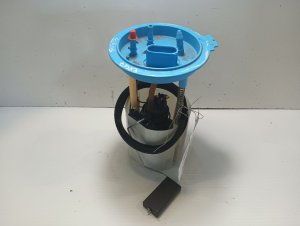
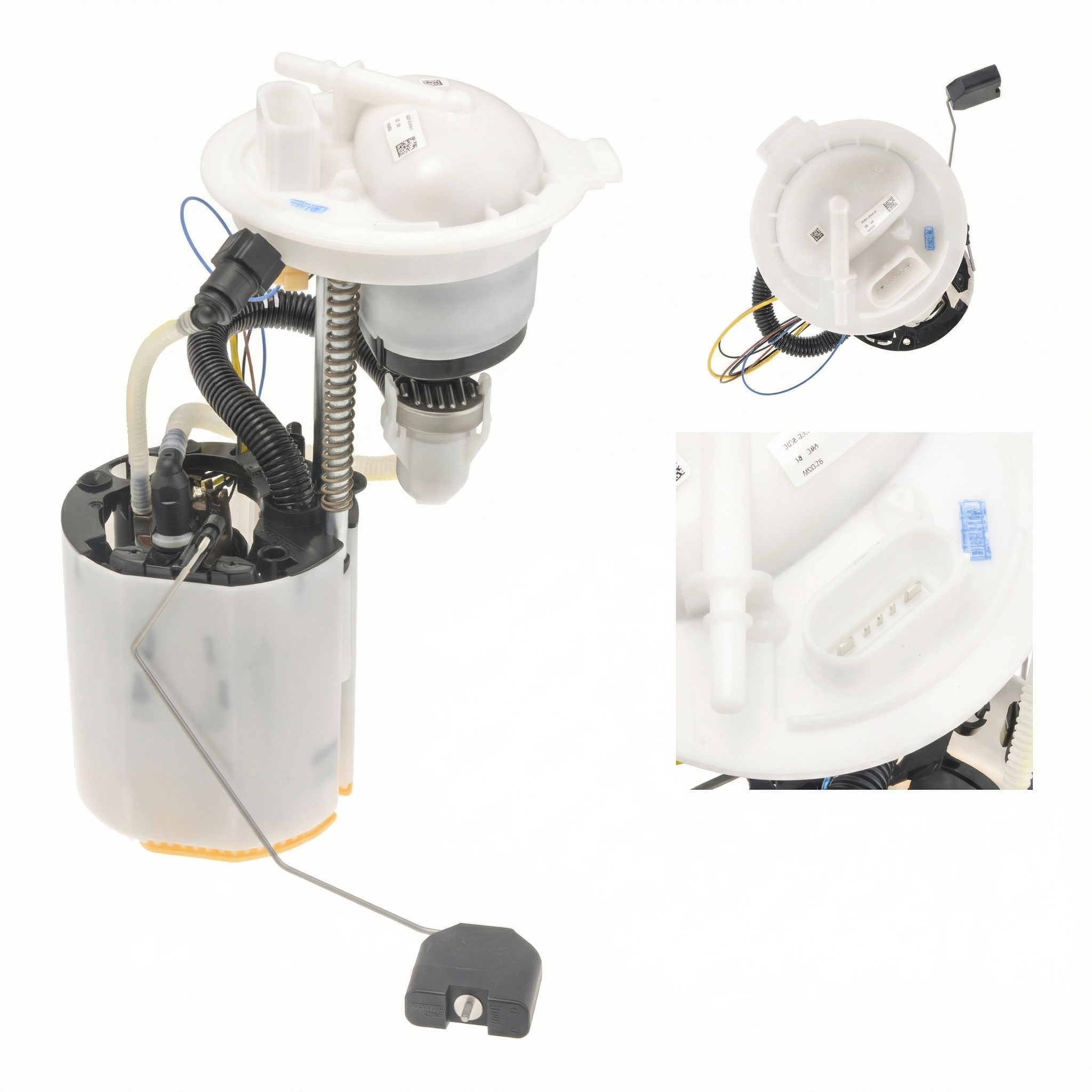
New Aftermarket Parts Available
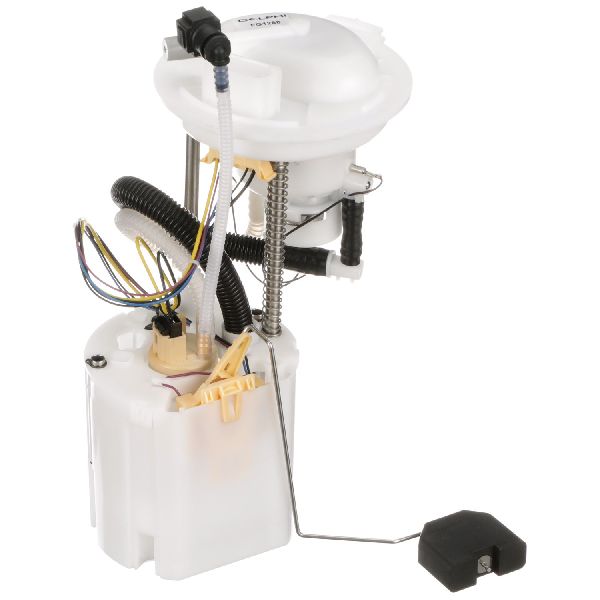


The information in this article is provided for general reference and educational purposes only. Vehicle specifications, procedures, and part compatibility can vary by production date, trim level, and region. Always consult your vehicle's factory service manual and verify part numbers before purchasing or performing repairs. Safety-critical components such as airbags, seat belts, and braking systems should be installed by a qualified professional.
- Volkswagen PASSAT:
- 🧭 Diagnostic Flowchart
- 🎬 Helpful Videos
- 🛍️ Shop This Part
- What's Unique About the 2012-2018 Volkswagen PASSAT
- Symptoms You May Notice
- Most Likely Causes
- Rare But Worth Checking
- Diagnosis Steps
- Parts You'll Likely Need
- Related Codes That Often Appear With This One
- Technical Service Bulletins (TSBs) & Recalls
- Platform-Specific Known Issues
- Mechanic-Grade Diagnostic Values
- Scan Tool Commands That Help
- Wiring & Ground Locations
- Real Owner Repair Stories
- Model Year Variations Within This Range
- 🎟️ Get 5% Off