

P0089 on 2004-2011 Audi A6 3.2L V6 FSI: Fuel Pressure Regulator Performance Causes and Fixes
For the Audi A6 3.2L FSI, code P0089 is most often caused by a failing high-pressure fuel pump (HPFP) or its associated cam follower. Before replacing the expensive pump, inspect the inexpensive cam follower for wear, as its failure is a very common and critical issue on this engine. A worn follower can quickly destroy the HPFP and camshaft, leading to a multi-thousand dollar repair.
- P0089 on the Audi A6 3.2L FSI indicates a fuel pressure mismatch, usually on the high-pressure side.
- **ALWAYS** inspect the HPFP cam follower first. It's a cheap part that can prevent a very expensive repair.
- Do not replace any parts without first logging specified vs. actual fuel pressure with a proper scan tool.
- The most likely culprits, in order, are: a worn cam follower, a failed HPFP, or a bad high-pressure sensor.
- When replacing the HPFP, it is mandatory to also replace the cam follower.
What's Unique About the 2004-2011 Audi A6
The C6 Audi A6 with the 3.2L FSI engine (codes AUK, BKH), like many VW/Audi direct-injection engines of this era, has a critical weak point: the cam follower for the high-pressure fuel pump (HPFP). This small, inexpensive part is a wear item, but if neglected, it can fail completely. A failure can lead to poor fuel pressure (triggering P0089) and potentially destroy the HPFP and the camshaft, resulting in a multi-thousand dollar repair. Therefore, any P0089 diagnosis on this engine must begin with an inspection of the cam follower, which many owners recommend checking every 30,000-40,000 miles.
Symptoms You May Notice
- Check Engine Light and/or EPC (Electronic Power Control) light is on
- Engine hesitation or stumbling during acceleration
- Rough idle
- Loss of engine power
- Engine cranks for a long time before starting
- Engine stalling
- Reduced fuel economy
- Ticking or tapping noise from the engine bay, especially near the HPFP.
- Replacing the expensive High-Pressure Fuel Pump (HPFP) without first inspecting the inexpensive cam follower. A bad follower can make a good pump perform poorly and will destroy a new pump quickly.
- Replacing fuel pumps without first using a scan tool to monitor requested vs. actual fuel pressure on both the low and high-pressure sides to isolate the problem.
- Assuming the issue is fuel-related when a large vacuum leak (e.g., from a faulty PCV valve) can also affect fuel trim and pressure regulation indirectly.
Most Likely Causes
- Worn High-Pressure Fuel Pump (HPFP) Cam Follower 🔴 High Probability → Shop Engine Valve Tappet The cam follower is a known high-wear item on this engine platform. It has a special black coating that wears off over time. Once worn, it can fail rapidly, sometimes in just a few thousand miles.
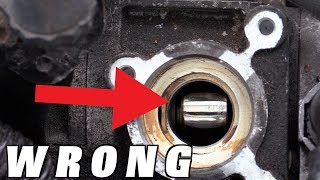
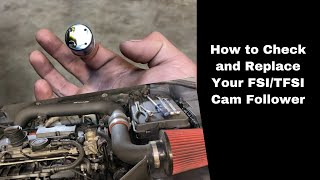
How to confirm: Remove the HPFP to physically inspect the cam follower. Look for a worn-through black coating, a concave surface, or a complete hole in the follower. This should be the first check. A forum user on AudiWorld documented this process with photos, showing a follower with its coating gone but the camshaft still intact.
Typical fix: Replace the cam follower. If the camshaft lobe shows any scoring or damage, the camshaft must also be replaced. An oil change is highly recommended to flush out any metal shavings from the worn follower.
Est. part cost: $40-$60 - Failing High-Pressure Fuel Pump (HPFP) 🔴 High Probability → Shop Fuel Pump The HPFP can fail internally, especially if operated with a worn-out cam follower which damages the pump's plunger. It is a common failure point for fuel pressure issues on this platform.
How to confirm: Using a diagnostic tool like VCDS, log measuring blocks for fuel pressure (e.g., Group 106, 140) while driving under load. If the 'actual' high fuel rail pressure cannot keep up with the 'specified' pressure, and the cam follower is confirmed to be good, the HPFP is likely faulty.
Typical fix: Replace the high-pressure fuel pump and its cam follower together. An oil change is recommended after replacement to remove any potential metal debris. Accessing the HPFP on the 3.2L V6 requires moving a coolant crossover pipe, which necessitates draining some coolant.
Est. part cost: $300-$600 - Faulty High-Pressure Fuel Sensor (G247) 🟡 Medium Probability These sensors can fail with age and heat cycles, sending incorrect data to the ECU.
How to confirm: If fuel pressure readings on a scan tool are erratic, jump around implausibly, or are stuck at a fixed value while the engine is running, the sensor may be at fault. This is often diagnosed after confirming the pumps and follower are functioning correctly. A user on AudiWorld with P0089/P0087 replaced the sensor as a diagnostic step.
Typical fix: Replace the high-pressure fuel sensor located on the fuel rail.
Est. part cost: $50-$150 - Failing Low-Pressure Fuel Pump (LPFP) ⚪ Low Probability → Shop Fuel Pump
How to confirm: Use a scan tool (VCDS) to monitor low-side fuel pressure in Measuring Value Block (MVB) 103. A weak LPFP will fail to supply adequate fuel to the HPFP, causing the high-pressure side to drop under load. A healthy low-pressure system should maintain around 5 bar.
Typical fix: Replace the in-tank low-pressure fuel pump. Access is typically under the rear seat cushion.
Est. part cost: $200-$400 - Clogged Fuel Filter ⚪ Low Probability → Shop Fuel Filter This is a standard maintenance item that is often neglected, leading to fuel starvation for the high-pressure system.
How to confirm: If the fuel filter has not been replaced in over 50,000 miles, it's suspect. Low-side fuel pressure tests can also reveal a restriction caused by a clogged filter. It is an inexpensive and easy item to replace as a preventative measure.
Typical fix: Replace the fuel filter.
Est. part cost: $30-$70
Rare But Worth Checking
- Leaking Fuel Injector: → Shop Fuel Injector A fuel injector stuck open can cause a drop in rail pressure. This would likely be accompanied by other codes for rich running conditions (like P0172/P0175) or misfires on a specific cylinder. A VCDS test can check for pressure drop after the engine is shut off, which can indicate a leaking injector. 🎬 Watch: How to check for leaking fuel injectors using VCDS
- Damaged Camshaft Lobe: → Shop Engine Camshaft If a worn cam follower is neglected for too long, it can wear down the specific lobe on the intake camshaft that drives the HPFP. If the lobe is damaged, replacing the HPFP and follower will not solve the problem; the camshaft itself will need replacement, a significantly more expensive and labor-intensive job. NHTSA ODI #10605840 describes a case where the camshaft did show wear and required replacement to correct P0089 and P2293 codes.
Diagnosis Steps
- Connect a diagnostic scan tool (VCDS is highly recommended for Audis) and check for any other accompanying fault codes.
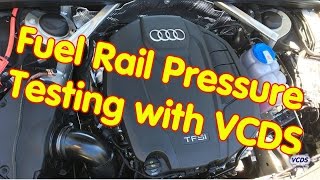
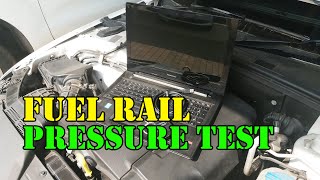
- Use the scan tool to monitor live data. Observe 'specified' vs. 'actual' fuel pressure. For the high-pressure rail, use Measuring Block 106 or 140. For the low-pressure side, use Measuring Block 103. 🎬 Watch: How to test your fuel rail pressure with VCDS
- If the high-pressure 'actual' reading cannot keep up with the 'specified' reading, the problem is likely on the high-pressure side. If the low-pressure reading is low or unstable, suspect the in-tank pump (LPFP) or fuel filter.
- Crucial Step: Before replacing any parts, relieve fuel pressure safely. Then, remove the High-Pressure Fuel Pump (HPFP) to physically inspect the cam follower. This requires partial draining of the coolant and removal of a coolant pipe for access on the 3.2L V6.
- Examine the cam follower for wear. If it is worn (missing coating, concave, or punctured), replace it. Also, inspect the camshaft lobe for any scoring or damage. If the lobe is damaged, the camshaft will need replacement.
- If the cam follower is intact but the high-pressure readings were low, the HPFP is the primary suspect.
- If the fuel pressure readings were erratic or illogical, but the pumps seem to function, the high-pressure fuel sensor (G247) may be faulty.
- If all high-pressure components check out, re-evaluate the low-pressure fuel pump and fuel filter based on the data from step 2.
Parts You'll Likely Need
- HPFP Cam Follower
(OEM #06D109309C)— This is a known high-wear item and the most common starting point for P0089 on this engine. It protects the HPFP and camshaft.
Trusted brands: INA, Audi Genuine
OEM price range: $40-$60
Aftermarket price range: $25-$45 - High-Pressure Fuel Pump (HPFP)
(OEM #06E127025G)— This is the second most likely cause after the cam follower. It often fails due to mileage or damage from a worn follower.
Trusted brands: Hitachi, Bosch, Pierburg
OEM price range: $500-$700
Aftermarket price range: $300-$500 - High-Pressure Fuel Sensor (G247)
(OEM #06E906051K)— Can fail and send incorrect readings to the ECM, causing the code without an actual pressure fault.
Trusted brands: Bosch, NTY, Valeo
OEM price range: $100-$150
Aftermarket price range: $50-$100
Related Codes That Often Appear With This One
- P0087 — P0087 ('Fuel Rail/System Pressure - Too Low') is very common with P0089, as a performance problem often manifests as pressure that is too low.
- P2293 — P2293 ('Fuel Pressure Regulator 2 Performance') also points directly to a performance issue with the HPFP's internal regulation, reinforcing the diagnosis of a faulty HPFP. NHTSA ODI #10595445 notes that P2293 and P0089 together can indicate possible cam follower, camshaft, or HPFP issues.
- P0300-P0306 — Misfire codes may appear on one or more cylinders due to the incorrect air/fuel mixture caused by the unstable fuel pressure.
- P310B — This Audi-specific code for 'Low Fuel Pressure Regulation' often accompanies P0089 and points to the low-pressure fuel system struggling to maintain pressure.
Platform-Specific Known Issues
- The wear on the HPFP cam follower is the most significant vehicle-specific issue related to this code. Owners should consider inspecting it proactively, especially on vehicles with over 70,000 miles, to prevent P0089 and potential catastrophic engine damage.
Mechanic-Grade Diagnostic Values
- Low-Pressure Fuel System Pressure (LPFP) — expected: ~5.0 Bar (~72.5 PSI) with key on, engine off. May vary between 4.8 and 5.5 Bar at idle.. Failure: Pressure significantly below 5 Bar indicates a fault with the in-tank pump (LPFP), filter, or control module (J538).
- High-Pressure Fuel Rail (Live Data at Idle, Hot Engine) — expected: ~40 Bar (~580 PSI), stable.. Failure: Pressure is not stable within ±1 bar of the specified value, or it matches low-side pressure (~5 Bar).
- High-Pressure Fuel Rail (Live Data Under Load) — expected: Should rise to 140-150 Bar.. Failure: Actual pressure fails to meet specified pressure under acceleration.
- G247 Sensor Signal Voltage — expected: Approximately 0.5V at idle, rising to ~4.5V under high pressure.. Failure: Voltage is erratic, stuck, or does not correspond to actual pressure changes.
- G247 Sensor Reference Voltage (Key On, Engine Off) — expected: ~5.0V at the reference wire from the ECM.. Failure: No voltage or significantly lower voltage points to an ECM or wiring issue.
- G247 Sensor Wiring Continuity — expected: Max 1.5 Ω between the sensor connector and the ECM connector pins.. Failure: Higher resistance or an open circuit (OL) indicates a broken or corroded wire.
- HPFP Regulator Valve (N276) Resistance — expected: 1.0 to 5.0 Ω.. Failure: A reading of 0 Ω indicates a short circuit and a failed regulator.
Hidden / Shadow Codes Worth Checking
- P310B: Low Fuel Pressure Regulation. This is a VAG-specific code that points more directly to a problem on the low-pressure side of the fuel system (in-tank pump, filter, or controller). (see via A VAG-compatible scan tool like VCDS or OBDeleven. If P0089 is present alongside P310B, diagnosis should start with the low-pressure system first.)
Scan Tool Commands That Help
- VCDS: Basic Settings - Group 103 — This function is used to run a fuel pump adaptation. However, according to Ross-Tech forum staff, this is not required when replacing the HPFP on this platform and is more applicable when there is a G410 low-pressure sensor, which may not be present on all models. Incorrect use can lead to confusion.
- VCDS / ODIS: Output Diagnostic Test Mode (DTM) for N276 - Fuel Pressure Regulator Valve — This is a bidirectional test to confirm if the HPFP's internal regulator is functional. When activated, you should hear an audible 'click' from the HPFP. No click suggests a failed regulator solenoid or a wiring issue.
Wiring & Ground Locations
- J538 — Under the rear passenger seat, between the floor panel and the fuel tank.. This is the Fuel Pump Control Module for the low-pressure in-tank pump. A failure or poor ground connection for this module can cause low-side fuel delivery issues, leading to P0089 and the related P310B code.
- G247 Sensor Connector — On the high-pressure fuel rail. On the 3.2L V6, this is on the left (driver's side in LHD) rear side of the engine.. This is the primary sensor for high-side fuel pressure. Checking for reference voltage (~5V), ground, and signal integrity at this connector is a key diagnostic step.
Real Owner Repair Stories
- AudiWorld Forums User (2008 Audi A6 3.2L) — Sporadic P0087 (Fuel Rail/System Pressure Too Low).
❌ Tried (didn't work) Replaced electric in-tank fuel pump (LPFP), Replaced fuel filter, Replaced low-side fuel pressure sensor, Replaced high-side fuel pressure sensor (G247)
✅ What actually fixed it The user reported that after trying all the common fixes, the problem was finally resolved by replacing the High-Pressure Fuel Pump (HPFP). This highlights that even after replacing sensors, the pump itself can be the mechanical point of failure. - AudiWorld Forums User (2006 Audi A6 Quattro 3.2L FSI) — P2293 (Fuel Pressure Regulator 2 Performance), but diagnosis is relevant to P0089.
❌ Tried (didn't work) Replaced low-pressure fuel sensor, Replaced high-pressure fuel sensor (G247)
✅ What actually fixed it The user performed a preventative replacement of the HPFP cam follower. The guide provides detailed, step-by-step photos of accessing the HPFP on the 3.2L engine, including the necessary removal of the coolant crossover pipe. This is a valuable resource for any DIYer attempting this job. - NHTSA ODI #11490502 — An owner reported that after installing a fuel pressure regulator and a fuel pressure filter, the vehicle continued to throw P0089 and P2293 codes, indicating performance issues.
OEM Part Supersession History
06E127025G→06E127025AB— Part revision and update by the manufacturer.
Heads up: The new part number (06E127025AB) is the correct replacement for the original 'G' version for the specified 2005-2009 3.2L engines.06E109309A→Not specified, but 06D109309C is the widely used part.— The cam follower for the 3.2L V6 was specific, but the 2.0T follower (06D109309C) is often cited and used across FSI engines. It's critical to verify the correct part for the 3.2L engine with a dealer.
Model Year Variations Within This Range
- 2004-2010: The 3.2L FSI engine was available under several codes, primarily AUK and BKH for the A6. While mechanically very similar, there can be minor differences in components or ECU software. Both are part of the EA837 family and share the same fundamental design and weaknesses, including the cam follower and HPFP system.
Diagnostic Flowchart
Other Known Issues on This Vehicle
Issues unrelated to this code that are worth knowing about as an owner of this generation:
- Timing Chain Tensioner Failure 🔴 High → Shop Engine Timing Chain — Becomes common over 80,000 miles. A characteristic 'rattle' on cold start for 2-3 seconds is the primary warning sign. (Ref: No recall, but a well-documented issue. The driver's side (Bank 2) upper tensioner is noted to fail more often due to its orientation allowing oil to drain out.)
- Intake Valve Carbon Buildup 🟠 Medium — Inevitable on all FSI engines. Symptoms like rough idle and reduced power typically appear every 40,000-60,000 miles. (Ref: No TSB, as it's considered a consequence of the direct injection design. The fix is a manual cleaning (media blasting).)
- Thermostat Failure 🟠 Medium — Common failure item, often occurring under 100,000 miles. Can cause overheating or failure to reach operating temperature. (Ref: No TSB. Replacement is labor-intensive as it is located under the intake manifold.)
- Oil Consumption / Oil Leaks 🟠 Medium — Higher-than-normal oil consumption can occur due to piston ring wear. Oil leaks from valve cover gaskets, oil filter housing, and timing covers are very common on high-mileage examples.
- MMI Infotainment System Failure 🟡 Low — The Multi Media Interface (MMI) control module is located in the trunk and is susceptible to moisture damage from leaks, causing system blackouts or unresponsiveness.
Used vs. New Parts: Buying Guide for This Vehicle
When a used part is the smart pick: Given the high failure rate and critical nature of the fuel system, used parts are generally not recommended for this repair. A used sensor (G247) could be considered if from a low-mileage, verified-running donor car, but the savings are minimal compared to the risk and labor to replace it again.
Donor-vehicle mileage cap: roughly under 60000 miles for the part to have meaningful remaining life.
What to inspect on the donor part:
- For a sensor, ensure the connector pins are clean and free of corrosion.
- For any mechanical part, verify the donor car had no fuel-related trouble codes.
- Avoid parts from vehicles with high mileage or unknown maintenance history.
OEM-only on this vehicle (don't cheap out):
- High-Pressure Fuel Pump (HPFP): Due to the extreme pressures and tight tolerances, a new OEM (Hitachi) or a top-tier OE supplier like Bosch or Pierburg is strongly recommended. Many forum users report issues with cheap, unbranded aftermarket pumps failing prematurely.
- Cam Follower: This part is inexpensive and a critical wear item. There is no reason to ever install a used one. Always buy a new, high-quality follower from an OE supplier like INA or Genuine Audi.
Aftermarket brands forum-validated for this vehicle:
- Hitachi (OEM for HPFP)
- Bosch (Sensors, HPFP)
- Pierburg (HPFP)
- INA (Cam Follower)
Brands owners have reported issues with on this vehicle:
- Unbranded, generic "white-box" HPFPs from online marketplaces. These are often poor-quality imitations that can fail quickly, potentially causing more damage. A seller warning about needing to remove logos for customs is a major red flag for counterfeit parts.
Real Owner Stories
Aggregated from forums and TSBs cited above. Mileages and costs reflect what owners reported in those sources.
2006 Audi A6 3.2L FSI
Symptoms: Owner documented the process of inspecting the fuel system components due to known platform issues.
What fixed it: Replacement of the cam follower; the owner noted the coating was gone but the camshaft remained intact.
Source hint: AudiWorld: 3.2L FSI, How to inspect and replace HPFP (high pressure fuel pump) Cam follower
2014 Audi Q5 3.2L V6 FSI — ~210000 miles
Symptoms: Chasing P0089 and P0087 codes over a long period.
What fixed it: The owner attempted to fix the issue by replacing the in-tank pump twice, a used HPFP, the rail sensor, and the control module, illustrating the difficulty of diagnosis without systematic testing.
Source hint: AudiWorld: Updated repost p0089, p0087
2005-2011 Audi A6 3.2L
Symptoms: P0089 engine code.
What fixed it: Discussion focused on immediate cam follower inspection; failure to do so can lead to camshaft damage.
Cost: $3400-$3400
Source hint: Reddit r/Audi: Got the infamous p0089 engine code. What is wrong? Should I consider the cam follower?
Documented NHTSA Reports
NHTSA ODI #10595445
Symptoms: A Check Engine Light (CEL) with P codes P2293 and P0089.
What fixed it: The report indicates these codes point toward possible cam follower, camshaft, and/or high pressure fuel pump (HPFP) issues.
NHTSA ODI #10605840
Symptoms: P codes P2293 and P0089 on the HPFP.
What fixed it: Diagnosis revealed engine damage where the camshaft showed wear and required replacement to correct the fuel pressure performance codes.
Related OBD-II Codes
Frequently Asked Questions
I have a 2006 Audi A6 3.2L and hear a ticking noise from the engine bay. Is this related to P0089?
How can I check if my cam follower is failing on my A6 3.2L V6?
What VCDS measuring blocks should I use to diagnose fuel pressure on my Audi A6 C6?
Is the cam follower wear a common issue for the 2004-2011 Audi A6 3.2L?
If my cam follower is worn through, do I need to replace anything else besides the follower?
My A6 has a rattle on cold starts for a few seconds; is this related to the fuel system?
Helpful Videos

Used OEM Parts in Stock
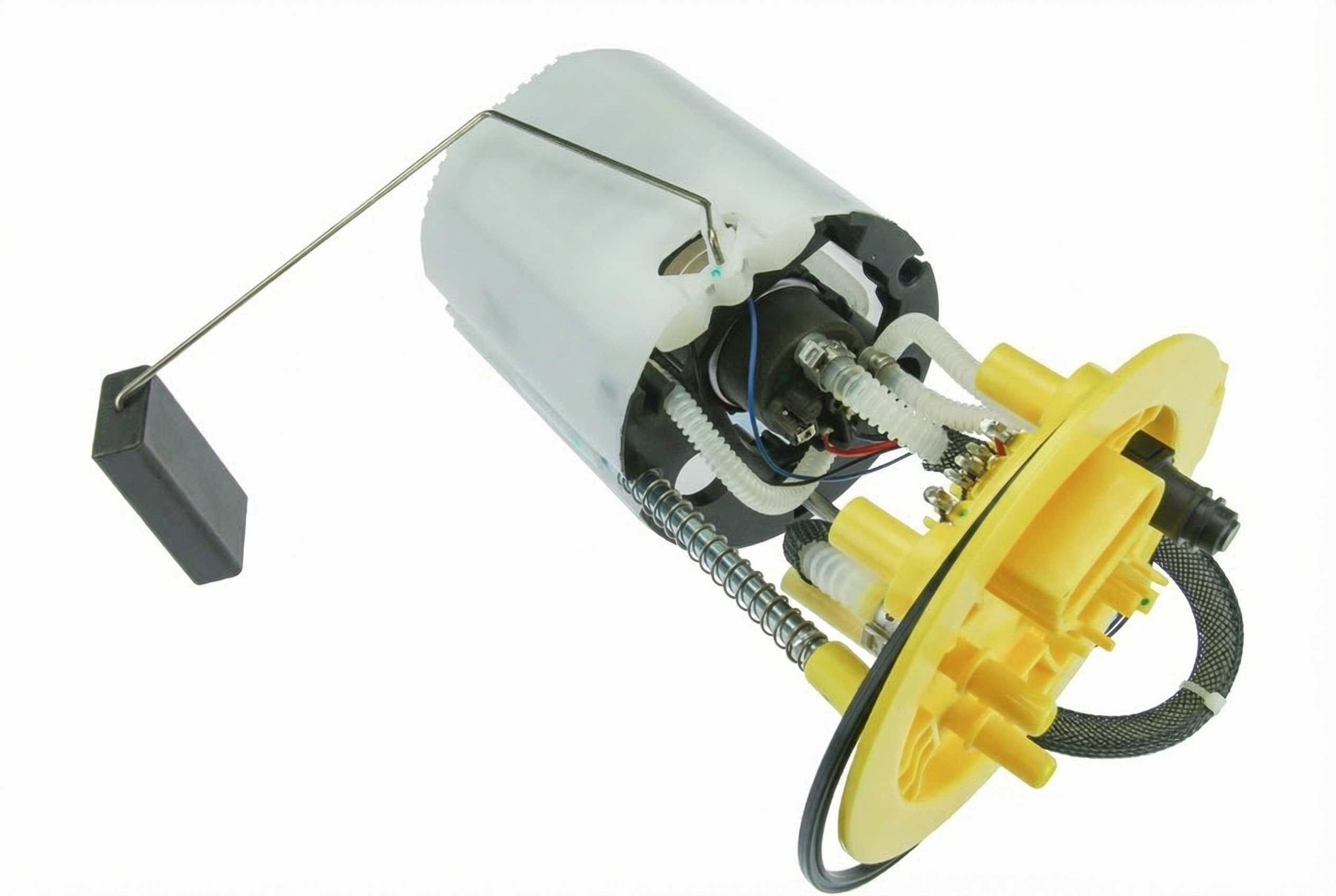
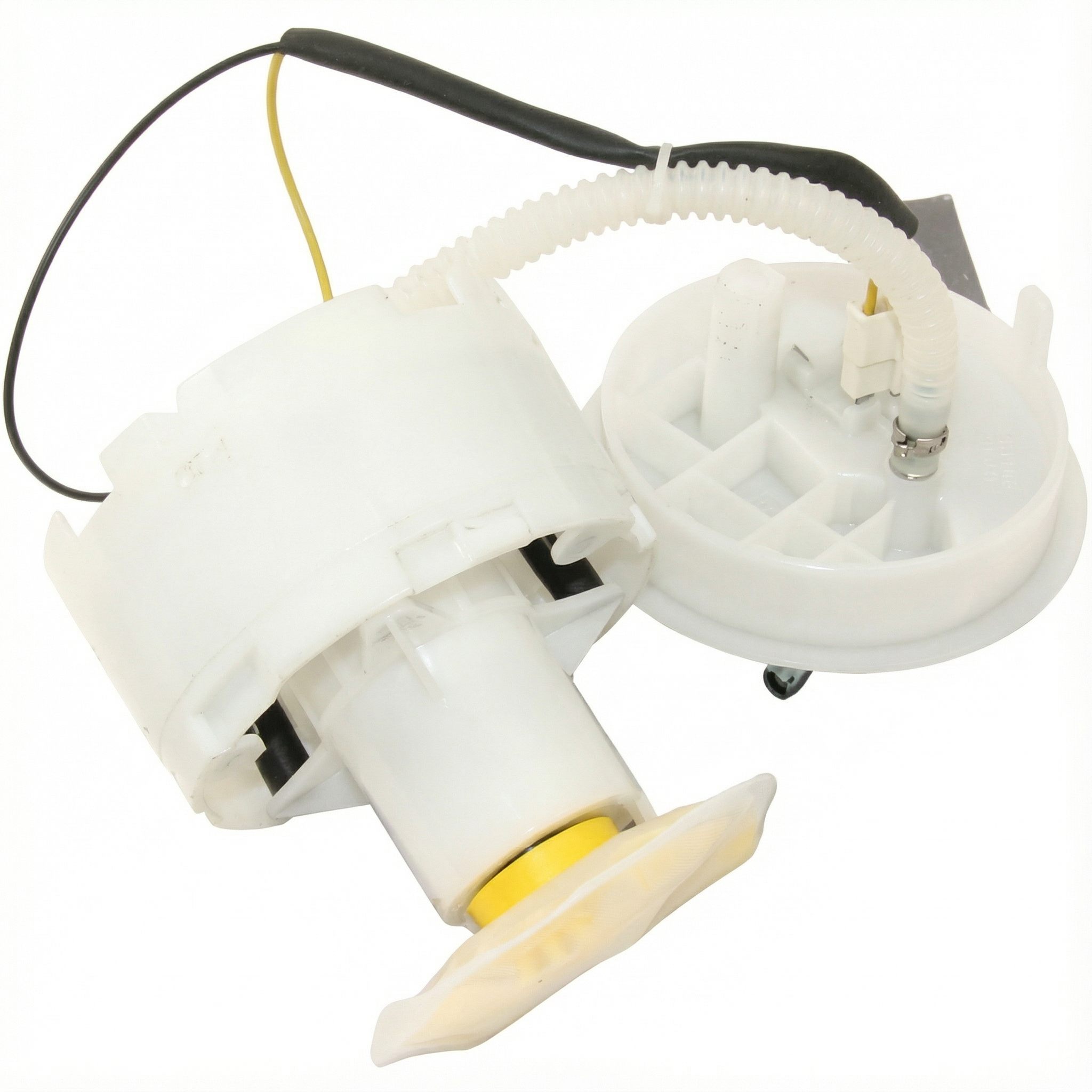
New Aftermarket Parts Available

The information in this article is provided for general reference and educational purposes only. Vehicle specifications, procedures, and part compatibility can vary by production date, trim level, and region. Always consult your vehicle's factory service manual and verify part numbers before purchasing or performing repairs. Safety-critical components such as airbags, seat belts, and braking systems should be installed by a qualified professional.
- Audi A6:
- 🧭 Diagnostic Flowchart
- 🎬 Helpful Videos
- 🛍️ Shop This Part
- What's Unique About the 2004-2011 Audi A6
- Symptoms You May Notice
- Most Likely Causes
- Rare But Worth Checking
- Diagnosis Steps
- Parts You'll Likely Need
- Related Codes That Often Appear With This One
- Platform-Specific Known Issues
- Mechanic-Grade Diagnostic Values
- Hidden / Shadow Codes Worth Checking
- Scan Tool Commands That Help
- Wiring & Ground Locations
- Real Owner Repair Stories
- OEM Part Supersession History
- Model Year Variations Within This Range
- Other Known Issues on This Vehicle
- Used vs. New Parts: Buying Guide for This Vehicle
- Real Owner Stories
- 2006 Audi A6 3.2L FSI
- 2014 Audi Q5 3.2L V6 FSI — ~210000 miles
- 2005-2011 Audi A6 3.2L
- Documented NHTSA Reports
- NHTSA ODI #10595445
- NHTSA ODI #10605840
- Related OBD-II Codes
- Frequently Asked Questions
- 🎟️ Get 5% Off