

P0089 on 2012-2018 Audi A6 3.0T: Causes and Fixes for Fuel Pressure Regulator Performance
For the 2012-2018 Audi A6 3.0T, code P0089 is most often caused by a failing high-pressure fuel pump (HPFP), a weak in-tank low-pressure fuel pump (LPFP), or a faulty fuel pressure sensor. Before replacing the expensive HPFP, it is critical to diagnose the system by logging requested vs. actual fuel pressure for both pumps using a tool like VCDS. A failing LPFP is a common cause and its failure often leads to a misdiagnosis of the HPFP. Replacing the LPFP costs around $250-$400 for the part.
- P0089 on your Audi A6 means fuel pressure is not what the engine computer expects.
- Do NOT immediately replace the expensive high-pressure fuel pump (HPFP). The problem is frequently the cheaper in-tank low-pressure fuel pump (LPFP) or a bad sensor.
- The most important diagnostic step is to log both low and high fuel pressure readings (requested vs. actual) with a tool like VCDS during a drive.
- Start with the cheapest and easiest potential fixes: check for fuel leaks and consider replacing the fuel filter if its age is unknown.
- Be aware of several factory recalls related to the fuel system on this car, which may be contributing to the problem.
What's Unique About the 2012-2018 Audi A6
The Audi A6 C7 platform with the 3.0L TFSI engine uses a sophisticated fuel system with two pumps: a low-pressure pump (LPFP) in the fuel tank and a high-pressure pump (HPFP) on the engine. P0089 is tricky on this platform because a weak low-pressure pump can starve the high-pressure pump, leading to a misdiagnosis of the more expensive HPFP. Furthermore, this model range has been subject to multiple fuel system-related recalls and TSBs, including for leaking fuel rails and faulty in-tank pumps, indicating a sensitive and sometimes problematic system design.
Symptoms You May Notice
- Check Engine Light is on
- EPC (Electronic Power Control) light may also be illuminated
- Significant loss of power, especially during acceleration or above 3,000 RPM
- Sluggish or hesitant throttle response
- Engine sputtering or misfiring under load
- Rough or unstable idle
- Engine stalling, sometimes at stops or low speeds
- Long crank time before the engine starts, especially when warm
- Reduced fuel economy
- Whining noise from the fuel pump area
- Replacing the High-Pressure Fuel Pump (HPFP) when the actual cause is a weak Low-Pressure Fuel Pump (LPFP).
- Replacing fuel pumps when the issue is a faulty fuel pressure sensor providing incorrect data.
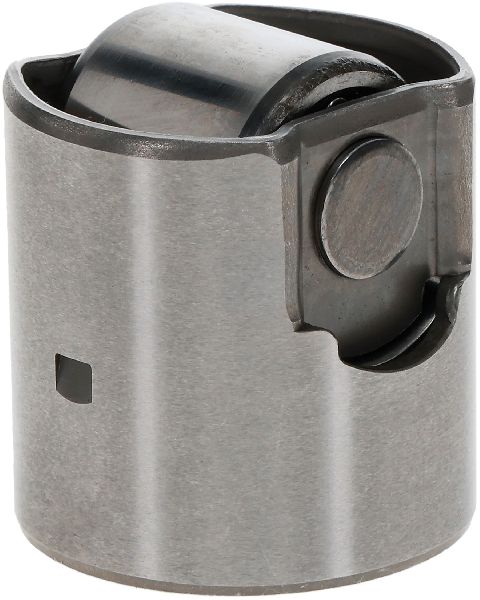
- Assuming the HPFP is the sole cause without checking the cam follower for wear, which is an inexpensive part to replace at the same time.
Most Likely Causes
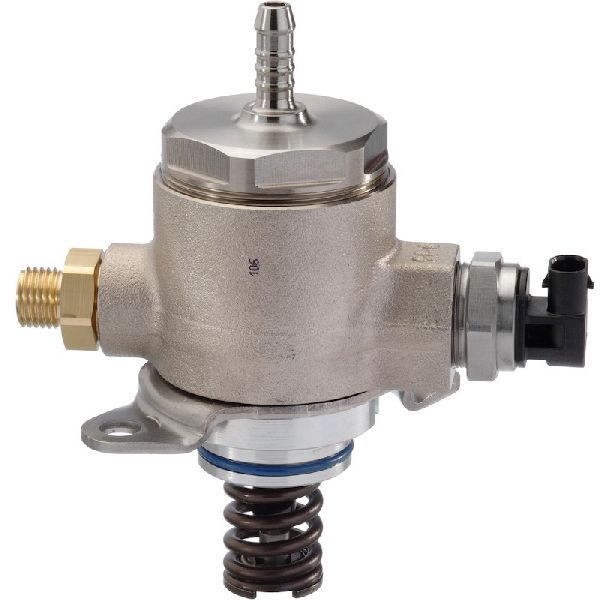
- Failing High-Pressure Fuel Pump (HPFP) 🔴 High Probability → Shop Fuel Pump The HPFP is a known wear item on many direct-injection Audi engines. The fuel pressure regulator is integrated into the HPFP, meaning the entire unit must be replaced when the regulator fails. These pumps operate under immense pressure and can fail mechanically over time.
How to confirm: Use a diagnostic tool like VCDS or OBDeleven to log fuel rail pressure. Compare the 'actual' high pressure against the 'requested' high pressure during idle and under load. A significant and consistent deviation where the actual pressure cannot meet the requested pressure points to a failing HPFP. A heat soak test can also be performed: after shutting down a warm engine, the rail pressure should spike to over 100 bar and hold. If it plateaus at a lower pressure (e.g., 50-90 bar) or drops off quickly, the HPFP is likely leaking internally.
Typical fix: Replace the High-Pressure Fuel Pump and the associated cam follower as a best practice. 🎬 Watch: Step-by-step guide to installing a new HPFP.
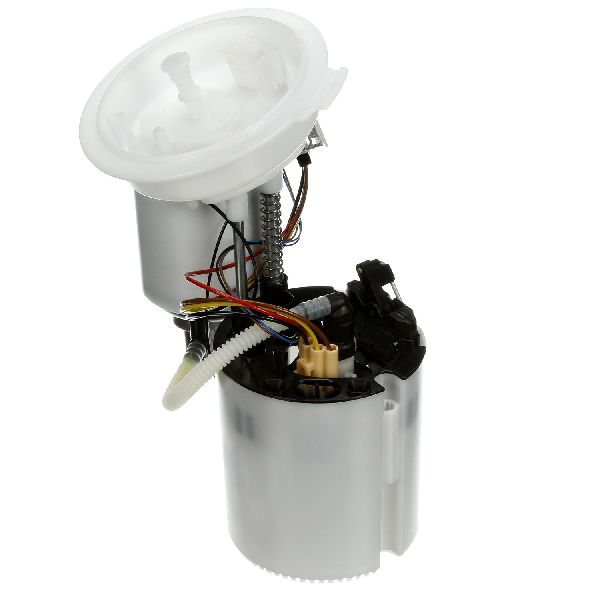
Est. part cost: $350-$600 - Failing Low-Pressure Fuel Pump (LPFP) 🟡 Medium Probability → Shop Fuel Pump The in-tank LPFP can weaken over time, failing to supply the HPFP with enough fuel volume and pressure. This is a very common cause and is often misdiagnosed as a bad HPFP, as a starved HPFP cannot meet its pressure targets.
How to confirm: Log the low-pressure fuel system readings with VCDS or a similar tool. The pressure should be stable and within a specific range (typically around 5-6 bar). If the low-pressure reading drops significantly under acceleration, the LPFP is likely weak.
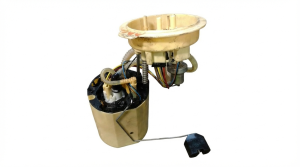
Typical fix: Replace the in-tank low-pressure fuel pump assembly. 🎬 See how to replace the in-tank low pressure pump. It is often recommended to use an OEM pump, as some owners report issues with aftermarket units.
Est. part cost: $250-$400 - Faulty Fuel Pressure Sensor 🟡 Medium Probability → Shop Fuel Pressure Sensor The system uses both a low-pressure sensor (G410) and a high-pressure sensor (G247). A sensor providing erratic or incorrect readings can trick the ECM into setting a P0089 code, even if the mechanical pumps are functioning correctly.
How to confirm: Observe the live data for the fuel pressure sensors. If the readings are erratic, jump around wildly, or are clearly illogical (e.g., reading high pressure with the engine off), the sensor is likely faulty. One owner on a forum reported fixing their P0089 code by replacing the high-pressure sensor after diagnostics showed its readings were unstable.
Typical fix: Replace the corresponding fuel pressure sensor (either high-pressure on the fuel rail or low-pressure).
Est. part cost: $50-$150 - Clogged Fuel Filter ⚪ Low Probability → Shop Fuel Filter The fuel filter is a standard maintenance item. If neglected, it can become clogged and restrict fuel flow to the HPFP, causing pressure to drop under demand, especially during high-load situations.
How to confirm: This is difficult to confirm without testing fuel flow directly. It's often replaced as a low-cost, preventative first step in diagnosis, especially if its service history is unknown.
Typical fix: Replace the fuel filter.
Est. part cost: $40-$80
Rare But Worth Checking
- Worn HPFP Cam Follower: → Shop Fuel Pump While a very common failure on the older 2.0T engines, the cam follower that drives the HPFP can also wear on the 3.0T. It's less common but worth inspecting if the HPFP is being replaced. A worn follower will reduce the pump's stroke, leading to low pressure.
- Leaking Fuel Injector: → Shop Fuel Injector A fuel injector stuck partially open can cause a drop in fuel rail pressure, potentially triggering P0089. This would likely be accompanied by other codes for rich running conditions (e.g., P0172/P0175) or misfires on a specific cylinder.
- Fuel Pump Control Module Failure: → Shop Fuel Pump The low-pressure fuel pump is controlled by a dedicated module (J538). A failure in this module can cause the LPFP to perform incorrectly, leading to P0089. This may be accompanied by specific codes related to the control module itself.
- Internal Fuel Line Degradation: → Shop Fuel Line In rare cases, the internal lining of a fuel hose can break down and create a flap that acts as a check valve, intermittently blocking fuel flow. One owner on YouTube documented finding a piece of rubber from a deteriorated line clogging the system, which resolved their long-running P0089 issue.
Diagnosis Steps
- Connect a high-quality OBD-II scanner (like VCDS or OBDeleven) capable of reading live data from the ECU.
- Check for any other stored fault codes. Address codes for specific sensors (like P310B) or circuits first.
- Access the live data for the fuel system. Monitor the following four parameters: 'Fuel Pressure (Low-Pressure System) Requested', 'Fuel Pressure (Low-Pressure System) Actual', 'Fuel Pressure (High-Pressure System) Requested', and 'Fuel Pressure (High-Pressure System) Actual'.
- With the engine idling, observe the values. Requested and actual pressures should be very close for both systems. High pressure at idle should be around 40 bar (580 PSI).
- While safely driving, perform a few wide-open throttle accelerations (if possible). Watch the live data. If the 'Actual' high pressure falls significantly behind the 'Requested' high pressure (which can command up to 150 bar / 2175 PSI), there is a fuel delivery problem.
- If high pressure drops, immediately check the 'Actual' low pressure reading. If the low pressure also drops significantly (e.g., below 4 bar), the issue is likely the in-tank low-pressure fuel pump or a clogged filter.
- If the low pressure remains stable but the high pressure cannot keep up, the problem is most likely the High-Pressure Fuel Pump (HPFP) or, less commonly, a leaking injector or worn cam follower.
- If pressure readings for either sensor are erratic, nonsensical, or do not change with engine demand, suspect the corresponding fuel pressure sensor.
- Inspect for any visible fuel leaks around the fuel rails, injectors, and HPFP.
- If replacing the HPFP, always inspect the cam follower for wear. It is a small, inexpensive part that is critical for the pump's operation. 🎬 Watch this detailed walkthrough of the 3.0T HPFP replacement.
Parts You'll Likely Need
- High-Pressure Fuel Pump (HPFP)
(OEM #06E127025S (verify by VIN, may be superseded))— This is a common failure point and contains the integrated pressure regulator often responsible for the code.
Related Codes That Often Appear With This One
- P0087 — P0087 ('Fuel Rail/System Pressure - Too Low') is very similar and indicates the pressure is not meeting the minimum required value, often pointing to the same set of causes like a weak pump or clog. These two codes frequently appear together.
- P2293 — P2293 ('Fuel Pressure Regulator 2 Performance') can appear alongside P0089, indicating a broader issue with the fuel pressure regulation circuit or multiple faults detected by the ECM.
- P310B — P310B ('Low Pressure Fuel System, Malfunction') specifically points to an issue on the low-pressure side. If seen with P0089, it strongly suggests the LPFP, its controller, or the low-pressure sensor is the root cause.
- P0171/P0174 — These 'System Too Lean' codes for Bank 1 and Bank 2 can occur when low fuel pressure prevents the injectors from supplying enough fuel to maintain the correct air-fuel ratio.
Technical Service Bulletins (TSBs) & Recalls
- TPI 2031245 / TSB 2040480/3 - While primarily for 2.0T engines, these bulletins address general VAG issues with fuel pressure and performance faults that share diagnostic principles.
- TPI 2036169 - Discusses fuel quality issues in TDI engines, but highlights the sensitivity of Audi fuel systems to fuel contamination, which can be a contributing factor to pump and filter failure in TFSI engines as well.
Platform-Specific Known Issues
- Safety Recall 24AP: Affects 2011-2013 models with the 3.0L TFSI engine. Dealers were to replace both fuel rails and injector seals due to a potential fuel leak, which could cause pressure issues.
- Safety Recall 24DP: Affects 2016-2018 A6 models. The left and right fuel rails may leak fuel, increasing fire risk and potentially affecting fuel pressure.
- 2024 Fuel Pump Recall: Affects a wide range of VW/Audi models. A faulty suction jet pump inside the fuel tank can fail, allowing fuel to leak into the EVAP system, which could affect fuel delivery and pressure.
Mechanic-Grade Diagnostic Values
- Low-Pressure Fuel System (LPFP) pressure at idle — expected: 58-87 PSI (4-6 bar). Failure: Pressure drops significantly under load/acceleration, falling below 4 bar.
- High-Pressure Fuel System (HPFP) pressure at idle — expected: Approx. 40-50 bar (580-725 PSI). Failure: Actual pressure consistently fails to meet requested pressure, especially under load.
- High-Pressure Fuel System (HPFP) pressure under Wide-Open Throttle (WOT) — expected: Can command up to 150 bar (2175 PSI). Failure: Actual pressure drops significantly below requested pressure.
- HPFP Heat Soak Test (Engine Off, Hot) — expected: Pressure should rise to over 60 bar within a few minutes and hold.. Failure: Pressure fails to rise significantly or drops off quickly, indicating an internal leak in the HPFP.
Scan Tool Commands That Help
- VCDS (Ross-Tech): Measuring Blocks (MVB) or Advanced Measuring Values (UDS) — Used to monitor live data. For older CAN modules, check MVB Group 106 for high pressure. For newer UDS modules, search for 'Fuel high pressure actual value'. This is essential for comparing requested vs. actual pressure for both low and high-pressure systems.
Wiring & Ground Locations
- J538 Fuel Pump Control Module — Sandwiched between the top of the fuel tank and the floor of the car, under the rear passenger seat area. Access is difficult and may require lowering the fuel tank. Two Torx bolts holding it are visible from under the rear seat bench next to the fuel pump access plate.. This module directly controls the in-tank low-pressure pump. A failure or bad connection here will starve the entire fuel system, mimicking HPFP failure and triggering P0089.
- Engine Block Ground Point — On the right (passenger) side of the engine compartment, near the alternator.. A poor engine ground can cause erratic behavior from various engine sensors, including the fuel pressure sensors (G247, G410), leading to incorrect readings and fault codes.
- G247 High-Pressure Sensor Connector — Located on the high-pressure fuel rail, which is underneath the supercharger assembly.. The wiring to this sensor is critical. A short to ground or open circuit in the harness will cause the ECU to receive a 0 bar reading, which can cause stalling and trigger P0089 or related codes.
Real Owner Repair Stories
- AudiWorld Forums user 'Wavepace' (Audi A6 (year not specified, but C7 platform)) — Car would start, idle for a few minutes, then stall. Codes P0089 and P2293 present.
❌ Tried (didn't work) Replacing the fuel filter., Replacing the in-tank low-pressure fuel pump (LPFP).
✅ What actually fixed it The user's mechanic ultimately recommended replacing the low-pressure fuel sensor (G410) due to observed pressure fluctuations even after the new LPFP was installed. The final resolution was not definitively posted by the original user, but this was the last diagnosed step. - Jackal Motorsports customer review (Audi 3.0T (specific model not mentioned)) — Car was reading under 4 bar of low-side fuel pressure, HPFP duty cycle was at 90% on a Stage 1 tune, indicating the HPFP was working overtime to compensate for a lack of fuel supply.
❌ Tried (didn't work) Initially considered replacing the HPFP based on the high duty cycle.
✅ What actually fixed it The owner correctly diagnosed that the OEM low-pressure fuel pump (LPFP) was failing and not feeding the HPFP properly. Replacing the LPFP with an upgraded unit resolved the issue, with low-side pressure returning to over 6 bar and the HPFP duty cycle dropping to a normal 82-85% on a more aggressive tune. This is a classic example of a weak LPFP causing symptoms that point toward the HPFP. - NHTSA ODI #11490502 — An owner reported that after replacing a fuel pressure regulator and fuel pressure filter, the vehicle continued to throw P0089 and P2293 codes.
- NHTSA ODI #10605840 — A report indicates that camshaft wear was discovered as the root cause for P2293 and P0089 codes, requiring a camshaft replacement to correct the HPFP performance issues.
- NHTSA ODI #10595445 — An owner brought their vehicle to a dealership for a check engine light involving P2293 and P0089, which the report notes can indicate possible cam follower, camshaft, and/or High Pressure Fuel Pump (HPFP) issues.
OEM Part Supersession History
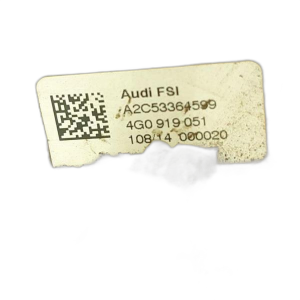
4G0919051C→4G0919051K— Revision and improvement for better reliability of the in-tank low-pressure fuel pump assembly.
Heads up: It is recommended to always use the latest revision (K) when replacing the LPFP.06E127025N, 06E127025Q→06E127025S— Revision of the high-pressure fuel pump.
Heads up: These part numbers are often listed as compatible, but it's critical to verify the exact part number for your vehicle's VIN.Multiple, e.g., 06E906051E→06E906051K— An updated part was released to address a known issue where fuel could seep inside the original low-pressure sensor (G410), causing incorrect readings.
Heads up: This is a known issue covered by a Technical Service Bulletin (TSB). If replacing the G410 sensor, ensure it is the updated 'K' revision or later.
Model Year Variations Within This Range
- 2016-2018: The A6 C7.5 facelift models (2016+) feature the updated 'CREC' engine. While still a 3.0T supercharged V6, it has significant changes, including a dual-injection fuel system (both direct and port injection) and a new Simos 16 ECU. While the fundamental causes of P0089 remain similar, diagnostic approaches and part numbers may differ slightly. For example, tuners note the CREC's fueling system is robust enough to handle E85 on stock hardware for some tuning stages.
Diagnostic Flowchart
Other Known Issues on This Vehicle
Issues unrelated to this code that are worth knowing about as an owner of this generation:
- Thermostat and Water Pump Failure 🔴 High — Common between 60,000 and 100,000 miles. The thermostat can stick closed, causing overheating, or the water pump can leak. (Ref: Multiple service actions and part updates have been issued over the years.)
- PCV Valve (Oil Separator) Failure 🟠 Medium — Typically occurs between 60,000-80,000 miles. Failure can cause high oil consumption, rough idle, lean codes, and a whistling noise from the engine.
- Leaking/Failed Engine Mounts 🟠 Medium — The fluid-filled electronic engine mounts are known to leak and collapse, often starting around 50,000-70,000 miles, causing excessive vibration at idle.
- Timing Chain Tensioner Wear / Rattle on Cold Start 🔴 High → Shop Engine Timing Chain — While less common than on earlier V8s, a brief rattle on cold starts can indicate wear in the timing chain tensioners. If ignored, this can lead to catastrophic failure. Onset can be anywhere from 80,000 miles onward, often exacerbated by long oil change intervals.
- Carbon Buildup on Intake Valves 🟠 Medium — As a direct-injection engine, fuel does not wash over the intake valves. This leads to carbon accumulation over time, typically requiring a manual cleaning service every 60,000-80,000 miles to restore performance and prevent misfires.
Used vs. New Parts: Buying Guide for This Vehicle
When a used part is the smart pick: A used Fuel Pump Control Module (J538) could be a cost-effective option, as it is an electronic component that either works or doesn't, with less concern for mechanical wear compared to a pump. Given its difficult-to-access location, a used part from a low-mileage donor is a reasonable gamble to save on costs.
Donor-vehicle mileage cap: roughly under 80000 miles for the part to have meaningful remaining life.
What to inspect on the donor part:
- For pumps or sensors, verify the part number on the used component matches the latest revision (e.g., 'K' suffix for the LPFP).
- Inspect electrical connectors for any signs of corrosion, melting, or damage.
- Ask for the VIN of the donor car to verify its model year and check for any relevant recalls or TSBs.
- Avoid purchasing used HPFPs unless from a highly reputable rebuilder, as internal wear is impossible to see and is the primary failure mode.
OEM-only on this vehicle (don't cheap out):
- Low-Pressure Fuel Pump (LPFP): Multiple forum and repair accounts mention that issues with P0087/P0089 were only resolved after replacing an aftermarket LPFP with a genuine OEM unit.
- High-Pressure Fuel Pump (HPFP): Due to the extreme pressures and tight tolerances, a new OEM (often Hitachi) or a reputable remanufactured unit is strongly recommended over a generic aftermarket or used part.
- Fuel Pressure Sensors (G247/G410): These are critical sensors. While premium aftermarket brands like Bosch are generally reliable, cheap unbranded sensors are a significant risk for inaccurate readings and repeat failures.
Aftermarket brands forum-validated for this vehicle:
- Bosch (often the OEM supplier for sensors and pumps)
- Hitachi (often the OEM supplier for the HPFP)
- Febi (for sensors)
Brands owners have reported issues with on this vehicle:
- Unspecified or generic 'white box' brands for any fuel system component, especially the LPFP, as reported by owners who had to redo the repair with an OEM part.
Real Owner Stories
Aggregated from forums and TSBs cited above. Mileages and costs reflect what owners reported in those sources.
2016 Audi A6 3.0 TFSI (CTUA)
Symptoms: Running extremely rich at idle on both banks.
What fixed it: Replacing the high-pressure fuel sensor after diagnostics showed its readings were unstable.
Source hint: Audizine forum thread '2016 Audi A6 3.0 TFSI CTUA running extremely rich at idle on both banks'
2012-2018 Audi A6 3.0L TFSI
Symptoms: Actual rail pressure plateaus at 50-90 bar during a heat soak test instead of spiking over 100 bar.
What fixed it: Replacement of the High-Pressure Fuel Pump (HPFP) due to internal leaking.
Source hint: Article Context - HPFP Common Causes / Heat Soak Test
Related OBD-II Codes
Frequently Asked Questions
Is there a recall for fuel leaks on my 2012 Audi A6 3.0L TFSI that could cause P0089?
My 2017 Audi A6 is showing P0089; is there a specific recall for newer models?
Can a problem with the EVAP system cause fuel pressure codes on this V6 engine?
Should I replace the cam follower when I change the High-Pressure Fuel Pump (HPFP)?
How can I tell if the issue is the in-tank pump (LPFP) or the high-pressure pump (HPFP)?
Are there any Technical Service Bulletins (TSBs) regarding fuel pressure for this platform?
Helpful Videos
Used OEM Parts in Stock
New Aftermarket Parts Available


The information in this article is provided for general reference and educational purposes only. Vehicle specifications, procedures, and part compatibility can vary by production date, trim level, and region. Always consult your vehicle's factory service manual and verify part numbers before purchasing or performing repairs. Safety-critical components such as airbags, seat belts, and braking systems should be installed by a qualified professional.
- Audi A6:
- 🧭 Diagnostic Flowchart
- 🎬 Helpful Videos
- 🛍️ Shop This Part
- What's Unique About the 2012-2018 Audi A6
- Symptoms You May Notice
- Most Likely Causes
- Rare But Worth Checking
- Diagnosis Steps
- Parts You'll Likely Need
- Related Codes That Often Appear With This One
- Technical Service Bulletins (TSBs) & Recalls
- Platform-Specific Known Issues
- Mechanic-Grade Diagnostic Values
- Scan Tool Commands That Help
- Wiring & Ground Locations
- Real Owner Repair Stories
- OEM Part Supersession History
- Model Year Variations Within This Range
- Other Known Issues on This Vehicle
- Used vs. New Parts: Buying Guide for This Vehicle
- Real Owner Stories
- 2016 Audi A6 3.0 TFSI (CTUA)
- 2012-2018 Audi A6 3.0L TFSI
- Related OBD-II Codes
- Frequently Asked Questions
- 🎟️ Get 5% Off