

P0089 on 2020-2022 Buick Encore GX: Fuel Pressure Regulator Performance Causes and Fixes
This code indicates a problem with the high-pressure fuel system. Before replacing any parts, check if the code is active or just in history. A GM Technical Service Bulletin (TSB) warns that history codes may not require part replacement. If the code is active, the issue is often a failing high-pressure fuel pump or fuel rail pressure sensor, but wiring issues should also be considered.
- Do not drive the vehicle; P0089 can cause sudden, dangerous power loss.
- The most critical first step is to determine if the code is active or just in history. Do not replace parts for a history code without further diagnosis.
- This is not a DIY-friendly repair. The high-pressure fuel system is dangerous to work on without proper training and tools.
- If the code is active, use a scan tool to watch desired vs. actual fuel rail pressure to confirm the fault before buying parts.
- The most likely failed parts for an active code are the high-pressure fuel pump or the fuel rail pressure sensor.
What's Unique About the 2020-2022 Buick ENCORE GX
For the 2020-2022 Encore GX, particularly with the 1.3L L3T engine, this code comes with a very specific manufacturer warning. General Motors issued TSB #PIP5860 advising technicians NOT to replace expensive components like the high-pressure fuel pump or injectors if P0089 is only stored in history. This suggests the platform may be prone to setting intermittent or 'ghost' codes that don't reflect a permanent hardware failure, making proper diagnosis absolutely critical 🎬 Watch: Diagnostic hints and tips for the P0089 code to avoid unnecessary repairs. This TSB also applies to the platform-mate Chevrolet Trailblazer with the same engine.
Diagnostic Flowchart
Tap your situation to follow the diagnostic path that matches what you're seeing on this vehicle.
Symptoms You May Notice
- Check Engine Light is on
- Reduced engine power or 'Limp Mode'
- Error messages on the dash such as 'Service ESC'
- Sudden loss of acceleration or vehicle speed
- Engine hesitation or stumbling
- Rough idle
- Engine stalling
- Difficulty starting the engine
- Whining noise from the high-pressure fuel pump area
- Replacing the high-pressure fuel pump, fuel rail, or injectors based solely on a P0089 code stored in history, without confirming an active fault. This is specifically warned against in TSB #PIP5860.
Most Likely Causes
- Failing High-Pressure Fuel Pump (HPFP) 🔴 High Probability → Shop Fuel Pump The HPFP is a common failure point in many GDI engines. However, for this vehicle, TSB #PIP5860 specifically warns against replacing it for a history code, so it must only be replaced if diagnostics confirm it is actively failing. Another TSB, #PIP6003, outlines a diagnostic procedure for when P0089 is active, which points toward replacing the HPFP if fuel injectors pass an AFIT (Active Fuel Injector Tester) test.
How to confirm: Use a scan tool to monitor desired vs. actual fuel rail pressure. If actual pressure consistently fails to meet desired pressure under load and other components are verified, the pump is likely at fault. Follow diagnostic steps in TSB #PIP6003 if available.
Typical fix: Replace the high-pressure fuel pump and the single-use high-pressure fuel line. 🎬 See this walkthrough for replacing a GM high pressure pump
Est. part cost: $150-$350 - Faulty Fuel Rail Pressure Sensor 🟡 Medium Probability → Shop Fuel Pressure Sensor Connectors for fuel pressure sensors are a known point of failure due to corrosion across many GM models, as noted in TSB #20-NA-197. While this TSB doesn't specifically list the Encore GX, the principle applies.
How to confirm: Monitor the sensor's voltage or pressure reading on a scan tool. If the reading is erratic, stuck at a specific value, or clearly incorrect (e.g., showing high pressure 🎬 Watch: Common signs and symptoms of a bad pressure sensor when the engine is off), the sensor is likely bad. Inspect the connector for corrosion or damage.
Typical fix: Replace the fuel rail pressure sensor. If the connector is corroded, it may also need to be replaced.
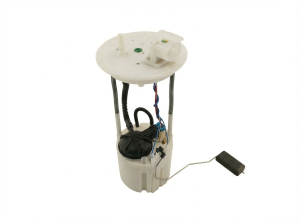
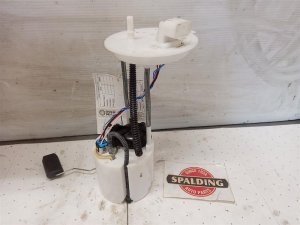
Est. part cost: $50-$120 - Failing Low-Pressure (In-Tank) Fuel Pump ⚪ Low Probability → Shop Fuel Pump
How to confirm: Perform a fuel pressure test on the low-pressure side of the system. If the pressure is below specification, the in-tank pump cannot supply enough fuel to the HPFP. Key-on, engine-off prime pressure should be between 55-60 PSI.
Typical fix: Replace the in-tank fuel pump module.
Est. part cost: $130-$250 - Clogged Fuel Filter or Restricted Fuel Lines ⚪ Low Probability → Shop Fuel Filter
How to confirm: A low-pressure fuel system test can reveal restrictions. A visual inspection of fuel lines for kinks or damage is also necessary.
Typical fix: Replace the clogged filter (if serviceable) or repair/replace the damaged fuel line.
Est. part cost: $20-$100
Rare But Worth Checking
- Leaking Fuel Injector(s): → Shop Fuel Injector A leaking injector can cause a drop in rail pressure. TSB #PIP6003 for similar GM engines suggests performing an AFIT (Active Fuel Injector Tester) test to rule out injectors before condemning the high-pressure fuel pump. A leaking injector would typically be accompanied by misfire codes for a specific cylinder.
- Wiring or Connector Issue: Damaged wiring or a corroded connector at the fuel rail pressure sensor or high-pressure fuel pump can cause erratic signals. TSB #20-NA-197 highlights this issue on other GM vehicles, recommending inspection and application of dielectric grease. TSB #21-NA-215 for the Encore GX and Trailblazer points to a loose G106 ground nut causing a lack of power and various DTCs, including P228C, which is related to P0089.
- ECM Software Issue: The existence of TSB #PIP5860, where GM Engineering was investigating the root cause for history codes, suggests a potential for software-related glitches that could trigger the code without a mechanical fault. Owners should ensure their vehicle's ECM software is up to date.
Diagnosis Steps
- Connect a professional scan tool and check if code P0089 is 'Active'/'Current' or 'History'.
- If the code is in 'History', follow the advice of TSB #PIP5860: clear the code, drive the vehicle, and see if it returns as an active fault before proceeding.
- If the code is 'Active', check for any other stored DTCs, particularly P228C, P00C6, or P0087.
- Use the scan tool's live data function to observe 'Desired Fuel Rail Pressure' and 'Actual Fuel Rail Pressure'.
- Compare the two readings at idle, during steady cruising, and under hard acceleration. A significant and consistent lag or drop in actual pressure points to a problem.
- Inspect wiring and connectors. Check the G106 ground nut for tightness, as a loose ground can cause power loss issues and related codes per TSB #21-NA-215. Inspect the fuel rail pressure sensor connector for corrosion as per TSB #20-NA-197.
- Perform a fuel pressure and volume test on the low-pressure (in-tank) fuel pump to ensure it is adequately supplying the high-pressure pump. With the key on and engine off, the prime pulse pressure should be 55-60 PSI.
- If available, perform an AFIT (Active Fuel Injector Tester) test as suggested by TSB #PIP6003 to rule out faulty injectors.
- If the low-pressure system is healthy, wiring is intact, and injectors test good, but the actual pressure readings are still incorrect, the fuel rail pressure sensor is a likely suspect.
- If the sensor is confirmed to be working and all other possibilities are ruled out, the high-pressure fuel pump is the most probable cause of the active fault.
Parts You'll Likely Need
- High-Pressure Fuel Pump
(OEM #12706123 (supersedes 12691320))— This pump is responsible for creating the high fuel pressure required for direct injection and is a common failure point when P0089 is an active code.
Trusted brands: ACDelco (GM Genuine), Standard Motor Products
OEM price range: $200-$350
Aftermarket price range: $75-$250 - Fuel Rail Pressure Sensor
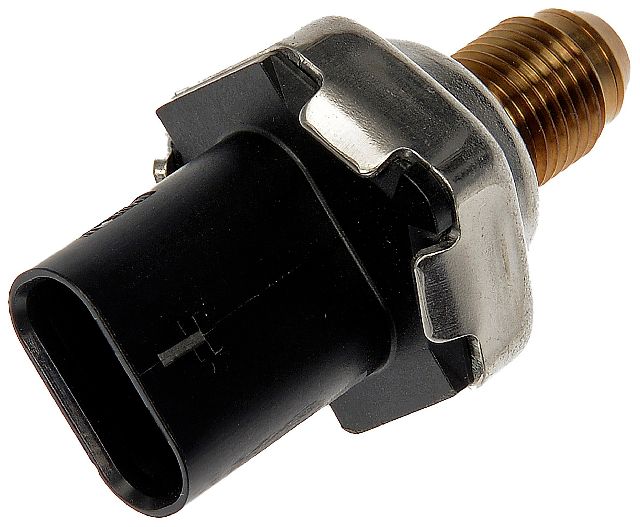
(OEM #12705503 (supersedes 12672582))— This sensor provides the critical feedback to the ECM. A faulty sensor or corroded connector can send incorrect data, causing the ECM to set P0089 even if the pressure is normal.
Trusted brands: ACDelco (GM Genuine), Bosch, Autotecnica
OEM price range: $35-$70
Aftermarket price range: $20-$50
Related Codes That Often Appear With This One
- P228C — Stands for 'Fuel Pressure Regulator 1 Control Performance - Low Pressure'. This code is often seen with P0089 and is also mentioned in TSB #PIP5860, indicating a closely related fuel pressure deviation.
- P00C6 — Stands for 'Fuel Rail Pressure Low During Engine Cranking'. This code was reported alongside P0089 in an NHTSA owner complaint, suggesting a failure to build adequate pressure even at startup.
- P0087 — Stands for 'Fuel Rail/System Pressure - Too Low'. This is a more direct code indicating low pressure, which is the underlying cause of the P0089 performance issue.
Technical Service Bulletins (TSBs) & Recalls
- PIP5860: Advises against replacing the high pressure fuel pump, fuel injectors, or fuel rail for a history DTC P0089 or P228C, and to only perform repairs if the code is active and diagnosed. Applies to both Encore GX and Chevrolet Trailblazer.
- 21-NA-215: Addresses a pop noise on acceleration and lack of power, which may be caused by a loose G106 ground nut. This can set multiple DTCs, including P228C, which is often seen with P0089.
- 20-NA-197: While for other GM models, it details how corrosion on sensor connectors can cause performance issues and recommends inspection and the use of dielectric grease.
Platform-Specific Known Issues
- A Preliminary Information bulletin from GM (TSB #PIP5860) specifically addresses P0089 on the 2020-2022 Encore GX. It warns service technicians not to replace fuel system components if the code is only in history, as the root cause was under investigation, implying a non-hardware-failure cause in some cases.
- TSB #21-NA-215 points to a potentially loose G106 ground nut from the factory, which can cause a pop noise on acceleration, lack of power, and set various DTCs, including the related code P228C. Checking this ground should be part of the diagnosis.
Mechanic-Grade Diagnostic Values
- Low-Side Fuel Pressure (In-tank pump) — expected: 55-60 PSI. Failure: Pressure significantly below 55 PSI indicates a weak in-tank pump or restriction.
- High-Pressure Fuel System Capability — expected: Up to 35 MPa (5,076 PSI). Failure: This is a system maximum, not a direct test value. It informs the technician of the extreme pressures involved.
- Fuel Rail Pressure Sensor vs. Mechanical Gauge — expected: The scan tool reading for fuel rail pressure (with key on, engine off) should closely match the reading from a mechanical gauge on the low-side service port.. Failure: A significant difference between the electronic sensor reading and the mechanical gauge reading points to a faulty or offset fuel rail pressure sensor.
Scan Tool Commands That Help
- GDS2 / Professional Scan Tool: Live Data: Desired vs. Actual Fuel Rail Pressure — This is the primary diagnostic function for P0089. It should be monitored at idle, under load, and during acceleration to see if the actual pressure can keep up with the commanded pressure from the ECM. A large, consistent deviation indicates a performance fault.
- GDS2 / Professional Scan Tool: Live Data: Fuel Rail Pressure Sensor (PSI/kPa) — Used with key on, engine off to compare the sensor's reading against a mechanical low-pressure gauge to verify sensor accuracy before the high-pressure pump engages.
Wiring & Ground Locations
- G106 — On the front center of the frame cross rail, under the crank pulley.. TSB #21-NA-215 identifies a potentially loose G106 ground nut from the factory causing lack of power and setting codes like P228C, which is a companion code to P0089. A poor ground here can affect multiple engine management systems.
- Underhood Fuse Block — Engine compartment.. Several fuses are critical for the ECM and related components. Check F25 (ECM TCM RUN/CRNK), F31 (ECM PT2), F36 (ECM PT1), and F47 (ECM BATT-GAS) for integrity before condemning expensive components.
- In-tank Fuel Pump Connector — At the top of the fuel tank, providing power to the low-pressure pump.. This is a 2-terminal connector using 18-gauge wire. Inspecting this connector for corrosion or damage is a key step when diagnosing a low-pressure supply issue.
Real Owner Repair Stories
- YouTube channel 'Mr.B' (2015 GMC Terrain 2.4L EcoTech (different engine, but same GDI principle)) — Check Engine Light with codes P0016 (Crank/Cam Correlation), P0089, and P228D. Engine ran okay but had low vacuum at startup.
❌ Tried (didn't work) Initial diagnosis focused on the fuel system due to the P0089 code.
✅ What actually fixed it The root cause was a stretched timing chain. The high-pressure fuel pump on this GDI engine is driven by a lobe on the intake camshaft. The incorrect camshaft timing due to the stretched chain caused the high-pressure pump to perform incorrectly, triggering the P0089 code. Replacing the timing chain kit resolved all codes, including the fuel pressure code.
When the Usual Fixes Don't Work
- While the most common causes for an active P0089 code are the high-pressure fuel pump or sensor, a notable counter-example from a similar GM GDI engine showed the actual cause to be a stretched timing chain. Because the high-pressure pump is driven by the camshaft, the incorrect mechanical timing led directly to a fuel pressure performance code (P0089). This highlights the need to investigate any accompanying timing-related DTCs (like P0016) before replacing fuel system parts.
OEM Part Supersession History
12672582→12705503— Part revision or manufacturer change for the Fuel Rail Pressure Sensor.12691320→12706123— Part revision or manufacturer change for the High-Pressure Fuel Pump.
Model Year Variations Within This Range
- 2020-2022: No significant variations in the fuel system related to this code are documented within this model year range. The 1.2L LIH and 1.3L L3T engines were used consistently. The 1.3L L3T was standard on AWD models and optional on FWD Select and Essence trims.
Helpful Videos
Used OEM Parts in Stock
New Aftermarket Parts Available

The information in this article is provided for general reference and educational purposes only. Vehicle specifications, procedures, and part compatibility can vary by production date, trim level, and region. Always consult your vehicle's factory service manual and verify part numbers before purchasing or performing repairs. Safety-critical components such as airbags, seat belts, and braking systems should be installed by a qualified professional.
- Buick ENCORE GX:
- 🧭 Diagnostic Flowchart
- 🎬 Helpful Videos
- 🛍️ Shop This Part
- What's Unique About the 2020-2022 Buick ENCORE GX
- Symptoms You May Notice
- Most Likely Causes
- Rare But Worth Checking
- Diagnosis Steps
- Parts You'll Likely Need
- Related Codes That Often Appear With This One
- Technical Service Bulletins (TSBs) & Recalls
- Platform-Specific Known Issues
- Mechanic-Grade Diagnostic Values
- Scan Tool Commands That Help
- Wiring & Ground Locations
- Real Owner Repair Stories
- When the Usual Fixes Don't Work
- OEM Part Supersession History
- Model Year Variations Within This Range
- 🎟️ Get 5% Off