

P0089 on 2010-2011 Buick LaCrosse: Fuel Pressure Regulator Causes and Fixes
On a 2010-2011 LaCrosse, P0089 almost always points to a failing high-pressure fuel pump (HPFP) located on the engine. On 2.4L models, if recent engine work was done, it could also be due to an incorrect camshaft part as noted in a GM TSB. Expect to pay $200-$400 for a new HPFP.
- For a 2010-2011 LaCrosse, P0089 is a serious code that points to a problem in the high-pressure fuel system.
- The most common cause across all engines is a failing high-pressure fuel pump (HPFP) located on the engine itself.
- If your LaCrosse has the 2.4L engine and recently had major engine service, the code may be caused by an incorrect camshaft part being installed, as per GM TSB #PIP5203C.
- Do not drive the vehicle. A stall or sudden loss of power is possible, creating a safety hazard.
- When replacing the HPFP, you must also replace the single-use high-pressure fuel line to prevent a fire risk.
What's Unique About the 2010-2011 Buick LACROSSE

For the 2010-2011 LaCrosse with the 2.4L engine, this code has a very specific and unusual potential cause documented by General Motors. A Technical Service Bulletin (TSB #PIP5203C) warns that if the engine, intake camshaft, or camshaft actuator has been replaced, installing the wrong model year part can trigger code P0089. This happens because the high-pressure fuel pump is driven by the camshaft, and a part mismatch affects the pump's mechanical operation, causing fuel pressure errors that are unrelated to the pump itself. For all engines, including the V6s, failure of the high-pressure fuel pump is a widely known weak point.
Diagnostic Flowchart

Tap your situation to follow the diagnostic path that matches what you're seeing on this vehicle.
Symptoms You May Notice
- Reduced Engine Power message on the dashboard
- Hesitation or stumbling during acceleration
- Rough or unstable idle
- Engine stalling unexpectedly
- Hard starting or long crank times
- Check Engine Light is on
- Rattling or whining noise from the high-pressure fuel pump
- Strong smell of fuel in the engine oil
- Replacing the in-tank (low-pressure) fuel pump when the engine-mounted high-pressure pump is the actual cause of the problem.
- Replacing the high-pressure fuel pump on a 2.4L engine after recent engine work, when the true cause is an incorrect camshaft or actuator as described in TSB #PIP5203C.
Most Likely Causes

- Failing High-Pressure Fuel Pump (HPFP) 🔴 High Probability → Shop Fuel Pump The HPFP on GM's 2.4L, 3.0L, and 3.6L direct injection engines of this era is a well-documented common failure item, with GM issuing special coverage warranties for some models due to high failure rates.
How to confirm: Use a scan tool to monitor commanded vs. actual fuel rail pressure. If actual pressure cannot meet the commanded pressure, especially under load, and the low-pressure system is confirmed to be working (50-65 PSI), the HPFP is the likely culprit. Another key indicator is a strong smell of gasoline on the oil dipstick, which points to a failed internal seal in the pump.
Typical fix: Replace the high-pressure fuel pump, its gasket, and the single-use high-pressure fuel line that connects to the fuel rail. It is also highly recommended to replace the camshaft follower (tappet) at the same time.
Est. part cost: $200-$450 - Incorrect Intake Camshaft or Actuator Sprocket (2.4L Engine) 🟡 Medium Probability → Shop Engine Camshaft As per TSB #PIP5203C, there was a mid-cycle change in camshaft parts. Using a 2011 part on a 2010 engine (or vice-versa) will cause excessively high fuel pressure at idle (around 2000-2500 PSI) and trigger codes P0089 and P228D.
How to confirm: This should be the primary suspect if the code appeared immediately after an engine, camshaft, or timing chain replacement. The TSB advises removing the cam cover to check the actuator colors: a 2010 engine should have a gray intake actuator and a black exhaust actuator. A 2011 engine has black actuators for both.
Typical fix: Replace the incorrect camshaft and/or actuator sprocket with the correct part for the vehicle's specific model year.
Est. part cost: $150-$300 - Faulty Fuel Rail Pressure Sensor ⚪ Low Probability → Shop Fuel Pressure Sensor
How to confirm: With the key on and engine off, check the pressure reading on a scan tool. It should be low and stable. If the reading is erratic, stuck at a high value, or doesn't change plausibly with engine operation, the sensor may be faulty. Wiggling the sensor connector to see if readings change can also indicate a wiring issue.
Typical fix: Replace the fuel rail pressure sensor. On the V6 engines, this requires removing the upper intake manifold.
Est. part cost: $50-$100 - Failing In-Tank Low-Pressure Fuel Pump ⚪ Low Probability → Shop Fuel Pump
How to confirm: Test the fuel pressure from the in-tank pump at the feed line to the HPFP. It should meet the manufacturer's specification (typically 50-65 PSI). If pressure is low, the in-tank pump is weak or the fuel filter is clogged.
Typical fix: Replace the in-tank fuel pump module. This is a major job as it often requires dropping the fuel tank.
Est. part cost: $200-$400
Rare But Worth Checking
- Worn Camshaft Follower (Tappet): → Shop Engine Camshaft The HPFP is driven by a camshaft lobe via a small follower or 'tappet' (OEM #12645725 for 2.4L). If this follower wears down or shatters, it can cause a rattling noise and prevent the pump from generating sufficient pressure. It is considered best practice to inspect and replace this part whenever the HPFP is replaced.
- Leaking Fuel Injector: → Shop Fuel Injector A fuel injector stuck open can cause a drop in fuel rail pressure, potentially triggering P0089. This would likely be accompanied by a rich running condition, fuel smell, and misfire codes for a specific cylinder.
- Faulty Fuel Rail Pressure Sensor Wiring: → Shop Fuel Pressure Sensor As documented in a detailed repair on iATN, a loose pin or corrosion in the sensor's electrical connector can cause erratic pressure readings, leading to P0089 and other codes even with a good sensor and pump.
Diagnosis Steps
- Check for other DTCs. Codes like P228D, P0087, or timing codes can provide critical diagnostic clues.
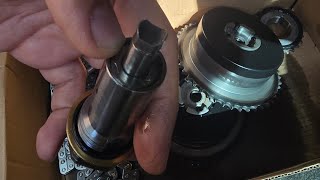
- If recent engine work was performed on a 2.4L engine, immediately investigate TSB #PIP5203C. 🎬 See how this mechanic resolved the P0089 camshaft mismatch. Verify the correct intake camshaft and actuator are installed before proceeding.
- Using a capable scan tool, observe the 'Commanded Fuel Rail Pressure' and 'Actual Fuel Rail Pressure' PIDs. Compare the values at idle, during a steady cruise, and under hard acceleration. Note any large discrepancies.
- If actual pressure consistently fails to meet commanded pressure, the issue is likely in the fuel delivery system.
- Test the low-pressure fuel system. Verify the in-tank pump is delivering adequate pressure (typically 50-65 PSI) to the high-pressure pump.
- If the low-pressure side is healthy, shift focus to the high-pressure system. Remove the oil cap and smell for gasoline, a strong indicator of a failed HPFP internal seal.
- Inspect the wiring and connector for the fuel rail pressure sensor and the HPFP. Check for loose pins or corrosion.
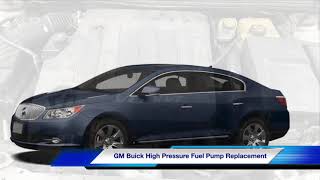
- If wiring is intact and the HPFP is suspected, prepare for replacement. 🎬 Watch: Step-by-step Buick high pressure fuel pump replacement guide. Before removing the old pump, ensure the camshaft lobe is at its base circle to relieve spring pressure.
- When replacing the HPFP, also replace the single-use high-pressure fuel line and inspect/replace the camshaft follower (tappet).
Parts You'll Likely Need
- High-Pressure Fuel Pump
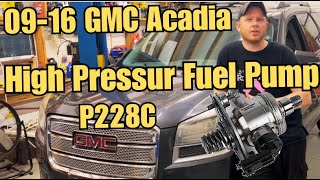
(OEM #12641847 (For 2.4L LAF, 3.0L LF1, 3.6L LLT))— This is the most common failure point for code P0089 on these GM direct injection engines.
Trusted brands: ACDelco (GM Genuine), Bosch
OEM price range: $300-$500
Aftermarket price range: $150-$350 - High-Pressure Fuel Line
(OEM #12634246 (V6) or 12635120 (I4) (Verify by VIN))— This is a single-use, torque-to-yield part. It MUST be replaced any time it is removed to prevent dangerous, high-pressure fuel leaks and fire risk.
Trusted brands: ACDelco
OEM price range: $40-$70
Aftermarket price range: $30-$50 - Intake Camshaft Actuator Sprocket
(OEM #12621505 (2011 Intake) or 12597025 (2010 Intake) (Verify by VIN))— For the 2.4L engine, this part may be needed if the incorrect one was installed during a previous repair, as per TSB #PIP5203C.
Trusted brands: ACDelco
OEM price range: $70-$120
Aftermarket price range: $40-$80 - HPFP Camshaft Follower / Tappet
(OEM #12645725 (For 2.4L LAF))— This small component transfers motion from the camshaft lobe to the HPFP piston and is a common wear item. It is best practice to replace it with the HPFP.
Trusted brands: ACDelco
OEM price range: $20-$40
Aftermarket price range: $15-$30
Related Codes That Often Appear With This One
- P228D — Stands for 'Fuel Pressure Regulator 1 Control Performance - High Pressure'. This code is specifically mentioned in GM's TSB alongside P0089 when the incorrect camshaft parts are installed on the 2.4L engine, causing excessively high pressure.
- P0087 — Stands for 'Fuel Rail/System Pressure - Too Low'. This code often appears with P0089 as it indicates a direct failure to meet pressure targets, commonly caused by a failing HPFP.
- P0191 — Stands for 'Fuel Rail Pressure Sensor Circuit Range/Performance'. This can indicate a problem with the sensor itself or its wiring, and often accompanies general pressure performance codes like P0089.
- P0300 — Stands for 'Random/Multiple Cylinder Misfire Detected'. Inconsistent fuel pressure can lead to poor combustion across all cylinders, resulting in a general misfire code.
Technical Service Bulletins (TSBs) & Recalls

- PIP5203C: Details diagnostic information for finding codes P0089 and P228D due to an incorrect intake camshaft or camshaft actuator sprocket being installed, primarily on the 2.4L engine.
Platform-Specific Known Issues
- TSB #PIP5203C: The 2.4L Camshaft Mix-Up: → Shop Engine Camshaft This bulletin is critical for the 2.4L (RPO LAF) engine. It details how installing an incorrect intake camshaft or actuator sprocket (e.g., a 2010 part on a 2011 vehicle or vice-versa) will cause P0089 and P228D. A 2010 engine uses a gray intake actuator, while a 2011 uses a black one. This should be the first check if the code appears after engine repairs.
- Real-World Repair Story: It's Not Always the Pump: A technician on the iATN network shared a case of a 2010 LaCrosse 3.6L that had its HPFP, sensor, and an injector replaced without fixing the issue. The ultimate cause was a single loose wire in the fuel pressure sensor's pigtail connector. Wiggling the connector caused pressure readings to jump erratically. This proves that even with a high-probability part like the HPFP, basic wiring checks are essential.
Mechanic-Grade Diagnostic Values
- High-Pressure Fuel Pump (HPFP) Control Solenoid Resistance — expected: 10 ohms +/- 1 ohm at 25°C (77°F).. Failure: A reading outside this range indicates a faulty solenoid, requiring pump replacement.
- High-Pressure Fuel Rail Pressure at Idle (2.4L Engine) — expected: 1.9-2.1 MPa (279-305 psi).. Failure: Significantly higher or lower pressure at idle suggests a problem with the HPFP or its control. Excessively high pressure (2000+ PSI) points to the camshaft issue in TSB #PIP5203C.
- High-Pressure Fuel Rail Pressure at Idle (3.0L Engine) — expected: Approximately 35 bar (508 psi).. Failure: Pressure that is significantly lower or wildly fluctuating can indicate a failing HPFP.
- Low-Pressure Fuel System Pressure (Commanded) — expected: Should increase to greater than 414 kPa (60 psi) when commanded with a scan tool.. Failure: Failure to reach the commanded pressure points to a weak in-tank fuel pump or a restriction in the low-pressure line.
- DTC P0089 Set Condition — expected: Actual fuel rail pressure is more than 3 MPa (435 psi) different from desired fuel pressure for over 5 seconds.. Failure: This is the specific threshold the ECM uses to trigger the fault code.
Hidden / Shadow Codes Worth Checking
- Type A vs. Type B DTC: P0089 is a 'Type B' DTC, meaning the Check Engine Light will illuminate only after the fault is detected on two consecutive drive cycles. However, the related code P228D (High Pressure) is a 'Type A' DTC, which will illuminate the light on the first detection of a fault. (see via Standard OBD-II Scan Tool)
Scan Tool Commands That Help
- GDS2, Autel, or equivalent professional scan tool: Fuel Pressure Control / Fuel Rail Pressure Test — After verifying low-pressure system integrity, use this bidirectional command to manually increase and decrease desired fuel pressure. Observe if the 'Actual Fuel Rail Pressure' PID follows the command. This directly tests the ECM's ability to control the HPFP and the pump's ability to respond.
- GDS2, Autel, or equivalent professional scan tool: Fuel Pump Control Module / Low Pressure Fuel Pump Test — Use this command to energize the in-tank fuel pump to its maximum duty cycle. This helps confirm if the low-pressure pump is capable of delivering sufficient pressure (over 60 PSI) to the HPFP, ruling out a low-side supply issue.
Wiring & Ground Locations
- Fuel Rail Pressure Sensor Connector (V6 Engines) — Under the upper intake manifold, connected to the fuel rail pressure sensor.. A documented failure involves the white wire breaking internally or having a loose pin within the connector pigtail. This causes erratic pressure readings, triggering P0089 and other codes even when the sensor and pump are good. The replacement pigtail is ACDelco PT2798.
- BCM (Body Control Module) — Under the driver's side of the dashboard.. While the fuel system is primarily controlled by the ECM (Engine Control Module), the BCM manages various vehicle systems and provides key data. Knowing its location is useful for diagnosing complex electrical faults that could indirectly affect the powertrain.
Real Owner Repair Stories
- iATN (International Automotive Technicians Network) Technical Tip (2010 Buick LaCrosse CXS 3.6L V6) — Hard start, runs poorly, runs rich, may pop back into intake, reduced power mode. Multiple codes including P0089, P0088 (high pressure), and misfires.
❌ Tried (didn't work) Replaced high-pressure fuel pump, Replaced high-pressure fuel lines, Replaced fuel rail pressure sensor, Replaced #1 fuel injector, Replaced Bank 1 Sensor 2 oxygen sensor
✅ What actually fixed it The connector for the fuel rail pressure sensor was faulty. While wiggling the connector with the key on, the pressure readings on the scan tool changed. The white wire was loose. Replacing the connector pigtail (ACDelco part #PT2798) resolved all issues.
"I Checked Everything" — The Actual Cause
- In a documented case on a 2010 LaCrosse 3.6L, after replacing the HPFP and sensor without success, the root cause was not a pressure or component failure, but an electrical one. The fuel rail pressure sensor connector had a loose pin on the white wire, causing erratic readings. This was only found by physically manipulating the harness while watching live scan tool data, a step often overlooked after major parts have been replaced.
OEM Part Supersession History
12608371, 12633115, 12633423, 12639694→12641847— Standard design improvement and part consolidation by the manufacturer.12578516→12621505— Updated part design for the camshaft actuator.
Heads up: Part #12621505 is for 2011+ 2.4L engines. Using it on a 2010 2.4L engine will cause high fuel pressure and set codes P0089 and P228D, as noted in TSB #PIP5203C.
Model Year Variations Within This Range
- 2010 vs. 2011 (2.4L Engine): The intake camshaft and camshaft actuator sprocket are different. A 2010 engine uses a gray intake actuator, while a 2011 uses a black one. Installing the incorrect year's part will cause severe fuel pressure regulation issues and trigger P0089.
- 2010: In early 2010, the 2.4L I4 engine (LAF) became the standard engine on the base CX model, replacing the 3.0L V6 (LF1) which had been standard at the generation's launch.
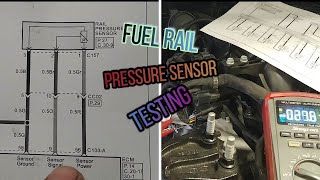
Helpful Videos
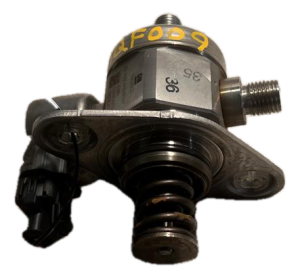
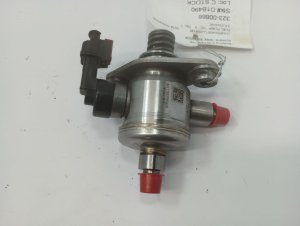
Used OEM Parts in Stock
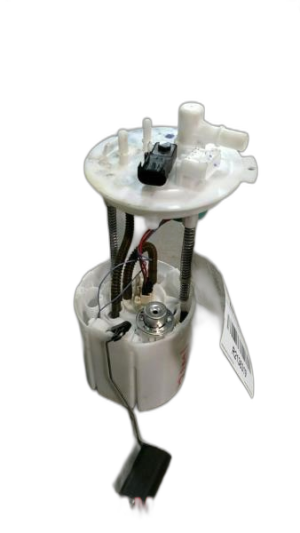
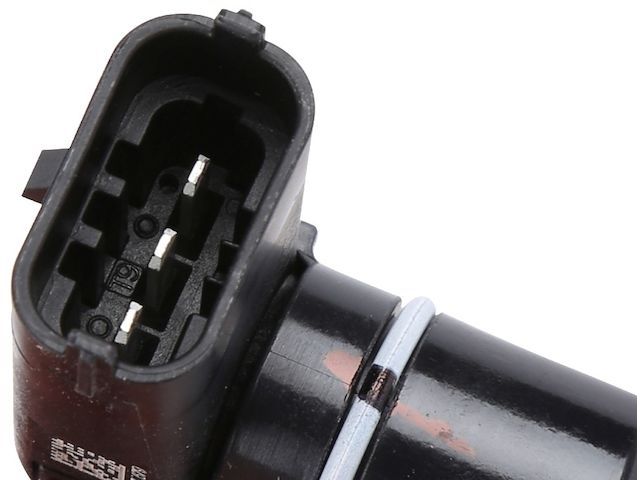
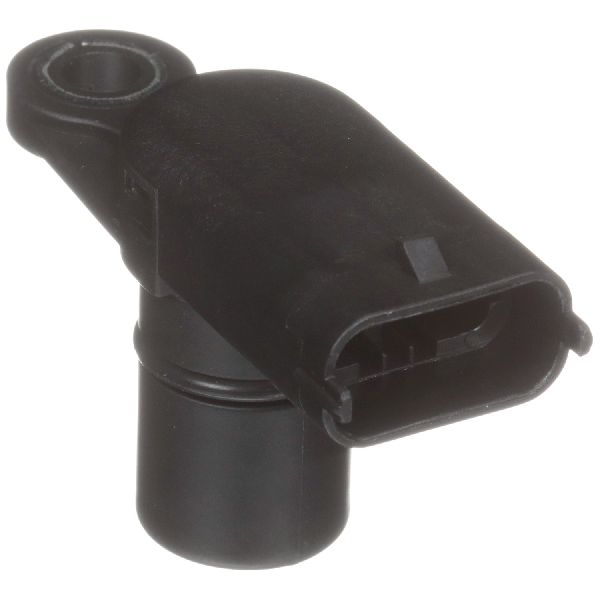
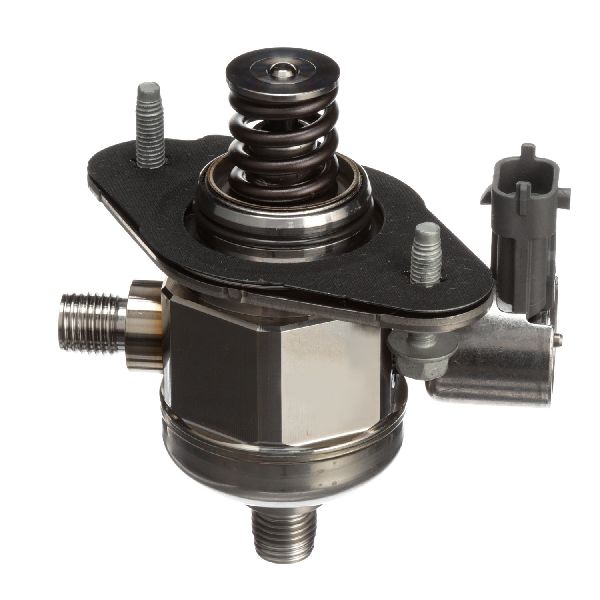
New Aftermarket Parts Available


The information in this article is provided for general reference and educational purposes only. Vehicle specifications, procedures, and part compatibility can vary by production date, trim level, and region. Always consult your vehicle's factory service manual and verify part numbers before purchasing or performing repairs. Safety-critical components such as airbags, seat belts, and braking systems should be installed by a qualified professional.
- Buick LACROSSE:
- 🧭 Diagnostic Flowchart
- 🎬 Helpful Videos
- 🛍️ Shop This Part
- What's Unique About the 2010-2011 Buick LACROSSE
- Symptoms You May Notice
- Most Likely Causes
- Rare But Worth Checking
- Diagnosis Steps
- Parts You'll Likely Need
- Related Codes That Often Appear With This One
- Technical Service Bulletins (TSBs) & Recalls
- Platform-Specific Known Issues
- Mechanic-Grade Diagnostic Values
- Hidden / Shadow Codes Worth Checking
- Scan Tool Commands That Help
- Wiring & Ground Locations
- Real Owner Repair Stories
- "I Checked Everything" — The Actual Cause
- OEM Part Supersession History
- Model Year Variations Within This Range
- 🎟️ Get 5% Off