

P0089 on 2011 Buick Regal: Fuel Pressure Regulator Performance Causes and Fixes
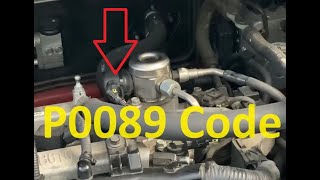
On a 2011 Buick Regal with the 2.4L engine, code P0089 almost always points to a failing high-pressure fuel pump (HPFP). This is a well-known issue for this engine. Before replacing the pump, verify the low-pressure fuel supply and check for timing-related codes, as a stretched timing chain can also cause P0089. The repair involves replacing the pump and the single-use high-pressure fuel line. Expect to pay $300-$550 for the OEM part.
- P0089 on a 2011 Regal 2.4L is most likely a failed high-pressure fuel pump (HPFP).
- Symptoms include reduced power, stalling, rough idle, and a whining noise from the engine.
- This is not a DIY-friendly repair. The fuel system is under dangerously high pressure.
- Always replace the single-use high-pressure fuel line when replacing the pump to prevent leaks.
- If the engine was recently replaced or repaired, verify the correct camshaft parts were used, as per TSB #PIP5203C.
What's Unique About the 2011-2011 Buick REGAL
For the 2011 Buick Regal with the 2.4L LAF engine, P0089 is a well-documented and common issue, almost always leading back to a failing high-pressure fuel pump (HPFP). These pumps are a known weak point across several GM platforms using this engine. Uniquely, there is a GM Technical Service Bulletin (TSB #PIP5203C) that links P0089 to the installation of incorrect model year camshaft parts after an engine repair, which can cause identical symptoms (whining noise, high pressure at idle) and mislead diagnosis. This makes it critical to consider the vehicle's repair history when this code appears. Additionally, worn timing chains on the 2.4L Ecotec are another known issue that can directly cause P0089 by altering the mechanical drive of the HPFP.
Diagnostic Flowchart
Tap your situation to follow the diagnostic path that matches what you're seeing on this vehicle.
Symptoms You May Notice
- Check Engine Light is on
- Reduced engine power or 'limp mode' message displayed
- Engine hesitation or stumbling during acceleration
- Rough idle, loping, or lunging, especially when in gear at a stop
- Hard starting or extended cranking
- Engine stalling unexpectedly
- Whining or rattling noise from the engine bay, specifically the HPFP area
- Strong smell of gasoline in the engine oil, indicating the HPFP is leaking internally
- Replacing fuel injectors when they are not the root cause. While a leaking injector can cause pressure loss, it's less common than HPFP failure for this code on this engine.
- Replacing the ECM. While a faulty ECM is a theoretical possibility, it is extremely rare and should only be considered after all other fuel system components and wiring have been exhaustively tested.
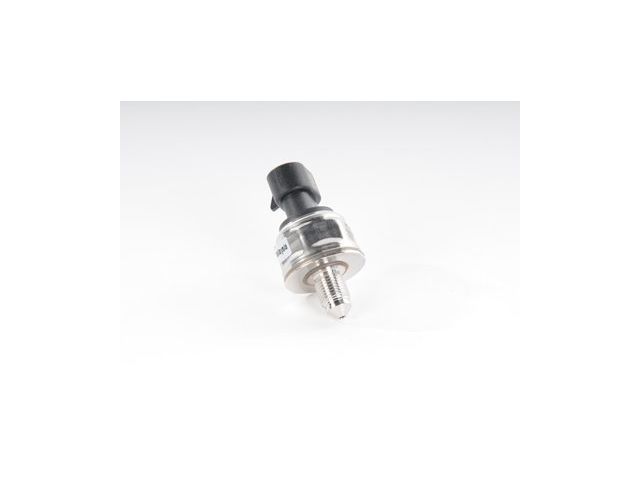
- Replacing the Fuel Rail Pressure Sensor. As seen in multiple forum threads and owner reports, owners often replace this sensor first without success, as the symptoms often point to a mechanical pump issue.
Most Likely Causes
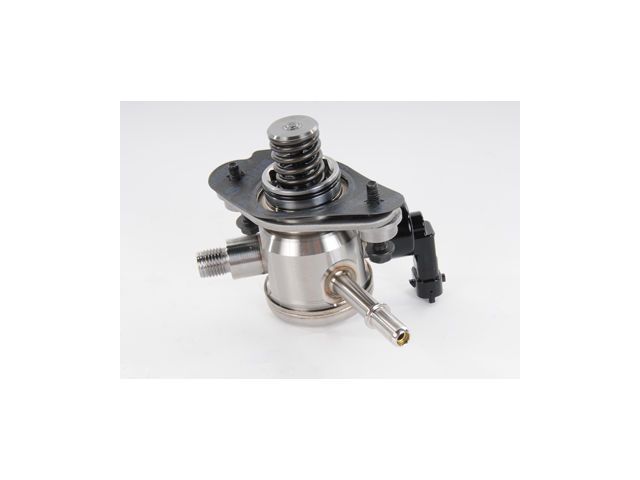
- Failing High-Pressure Fuel Pump (HPFP) 🔴 High Probability → Shop Fuel Pump The HPFP on the 2.4L Ecotec engine is a widely documented failure point. The internal mechanism wears out, or the internal seals fail, leading to an inability to generate commanded pressure or fuel leaking into the crankcase.
How to confirm: Use a scan tool to monitor 'Commanded Fuel Rail Pressure' vs. 'Actual Fuel Rail Pressure'. A significant and persistent discrepancy, especially under load, points to the pump. An actual pressure that is more than 2,500 kPa (363 psi) different from desired for over 5 seconds can set the code. A whining noise from the pump is also a strong indicator. Checking the engine oil for a gasoline smell is a key indicator of an internal pump leak.
Typical fix: Replace the high-pressure fuel pump, its gasket, and the single-use high-pressure fuel line that connects it to the fuel rail. An oil change is highly recommended if fuel dilution is suspected.
Est. part cost: $280-$550 - Faulty Fuel Rail Pressure Sensor 🟡 Medium Probability → Shop Fuel Pressure Sensor
How to confirm: If the actual fuel pressure reading on a scan tool is erratic, stuck at a certain value, or reads extremely high (e.g., over 2200 PSI at idle), the sensor may be faulty. However, this is often replaced unnecessarily when the pump is the true cause.
Typical fix: Replace the fuel rail pressure sensor.
Est. part cost: $50-$150 - Weak In-Tank (Low-Pressure) Fuel Pump ⚪ Low Probability → Shop Fuel Pump
How to confirm: The HPFP cannot function correctly if it isn't being supplied with adequate fuel from the tank. Test the low-pressure fuel system pressure at the feed line to the HPFP. Using a scan tool, command the low-pressure pump and verify it can achieve and hold pressure above 414 kPa (60 psi).
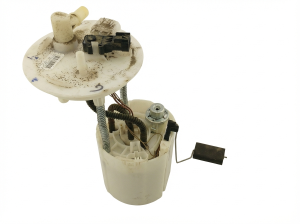
Typical fix: Replace the in-tank fuel pump module.
Est. part cost: $200-$400
Rare But Worth Checking
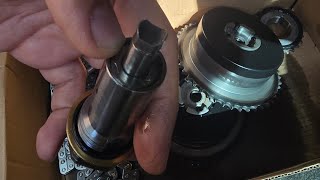
- Incorrect Intake Camshaft or Camshaft Actuator Sprocket: → Shop Engine Camshaft This is a very specific scenario documented in TSB #PIP5203C. If the engine, intake camshaft, or actuator has been replaced recently, the wrong model year part may have been installed. A 2011 LAF engine should have black actuators for both cams, while a 2010 has a gray intake actuator. This affects the mechanical drive of the HPFP, causing high pressure at idle (2000-2500 PSI) and codes P0089 and P228D.
- Stretched Timing Chain or Worn Cam Lobe: → Shop Engine Timing Chain The HPFP is driven by a three-lobed section of the intake camshaft. The 2.4L Ecotec is known for timing chain issues. A stretched chain can alter cam timing enough to affect the HPFP's performance, triggering P0089, often alongside timing correlation codes like P0016/P0017. Physical inspection of the cam lobes that drive the pump is necessary if the pump is removed.
Diagnosis Steps
- Connect a scan tool and check for any other stored DTCs. Pay close attention if P228D, P0016, or P0017 are present.
- Using the scan tool's live data function, monitor 'Desired Fuel Rail Pressure' and 'Actual Fuel Rail Pressure' at idle, during a steady cruise, and under acceleration.
- Observe if the actual pressure significantly lags behind the desired pressure under load, or if it reads excessively high at idle (e.g., >2000 PSI), which could indicate the TSB camshaft issue.
- Listen for a distinct whining or ticking noise from the high-pressure fuel pump, which is located on the engine and driven by the camshaft.
- Check the engine oil on the dipstick for a strong smell of raw fuel. This is a sign of a failed internal seal on the HPFP. If detected, an oil change is mandatory after the pump is replaced.
- If recent major engine work has been performed, consult TSB #PIP5203C. If possible, inspect the camshaft actuator sprockets for the correct colors (both should be black for a 2011 model).
- Test the low-pressure fuel system to ensure the HPFP is receiving an adequate fuel supply (should be >60 PSI / 414 kPa when commanded by a scan tool).
- Inspect the wiring and connector for the fuel rail pressure sensor and the HPFP for any signs of damage or corrosion. A high resistance on these circuits can trigger the code.
- If low-side pressure is good, timing codes are absent, and the oil is not diluted with fuel, the HPFP itself is the most likely culprit.
Parts You'll Likely Need
- High-Pressure Fuel Pump
(OEM #12641847)— This is the most common failure part for code P0089 on the 2.4L engine in the 2011 Buick Regal. This part number supersedes previous versions 12639694, 12633423, 12633115, and 12608371.
Trusted brands: ACDelco, GM Genuine Parts
OEM price range: $280-$550
Aftermarket price range: $200-$400 - High-Pressure Fuel Line
(OEM #12670475)— This is a single-use, 'torque-to-yield' part. It must be replaced any time it is removed to prevent high-pressure fuel leaks and potential fires, as stated in service literature.
Trusted brands: ACDelco, GM Genuine Parts
OEM price range: $30-$90
Aftermarket price range: $20-$50 - Fuel Rail Pressure Sensor
(OEM #12651990)— This sensor can fail and send incorrect readings to the ECM, causing the code. It is a less common but still possible cause, though often misdiagnosed.
Trusted brands: ACDelco, Bosch, GM Genuine Parts
OEM price range: $70-$150
Aftermarket price range: $40-$90
Related Codes That Often Appear With This One
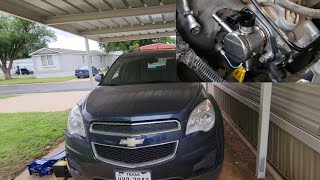
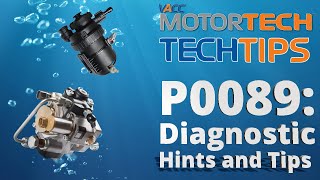
- P228D — Stands for 'Fuel Pressure Regulator 1 Control Performance - High Pressure'. This code frequently appears with P0089 and is specifically mentioned in TSB #PIP5203C as a companion code, often pointing to either a failing HPFP 🎬 Watch: How P0089 and P228D were finally resolved on this engine. or the incorrect camshaft parts being installed.
- P0172 — Stands for 'System Too Rich (Bank 1)'. A failing HPFP can leak fuel internally into the crankcase, which gets pulled into the intake via the PCV system, or a faulty regulator can cause excessive pressure, leading to a rich condition.
- P0300 — Stands for 'Random/Multiple Cylinder Misfire'. Inconsistent fuel pressure starves the cylinders of fuel, leading to poor combustion and misfires across multiple cylinders.
- P0016 / P0017 — Crankshaft/Camshaft Position Correlation codes. Their presence alongside P0089 is a strong indicator that the root cause is not the fuel pump itself, but a stretched timing chain that is affecting the mechanical drive of the pump.
Technical Service Bulletins (TSBs) & Recalls
- PIP5203C: Warns that codes P0089 and P228D, along with a whine from the HPFP, can be caused by installing an incorrect model year intake camshaft or camshaft actuator after an engine repair. It specifies part color differences for identification.
- 12313C: This was a Special Coverage Adjustment for the engine balance chain and fuel pump, extending the warranty to 10 years/120,000 miles. This coverage is now expired for 2011 models.
Platform-Specific Known Issues
- The 2.4L LAF Ecotec engine has a known history of high-pressure fuel pump failures. GM previously offered a special coverage warranty (#12313C) for this part and the engine balance chain for 10 years or 120,000 miles, but it has since expired for all 2011 vehicles based on age.
- GM TSB #PIP5203C details a specific issue where installing a 2010 model year intake camshaft or actuator (gray color) into a 2011 vehicle (which uses a black actuator) will cause P0089 and P228D, along with a whining noise from the HPFP. A special note in the TSB indicates that very early 2011 Regals (VIN prior to B1014160) used the 2010-design engine.
Mechanic-Grade Diagnostic Values
- High-Pressure Fuel Pump Actuator Solenoid Resistance — expected: 9 - 11 Ohms at 77°F (25°C). Failure: A reading outside this range, or less than infinite resistance between each terminal and the pump housing, indicates a faulty pump.
- Low-Pressure Fuel System Pressure (Commanded ON) — expected: Greater than 414 kPa (60 psi). Failure: Pressure below this range indicates a problem with the in-tank fuel pump or its supply circuit, which will starve the HPFP.
- High-Pressure Fuel Rail Pressure (at idle) — expected: 1.9 - 2.1 MPa (279 - 305 psi). Failure: Pressure significantly above or below this range at a stable idle points to a fault in the HPFP or its sensor.
- High-Pressure Fuel Rail Pressure (with incorrect camshaft parts) — expected: Approx. 2000 - 2500 PSI at idle. Failure: This extremely high pressure at idle is a key symptom of the model-year part mismatch described in TSB #PIP5203C.
- Camshaft Position Variance (Scan Tool PID) — expected: Less than +/- 4 degrees at idle. Failure: A persistent deviation greater than 4-6 degrees between desired and actual cam angles strongly suggests a mechanical timing issue (stretched chain) is the root cause of the fuel code.
Scan Tool Commands That Help
- GDS2 / Professional Scan Tool: Fuel Pressure Control / Fuel Pump Command — Use this to command an increase and decrease in fuel pressure to verify the HPFP actuator is responding and the fuel rail pressure sensor reads the change. This helps isolate a faulty pump from a faulty sensor.
- GDS2 / Professional Scan Tool: Low-Pressure Fuel Pump Command ON — Use this to activate the in-tank fuel pump without the engine running. This allows for a clean test of the low-pressure supply to ensure it meets the required 60+ PSI needed by the HPFP.
- GDS2 (GM Dealer Scan Tool): Output Control - Camshaft Position Actuator Solenoid — If timing codes like P0016/P0017 are present with P0089, this command manually activates the VVT solenoids. A change in engine idle confirms the solenoid and phaser are mechanically working, helping to rule them out as the cause of the timing deviation.
Wiring & Ground Locations
- G105 — On the rear of the engine block (for the related 2.4L engine in the Chevy Equinox).. The ECM and its sensors rely on clean ground connections. A corroded or loose engine ground can introduce electrical noise or voltage offsets, potentially causing incorrect readings from the fuel pressure sensor or poor performance from the HPFP actuator, leading to P0089.
Real Owner Repair Stories
- ScannerDanner Forum user (2011 Chevy Equinox 2.4L AWD (same engine and fuel system)) — Intermittent P0089 and P228D, only occurring at idle and in gear after 30+ minutes of driving.
❌ Tried (didn't work) A previous shop had already replaced the timing chain and VVT solenoids., New low-pressure fuel sensor was installed.
✅ What actually fixed it The problem was a defective intake camshaft phaser (actuator). Replacing it with a new AC Delco part resolved the issue. - JustAnswer user report (2011 Buick Regal CXL) — Reduced Engine Power message, Stabilitrak message, codes P0089 and P228D (Pressure too high).
❌ Tried (didn't work) In-tank fuel pump, Fuel rail pressure sensor, Throttle body, High-pressure fuel pump (HPFP), Mass Air Flow (MAF) sensor, Manifold Absolute Pressure (MAP) sensor, Both VVT solenoids
✅ What actually fixed it The user did not post the final resolution, but this story is a valuable example of how P0089 can lead to extensive and expensive parts replacement without a fix when the root cause is likely the specific issue described in TSB #PIP5203C (incorrect camshaft parts).
OEM Part Supersession History
12608371, 12633115, 12633423, 12639694→12641847— Standard part evolution and improvement by the manufacturer.2010 LAF Intake Camshaft Actuator (Gray, P/N 12597025)→2011 LAF Intake Camshaft Actuator (Black, P/N 12621505)— Model year design change in the engine.
Heads up: CRITICAL: Installing a 2010-style gray intake actuator on a 2011 engine (or vice-versa) will cause the HPFP to be driven incorrectly, resulting in extremely high fuel pressure at idle (2000-2500 PSI) and setting codes P0089 and P228D, as documented in TSB #PIP5203C.
Model Year Variations Within This Range
- 2011: TSB #PIP5203C notes that for the 2011 Regal with the 2.4L LAF engine, technicians must identify if it is an early or late build design when diagnosing fuel pressure issues after an engine repair. A 2011 LAF engine must have black camshaft actuator sprockets for both intake and exhaust. A 2010 LAF engine, which could be swapped in, uses a gray intake actuator and a black exhaust actuator. Using the wrong parts will cause P0089.
Helpful Videos

Used OEM Parts in Stock
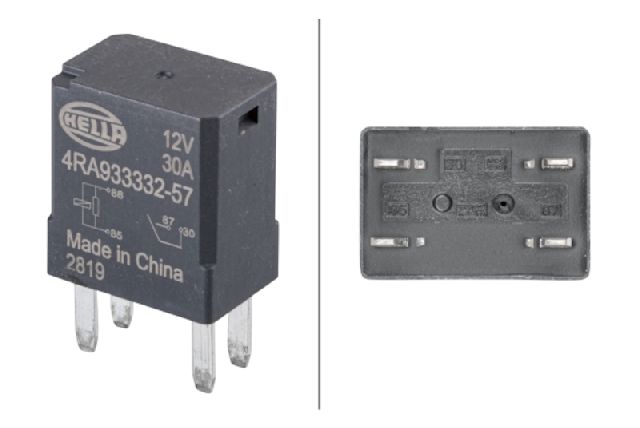
New Aftermarket Parts Available


The information in this article is provided for general reference and educational purposes only. Vehicle specifications, procedures, and part compatibility can vary by production date, trim level, and region. Always consult your vehicle's factory service manual and verify part numbers before purchasing or performing repairs. Safety-critical components such as airbags, seat belts, and braking systems should be installed by a qualified professional.
- Buick REGAL:
- 🧭 Diagnostic Flowchart
- 🎬 Helpful Videos
- 🛍️ Shop This Part
- What's Unique About the 2011-2011 Buick REGAL
- Symptoms You May Notice
- Most Likely Causes
- Rare But Worth Checking
- Diagnosis Steps
- Parts You'll Likely Need
- Related Codes That Often Appear With This One
- Technical Service Bulletins (TSBs) & Recalls
- Platform-Specific Known Issues
- Mechanic-Grade Diagnostic Values
- Scan Tool Commands That Help
- Wiring & Ground Locations
- Real Owner Repair Stories
- OEM Part Supersession History
- Model Year Variations Within This Range
- 🎟️ Get 5% Off