

P0089 on 2011-2017 Buick Regal 2.4L: Fuel Pressure Regulator Performance Causes and Fixes
On a 2011-2017 Regal with the 2.4L engine, P0089 almost always indicates a failing high-pressure fuel pump (HPFP). This is a very common issue for this engine. A definitive sign is a strong smell of gasoline in the engine oil. Expect to pay $300-$550 for an OEM pump, plus labor. If timing codes like P0016 are also present, a stretched timing chain may be the root cause.
- P0089 on your Regal 2.4L almost certainly means the high-pressure fuel pump (HPFP) has failed.
- Do not continue to drive the vehicle, as it can stall at any time, posing a serious safety risk.
- This is not a beginner-friendly DIY repair due to the extremely high fuel pressures involved. Professional service is strongly recommended.
- When the HPFP is replaced, the high-pressure fuel line connecting it to the fuel rail MUST also be replaced.
- If the check engine light appeared immediately after an engine repair, the cause could be incorrect camshaft parts, as described in TSB #PIP5203A.
What's Unique About the 2011-2017 Buick Regal
For the 2.4L Ecotec engine in this generation of Regal and its platform mates, P0089 is an extremely common issue that almost always points to a failing high-pressure fuel pump (HPFP). A key symptom of HPFP failure on this engine is fuel leaking past the internal seals into the crankcase, contaminating the engine oil. A unique diagnostic trap exists, documented in GM TSB #PIP5203C: if the code appears after major engine work, it may be caused by the installation of an incorrect model year camshaft or actuator, which mimics the symptoms of a bad pump by causing excessively high pressure at idle.
Symptoms You May Notice
- Reduced engine power or 'Limp Mode'
- Engine stalling, especially at idle or under load
- Rough or fluctuating idle, sometimes described as 'loping' or 'lunging'
- Hesitation or stumbling during acceleration
- Hard starting or extended cranking
- A distinct whining noise from the engine bay, near the HPFP
- Strong smell of gasoline in the engine oil
- Replacing the high-pressure fuel pump (HPFP) when the root cause is a stretched timing chain. If timing codes like P0016/P0017 are present, the timing system must be diagnosed first.
- Replacing the fuel rail pressure sensor when the high-pressure fuel pump is the actual point of failure.
- Replacing the low-pressure fuel pump in the tank without first diagnosing the high-pressure system.
Most Likely Causes
- Failing High-Pressure Fuel Pump (HPFP) 🔴 High Probability → Shop Fuel Pump The HPFP is a widely documented weak point on the 2.4L LAF/LEA Ecotec engines. Internal seals fail, causing fuel to leak into the crankcase, or the pump mechanism wears out and cannot generate the commanded pressure.
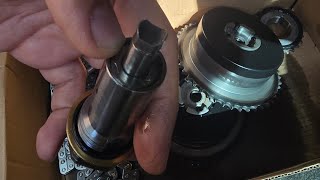
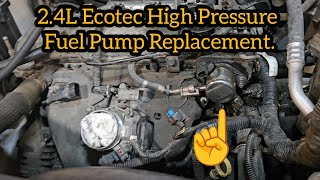
How to confirm: Use a scan tool to monitor desired vs. actual fuel rail pressure. If the actual pressure cannot keep up with the desired pressure under load, or is stuck at an extremely high value (2000+ PSI) at idle, the pump has likely failed. 🎬 Watch: This walkthrough shows how to replace a failed pump. The most definitive confirmation is checking the engine oil on the dipstick for a strong gasoline smell.
Typical fix: Replace the high-pressure fuel pump, the single-use high-pressure fuel line, and the cam follower/tappet that the pump rides on. An engine oil and filter change is mandatory if the oil is contaminated with fuel.
Est. part cost: $250-$550 - Stretched Timing Chain or Failed Timing Components 🟡 Medium Probability → Shop Engine Timing Chain The 2.4L Ecotec is notorious for premature timing chain stretch, often accelerated by oil consumption issues. Because the HPFP is driven by a lobe on the intake camshaft, incorrect timing directly affects the pump's ability to generate pressure, causing P0089.
How to confirm: This is the likely root cause if timing-related codes (e.g., P0016, P0017) are present alongside P0089. A rattling noise on startup is another key symptom. A technician can confirm by checking cam deviation angles with a scan tool or by finding plastic guide debris in the VVT solenoid screens.
Typical fix: Replace the timing chains, guides, and tensioners as a complete kit. This is a labor-intensive job. It is critical to use high-quality OEM parts, as cheap aftermarket kits are known to fail again quickly.
Est. part cost: $150-$350 (for parts kit) - Incorrect Camshaft or Actuator Installed (Post-Repair) ⚪ Low Probability → Shop Engine Camshaft As per TSB #PIP5203C, 2010 and 2011 model year engines use different intake camshafts and actuator sprockets. Installing the wrong one during an engine repair will cause P0089 and P228D.
How to confirm: This should only be suspected if the code appeared immediately after an engine, camshaft, or cam actuator replacement. Confirm by removing the camshaft cover and checking the actuator sprockets. A 2010 engine uses one gray and one black sprocket; a 2011 uses two black sprockets.
Typical fix: Install the correct model year intake camshaft and/or actuator sprocket.
Est. part cost: $150-$400 - Faulty Fuel Rail Pressure Sensor ⚪ Low Probability → Shop Fuel Pressure Sensor
How to confirm: If the fuel pressure readings on a scan tool are erratic, stuck at one value, or clearly implausible (e.g., showing high pressure when the engine is off), the sensor may be at fault. This is much less common than pump or timing failure.
Typical fix: Replace the fuel rail pressure sensor.
Est. part cost: $50-$120
Rare But Worth Checking
- Worn Intake Camshaft Lobe: → Shop Engine Camshaft The specific lobe on the intake camshaft that drives the HPFP can wear down, especially after oil starvation. This prevents the pump from stroking fully, reducing pressure. This is typically inspected when replacing the HPFP.
- Failing in-tank low-pressure fuel pump: → Shop Fuel Pump The high-pressure pump can't function correctly if it's being starved of fuel from the tank (it requires 43-58 PSI supply). This should be checked if HPFP replacement doesn't solve the issue.
- Leaking Fuel Injectors: → Shop Fuel Injector An injector stuck open can cause a loss of rail pressure, triggering the code.
- Wiring or Connector Issues: A damaged wire or corroded connector for the fuel rail pressure sensor or HPFP can cause erratic signals and trigger the code.
Diagnosis Steps
- Connect an OBD-II scanner and confirm P0089 is active. Note any other codes present, especially timing codes (P0016/P0017) or rich/lean codes (P0171/P0172).
- Perform a sensory check: Open the engine oil fill cap or pull the dipstick and smell for a strong odor of gasoline. If present, the HPFP has failed internally and is leaking fuel into the crankcase.
- Using the scanner's live data function, monitor 'Desired Fuel Rail Pressure' and 'Actual Fuel Rail Pressure'.
- At idle, observe if the actual pressure is stable and close to the desired value. Note: If incorrect cam parts were installed (per TSB PIP5203C), pressure may be extremely high (2000+ PSI).
- While safely test driving, observe if the actual pressure can keep up with the desired pressure under load. A significant lag or drop indicates a pump/supply issue.
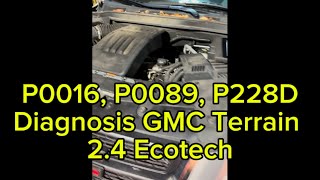
- If the vehicle has a recent history of major engine repair (timing chain, camshaft), investigate TSB #PIP5203C by 🎬 Watch this diagnostic video to resolve P0089 and P228D codes. inspecting the camshaft actuator sprockets.
- If timing codes are present or a startup rattle is heard, investigate the timing system for a stretched chain or broken guides before replacing any fuel components. 🎬 See how a stretched timing chain causes these specific codes.
- Inspect the wiring and connectors for the HPFP and fuel rail pressure sensor for any visible damage or corrosion.
- If the HPFP is suspected but the oil does not smell of gas, check the low-pressure fuel system first to ensure the HPFP is receiving adequate fuel (43-58 PSI) from the in-tank pump.
Parts You'll Likely Need
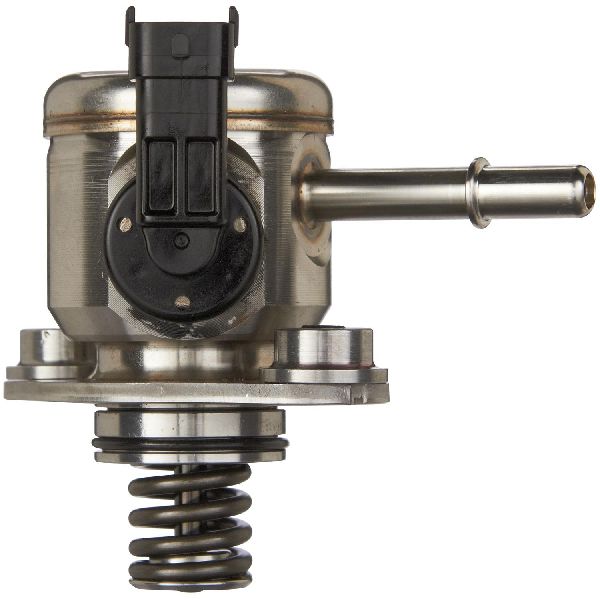
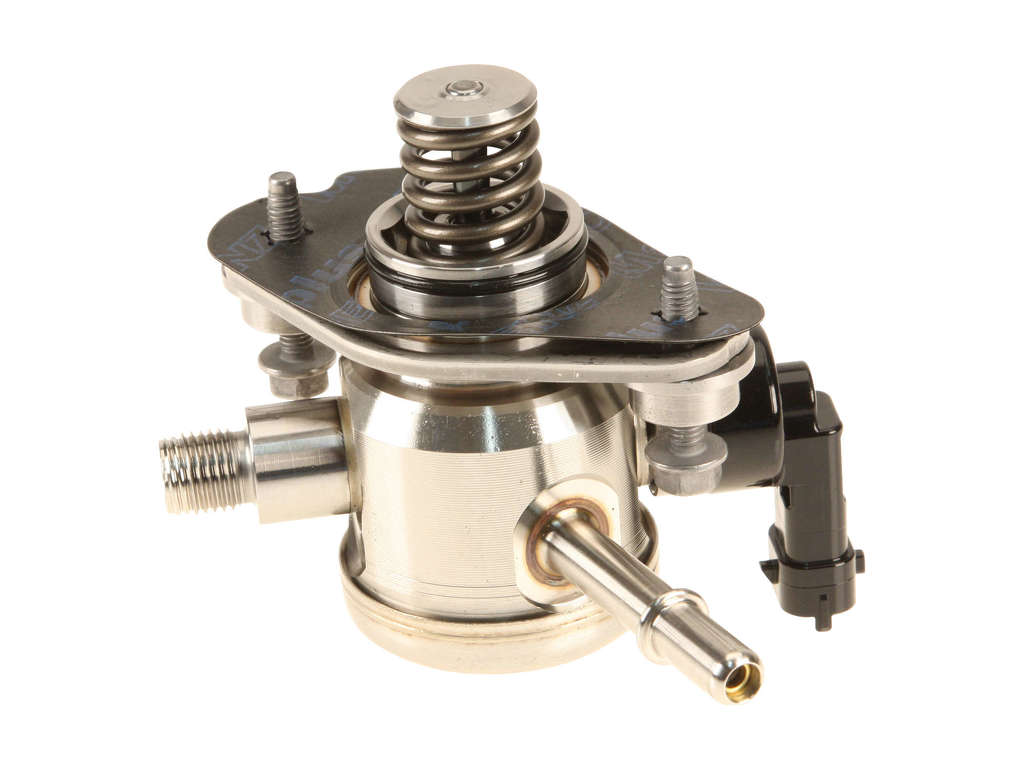
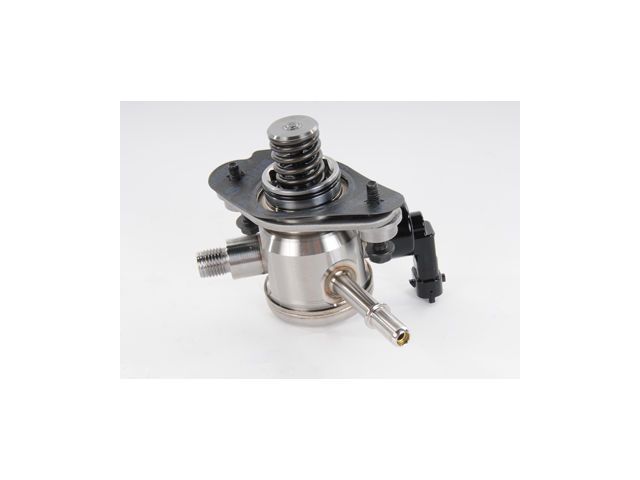
- High-Pressure Fuel Pump (HPFP)
(OEM #12641847 (supersedes 12639694, 12633423, 12633115, 12608371))— This is the most common failure part for code P0089 on this engine. Internal seal failure leading to fuel-in-oil contamination is the typical failure mode.
Trusted brands: ACDelco, Bosch
OEM price range: $300-$550
Aftermarket price range: $200-$400 - High-Pressure Fuel Line (Pump to Rail)
(OEM #12634326 (Note: some sources cite 12670475 as a valid number for this application))
Related Codes That Often Appear With This One
- P228D — Stands for 'Fuel Pressure Regulator 1 Control Performance - High Pressure'. This code is specifically mentioned in TSB #PIP5203C as appearing with P0089, often indicating either a failed HPFP or incorrect camshaft parts causing excessive pressure.
- P0016 / P0017 — Stands for 'Crankshaft/Camshaft Position Correlation'. The presence of these codes with P0089 is a very strong indicator that the root cause is a stretched timing chain, which affects both engine timing and the mechanical drive for the HPFP.
- P0172 — Stands for 'System Too Rich (Bank 1)'. This code is often triggered when the HPFP fails and leaks fuel into the crankcase. The fuel-contaminated oil vapors are then ingested through the PCV system, causing a rich condition.
- P0171 — Stands for 'System Too Lean (Bank 1)'. Insufficient fuel pressure from a failing HPFP or a clogged PCV orifice can lead to a lean air/fuel mixture, which the oxygen sensors detect.
- P0191 — Stands for 'Fuel Rail Pressure Sensor Circuit Range/Performance'. This can indicate a problem with the sensor itself or its wiring, often accompanying general pressure performance codes like P0089.
Technical Service Bulletins (TSBs) & Recalls
- PIP5203A / PIP5203C: Addresses poor engine performance with codes P0089 and P228D after engine or camshaft replacement due to incorrect parts being used (e.g., a 2010 gray cam sprocket on a 2011 engine). Causes high fuel pressure at idle (2000-2500 PSI) and a whining noise.
- Bulletin #PIP5203C notes that this concern could be due to an incorrect intake camshaft or camshaft actuator sprocket being installed, which sets diagnostic trouble codes P0089 and P228D in the engine control module.
Platform-Specific Known Issues
- The high-pressure fuel pump is a widely acknowledged common failure item on the 2.4L Ecotec engine, often failing by leaking fuel internally into the engine oil.
- GM Technical Service Bulletin PIP5203C highlights a specific issue where incorrect camshaft actuator sprockets installed during a repair can cause P0089 and P228D. A 2010 engine uses gray and black sprockets, while a 2011 uses two black sprockets.
- A stretched timing chain is another very common root cause for P0089 on this engine, as it directly impacts the mechanical drive of the HPFP. The presence of codes P0016/P0017 is a strong clue.
Mechanic-Grade Diagnostic Values
- Low-Pressure Fuel System Pressure — expected: > 60 psi (414 kPa). Failure: Pressure below this range indicates a failing in-tank pump or supply issue, which will starve the HPFP.
- High-Pressure Fuel Rail Pressure at Idle — expected: 1.9 - 2.1 MPa (279 - 305 psi). Failure: Pressure significantly outside this range, or pressure that is very high (2000+ PSI) if incorrect cam parts are installed, indicates a fault.
- High-Pressure Fuel Pump Actuator Solenoid Resistance — expected: 9 - 11 Ohms at 77°F (25°C). Failure: A reading outside this range, or any continuity between a terminal and the pump housing, indicates a faulty pump.
- ECM/PCM Ground Circuit Resistance — expected: < 1.0 Ohm. Failure: High resistance between the PCM ground pins (large black/white wires at the connector) and the battery negative terminal can cause erratic sensor readings. The reading should be very close to the resistance of touching the meter leads together.
Scan Tool Commands That Help
- GDS2 / Professional Scan Tool: High Pressure Fuel Pump Output Test / Fuel Pressure Control — This is a primary bidirectional test to command different fuel pressures and observe if the HPFP and rail pressure sensor respond accordingly. It helps isolate a faulty pump from a sensor or timing issue.
- GDS2 / Professional Scan Tool: Fuel Pump Enable (Low Pressure) — Used with the engine off to manually run the in-tank fuel pump. This allows for testing the low-pressure supply and checking for pressure bleed-down without the engine running.
- GDS2 / Professional Scan Tool: Fuel Trim Reset — After replacing a fuel system component like the HPFP or an injector, this command forces the ECM to immediately relearn the long-term fuel strategy, helping to verify the fix.
- GDS2 / Professional Scan Tool: Camshaft Position Actuator Solenoid Control — Since the HPFP is driven by the intake camshaft, this command is used to verify the VVT actuators are not stuck, which could affect the pump's mechanical drive and cause pressure issues.
Wiring & Ground Locations
- G112 — Primary engine-to-chassis ground, typically located on the engine block or cylinder head.. This is the main ground reference for the Engine Control Module (ECM). A poor connection here can cause voltage offsets and electrical noise, leading to inaccurate readings from the fuel rail pressure sensor and other engine sensors.
- G105 — Engine ground point, located at the top rear of the 2.4L engine.. Provides a ground path for various engine-mounted components. A loose or corroded connection can contribute to erratic electronic behavior.
- ECM Connector Ground Pins — At the main connectors for the Engine Control Module (ECM). On the 2.4L Ecotec, these are typically large black and white wires.. Testing the resistance from these specific pins directly to the battery negative terminal is the most accurate way to confirm the ECM's ground integrity. High resistance here is a specific, measurable fault that can cause P0089.
Real Owner Repair Stories
- ScannerDanner Forum (2012 Chevy Equinox 2.4L (platform mate), 66,000 miles) — Hard to start, reduced power, stalls at stops, codes P0172 and P0191.
❌ Tried (didn't work) Customer had replaced the HPFP and Fuel Rail Pressure sensor with aftermarket 'Standard' brand parts.
✅ What actually fixed it Replacing the aftermarket high-pressure fuel pump with an OEM GM Genuine pump. The technician noted the aftermarket pump would not allow rail pressure to drop below 290 PSI on deceleration, while the OEM pump correctly dropped to ~70 PSI. - G Auto Repair YouTube Channel (2015 Chevrolet Equinox 2.4L (platform mate)) — Intermittent stalling and drivability issues, codes P0089 and P228D. Problem would only occur when the engine reached operating temperature (~215°F).
❌ Tried (didn't work) The owner was considering replacing the HPFP and sensors.
✅ What actually fixed it A complete timing chain replacement. The original timing chain tensioner had failed and was coming apart, causing the intake cam timing to 'wander' when hot. This directly affected the HPFP's mechanical drive, triggering the fuel pressure codes without setting a primary timing code initially. - The Pit Stop YouTube Channel (2015 Buick Regal 2.4L) — Misfiring, sputtering, especially at stop lights. Codes P0172 and P0191.
❌ Tried (didn't work) The car had been to another shop that spent over $2,000 and had already replaced the high-pressure fuel pump with an aftermarket part.
✅ What actually fixed it Replacing the recently installed aftermarket HPFP with a new, OEM GM fuel pump. The technician stated that aftermarket pumps are a common cause of this exact problem on these engines. - NHTSA ODI #10979641 — An owner reported that after an engine replacement, the vehicle developed P0089 and P228D codes along with a whine from the high-pressure fuel pump. It was discovered that the replacement engine was a 2010 model being used in a 2011 vehicle, leading to the component mismatch described in PIP5203A.
OEM Part Supersession History
12608371, 12633115, 12633423, 12639694→12641847— Standard part evolution for improved reliability and manufacturing.
Heads up: This is the correct OEM part. Multiple sources strongly warn that aftermarket HPFPs, even if they physically fit, often fail to regulate pressure correctly and can cause codes P0089 or P0191 immediately after installation. Use of OEM/ACDelco is highly recommended.
Model Year Variations Within This Range
- 2011 vs 2012-2017: The 2011 model uses the LAF engine, which has a single VVT system (intake only). The 2012-2017 models use the LEA engine, which has dual VVT (intake and exhaust) and is FlexFuel (E85) capable. While the core HPFP and timing chain issues are common to both, service procedures involving camshafts or fuel injectors may differ.
- 2011 (and 2010): Per TSB #PIP5203C, 2010-2011 LAF engines use different intake camshafts and actuator sprockets than later models. Installing the wrong parts during an engine repair will cause P0089 and P228D with extremely high fuel pressure at idle.
Diagnostic Flowchart
Used vs. New Parts: Buying Guide for This Vehicle
When a used part is the smart pick: For a P0089 repair on this vehicle, using used parts is strongly discouraged for the primary failure components. A used fuel rail pressure sensor from a verified low-mileage vehicle could be a viable cost-saving measure, but the risk may outweigh the savings.
Donor-vehicle mileage cap: roughly under 80000 miles for the part to have meaningful remaining life.
What to inspect on the donor part:
- Verify the donor vehicle was not scrapped due to engine failure.
- Look for vehicles with rear-end damage, suggesting the engine was running well at the time of the accident.
- Avoid parts from engines that show signs of heavy oil leaks, sludge, or overheating.
OEM-only on this vehicle (don't cheap out):
- High-Pressure Fuel Pump (HPFP)
- High-Pressure Fuel Line (Pump to Rail)
- Timing Chain & Component Kit
Aftermarket brands forum-validated for this vehicle:
- For sensors, Delphi and Bosch are generally considered reliable alternatives to OEM.
Brands owners have reported issues with on this vehicle:
- For the High-Pressure Fuel Pump, any non-OEM/ACDelco brand carries a significant risk of immediate failure or performance issues. The 'Standard' brand was specifically identified in one detailed repair as not functioning correctly.
Real Owner Stories
Aggregated from forums and TSBs cited above. Mileages and costs reflect what owners reported in those sources.
2011 Buick LaCrosse 2.4L
Symptoms: Poor engine performance, a whining noise, and extremely high fuel pressure (2000-2500 PSI) at idle, triggering codes P0089 and P228D immediately after an engine repair.
What fixed it: Installing the correct 2011 model year cam actuator sprocket, replacing the incorrect 2010 gray sprocket that had been installed by mistake.
Source hint: TSB #PIP5203C
2015 Chevrolet Equinox 2.4L
Symptoms: Check engine light with codes P0089 and P228D.
What fixed it: The root cause was a failed timing chain tensioner from a cheap aftermarket timing kit that had been previously installed. Replacing the timing components with a high-quality kit resolved the fuel pressure codes.
Source hint: YouTube: Chevrolet Equinox 2.4l P0089, p228d finally resolved
2012 GMC Terrain 2.4L
Symptoms: A 'loping/lunging' idle that eventually set codes P0089 and P228D.
What fixed it: The source forum thread discusses the diagnostic process, which focused on monitoring desired vs. actual fuel pressure and camshaft timing PIDs to isolate the fault, but does not state the final repair.
Source hint: ScannerDanner Forum: 2012 Terrain 2.4 P0089 and P228D
Related OBD-II Codes
Frequently Asked Questions
What is the most reliable way to confirm the high-pressure fuel pump (HPFP) has failed on my 2011-2017 Regal?
My Regal has P0089 along with codes P0016 and P0017. Should I replace the fuel pump?
I just had my timing chain replaced and now my car has a P0089 code. What happened?
Does TSB #PIP5203C apply to my 2011 Regal?
What other parts must be replaced when changing the high-pressure fuel pump?
My engine makes a distinct whining noise and has a P0089 code. What does that mean?
Helpful Videos
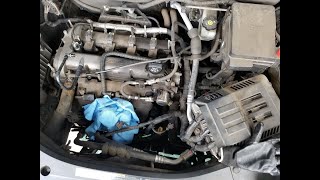
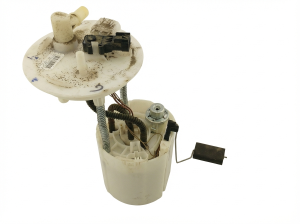
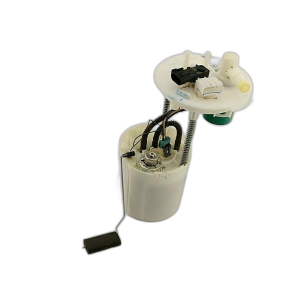
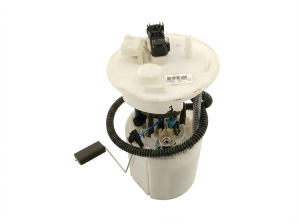
Used OEM Parts in Stock
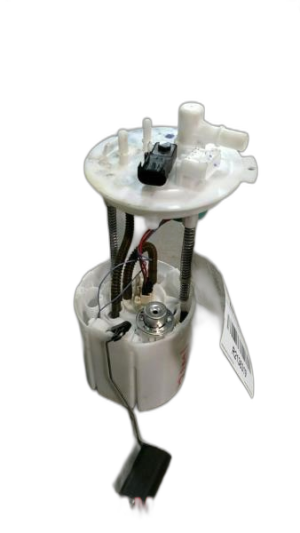
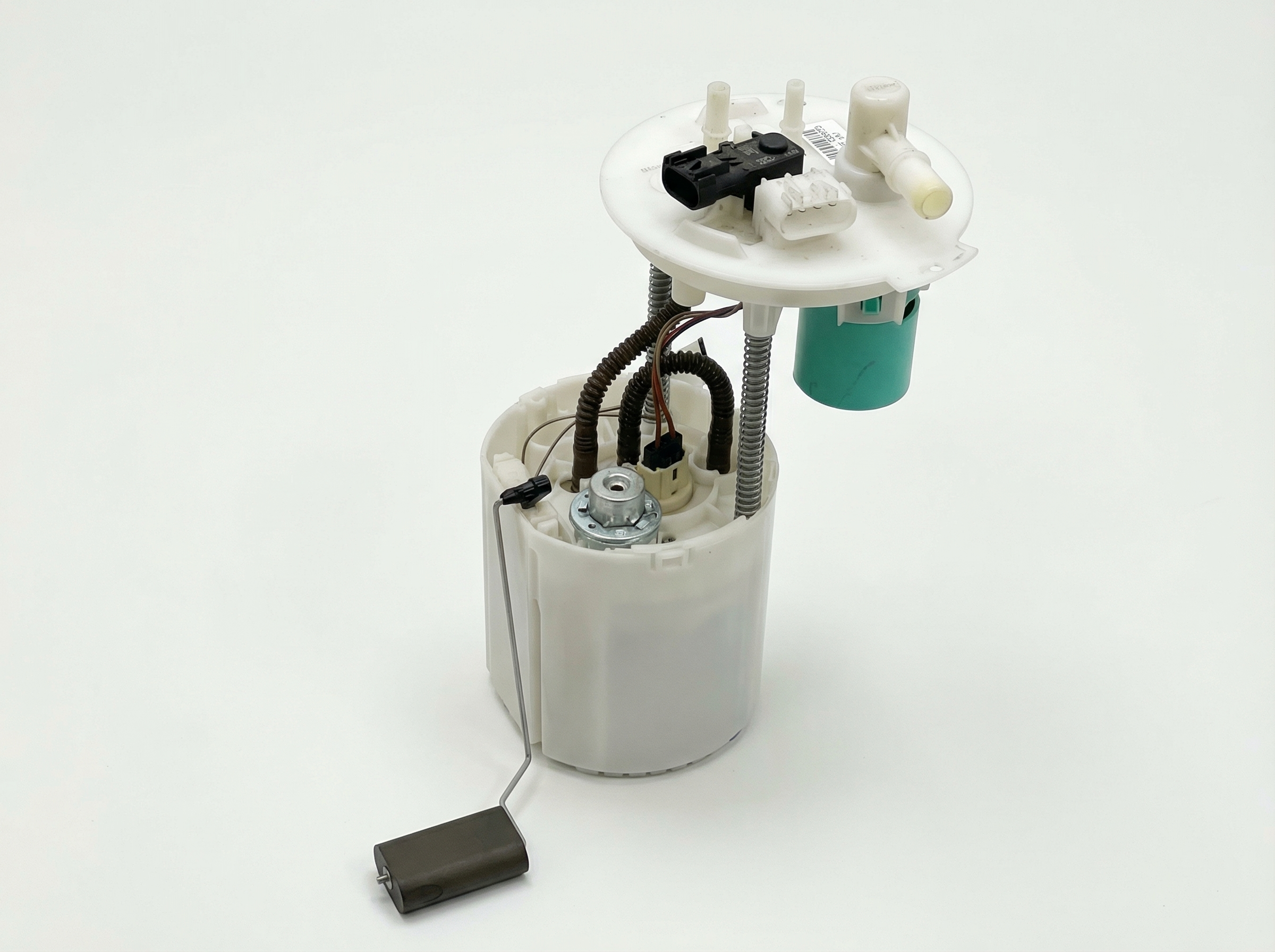
New Aftermarket Parts Available


The information in this article is provided for general reference and educational purposes only. Vehicle specifications, procedures, and part compatibility can vary by production date, trim level, and region. Always consult your vehicle's factory service manual and verify part numbers before purchasing or performing repairs. Safety-critical components such as airbags, seat belts, and braking systems should be installed by a qualified professional.
- Buick Regal:
- 🧭 Diagnostic Flowchart
- 🎬 Helpful Videos
- 🛍️ Shop This Part
- What's Unique About the 2011-2017 Buick Regal
- Symptoms You May Notice
- Most Likely Causes
- Rare But Worth Checking
- Diagnosis Steps
- Parts You'll Likely Need
- Related Codes That Often Appear With This One
- Technical Service Bulletins (TSBs) & Recalls
- Platform-Specific Known Issues
- Mechanic-Grade Diagnostic Values
- Scan Tool Commands That Help
- Wiring & Ground Locations
- Real Owner Repair Stories
- OEM Part Supersession History
- Model Year Variations Within This Range
- Used vs. New Parts: Buying Guide for This Vehicle
- Real Owner Stories
- 2011 Buick LaCrosse 2.4L
- 2015 Chevrolet Equinox 2.4L
- 2012 GMC Terrain 2.4L
- Related OBD-II Codes
- Frequently Asked Questions
- 🎟️ Get 5% Off