

P0089 on 2012-2014 Cadillac CTS 3.6L: Fuel Pressure Regulator Performance Explained
For a 2012-2014 Cadillac CTS with the 3.6L LFX engine, code P0089 almost always points to a failing high-pressure fuel pump (HPFP). This is a common issue on this direct-injection engine. Expect to pay between $150-$300 for an aftermarket pump and $350-$500 for an OEM part. The repair is critical as the engine can stall unexpectedly.
- P0089 on this Cadillac indicates a performance issue with the high-pressure fuel system, most commonly a failing High-Pressure Fuel Pump (HPFP).
- Do not drive the vehicle, as it can stall without warning, creating a major safety hazard.
- Diagnosis requires a scan tool that can read both desired and actual fuel rail pressure.
- When replacing the HPFP, it is mandatory to also replace the single-use high-pressure fuel line and change the engine oil to remove any fuel contamination.
What's Unique About the 2012-2014 Cadillac CTS
The 3.6L LFX V6 is a gasoline direct injection (GDI) engine, which uses both a low-pressure fuel pump in the tank and a high-pressure fuel pump (HPFP) driven by the camshaft. Code P0089 on these engines is almost always related to the high-pressure side of the system. Failures of the HPFP are a well-documented issue across many GM vehicles that use this engine, including the Cadillac CTS, Camaro, and Traverse. The diagnostic process must differentiate between the low-pressure and high-pressure circuits to avoid common misdiagnoses, like replacing the in-tank pump when the engine-mounted HPFP is the actual cause.
Symptoms You May Notice
- Check Engine Light is on
- Reduced Engine Power message displayed 🎬 See a walkthrough of the HPFP replacement for these codes.
- Engine hesitation or stuttering, especially during acceleration between 2000-4000 RPM.
- Rough or unstable idle
- Hard starting or long crank times
- Engine stalling, sometimes unexpectedly while driving
- Strong smell of fuel from the exhaust and visible white smoke
- Noticeably excessive fuel consumption
- Replacing the in-tank (low-pressure) fuel pump without first confirming the high-pressure fuel pump (HPFP) is functioning correctly. A scan tool capable of reading both low-side and high-side fuel pressure is essential for correct diagnosis. 🎬 Watch this before you replace any parts on your Cadillac.
- Replacing the HPFP without checking for fuel contamination in the engine oil. A failed pump can dilute the oil with gasoline, leading to severe engine damage if not addressed with an oil change.
Most Likely Causes
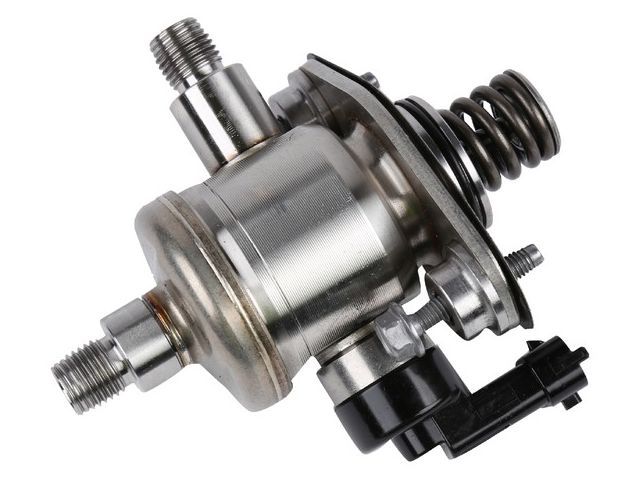
- Failing High-Pressure Fuel Pump (HPFP) 🔴 High Probability → Shop Fuel Pump The HPFP is a known failure point on the GM 3.6L LFX engine family due to the high stress it operates under. Internal wear of the plunger or seals is common.
How to confirm: Use a scan tool to monitor desired vs. actual fuel rail pressure. If the actual pressure cannot keep up with the desired pressure under load (e.g., wide-open throttle), and the low-pressure system is confirmed to be working correctly (over 44 PSI), the HPFP is the likely culprit.
Typical fix: Replace the high-pressure fuel pump, the single-use high-pressure fuel line, and the pump's roller tappet/follower. It is also critical to change the engine oil, as a failing HPFP can leak gasoline into the crankcase.
Est. part cost: $150-$500 - Wiring Harness Chafing 🟡 Medium Probability GM has identified issues where the engine wiring harness can rub against the transmission or other components, causing shorts in various circuits, including those for fuel pressure sensors.
How to confirm: Visually inspect the engine wiring harness, particularly where it runs near the transmission bellhousing and cylinder heads. Look for signs of abrasion, worn-through conduit, and damaged wires. TSB PI0631H provides specific locations to check.
Typical fix: Repair the damaged wires and re-route or protect the harness to prevent future chafing.
Est. part cost: $10-$50 for repair materials - Faulty Fuel Rail Pressure Sensor 🟡 Medium Probability → Shop Fuel Pressure Sensor
How to confirm: Check the sensor's voltage readings with a scan tool. If the readings are erratic, stuck at a specific value, or don't correlate with known good pressure values (e.g., reading high pressure when the engine is off 🎬 Learn more about common causes and fixes for code P0089.), the sensor is likely faulty.
Typical fix: Replace the fuel rail pressure sensor.
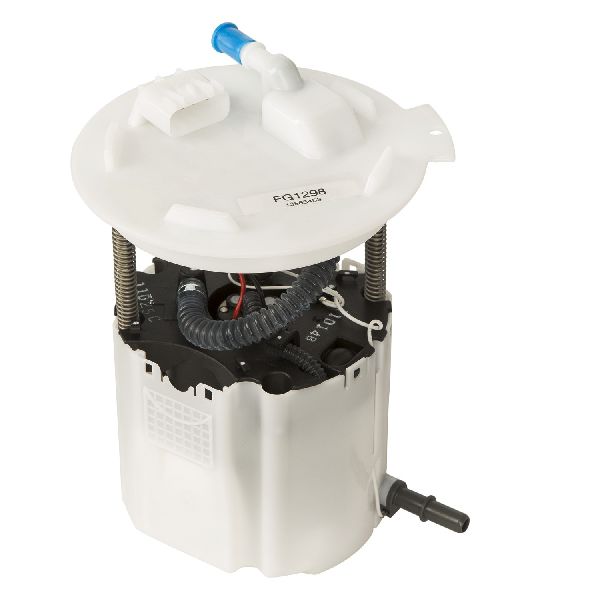
Est. part cost: $50-$150 - Weak In-Tank (Low-Pressure) Fuel Pump ⚪ Low Probability → Shop Fuel Pump
How to confirm: Test the low-side fuel pressure using a mechanical gauge or a scan tool that reads the low-side sensor. It should be stable and within the manufacturer's specification (typically 44-75 PSI). If the low-pressure pump cannot supply adequate fuel to the HPFP, the high-pressure side will underperform.
Typical fix: Replace the in-tank fuel pump module.
Est. part cost: $200-$400
Rare But Worth Checking
- Worn Camshaft Lobe: → Shop Engine Camshaft The HPFP is driven by a three-lobe cam on the Bank 2 (front bank) exhaust camshaft. If these lobes become worn, the pump's plunger (follower) won't have enough travel to generate pressure. This is a major mechanical repair and is usually investigated by physically inspecting the camshaft after replacing the HPFP does not solve the issue.
- Leaking Fuel Injector(s): → Shop Fuel Injector A fuel injector that is stuck open or leaking can cause a drop in fuel rail pressure, potentially triggering a P0089 code. This can sometimes be accompanied by misfire codes for a specific cylinder.
- Shifted Crankshaft Reluctor Wheel: A very rare issue documented in GM TSB PIP3423N. The reluctor wheel on the crankshaft, which the crank sensor reads for timing, can move. This throws off engine timing data sent to the ECM, which can indirectly cause fuel pressure regulation problems and set codes like P0089 alongside timing codes like P0016-P0019.
Diagnosis Steps
- Connect a diagnostic scan tool and verify that P0089 is the active code. Check for any other stored codes, especially P0087, P0191, or misfire codes.
- Access the live data stream on the scan tool. Monitor 'Desired Fuel Rail Pressure' and 'Actual Fuel Rail Pressure'.
- At idle, the values should be very close (around 2-5 MPa or 290-725 PSI). Briefly increase engine RPM; the actual pressure should closely follow the desired pressure.
- If actual pressure lags significantly behind desired pressure, especially under load (a wide-open throttle test during a road test is best), proceed with further fuel system checks.
- First, verify the low-pressure fuel system. Check the low-side fuel pressure to ensure the HPFP is receiving adequate fuel supply. Per GM specs, it must be greater than 300 kPa (44 PSI) for the high-pressure system to operate correctly.
- If low-side pressure is good, the problem is likely in the high-pressure circuit. Inspect the wiring and connector for the Fuel Rail Pressure Sensor and the High-Pressure Fuel Pump for any visible damage or corrosion. Pay special attention to harness routing per TSB PI0631H.
- If the sensor readings are erratic or implausible, test the sensor circuit and consider replacing the sensor.
- If the sensor and wiring are good, but pressure remains low or unstable, the High-Pressure Fuel Pump (HPFP) is the most probable cause of failure. Before replacement, check the engine oil for fuel smell.
- When replacing the HPFP, also inspect the camshaft lobe for wear and replace the roller tappet that sits between the pump and the cam.
Parts You'll Likely Need
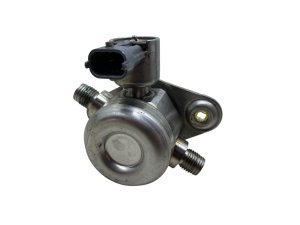
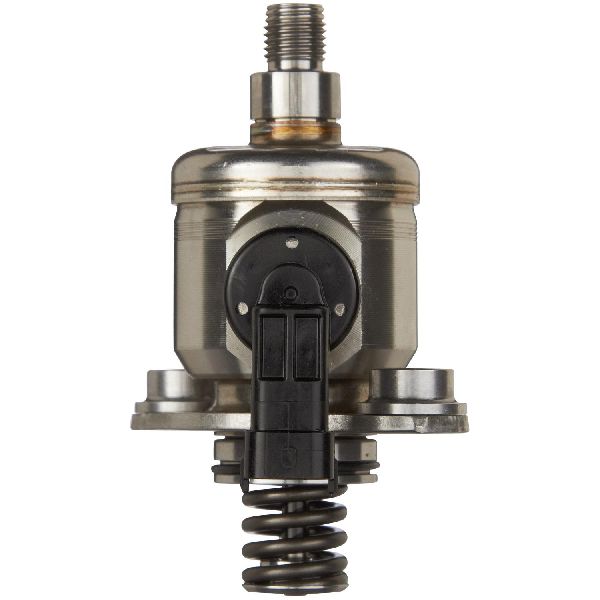
- High-Pressure Fuel Pump
(OEM #12676667 (Supersedes 12658552, 12647344, 12639260, 12634492, 12626234, 12614934))— This is the most common failure point for code P0089 on the 3.6L LFX engine. It is responsible for generating the high fuel pressure required for direct injection.
Trusted brands: ACDelco, Bosch
OEM price range: $350-$500
Aftermarket price range: $150-$300 - High-Pressure Fuel Line
(OEM #12639516)— This is a single-use, 'torque-to-yield' part. It must be replaced any time it is removed to ensure a safe, leak-free seal on the high-pressure fuel system.
Trusted brands: ACDelco
OEM price range: $30-$60
Aftermarket price range: $20-$40 - Fuel Pump Plunger / Roller Tappet
(OEM #12665939)— This roller follower sits between the camshaft lobe and the HPFP piston. It is a wear item and should be replaced with the pump to ensure proper operation and prevent damage to the new pump or camshaft.
Trusted brands: ACDelco
OEM price range: $25-$50
Aftermarket price range: $15-$30
Related Codes That Often Appear With This One
- P0087 — This code means 'Fuel Rail/System Pressure - Too Low' and often appears alongside P0089 when the HPFP is failing to build enough pressure.
- P0191 — This code indicates a 'Fuel Rail Pressure Sensor Circuit Range/Performance' issue, which can be caused by either a faulty sensor or the erratic pressures from a failing HPFP.
- P0300-P0306 — These are misfire codes. Inconsistent fuel pressure can lead to a lean condition, causing the engine to misfire on one or more cylinders. A P0300 (random misfire) is very common with P0089.
- P228D — This code for 'Fuel Pressure Regulator 1 Control Performance - High Pressure' can be set if the system pressure exceeds the commanded pressure, which can also be a symptom of a faulty HPFP or its internal regulator.
Technical Service Bulletins (TSBs) & Recalls
- 07-06-04-025H: Informs that a ticking noise from the HPFP is normal and not a sign of a defect.
- PI0631H: Details a condition where the engine wiring harness can chafe on the transmission, causing shorts that can lead to P0089 and other DTCs.
- PIP3423N: Addresses timing-related DTCs that can be caused by a shifted crankshaft reluctor wheel, which can indirectly cause fuel pressure codes.
- TSB Bulletin #PIP5279A: Provides information for technicians regarding vehicles that may have a Service Engine Soon Malfunction Indicator Lamp with Diagnostic Trouble Codes including P0089, P228D, and P0192.
Platform-Specific Known Issues
- The 3.6L LFX engine, along with other GM direct injection V6 engines, is noted for having a ticking noise from the high-pressure fuel pump, which is considered normal operation. Do not replace the pump for a ticking noise alone unless it is accompanied by a fault code and performance issues.
- A failing HPFP on the LFX engine can leak fuel internally past its seals and into the crankcase, diluting the engine oil. After replacing the pump, an oil and filter change is mandatory to prevent catastrophic engine bearing damage.
Mechanic-Grade Diagnostic Values
- High-Pressure Fuel Pump (HPFP) Actuator Resistance — expected: 0.35 - 0.6 Ohms at 20°C (68°F) between the two terminals.. Failure: A reading below 0.3 Ohms, above 0.6 Ohms, or any continuity between a terminal and the pump housing indicates a faulty pump.
- HPFP Actuator Circuit Integrity — expected: Less than 2 Ohms of total resistance on the control circuit.. Failure: As little as 2 Ohpm of high resistance on either the control or high control circuit can cause P0089 to set, indicating a wiring or connector issue.
- Low-Pressure Fuel System (KOEO, Pump Commanded On) — expected: Greater than 414 kPa (60 PSI).. Failure: Pressure below this threshold indicates a weak in-tank pump, clogged filter, or FPCM issue that must be fixed before diagnosing the high-pressure side.
- High-Pressure Fuel System (Idle, Engine Warm) — expected: 1.9 - 5.5 MPa (276 - 798 PSI).. Failure: Pressure that is unstable or significantly outside this range at idle points to an HPFP, sensor, or actuator issue.
- High-Pressure Fuel System (Wide-Open Throttle) — expected: Should reach 14 - 17 MPa (2,031 - 2,466 PSI) near 7,000 RPM.. Failure: If the actual pressure fails to reach the commanded pressure during a WOT pull, the HPFP is very likely failing.
- Fuel Rail Pressure Sensor Plausibility (KOEO) — expected: The high-pressure sensor reading should be nearly identical to the low-pressure sensor reading.. Failure: A significant difference between the two sensor readings with the engine off points to a skewed or faulty high-pressure sensor.
Scan Tool Commands That Help
- GDS2 (GM Global Diagnostic System 2): Fuel Pressure Control — Use this to manually command increases and decreases in fuel rail pressure while the engine is idling. It directly tests if the HPFP actuator is responding and if the pressure sensor is reading the change.
- GDS2: Fuel System Pressure Test — This is an automated test that cycles both the low and high-pressure pumps through various states to see if they can meet and hold pressure targets, helping to quickly isolate a failing component.
- GDS2: Fuel Trim Reset — After any repair (like replacing an injector, sensor, or fixing a leak), this function must be used to clear the long-term fuel trim values. This allows the ECM to relearn adaptations immediately and helps verify the fix was successful.
Wiring & Ground Locations
- G106 / G131 — G106 is on the right rear of the engine; G131 is on the left rear of the engine.. These are primary engine block grounds. A poor or corroded connection at these points can cause erratic voltage and unstable readings for multiple engine sensors, including the fuel rail pressure sensor and the ECM itself.
- Engine Harness Chafe Point — The main engine harness where it routes along the transmission bellhousing, particularly on the right side.. As documented in TSB PI0631H, the harness can rub through on the edge of the transmission case, causing a short in the fuel pressure sensor or HPFP actuator circuits, directly leading to code P0089.
- Fuel Rail Pressure Sensor Connector — On the high-pressure fuel rail, under the intake manifold.. The three pins for the sensor are for the 5V reference, low reference (ground), and signal. According to forum data, the wire colors are typically Yellow, Blue/Black, and Black/Blue. Getting this order wrong during a pigtail repair will cause short-circuit codes.
Real Owner Repair Stories
- YouTube user, 'Pickles Garage' (2011 Chevrolet Camaro V6 (3.6L LFX engine)) — Juddering on acceleration, strong fuel smell, hard starting, multiple misfire codes along with P0089.
❌ Tried (didn't work) Initial diagnosis pointed towards bad ignition coils due to the misfires.
✅ What actually fixed it The problem was resolved by replacing the fuel rail pressure sensor located on the engine's fuel rail. The owner confirmed the fix after a week of driving. - YouTube user, 'SuperMario Diagnostics' (Chevrolet Equinox 2.4L (different engine, but same diagnostic principle)) — Persistent P0089 and P228D codes, engine rattle.
❌ Tried (didn't work) High-pressure fuel pump had been replaced., Camshaft sensors had been replaced.
✅ What actually fixed it The root cause was a failed timing chain tensioner from a previous, incorrect timing job. The faulty tensioner allowed the intake camshaft, which drives the HPFP, to have incorrect timing, causing the fuel pressure performance codes. The fix was a complete timing chain service with quality parts.
"I Checked Everything" — The Actual Cause
- In a documented case on a similar GM GDI engine, a vehicle had persistent P0089/P228D codes even after fuel system components were replaced. The actual cause was a failed timing chain tensioner. The resulting camshaft timing deviation was not yet severe enough to set a dedicated timing code (like P0017), but it was enough to disrupt the operation of the cam-driven high-pressure fuel pump, leading technicians to chase a fuel problem when the root cause was mechanical timing.
OEM Part Supersession History
12614934, 12626234, 12634492, 12639260, 12647344, 12658552→12676667— Progressive design updates by GM/Bosch to improve durability and performance of the high-pressure fuel pump.
Model Year Variations Within This Range
- 2012: The 2012 model year was the first for the LFX engine in the CTS, which replaced the previous LLT V6. The LFX uses a composite intake manifold and has different part numbers for the fuel rail and pressure sensor compared to the 2008-2011 LLT. Technicians must verify the engine code (8th VIN digit '3' for LFX) before ordering parts.
- 2014-onward (approx.): Around 2014, GM began enlarging the PCV orifices in the 3.6L LFX valve covers to combat sludge buildup. While not a direct cause of P0089, poor crankcase ventilation can contribute to oil degradation, which in turn harms the oil-pressure-fed timing chain tensioners, potentially leading to timing-induced fuel pressure issues over the long term.
Diagnostic Flowchart
Used vs. New Parts: Buying Guide for This Vehicle
When a used part is the smart pick: For non-wear items like a wiring harness pigtail, engine computer (ECM), or mounting brackets, a used part from a reputable auto recycler is a cost-effective and reliable choice.
Donor-vehicle mileage cap: roughly under 80000 miles for the part to have meaningful remaining life.
What to inspect on the donor part:
- For a used HPFP, physically inspect the cam follower roller on the bottom; it must be perfectly smooth and spin freely.
- Any scoring, flat spots, or pitting on the roller indicates it should not be purchased.
- Check the electrical connector for clean, straight pins and the housing for any cracks or signs of extreme corrosion.
OEM-only on this vehicle (don't cheap out):
- High-Pressure Fuel Pump (HPFP)
- High-Pressure Fuel Line
Aftermarket brands forum-validated for this vehicle:
- ACDelco (OEM)
- Bosch (OEM supplier)
Brands owners have reported issues with on this vehicle:
- Unnamed or 'white-box' high-pressure fuel pumps from online marketplaces are frequently reported by technicians to have high out-of-box failure rates and should be avoided.
Real Owner Stories
Aggregated from forums and TSBs cited above. Mileages and costs reflect what owners reported in those sources.
Chevrolet Camaro 3.6L LFX
Symptoms: Vibration, a strong fuel smell, visible white smoke from the exhaust, and noticeably high fuel consumption.
What fixed it: The owner replaced the high-pressure fuel pump (HPFP), but the problem persisted, indicating the issue was more complex and could be related to wiring or injectors.
Source hint: Camaro5 Forum: 'Camaro with a lot of fuel injections problems and misfires'
2008 Cadillac CTS 3.6L
Symptoms: The 'engine power is reduced' message appeared on the dash, the check engine light was on, and the car was 'sneezing' and losing power during acceleration.
What fixed it:
Source hint: Cadillac Club Russia: 'Ошибка P0089 , помогите очень расстроился!' (Error P0089, help I'm very upset!)
Related OBD-II Codes
Frequently Asked Questions
I hear a ticking noise from my 3.6L engine. Is my high-pressure fuel pump failing and causing code P0089?
My mechanic wants to replace the expensive high-pressure fuel pump right away. Should anything else be checked first?
I'm replacing the high-pressure fuel pump myself. Is there anything special I need to do besides swapping the part?
Are there any known wiring issues on the 2012-2014 CTS that could cause P0089?
My CTS hesitates and stutters when I accelerate, especially between 2000-4000 RPM. Is this a typical symptom of P0089?
My wife has a 2015 Cadillac SRX with the 3.6L engine. Is it likely to have the same P0089 fuel pump problem?
Helpful Videos
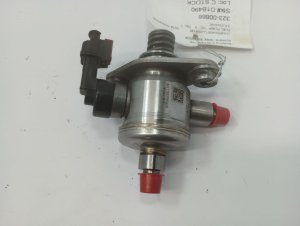
Used OEM Parts in Stock
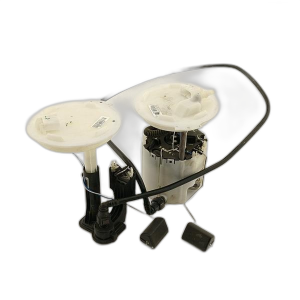
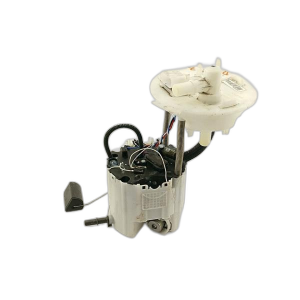
New Aftermarket Parts Available


The information in this article is provided for general reference and educational purposes only. Vehicle specifications, procedures, and part compatibility can vary by production date, trim level, and region. Always consult your vehicle's factory service manual and verify part numbers before purchasing or performing repairs. Safety-critical components such as airbags, seat belts, and braking systems should be installed by a qualified professional.
- Cadillac CTS:
- 🧭 Diagnostic Flowchart
- 🎬 Helpful Videos
- 🛍️ Shop This Part
- What's Unique About the 2012-2014 Cadillac CTS
- Symptoms You May Notice
- Most Likely Causes
- Rare But Worth Checking
- Diagnosis Steps
- Parts You'll Likely Need
- Related Codes That Often Appear With This One
- Technical Service Bulletins (TSBs) & Recalls
- Platform-Specific Known Issues
- Mechanic-Grade Diagnostic Values
- Scan Tool Commands That Help
- Wiring & Ground Locations
- Real Owner Repair Stories
- "I Checked Everything" — The Actual Cause
- OEM Part Supersession History
- Model Year Variations Within This Range
- Used vs. New Parts: Buying Guide for This Vehicle
- Real Owner Stories
- Chevrolet Camaro 3.6L LFX
- 2008 Cadillac CTS 3.6L
- Related OBD-II Codes
- Frequently Asked Questions
- 🎟️ Get 5% Off