

P0089 on 2015-2016 Cadillac Escalade: Fuel Pressure Regulator Performance Causes and Fixes
Code P0089 on a 2015-2016 Escalade typically points to a failing high-pressure fuel pump (HPFP) or a faulty fuel rail pressure sensor. Due to the extreme pressures of the direct injection system, professional diagnosis and repair are strongly recommended. In many cases, this code appears without noticeable driving issues, but it should not be ignored.
- P0089 on a 2015-2016 Escalade indicates a serious problem with the high-pressure fuel system.
- The most likely causes are a failing high-pressure fuel pump (HPFP) or a bad fuel rail pressure sensor.
- Due to extreme fuel pressures and repair complexity, this is not a recommended DIY job. Seek professional service.
- Always use a scan tool to compare desired vs. actual fuel pressure as the first diagnostic step.
- If the HPFP is replaced, the high-pressure fuel lines connected to it must also be replaced.
What's Unique About the 2015-2016 Cadillac ESCALADE
The 2015-2016 Escalade uses a sophisticated GDI fuel system with two pumps: a low-pressure pump in the tank and a high-pressure fuel pump (HPFP) driven by the engine's camshaft. Code P0089 is common on this platform and is often a result of failure in one of the key high-pressure components. A GM Technical Service Bulletin (TSB PIP5279A) specifically addresses this code and suggests that if standard diagnostics don't find a cause, the fuel rail pressure sensor itself is a likely culprit. This issue is shared across many GM trucks and SUVs using the 4.3L, 5.3L, and 6.2L Gen V engines.
Diagnostic Flowchart
Tap your situation to follow the diagnostic path that matches what you're seeing on this vehicle.
Symptoms You May Notice
- Check Engine Light is on
- Reduced engine power and poor acceleration
- Engine hesitation or stumbling, especially under load
- Rough or unstable idle
- Engine may stall unexpectedly
- Difficulty starting the engine, or long crank times
- Noticeably worse fuel economy
- Engine may 'diesel' or run on for a moment after shutoff
- Fuel smell in the engine oil, and an oil level that appears to be overfull
- Replacing the low-pressure fuel pump without first confirming it has failed. The high-pressure pump and sensor are more common culprits for this specific code on the Escalade.
- Replacing the high-pressure fuel pump when the actual fault lies with the fuel rail pressure sensor, which is a cheaper and less labor-intensive repair.
Most Likely Causes
- Failing High-Pressure Fuel Pump (HPFP) 🔴 High Probability → Shop Fuel Pump The HPFP is a complex mechanical part that is a known failure point on many GM GDI engines. The internal pressure regulating solenoid can fail, or the pump mechanism itself can wear out. A common failure is the internal seal, which allows gasoline to leak into the engine crankcase, contaminating the oil.
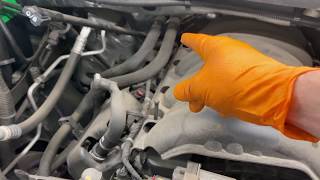
How to confirm: A technician will use a scan tool to monitor desired vs. actual fuel rail pressure. 🎬 See how to test fuel rail pressure and function If the actual pressure cannot keep up with the desired pressure under load, and the low-pressure system is confirmed to be working correctly, the HPFP is the primary suspect. Another key indicator is checking the engine oil for a strong gasoline smell.
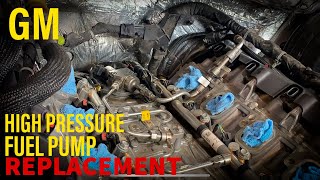
Typical fix: Replace the high-pressure fuel pump. 🎬 Watch: Complete guide to replacing the high-pressure fuel pump This is an involved repair that requires removing the intake manifold. The high-pressure fuel lines are typically single-use and must also be replaced to prevent leaks. An oil change is mandatory if fuel contamination is suspected.
Est. part cost: $350-$600 - Faulty Fuel Rail Pressure Sensor (FRPS) 🟡 Medium Probability → Shop Fuel Pressure Sensor GM issued a Technical Service Bulletin (PIP5279A) that specifically suggests replacing the FRPS if diagnostics for P0089 are inconclusive, indicating it's a common and sometimes difficult-to-diagnose failure. The sensor can send erratic or incorrect data to the ECM, causing the computer to believe there is a pressure performance issue when the pump is functioning correctly.
How to confirm: The sensor provides the pressure reading to the ECM. Diagnosis involves checking the sensor's voltage readings and comparing them against known specifications. A technician can also observe the live data on a scan tool; if the pressure reading is stuck, erratic, or reads 0 PSI or a max value like 4,062 PSI when unplugged or shorted, the sensor is likely faulty. Given the TSB, replacement is often recommended when other causes are ruled out.
Typical fix: Replace the fuel rail pressure sensor. It is located on the back of the driver's side fuel rail, underneath the intake manifold.
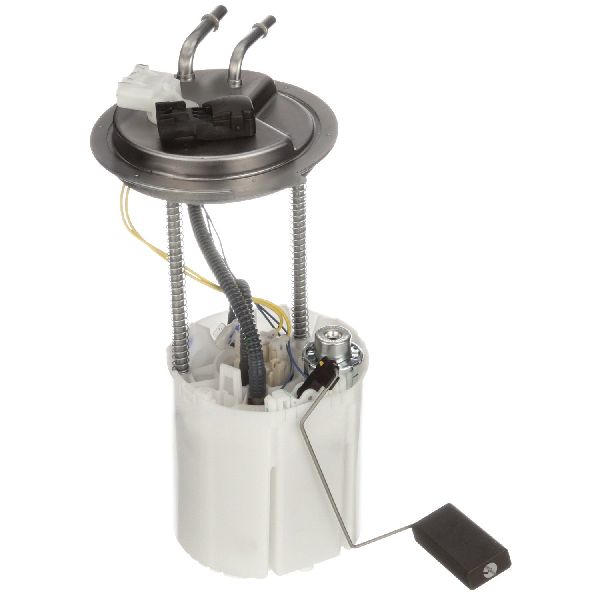
Est. part cost: $50-$150 - Weak In-Tank Low-Pressure Fuel Pump ⚪ Low Probability → Shop Fuel Pump The HPFP cannot generate high pressure if it isn't being fed sufficient fuel from the low-pressure pump in the tank. While less common than HPFP failure for this code, it's a critical part of the system. GM has also issued TSBs (e.g., 17-NA-335) for updated low-pressure pump modules to address issues like hesitation and stalling in high ambient temperatures, which can be related.
How to confirm: A technician will test the low-pressure fuel system's pressure to ensure it meets specifications (typically 45-60 PSI for these systems) before diagnosing the high-pressure side. This must be verified before condemning the more expensive high-pressure components.
Typical fix: Replace the in-tank fuel pump module assembly. 🎬 Watch: How to replace the fuel pump without dropping the tank
Est. part cost: $200-$450 - Wiring Harness Issues ⚪ Low Probability Engine harnesses can chafe against other components over time, leading to shorts or open circuits. The wiring to the HPFP control solenoid or the FRPS can be damaged, causing erratic signals and triggering the code.
How to confirm: Visually inspect the wiring harnesses for the fuel rail pressure sensor and high-pressure fuel pump for any signs of damage, corrosion, or loose connections. A technician may perform a continuity or pin-out test on the connectors and wiring.
Typical fix: Repair the damaged section of the wiring harness or replace the affected connector.
Est. part cost: $20-$200
Rare But Worth Checking
- Leaking Fuel Injector: → Shop Fuel Injector A fuel injector stuck open can cause a drop in rail pressure, potentially triggering P0089. This would likely be accompanied by a misfire code (e.g., P030X) for the specific cylinder and a rich running condition.
- Worn Camshaft Lobe: → Shop Engine Camshaft Since the HPFP is driven by a three-lobed section on the intake camshaft, excessive wear on those specific lobes can prevent the pump from generating sufficient pressure. This is a major mechanical failure and is very rare, but can happen, especially if the engine has suffered from oil starvation issues which can also cause camshaft timing codes like P0011 or P0016.
Diagnosis Steps
- Connect a professional scan tool to read the code and check for any other related DTCs.
- View live data to compare 'Desired Fuel Rail Pressure' with 'Actual Fuel Rail Pressure'. Note the discrepancy during idle, light throttle, and heavy acceleration. At idle, pressure should be around 500-600 PSI.
- Test the low-pressure fuel system. Connect a fuel pressure gauge to the low-pressure line and verify the pressure is within GM's specification (typically 45-60 PSI).
- If low-pressure is good, inspect the wiring and connectors for the high-pressure fuel pump and the fuel rail pressure sensor for any visible damage or corrosion.
- Pull the engine oil dipstick and smell it for gasoline. A strong fuel odor is a definitive sign of a leaking high-pressure fuel pump seal.
- If wiring is intact and no fuel is in the oil, further diagnosis will focus on isolating the fault between the fuel rail pressure sensor and the high-pressure fuel pump.
- Based on TSB PIP5279A, if other tests are inconclusive, replacing the Fuel Rail Pressure Sensor is a logical next step.
- If the problem persists after replacing the sensor, the high-pressure fuel pump is the most likely remaining cause.
Parts You'll Likely Need
- High-Pressure Fuel Pump
(OEM #12728002 (supersedes 12711662))— This is the most common mechanical failure point that causes code P0089 on this engine, often due to internal seal failure or solenoid malfunction.
Trusted brands: ACDelco (GM Genuine), Delphi
OEM price range: $450-$600
Aftermarket price range: $300-$500 - Fuel Rail Pressure Sensor
(OEM #12627092)— A faulty sensor can send incorrect data, and a GM TSB points to it as a likely cause when other diagnostics are inconclusive.
Trusted brands: ACDelco (GM Genuine), Bosch
OEM price range: $80-$150
Aftermarket price range: $50-$100 - High-Pressure Fuel Feed Line
(OEM #12673)— This is a one-time use part that must be replaced any time the high-pressure fuel pump is serviced to prevent dangerous, high-pressure leaks.
Trusted brands: ACDelco (GM Genuine)
OEM price range: $40-$70
Aftermarket price range: $30-$50
Related Codes That Often Appear With This One
- P228C — Indicates 'Fuel Pressure Regulator Control Performance - Low Pressure', directly related to the same fault condition.
- P228D — Indicates 'Fuel Pressure Regulator Control Performance - High Pressure', another directly related fault.
- P0192 — Indicates 'Fuel Rail Pressure Sensor Circuit Low', pointing towards a sensor or wiring issue.
- P0193 — Indicates 'Fuel Rail Pressure Sensor Circuit High', also pointing towards a sensor or wiring issue.
- P0172 / P0175 — Indicates 'System Too Rich (Bank 1 / Bank 2)'. These can be triggered if the HPFP internal seal fails and leaks fuel into the crankcase, which then gets pulled into the intake via the PCV system, causing a rich condition.
Technical Service Bulletins (TSBs) & Recalls
- PIP5279A: Mentions that for SES lamps with DTC P0089 (and others like P0192, P0193, P228C, P228D), if published diagnostics are inconclusive, the technician should replace the Fuel Rail Pressure Sensor (FRPS).
- 17-NA-335: While not directly for P0089, this TSB addresses hesitation, surging, and stalling in high ambient temperatures due to vapor buildup, with the fix being an updated in-tank fuel pump module. This highlights potential issues with the low-pressure side of the fuel system that could indirectly contribute to pressure performance problems.
Platform-Specific Known Issues
- Technical Service Bulletin PIP5279A directly addresses P0089 on the 2015-2016 Escalade, noting it can appear with other fuel pressure codes (P0192, P0193, P228C, P228D) and suggests replacing the fuel rail pressure sensor if a root cause isn't easily found through standard diagnostics.
- A common failure mode for the High-Pressure Fuel Pump (HPFP) on the L86 engine is an internal seal leak, which dumps gasoline directly into the crankcase. This contaminates the engine oil, reduces lubrication, and can cause rich running codes (P0172/P0175) as the fuel vapor is ingested through the PCV system.
Mechanic-Grade Diagnostic Values
- Low-Side Fuel Pressure (In-tank pump) — expected: 45-60 PSI (310-414 kPa). Must be greater than 36 PSI for high-pressure DTCs to run.. Failure: Pressure below 45 PSI indicates a problem with the in-tank pump or Fuel Pump Control Module (FPCM) before diagnosing the high-pressure system.
- High-Side Fuel Rail Pressure (at idle) — expected: Approximately 500-600 PSI (3.4-4.1 MPa).. Failure: Pressure that is significantly lower, higher, or erratically fluctuating from the 'Desired Fuel Rail Pressure' PID on a scan tool.
- Fuel Rail Pressure Sensor (FRPS) Reading (KOEO, unplugged) — expected: 0 PSI.. Failure: If the sensor is unplugged and the scan tool still shows a pressure reading, it indicates a wiring issue (short to ground or another signal).
- Fuel Rail Pressure Sensor (FRPS) Reading (KOEO, signal shorted to 5V reference) — expected: 4,062 PSI (Maximum reading).. Failure: This test confirms the sensor's range. If the reading does not go to max, there may be an issue with the sensor or wiring.
- High-Pressure Fuel Pump Actuator Resistance — expected: 0.3 - 0.7 ohms between the two terminals.. Failure: Resistance outside this range, or any resistance between a terminal and the pump housing, indicates a faulty actuator requiring pump replacement. As little as 2 ohms of excess resistance in the circuit can set these DTCs.
Hidden / Shadow Codes Worth Checking
- DTC Type Distinction: P0089 is a Type B DTC, meaning the Malfunction Indicator Lamp (MIL) will illuminate after the fault is detected on two consecutive drive cycles. The related codes P228C and P228D are Type A DTCs, which will illuminate the MIL on the first detection of the fault. (see via Standard OBD-II Scan Tool)
Scan Tool Commands That Help
- GDS2 (GM Dealer Scan Tool): FPCM Duty Cycle Command — To manually command the in-tank low-pressure fuel pump to a specific output (e.g., 25%, 50%, 75%) to verify its functionality and rule out low-side supply issues before condemning the high-pressure pump.
- GDS2 (GM Dealer Scan Tool): Fuel System Depressurize — Used to test the fuel rail pressure sensor. With the engine idling, commanding the system to depressurize should cause the engine to stall and the pressure reading to drop to zero. If the sensor still reads residual pressure after the stall, it is faulty.
- GDS2 (GM Dealer Scan Tool): Camshaft Position Actuator Solenoid Control — In cases of a crank-no-start with related code P00C6, a stuck cam phaser can be the cause. Cycling the intake cam phaser solenoid 4-5 times with GDS2 may un-stick it and allow the engine to start, pointing diagnosis toward the timing system instead of fuel.
- J2534 Pass-Thru Device with GM SPS2: Fuel Pump Control Module Programming — This is not a diagnostic command, but a required procedure. If the Fuel Pump Control Module (FPCM) is replaced during diagnosis, it must be programmed to the vehicle's VIN to function correctly.
Wiring & Ground Locations
- G218 — Under the driver's side of the instrument panel, near the base of the A-pillar. Access may require removing the A-pillar trim and side dash panel/speaker.. This is a critical ground for the Body Control Module (BCM). GM TSB PIT5405C identifies a poor connection here as a root cause for a wide range of electrical issues, including engine stalls and no-start conditions. The foam dash insulator mat is often found trapped between the ground eyelet and the body stud, preventing a solid connection even if the nut is tight.
- Negative Battery Cable Engine Ground — The main negative battery cable connects to the engine block, often near the starter motor on the passenger side.. A poor engine ground can cause a host of electrical and sensor-related issues. GM specifies a torque of 45 Nm (33 ft lb) for this connection. It should be inspected for looseness and corrosion.
- G102 — On the rear of the left (driver's side) cylinder head.. This ground is for the ignition coil circuits. While not directly for the fuel system, a poor ignition ground can cause erratic engine behavior and misdiagnosed sensor codes.
Real Owner Repair Stories
- Go-Parts research article citing forum data (2015 GMC Sierra 1500 6.2L L86 (mechanically identical fuel system)) — Engine would not start or had a long crank time after an engine swap, throwing fuel pressure sensor related codes (P127C).
❌ Tried (didn't work) Checking wiring harness connections for obvious errors.
✅ What actually fixed it The replacement engine was a newer 2017+ model and came with a 3-pin digital fuel pressure sensor. The 2015 truck's harness was designed for the 4-pin analog sensor. Swapping the driver's side fuel rail and sensor from the original 2015 engine onto the new engine resolved the no-start condition.
OEM Part Supersession History
12711662→12728002, which was later superseded by 12744840— High-Pressure Fuel Pump (HPFP). GM updated this part multiple times, likely to improve reliability and address internal seal or solenoid failures.12623130→12673824— Fuel Rail Pressure Sensor (FRPS). This is the correct 4-pin sensor for the 2015-2016 Escalade.
Heads up: This 4-pin sensor is NOT compatible with 2017 and newer models, which use a 3-pin digital sensor.
Model Year Variations Within This Range
- 2015: A mid-year change occurred in 2015. Early-build 2015 models have a 6-speed automatic transmission, while later '2015i' (interim) models were equipped with the new 8L90 8-speed automatic transmission. This also coincided with an updated Cadillac CUE system and the adoption of the newer Cadillac crest logo.
- 2015-2016 vs 2017+: The Fuel Rail Pressure Sensor (FRPS) and its harness connector changed. 2015-2016 models use a 4-pin analog sensor (PN 12673824), while 2017 and newer models switched to a 3-pin digital sensor. The parts are not interchangeable.
Helpful Videos

Used OEM Parts in Stock
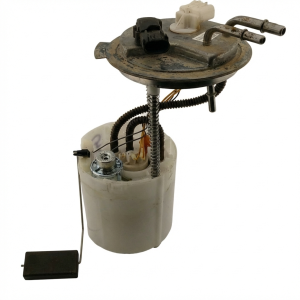
New Aftermarket Parts Available
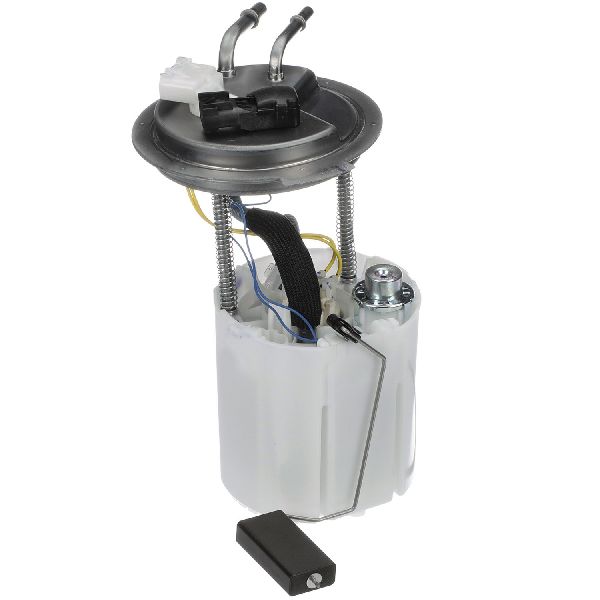


The information in this article is provided for general reference and educational purposes only. Vehicle specifications, procedures, and part compatibility can vary by production date, trim level, and region. Always consult your vehicle's factory service manual and verify part numbers before purchasing or performing repairs. Safety-critical components such as airbags, seat belts, and braking systems should be installed by a qualified professional.
- Cadillac ESCALADE:
- 🧭 Diagnostic Flowchart
- 🎬 Helpful Videos
- 🛍️ Shop This Part
- What's Unique About the 2015-2016 Cadillac ESCALADE
- Symptoms You May Notice
- Most Likely Causes
- Rare But Worth Checking
- Diagnosis Steps
- Parts You'll Likely Need
- Related Codes That Often Appear With This One
- Technical Service Bulletins (TSBs) & Recalls
- Platform-Specific Known Issues
- Mechanic-Grade Diagnostic Values
- Hidden / Shadow Codes Worth Checking
- Scan Tool Commands That Help
- Wiring & Ground Locations
- Real Owner Repair Stories
- OEM Part Supersession History
- Model Year Variations Within This Range
- 🎟️ Get 5% Off