

P0089 on 2015-2016 Cadillac Escalade ESV: Fuel Pressure Regulator Performance Fixes
On a 2015-2016 Escalade ESV, code P0089 usually points to a problem with the high-pressure fuel system. The most common cause is a failing high-pressure fuel pump (HPFP), followed by a faulty fuel rail pressure sensor. A key symptom of HPFP failure is fuel contaminating the engine oil. Expect a repair cost of $500-$1500, depending on the failed part.
- P0089 on a 2015-2016 Escalade indicates the fuel pressure in the high-pressure rail isn't matching what the computer expects.
- The most common culprit is a failing high-pressure fuel pump (HPFP), located under the intake manifold.
- A faulty fuel rail pressure sensor is the second most likely cause.
- Diagnosis requires a scan tool to compare desired vs. actual fuel pressure and testing the low-pressure fuel system to rule it out.
- This is not a DIY-friendly repair for beginners due to the extremely high fuel pressures and the need to remove the intake manifold for HPFP replacement.
What's Unique About the 2015-2016 Cadillac ESCALADE ESV
The 2015-2016 Escalade ESV uses the GM EcoTec3 6.2L (L86) engine, which features a sophisticated direct injection fuel system. This system has two fuel pumps: a low-pressure pump in the tank and a high-pressure fuel pump (HPFP) driven by the camshaft. Code P0089 on this platform almost always relates to the high-pressure side, which operates at pressures exceeding 2,000 PSI. Diagnosis can be more complex than on older port-injected engines because it requires differentiating between a failing low-pressure supply and a problem with the high-pressure pump or its sensor.
Diagnostic Flowchart
Tap your situation to follow the diagnostic path that matches what you're seeing on this vehicle.
Symptoms You May Notice
- Check Engine Light is on
- Reduced engine power message displayed
- Engine hesitation or stumbling, especially under acceleration
- Rough or unstable idle
- Difficulty starting the engine
- Engine stalling
- Engine oil smells of gasoline or is overfilled on the dipstick 🎬 Watch: Diagnosing P0089 symptoms like rough idle and fuel smells.
- Long crank times before the engine starts
- Replacing the in-tank (low-pressure) fuel pump without first verifying that the low-pressure system is actually at fault using a scan tool or pressure gauge.
- Replacing fuel injectors when the issue is with the pump or sensor.
- Replacing the high-pressure fuel pump when the actual fault is a less expensive fuel rail pressure sensor.
Most Likely Causes
- Failing High-Pressure Fuel Pump (HPFP) 🔴 High Probability → Shop Fuel Pump The HPFP is a complex mechanical component driven by a dedicated lobe on the camshaft. A common failure is the internal seal, which allows high-pressure fuel to leak into the engine crankcase, contaminating the oil. This wear-and-tear failure is a known issue on GM's direct injection engines.
How to confirm: Use a scan tool to monitor desired vs. actual fuel rail pressure. If actual pressure cannot keep up with desired pressure, especially during acceleration, the HPFP is suspect. A definitive sign is checking the engine oil; if it smells strongly of gasoline or the level is rising, the HPFP is almost certainly the cause. Also, check long-term fuel trims, which will often be highly negative (-20% or more) as the ECM tries to compensate for the extra fuel entering via the crankcase.
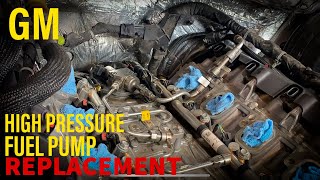
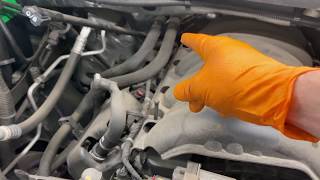
Typical fix: Replacement of the high-pressure fuel pump, which is located in the engine valley under the intake manifold. The fuel pipe connecting the pump to the rail is a one-time-use part 🎬 See this step-by-step walkthrough for a proper HPFP installation. and must also be replaced. An oil and filter change is mandatory if fuel contamination is present.
Est. part cost: $300-$700 - Faulty Fuel Rail Pressure Sensor 🟡 Medium Probability → Shop Fuel Pressure Sensor The sensor provides the critical feedback to the ECM. If it sends inaccurate or erratic readings, the ECM will detect a mismatch and trigger P0089. TSB PIP5279A suggests replacing this sensor if other diagnostics are inconclusive, indicating it can fail without obvious signs.
How to confirm: Observe the fuel rail pressure reading on a scan tool. With the key on, engine off, the reading should be stable. If it reads zero, maxes out (e.g., 95,058 PSI on some scan tools for a fault condition), or fluctuates wildly, the sensor or its wiring is likely faulty. If the reading seems plausible but the code persists and the pump is verified as good, the sensor may be providing inaccurate data under load.
Typical fix: Replacement of the fuel rail pressure sensor, which is located on one of the engine's fuel rails.
Est. part cost: $50-$150 - Insufficient Low-Pressure Fuel Supply ⚪ Low Probability The HPFP cannot function correctly if it is starved of fuel from the in-tank pump. A failing in-tank pump, clogged filter, or a faulty Fuel Pump Driver Module (FPDM) can cause this. TSB 17-NA-335 notes that in high ambient temperatures, vapor buildup in the fuel line can cause similar symptoms, addressed by an updated in-tank fuel pump module.
How to confirm: Test the low-pressure fuel system. On these vehicles, this is best done via a scan tool that can read the 'Fuel Tank Fuel Pressure Sensor' and command the low-pressure pump. The pressure should be around 400 kPa (58 PSI) and stable. If low-side pressure is below spec or drops off under load, the problem is in the low-pressure system.
Typical fix: Replacement of the in-tank fuel pump module or the Fuel Pump Driver Module (FPDM). The FPDM is often located on the frame rail above the spare tire.
Est. part cost: $250-$500
Rare But Worth Checking
- Worn Camshaft Lobe: → Shop Engine Camshaft The HPFP is driven by a specific lobe on the camshaft. Excessive wear on this lobe will prevent the pump from generating sufficient pressure. This is a major mechanical failure often accompanied by other symptoms like timing-related codes (e.g., P0016) and is less common than the pump itself failing.
- Leaking Fuel Injector(s): → Shop Fuel Injector A fuel injector that is stuck open or leaking can cause a drop in rail pressure that the pump cannot overcome, triggering P0089. This would likely be accompanied by misfire codes for the specific cylinder. Coolant leaking onto an injector connector can also cause electrical issues.
- Wiring Issues: Damaged wiring or corroded terminals at the fuel rail pressure sensor or HPFP can cause erratic signals. GM TSB #PIP5361 specifically calls out inspecting connector X161 for looseness or burn marks on these vehicles for P0089 and related codes. TSB 21-NA-172 also points to potential harness chafing issues on related platforms.
Diagnosis Steps
- Connect a professional-grade scan tool to the OBD-II port.
- Check for any other accompanying trouble codes. Pay close attention to rich codes (P0172/P0175) or sensor circuit codes (P0192/P0193). TSB #PIP5279A lists a full family of related fuel codes.
- Using the scan tool's live data, monitor 'Desired Fuel Rail Pressure' and 'Actual Fuel Rail Pressure'.
- At idle, the values should be very close (approx. 500-600 PSI). Command a higher RPM or briefly accelerate while parked and observe if the actual pressure follows the desired pressure. A significant lag or inability for the actual pressure to rise points to a problem.
- Check the engine oil. Carefully remove the dipstick and smell for a strong gasoline odor. Check if the oil level is above the full mark. If either is true, the High-Pressure Fuel Pump (HPFP) is the primary suspect.
- Test the low-pressure fuel system. Use the scan tool to monitor the low-side pressure sensor. It should hold steady at the specified pressure (typically 50-60 PSI / 400 kPa).
- If low-pressure is good but high-pressure is low, inspect the wiring and connector X161 for the high-pressure fuel pump and fuel rail pressure sensor, as mentioned in TSB #PIP5361.
- If wiring is intact and the low-pressure supply is good, the two main suspects are the fuel rail pressure sensor and the high-pressure fuel pump itself.
- A sensor that provides erratic or illogical readings (e.g., pegged at max value) is likely bad. A pump that consistently fails to meet pressure targets under load, especially if fuel is present in the oil, is failing mechanically.
Parts You'll Likely Need
- High-Pressure Fuel Pump
(OEM #12677329 (may be superseded by 12691016 or 12641740))— This is the most frequent point of failure for code P0089 on this engine, as it is a high-stress mechanical part responsible for generating the pressure. Internal seal failure is common.
Trusted brands: ACDelco (GM Genuine), Bosch
OEM price range: $450-$700
Aftermarket price range: $300-$550 - Fuel Rail Pressure Sensor
(OEM #12679819 (or related numbers for specific rail))— This sensor provides the critical feedback for fuel pressure control. A faulty sensor can send incorrect data, causing the ECM to set P0089. TSB PIP5279A recommends its replacement if diagnostics are inconclusive.
Trusted brands: ACDelco, Bosch
OEM price range: $80-$150
Aftermarket price range: $50-$100 - Fuel Pump Driver Module (FPDM)
(OEM #23482843)— This module controls the voltage to the in-tank low-pressure fuel pump. A failure can starve the high-pressure pump of fuel. It's a less common cause than the HPFP but should be considered if low-pressure fuel supply is inadequate.
Trusted brands: ACDelco (GM Genuine), Dorman
OEM price range: $100-$200
Aftermarket price range: $50-$120
Related Codes That Often Appear With This One
- P228C — Fuel Pressure Regulator 1 Exceeded Control Limits - Pressure Too Low. This code is often set along with P0089 when the fuel pressure is consistently below the target.
- P228D — Fuel Pressure Regulator 1 Exceeded Control Limits - Pressure Too High. This can occur if the regulator component within the HPFP fails in a closed position.
- P0192 / P0193 — Fuel Rail Pressure Sensor Circuit Low/High Input. These point more specifically to an electrical issue with the sensor or its circuit, rather than a performance issue.
- P0172 / P0175 — System Too Rich (Bank 1 / Bank 2). These codes are a major clue for HPFP failure. When the pump leaks fuel into the crankcase, the PCV system pulls the fuel vapors into the intake, creating a rich condition that the ECM cannot correct.
Technical Service Bulletins (TSBs) & Recalls
- PIP5279A: Mentions P0089 in a group of fuel system codes, indicating a known area for diagnostics.
- PIP5361: Suggests inspecting a specific electrical connector (X161) for faults when P0089 is present.
Platform-Specific Known Issues
- Fuel in Crankcase Oil: A critical symptom associated with HPFP failure on the L86 engine is fuel contaminating the engine oil. The internal seals of the pump can fail, allowing gasoline to leak directly into the crankcase. Owners may notice the oil level is overfull on the dipstick and smells strongly of gasoline. This necessitates an immediate oil and filter change along with the pump replacement to prevent severe engine damage.
- TSB Recommendation for Sensor Replacement: TSB PIP5279A is particularly relevant for this platform. It states that after following standard diagnostic procedures for P0089 and related codes, if the cause is still not found, the technician should replace the Fuel Rail Pressure Sensor (FRPS). This suggests the sensor can fail in a way that is difficult to diagnose with live data alone, making it a common 'parts cannon' target that sometimes works.
Mechanic-Grade Diagnostic Values
- Low-Pressure Fuel System Pressure (In-tank pump) — expected: ~400 kPa (58 PSI) with key on, engine off.. Failure: Pressure is significantly below the 50-65 PSI range or drops off under load.
- High-Pressure Fuel Rail Pressure at Idle — expected: Approx. 500-600 PSI at idle. Actual pressure should closely match desired pressure on a scan tool.. Failure: Actual pressure is significantly lower than desired pressure, especially when revving the engine.
- High-Pressure Fuel Rail Pressure Sensor Voltage (KOEO) — expected: Approx. 1.5 - 1.8 volts with Key On, Engine Off.. Failure: Voltage is stuck at 0V, 5V, or fluctuates erratically.
- Fuel Rail Pressure Sensor Signal Wire (Disconnected) — expected: 5 Volts.. Failure: An open, short to ground, or short to voltage on the signal wire can cause the scan tool to display a default high-pressure reading (e.g., 95,058 PSI).
Scan Tool Commands That Help
- GDS2 (GM Global Diagnostic System 2): Fuel System Tests — To command the low-pressure (in-tank) fuel pump on/off to verify its operation and check for stable low-side pressure. It can also be used to monitor desired vs. actual high-pressure fuel rail pressure during a test drive to see if the HPFP can keep up under load.
- GDS2 (GM Global Diagnostic System 2): Fuel Pump Driver Module Programming — After replacing the Fuel Pump Driver Module (FPDM), it must be programmed to the vehicle's VIN for it to function correctly.
Wiring & Ground Locations
- Fuel Pump Driver Module (FPDM) — On the driver's side frame rail, typically above or near the spare tire.. This module controls the low-pressure fuel pump. Corrosion or wiring issues at this location can cause a loss of low-pressure fuel supply, starving the high-pressure pump and triggering P0089.
- Connector X161 — This is a major engine harness connector. Its exact location requires consulting service information, but it's a key junction for fuel system wiring.. TSB #PIP5361 specifically identifies inspecting pins 1 and 2 in this connector for looseness or burn marks as a diagnostic step for P0089 and P228C after standard diagnostics are inconclusive.
- Fuel Rail Pressure Sensor Wiring — The sensor is on the fuel rail at the back of the engine. The harness routes under the intake manifold.. The sensor uses a 3-wire connector (on later models) that sends a digital SENT protocol signal, not a simple analog voltage. The ECM supplies 5V reference and ground. A fault in this wiring will cause illogical readings.
Real Owner Repair Stories
- YouTube user comment/video analysis (2015 Cadillac Escalade) — Misfire codes and suspected fuel injector issue, but also relevant to P0089 due to system interaction.
❌ Tried (didn't work) Initial diagnosis pointed to a bad fuel injector.
✅ What actually fixed it A coolant heater hose was found to be leaking directly onto the cylinder 8 fuel injector connector. The coolant intrusion caused an electrical fault with the injector. While not a direct cause of P0089, it illustrates how external factors like fluid leaks can create fuel system electrical problems with similar symptoms. The fix was to repair the coolant leak and address the contaminated connector/injector.
OEM Part Supersession History
12677329→12691016— GM regularly updates parts to improve reliability or address known issues. The current replacement part for the high-pressure fuel pump is 12691016.
Heads up: Part number 12691016 replaces a long list of previous numbers, including 12622475, 12633594, 12641740, and 12677329. Always use the latest superseded part number for repairs.
Model Year Variations Within This Range
- 2015-2016: Around the 2016 model year, GM transitioned the fuel rail pressure sensor from a 4-pin analog sensor to a 3-pin digital (SENT protocol) sensor. While the 2015-2016 Escalade likely uses one type consistently, it's a critical detail to verify during diagnosis or replacement, as the harnesses and ECM logic are different.
Helpful Videos
Used OEM Parts in Stock
New Aftermarket Parts Available


The information in this article is provided for general reference and educational purposes only. Vehicle specifications, procedures, and part compatibility can vary by production date, trim level, and region. Always consult your vehicle's factory service manual and verify part numbers before purchasing or performing repairs. Safety-critical components such as airbags, seat belts, and braking systems should be installed by a qualified professional.
- Cadillac ESCALADE ESV:
- 🧭 Diagnostic Flowchart
- 🎬 Helpful Videos
- 🛍️ Shop This Part
- What's Unique About the 2015-2016 Cadillac ESCALADE ESV
- Symptoms You May Notice
- Most Likely Causes
- Rare But Worth Checking
- Diagnosis Steps
- Parts You'll Likely Need
- Related Codes That Often Appear With This One
- Technical Service Bulletins (TSBs) & Recalls
- Platform-Specific Known Issues
- Mechanic-Grade Diagnostic Values
- Scan Tool Commands That Help
- Wiring & Ground Locations
- Real Owner Repair Stories
- OEM Part Supersession History
- Model Year Variations Within This Range
- 🎟️ Get 5% Off