

P0089 on 2014-2016 Chevrolet Corvette: Fuel Pressure Regulator Performance Explained
On a C7 Corvette, P0089 usually points to a failing high-pressure fuel pump (HPFP), often accompanied by a rattling noise from the engine bay. This can cause hesitation, stalling, and a 'Reduced Engine Power' message. Expect to pay $450-$700 for a new OEM pump, with professional installation highly recommended due to the system's complexity and high pressures.
- P0089 on a 2014-2016 Corvette indicates a serious issue with the high-pressure fuel system.
- The most likely cause is a failing high-pressure fuel pump (HPFP).
- Symptoms often include engine hesitation under power and a 'Reduced Engine Power' warning.
- Due to the extremely high pressures and complexity, this is not a recommended DIY repair. Seek professional diagnosis.
- Before replacing parts, use a scan tool to compare desired vs. actual fuel rail pressure to confirm the diagnosis.
What's Unique About the 2014-2016 Chevrolet CORVETTE
The 2014-2016 C7 Corvette uses a sophisticated direct injection fuel system with both a low-pressure in-tank pump and a high-pressure, camshaft-driven pump (HPFP). Code P0089 almost always relates to the high-pressure side of this system. The issue is common enough that GM issued Technical Service Bulletin #PIP5279A, which includes P0089 for the 2014-2016 model years and suggests that if standard diagnostics are inconclusive, the fuel rail pressure sensor (FRPS) should be replaced. The problem is especially prevalent on modified cars (e.g., with superchargers, E85 conversions, or aggressive cams) where increased fuel demand stresses the limits of the stock HPFP and its control system.
Diagnostic Flowchart
Tap your situation to follow the diagnostic path that matches what you're seeing on this vehicle.
Symptoms You May Notice
- Check Engine Light is on
- "Reduced Engine Power" message on the driver information center
- Engine hesitation or stumbling during acceleration
- Engine stalling, especially under load
- Rough or unstable idle
- Hard starting or extended cranking time
- Decreased fuel economy
- Audible rattling or buzzing noise from the engine bay, near the firewall, that corresponds with engine RPM.
- Replacing fuel injectors when the issue is fuel pressure delivery.
- Replacing the low-pressure pump when the high-pressure pump is the actual point of failure on a stock vehicle.
- Mistaking a noisy fuel line for a bad lifter. TSB PIP5395 notes that high-pressure pulsations can cause a ticking or buzzing noise in the fuel feed line that can be heard inside the cabin.
Most Likely Causes
- Failing High-Pressure Fuel Pump (HPFP) 🔴 High Probability → Shop Fuel Pump The HPFP is a complex mechanical part driven by a dedicated lobe on the camshaft. Wear and tear on its internal solenoid or mechanical components is the most common cause of P0089 on the C7 platform. Failures can manifest as either a complete inability to build pressure or erratic performance.
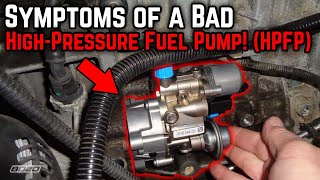
How to confirm: Use a professional scan tool to monitor 'Desired Fuel Rail Pressure' vs. 'Actual Fuel Rail Pressure'. If the actual pressure cannot keep up with the desired pressure, especially under load, the HPFP is the primary suspect. A user on CorvetteForum noted their tuner saw actual pressure at 2422psi when desired was 3401psi, confirming a bad pump. A physical sign can be a loud rattling sound from the pump itself. 🎬 Watch: How to tell if your HPFP is going bad
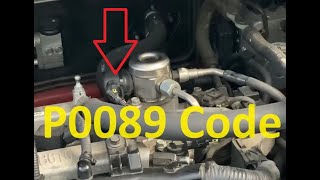
Typical fix: Replace the high-pressure fuel pump. The regulator is internal to the pump. 🎬 See this breakdown of P0089 causes and common fixes When replacing, it is critical to inspect the camshaft lobe for wear.
Est. part cost: $450 - $700 for OEM - Faulty Fuel Rail Pressure Sensor (FRPS) 🟡 Medium Probability → Shop Fuel Pressure Sensor This sensor provides the critical feedback to the ECM. If it sends inaccurate, erratic, or biased readings, the ECM will set a performance code even if the pump is working correctly. TSB #PIP5279A specifically advises replacing the FRPS if other diagnostics for P0089 are inconclusive.
How to confirm: If fuel pressure readings on the scan tool are erratic, stuck at one value, or clearly incorrect at idle (e.g., reading high pressure when the engine is off), the sensor is suspect. A quick check is to compare the rail pressure sensor reading to the low-side pressure sensor reading with the engine off (key on); they should be nearly identical.
Typical fix: Replace the fuel rail pressure sensor.
Est. part cost: $50 - $100 - Weak Low-Pressure Fuel Pump ⚪ Low Probability → Shop Fuel Pump The HPFP can only deliver high pressure if it receives adequate volume from the in-tank low-pressure pump. This is less common on stock vehicles but is a frequent issue on cars modified to run E85, which requires about 30% more fuel volume than gasoline. The stock low-side pump can be overwhelmed, starving the HPFP.
How to confirm: Monitor the low-pressure fuel system pressure with a scan tool during a wide-open throttle pull. If it drops significantly, it may be the bottleneck in the system. Forum users with modified cars report this is a common scenario.
Typical fix: Replace the in-tank low-pressure fuel pump, or upgrade it for modified applications.
Est. part cost: $200 - $400
Rare But Worth Checking
- ECM Software or Tuning Issue: On heavily modified cars, the factory ECM calibration may struggle to control fuel pressure accurately during rapid throttle changes, leading to pressure overshoots or undershoots that trigger P0089. This typically requires a custom tune to resolve.
- Wiring Harness Issue: Damage or corrosion in the wiring for the HPFP actuator or the fuel rail pressure sensor can cause intermittent signals and trigger the code. One diagnostic guide notes that as little as 2 Ohms of resistance in the HPFP control circuits can cause these DTCs to set. This should be investigated before replacing expensive components.
- Restricted Fuel Line: → Shop Fuel Line GM issued TSB 16-NA-202 for some 2016 models (LGX engine, but relevant principle) where a fuel feed line was manufactured with an extra internal check valve, causing fuel starvation to the HPFP under hard acceleration and triggering P0089. While not specific to the LT1/LT4, it highlights that line restrictions are a possibility. A similar issue is noted on CorvetteForum where the LT1 low-pressure line to the HPFP has a restrictor not present on the LT4 version.
Diagnosis Steps
- Connect a professional OBD-II scan tool capable of reading live data for GM vehicles.
- Confirm P0089 is present and check for any other related fuel system codes like P228C, P228D, P0192, or P0193.
- Access the live data stream and monitor 'Desired Fuel Rail Pressure' and 'Actual Fuel Rail Pressure'.
- At idle, the values should be very close (approx. 290-500 PSI). Briefly rev the engine; the actual pressure should track the desired pressure closely.
- Listen for a rattling or loud ticking noise from the high-pressure fuel pump, located at the rear of the engine valley. This is a common sign of mechanical failure.
- If safe to do so, perform a test drive under load (e.g., a wide-open throttle pull in a safe, legal environment) while a passenger records the data. If the actual pressure falls significantly behind the desired pressure (e.g., a 1000+ PSI deficit), the HPFP is likely failing.
- If the actual pressure reading is erratic, zero, or maxed out, inspect the fuel rail pressure sensor and its wiring. Per TSB #PIP5279A, if other tests are inconclusive, replacing the sensor is the next step.
- Inspect the wiring harness and connectors for the HPFP and fuel rail pressure sensor for any signs of damage, corrosion, or looseness.
- If the high-pressure side seems to function but the code appears under high demand, check the live data for the low-pressure fuel pump to ensure it's supplying adequate pressure to the HPFP.
Parts You'll Likely Need
- High-Pressure Fuel Pump
(OEM #12677329 (superseded by 12691016))— This is the most common failure point for code P0089 on the C7 Corvette. The internal regulator fails, requiring replacement of the entire pump assembly. Part number 12677329 has been superseded multiple times, with 12691016 being a more current replacement.
Trusted brands: ACDelco, GM Genuine
OEM price range: $450 - $700
Aftermarket price range: $350 - $500 - Fuel Rail Pressure Sensor
(OEM #12679369)— If the pump is confirmed to be working or if diagnostics are inconclusive, this sensor is the next logical part to replace per GM's own service bulletin. It provides the pressure reading to the ECM.
Trusted brands: ACDelco, Bosch
OEM price range: $70 - $100
Aftermarket price range: $40 - $70
Related Codes That Often Appear With This One
- P228C — This code means 'Fuel Pressure Regulator Control Performance - Low Pressure' and often appears with P0089, indicating the system is struggling to build or maintain pressure, especially under load.
- P228D — This code means 'Fuel Pressure Regulator Control Performance - High Pressure' and can appear with P0089, especially during throttle-off events where pressure spikes.
- P0192 — 'Fuel Rail Pressure Sensor Circuit Low', indicating a potential issue with the sensor or its circuit, which is directly related to P0089. (Cited in TSB #PIP5279A)
- P0193 — 'Fuel Rail Pressure Sensor Circuit High', also pointing to a sensor or circuit fault that can cause P0089. (Cited in TSB #PIP5279A)
Technical Service Bulletins (TSBs) & Recalls
- PIP5279A: Mentions that vehicles may set DTC P0089 along with other fuel codes. Critically, it advises technicians to 'Follow published Si diagnostics for the DTC's that have set, if it is inconclusive replace the FRPS (fuel rail pressure sensor)'. This confirms manufacturer awareness and provides a specific diagnostic path.
- PIP5395: Addresses a 'ticking rattle or buzz noise' that can be mistaken for a lifter or HPFP failure. It points to the fuel feed line between the HPFP and the chassis line as a potential cause of noise due to pulsations, recommending line replacement if the noise is isolated there.
Platform-Specific Known Issues
- A known issue documented by GM in Technical Service Bulletin #PIP5279A for 2014-2016 models, which lists P0089 and advises replacing the Fuel Rail Pressure Sensor if diagnostics are inconclusive.
Mechanic-Grade Diagnostic Values
- Low-Pressure Fuel System Pressure (at idle) — expected: 40-55 PSI. Failure: Significant drop below 40 PSI, especially under load.
- Low-Pressure Fuel System Pressure (WOT) — expected: ~70 PSI. Failure: Pressure does not rise to or hold near 70 PSI during a wide-open throttle event.
- High-Pressure Fuel System Pressure (at idle) — expected: ~500 PSI. Failure: Pressure is erratic or does not match the desired pressure shown on a scan tool.
- High-Pressure Fuel System Pressure (WOT) — expected: ~2100 PSI. Failure: Pressure fails to reach or sustain near 2100 PSI, lagging significantly behind the desired pressure.
- Fuel Rail Pressure Sensor Voltage (Engine Off) — expected: ~0.5 V. Failure: Voltage is significantly different, zero, or maxed out.
- Fuel Rail Pressure Sensor Voltage (at idle) — expected: ~1.32 V. Failure: Voltage is erratic or does not correspond to stable idle pressure.
- HPFP Control Circuit Resistance — expected: < 2 Ohms. Failure: Resistance over 2 Ohms can cause intermittent DTCs.
Scan Tool Commands That Help
- GDS2: Fuel Pump Relay control — To manually activate the low-pressure fuel pump to check for leaks or verify pump operation without starting the engine. This requires placing the car in 'Service Only Mode' by holding the start button for 5 seconds with your foot off the brake.
- GDS2: Vehicle DTC Information — To perform a full scan of all vehicle modules to identify any related codes that may not be visible on a standard OBD-II reader.
- GDS2: Diagnostic Data Display — To view and log live data streams, such as Desired vs. Actual fuel pressure, sensor voltages, and fuel trims, which is essential for diagnosing performance-based codes like P0089.
Wiring & Ground Locations
- Engine Compartment Ground Stud — On the passenger side fender well, just to the rear of the air filter housing.. This is a common and accessible ground point in the engine bay. A poor ground here can cause erratic behavior in nearby sensors and modules, including those related to the fuel system. Ensuring this connection is clean and tight is a crucial early diagnostic step.
- ECM Connector X2 Pin 72 — At the Engine Control Module (ECM).. This pin provides the control signal for the Fuel Pressure Regulator Solenoid. The wire is typically Yellow. Testing for signal and voltage at this pin is a key step in diagnosing a circuit fault vs. a component failure.
- ECM Connector X2 Pin 24 — At the Engine Control Module (ECM).. This pin provides the supply voltage for the Fuel Pressure Regulator Solenoid. The wire is typically Purple/White. Verifying voltage here confirms the ECM is supplying power to the circuit.
Real Owner Repair Stories
- CorvetteForum user (2016 C7 Z06, A8 Transmission, 18k miles) — Reduced Engine Power during a WOT pull on the freeway. Codes P228C and P0089 were present.
❌ Tried (didn't work) Dealer had previously replaced the high-pressure fuel pump under a special warranty for a different issue (fuel smell).
✅ What actually fixed it The user's issue was unresolved in the thread, but another user with identical symptoms on a 2016 Z06 reported their final fix was repairing a small exhaust leak between the catalytic converter and the X-Pipe, which was causing skewed fuel trims and triggering the fuel pressure codes under load. - CorvetteForum user (C7 Z06 with extensive modifications (cam with 38% fuel lobe, supercharger, E85, etc.)) — Recurring P228D and P0089 codes, triggering limp mode during high-RPM, on/off throttle driving.
❌ Tried (didn't work) Replacing the GM fuel rail pressure sensor.
✅ What actually fixed it The owner concluded the issue was not a failing part, but a tuning problem described as 'integral windup' where the ECM's control loop for the HPFP accumulates error during rapid throttle changes common in aggressive driving. The resolution is to have the car professionally re-tuned to adjust the fuel pressure control parameters to account for the modifications.
OEM Part Supersession History
12677329, 12622475, 12629934, 12633594, 12641740, 12669005, 12677328, 12733943→12691016— GM periodically updates parts to improve reliability or address known failure modes. This part has a long history of revisions.
Model Year Variations Within This Range
- 2014-2016: These models used a 4-pin analog style Fuel Rail Pressure Sensor.
- 2017+: Starting in 2017, GM switched to a more accurate 3-pin digital Fuel Rail Pressure Sensor. While the sensors can be physically swapped, the ECM and wiring harness are different and expect a specific sensor type.
- 2014 vs 2015+: Forum discussions suggest there may be subtle differences in the fuel system and tuning between 2014 and later models that become apparent when modifying the vehicle, though specific part number changes for stock components are not well-documented.
Helpful Videos
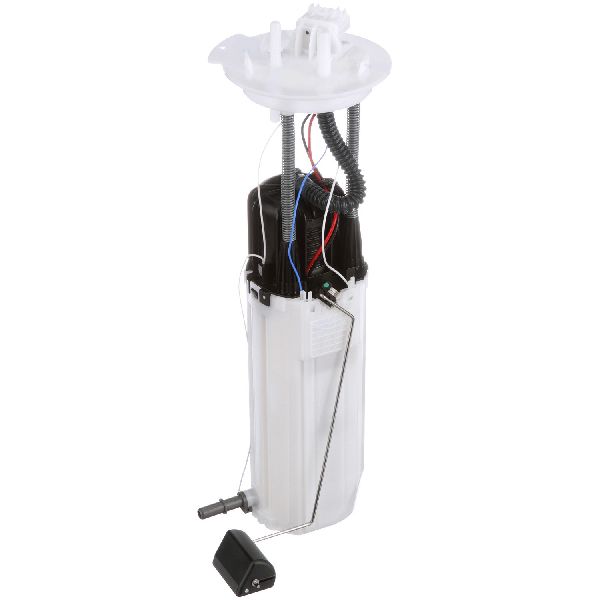
We Have This Part in Stock


The information in this article is provided for general reference and educational purposes only. Vehicle specifications, procedures, and part compatibility can vary by production date, trim level, and region. Always consult your vehicle's factory service manual and verify part numbers before purchasing or performing repairs. Safety-critical components such as airbags, seat belts, and braking systems should be installed by a qualified professional.
- Chevrolet CORVETTE:
- 🧭 Diagnostic Flowchart
- 🎬 Helpful Videos
- 🛍️ Shop This Part
- What's Unique About the 2014-2016 Chevrolet CORVETTE
- Symptoms You May Notice
- Most Likely Causes
- Rare But Worth Checking
- Diagnosis Steps
- Parts You'll Likely Need
- Related Codes That Often Appear With This One
- Technical Service Bulletins (TSBs) & Recalls
- Platform-Specific Known Issues
- Mechanic-Grade Diagnostic Values
- Scan Tool Commands That Help
- Wiring & Ground Locations
- Real Owner Repair Stories
- OEM Part Supersession History
- Model Year Variations Within This Range
- 🎟️ Get 5% Off