

P0089 on 2011-2016 Chevrolet Cruze 1.4L: Fuel Pressure Regulator Performance Causes and Fixes
On a 2011-2016 Cruze 1.4L Turbo, code P0089 almost always points to a failing High-Pressure Fuel Pump (HPFP), as the regulator is internal to it. Check the engine oil for a strong gasoline smell, which confirms a bad HPFP seal leaking fuel into the crankcase. Expect to pay $250-$500 for a new pump.
- P0089 on a 1.4L Cruze strongly suggests a problem with the High-Pressure Fuel Pump (HPFP).
- Before buying any parts, check your engine oil for the smell of gasoline. This is a free, simple check that can confirm a failed HPFP.
- Do not ignore this code. It can lead to stalling, which is a safety hazard, and can cause expensive damage to other engine components if left unaddressed.
- Always diagnose the low-pressure fuel system before condemning the more expensive high-pressure pump.
- Due to the high pressures involved, this repair is best left to experienced DIYers or a professional mechanic.
What's Unique About the 2011-2016 Chevrolet Cruze
The 1.4L Turbo engine in the first-generation Cruze uses a Gasoline Direct Injection (GDI) system that relies on a very high-pressure fuel pump (HPFP). This HPFP is a well-documented weak point and a common failure item, often between 80,000 and 120,000 miles. Because the fuel pressure regulator is built into the HPFP, a P0089 code is a strong indicator of the pump's imminent or current failure. This issue is so prevalent that it's shared across other GM models with the same engine, like the Sonic, Trax, and Buick Encore.
Generation note: The 2011-2016 model years primarily cover the first generation of the Chevrolet Cruze. In 2016, a redesigned second-generation Cruze was introduced, but the first-generation model continued to be sold as the 'Cruze Limited'. This guide applies to all first-generation models from 2011-2016, including the 'Limited', as they share the same 1.4L LUJ/LUV engine and fuel system design.
Symptoms You May Notice
- Check Engine Light is on
- Reduced engine power or 'Limp Mode' activation
- Engine stalling, especially at idle or when coming to a stop
- Rough or unstable idle
- Hard starting or extended cranking time
- Hesitation or stumbling during acceleration
- Noticeable decrease in fuel economy
- Strong smell of raw gasoline in the engine oil
- Rattling or whining noise from the engine bay, corresponding to the failing pump
- Replacing the low-pressure fuel pump in the tank when the high-pressure fuel pump (HPFP) was the actual cause.
- Replacing the fuel rail pressure sensor without first verifying that both the low-pressure and high-pressure pumps are functioning correctly.
- Replacing spark plugs or ignition coils, assuming the stumbling and misfires are ignition-related without checking fuel pressure first.
Most Likely Causes
- Failing High-Pressure Fuel Pump (HPFP) 🔴 High Probability → Shop Fuel Pump The HPFP is a known, well-documented failure point on the 1.4L LUJ/LUV engine. The internal pressure regulator fails, causing erratic performance. This is the most common cause for P0089 by a wide margin.
How to confirm: Check the engine oil on the dipstick for a strong smell of raw gasoline; this indicates the pump's internal seal has failed and is leaking fuel into the crankcase. Use a scan tool to watch 'Desired Fuel Rail Pressure' vs. 'Actual Fuel Rail Pressure' under load; if the actual pressure cannot keep up, is erratic, or significantly overshoots the desired pressure, the HPFP is the likely cause, assuming low-side pressure is good.
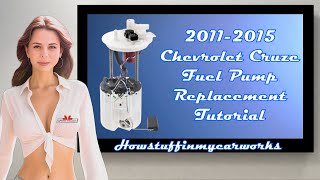
Typical fix: Replace the High-Pressure Fuel Pump 🎬 See this walkthrough for replacing the high-pressure fuel pump. and its associated seals and gaskets. An oil change is mandatory if fuel contamination is found in the oil.
Est. part cost: $250-$500 - Failing Low-Pressure In-Tank Fuel Pump 🟡 Medium Probability → Shop Fuel Pump This pump can weaken over time, failing to supply adequate fuel to the HPFP. While GM TSB 18-NA-103 specifically mentions this pump struggling in cold weather with diesel fuel, the principle of a weak low-pressure pump causing high-pressure side codes is valid for gasoline engines as well, especially on high-mileage vehicles.
How to confirm: Connect a fuel pressure gauge to the low-pressure fuel line schrader valve. The pressure should be stable at approximately 50-60 PSI. If the pressure is low, erratic, or drops significantly under load, the in-tank pump is faulty.
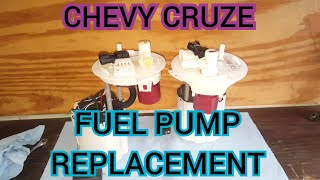
Typical fix: Replace the in-tank fuel pump module. 🎬 Watch: Step-by-step guide to replacing the in-tank fuel pump. The fuel filter is integrated into this module and is not serviced separately.
Est. part cost: $150-$350 - Faulty Fuel Rail Pressure Sensor ⚪ Low Probability → Shop Fuel Pressure Sensor While less common than pump failure, the sensor can fail and send incorrect readings to the ECM. TSB 20-NA-197 specifically addresses issues with corrosion on the sensor's electrical connector, which can cause a host of fuel pressure codes including P0089.
How to confirm: With a scan tool, observe the fuel pressure reading with the engine off (KOEO). It should read close to the low-side pressure (around 50-60 PSI). If it shows a very high, negative, or zero reading, the sensor is likely bad. Inspect the connector for green or white corrosion as described in TSB 20-NA-197.
Typical fix: Replace the fuel rail pressure sensor and/or clean or replace its pigtail connector if corrosion is found. Apply dielectric grease to the new connector to prevent future issues.
Est. part cost: $50-$100
Rare But Worth Checking
- Clogged Fuel Filter: → Shop Fuel Filter The fuel filter is part of the in-tank fuel pump module and is not serviced separately. If it becomes clogged, it will exhibit the same symptoms as a failing low-pressure pump, and the entire module must be replaced.
- Wiring Harness Damage: Damage or corrosion to the wiring for the HPFP or the fuel rail pressure sensor can cause an intermittent signal, triggering a P0089 code. TSB 20-NA-197 highlights the connector for the pressure sensor as a specific point of failure. A thorough visual inspection of the harness in the engine bay is recommended. Manufacturer Bulletin #PIP6061 notes that electrical connection concerns at the high pressure fuel pump can set P0089, and technicians should inspect terminals and manipulate the harness to duplicate the fault.
- Camshaft Issues: → Shop Engine Camshaft Although rare, Manufacturer Bulletin #PIP5203C indicates that P0089 and P228D could be due to an incorrect intake camshaft or camshaft actuator sprocket.
Diagnosis Steps
- Check for other DTCs. Address any codes for sensors or other systems first. Codes like P0087 or P228D strongly point towards the fuel system.
- Perform a visual inspection of the engine bay. Look for any obvious fuel leaks, especially around the HPFP on the engine and the fuel lines.
- Crucial Step: Check the engine oil. Remove the dipstick and oil cap and smell for raw gasoline. A strong fuel smell is a definitive sign of a failed HPFP leaking fuel into the crankcase. If fuel is present, stop diagnosis and replace the HPFP and change the engine oil.
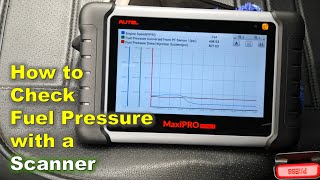
- Connect a scan tool and monitor live data. Observe 🎬 Watch: How to check fuel pressure using a scan tool. 'Desired Fuel Rail Pressure' and 'Actual Fuel Rail Pressure'. The values should be very close at idle and under acceleration.
- Test the low-pressure fuel system. Connect a mechanical gauge to the low-pressure line. The pressure should be stable around 50-60 PSI at idle and should not drop significantly under acceleration. If low-side pressure is weak, the in-tank pump is the problem.
- If low-side pressure is good, re-evaluate the scan tool data for the high-pressure side. Command a 'snap throttle' test or drive under load. If 'Actual' pressure cannot meet 'Desired' pressure or is highly unstable, the HPFP is the primary suspect.
- Inspect the electrical connector and wiring for the fuel rail pressure sensor and the HPFP for any signs of corrosion, damage, or loose connections, as noted in TSB 20-NA-197. Pay close attention to the fuel rail pressure sensor connector for any signs of corrosion or blackening, which indicates a poor connection.
- If the HPFP and low-pressure pump test good, and wiring is intact, the fuel rail pressure sensor itself may be faulty. Note that Manufacturer Bulletin #PIP5988 suggests that for some GM models, technicians should replace the fuel rail instead of the injection pump for DTC P0089.
Parts You'll Likely Need
- High-Pressure Fuel Pump (HPFP)
(OEM #12677329 (Supersedes earlier numbers like 12641847, 12651080))— This is the most common failure point for code P0089 on this engine, as the internal regulator fails.
Trusted brands: ACDelco, GM Genuine Parts, Bosch
OEM price range: $300-$500
Aftermarket price range: $200-$400 - Low-Pressure Fuel Pump Module
(OEM #13516949 (Check VIN for exact fitment))— This is the second most likely cause, especially if symptoms are worse in cold weather or if low-side fuel pressure tests low.
Trusted brands: ACDelco, Delphi
OEM price range: $250-$400
Aftermarket price range: $150-$300 - Fuel Rail Pressure Sensor
(OEM #12677899 (Check VIN for exact fitment))— Replaced if it provides incorrect readings or if its connector is damaged (per TSB 20-NA-197), but only after verifying the pumps are working correctly.
Trusted brands: ACDelco, Bosch
OEM price range: $50-$100
Related Codes That Often Appear With This One
- P0087 — P0087 (Fuel Rail Pressure Too Low) is often seen with P0089, as a failing regulator/pump will frequently lead to low pressure conditions.
- P0171 — P0171 (System Too Lean) can occur if the fuel pressure is erratically low, preventing the injectors from delivering enough fuel.
- P228D — P228D (Fuel Pressure Regulator 1 Control Pressure Too High) is another performance code related to the same component, indicating the pressure is exceeding the commanded value, which can happen with a faulty internal regulator.
- P0299 — P0299 (Turbocharger Underboost) can sometimes appear alongside fuel pressure codes as the engine's overall performance is compromised and enters a limp mode, affecting the turbo's ability to make boost.
Technical Service Bulletins (TSBs) & Recalls
- 20-NA-197 — Malfunction Indicator Lamp (MIL) Illuminated - DTC P0087, P0089, P0191, and others — This TSB addresses a condition where corrosion or damage at the fuel pressure sensor electrical connector can cause a variety of fuel pressure-related DTCs, including P0089. The fix involves inspecting the connector, and if corrosion or damage is found, replacing the connector pigtail and applying dielectric grease.
- 18-NA-103 — Information on Diesel Fuel Gelling in Cold Temperatures — While this TSB is for diesel models, it is often cited in relation to gasoline P0087/P0089 issues because it highlights how a weak low-pressure pump can fail to supply the high-pressure pump, especially in cold weather. This principle is a valid diagnostic consideration for the gasoline Cruze.
- 14311B — Special Coverage Adjustment – Negative Battery Cable Loose — Not directly related to P0089, but a critical TSB for this platform. A faulty negative battery cable causes widespread, random electrical issues, including various warning lights and stalling, which can sometimes be misdiagnosed. It's a known issue covered by a special warranty extension.
- Bulletin #PIP5203C — This bulletin notes that P0089 and P228D may be set due to an incorrect intake camshaft or camshaft actuator sprocket.
- Bulletin #PIP5988 — This manufacturer information advises technicians to replace the fuel rail instead of the injection pump for DTC P0089 in certain instances.
- Bulletin #PIP6061 — This bulletin communicates that electrical connection concerns at the high pressure fuel pump may set P0089 and other codes, requiring an inspection of terminals and the wiring harness.
Platform-Specific Known Issues
- The High-Pressure Fuel Pump (HPFP) is a widely acknowledged weak point on the 1.4L Turbo engine, with failures commonly occurring under 120,000 miles.
- Per TSB 18-NA-103, the in-tank fuel pump can underperform in temperatures below 20°F (-6°C), causing fuel starvation and setting pressure-related codes.
- Per TSB 20-NA-197, the electrical connector for the fuel rail pressure sensor is susceptible to corrosion, which can cause erratic readings and trigger false codes.
Mechanic-Grade Diagnostic Values
- Low-Side Fuel Pressure (KOEO - Key On, Engine Off) — expected: 50–94 psi (345–650 kPa).. Failure: Pressure below 50 psi after priming the pump indicates a weak in-tank pump or a leak.
- Low-Side Fuel Pressure (KOER - Key On, Engine Running) — expected: ~58 PSI (400 kPa) at idle.. Failure: Pressure dropping significantly below 58 PSI at idle or under load points to a failing in-tank fuel pump.
- Fuel Rail Pressure Sensor Voltage (KOEO) — expected: Signal wire should read approximately 0.5V.. Failure: A reading of 0V or 5V with the sensor connected indicates a wiring or sensor fault.
- Fuel Rail Pressure Sensor Voltage (at idle) — expected: Signal wire should read approximately 1.5V - 2.2V.. Failure: Voltage that is static or does not correspond to changes in engine load suggests a faulty sensor.
- Fuel Rail Pressure Sensor Connector Pins — expected: 3-wire connector: Pin 1: Ground (<0.1V), Pin 2: Signal (0.5V-4.5V), Pin 3: 5V Reference.. Failure: Absence of 5V reference, high resistance on ground wire, or signal voltage that is stuck high or low.
- High-Pressure Fuel Pump Solenoid — expected: The solenoid is pulse-width modulated (PWM) by the ECM; specific resistance values are not typically used for diagnosis. Diagnosis is done via scan tool observation of actual vs. desired pressure.. Failure: If actual pressure does not follow desired pressure commands from the scan tool, the pump's internal regulator (solenoid) or the pump itself is failing.
Scan Tool Commands That Help
- GDS2 / Tech2 / High-End Scan Tool: Fuel Pump Prime / On-Off Command — Used to manually run the low-pressure in-tank fuel pump with the engine off to check for leaks and verify low-side pressure with a mechanical gauge.
- GDS2 / Tech2 / High-End Scan Tool: Fuel Rail Pressure Control — This bidirectional command allows a technician to command a specific fuel pressure and observe if the HPFP and sensor respond accordingly. This is crucial for isolating a faulty pump from a faulty sensor.
- GDS2 / Tech2 / High-End Scan Tool: Live Data Monitoring: 'Desired Fuel Rail Pressure' vs. 'Actual Fuel Rail Pressure' — This is the primary diagnostic screen for P0089. Under all conditions (idle, snap throttle, load), the 'Actual' value should closely track the 'Desired' value. A significant, lagging, or erratic deviation points to a mechanical fault in the fuel system.
Wiring & Ground Locations
- Fuel Rail Pressure Sensor Connector — On the end of the fuel rail, typically on the driver's side of the engine.. This 3-wire connector provides power, ground, and signal for the sensor. Corrosion or damage here (as noted in TSB 20-NA-197) can cause incorrect pressure readings, leading to a P0089 code. Test for 5V reference, good ground, and a variable signal voltage.
- High-Pressure Fuel Pump Connector — On the top of the high-pressure fuel pump, which is mounted to the camshaft cover on the top of the engine.. This 2-wire connector controls the internal fuel pressure regulator (solenoid). A poor connection can cause erratic pump performance, directly leading to a P0089 code. Check for secure connection and signs of fretting or corrosion.
- ECM Connector — Typically located on the driver's side of the engine bay, near the battery or on the air filter housing.. All sensor signals and pump commands route through the ECM. A continuity test between the fuel rail pressure sensor connector and the corresponding pins at the ECM connector can rule out a break in the wiring harness.
Real Owner Repair Stories
- CruzeTalk.com forum user (2014 Chevrolet Cruze 1.4L Turbo) — Code P0088 (Fuel Pressure Too High), rough running, and engine stalling.
❌ Tried (didn't work) Replaced the fuel rail pressure sensor.
✅ What actually fixed it The problem was ultimately resolved by replacing the high-pressure fuel pump (HPFP). - NHTSA ODI #11066770 — An owner reported a scary incident where the vehicle could not maintain the speed limit. Diagnostic trouble codes P228D and P0089 were retrieved.
- NHTSA ODI #11591751 — A report describes a vehicle that would not accelerate past 9 mph, with a technician finding codes P0068, P0089 for the high pressure fuel pump, and P0101.
OEM Part Supersession History
12641847, 12651080→12677329— Revisions to improve reliability and address premature failure of the internal regulator.
Heads up: The latest part number, 12677329 (also sold as ACDelco HPM1029), is the recommended replacement for all previous versions.12677329→12691016— Continued design revision by GM.
Heads up: Part number 12691016 is the latest supersession for 12677329. Both should be compatible, but it is best to order the latest available part.
Model Year Variations Within This Range
- 2011-2020: The 1.4L turbo engine came in two main variants, LUJ and LUV. While largely similar, the LUV is a modification of the LUJ with a different block configuration. However, for the purposes of diagnosing P0089, the fuel systems, common failures (HPFP), and diagnostic procedures are identical.
Diagnostic Flowchart
Other Known Issues on This Vehicle
Issues unrelated to this code that are worth knowing about as an owner of this generation:
- PCV System Failure (Valve Cover & Intake Manifold) 🔴 High — Extremely common, often occurs between 60,000-100,000 miles. A ruptured diaphragm in the valve cover (non-serviceable) causes a vacuum leak (hissing, rough idle, P0171). This is often caused by a failed check valve in the intake manifold port, which then allows boost pressure to destroy the new valve cover diaphragm if not also addressed.
- Coolant Leaks (Water Outlet & Reservoir) 🟠 Medium — Very common. The plastic water outlet (thermostat housing) is prone to cracking and leaking from its seam or gasket surface. The coolant reservoir also frequently develops cracks. Owners often report smelling coolant.
- Negative Battery Cable Failure 🔴 High — Widespread issue affecting 2011-2015 models. An insufficient crimp on the negative terminal causes high resistance, leading to a wide array of bizarre electrical problems, stalling, and no-start conditions. (Ref: TSB 14311B (Special Coverage))
- Oil Leaks (Oil Cooler, Cam Seals, Crank Seal) 🟠 Medium — Common as the vehicle ages. Seals for the oil cooler lines, camshaft position actuator solenoids, and front crankshaft seal are known to degrade and cause significant oil leaks.
- Turbocharger Failure 🔴 High — Can occur, typically over 100,000 miles. Often related to coolant or oiling issues. Symptoms include loss of power (P0299 underboost code), smoking, and whining noises.
Used vs. New Parts: Buying Guide for This Vehicle
When a used part is the smart pick: For this specific repair, using a used part is strongly discouraged for the High-Pressure Fuel Pump (HPFP) and Fuel Rail Pressure Sensor. These are high-wear and sensitive electronic items, respectively. A used wiring harness pigtail or connector could be a viable option if the original is damaged.
Donor-vehicle mileage cap: roughly under 60000 miles for the part to have meaningful remaining life.
What to inspect on the donor part:
- For any used part, verify the donor vehicle had low mileage and no signs of front-end collision, fire, or flood damage.
- If sourcing a connector, ensure the pins are straight, clean, and free of any green or white corrosion.
OEM-only on this vehicle (don't cheap out):
- High-Pressure Fuel Pump (HPFP)
- Fuel Rail Pressure Sensor
Aftermarket brands forum-validated for this vehicle:
- ACDelco (OEM supplier)
- Bosch (Often the original manufacturer for GM)
- Delphi (Low-Pressure Fuel Pump)
Brands owners have reported issues with on this vehicle:
- Unnamed, 'white-box' electronic parts from online marketplaces are a significant gamble and are known to fail prematurely or not perform to OEM specifications, leading to repeat repairs.
Real Owner Stories
Aggregated from forums and TSBs cited above. Mileages and costs reflect what owners reported in those sources.
Chevrolet Cruze 1.4L Turbo
Symptoms: The vehicle was throwing a cascade of codes including P0087, P0171, P0299, and P0089.
What fixed it: Replacing the High-Pressure Fuel Pump (HPFP) after an initial attempt to fix it with a low-pressure pump failed.
Source hint: CruzeTalk Forum: P0087, P0171, P0299, P0089 - Fixed
2011-2016 Chevrolet Cruze 1.4L LUJ/LUV — ~110000 miles
Symptoms: Erratic performance and P0089 code; internal pressure regulator failure.
What fixed it: Replacement of the High-Pressure Fuel Pump (HPFP) and associated seals.
Cost: $250-$500
Source hint: Vehicle specific issues: High-Pressure Fuel Pump (HPFP) failures commonly occurring under 120,000 miles
GDI vehicle (Cruze platform mate)
Symptoms: P0089 and P228D codes present simultaneously.
What fixed it: Replacement of the High-Pressure Fuel Pump (HPFP) because the regulator is internal to the pump.
Source hint: Reddit r/mechanicadvice: Fuel pressure regulator code
Related OBD-II Codes
Frequently Asked Questions
Is there a TSB for the fuel rail pressure sensor on my 2011-2016 Chevrolet Cruze?
Why does my Cruze stall or have a hard start when it's very cold outside?
My engine oil smells like gasoline; is this related to the P0089 code?
Could a bad battery cable cause fuel pressure codes on a Chevrolet Cruze?
How can I tell if the High-Pressure Fuel Pump is failing on my 1.4L Turbo engine?
Does the 2011-2016 Cruze have a serviceable fuel filter?
Helpful Videos
Used OEM Parts in Stock
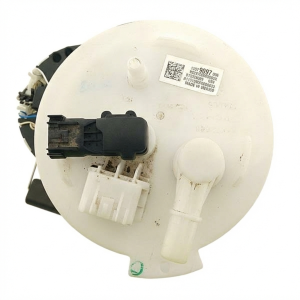
New Aftermarket Parts Available



The information in this article is provided for general reference and educational purposes only. Vehicle specifications, procedures, and part compatibility can vary by production date, trim level, and region. Always consult your vehicle's factory service manual and verify part numbers before purchasing or performing repairs. Safety-critical components such as airbags, seat belts, and braking systems should be installed by a qualified professional.
- Chevrolet Cruze:
- 🧭 Diagnostic Flowchart
- 🎬 Helpful Videos
- 🛍️ Shop This Part
- What's Unique About the 2011-2016 Chevrolet Cruze
- Symptoms You May Notice
- Most Likely Causes
- Rare But Worth Checking
- Diagnosis Steps
- Parts You'll Likely Need
- Related Codes That Often Appear With This One
- Technical Service Bulletins (TSBs) & Recalls
- Platform-Specific Known Issues
- Mechanic-Grade Diagnostic Values
- Scan Tool Commands That Help
- Wiring & Ground Locations
- Real Owner Repair Stories
- OEM Part Supersession History
- Model Year Variations Within This Range
- Other Known Issues on This Vehicle
- Used vs. New Parts: Buying Guide for This Vehicle
- Real Owner Stories
- Chevrolet Cruze 1.4L Turbo
- 2011-2016 Chevrolet Cruze 1.4L LUJ/LUV — ~110000 miles
- GDI vehicle (Cruze platform mate)
- Related OBD-II Codes
- Frequently Asked Questions
- 🎟️ Get 5% Off