

P0089 on 2014-2016 Chevrolet Suburban: Fuel Pressure Regulator Performance Fixes
For 2015-2016 Suburbans with the 5.3L direct-injection engine, P0089 is most often caused by a failing high-pressure fuel pump (HPFP). For the 2014 model, the issue is more likely a weak in-tank fuel pump, its driver module, or a faulty fuel pressure sensor. Expect to pay $300-$600 for a new HPFP, plus several hours of labor.
- For 2015-2016 Suburbans, P0089 almost always points to the high-pressure fuel pump (HPFP).
- A critical diagnostic step is to check for the smell of gasoline in the engine oil, which confirms a severe internal HPFP failure.
- Driving with this code is risky due to the potential for sudden engine stalling.
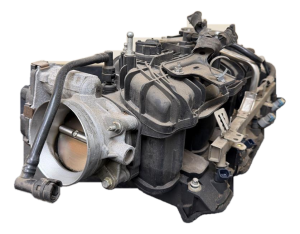
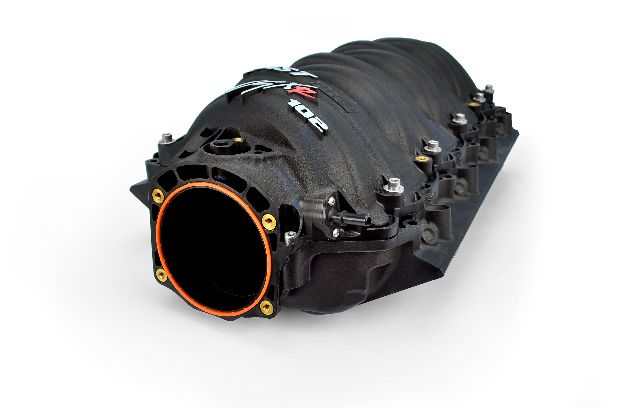
- This is not a simple DIY job; replacing the HPFP requires removing the intake manifold and handling a dangerously high-pressure fuel system.
- Always replace the high-pressure fuel pipe and intake gaskets when replacing the HPFP.
What's Unique About the 2014-2016 Chevrolet SUBURBAN
This year range covers a major powertrain change. The 2014 Suburban (GMT900 platform) uses a traditional port-injected 5.3L V8. The 2015-2016 models (K2XX platform) introduced the EcoTec3 5.3L V8 with Gasoline Direct Injection (GDI). GDI systems use both a low-pressure in-tank pump and a high-pressure fuel pump (HPFP) mounted on the engine. Therefore, the cause of P0089 is fundamentally different: on a 2014, it points to the in-tank pump, its driver module, or its regulator, while on a 2015-2016, it almost always points to a problem with the HPFP or its related sensors.
Diagnostic Flowchart
Tap your situation to follow the diagnostic path that matches what you're seeing on this vehicle.
Generation note: The 2014 model year is the last of the GMT900 generation, while the 2015-2016 models are the beginning of the K2XX generation. The primary difference affecting this code is the change from a port fuel injection system in 2014 to a gasoline direct injection (GDI) system in 2015, which added a high-pressure fuel pump.
Symptoms You May Notice
- Check Engine Light is on
- Reduced Engine Power message displayed
- Engine hesitation or stumbling during acceleration
- Rough or unstable idle
- Engine stalling, sometimes unexpectedly while driving
- Long crank times or difficulty starting
- Decreased fuel economy
- Strong smell of gasoline in the engine oil (a sign of a severe internal HPFP leak)
- Whining noise from the rear of the engine bay where the HPFP is located.
- Replacing only the fuel pressure sensor when the high-pressure fuel pump is the actual cause.
- Replacing the in-tank fuel pump on a 2015+ model without first verifying that the high-pressure pump is functioning correctly.
- Replacing the in-tank fuel pump on a 2014 model when the Fuel Pump Driver Module (FPDM) is the actual point of failure.
Most Likely Causes
- Failing High-Pressure Fuel Pump (HPFP) 🔴 High Probability → Shop Fuel Pump The HPFP on 2015+ GM EcoTec3 engines is a widely documented failure point. Internal seals can degrade, causing the pump to lose its ability to generate sufficient pressure or leak fuel internally into the crankcase.
How to confirm: Use a scan tool to monitor desired vs. actual fuel rail pressure. If the actual pressure cannot keep up with the desired pressure, especially under load, the HPFP is likely failing. Also, check the engine oil dipstick for a strong gasoline smell and a higher-than-normal oil level.
Typical fix: Replace the high-pressure fuel pump, its gasket, and the one-time-use high-pressure fuel line. An oil change is mandatory if fuel has contaminated the oil.
Est. part cost: $300-$550 - Faulty Fuel Rail Pressure Sensor 🟡 Medium Probability → Shop Fuel Pressure Sensor GM issued TSB PIP5279A for a range of fuel pressure codes, including P0089, on these vehicles. The bulletin suggests that if standard diagnostics are inconclusive, the Fuel Rail Pressure Sensor (FRPS) should be replaced. Another bulletin, 20-NA-197, points to corrosion at the sensor's electrical connector as a possible cause.
How to confirm: If fuel pressure readings on the scan tool are erratic, nonsensical, or do not change with engine RPM, the sensor may be faulty. Inspect the sensor's wiring and connector for damage or corrosion before replacement.
Typical fix: Replace the fuel rail pressure sensor and/or its electrical connector pigtail.
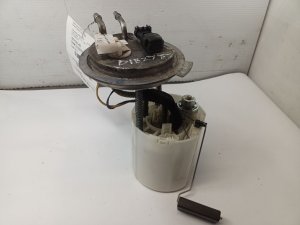
Est. part cost: $50-$150 - Weak In-Tank (Low-Pressure) Fuel Pump or Faulty Fuel Pump Driver Module (FPDM) ⚪ Low Probability → Shop Fuel Pump On the 2014 model, the in-tank pump is the primary pressure source. On all models, the HPFP can only deliver high pressure if it receives adequate supply from the low-pressure pump. The FPDM, which controls the in-tank pump, is a known failure point on this platform, sometimes failing intermittently.
How to confirm: Test the low-pressure fuel system pressure. It should meet manufacturer specifications (typically 50-65 PSI). For the FPDM, diagnosis can be tricky as it may fail when hot or intermittently. A common diagnostic step is to bypass the module to see if the pump runs continuously.
Typical fix: Replace the in-tank fuel pump module or the Fuel Pump Driver Module. The FPDM is located on a cross-member above the spare tire.
Est. part cost: $250-$450 (pump), $70-$160 (FPDM)
Rare But Worth Checking
- Worn Camshaft Lobe: → Shop Engine Camshaft The HPFP is driven by a specific lobe on the camshaft. If this lobe wears down, the pump's plunger won't have enough travel to build pressure. This is rare but can happen, especially on high-mileage engines or if incorrect engine parts were installed during a previous repair.
- Wiring Harness Chafing: GM has issued bulletins for engine wiring harnesses chafing on sharp edges of brackets or the engine itself, which can short out circuits related to the fuel system.
- Clogged Fuel Filter: → Shop Fuel Filter A severely clogged fuel filter can restrict flow to the in-tank pump or the HPFP, causing a drop in pressure and triggering the code.
Diagnosis Steps
- Connect a scan tool and verify P0089 is present. Note any other codes, especially P228C, P0172, or P0175.
- Monitor live data for 'Desired Fuel Rail Pressure' and 'Actual Fuel Rail Pressure'.
- At idle, the values should be very close. Briefly rev the engine; the actual pressure should track the desired pressure closely. A significant lag or inability to meet the target points to a weak pump.
- Check long-term fuel trims. Highly negative numbers (e.g., -20% or more) combined with rich codes (P0172/P0175) strongly suggest the HPFP is leaking into the oil.
- Carefully remove the oil cap or dipstick and smell for gasoline. A strong fuel odor confirms crankcase contamination. An oil analysis from a lab like Blackstone Labs can also definitively confirm fuel dilution.
- If fuel pressure readings are erratic or stuck at one value, inspect the wiring and connector for the fuel rail pressure sensor for corrosion or damage before replacing it, as noted in TSB 20-NA-197.
- If the HPFP seems to be underperforming but there's no sign of a rich condition, test the low-pressure fuel system to ensure the HPFP is receiving adequate fuel supply (target 50-65 PSI). This is a critical first step for 2014 models.
- For 2014 models, if low-side pressure is poor, investigate the Fuel Pump Driver Module (FPDM) located above the spare tire before condemning the in-tank pump.
Parts You'll Likely Need
- High-Pressure Fuel Pump (HPFP)
(OEM #ACDelco HPM1006 (or superseding part number))— This is the most common failure point for code P0089 on 2015-2016 Suburbans with the direct-injection engine.
Trusted brands: ACDelco (GM Genuine Parts), Delphi
OEM price range: $300-$550
Aftermarket price range: $200-$400 - High-Pressure Fuel Pipe
(OEM #GM 12677004)— This is a one-time-use pipe that connects the HPFP to the fuel rail. It has crush fittings and must be replaced whenever it is removed to ensure a leak-free seal.
Trusted brands: ACDelco (GM Genuine Parts)
OEM price range: $40-$70
Aftermarket price range: $30-$50 - Intake Manifold Gaskets
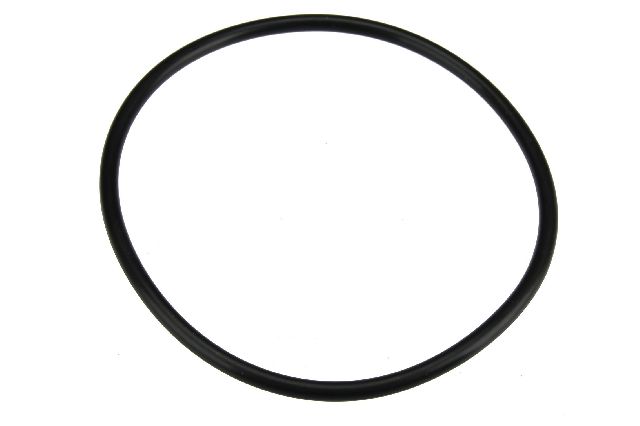
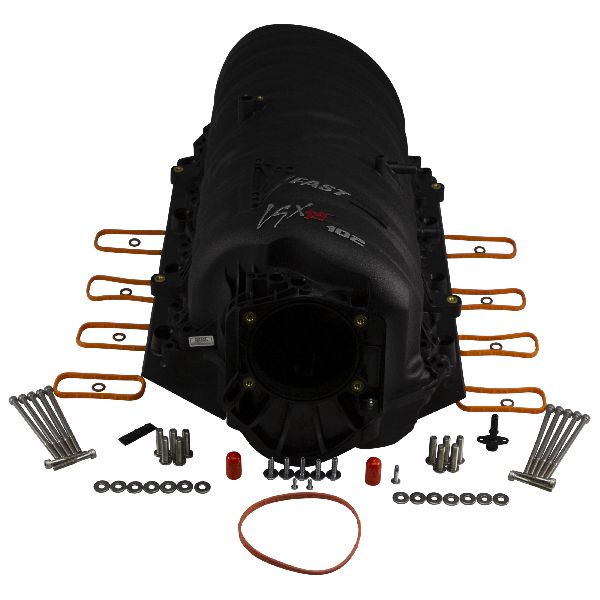
(OEM #ACDelco 12626354)— The intake manifold must be removed to access the HPFP on 2015+ models. The gaskets are one-time-use and must be replaced to prevent vacuum leaks.
Trusted brands: ACDelco, Fel-Pro (MS 97402)
OEM price range: $50-$80
Aftermarket price range: $30-$60
Related Codes That Often Appear With This One
- P228C — This code means 'Fuel Pressure Regulator 1 Exceeded Control Limits - Pressure Too Low' and is a very common companion to P0089, specifically indicating the HPFP is failing to build enough pressure.
- P228D — This code means 'Fuel Pressure Regulator Control Performance - High Pressure' and can appear if the regulator fails in a way that causes excessive pressure, or if incorrect engine components (like a camshaft) have been installed.
- P0172 / P0175 — These 'System Too Rich' codes appear when the HPFP fails internally and leaks fuel directly into the engine crankcase. The fuel vapor is then pulled into the intake via the PCV system, causing a rich condition that the oxygen sensors detect.
Technical Service Bulletins (TSBs) & Recalls
- PIP5279A: Mentions P0089 along with other fuel system codes. Instructs technicians to follow standard service diagnostics, but if they are inconclusive, to replace the Fuel Rail Pressure Sensor (FRPS).
- 20-NA-197: Addresses multiple fuel pressure codes, including P0089, caused by corrosion or damage at the fuel pressure sensor electrical connector.
Platform-Specific Known Issues
- A known issue on these EcoTec3 engines is the internal failure of the high-pressure fuel pump, which allows fuel to contaminate the engine oil, leading to rich codes (P0172/P0175) and potential engine damage from diluted oil.
- For the 2014 model year, intermittent no-start or stalling conditions can be caused by a failing Fuel Pump Driver Module (FPDM), which can set code P069E along with P0089.
Mechanic-Grade Diagnostic Values
- High-Pressure Fuel Rail Pressure (2015+ GDI) — expected: Approx. 500-600 PSI at idle.. Failure: Actual pressure is significantly lower than desired pressure (e.g., half) on a scan tool, especially when revving the engine.
- Low-Pressure Fuel System Pressure (All Years) — expected: Approx. 400 kPa (58 PSI) with key on, engine off.. Failure: Pressure is significantly below the 50-65 PSI target range, indicating a problem with the in-tank pump or FPDM.
- Fuel Rail Pressure Sensor Voltage (2015+) — expected: Approx. 1.5 - 1.8 volts with key on, engine off.. Failure: Voltage is stuck at 0V, 5V, or is erratic, suggesting a sensor or wiring fault.
Scan Tool Commands That Help
- GDS2 / Professional Scan Tool: Fuel Pump Control / Fuel System Depressurize — This function is used to safely relieve high fuel pressure before servicing components like the HPFP or fuel rail pressure sensor. It commands the pump off and allows the engine to run until it stalls from lack of fuel.
- GDS2 / Professional Scan Tool: Fuel Rail Pressure Relief Valve Reset — After replacing the high-pressure fuel pump or related components, this procedure may be required to reset adaptations in the ECM.
Wiring & Ground Locations
- Fuel Rail Pressure Sensor (FRPS) Signal — On the 2015 L83 engine, this is Pin 3 (Brown/Yellow wire) on ECM connector X3.. This is the primary signal wire the ECM uses to read fuel pressure. A break or short in this wire will cause incorrect readings and trigger P0089.
- High Pressure Fuel Pump Actuator Control — On the 2015 L83 engine, these are Pins 16 (Yellow wire) and 32 (Violet/Black wire) on ECM connector X3.. These wires carry the ECM's command signal to the HPFP's internal regulator. Faults here will prevent the pump from adjusting pressure correctly.
- Fuel Pump Control Module (FPDM) Fuse — In the underhood fuse block, fuse F83 is for the fuel pump.. Loss of power to the FPDM will disable the in-tank low-pressure pump, starving the high-pressure pump of fuel and causing P0089.
- Fuel Pump Driver Module (FPDM) — Located on a frame cross-member, above the spare tire.. This module controls the in-tank fuel pump. It is exposed to the elements and is a known failure point, causing intermittent stalling and fuel pressure issues.
Real Owner Repair Stories
- YouTube channel 'G Auto Repair' (2015 Chevrolet Equinox 2.4L (similar GDI system)) — P0089 and P228D, random hesitation when the engine reached operating temperature (around 215°F).
❌ Tried (didn't work) The video implies that simply replacing the HPFP or sensors often fails to fix the issue when the root cause is different.
✅ What actually fixed it The root cause was a failed timing chain tensioner from a previous, low-quality timing job. The loss of oil pressure to the tensioner allowed the intake camshaft (which drives the HPFP) to wander out of time, causing the fuel pressure performance codes. The fix was a complete, OEM-quality timing job.
OEM Part Supersession History
12618337, 12673077, 12679191→GM 12677004— Standard part evolution for improved materials or manufacturing process.
Heads up: This high-pressure fuel pipe is for naturally aspirated 5.3L and 6.2L Gen V engines only. It will not fit supercharged engines (LT4) or later generation engines like the L84/L87.HPM1000, 12651170→ACDelco HPM1006 (GM 12658481)— Part consolidation and design updates.
Model Year Variations Within This Range
- 2014: Uses a port fuel injection system. P0089 diagnosis focuses entirely on the low-pressure side: the in-tank pump, the Fuel Pump Driver Module (FPDM), the fuel filter, and the low-pressure sensor.
- 2015-2016: Uses a Gasoline Direct Injection (GDI) system with both a low-pressure and high-pressure pump. P0089 diagnosis focuses primarily on the high-pressure pump, its drive mechanism (camshaft), and the high-pressure rail sensor.
Helpful Videos
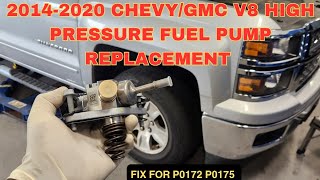
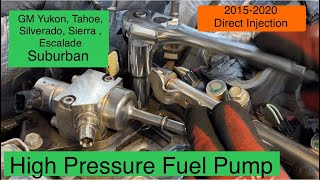
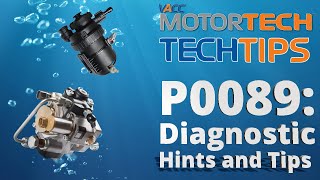
![Easy Fix for Common Chevy Problem [Fuel Pump Control Module]](https://img.youtube.com/vi/38Xeo1uLBoU/mqdefault.jpg)
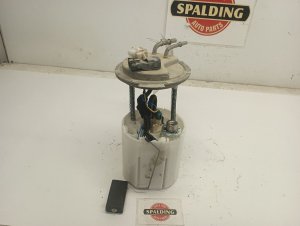
Used OEM Parts in Stock
New Aftermarket Parts Available


The information in this article is provided for general reference and educational purposes only. Vehicle specifications, procedures, and part compatibility can vary by production date, trim level, and region. Always consult your vehicle's factory service manual and verify part numbers before purchasing or performing repairs. Safety-critical components such as airbags, seat belts, and braking systems should be installed by a qualified professional.
- Chevrolet SUBURBAN:
- 🧭 Diagnostic Flowchart
- 🎬 Helpful Videos
- 🛍️ Shop This Part
- What's Unique About the 2014-2016 Chevrolet SUBURBAN
- Symptoms You May Notice
- Most Likely Causes
- Rare But Worth Checking
- Diagnosis Steps
- Parts You'll Likely Need
- Related Codes That Often Appear With This One
- Technical Service Bulletins (TSBs) & Recalls
- Platform-Specific Known Issues
- Mechanic-Grade Diagnostic Values
- Scan Tool Commands That Help
- Wiring & Ground Locations
- Real Owner Repair Stories
- OEM Part Supersession History
- Model Year Variations Within This Range
- 🎟️ Get 5% Off