

P0089 on 2011-2017 Ford F-450 6.7L Power Stroke: Fuel Pressure Regulator Performance Guide
On the 6.7L Power Stroke, code P0089 most often indicates clogged fuel filters or a faulty Fuel Pressure Control Valve (PCV) on the driver's side fuel rail. Replacing the filters is an easy first step. If that doesn't resolve it, the PCV is the next most common failure. This code can also be an early warning of a failing CP4.2 high-pressure fuel pump, a critical and expensive issue.
- P0089 means the fuel pressure in your engine's high-pressure rail isn't what the computer expects.
- Always start diagnosis by replacing the two fuel filters, especially if their service history is unknown. This is the simplest and a very common fix.
- The two most likely failed parts are the Fuel Pressure Control Valve (on the rail) and the Fuel Volume Control Valve (on the pump).
- This code can be an early warning of a failing CP4.2 high-pressure fuel pump. If you see metal flakes in the fuel system, stop immediately and prepare for a major repair to avoid repeated failures.
- Due to the extreme pressures and complexity, this is a job best left to a professional technician familiar with Power Stroke diesels.
What's Unique About the 2011-2017 Ford F-450 Super Duty
The 6.7L Power Stroke engine uses a Bosch CP4.2 high-pressure fuel pump, which has two primary regulating components: a Fuel Volume Control Valve (VCV or MPROP) on the pump itself and a Fuel Pressure Control Valve (PCV or DRV) on the fuel rail. This code can be triggered by either part, making diagnosis crucial. This platform is also notorious for the CP4.2 pump's sensitivity to fuel contamination and lack of lubricity in modern Ultra-Low Sulfur Diesel (ULSD), which can cause internal failure. P0089 can be an early warning sign of this wear before a catastrophic failure contaminates the entire fuel system, a repair that can cost over $10,000.
Symptoms You May Notice
- Check Engine Light is on
- Reduced engine power ('limp mode')
- Engine hesitation or stuttering during acceleration
- Rough or unstable idle
- Engine stalling, especially at low speeds or idle
- Hard starting or extended cranking
- Decreased fuel economy
- Unusual ticking or knocking sounds from the engine bay
- Replacing the entire high-pressure fuel pump (HPFP) when only the more accessible and less expensive Fuel Pressure Control Valve (PCV) or Fuel Volume Control Valve (VCV) was faulty.
- Replacing fuel injectors when the root cause is inconsistent pressure from a faulty regulator or pump.
- Replacing the low-pressure radiator hose when coolant is seen dripping from it; this is often caused by a leak from the water pump's weep hole located directly above it.
Most Likely Causes
- Clogged or Dirty Fuel Filters 🔴 High Probability → Shop Fuel Filter Diesel fuel systems are sensitive to contaminants. The 6.7L Power Stroke has two filters (a primary frame-mounted Diesel Fuel Conditioning Module/DFCM and a secondary engine-mounted one) that must be changed at regular intervals (typically every 15,000-22,500 miles).
How to confirm: Check service history. If filters are past their service interval, they are the first suspect. After changing filters, the system must be properly primed by cycling the key-on, engine-off at least 6 times for 30 seconds each to purge air, as improper priming can also cause this code.
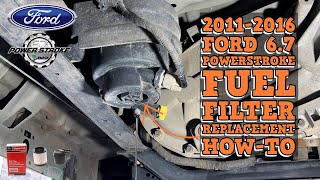
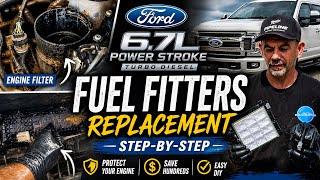
Typical fix: Replace both the primary and secondary fuel filters with high-quality OEM (Motorcraft) parts. 🎬 Watch: Step-by-step guide to replacing your fuel filters. Ensure the system is fully primed before starting.
Est. part cost: $60-$120 - Faulty Fuel Pressure Control Valve (PCV / DRV) 🔴 High Probability
How to confirm: After ruling out filters, this is a primary suspect. A technician can monitor 'Desired Fuel Rail Pressure' vs. 'Actual Fuel Rail Pressure' with a scan tool like FORScan. If the actual pressure is erratic, unstable, or doesn't respond correctly to commands, the PCV is likely failing. This valve is located on the rear of the driver's side fuel rail.
Typical fix: Replace the Fuel Pressure Control Valve. This requires removing some components for access and following a specific torque procedure to ensure it seals correctly.
Est. part cost: $150-$250 - Faulty Fuel Volume Control Valve (VCV / MPROP / FCA) 🟡 Medium Probability
How to confirm: This valve is located on the CP4 high-pressure fuel pump itself. Diagnosis is similar to the PCV, involving scan tool data analysis. If pressure regulation issues persist after replacing the PCV and filters, the VCV is the next logical component to inspect. It can be removed to check for metal shavings, a tell-tale sign of CP4 pump failure.
Typical fix: Replace the Fuel Volume Control Valve on the CP4 pump. This is generally more accessible than the PCV.
Est. part cost: $120-$200 - Failing Low-Pressure Fuel Pump (Lift Pump) ⚪ Low Probability → Shop Fuel Pump
How to confirm: The lift pump, located in the DFCM on the frame rail, supplies fuel to the high-pressure pump. A technician can test its output pressure. It should maintain 53-73 PSI. If pressure is low, the high-pressure system is being starved of fuel.
Typical fix: Replace the low-pressure lift pump assembly.
Est. part cost: $300-$500
Rare But Worth Checking
- Failing High-Pressure Fuel Pump (CP4.2): → Shop Fuel Pump While less common than a regulator failure, this is a critical possibility. P0089 can be an early sign of the pump wearing out due to lack of lubricity or contamination. If metal shavings (looks like glitter) are found in the fuel filter housing or on the VCV screen, the pump is failing and has likely contaminated the entire fuel system, requiring a complete system replacement costing $10,000-$15,000.
- Leaking Fuel Injector: → Shop Fuel Injector A fuel injector that is stuck open or leaking internally can cause a drop in rail pressure, triggering this code. This often requires a cylinder contribution test or a leak-down test to identify the faulty injector.
- Damaged Wiring or Connectors: Check the wiring harnesses and connectors for the Fuel Pressure Control Valve (PCV), Fuel Volume Control Valve (VCV), and the Fuel Rail Pressure Sensor for any signs of damage, corrosion, or looseness. A rat chewing through a wire has been reported as a cause.
- Blown Fuse: Ford issued a special service message (SSM 44987) indicating that for P0089 and related codes, technicians should inspect fuse 33 in the Battery Junction Box (BJB). A blown fuse can cause these symptoms and should be checked before replacing expensive components.
Diagnosis Steps
- Check for other stored diagnostic trouble codes that could provide more context.
- Inspect Fuse 33: Per Ford SSM 44987, check fuse 33 in the Battery Junction Box. If blown, replace it and re-evaluate before proceeding.
- Inspect and Replace Fuel Filters: → Shop Fuel Filter This is the cheapest and easiest first step. If the filters are old or their history is unknown, replace them with Motorcraft parts. Cut open the old upper filter and inspect the pleats for shiny metal flakes. The presence of metal indicates CP4 failure.
- Properly Prime Fuel System: After filter replacement, cycle the ignition key to 'on' (without starting) for 30 seconds, then off. Repeat this 6 times to fully purge air from the system.
- Monitor Fuel Pressure: Use a high-quality OBD-II scan tool (like FORScan) to graph 'FRP.DES' (Desired Fuel Rail Pressure) vs. 'FRP' (Actual Fuel Rail Pressure). During cranking, idle, and acceleration, look for large discrepancies, instability, or slow response from the actual pressure reading.
- Test Low-Pressure System: Connect a fuel pressure gauge to the low-pressure system to verify the lift pump is supplying adequate pressure (53-73 PSI) 🎬 See how to replace the low pressure lift pump. to the CP4 pump.
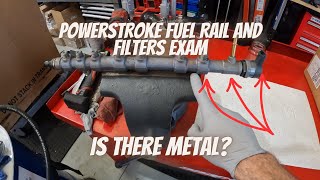
- Inspect Regulators for Debris: If pressure issues persist, remove the Fuel Volume Control Valve (VCV) from the top of the CP4 pump. Inspect its screen for metal debris. The presence of metal flakes is a definitive sign of a failing CP4 pump. 🎬 Watch: How to inspect your fuel rail for metal debris.
- Isolate the Faulty Regulator: If no metal is found, the issue is likely one of the regulators. Based on scan tool data, a technician will determine if the PCV or VCV is the most likely cause and replace it.
- Check for CP4 Failure: If metal is found at any stage, the diagnosis stops as a full fuel system replacement is necessary. This includes the pump, all injectors, fuel rails, and lines, and requires cleaning the tank.
Parts You'll Likely Need
- Fuel Pressure Control Valve (PCV/DRV)
(OEM #BC3Z-9C968-A)— This Bosch valve (Bosch P/N: 0281006017), located on the driver's side fuel rail, is a very common failure point that directly causes the pressure regulation issues that set code P0089.
Trusted brands: Bosch (OEM), Motorcraft
OEM price range: $150-$250
Aftermarket price range: $80-$150
Related Codes That Often Appear With This One
- P0087 — This code for 'Fuel Rail/System Pressure - Too Low' often appears with P0089 as they both relate to the system's inability to maintain commanded pressure. It is a primary indicator of potential CP4 failure.
- P0088 — This code for 'Fuel Rail/System Pressure - Too High' can also accompany P0089, indicating the regulator is performing erratically, causing both pressure drops and spikes.
- P2291 — This code for 'Injector Control Pressure Too Low - Engine Cranking' points to the system's failure to build sufficient pressure for the engine to start, a severe symptom of the problem causing P0089.
- P0093 — 'Fuel System Leak Detected - Large Leak' can be set alongside P0089 when the pressure drop is significant, even if an external leak isn't visible, pointing towards a major internal leak like a failed regulator or injector.
Technical Service Bulletins (TSBs) & Recalls
- SSM 44987: For vehicles exhibiting DTCs P0087, P0088, P0089, P0093, P228F or P2291 with a rough idle or crank no start, inspect fuse 33 in the Battery Junction Box (BJB) for an open condition before performing normal diagnostics.
Platform-Specific Known Issues
- CP4.2 High-Pressure Fuel Pump (HPFP) Failure: → Shop Fuel Pump The Bosch CP4.2 pump used in this engine is known to be susceptible to catastrophic failure, often initiated by lack of lubrication from water in the fuel. When it fails, it sends metal debris throughout the entire high-pressure fuel system, requiring replacement of the pump, injectors, rails, and lines, a repair that can cost over $9,000. Code P0089 can be an early indicator of pump wear.
Mechanic-Grade Diagnostic Values
- Low-Pressure Fuel System (Lift Pump) Pressure — expected: 53-73 PSI. Failure: Pressure below 52 PSI will trigger a low-pressure switch and starve the CP4 pump.
- High-Pressure Fuel Rail Pressure (FRP) at Cranking — expected: Minimum 5,000 PSI (345 Bar). Failure: If the system cannot build at least 5,000 PSI while cranking, the injectors will not fire.
- High-Pressure Fuel Rail Pressure (FRP) at Idle — expected: ~5,600 PSI. Failure: Pressure that is significantly lower, higher, or erratic compared to the desired pressure (FRP.DES) indicates a regulation problem.
- Injector Return Flow (Leak-off) — expected: Ford does not provide an official spec, but a common guideline borrowed from GM LML engines is less than 3 ml in 15 seconds at idle.. Failure: Excessive return flow from one or more injectors indicates an internal leak, causing a drop in rail pressure.
- Fuel Rail Temperature (FRT) Sensor Voltage — expected: The PCM uses fuel temperature to determine fuel pressure control mode (PCV or VCV). Voltage varies with temperature.. Failure: A sensor reading that is illogical compared to ambient temperature can cause incorrect pressure control.
Scan Tool Commands That Help
- FORScan / IDS: Monitor PIDs: 'FRP' (Fuel Rail Pressure), 'FRP.DES' (Desired Fuel Rail Pressure), 'FLP' (Low Side Fuel Pressure) — This is the primary diagnostic step. Graphing these PIDs together while driving, idling, and cranking will show if the actual pressure is failing to meet the commanded pressure, and if the low-side supply is sufficient.
- FORScan / IDS: Cylinder Contribution / Power Balance Test — Used to identify a specific cylinder that is not contributing correctly. If a single cylinder shows a major anomaly, it can point to a leaking or faulty injector for that cylinder, which could be the cause of the pressure drop.
- FORScan / IDS: Injector Buzz Test — This test actuates the injector solenoids to confirm they are electrically functioning. While it doesn't test for leaks, it can quickly identify an electrical failure in an injector circuit.
- IDS: KOEO (Key On Engine Off) and KOER (Key On Engine Running) Self-Tests — Ford's diagnostic routines can command system components and check for circuit faults that may not be present during normal operation. Running these self-tests can uncover intermittent electrical issues.
Wiring & Ground Locations
- PCM Engine Connector (Middle Connector) — The Powertrain Control Module (PCM) is located on the driver's side firewall. The middle of the three large connectors is for the engine harness.. The wiring for the fuel pressure regulators (PCV, VCV) and the fuel rail pressure sensor runs through this connector. A poor connection or corrosion here can cause intermittent pressure reading faults.
- PCV Connector — On the Fuel Pressure Control Valve (PCV) at the rear of the driver's side high-pressure fuel rail.. This is the primary connector for the component most often at fault. Check for corrosion, damaged pins, or a loose connection.
- VCV Connector — On the Fuel Volume Control Valve (VCV/MPROP) on top of the CP4.2 high-pressure pump in the engine valley.. This connector controls the volume of fuel entering the high-pressure pump. Damage here can lead to incorrect fuel supply and pressure deviations.
Real Owner Repair Stories
- Ford-trucks.com forum user (2011 F-250 6.7L) — P0089 and P0087 codes, truck would crank but not start.
❌ Tried (didn't work) Replaced both fuel filters., Replaced the Fuel Pressure Control Valve (PCV) on the rail.
✅ What actually fixed it The user found a hairline crack in the plastic 90-degree fitting on the low-pressure fuel line where it connects to the upper (engine) fuel filter housing. This was causing the low-pressure pump to suck in air, preventing the high-pressure system from building the required 5,000 PSI for startup. Replacing the faulty line resolved the no-start and cleared the codes.
OEM Part Supersession History
BC3Q-9C968-AA→BC3Z-9C968-A— Standard part revision and update by Ford/Bosch.
Heads up: The parts are interchangeable for the 2011-2019 model years. BC3Z-9C968-A is the most current OEM part number.N/A→N/A— The Bosch OEM part number for BC3Z-9C968-A is 0281006017.
Heads up: This is the same part, just in Bosch packaging instead of Motorcraft. It is a direct equivalent.
Model Year Variations Within This Range
- 2011-2014: These models use a specific fuel injector (Bosch Part #0 986 435 415). They are not interchangeable with later years.
- 2015-2019: The 2015 model year refresh introduced a different fuel injector (Bosch Part #0 986 435 433) and a larger turbocharger, which can affect fuel demand and diagnostic characteristics under load.
- 2011-2016 vs 2017-2019: The frame-mounted low-pressure fuel pump/filter assembly (DFCM) has design differences. While the function is the same, the physical part and replacement procedure may vary slightly.
Diagnostic Flowchart
Other Known Issues on This Vehicle
Issues unrelated to this code that are worth knowing about as an owner of this generation:
- Early Turbocharger Failure (2011-2012) 🔴 High — Common on 2011-2012 models due to the use of ceramic ball bearings in the Garrett GT32 SST turbo. Ford switched to more durable steel bearings in later models.
- Primary Radiator Leak 🟠 Medium — Prone to leaking, especially on 2011-2016 models. The leak typically occurs at the metal crimps on the driver's side plastic end tank.
- EGT Sensor Failure 🟠 Medium — Extremely common across all 2011-2017 models. The engine has four EGT sensors, and they fail frequently, which can put the truck into limp mode. Ford issued an extended warranty (15M02) for this issue. (Ref: Customer Satisfaction Program 15M02)
- EGR Cooler Clogging 🟠 Medium — Carbon deposits can clog the EGR cooler core over time, leading to overheating or code P0401. Less severe than on previous Power Stroke generations but still a known issue.
- Turbo Coolant & Oil Line Leaks (2011-2014) 🟡 Low — The O-rings on the coolant and oil lines connecting to the turbo can degrade, causing coolant or oil to leak into the engine valley and drip down the bellhousing.
Used vs. New Parts: Buying Guide for This Vehicle
When a used part is the smart pick: For this fuel system, using used parts is highly discouraged. The risk of contamination from a donor vehicle that had a CP4 failure is too high. A used wiring harness or non-electronic components like fuel lines (if thoroughly cleaned and inspected) could be considered, but electronic sensors and pumps should be purchased new.
Donor-vehicle mileage cap: roughly under 20000 miles for the part to have meaningful remaining life.
What to inspect on the donor part:
- If considering any used fuel component, demand proof the donor vehicle did NOT have a CP4 pump failure.
- Inspect any electronic connector for corrosion, bent pins, or brittle plastic.
- For hard lines, check for any kinks, cracks, or stripped flare nuts.
OEM-only on this vehicle (don't cheap out):
- High-Pressure Fuel Pump (CP4.2 or DCR conversion): The risk of catastrophic failure makes OEM or reputable conversion kits (like S&S Diesel) the only safe choice.
- Fuel Injectors: Remanufactured injectors from Bosch/Motorcraft or new from a reputable source like S&S or Exergy are recommended. Cheap aftermarket injectors are a major risk.
- Fuel Filters: Always use high-quality Motorcraft or equivalent filters (e.g., Doc's Diesel, Baldwin) to ensure proper filtration and water separation.
Aftermarket brands forum-validated for this vehicle:
- S&S Diesel Motorsport (CP4 Disaster Prevention Kits, DCR Pump Conversions, Injectors)
- Exergy Performance (Injectors, Pumps)
- Bosch (OEM supplier for most fuel system components)
- Motorcraft (OEM)
Brands owners have reported issues with on this vehicle:
- Unbranded, no-name fuel injectors or regulators from online marketplaces. The precision required for common rail systems is extremely high, and these parts often fail quickly or cause performance issues.
Real Owner Stories
Aggregated from forums and TSBs cited above. Mileages and costs reflect what owners reported in those sources.
2011 Ford F-250 Super Duty 6.7L Power Stroke
Symptoms: Crank but will not start condition.
What fixed it: Inspected and replaced a blown fuse 33 in the Battery Junction Box (BJB) as per SSM 44987.
Source hint: Ford-Trucks.com Forum: 2011 Cranks but will not start?
2011 Ford F-250 Super Duty 6.7L Power Stroke — ~150000 miles
Symptoms: High-mileage truck with concerns regarding CP4 pump failure, turbo bearing issues, and oil leaks.
What fixed it: Diagnostic guide suggests inspecting the VCV screen for metal shavings to confirm if the CP4 pump has failed.
Source hint: Reddit r/Diesel: Bought a 2011 F250 with a 6.7. Now What....?
Related OBD-II Codes
Frequently Asked Questions
My 2011 F-450 has a crank-no-start condition with code P0089. Is there a specific fuse I should check first?
How often should I change the fuel filters on my 6.7L Power Stroke to prevent P0089?
I just replaced my filters and now I have a P0089 code. Did I do something wrong?
What is the 'catastrophic failure' associated with the fuel system on 2011-2017 Super Duty trucks?
Where is the Fuel Pressure Control Valve (PCV) located on the 6.7L engine?
What should the low-pressure lift pump (DFCM) be outputting to the high-pressure system?
Helpful Videos


The information in this article is provided for general reference and educational purposes only. Vehicle specifications, procedures, and part compatibility can vary by production date, trim level, and region. Always consult your vehicle's factory service manual and verify part numbers before purchasing or performing repairs. Safety-critical components such as airbags, seat belts, and braking systems should be installed by a qualified professional.
- Ford F-450 Super Duty:
- 🧭 Diagnostic Flowchart
- 🎬 Helpful Videos
- What's Unique About the 2011-2017 Ford F-450 Super Duty
- Symptoms You May Notice
- Most Likely Causes
- Rare But Worth Checking
- Diagnosis Steps
- Parts You'll Likely Need
- Related Codes That Often Appear With This One
- Technical Service Bulletins (TSBs) & Recalls
- Platform-Specific Known Issues
- Mechanic-Grade Diagnostic Values
- Scan Tool Commands That Help
- Wiring & Ground Locations
- Real Owner Repair Stories
- OEM Part Supersession History
- Model Year Variations Within This Range
- Other Known Issues on This Vehicle
- Used vs. New Parts: Buying Guide for This Vehicle
- Real Owner Stories
- 2011 Ford F-250 Super Duty 6.7L Power Stroke
- 2011 Ford F-250 Super Duty 6.7L Power Stroke — ~150000 miles
- Related OBD-II Codes
- Frequently Asked Questions
- 🎟️ Get 5% Off