

P0089 on 2010-2017 GMC Terrain 2.4L: Fuel Pressure Regulator Performance Causes and Fixes
On a 2010-2017 GMC Terrain with the 2.4L engine, code P0089 almost always points to a failing high-pressure fuel pump (HPFP). This pump is a known weak point and can cause stalling and drivability issues. However, because the pump is driven by the camshaft, a stretched timing chain is also a very common root cause. Expect to pay $300-$500 for an OEM ACDelco pump and between 1-2 hours of labor for replacement.
- P0089 on the 2.4L Terrain almost always points to the high-pressure fuel pump (HPFP).
- Before replacing the pump, check the engine oil for a strong gasoline smell. This is a definitive sign of HPFP failure.
- If timing-related codes like P0016 or P0017 are also present, the timing chain system must be inspected as it is a likely root cause.
- Always replace the small, one-time-use fuel pipe (PN: 12608374) when replacing the HPFP to prevent dangerous fuel leaks.
- Consider using an OEM ACDelco pump, as some aftermarket pumps have been reported to cause other fuel system codes on this specific engine.
What's Unique About the 2010-2017 GMC Terrain
The 2.4L Ecotec engine uses a high-pressure fuel pump (HPFP) that is mechanically driven by a special three-lobed section on the intake camshaft. This design directly links fuel pressure to engine timing. These engines are also known for timing chain stretch, often due to oil consumption issues. A stretched or jumped timing chain will alter the mechanical operation of the HPFP, leading to fuel pressure codes like P0089 even if the pump itself hasn't failed yet. Therefore, a fuel code on this engine can sometimes be the first symptom of a more serious mechanical timing problem.
Symptoms You May Notice
- Check Engine Light illuminated
- "Reduced Engine Power" message on the dash
- Engine stalling, especially at idle or when coming to a stop
- Hesitation or stumbling during acceleration
- Rough idle, sometimes described as 'loping' or 'lunging' when in gear at a stop.
- Strong smell of gasoline in the engine oil
- Whining noise from the high-pressure fuel pump area, especially if incorrect camshaft parts were installed.
- Replacing the in-tank fuel pump when the high-pressure pump is the actual culprit.
- Replacing the fuel rail pressure sensor without verifying the pump's performance.
- Replacing the HPFP when a stretched timing chain is the root cause, which will lead to the new pump not fixing the issue.
- Replacing the HPFP when incorrect camshaft parts from a prior repair are the true cause, as detailed in TSB PIP5203C.
Most Likely Causes
- Failing High-Pressure Fuel Pump (HPFP) 🔴 High Probability → Shop Fuel Pump The HPFP is a well-documented weak point on this engine. GM issued a voluntary emission recall (43180) for 2010-2011 models due to excessive wear in the pump that could cause fuel to leak into the crankcase. The issue remains common across all years.
How to confirm: Use a scan tool to monitor 'Desired Fuel Rail Pressure' vs. 'Actual Fuel Rail Pressure'. If actual pressure is consistently low, high, or erratic, the pump is likely failing. A definitive sign is a strong smell of gasoline on the engine oil dipstick, which indicates the pump's internal seals have failed.
Typical fix: Replace the high-pressure fuel pump and the one-time-use fuel line that connects it to the rail. An oil and filter change is mandatory if fuel contamination is present.
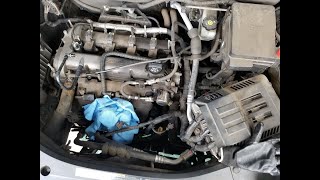
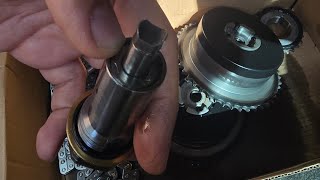
Est. part cost: $300-$500 for an OEM pump - Stretched Timing Chain or Worn Timing Components 🟡 Medium Probability → Shop Engine Timing Chain These engines are known for high oil consumption, which can lead to accelerated wear and stretching of the timing chain. Since the HPFP is driven by the intake camshaft, a loose chain can disrupt the pump's mechanical action and cause fuel pressure errors. In some cases, a failed aftermarket timing chain tensioner can lose oil pressure when hot, affecting cam phasing and triggering P0089 🎬 See how a stretched timing chain triggers these specific fuel codes. without any initial timing codes.
How to confirm: Listen for a rattling noise from the front of the engine, especially on a cold start. Check for related timing codes like P0016 or P0017. A mechanic can remove the valve cover to physically inspect the chain for excessive slack. Be aware the issue can be intermittent and only appear when the engine reaches operating temperature.
Typical fix: Replace the timing chain, tensioners, and guides. This is a significant repair, often costing over $1,500. 🎬 Watch this complete walkthrough of the timing chain replacement process.
Est. part cost: $200-$400 for a timing kit - Faulty Fuel Rail Pressure Sensor (FRPS) ⚪ Low Probability → Shop Fuel Pressure Sensor
How to confirm: With a scan tool, observe the 'Actual Fuel Rail Pressure' reading with the engine off (but ignition on). It should read close to the low-side pressure (around 50-60 PSI). If it's stuck at a very high or low value, the sensor is likely faulty. Also, inspect the sensor's electrical connector for corrosion, which is a known issue.
Typical fix: Replace the fuel rail pressure sensor. If the connector is corroded, it must also be replaced.
Est. part cost: $50-$100
Rare But Worth Checking
- Incorrect Camshaft or Actuator Installed During a Prior Repair: → Shop Engine Camshaft According to GM TSB #PIP5203C, installing an intake camshaft or actuator from a different model year can cause P0089 and P228D. Specifically, a 2010 engine uses a gray intake actuator, while a 2011+ engine uses a black one. Installing the wrong one changes the HPFP drive timing due to a different camshaft locating notch position, causing excessively high fuel pressure (2000-2500 PSI) at idle and a whining noise.
- Failing In-Tank (Low-Pressure) Fuel Pump: → Shop Fuel Pump If the low-pressure pump in the fuel tank is weak, it can starve the HPFP, preventing it from reaching the commanded pressure. This is less common than HPFP failure but should be ruled out by checking the low-side fuel pressure.
- Corroded Fuel Rail Pressure Sensor Connector: → Shop Fuel Pressure Sensor GM TSB #20-NA-197 identifies that corrosion or damage at the fuel pressure sensor electrical connector can cause a variety of fuel pressure codes, including P0089. The fix involves cleaning or replacing the connector pigtail and applying dielectric grease.
Diagnosis Steps
- Check for other stored DTCs. The presence of timing codes (P0016/P0017) or high-pressure codes (P228D) provides critical clues.
- Use a capable scan tool to graph 'Desired Fuel Rail Pressure' vs. 'Actual Fuel Rail Pressure' while the engine is running.
- Observe the pressure at idle and during a short test drive. If the actual pressure cannot keep up with the desired pressure, or if it spikes uncontrollably high, suspect the HPFP or its drive mechanism.
- With the engine off, remove the oil filler cap and dipstick. Smell for a strong odor of raw gasoline. If present, the HPFP has failed internally and is leaking into the crankcase. This requires immediate replacement.
- If no fuel smell is present and pressure readings are inconclusive, verify the low-pressure fuel system is supplying adequate pressure (typically 50-70 PSI) to the HPFP.
- If timing codes are present or a rattle is heard, inspect the timing system for slack or damage before replacing any fuel components.
- Check the vehicle's repair history. If major engine work (camshaft, timing chain, engine replacement) was performed recently, investigate the possibility of incorrect parts being used per TSB PIP5203C.
- Inspect the electrical connector at the Fuel Rail Pressure Sensor for any signs of green or black corrosion per TSB 20-NA-197.
Parts You'll Likely Need
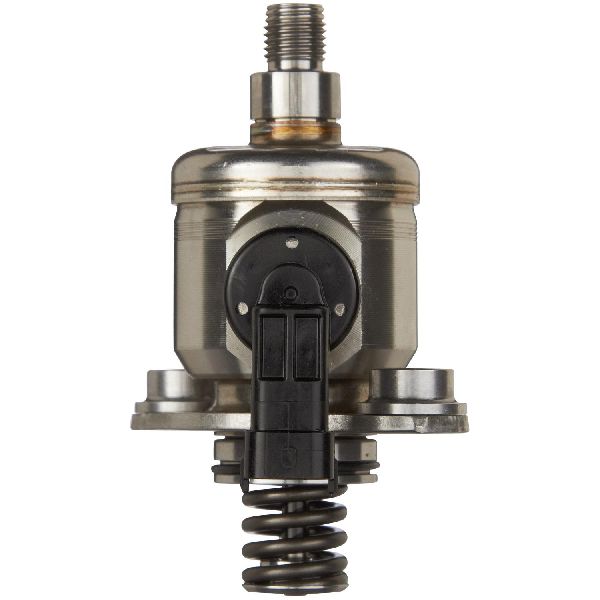
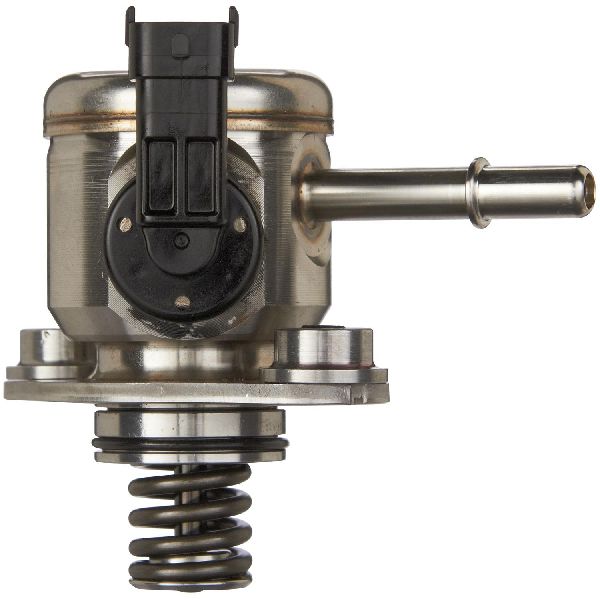
- High-Pressure Fuel Pump
(OEM #12641847 / 12658478 (superseded))— This is the most common failure point for code P0089 on this engine. The internal regulator fails or the pump's internal seals leak fuel into the engine oil. GM issued a recall for this part on 2010-2011 models.
Trusted brands: ACDelco (HPM1005), GM Genuine
OEM price range: $300-$500
Aftermarket price range: $150-$300 - High-Pressure Fuel Pipe
(OEM #12608374)— This is a one-time-use, torque-to-yield part that connects the HPFP to the fuel rail. It must be replaced any time it is removed to ensure a safe, leak-free seal.
Trusted brands: ACDelco, GM Genuine
OEM price range: $25-$40
Aftermarket price range: $15-$30
Related Codes That Often Appear With This One
- P228D — Stands for 'Fuel Pressure Regulator 1 Exceeded Control Limits - Pressure Too High'. It is extremely common to see with P0089 and points directly to a fault within the HPFP or its drive mechanism. It can be set when actual pressure is 3 MPa (435 PSI) over desired pressure for more than 5 seconds.
- P0016 / P0017 — These are crankshaft/camshaft position correlation codes. Seeing them with P0089 is a strong indicator that the root cause is a stretched timing chain affecting both engine timing and the mechanically driven HPFP.
- P0172 — Stands for 'System Too Rich'. This code can appear if the HPFP fails and leaks fuel into the engine oil. The fuel-contaminated oil vapor is then drawn into the intake via the PCV system, causing a rich running condition.
Technical Service Bulletins (TSBs) & Recalls
- Bulletin #PIP5203C: This manufacturer communication provides information to technicians regarding a service engine soon light with codes P0089 and P228D set in the engine control module, noting the concern could be due to an incorrect intake camshaft or camshaft actuator sprocket.
- GM Recall 43180: A voluntary emission recall for 2010-2011 Terrain/Equinox to replace the high-pressure fuel pump due to a tendency to leak fuel into the engine oil.
Platform-Specific Known Issues
- High Oil Consumption: Many 2.4L Ecotec engines suffer from excessive oil consumption due to piston ring issues. Running the engine low on oil accelerates wear on the timing chain, which in turn can cause P0089.
- Timing Chain Stretch: As a consequence of design and potential oiling issues, the timing chains are a well-documented weak point. A loose chain directly impacts the mechanically-driven HPFP, causing fuel pressure faults.
- HPFP Recall: GM Voluntary Emission Recall 43180 was issued for 2010-2011 models due to excessive wear in the pump that could cause fuel to leak into the crankcase.
Mechanic-Grade Diagnostic Values
- Low-Pressure Fuel System (In-Tank Pump), Engine Off — expected: 345-690 kPa (50-100 psi). Failure: Pressure below this range indicates a weak in-tank pump or restriction.
- Low-Pressure Fuel System (In-Tank Pump), Idling — expected: 300-400 kPa (43-58 psi). Failure: Readings outside this range suggest a problem with the fuel pump flow control module or the pump itself.
- High-Pressure Fuel Pump Solenoid Resistance — expected: 9-11 Ohms at 77°F (25°C). Failure: Resistance outside this range indicates a faulty pump solenoid, requiring pump replacement.
- High-Pressure Fuel Rail Pressure at Idle (after repair) — expected: Significantly lower than the 2000-2500 PSI seen during failure.. Failure: Pressure spiking to 2000-2500 PSI at idle is a key symptom noted in TSB PIP5203C, often due to incorrect camshaft parts.
Scan Tool Commands That Help
- GDS2 / Professional Scan Tool: Graph Desired vs. Actual Fuel Rail Pressure — This is the primary diagnostic step to determine if the HPFP is meeting the ECM's commands. It should be observed at idle, under load, and during deceleration to identify performance issues.
Real Owner Repair Stories
- ScannerDanner Forum (2012 GMC Terrain 2.4L, 167k miles) — Loping/lunging idle only when in gear after 10-15 minutes of driving. Eventually set 'Reduced Power' warning.
❌ Tried (didn't work) Replaced cam actuators and sensors, Replaced timing chain, Cleaned PCV port in intake manifold, Cleaned throttle body, Replaced fuel rail pressure sensor
✅ What actually fixed it The thread concluded with a strong diagnosis pointing to the high-pressure fuel pump (HPFP). Freeze frame data showed fuel pressure at 2252 PSI when P228D (Pressure Too High) was set. The collective advice was that after replacing the timing chain and sensor with no change, the out-of-control high pressure was almost certainly an internal failure of the HPFP regulator. - NHTSA ODI #11203242 — An owner reported excessive oil consumption and repetitive codes including P0089, P0300, P0366, P228D, and P0014, noting the car was jerking back and forth when at a stop light.
- NHTSA ODI #11719289 — An owner reported the vehicle wanted to shake and a diagnostic returned codes P0016, P0089, and P228D, which they noted are well-known codes for this engine.
OEM Part Supersession History
12608371, 12633115, 12633423, 12639694→12641847— Standard part evolution and consolidation by GM.
Heads up: While 12641847 is the most common replacement, always verify the part number against the vehicle's VIN. The ACDelco equivalent is often listed as EP1028.12641847→12677329— Further part updates by GM.
Heads up: Some sources list 12677329 as the latest OEM number. It is critical to use a VIN-based lookup to get the correct, most current part for the specific vehicle.
Model Year Variations Within This Range
- 2010-2011 (LAF Engine): These models used the LAF engine. A key difference noted in TSB PIP5203C is the intake camshaft actuator, which is gray for 2010 models. Installing a later model's black actuator will cause P0089. These years were also subject to the initial HPFP recall.
- 2012-2017 (LEA Engine): These models use the LEA engine, which is FlexFuel (E85) capable. This introduces a unique failure mode where excessive E85 use can cause the HPFP to fail, as documented in TSB 18-NA-072.
Diagnostic Flowchart
Used vs. New Parts: Buying Guide for This Vehicle
When a used part is the smart pick: A used part is generally not recommended for the core components of this repair (HPFP, timing chain). However, sourcing a used engine cover or intake ducting from a junkyard is a perfectly reasonable way to save money if those plastic parts are damaged during the repair.
Donor-vehicle mileage cap: roughly under 80000 miles for the part to have meaningful remaining life.
What to inspect on the donor part:
- For any used part, check for a vehicle history report to avoid parts from flood or severely wrecked vehicles.
- If considering a used engine assembly, request video of it running or compression test numbers.
- Look for donor vehicles with lower mileage and evidence of regular maintenance.
OEM-only on this vehicle (don't cheap out):
- High-Pressure Fuel Pump (HPFP): Due to the high failure rate and the critical nature of this part, using a new OEM (GM Genuine or ACDelco) pump is strongly advised. Many forum users report premature failure of cheap aftermarket pumps.
- Timing Chain Kit: This is a labor-intensive job, and using a low-quality aftermarket kit is a common cause of repeat failures. An OEM or a top-tier aftermarket brand like Cloyes is recommended.
Aftermarket brands forum-validated for this vehicle:
- Cloyes (for Timing Chain Kits)
Brands owners have reported issues with on this vehicle:
- Unbranded or 'white box' High-Pressure Fuel Pumps from online marketplaces are frequently cited as failing quickly. While the price is tempting, the risk of repeat labor costs is very high.
Real Owner Stories
Aggregated from forums and TSBs cited above. Mileages and costs reflect what owners reported in those sources.
2014 Chevrolet Equinox 2.4L
Symptoms: Owner experienced multiple codes including P0016, P0089, and P228D, along with drivability issues.
What fixed it: A complete timing job, including replacing the chains, guides, phasers, and tensioner, successfully resolved all codes and fixed the drivability problems.
Source hint: Equinox Forum: 2014 Equinox 2.4L - P0016, P0089, P228D - HELP
2011 GMC Terrain 2.4L
Symptoms: Vehicle presented with a combination of codes: P228D, P0089, P0016, and P0017.
What fixed it: The combination of fuel pressure and timing codes strongly pointed to a stretched timing chain as the root cause, which was affecting the camshaft-driven high-pressure fuel pump.
Source hint: GMTNation: 2011 Terrain codes; P228D, P0089, P0016, P0017
2015 Chevrolet Equinox 2.4L
Symptoms: The vehicle had persistent P0089 and P228D codes after a previous repair.
What fixed it: The issue was traced to a failed aftermarket timing chain tensioner installed during a prior timing job. The faulty tensioner was losing oil pressure, leading to incorrect cam phasing and manifesting as fuel pressure codes.
Source hint: YouTube: Chevrolet Equinox 2.4l P0089, p228d finally resolved
2012 GMC Terrain 2.4L
Symptoms: Owner reported persistent P0089 and P228D codes that would only appear after the vehicle had been driving for 30-45 minutes and reached operating temperature.
What fixed it: This was a difficult diagnosis. Even after replacing the cam actuators and the timing chain, the codes continued to appear, highlighting a frustrating diagnostic path some owners face.
Source hint: ScannerDanner Forum: 2012 Terrain 2.4 P0089 and P228D
Related OBD-II Codes
Frequently Asked Questions
I have a 2011 GMC Terrain and got code P0089. Is there a recall for the high-pressure fuel pump?
Why do I smell a strong odor of gasoline on my oil dipstick along with a P0089 code?
My Terrain has codes P0089, P0016, and P0017. Should I replace the fuel pump?
How is the high oil consumption on my 2.4L Ecotec related to this P0089 fuel code?
I just had a timing chain job done and now I have P0089 and P228D. What could have gone wrong?
What does the 'Reduced Engine Power' message mean when my P0089 Check Engine Light is on?
Helpful Videos
Used OEM Parts in Stock
New Aftermarket Parts Available


The information in this article is provided for general reference and educational purposes only. Vehicle specifications, procedures, and part compatibility can vary by production date, trim level, and region. Always consult your vehicle's factory service manual and verify part numbers before purchasing or performing repairs. Safety-critical components such as airbags, seat belts, and braking systems should be installed by a qualified professional.
- GMC Terrain:
- 🧭 Diagnostic Flowchart
- 🎬 Helpful Videos
- 🛍️ Shop This Part
- What's Unique About the 2010-2017 GMC Terrain
- Symptoms You May Notice
- Most Likely Causes
- Rare But Worth Checking
- Diagnosis Steps
- Parts You'll Likely Need
- Related Codes That Often Appear With This One
- Technical Service Bulletins (TSBs) & Recalls
- Platform-Specific Known Issues
- Mechanic-Grade Diagnostic Values
- Scan Tool Commands That Help
- Real Owner Repair Stories
- OEM Part Supersession History
- Model Year Variations Within This Range
- Used vs. New Parts: Buying Guide for This Vehicle
- Real Owner Stories
- 2014 Chevrolet Equinox 2.4L
- 2011 GMC Terrain 2.4L
- 2015 Chevrolet Equinox 2.4L
- 2012 GMC Terrain 2.4L
- Related OBD-II Codes
- Frequently Asked Questions
- 🎟️ Get 5% Off