

P0089 on 2014-2016 GMC Yukon: Fuel Pressure Regulator Performance Causes and Fixes
On 2015-2016 GMC Yukons with direct injection, code P0089 is most often caused by a failing high-pressure fuel pump (HPFP). This is a critical failure that can cause stalling and fuel contamination of the engine oil. Expect repair costs of $600-$1500, with the pump itself costing $250-$500. For the 2014 model, the issue is different and typically relates to the in-tank pump or Fuel Pump Driver Module (FPDM).
- For a 2015-2016 GMC Yukon, P0089 strongly points to a failing high-pressure fuel pump (HPFP), a known issue for these vehicles.
- Do not drive the vehicle. There is a serious risk of the engine stalling in traffic.
- Check the engine oil for a gasoline smell. If present, the HPFP has almost certainly failed and the oil must be changed along with the pump.
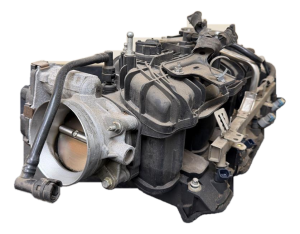
- This is not a simple DIY job. The fuel system is under extremely high pressure, and the repair requires removing the intake manifold.
- Always check if your vehicle's VIN is covered by GM's emissions recall #14858 for the fuel pump before paying for repairs.
What's Unique About the 2014-2016 Gmc YUKON
The 2014-2016 year range spans two different generations of the GMC Yukon with different fuel systems. The 2014 model year is the last of the third generation (GMT900 platform), which typically used a standard port fuel injection system. The 2015-2016 models are the fourth generation (K2XX platform), featuring EcoTec3 engines with Gasoline Direct Injection (GDI). GDI systems operate at much higher pressures and use an engine-driven high-pressure fuel pump (HPFP), which is a common failure point and the primary suspect for code P0089 on these specific vehicles. GM even issued a recall for some 2015 models for faulty high-pressure fuel pumps.
Diagnostic Flowchart
Tap your situation to follow the diagnostic path that matches what you're seeing on this vehicle.
Generation note: The 2014 model year belongs to the third generation Yukon (2007-2014) with a port fuel injection system. P0089 on a 2014 model does NOT involve a high-pressure fuel pump. Instead, causes are typically a failing in-tank fuel pump, a faulty Fuel Pump Driver Module (FPDM), or a bad fuel pressure sensor on the fuel rail. The 2015 and 2016 models are part of the fourth generation (2015-2020) and use a Gasoline Direct Injection (GDI) system with an HPFP. This guide focuses primarily on the more common and complex issues related to the 2015-2016 GDI engines.
Symptoms You May Notice
- Check Engine Light is on
- Engine stalling, sometimes unexpectedly while driving
- Hesitation or stumbling during acceleration
- Reduced engine power or 'Limp Mode'
- Rough or unstable idle
- Engine is hard to start
- Strong smell of gasoline in the engine oil
- Louder than normal ticking noise from the engine bay, near the HPFP
- Replacing the in-tank (low-pressure) fuel pump when the actual fault is with the engine-mounted high-pressure fuel pump (on 2015-2016 models).
- Replacing the fuel pressure sensor when the high-pressure fuel pump is the root cause of the erratic pressure readings.
Most Likely Causes
- Failing High-Pressure Fuel Pump (HPFP) 🔴 High Probability → Shop Fuel Pump The HPFP on the 2015+ EcoTec3 engines is a known failure point. GM issued recall #14858 for this part on certain 2015 models due to potential leaks and failure. Internal seals can fail, causing fuel to leak into the crankcase, contaminating the engine oil. This is a very common failure pattern discussed by owners.
How to confirm: A mechanic will use a scan tool to monitor desired versus actual fuel rail pressure. A significant deviation points to the pump. Checking the engine oil for a strong gasoline smell is another key indicator of a failed pump seal. Sending an oil sample to a lab like Blackstone Labs can definitively confirm fuel contamination.
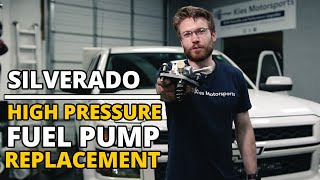
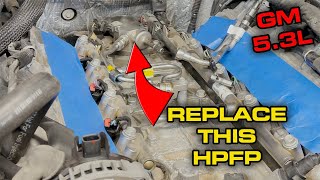
Typical fix: Replace the high-pressure fuel pump, the one-time-use fuel feed pipe, and the intake manifold gaskets. 🎬 Watch: Step-by-step guide to replacing the high-pressure fuel pump. An oil change and filter replacement is mandatory if fuel has contaminated the oil.
Est. part cost: $250-$500 - Faulty Fuel Rail Pressure Sensor 🟡 Medium Probability → Shop Fuel Pressure Sensor This sensor provides the critical feedback to the ECM. It can fail or send erratic readings. GM TSB PIP5279A specifically addresses this code and suggests replacing the Fuel Rail Pressure Sensor (FRPS) if diagnostics are inconclusive, indicating it's a known issue.
How to confirm: Test the sensor's output with a multimeter or compare its readings on a scan tool to a manual pressure gauge. If the sensor's readings are erratic, do not match the actual pressure, or 'hang' at a high value after deceleration, it is likely faulty.
Typical fix: Replace the fuel rail pressure sensor.
Est. part cost: $50-$150 - Weak In-Tank Low-Pressure Fuel Pump ⚪ Low Probability → Shop Fuel Pump The in-tank pump can fail, especially in high ambient temperatures, leading to fuel starvation for the HPFP. This can sometimes trigger P0089, though it more commonly sets other codes like P2635. This is a more likely cause on the 2014 non-GDI models.
How to confirm: Test the low-pressure fuel system's pressure and flow rate at the inlet to the high-pressure pump. The pressure should be stable and within the manufacturer's specification (typically 40-75 PSI for these systems). Cycling the key multiple times to see if it starts easier can sometimes point to a weak in-tank pump.
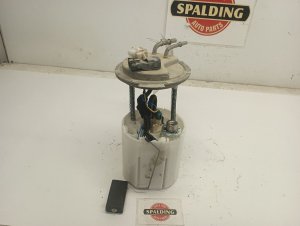
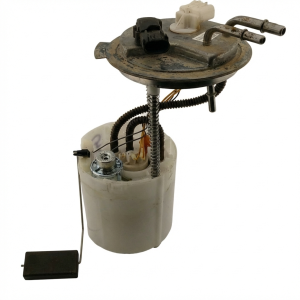
Typical fix: Replace the in-tank fuel pump module assembly. This requires dropping the fuel tank.
Est. part cost: $250-$500 - Clogged Fuel Filter or Restricted Fuel Lines ⚪ Low Probability → Shop Fuel Filter
How to confirm: Inspect fuel lines for kinks or damage. The fuel filter on these models is often part of the in-tank pump module and not serviced separately. If a restriction is suspected, a fuel pressure test on the low-pressure side can help confirm it.
Typical fix: Replace the restricted fuel line or the entire fuel pump module if the integrated filter is clogged.
Est. part cost: $100-$500
Rare But Worth Checking
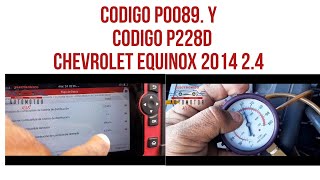
- Wiring Issues: Damaged wiring or a poor connection at the fuel pressure sensor or high-pressure pump can cause erratic signals, leading to this code. A visual inspection of the harness is always a good step. TSB 20-NA-136 notes that corrosion at the fuel pressure sensor connector can cause this and other fuel pressure codes. A Reddit user reported codes P0089 and P228D appeared after hitting a bump, 🎬 Watch: How P0089 and P228D codes were finally resolved. suggesting a loose connector.
- Faulty Fuel Pump Driver Module (FPDM): → Shop Fuel Pump The FPDM controls the voltage to the in-tank fuel pump. If it malfunctions, it can cause inadequate fuel supply to the high-pressure pump. This is a more common culprit on the 2014 models which lack the HPFP.
- Leaking Fuel Injector(s): → Shop Fuel Injector A leaking injector can cause a drop in fuel rail pressure, potentially triggering a P0089 code. GM issued a special coverage program (N192281810) for failing injectors on some 2016-2017 models, extending the warranty to 10 years/150,000 miles in certain states.
Diagnosis Steps
- Scan the ECM for all stored trouble codes and review freeze-frame data.
- Using a scan tool, monitor live data for 'Desired Fuel Rail Pressure' and 'Actual Fuel Rail Pressure'. Note any large discrepancies, especially under load.
- Inspect the engine oil dipstick for a strong smell of gasoline. If present, the high-pressure fuel pump has likely failed internally and the oil is contaminated. This is a critical check for 2015-2016 models.
- Visually inspect the wiring harnesses and connectors for the fuel rail pressure sensor and the high-pressure fuel pump for any signs of damage, corrosion, or looseness, as noted in TSB 20-NA-136.
- Test the low-pressure fuel system. Ensure the in-tank pump is delivering adequate and stable pressure to the HPFP (should be 40-75 PSI on a 2015 model).
- If the low-pressure side is good but the high-pressure side cannot meet the desired pressure, and especially if fuel is in the oil, the high-pressure fuel pump is the primary suspect.
- If pressure readings are erratic but no other symptoms point to the pump, test the fuel rail pressure sensor itself. Per TSB PIP5279A, if other diagnostics are inconclusive, the sensor may be the culprit.
Parts You'll Likely Need
- High-Pressure Fuel Pump
(OEM #12694362 (supersedes 12677329, 12669583))— This is the most common failure part for code P0089 on 2015-2016 Yukons with direct injection. The original part has a high failure rate, and GM has released updated part numbers.
Trusted brands: ACDelco, GM Genuine Parts
OEM price range: $300-$500
Aftermarket price range: $200-$400 - Fuel Rail Pressure Sensor
(OEM #12673824)— This sensor provides the pressure feedback to the ECM. If it fails, it can send incorrect data and trigger the code. TSB PIP5279A points to this as a potential fix.
Trusted brands: ACDelco, Bosch
OEM price range: $70-$120
Aftermarket price range: $40-$80 - High-Pressure Fuel Line
(OEM #12677327 (Pump to Rail))— This is a one-time-use, 'torque-to-yield' part that must be replaced any time it is disconnected, such as during HPFP replacement.
Trusted brands: ACDelco, GM Genuine Parts
OEM price range: $30-$60 - Intake Manifold Gaskets
(OEM #12626354)— The intake manifold must be removed to access the high-pressure fuel pump. The gaskets are not reusable and must be replaced to prevent vacuum leaks.
Trusted brands: ACDelco, Fel-Pro
OEM price range: $40-$70
Aftermarket price range: $20-$50
Related Codes That Often Appear With This One
- P228C / P228D — These codes mean "Fuel Pressure Regulator Control Performance" (Low/High) and often appear with P0089, pointing directly to a problem in the high-pressure fuel system.
- P0192 / P0193 — These codes relate to the fuel rail pressure sensor circuit reading low (P0192) or high (P0193), indicating a sensor or pressure regulation problem. TSB PIP5279A lists these codes alongside P0089.
- P0172 / P0175 — These codes indicate a rich fuel condition on Bank 1 and Bank 2. They can be triggered when the HPFP fails and leaks fuel into the crankcase, which then gets pulled into the intake via the PCV system, causing the engine to run rich.
- P00C6 — This code for "Fuel Rail Pressure Too Low - Engine Cranking" can accompany P0089, indicating the system cannot build sufficient pressure even during startup.
Technical Service Bulletins (TSBs) & Recalls
- SES Lamp With Fuel Rail Pressure Codes: This bulletin addresses several fuel pressure codes, including P0089. It advises technicians to follow standard diagnostics, but if the cause is not found, to replace the Fuel Rail Pressure Sensor (FRPS). This applies to 2014-2016 Yukon/Sierra models among others.
- Diagnostic Information for Fuel Pressure Sensor DTCs: → Shop Fuel Pressure Sensor This TSB from September 2020 notes that various fuel pressure codes, including P0089, can be caused by corrosion or damage at the fuel pressure sensor electrical connector. It advises inspecting the connector and terminals before replacing parts.
- Special Coverage - Fuel Injector Malfunction: → Shop Fuel Injector While not directly for P0089, this special coverage extends the warranty for faulty fuel injectors on some 2016-2017 models. A leaking injector can cause a loss of rail pressure, which could potentially trigger a P0089 code.
Platform-Specific Known Issues
- HPFP Failure Leading to Stalling and Fuel in Oil: Numerous owners on forums like TahoeYukonForum.com describe a common failure pattern for 2015+ models where the vehicle suddenly stalls, throws code P0089, and upon inspection, the engine oil smells strongly of gasoline. This is a classic sign of an internal HPFP seal failure.
- Code Triggered by Bump in the Road: A 2023 Silverado owner on Reddit reported getting P0089 and P228D immediately after hitting a small bump, which put the truck in reduced power mode. This experience suggests that a loose electrical connector at the fuel pressure sensor or HPFP could be a potential cause.
Mechanic-Grade Diagnostic Values
- High-Pressure Fuel Rail Pressure (Scan Tool, Idle) — expected: ~500-600 PSI. Failure: Significantly lower, higher, or fluctuating pressure when desired pressure is stable.
- High-Pressure Fuel Rail Pressure (Scan Tool, Acceleration) — expected: Rises to 2000+ PSI. Failure: Pressure does not rise significantly under load to match desired pressure.
- Fuel Rail Pressure Sensor Voltage (Key On, Engine Off) — expected: ~0.5 Volts. Failure: Voltage significantly different, or 0V (open circuit) or 5V (short to reference).
- Fuel Rail Pressure Sensor Voltage (Idle) — expected: ~1.32 Volts. Failure: Voltage does not correlate with observed pressure or is erratic.
- High-Pressure Fuel Pump Solenoid Resistance — expected: 9-11 Ohms at 77°F. Failure: Resistance is outside this range, or shows infinite resistance (open) or zero resistance (short).
- Low-Pressure Fuel System Pressure — expected: 40-75 PSI. Failure: Pressure is below 40 PSI or is unstable, indicating a weak in-tank pump or FPDM issue.
Scan Tool Commands That Help
- GDS2 / Tech2 (or equivalent professional scanner): Fuel System Test / Fuel Pump Control — This bidirectional command allows a technician to manually command the low-pressure fuel pump on/off and sometimes vary its speed. This is used to verify the FPDM and in-tank pump are responding correctly to commands from the ECM, helping to isolate a low-pressure side fault.
- GDS2 / Tech2 (or equivalent professional scanner): Fuel Rail Pressure Relief Valve Reset — This function may be required after a repair that involves the high-pressure fuel system, such as replacing the pump or sensor, especially if a high-pressure code like P228D was present.
Wiring & Ground Locations
- Fuel Pump Driver Module (FPDM) — On the driver's side frame rail, near the rear of the second door.. The FPDM controls the in-tank low-pressure pump. A corroded connector or faulty module at this location can starve the high-pressure pump of fuel, leading to low pressure codes like P0089.
- ECM Connector X1, Pin 2 — At the Engine Control Module (ECM).. This pin is for the Fuel Line Pressure Sensor Signal (D-BU/WH wire). Testing for a proper signal here can help diagnose a wiring issue between the sensor and the ECM.
- ECM Connector X1, Pin 8 & 24 — At the Engine Control Module (ECM).. Pin 8 (BK/YE wire) is the Low Reference and Pin 24 (BN/RD wire) is the 5-Volt Reference for the low-pressure fuel sensor. Loss of either of these can cause incorrect low-pressure readings, confusing the diagnosis.
- Main Engine Ground Stud — On the back of the engine, on the driver's side (port side) near the top of the flywheel housing.. A loose or corroded main engine ground can cause a variety of sensor and module communication issues, including erratic readings from the fuel pressure sensor or poor performance from the pump controllers.
Real Owner Repair Stories
- YouTube user 'Repairs from the other guy' (Chevrolet Equinox 2.4L (similar GDI system)) — Codes P0089 and P228D that would only appear when the engine reached operating temperature (~215°F).
❌ Tried (didn't work) Replacing the high-pressure fuel pump/regulator, Replacing camshaft sensors
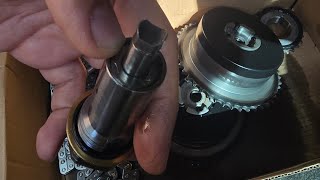
✅ What actually fixed it The vehicle had recently had a timing chain job. The technician found that although the timing was correct at cold, one of the camshaft phasers would 'walk off' and go out of time as the engine warmed up. This slight change in intake cam timing, which drives the HPFP, was enough to cause the fuel pressure performance codes. Replacing the timing chain tensioners and VVT solenoids (cam phasers) with new OEM parts resolved the issue. - Reddit user on r/Silverado (2023 Silverado 5.3L with 56k miles) — Sudden Reduced Power mode, ESC/traction warnings, and codes P228D & P0089 immediately after hitting a bump.
❌ Tried (didn't work) The user was still in the diagnostic phase.
✅ What actually fixed it The user reported that reseating connectors in the area of the high-pressure pump and fuel rail temporarily improved drivability, strongly suggesting the root cause was a loose electrical connector or chafed wiring harness rather than a mechanical pump failure. The sudden onset after a physical jolt is a key indicator of a connection issue.
Model Year Variations Within This Range
- 2014-2016: Some early Gen V engines (around 2014-2016) used a 4-wire fuel rail pressure sensor that incorporated a temperature sensor, while later models switched to a 3-wire sensor. It is critical to use the correct sensor for the vehicle's specific wiring harness.
Helpful Videos
Used OEM Parts in Stock
New Aftermarket Parts Available

The information in this article is provided for general reference and educational purposes only. Vehicle specifications, procedures, and part compatibility can vary by production date, trim level, and region. Always consult your vehicle's factory service manual and verify part numbers before purchasing or performing repairs. Safety-critical components such as airbags, seat belts, and braking systems should be installed by a qualified professional.
- Gmc YUKON:
- 🧭 Diagnostic Flowchart
- 🎬 Helpful Videos
- 🛍️ Shop This Part
- What's Unique About the 2014-2016 Gmc YUKON
- Symptoms You May Notice
- Most Likely Causes
- Rare But Worth Checking
- Diagnosis Steps
- Parts You'll Likely Need
- Related Codes That Often Appear With This One
- Technical Service Bulletins (TSBs) & Recalls
- Platform-Specific Known Issues
- Mechanic-Grade Diagnostic Values
- Scan Tool Commands That Help
- Wiring & Ground Locations
- Real Owner Repair Stories
- Model Year Variations Within This Range
- 🎟️ Get 5% Off