

P0089 on 2022-2026 Jeep Compass: Fuel Pressure Performance Causes & Fixes
P0089 on a 2022-2026 Jeep Compass indicates a fuel pressure performance issue. For 2023+ models with the 2.0L Turbo, this often points to a failing high-pressure fuel pump (HPFP) or fuel rail pressure sensor, a fault pattern confirmed by TSB 14-001-25. For 2022 models with the 2.4L engine, it's more likely a faulty in-tank fuel pump or pressure sensor.
- P0089 on a 2022-2026 Compass means the fuel pressure is not what the engine computer expects.
- The most likely cause depends on your engine: for the 2023+ 2.0L Turbo, suspect the high-pressure fuel pump (HPFP); for the 2022 2.4L, suspect the in-tank fuel pump.
- Symptoms include rough idle, hesitation, power loss, and stalling. [Bulletin #14-002-26, Bulletin #14-001-25]
- Driving with this code is not recommended as the vehicle could stall in traffic.
- Diagnosis requires a scan tool to monitor live fuel pressure data; this is often a job best left to a professional.
What's Unique About the 2022-2026 Jeep COMPASS
The 2022-2026 Jeep Compass range spans a major powertrain change. The 2022 model primarily uses a 2.4L port-injected Tigershark engine with a lower-pressure fuel system. Starting in 2023, the Compass switched to a 2.0L turbocharged engine (GME-T4) with Gasoline Direct Injection (GDI). GDI systems use a much higher-pressure fuel system with both a low-pressure in-tank pump and a high-pressure engine-mounted pump (HPFP) that can generate up to 2,900 psi, making them more susceptible to codes like P0089. TSB 14-001-25 specifically calls out the high-pressure fuel pump as a cause for P0089 on 2022-2024 models, directly acknowledging a hardware issue.
Diagnostic Flowchart
Tap your situation to follow the diagnostic path that matches what you're seeing on this vehicle.
Generation note: While this range is all within the second generation (MP/552), it covers two different engines. The 2022 model year primarily features the 2.4L MultiAir I4 engine with sequential multi-port injection (MPI). From 2023-2026, the standard engine is the 2.0L Turbo I4 (GME-T4) with Gasoline Direct Injection (GDI). Causes and parts will differ significantly between these two fuel systems.
Symptoms You May Notice
- Check Engine Light is on
- Unstable or rough idle
- Engine is running rough
- Hesitation or stumbling during acceleration
- Loss of power, especially under load like climbing hills
- Engine stalling unexpectedly
- Reduced fuel economy
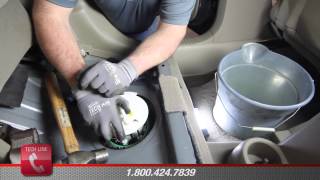
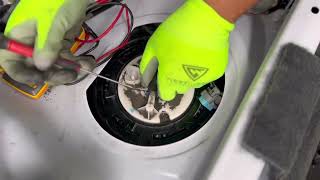
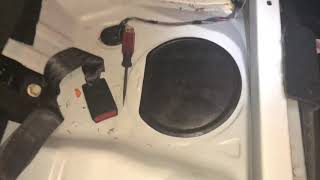
- Hard starting or long crank times 🎬 Watch: Troubleshooting a no-start condition and fuel pump replacement
- Replacing fuel injectors when the issue is fuel pressure delivery.
- Replacing oxygen sensors that show a lean condition, which is a symptom of low fuel pressure, not the cause.
- Replacing the high-pressure fuel pump on a 2.0L Turbo model without first checking for PCM software updates related to fuel pressure codes like P0087/P0088.
Most Likely Causes
- Failing High-Pressure Fuel Pump (HPFP) 🔴 High Probability → Shop Fuel Pump Applies to 2023+ models with the 2.0L Turbo GDI engine. The HPFP is a mechanical pump that must generate extremely high pressures (up to 2,900 psi), making it a common failure point. TSB 14-001-25 directly identifies HPFP failure as the cause for P0089 on these vehicles.
How to confirm: Use a diagnostic scan tool to monitor desired vs. actual fuel rail pressure. A significant lag or inability for the actual pressure to meet the desired pressure under load points to a weak HPFP. This procedure is detailed in Stellantis service literature.
Typical fix: Replacement of the high-pressure fuel pump, as instructed by TSB 14-001-25.
Est. part cost: $600-$900 (Aftermarket) to $900-$1200 (OEM). - Faulty Fuel Rail Pressure Sensor 🟡 Medium Probability → Shop Fuel Pressure Sensor This sensor provides the critical feedback to the PCM. If it sends inaccurate readings, the PCM will set a performance code even if the pressure is correct. It's a common failure point on many modern engines and can cause erratic pressure readings.
How to confirm: Monitor the sensor's voltage or pressure reading on a scan tool. If the reading is erratic, stuck at a certain value, or doesn't change with engine RPM, the sensor is likely bad. Comparing the scan tool reading to a mechanical gauge (if possible on a high-pressure system) is the definitive test.
Typical fix: Replacement of the fuel rail pressure sensor. The part number has been superseded, so using the latest version is critical.
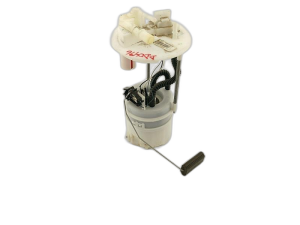
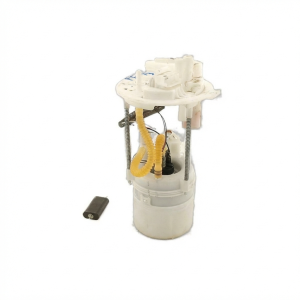
Est. part cost: $50-$120 - Failing Low-Pressure (In-Tank) Fuel Pump 🟡 Medium Probability → Shop Fuel Pump This is a primary cause for the 2022 2.4L engine and can also affect the 2.0L Turbo. The in-tank pump supplies fuel to the engine (or to the HPFP on GDI models). If its output is weak, the target pressure can't be met.
How to confirm: Test the low-pressure fuel system pressure at the fuel rail (for 2.4L) or at the feed line to the HPFP (for 2.0L). The pressure should be within the manufacturer's specified range (typically 58-64 PSI for the low-pressure side).
Typical fix: Replacement of the in-tank fuel pump module. 🎬 Watch: How to replace the in-tank fuel pump module
Est. part cost: $200-$450 - Clogged Fuel Filter ⚪ Low Probability → Shop Fuel Filter The fuel filter is often part of the in-tank fuel pump module assembly and is not always serviced separately. A blockage restricts fuel flow, causing pressure to drop.
How to confirm: A low-pressure fuel test will show low volume/pressure. If the pump is audible and seems to be working, a clogged filter is a strong possibility.
Typical fix: Replacement of the fuel filter or the entire fuel pump module assembly. 🎬 See this walkthrough for replacing the fuel pump assembly
Est. part cost: $200-$450
Rare But Worth Checking
- Wiring or Connector Issue: A damaged wire or corroded connector for the fuel pressure sensor or fuel pump can cause intermittent or incorrect signals, leading to this code. Always inspect the harness before replacing expensive components.
- PCM Software Issue: While TSB 18-106-23 specifically mentions codes P0087 and P0088, it points to a known issue with the PCM's fuel pressure monitoring logic on 2023-2024 models with the 2.0L engine. An erroneous P0089 could be related, making a software update check a valid diagnostic step if no mechanical faults are found.
Diagnosis Steps
- Connect an OBD-II scanner and check for any other accompanying codes. Note the freeze frame data to see when the fault occurred.
- Use the scanner's live data function to monitor 'Desired Fuel Rail Pressure' and 'Actual Fuel Rail Pressure'.
- Observe the pressure at idle, then while increasing engine RPM, and finally during a test drive under load.
- If actual pressure cannot keep up with desired pressure, suspect a weak pump (low or high pressure) or a clogged filter. This is the primary symptom of a failing HPFP per TSB 14-001-25.
- If actual pressure is erratic, stuck, or doesn't change, inspect the fuel rail pressure sensor and its wiring.
- Perform a low-pressure fuel system test to rule out the in-tank pump and filter. Pressure should be 58-64 PSI.
- Inspect all visible wiring and connectors for the fuel pumps and pressure sensor for any signs of damage or corrosion.
- For 2.0L Turbo models, check with a dealer if TSB 18-106-23 (PCM update for P0087/P0088) or other software updates apply to your VIN, as software logic can be a root cause.
- If all sensors and pumps test okay, the issue may be with the PCM, though this is rare.
Parts You'll Likely Need
- High-Pressure Fuel Pump
(OEM #68441339AB)— This is a primary failure point on the 2023+ 2.0L GDI engine, as identified in TSB 14-001-25.
Trusted brands: Mopar, Bosch
OEM price range: $900-$1200
Aftermarket price range: $600-$900 - Fuel Rail Pressure Sensor
(OEM #68616938AA (supersedes 68445162AB))— This sensor provides the data that triggers the code. A faulty sensor is a common and relatively inexpensive part to replace. Using the latest part number is crucial for compatibility with software updates.
Trusted brands: Mopar, Standard Motor Products, Delphi
OEM price range: $100-$180
Aftermarket price range: $50-$120 - In-Tank Fuel Pump Module — This is the most likely cause on the 2022 2.4L engine and can also be the fault on the 2.0L Turbo if it fails to supply the high-pressure pump.
Trusted brands: Mopar, Delphi, Carter
OEM price range: $350-$450
Aftermarket price range: $200-$300
Related Codes That Often Appear With This One
- P0087 — This code means 'Fuel Rail/System Pressure - Too Low,' which is a more specific version of the performance issue detected by P0089. TSB 14-001-25 lists them together as symptoms of a failing HPFP.
- P0088 — This code means 'Fuel Rail/System Pressure - Too High,' which can occur if the pressure regulator fails. TSB 14-001-25 also lists this code alongside P0089, indicating a general control problem.
- P0300-P0304 — These are random or specific cylinder misfire codes. Incorrect fuel pressure can lead to a lean air/fuel mixture, causing misfires.
Technical Service Bulletins (TSBs) & Recalls
- 14-001-25: Directly addresses P0089, P0087, and P0088 caused by high-pressure fuel pump failure on 2022-2024 models.
- 14-002-26: Also lists P0089, P0087, and P0088 with symptoms like unstable idle, confirming the fault pattern.
- 18-106-23: Addresses software updates for related fuel pressure codes P0087/P0088 on the 2.0L engine, suggesting software logic can be a factor.
Platform-Specific Known Issues
- TSB for High-Pressure Fuel Pump Failure: → Shop Fuel Pump Jeep issued TSB 14-001-25 for 2022-2024 Compass models (among others) that specifically addresses P0089, P0087, and P0088 codes caused by a failing high-pressure fuel pump. Symptoms listed include rough running and loss of power. The prescribed fix is the replacement of the HPFP.
- Potential for Software-Related False Codes: For the 2.0L Turbo engine, TSB 18-106-23 was issued to fix erroneous P0087 and P0088 codes via a PCM software update. While P0089 isn't explicitly named, the existence of this TSB for closely related codes on the same platform suggests that the PCM's sensitivity or logic could be a factor, and checking for software updates is a wise step.
Mechanic-Grade Diagnostic Values
- High-Pressure Fuel Pressure (2.0L GDI Engine) — expected: Up to 2,900 psi (200 bar) under load.. Failure: Actual pressure on a scan tool significantly lags behind desired pressure or fails to reach peak pressure.
- Low-Pressure Fuel Pressure (2.0L GDI Engine) — expected: Approximately 80 psi feeding the high-pressure pump.. Failure: Pressure significantly below 80 psi indicates a failing in-tank pump or clogged filter, starving the HPFP.
- Low-Pressure Fuel Pressure (2.4L MPI Engine) — expected: 58-64 PSI.. Failure: Pressure below 58 PSI indicates a weak in-tank pump or clogged filter.
- Long-Term Fuel Trim (LTFT) — expected: Within +/- 5% at idle and steady cruise.. Failure: Values consistently greater than +10% suggest the PCM is compensating for a lean condition caused by insufficient fuel pressure.
- Fuel Rail Pressure Sensor Signal Voltage (Closed Circuit) — expected: A low voltage reading (e.g., ~0.25V - 0.5V) with the key on, engine off.. Failure: Voltage remains at 5V even when connected, indicating an internal sensor fault or an open in the signal return circuit.
Scan Tool Commands That Help
- wiTECH 2.0: Actuation Tests / Active Tests — To command the low-pressure fuel pump on/off independently of the engine running. This helps verify the pump's electrical circuit and basic operation without starting the vehicle.
- wiTECH 2.0: PCM Reprogramming / Flash — To apply software updates from Jeep, such as the one mentioned in TSB 18-106-23 for related codes P0087/P0088. This should be done if no mechanical faults are found.
- wiTECH 2.0: Proxy Configuration Alignment — This function is required after replacing certain modules like the BCM or PCM to ensure all vehicle modules recognize the new component and communicate correctly.
Wiring & Ground Locations
- F38 Fuse — In the underhood power distribution center on 2023 models.. This fuse powers the fuel pump relay coil. If it's blown, the relay won't activate, and the fuel pump will not run.
- Engine Control Unit (ECU/PCM) — In the engine bay, next to the 12-volt battery on 2023+ 2.0L models.. Knowing the physical location is essential for inspecting the main connectors for corrosion or damage, which could interrupt signals from the fuel pressure sensor.
- Fuel Rail Pressure Sensor Connector — On the fuel rail, connected to the fuel pressure sensor.. Connector pigtail replacements are common. It is critical to follow the instructions included with the OEM repair kit, as wire positions can change between the old and new connectors, causing new DTCs if wired incorrectly.
OEM Part Supersession History
68445162AB→68616938AA— Update for improved accuracy, reliability, or compatibility with PCM software updates.
Heads up: When replacing some FCA sensors, the wiring pigtail may also need to be replaced and re-pinned. An FCA STAR document shows an instance where pin positions were swapped on the new connector. Failure to follow the specific instructions with the new part can lead to new fault codes.
Model Year Variations Within This Range
- 2023-2026: The 2.0L GME-T4 Turbo engine used in North American market Compass models is assembled in the Trenton Engine Plant, Michigan, USA.
- 2026+: Technicians working on the latest models may require the new Mopar Diagnostic Pod (MDP+) instead of the older microPOD II, as it supports the CAN FD and Ethernet protocols used in newer vehicle architectures.
Helpful Videos
We Have This Part in Stock

The information in this article is provided for general reference and educational purposes only. Vehicle specifications, procedures, and part compatibility can vary by production date, trim level, and region. Always consult your vehicle's factory service manual and verify part numbers before purchasing or performing repairs. Safety-critical components such as airbags, seat belts, and braking systems should be installed by a qualified professional.
- Jeep COMPASS:
- 🧭 Diagnostic Flowchart
- 🎬 Helpful Videos
- 🛍️ Shop This Part
- What's Unique About the 2022-2026 Jeep COMPASS
- Symptoms You May Notice
- Most Likely Causes
- Rare But Worth Checking
- Diagnosis Steps
- Parts You'll Likely Need
- Related Codes That Often Appear With This One
- Technical Service Bulletins (TSBs) & Recalls
- Platform-Specific Known Issues
- Mechanic-Grade Diagnostic Values
- Scan Tool Commands That Help
- Wiring & Ground Locations
- OEM Part Supersession History
- Model Year Variations Within This Range
- 🎟️ Get 5% Off