

P0089 on 2013-2014 Land Rover LR2: Fuel Pressure Regulator Performance Causes and Fixes
On a 2013-2014 Land Rover LR2, code P0089 is almost always caused by a faulty relief valve inside the in-tank fuel pump, a known issue documented by Land Rover. The fix is to replace the entire in-tank fuel pump assembly, which can cost between $1,678 and $1,878 at a repair shop.
- For a 2013-2014 LR2, P0089 is not a generic code; it's very likely pointing to a specific known fault with the in-tank fuel pump.
- Before ordering any parts, confirm the specific sub-code is P0089-29, as this is the code directly addressed by the manufacturer's service bulletin.
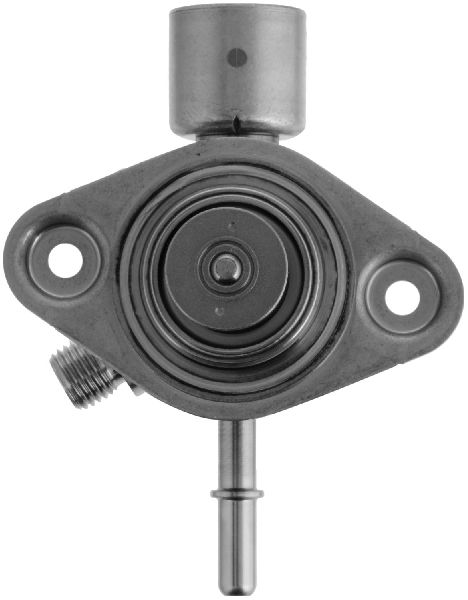
- Do not confuse the low-pressure in-tank pump with the high-pressure pump on the engine; this code relates to the in-tank unit.
- Due to the fire risk associated with handling fuel and accessing the fuel tank, this repair is strongly recommended for a professional mechanic.
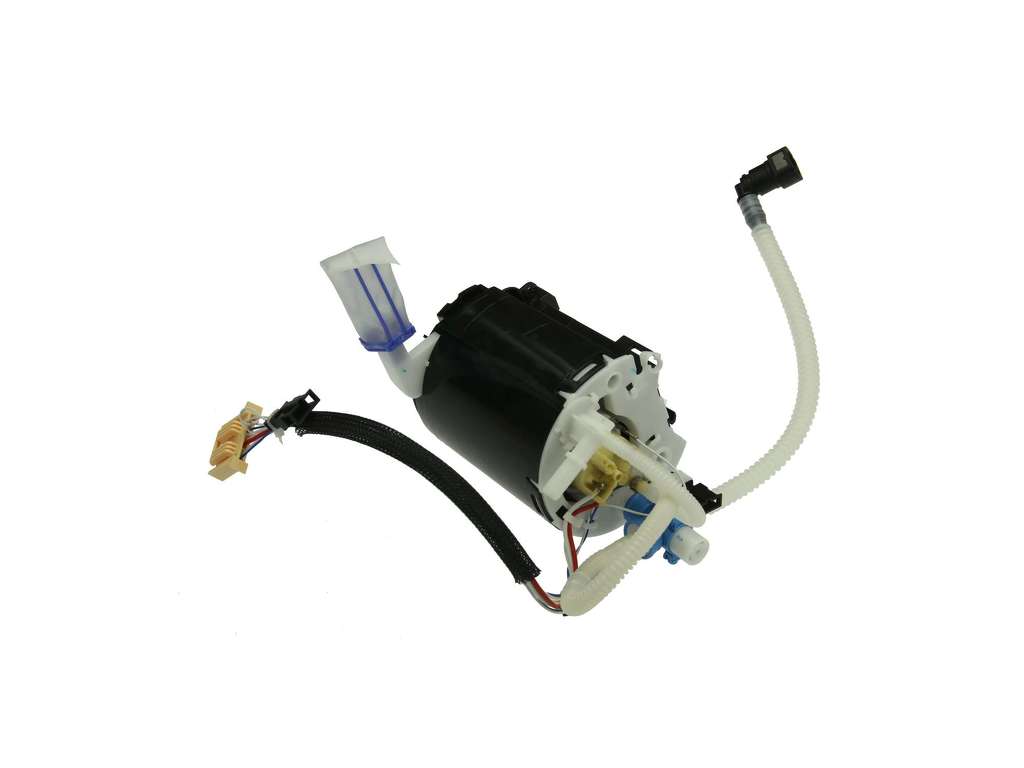
- The correct replacement part is the entire fuel pump and sender assembly, Land Rover part number LR036126.
What's Unique About the 2013-2014 Land Rover LR2
For this specific LR2, the P0089 code is very well-documented by Land Rover itself. The manufacturer issued a Technical Service Bulletin (LTB00623NAS1) that points directly to a specific, common failure: an over-active relief valve seal inside the in-tank fuel pump. This means that unlike on many other vehicles where P0089 might lead to a complex diagnosis of sensors or wiring, on the 2013-2014 LR2 the problem is most frequently the in-tank pump assembly itself. The same issue affects the 2012-2013 Range Rover Evoque.
Diagnostic Flowchart
Tap your situation to follow the diagnostic path that matches what you're seeing on this vehicle.
Symptoms You May Notice
- Check Engine Light (MIL) illuminated.
- No noticeable engine-related performance issues.
- Possible engine hesitation or stumbling.
- Potential for long crank times or no-start condition.
- Possible engine stalling.
- Poor acceleration and reduced fuel economy.
- Replacing the high-pressure fuel pump on the engine. This system uses both a low-pressure in-tank pump and a high-pressure mechanical pump; P0089 on this vehicle almost always relates to the low-pressure side.
- Replacing the fuel rail pressure sensor without confirming its failure through testing. While possible, it is a less common cause than the in-tank pump for this specific code. One owner on landroverforums.com reported a shop replaced the high-pressure sensor for a P0089-64 code with no success, only fixing it after replacing the low-pressure sensor.
Most Likely Causes
- Faulty In-Tank Fuel Pump Assembly 🔴 High Probability → Shop Fuel Pump A known manufacturing defect with the relief valve seal inside the pump is documented in Land Rover Technical Service Bulletin LTB00623NAS1. This is the most common cause for the P0089-29 sub-code.
How to confirm: Scan the vehicle for the specific sub-code P0089-29. If present, perform the static test from the TSB: monitor the low-range fuel pressure sensor voltage. A healthy pump should show a stable ~3.0v for 30 seconds, then drop to a stable ~2.3v for the next 30 seconds. If the voltage is unstable, starts low (e.g., below 2.6v) and slowly builds, the pump is faulty.
Typical fix: Replace the entire in-tank fuel pump and sender assembly.
Est. part cost: $450-$780 - Failing Low-Pressure Fuel Sensor ⚪ Low Probability → Shop Fuel Pressure Sensor
How to confirm: Monitor live fuel pressure data with an advanced scan tool. If the readings are erratic or do not match a manual pressure gauge reading, the sensor is likely faulty. In one forum-documented case for a P0089-64 code, the issue was resolved by replacing the low-pressure fuel sensor after incorrectly replacing the high-pressure sensor first.
Typical fix: Replace the low-pressure fuel sensor (Part # LR015356).
Est. part cost: $50-$100 - Clogged Fuel Filter ⚪ Low Probability → Shop Fuel Filter The fuel filter is integrated into the fuel pump assembly and is not typically serviced separately. It usually gets replaced along with the pump.
How to confirm: A fuel pressure and volume test can indicate a restriction, but diagnosis often points back to the pump assembly as the filter is non-serviceable.
Typical fix: Replace the in-tank fuel pump assembly, which includes a new filter.
Est. part cost: $450-$780
Rare But Worth Checking
- Wiring Issue: Damage to the wiring harness for the fuel pump or pressure sensor can cause intermittent signals and trigger the code. This should be checked before replacing expensive components, especially if other work was recently performed near the fuel tank.
- ECM Software Fault: In some cases, particularly with the P0089-64 sub-code ('Signal plausibility failure') on other Land Rover models, an outdated Powertrain Control Module (PCM) software calibration has been the cause. Some owners report this code appearing after a fuel tank flange recall service, suggesting a software update may be needed to recalibrate for the new hardware.
Diagnosis Steps
- Connect a Land Rover-compatible OBD-II scanner to read the trouble codes. Specifically look for the sub-code P0089-29, as mentioned in TSB LTB00623NAS1. A generic reader may only show P0089.
- Review the symptoms. If the only symptom is the Check Engine Light, this aligns with the TSB.
- If P0089-29 is present, proceed with the TSB's diagnostic test. Using a scan tool with live data, monitor the 'Fuel rail pressure - Low range sensor' voltage.
- Perform the static test cycle from the TSB: Start the engine and let it idle for 60 seconds. For the first 30 seconds, the voltage should be stable at approximately 3.0v (± 0.15). For the next 30 seconds, the voltage should be stable at approximately 2.3v (± 0.15).
- Analyze the test results: If voltage readings are unstable, start low (e.g., below 2.6v) and slowly build, or otherwise fail to hold steady, the TSB directs to replace the in-tank fuel pump assembly.
- If voltage readings are stable and correct but the code persists, the TSB suggests replacing the Fuel Supply Line Pressure sensor.
- Inspect the wiring and connectors for the fuel pump module and low-pressure sensor for any visible damage or corrosion, especially if fuel system service was recently performed.
Parts You'll Likely Need
- In-Tank Fuel Pump and Sender Assembly
(OEM #LR036126)— This is the component identified as the primary cause of P0089-29 in Land Rover's own Technical Service Bulletin LTB00623NAS1. Superseded part number may be LR041170.
Trusted brands: Bosch, VDO (A2C32279000Z), URO Parts
OEM price range: $780
Aftermarket price range: $450-$600
Technical Service Bulletins (TSBs) & Recalls
- LTB00623NAS1: Engine MIL Illuminated With DTC P0089-29 Stored.
- Q379NAS1: A service action related to DTC P0089-29, 'Fuel Pressure Regulator Performance - Signal Invalid 🎬 See this breakdown of fuel pressure regulator performance issues.'.
Platform-Specific Known Issues
- TSB LTB00623NAS1 was issued specifically for the 2013 LR2 (and 2012-2013 Evoque) to address DTC P0089-29. It identifies the cause as an 'over-active relief valve seal within the in-tank fuel pump'.
- TSB Q379NAS1 also references code P0089-29, 'Fuel Pressure Regulator Performance - Signal Invalid', for this vehicle range and points towards a potential software update as part of the diagnostic process.
- Multiple owners on forums have reported the P0089-64 variant appearing shortly after having a fuel tank flange recall service performed, suggesting the disturbance of components or a software mismatch could be a trigger.
Mechanic-Grade Diagnostic Values
- Low-Pressure Fuel System Pressure (at idle) — expected: ~55 PSI (3.8 bar). Failure: Pressure significantly below 50 PSI (3.4 bar) or erratic readings.
- Low-Pressure Fuel System Pressure (cold start spike) — expected: Can spike over 60 PSI (4.1 bar). Failure: Failure to reach higher pressure on cold start may indicate a weak pump.
- Low-Pressure Fuel Pump Output Pressure (full power) — expected: Greater than 350 kPa (approx. 50.8 PSI). Failure: Pressure below 280 kPa (approx. 40.6 PSI) indicates a failing pump.
- Low-Pressure Fuel Sensor Voltage (Key On, Engine Off) — expected: Should be between 1.3V and 3.1V.. Failure: Voltage reading 4V to 5V or above indicates a shorted sensor.
- Fuel Pump Module Commanded Duty Cycle — expected: Should be under 30% at idle.. Failure: A duty cycle climbing towards 33% or higher on a cold start suggests the pump is getting weak and working harder to maintain pressure.
Hidden / Shadow Codes Worth Checking
- P0089-29: Fuel Pressure Regulator Performance - Signal Invalid. This is the specific code addressed by TSB LTB00623NAS1 and points directly to the in-tank fuel pump's internal relief valve. (see via Land Rover SDD/Pathfinder or a compatible advanced OBD-II scanner (e.g., GAP IID).)
- P0089-64: Fuel Pressure Regulator 1 Performance - Signal Plausibility Failure. This sub-code is often reported by owners and is not covered by the main TSB. It has been linked to faulty low-pressure fuel sensors or PCM software sensitivity, sometimes appearing after a fuel tank flange recall service. (see via )
Scan Tool Commands That Help
- Land Rover SDD (Symptom Driven Diagnostics): Live Data Monitoring: 'Fuel rail pressure - Low range sensor' — This is the specific data PID required to perform the voltage-based static test outlined in TSB LTB00623NAS1 to diagnose the in-tank fuel pump.
- Advanced Scan Tools (e.g., GAP IID): Fuel Priming Function / Service/Test Menu — Allows the technician to manually run the fuel pump to check for pressure build-up and listen for pump operation without starting the engine.
Wiring & Ground Locations
- Low-Pressure Fuel Sensor Location — On other Land Rover models with similar engines, the sensor is located on the right side of the transmission, tucked behind a heat shield. Access is extremely difficult and may require removing heat shields to reach.. If the TSB's voltage test for the pump passes, the next step is to check the sensor and its wiring. Knowing its difficult-to-access location is critical for estimating labor and planning the diagnostic approach.
- Main Battery Ground — The main ground cable from the battery negative terminal typically connects directly to the chassis/frame rail near the battery. On Discovery models, this is straight down from the battery, below the radiator.. A poor main ground can cause a host of electrical issues, including low voltage to the fuel pump module, which could mimic a failing pump. This should be inspected and cleaned as a basic step in any electrical diagnosis.
- Fuel Pump Module Connector — Located on top of the fuel tank, accessible through a hatch under the rear carpeting.. This is the primary point for testing voltage and ground supplied to the fuel pump. A voltage drop test at this connector under load (while the pump is priming) can differentiate between a bad pump and a wiring supply issue.
Real Owner Repair Stories
- landroverforums.com user 'hpwardduff' (2015 Land Rover LR4) — Check Engine Light with code P0089. A generic reader showed 'High Pressure regulator bank 1', but a dealer-level scanner revealed the specific sub-code P0089-64 'Signal plausibility failure'.
❌ Tried (didn't work) Replacing the High-Pressure fuel sensor on the engine fuel rail.
✅ What actually fixed it Replacing the low-pressure fuel sensor cleared the fault. The user noted this was the second time this repair was needed.
When the Usual Fixes Don't Work
- While the official Land Rover TSB for the P0089-29 sub-code definitively points to the in-tank fuel pump, real-world owner experiences show that the P0089-64 sub-code is a significant exception. In a documented case involving an LR4, a repair shop followed the generic code definition and replaced the high-pressure fuel sensor, which did not fix the problem. The ultimate solution was replacing the low-pressure fuel sensor, a much less common cause according to standard procedure but a confirmed fix for the 'Signal Plausibility Failure' variant of the code. This highlights the critical importance of reading the manufacturer-specific sub-code before replacing parts.
OEM Part Supersession History
LR036126→LR041170— Standard part revision by the manufacturer.
Heads up: LR041170 is the direct replacement for LR036126 for the 2013-2014 LR2. No known incompatibilities.
Helpful Videos

We Have This Part in Stock


The information in this article is provided for general reference and educational purposes only. Vehicle specifications, procedures, and part compatibility can vary by production date, trim level, and region. Always consult your vehicle's factory service manual and verify part numbers before purchasing or performing repairs. Safety-critical components such as airbags, seat belts, and braking systems should be installed by a qualified professional.
- Land Rover LR2:
- 🧭 Diagnostic Flowchart
- 🎬 Helpful Videos
- 🛍️ Shop This Part
- What's Unique About the 2013-2014 Land Rover LR2
- Symptoms You May Notice
- Most Likely Causes
- Rare But Worth Checking
- Diagnosis Steps
- Parts You'll Likely Need
- Technical Service Bulletins (TSBs) & Recalls
- Platform-Specific Known Issues
- Mechanic-Grade Diagnostic Values
- Hidden / Shadow Codes Worth Checking
- Scan Tool Commands That Help
- Wiring & Ground Locations
- Real Owner Repair Stories
- When the Usual Fixes Don't Work
- OEM Part Supersession History
- 🎟️ Get 5% Off