

P0089 on 2007-2012 Mazda CX-7 2.3L Turbo: Fuel Pressure Regulator Causes and Fixes
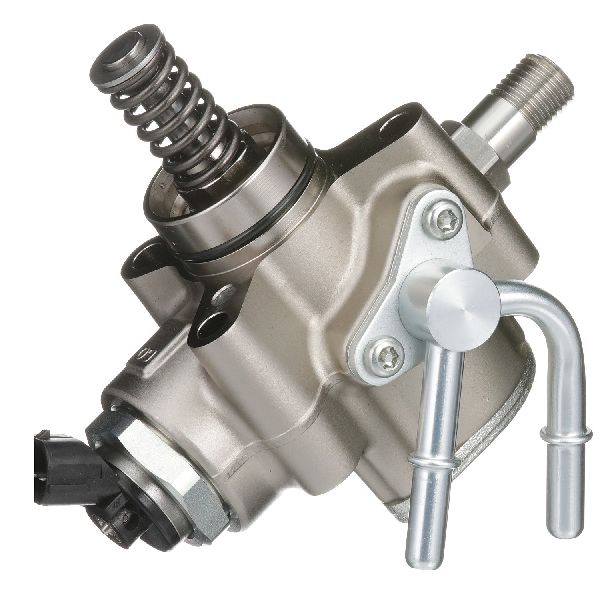
On the 2.3L Turbo CX-7, code P0089 almost always indicates a failing High-Pressure Fuel Pump (HPFP). The internal regulator, known as a spill valve, is a common failure point. Expect to pay $400-$800 for an OEM replacement pump. It is critical to also check for and change fuel-contaminated engine oil to prevent engine damage.
- P0089 on a 2007-2012 Mazda CX-7 almost always means the High-Pressure Fuel Pump (HPFP) is failing.
- Before replacing any parts, check the engine oil for a gasoline smell. If present, the HPFP has failed and you MUST change the oil and filter with the pump to save your engine.
- Use a scan tool to watch the 'Desired' vs 'Actual' fuel rail pressure; if the actual pressure is erratic, it confirms the HPFP is bad.
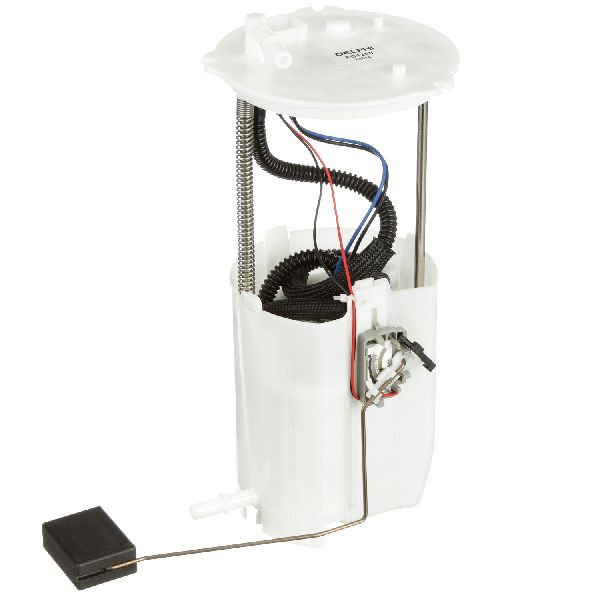
- Do not confuse the HPFP on the engine with the low-pressure fuel pump in the gas tank; this code points to the high-pressure side.
What's Unique About the 2007-2012 Mazda CX-7
The 2.3L MZR DISI Turbo engine uses a sophisticated direct injection system with two fuel pumps: a low-pressure pump in the tank and a camshaft-driven High-Pressure Fuel Pump (HPFP) on the engine. The P0089 code almost exclusively relates to the HPFP, which is a well-documented weak point on this platform (also shared with the Mazdaspeed3 and Mazdaspeed6). The 'regulator' is an internal component of the HPFP called a spill valve (or Suction Control Valve), and its failure is the most common cause of this code, far more so than on typical port-injected engines.
Symptoms You May Notice
- Check Engine Light is on
- Vehicle enters 'limp mode' with significantly reduced power
- Hesitation or stumbling during acceleration, especially under boost.
- Rough or unstable idle
- Engine may stall unexpectedly.
- Noticeable decrease in fuel economy.
- Hard starting or extended cranking
- Replacing the in-tank (low-pressure) fuel pump without first diagnosing the high-pressure system. P0089 on this engine almost always points to the HPFP.
- Replacing the fuel rail pressure sensor when the HPFP is the actual cause. While the sensor can fail, it is much less common than HPFP failure for this specific code.
Most Likely Causes
- Failing High-Pressure Fuel Pump (HPFP) 🔴 High Probability → Shop Fuel Pump The internal spill valve (suction control valve), which regulates pressure, is a known common failure point on the MZR DISI engine's HPFP. It can stick or wear out, causing erratic pressure control. This is the most cited cause in owner forums for P0089.
How to confirm: Use a scan tool to monitor 'Desired' vs. 'Actual' fuel rail pressure. If 'Actual' pressure is erratic, noisy, or does not follow 'Desired' pressure under load, the HPFP is faulty. Also, check the engine oil dipstick for a strong gasoline smell, which indicates the pump's internal seals have failed and it must be replaced immediately.
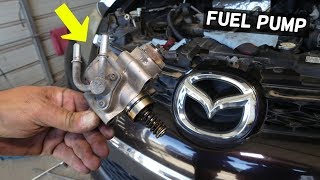
Typical fix: Replace the entire High-Pressure Fuel Pump. 🎬 See this step-by-step HPFP replacement walkthrough It is also mandatory to change the engine oil and filter if fuel contamination is present.
Est. part cost: $400-$800 for an OEM pump. - Faulty Fuel Rail Pressure Sensor ⚪ Low Probability → Shop Fuel Pressure Sensor While less common than HPFP failure, the sensor can fail. Sourcing a replacement can be difficult, as Mazda may only sell it as part of the entire fuel rail assembly for over $900. The original sensor is a Bosch 0261545006, but owners have investigated using alternatives like 0261545074.
How to confirm: If the HPFP is known to be good but the pressure readings are still erratic, nonsensical, or stuck at zero, the sensor may be at fault. Diagnosis involves checking the sensor's voltage output against actual pressure or swapping with a known-good sensor. One owner reported readings jumping between 0 and 1700 PSI at cold start, which stabilized when warm, pointing to a faulty sensor.
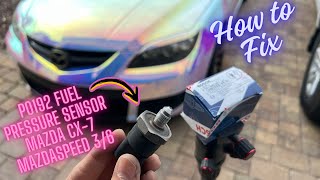
Typical fix: Replace the fuel rail pressure sensor. This may require purchasing the entire fuel rail from the dealer or sourcing a compatible Bosch sensor from the aftermarket. 🎬 Watch: How to replace the fuel rail pressure sensor
Est. part cost: $50-$150 for sensor alone, $900+ for fuel rail assembly from dealer. - Clogged In-Tank Fuel Filter or Failing Low-Pressure Pump ⚪ Low Probability → Shop Fuel Filter
How to confirm: If the high-pressure side checks out, test the low-pressure fuel system. A failing in-tank pump or clogged filter can starve the HPFP, causing it to perform erratically. Check for adequate low-side pressure at the HPFP inlet; it should be between 55-71 PSI with the key on, engine off.
Typical fix: Replace the in-tank fuel pump module, which typically includes the filter.
Est. part cost: $150-$300
Rare But Worth Checking
- Wiring or Connector Issue: A damaged wire or corroded connector for the HPFP's spill valve or the fuel rail pressure sensor can cause intermittent and incorrect signals, mimicking a component failure. A visual inspection of the harness is worthwhile before replacing expensive parts.
Diagnosis Steps
- Connect an OBD-II scanner and verify P0089 is the primary code. Check for other codes like P0088 or P0192.
- CRITICAL STEP: Check the engine oil. Remove the dipstick and smell the oil for any trace of gasoline. If fuel is present, the HPFP has failed and is leaking internally. Do not run the engine more than necessary.
- Using the scanner's live data function, monitor 'Fuel Rail Pressure (Desired)' and 'Fuel Rail Pressure (Actual)'.
- With the engine idling, the values should be close (around 410-430 PSI when warm). Briefly rev the engine; the actual pressure should closely follow the desired pressure.
- If safe to do so, perform a test drive under load. If the actual pressure becomes erratic, drops, or spikes unpredictably compared to the desired pressure, the HPFP is the primary suspect. Under load, pressure should exceed 1600 PSI.
- If the pressure readings are nonsensical (e.g., reading max pressure with the engine off, or jumping between 0 and 1700 PSI when cold), inspect the fuel rail pressure sensor and its wiring.
- If the high-pressure system seems to respond correctly but the code persists, test the low-pressure fuel pump's output to ensure the HPFP is not being starved of fuel. Pressure should be 55-71 PSI at the HPFP inlet (KOEO).
Parts You'll Likely Need
- High-Pressure Fuel Pump (HPFP)
(OEM #L3K9-13-35ZC)— This is the most common failure point for code P0089 on the 2.3L MZR DISI engine due to the failure of its internal spill valve. The part number L3K9-13-35ZC supersedes older versions like L3K9-13-35ZA and L3K9-13-35ZB.
Trusted brands: Mazda (OEM), Bosch
OEM price range: $500-$800
Aftermarket price range: $300-$500 - Engine Oil and Filter — This is a mandatory replacement if the failing HPFP has contaminated the engine oil with fuel, a very common and dangerous side effect of this failure.
Trusted brands: Castrol, Mobil 1, Pennzoil
OEM price range: $50-$80
Aftermarket price range: $30-$60
Related Codes That Often Appear With This One
- P0088 — This code for 'Fuel Rail/System Pressure - Too High' is often seen with P0089 because both are caused by the HPFP's inability to correctly regulate pressure. P0089 indicates a performance problem, while P0088 indicates the pressure has exceeded the maximum threshold.
- P0192 — This code for 'Fuel Rail Pressure Sensor Circuit Low' can appear if the sensor itself is failing or if the HPFP failure causes a sudden drop in pressure. One owner reported this code appearing with P0300 when the sensor failed.
- P0300 — A 'Random Misfire' code can be triggered because the erratic and incorrect fuel pressure leads to poor fuel atomization, fouling spark plugs and causing inconsistent combustion.
- P2177 — This code for 'System Too Lean Off Idle' can occur alongside P0089 if the fuel pressure is erratically low, causing a lean condition that the PCM cannot correct with fuel trims.
- P2188 — This code for 'System Too Rich at Idle' can be triggered if the failing spill valve causes pressure spikes at idle, leading to an overly rich mixture.
Technical Service Bulletins (TSBs) & Recalls
- SSP 87 (SB-10043875-3697): While not for P0089, this is a highly relevant warranty extension for the 2.3L MZR DISI engine. It covered 'Variable Valve Timing Noise and Timing Chain Noise' for 7 years or 70,000 miles on the 2007-2010 CX-7, Mazdaspeed3, and 2006-2007 Mazdaspeed6.
- Bulletin #01-007-21-3792: Although issued for the Mazda2, this manufacturer bulletin notes that P0089 (Spill valve control solenoid valve control circuit range/performance problem) can be caused by improper control software of the PCM.
Platform-Specific Known Issues
- Fuel in Oil: The most critical issue specific to this platform is the tendency for a failing HPFP to leak gasoline directly into the crankcase. This thins the engine oil, reducing its lubricating properties and leading to accelerated wear or catastrophic failure of the engine and turbocharger.
- VVT and Timing Chain Stretch: While not a direct cause of P0089, this engine is also known for issues with the Variable Valve Timing (VVT) actuator and timing chain stretch, for which Mazda issued a warranty extension (SSP 87). These issues can cause rattling noises on startup and other performance problems.
- Turbocharger Failure: The K04 turbocharger is prone to failure, often due to oil starvation from a clogged banjo bolt filter in the oil feed line. This is known as 'smoking turbo syndrome' and is a separate, but equally serious, common issue for this engine.
Mechanic-Grade Diagnostic Values
- Low-Pressure Fuel Pump (In-Tank) Pressure — expected: 55-71 PSI. Failure: Pressure significantly below this range indicates a failing in-tank pump or clogged filter.
- High-Pressure Fuel Rail Pressure at Idle (Engine Warm) — expected: Approximately 410-430 PSI. Failure: Pressure that is erratic, significantly lower, or spikes much higher points to a fault in the HPFP or rail pressure sensor.
- High-Pressure Fuel Rail Pressure Under Load (WOT) — expected: Should exceed 1,600 PSI. Failure: Failure to reach or maintain pressure above 1,600 PSI under load indicates a weak HPFP or fuel starvation from the low-pressure side.
- Fuel Rail Pressure Sensor Signal Voltage (KOEO) — expected: Approximately 1.5V to 1.8V. Failure: Voltage that is stuck high, low, or is erratic can indicate a faulty sensor or wiring issue.
Wiring & Ground Locations
- G2 — Left rear corner of the engine compartment, near the PCM.. This is a primary ground point for the Powertrain Control Module (PCM) and other engine performance components. A poor connection here can cause a wide range of erratic sensor readings and drivability issues.
- HPFP Ground — A ground wire is typically attached to one of the HPFP mounting bolts or nearby on the cylinder head.. A specific ground for the HPFP and ignition coil harness is critical. A loose or corroded connection here can directly impact the operation of the spill valve solenoid, causing erratic pressure control.
- Spill Valve Solenoid Connector — On the High-Pressure Fuel Pump (HPFP), located on the right rear of the engine.. This is the electrical connection for the internal fuel pressure regulator (spill valve). Inspect for corrosion, damage, or loose pins, as a bad connection will directly cause P0089.
- Fuel Rail Pressure Sensor Connector — On the fuel rail, located at the left front of the engine, visible between the intake manifold and power steering reservoir.. A poor connection at the sensor will cause incorrect or erratic pressure readings, leading to P0089 or related sensor codes.
Real Owner Repair Stories
- Mazda Forum user (2008 Mazda CX-7 2.3L Turbo) — Engine stalling. On cold start, scan tool showed fuel pressure erratically jumping between 0 PSI and 1700 PSI, causing the engine to flood and stall. Once the engine reached operating temperature, pressure stabilized at a normal 425 PSI at idle and the car ran fine.
❌ Tried (didn't work) Using a fuel additive (Marvel Mystery Oil) provided a temporary fix but the problem returned.
✅ What actually fixed it The user suspected the Fuel Rail Pressure Sensor was the culprit due to the temperature-dependent behavior and the fact that disconnecting it caused the PCM to default to a high, but stable, pressure reading, allowing the engine to run smoothly. The final fix was replacing the fuel rail pressure sensor.
OEM Part Supersession History
L3K9-13-35ZA, L3K9-13-35ZB→L3K9-13-35ZC— Improved internal components and seals to increase reliability and longevity.
Heads up: The newest part number, L3K9-13-35ZC, is fully backward compatible with vehicles that originally used the -ZA or -ZB versions.
Model Year Variations Within This Range
- 2010-2012: A facelift was introduced for the 2010 model year which included revised exterior styling and some interior updates. However, the 2.3L MZR DISI Turbo engine and its high-pressure fuel system remained fundamentally the same, so the causes and fixes for P0089 are consistent across the entire 2007-2012 range.
Diagnostic Flowchart
Other Known Issues on This Vehicle
Issues unrelated to this code that are worth knowing about as an owner of this generation:
- Turbocharger Failure ('Smoking Turbo Syndrome') 🔴 High — Widespread issue, can occur under 100,000 miles. Often caused by oil starvation from a clogged oil feed line banjo bolt filter, or from oil sludge due to extended oil change intervals. (Ref: SSP 86: 'Heavy White Exhaust Smoke Warranty Extension Program' was issued for some model years, extending warranty to 7 years / 70,000 miles for this specific condition.)
- VVT Actuator Failure and Timing Chain Stretch 🔴 High → Shop Engine Timing Chain — Very common. Symptoms include a distinct engine rattle for a few seconds on cold starts. If ignored, can lead to a stretched timing chain, jumped timing, and catastrophic engine failure. (Ref: SSP 87 (SB-10043875-3697): Mazda issued a warranty extension for 'Variable Valve Timing Noise and Timing Chain Noise' to 7 years or 70,000 miles for the 2007-2010 CX-7 and its platform mates.)
- Engine Oil Sludge Buildup 🟠 Medium — Common on vehicles that followed the original manufacturer-recommended oil change intervals, which were too long. This sludge restricts oil passages, starving the turbo and VVT system of oil, leading to their failure.
- Failing A/C Compressor 🟡 Low — A frequently reported issue for 2007-2010 models, where the A/C system begins blowing warm air. Mazda acknowledged the issue and offered an extended warranty on the compressor. (Ref: Mazda extended the warranty on the A/C compressor for this known issue.)
Used vs. New Parts: Buying Guide for This Vehicle
When a used part is the smart pick: A used OEM HPFP assembly can be a cost-effective option if it comes from a low-mileage, verified running donor vehicle. However, it carries significant risk. It is generally not recommended unless the part's history is known. Buying just the upgraded 'internals' (e.g., from Autotech) used is more common in the performance community but still requires careful inspection.
Donor-vehicle mileage cap: roughly under 70000 miles for the part to have meaningful remaining life.
What to inspect on the donor part:
- Ask for the VIN of the donor car to verify mileage and check for accident history.
- Inspect the pump body for any cracks, especially around mounting points.
- If buying upgraded internals, you cannot verify their condition from the outside; you must trust the seller or have a return agreement.
- Avoid pumps from engines that show signs of heavy oil sludge or poor maintenance.
OEM-only on this vehicle (don't cheap out):
- High-Pressure Fuel Pump (HPFP): While some aftermarket options exist, the OEM Mazda/Bosch unit (L3K9-13-35ZC) is the most proven and reliable choice for a stock vehicle. Many cheap aftermarket pumps fail quickly.
Aftermarket brands forum-validated for this vehicle:
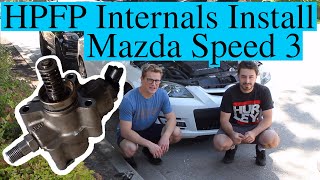
- Autotech: For HPFP 'internals' only. This is an upgrade, not a stock replacement, that increases fuel flow for tuned engines. It requires disassembling the pump.
Brands owners have reported issues with on this vehicle:
- Unnamed, no-brand 'OEM-style' pumps from online marketplaces. These have a very high failure rate and should be avoided to prevent repeat repairs and potential engine damage.
Real Owner Stories
Aggregated from forums and TSBs cited above. Mileages and costs reflect what owners reported in those sources.
2007-2012 Mazda CX-7 2.3L MZR DISI Turbo
Symptoms: Fuel pressure readings were jumping wildly between 0 and 1700 PSI during a cold start, but the readings stabilized once the engine warmed up.
What fixed it: Replacement of the fuel rail pressure sensor.
Source hint: Forum citation: 'HELP! Strange Fuel Pressure readings' (mazdaforum.com)
2007-2012 Mazda CX-7 2.3L MZR DISI Turbo
Symptoms: The vehicle experienced a nasty noise coming from the High-Pressure Fuel Pump (HPFP) along with a P0089 and P0091 code.
What fixed it: Replacement of the High-Pressure Fuel Pump (HPFP).
Source hint: Forum citation: 'Code p0089,P0091 Nasty HPFP Noise' (mazdaspeeds.org)
2007-2012 Mazda CX-7 2.3L MZR DISI Turbo — ~100000 miles
Symptoms: Heavy white exhaust smoke caused by oil starvation in the turbocharger.
What fixed it: Replacement of the K04 turbocharger (related to SSP 86).
Source hint: Vehicle specific issues: 'Turbocharger Failure (Smoking Turbo Syndrome)'
Related OBD-II Codes
Frequently Asked Questions
Does the SSP 87 warranty extension cover my P0089 fuel pressure issue on my 2008 CX-7?
I smell gasoline on my dipstick while checking the oil; is this related to the P0089 code?
Can I buy just the fuel rail pressure sensor for my CX-7 instead of the whole rail?
What should the fuel rail pressure readings be for a healthy 2.3L DISI engine?
Is the 'Smoking Turbo Syndrome' covered by the same TSB as the fuel pressure issues?
What is the low-side fuel pressure requirement for the CX-7?
Helpful Videos
![How to Install your Mazdaspeed 3 [HPFP] Internals](https://img.youtube.com/vi/G80hqXgNq4U/mqdefault.jpg)
Used OEM Parts in Stock
New Aftermarket Parts Available


The information in this article is provided for general reference and educational purposes only. Vehicle specifications, procedures, and part compatibility can vary by production date, trim level, and region. Always consult your vehicle's factory service manual and verify part numbers before purchasing or performing repairs. Safety-critical components such as airbags, seat belts, and braking systems should be installed by a qualified professional.
- Mazda CX-7:
- 🧭 Diagnostic Flowchart
- 🎬 Helpful Videos
- 🛍️ Shop This Part
- What's Unique About the 2007-2012 Mazda CX-7
- Symptoms You May Notice
- Most Likely Causes
- Rare But Worth Checking
- Diagnosis Steps
- Parts You'll Likely Need
- Related Codes That Often Appear With This One
- Technical Service Bulletins (TSBs) & Recalls
- Platform-Specific Known Issues
- Mechanic-Grade Diagnostic Values
- Wiring & Ground Locations
- Real Owner Repair Stories
- OEM Part Supersession History
- Model Year Variations Within This Range
- Other Known Issues on This Vehicle
- Used vs. New Parts: Buying Guide for This Vehicle
- Real Owner Stories
- 2007-2012 Mazda CX-7 2.3L MZR DISI Turbo
- 2007-2012 Mazda CX-7 2.3L MZR DISI Turbo
- 2007-2012 Mazda CX-7 2.3L MZR DISI Turbo — ~100000 miles
- Related OBD-II Codes
- Frequently Asked Questions
- 🎟️ Get 5% Off