

P0089 on 2019-2021 Subaru Ascent: Fuel Pressure Regulator Performance Causes and Fixes
On a 2019-2021 Subaru Ascent, code P0089 is most often caused by a failing high-pressure fuel pump (HPFP). Before replacing any parts, check if your vehicle is covered by the WRG-21 recall for the low-pressure fuel pump, as this is a known issue that can affect the entire fuel system and cause stalling.
- For any fuel-related issue on a 2019-2020 Ascent, your first step should be to check with a Subaru dealer if the WRG-21 fuel pump recall has been performed.
- The most likely cause of P0089 on this vehicle is a failing high-pressure fuel pump (HPFP).
- This is not a DIY-friendly repair. The fuel system is under extremely high pressure, and diagnosis requires professional tools.
- Do not continue driving with this code. The risk of the engine stalling unexpectedly is high and poses a significant safety hazard.
What's Unique About the 2019-2021 Subaru Ascent
The Subaru Ascent uses the FA24F, a modern gasoline direct-injection (GDI) engine. Unlike older port-injected engines, it has two fuel pumps: a low-pressure pump in the tank and a high-pressure fuel pump (HPFP) on the engine. Code P0089 on this platform frequently points to a problem with the high-pressure side of the system, a known weak point. Critically, 2019-2020 models were subject to a major recall (WRG-21) for the Denso low-pressure pump, which can cause a wide range of fuel-related symptoms and codes, including engine stalling.
Symptoms You May Notice
- Check Engine Light is on
- All dashboard warning lights (including EyeSight) may illuminate, as a check engine fault can disable other systems
- Hesitation or stumbling on acceleration
- Reduced engine power or 'limp mode'
- Rough idle
- Engine stalling, especially under load
- Difficulty starting the engine
- Poor fuel economy 🎬 Watch: Common Subaru Ascent problems and reliability issues
- Replacing the fuel pressure sensor when the high-pressure fuel pump is actually at fault.
- Replacing the high-pressure fuel pump when the low-pressure fuel pump is weak or failing (especially if the recall was not checked).
- Assuming the issue is with fuel injectors without first verifying fuel pressure delivery.
Most Likely Causes
- Failing High-Pressure Fuel Pump (HPFP) 🔴 High Probability → Shop Fuel Pump The HPFP on the FA24F engine platform is a documented failure point. A TSB for a related code (P0087) led to a redesigned pump, indicating a potential vulnerability in the original design that can also cause P0089. Owner forums confirm HPFP failures on low-mileage Ascents.
How to confirm: A technician will use a scan tool to monitor desired vs. actual fuel rail pressure. If the actual pressure cannot keep up with or deviates significantly from the desired pressure under load, the HPFP is suspect. This is the most common cause, with some repair databases estimating it accounts for 70% of P0089 cases.
Typical fix: Replace the high-pressure fuel pump.
Est. part cost: $500-$900 - Failing Low-Pressure Fuel Pump (LPFP) 🟡 Medium Probability → Shop Fuel Pump A safety recall (WRG-21 / NHTSA 21V-587) was issued for 🎬 Watch: Overview of the Subaru fuel pump recall 2019-2020 Ascents because the Denso LPFP impeller can deform and cause the pump to fail. The recall affects 22,831 Ascents produced between January 14, 2019, and May 20, 2019. A weak LPFP can starve the HPFP, causing it to underperform and trigger P0089.
How to confirm: First, check if the vehicle's VIN is part of the recall using the NHTSA website or by contacting a Subaru dealer. If not under recall, a technician can test the low-pressure fuel system's flow and pressure to see if it meets specifications.
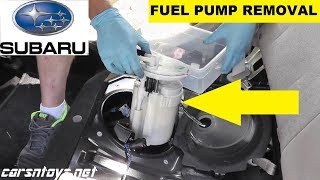
Typical fix: If under recall, the dealer will replace the low-pressure fuel pump for free. Otherwise, the pump assembly needs to be replaced. 🎬 See: How to remove and replace a Subaru fuel pump
Est. part cost: $250-$450 - Faulty Fuel Rail Pressure Sensor ⚪ Low Probability → Shop Fuel Pressure Sensor
How to confirm: If both the low and high-pressure pumps are confirmed to be working correctly, the sensor's readings can be compared to a mechanical gauge or analyzed for erratic behavior on a scan tool. A faulty sensor may send inaccurate data to the ECM.
Typical fix: Replace the fuel rail pressure sensor.
Est. part cost: $100-$200
Rare But Worth Checking
- Clogged Fuel Filter or Restricted Fuel Line: → Shop Fuel Filter The main fuel filter is part of the in-tank pump assembly. While less common, contamination from poor quality fuel could cause a restriction and lead to pressure drops.
- Wiring Issue: A damaged wire or corroded connector in the circuit for either the fuel pumps or the pressure sensor could cause erratic signals and trigger the code.
Diagnosis Steps
- Check Vehicle VIN for Recall: The first and most important step is to check if the vehicle is part of Subaru Safety Recall WRG-21 for the low-pressure fuel pump. This applies to certain 2019-2020 Ascents and can be checked for free by any Subaru dealer.
- Scan for Codes: Use an OBD-II scanner to confirm P0089 and check for any other related codes, such as P0087 or P0171.
- Monitor Fuel Pressure Data: Use an advanced scan tool to view live data. Graph the 'Desired Fuel Rail Pressure' and 'Actual Fuel Rail Pressure' PIDs. Perform a short drive with varying engine loads, including wide-open throttle.
- Analyze Pressure Data: If the actual pressure consistently lags behind the desired pressure, especially under acceleration, it points towards a fuel delivery issue (LPFP or HPFP). If the pressure is erratic or spikes, it could be the HPFP or sensor.
- Test Low-Pressure System: If the recall does not apply or has been performed, test the pressure and volume of the low-pressure fuel pump to ensure it is supplying enough fuel to the HPFP.
- Test High-Pressure System: If the low-pressure side is healthy but the pressure deviation persists, the HPFP is the most likely culprit.
- Inspect Wiring: Visually inspect the wiring harnesses for the fuel pumps and pressure sensor for any signs of damage, corrosion, or looseness. Pay attention to the fuel pump controller, often located in the trunk area.
Parts You'll Likely Need
- High-Pressure Fuel Pump
(OEM #16625AA110)— This is the most common mechanical failure that causes code P0089 on the Subaru FA24F engine.
Trusted brands: Subaru (OEM)
OEM price range: $530-$900 - Low-Pressure Fuel Pump Assembly
(OEM #42022AL03B (example part, verify by VIN))— A critical recall (WRG-21) affects this part on 2019-2020 models, and a weak LPFP can cause performance codes like P0089.
Trusted brands: Subaru (OEM), Denso
OEM price range: $300-$450
Aftermarket price range: $200-$350
Related Codes That Often Appear With This One
- P0087 — P0087 (Fuel Rail/System Pressure - Too Low) is the sister code to P0089 and often points to the same failing components, like the HPFP.
- P0088 — P0088 (Fuel Rail/System Pressure - Too High) can also be triggered by a malfunctioning HPFP or its internal regulator, indicating erratic performance.
- P0171 — P0171 (System Too Lean) can occur because inadequate fuel pressure prevents injectors from delivering the correct amount of fuel.
Technical Service Bulletins (TSBs) & Recalls
- WRG-21 (Recall): Safety recall for low-pressure fuel pump impeller failure on 2019-2020 Ascent models.
- TSB 09-74-21R: While not a direct fix for P0089, this TSB provides procedures for removing carbon deposits from injectors and intake valves, which can be a contributing factor or a separate issue on direct-injection engines.
Platform-Specific Known Issues
- Safety Recall WRG-21 / NHTSA 21V-587: Affects the low-pressure fuel pump on certain 2019-2020 Ascent models produced from Jan 14, 2019 to May 20, 2019. The Denso-made impeller may have been manufactured with a lower density, which can cause it to deform, interfere with the pump body, and fail, leading to engine stalling.
Mechanic-Grade Diagnostic Values
- Low-Pressure Fuel System Pressure — expected: 49-58 psi (340-400 kPa) at the inlet of the high-pressure pump.. Failure: Pressure consistently below 49 psi indicates a failing in-tank pump (LPFP), clogged filter, or a fault in the low-pressure control system.
- High-Pressure Fuel System Pressure (Live Data at Idle) — expected: 580 - 1015 PSI (4.0 - 7.0 MPa) at idle.. Failure: If 'Actual Fuel Pressure' on a scan tool consistently lags behind or deviates from 'Desired Fuel Pressure', especially during acceleration, the HPFP is likely failing.
- High-Pressure Fuel System Pressure (Live Data under Load) — expected: Should rise with engine RPM and load, potentially exceeding 2,500-3,000 PSI.. Failure: Failure to reach commanded pressure under load when the low-pressure system is confirmed to be working correctly.
- Fuel Rail Pressure Sensor Signal Voltage (Key-On-Engine-Off) — expected: Approximately 0.5V at zero pressure, up to 1.5V-1.8V.. Failure: Voltage stuck at 0V (short to ground) or 5V (open circuit) indicates a sensor or wiring fault.
- Fuel Rail Pressure Sensor Connector Pin Test (Key-On-Engine-Off) — expected: Pin 1: 5V Reference, Pin 2: Ground (continuity to chassis), Pin 3: Signal (1.5-1.8V).. Failure: Absence of 5V reference or a bad ground points to a wiring or ECM problem, not the sensor itself.
Scan Tool Commands That Help
- Subaru Select Monitor (SSM): Current Data Display / Live Data Monitoring — This is the primary function used to diagnose P0089. A technician will select {Engine Control System} -> {Current Data Display/Save} to graph 'Commanded Fuel Rail Pressure' vs. 'Actual Fuel Rail Pressure'. This comparison under various loads (idle, acceleration) is essential to determine if the HPFP or LPFP is failing to meet the ECM's requests.
Wiring & Ground Locations
- Fuel Pump Control Module (FPCM) — Typically located in a protected area under the rear seat or carpeting, near the fuel tank. Part number may be 22648AA220.. This module controls the voltage and speed of the low-pressure fuel pump. A failure of the module itself or a wiring issue to it can starve the high-pressure pump, leading to P0089.
- In-Tank Fuel Pump Module Connector — Located under the rear passenger-side seat, beneath a black metal access cover on the vehicle floor.. This is the main electrical connection for the low-pressure fuel pump. Checking for voltage, ground, and connector integrity here is a key step in diagnosing a no-start or low-pressure condition before condemning the pump. Corrosion or heat damage at this connector can cause intermittent pump operation.
OEM Part Supersession History
42021XC00A→42021XC00B, 42021XC00C— Recall-related update. The original low-pressure fuel pump (LPFP) assembly contained a defective Denso impeller that could deform and fail. The subsequent parts are the corrected versions.
Heads up: When sourcing a used part, part number 42021XC00A should be avoided as it contains the known defective component.
Diagnostic Flowchart
Other Known Issues on This Vehicle
Issues unrelated to this code that are worth knowing about as an owner of this generation:
- CVT Chain Slip / Failure 🔴 High — Common enough to trigger a recall (WRK-21 / NHTSA 21V955) for 2019-2020 models. Symptoms include shuddering, hesitation, and potential for total loss of power. (Ref: WRK-21 / NHTSA 21V955)
- Parasitic Battery Drain 🟠 Medium — Widespread owner complaints of batteries dying prematurely, sometimes within days or weeks of inactivity. A class-action lawsuit alleges a defect preventing electronic modules from entering a low-power sleep state. (Ref: Class-action lawsuit filed; various software updates attempted by dealers.)
- Power Rear Gate Malfunction 🟡 Low — Numerous owner reports of the rear tailgate refusing to open, opening partially, or opening on its own. Often linked to battery drain issues or needing a system reset. (Ref: Multiple TSBs exist for diagnosis and repair of latch/control module.)
- Spontaneously Cracking Windshields 🟠 Medium — A high number of complaints for 2019-2020 models where windshields crack without impact, leading to a class-action lawsuit. (Ref: Class-action lawsuit filed.)
Used vs. New Parts: Buying Guide for This Vehicle
When a used part is the smart pick: For this specific vehicle and code, sourcing used fuel system components is generally not recommended due to the high failure rates of both the low-pressure and high-pressure pumps. The risk of acquiring a part that is already failing or near the end of its life is significant. Replacement of non-electronic components like fuel lines or the fuel rail itself could be considered if they are damaged, but the core pumps and sensors should be purchased new.
Donor-vehicle mileage cap: roughly under 30000 miles for the part to have meaningful remaining life.
What to inspect on the donor part:
- Verify the part number of a used Low-Pressure Fuel Pump is the updated version (e.g., 42021XC00C), not the original recalled part (42021XC00A).
- For a High-Pressure Fuel Pump, there are no reliable visual cues. It is a high-risk purchase.
- Inspect electrical connectors for any signs of melting, corrosion, or heat damage, which would indicate a high-resistance connection and should be avoided.
OEM-only on this vehicle (don't cheap out):
- High-Pressure Fuel Pump (HPFP)
- Low-Pressure Fuel Pump (LPFP) Assembly
- Fuel Rail Pressure Sensor
Aftermarket brands forum-validated for this vehicle:
- Nostrum: Offers an upgraded, higher-flow High-Pressure Fuel Pump for the FA24F engine, which is E85 compatible and provides a 37% flow increase over stock. This is a performance upgrade, not a standard replacement.
Brands owners have reported issues with on this vehicle:
- Unbranded, no-name pumps and sensors from online marketplaces. Given the critical safety nature of the fuel system and the known OEM issues, using unverified aftermarket parts carries a high risk of premature failure and potential engine damage.
Real Owner Stories
Aggregated from forums and TSBs cited above. Mileages and costs reflect what owners reported in those sources.
2019 Subaru Ascent FA24F — 10000 miles
Symptoms: High-pressure fuel pump (HPFP) failure causing a cascade of warning lights on the dashboard.
What fixed it: Replacement of the high-pressure fuel pump.
Source hint: ascentforums.com / r/SubaruAscent
2019-2020 Subaru Ascent FA24F
Symptoms: The fuel pump impeller can deform and cause the pump to fail, leading to engine stalling.
What fixed it: Dealer replacement of the low-pressure fuel pump under Safety Recall WRG-21.
Source hint: Safety Recall WRG-21 / NHTSA 21V-587
Related OBD-II Codes
Frequently Asked Questions
Is my 2019 Subaru Ascent covered under a recall for fuel pump issues related to P0089?
Why did my EyeSight and other dashboard lights turn on along with the Check Engine Light?
Can I use a used high-pressure fuel pump to fix this code on my FA24F engine?
Does TSB 09-74-21R fix the P0089 fuel pressure regulator performance issue?
Could my Ascent's battery issues be related to the P0089 code?
What is the most likely cause of P0089 if my car is not part of the WRG-21 recall?
Helpful Videos
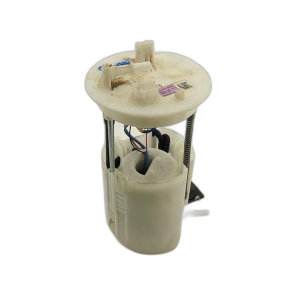
Used OEM Parts in Stock
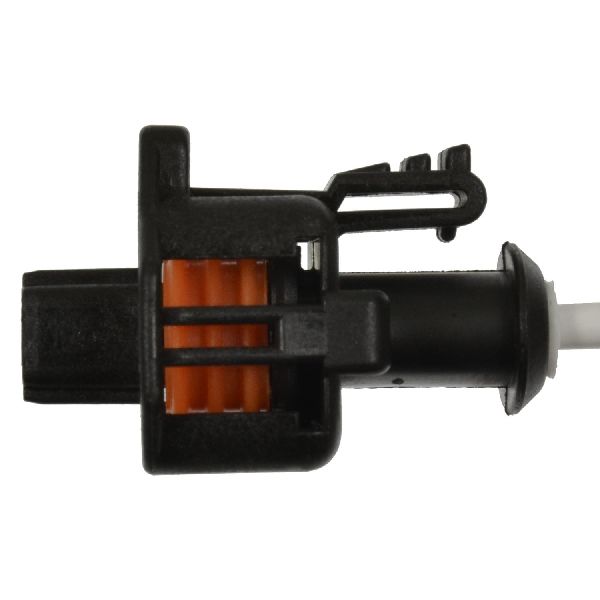
New Aftermarket Parts Available


The information in this article is provided for general reference and educational purposes only. Vehicle specifications, procedures, and part compatibility can vary by production date, trim level, and region. Always consult your vehicle's factory service manual and verify part numbers before purchasing or performing repairs. Safety-critical components such as airbags, seat belts, and braking systems should be installed by a qualified professional.
- Subaru Ascent:
- 🧭 Diagnostic Flowchart
- 🎬 Helpful Videos
- 🛍️ Shop This Part
- What's Unique About the 2019-2021 Subaru Ascent
- Symptoms You May Notice
- Most Likely Causes
- Rare But Worth Checking
- Diagnosis Steps
- Parts You'll Likely Need
- Related Codes That Often Appear With This One
- Technical Service Bulletins (TSBs) & Recalls
- Platform-Specific Known Issues
- Mechanic-Grade Diagnostic Values
- Scan Tool Commands That Help
- Wiring & Ground Locations
- OEM Part Supersession History
- Other Known Issues on This Vehicle
- Used vs. New Parts: Buying Guide for This Vehicle
- Real Owner Stories
- 2019 Subaru Ascent FA24F — 10000 miles
- 2019-2020 Subaru Ascent FA24F
- Related OBD-II Codes
- Frequently Asked Questions
- 🎟️ Get 5% Off