

P0089 on 2008-2018 Subaru Forester XT: Fuel Pressure Regulator Performance Causes and Fixes
For 2014-2018 Forester XTs (FA20DIT), P0089 is most often a failing High-Pressure Fuel Pump (HPFP), a ~$400-$800 part. For 2008-2013 models (EJ255), it's typically the in-tank fuel pump assembly, costing ~$200-$450. Always check for the WRG-21 fuel pump recall on 2018 models first.
- P0089 on a Forester XT requires you to know your engine: FA20DIT (2014-2018) or EJ255 (2008-2013).
- For the newer FA20DIT, the high-pressure fuel pump (HPFP) is the most likely failure. Check for low-pressure pump recalls on 2018 models first.
- For the older EJ255, the entire in-tank fuel pump assembly is the most common part to fail and replace.
- This is not a beginner-friendly DIY repair due to the high fuel pressures (especially on GDI models) and fire risk. Professional diagnosis is highly recommended.
What's Unique About the 2008-2018 Subaru Forester XT
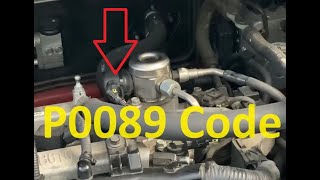
The 2008-2018 year range covers two completely different fuel systems for the Forester XT, making diagnosis for P0089 highly specific to the generation. 🎬 Watch: Understanding P0089 causes and fuel pressure regulator performance. The 2014-2018 SJ Forester XT with the FA20DIT engine uses a modern Gasoline Direct Injection (GDI) system with both a low-pressure in-tank pump and a cam-driven high-pressure fuel pump (HPFP). On these models, P0089 almost always relates to a performance issue on the high-pressure side. In contrast, the 2008-2013 SH Forester XT with the EJ255 engine uses a traditional port fuel injection system with a single in-tank fuel pump and integrated regulator, simplifying the potential causes.
Generation note: This guide covers two Forester XT generations with different engines. The 2008-2013 (SH generation) uses the port-injected EJ255 engine. The 2014-2018 (SJ generation) uses the direct-injected FA20DIT engine. The causes, parts, and diagnostic steps for P0089 are completely different for each and are noted below.
Symptoms You May Notice
- Check Engine Light is on
- Engine hesitation or stumbling during acceleration
- Significant loss of power, especially under load or when boost builds
- Rough or fluctuating idle
- Engine stalling, sometimes unexpectedly, like when coming to a stop
- Difficulty starting the engine, requiring long cranks
- Reduced fuel economy
- A noticeable 'stutter' when trying to maintain a constant speed
- On FA20DIT engines, replacing the in-tank low-pressure pump when the high-pressure pump is the actual cause of failure.
- Replacing fuel injectors when the issue is inadequate fuel pressure supplying them.
- Replacing the fuel pressure sensor without first verifying that the fuel pumps can deliver the correct pressure.
- On FA20DIT engines, attributing hesitation symptoms solely to carbon buildup when P0089 is present, indicating a fuel delivery problem.
Most Likely Causes
- Failing High-Pressure Fuel Pump (HPFP) 🔴 High Probability → Shop Fuel Pump Applies to 2014-2018 FA20DIT engines only. The HPFP is a known failure point on Subaru's early direct-injection engines, often due to internal seal degradation or mechanical wear, leading to an inability to build or maintain the high pressures required for GDI operation.
How to confirm: A technician will use a diagnostic scan tool to monitor 'Commanded Fuel Rail Pressure' vs. 'Actual Fuel Rail Pressure'. A significant and growing deviation between these values, especially a drop in actual pressure under load while the low-pressure side remains stable, strongly indicates a failing HPFP.
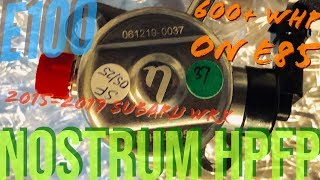
Typical fix: Replace the high-pressure fuel pump and its associated O-rings and gaskets. It is a mechanically driven pump, typically located on the engine. 🎬 See this walkthrough for replacing the high-pressure fuel pump.
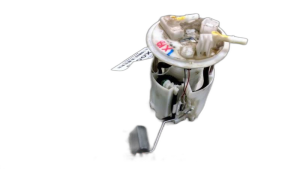
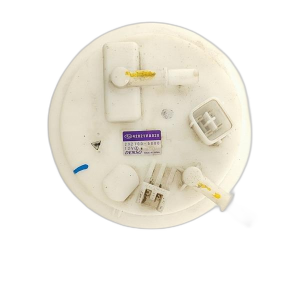
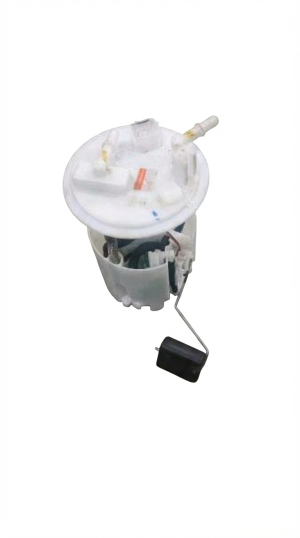
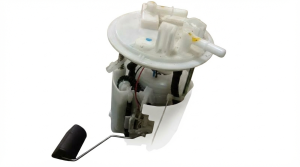
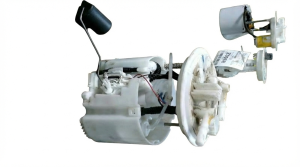
Est. part cost: $400-$850 - Failing In-Tank Fuel Pump Assembly 🔴 High Probability → Shop Fuel Pump Applies to 2008-2013 EJ255 engines. The fuel pump, filter, and pressure regulator are integrated into one assembly in the fuel tank. Age and mileage (often over 100k miles) can cause the pump motor to weaken or the internal regulator to fail, directly affecting line pressure.
How to confirm: Connect a mechanical fuel pressure gauge to the fuel line in the engine bay. If the pressure is below the manufacturer's specification (typically ~43 psi at idle for the EJ255) or drops significantly when the throttle is applied, the pump assembly is the primary suspect.
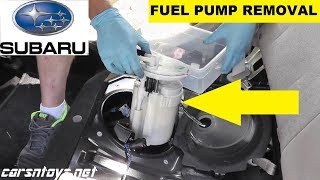
Typical fix: Replace the entire in-tank fuel pump and filter assembly. Access is typically under the rear seat or cargo area floor. 🎬 Watch: How to remove and replace the in-tank fuel pump.
Est. part cost: $200-$450 - Failing Low-Pressure Fuel Pump (LPFP) 🟡 Medium Probability → Shop Fuel Pump Applies to 2014-2018 FA20DIT engines. A recall (WRG-21) was issued for the LPFP on 2018 Forester turbo models for a defective impeller that could deform and cause the pump to fail entirely. A weak LPFP that is not part of the recall can also starve the HPFP, causing P0089 or more commonly, P0087.
How to confirm: Check if the vehicle's VIN is part of the WRG-21 recall via a dealer or Subaru's website. A technician can also test the low-pressure fuel line pressure to ensure it's supplying adequate fuel (typically 49-58 PSI) to the HPFP.
Typical fix: Replace the in-tank low-pressure fuel pump assembly. If under recall, this is performed by a Subaru dealer for free.
Est. part cost: $250-$500 - Clogged Fuel Filter ⚪ Low Probability → Shop Fuel Filter On EJ255 engines, the fuel filter is part of the in-tank pump assembly and is replaced with it. On FA20DIT engines, while less common to be the sole cause, a severely clogged in-tank filter sock can restrict flow to the HPFP, mimicking a weak LPFP.
How to confirm: Confirmed by low fuel pressure readings from the low-pressure system (on FA20DIT) or the main fuel line (on EJ255). Visual inspection of the filter sock during pump replacement often shows significant contamination.
Typical fix: Replace the fuel filter. On these models, this almost always means replacing the entire fuel pump assembly.
Est. part cost: $200-$450
Rare But Worth Checking
- Faulty Fuel Rail Pressure Sensor: → Shop Fuel Pressure Sensor This sensor reports pressure to the ECM. If it sends incorrect data, the ECM may set P0089 even if the pressure is normal. This should be tested after confirming the pumps are working correctly.
- Wiring or Connector Issue: Corrosion or damage to the wiring for either the high-pressure or low-pressure pump can cause intermittent power loss and pressure fluctuations, triggering the code. Check the connector at the in-tank pump assembly for signs of melting or corrosion.
- Leaking Fuel Injector (FA20DIT): → Shop Fuel Injector On direct-injection models, a leaking injector can cause a drop in rail pressure, potentially triggering P0089, though this would often be accompanied by other codes related to fuel trim or misfires.
Diagnosis Steps
- Check for Recalls: First, check if your vehicle's VIN is affected by Subaru recall WRG-21 (for the 2018 XT's low-pressure pump). If so, have the recall service performed by a dealer before any other diagnosis.
- Scan for Codes: Use an OBD-II scanner to confirm P0089 and check for any other related codes like P0087 or P0171. Note the freeze frame data to see the engine conditions when the code was set.
- Generation-Specific Pressure Test (2014-2018 FA20DIT): Use a scan tool with live data to graph 'Commanded Fuel Rail Pressure' vs. 'Actual Fuel Rail Pressure'. Perform a test drive with wide-open throttle pulls (where safe). If 'Actual' pressure cannot keep up with 'Commanded' pressure and drops significantly, the HPFP is the primary suspect. Also, verify the low-pressure pump's output is stable.
- Generation-Specific Pressure Test (2008-2013 EJ255): Connect a mechanical fuel pressure gauge to the fuel line service port. Check the pressure at idle (should be ~43 PSI) and while revving the engine. A low or dropping reading points to a bad fuel pump assembly.
- Inspect for Leaks: Visually inspect all fuel lines, including the high-pressure lines and injector seals on FA20DIT models, for any signs of fuel leaks, which would appear as a wet spot or strong fuel smell.
- Check Wiring: Inspect the electrical connectors and wiring to the fuel pumps (both HPFP and LPFP on FA20DIT) and the fuel rail pressure sensor for any signs of damage, corrosion, or loose connections.
- Test Sensor: If fuel pressure appears to be mechanically sound but the code persists, the fuel pressure sensor itself may be faulty. This is less common and should be tested by comparing its readings to a known-good mechanical gauge (where applicable) or by substitution.
Parts You'll Likely Need
- High-Pressure Fuel Pump (HPFP)
(OEM #16625AA040)— This is the most common failure for the P0089 code on 2014-2018 Forester XT models with the FA20DIT engine.
Trusted brands: Subaru (OEM), Hitachi
OEM price range: $550-$850
Aftermarket price range: $300-$600 - In-Tank Fuel Pump Assembly (Port Injection)
(OEM #42021AG040 (for 2009-2013 XT), 42021SC031 (for non-turbo but check fitment))— For the 2008-2013 Forester XT (EJ255), this entire assembly is the most common fix, as it contains the pump, regulator, and filter. Part number can vary by specific year.
Trusted brands: Subaru (OEM), Denso, Bosch, DeatschWerks
OEM price range: $350-$500
Aftermarket price range: $150-$300
Related Codes That Often Appear With This One
- P0087 — Stands for 'Fuel Rail/System Pressure - Too Low'. It is very common to see this code alongside P0089, as a performance problem often results in low pressure. They frequently appear together when the HPFP is failing.
- P0171 — Stands for 'System Too Lean'. Inconsistent or low fuel pressure can prevent the injectors from delivering enough fuel, causing a lean air-fuel mixture.
- P0300-P0304 — Represents random or specific cylinder misfires. A lack of fuel pressure can cause misfires, especially under load.
Technical Service Bulletins (TSBs) & Recalls
- WRG-21 / NHTSA 21V-587: Safety recall for the low-pressure fuel pump impeller on certain 2018 Forester XT models. The impeller, having a lower density, could deform and cause the fuel pump to become inoperative, leading to engine stalling.
Platform-Specific Known Issues
- Subaru Safety Recall WRG-21 (NHTSA ID: 21V587): Affects certain 2018 Forester (turbo) models. The low-pressure fuel pump impeller can deform and cause the pump to become inoperative, leading to engine stalling.
Mechanic-Grade Diagnostic Values
- FA20DIT Low-Pressure Fuel System (In-tank pump to HPFP) — expected: 50-60 PSI at idle and under load.. Failure: Pressure significantly below 50 PSI, especially under load, indicates a failing LPFP or clogged filter.
- FA20DIT High-Pressure Fuel System (Post-HPFP) — expected: 400-700 PSI at idle; can exceed 2,500 PSI under full load.. Failure: Inability to reach or maintain commanded pressure on a scan tool, or pressure dropping below 200 PSI during acceleration, points to a failing HPFP.
- EJ255 Port Injection Fuel System Pressure — expected: ~43 PSI at idle.. Failure: Pressure below specification or dropping significantly when the engine is revved indicates a failing in-tank pump assembly.
- Fuel Rail Pressure Sensor Signal Voltage (Key On, Engine Off) — expected: Approximately 0.5V to 1.8V.. Failure: A reading near 0V or 5V suggests a bad sensor or a short/open in the wiring.
- Fuel Rail Pressure Sensor Reference Voltage (Sensor Unplugged, Key On) — expected: 5.0V DC.. Failure: No voltage or significantly less than 5V points to an issue with the ECM or wiring.
- Fuel Rail Pressure Sensor Ground Wire — expected: Less than 1 ohm of resistance to chassis ground.. Failure: High resistance indicates a poor ground connection, which can cause erratic sensor readings.
Scan Tool Commands That Help
- Subaru Select Monitor (SSM) or equivalent advanced scan tool: Fuel Pump Duty Cycle / Control — For EJ255 models with a Fuel Pump Controller, this allows a technician to command the pump to run at different speeds to test the functionality of the controller and the pump itself, helping to isolate a failure between the two.
- Subaru Select Monitor (SSM) or equivalent advanced scan tool: Live Data Graphing: Commanded vs. Actual Fuel Rail Pressure — This is the primary diagnostic method for the FA20DIT HPFP. Graphing these two parameters during a test drive under load will clearly show if the HPFP is failing to keep up with the ECM's request, which is the hallmark of a P0089 failure on this engine.
Wiring & Ground Locations
- Fuel Pump Controller (FPC) — For 2009-2013 Forester XT (EJ255), the FPC is located underneath the dash on the passenger's side, near the door.. A failing FPC can cause intermittent fuel pressure drops and stalling, mimicking a bad fuel pump. It controls the voltage to the in-tank pump. A related code, P0230, often points directly to the FPC.
- In-tank Fuel Pump Connector (EJ255) — Under the back seat on the driver's side. For 2009-2013 models, the ground wire is Black (Pin 3) and the 12V power wire is Blue with a Yellow stripe on the harness side.. This connector is a common point of failure. Overheating can melt the plastic and cause a poor connection, leading to low voltage at the pump and triggering P0089. Inspecting this connector is a critical step.
- Ground Point Gb-7 — For a 2009 Forester XT, this ground point is located at the right rear of the vehicle chassis.. This is a chassis ground point for several components in the rear of the vehicle. While not exclusively for the fuel pump, a corroded or loose main ground in this area can cause intermittent issues with rear-mounted electronics, including the fuel pump assembly.
Real Owner Repair Stories
- Smeedia YouTube Channel (Subaru Outback XT (EJ255 engine, similar fuel system to 2008-2013 Forester XT)) — Car dying on cold start, blowing 15A fuses, slight burning smell.
❌ Tried (didn't work) Initially suspected a wiring issue or a bad ground, performed a 'wiggle test' on the harness which produced no change.
✅ What actually fixed it The aftermarket Deatschwerks DW300C fuel pump was failing after 25,000 miles. Replacing the pump with a new AEM 340LPH unit resolved the starting, stalling, and fuse issues.
OEM Part Supersession History
42021SC030→42021SC031— Standard part revision by the manufacturer.
Heads up: Part 42021SC031 is listed for the non-turbo Forester but is often cross-referenced for the 2011-2013 XT. Always verify fitment with VIN. The correct part for a 2009-2010 XT is often cited as 42021AG040. Part number confusion is common for the SH generation.N/A→16625AA040— This is the primary OEM part number for the FA20DIT HPFP for the entire 2014-2018 range.
Model Year Variations Within This Range
- 2008-2013 (SH Generation): These models use a Fuel Pump Controller (FPC) to regulate voltage to the in-tank pump. This controller is a unique point of failure not present in the later SJ generation's low-pressure system.
- 2018 (SJ Generation): A specific recall (WRG-21) was issued for the low-pressure in-tank fuel pump (LPFP) on 2018 Forester turbo models due to a defective impeller. This should be the first item checked for any 2018 model presenting with P0089.
Diagnostic Flowchart
Other Known Issues on This Vehicle
Issues unrelated to this code that are worth knowing about as an owner of this generation:
- EJ255 Piston Ringland Failure 🔴 High — More common on modified engines, but can occur on stock vehicles, especially with age or poor maintenance. It's a well-known weakness of the EJ255's cast pistons.
- FA20DIT Carbon Buildup on Intake Valves 🟠 Medium — An inherent issue with direct-injection engines. Typically requires cleaning (e.g., walnut blasting) every 60,000-100,000 miles to prevent rough idle, hesitation, and power loss.
- High-Torque CVT (TR690) Issues (2014-2018 XT) 🟠 Medium — Complaints of shuddering, hesitation, and occasional failure are documented, particularly on the 2014-2018 models. Subaru extended the warranty to 10 years/100,000 miles for some vehicles due to these concerns. (Ref: TSB 16-103-15R addresses shudder symptoms.)
- EJ255 Turbocharger Oil Starvation 🟠 Medium — The banjo bolt filter screen for the turbo oil feed line can become clogged with debris, starving the turbo of oil and leading to premature failure.
- Excessive Oil Consumption (Both Engines) 🟡 Low — Both the EJ255 and FA20DIT can consume oil, especially when driven hard. Low oil levels can lead to accelerated wear or catastrophic failure.
Used vs. New Parts: Buying Guide for This Vehicle
When a used part is the smart pick: Used parts are generally not recommended for fuel pumps (HPFP or LPFP) due to them being high-wear items with an unknown history. A used Fuel Pump Controller (FPC) for an EJ255 model could be a cost-effective option if tested and sourced from a low-mileage vehicle.
Donor-vehicle mileage cap: roughly under 60000 miles for the part to have meaningful remaining life.
What to inspect on the donor part:
- For an FPC, ensure the connector pins are clean with no signs of corrosion or overheating.
- For any fuel component, avoid parts from vehicles that show signs of sitting for a long time (e.g., heavy rust, old fuel smell).
- Check the electrical connector on the fuel pump hanger for any signs of melting or discoloration, even if only buying the controller.
OEM-only on this vehicle (don't cheap out):
- High-Pressure Fuel Pump (HPFP) - While aftermarket options exist, the OEM Hitachi pump is the most reliable choice to avoid premature failure.
Aftermarket brands forum-validated for this vehicle:
- DeatschWerks (DW300c, DW65c) - Popular upgrade for in-tank pumps on both EJ255 and FA20DIT, offering higher flow for modified cars. Note that they are performance-oriented and may have different longevity than OEM.
- AEM (340lph) - A common and reliable alternative to DeatschWerks for an upgraded in-tank pump.
- Denso/Bosch - Often the OEM manufacturer for Subaru; if available as an aftermarket replacement, they are a safe and reliable choice for the in-tank pump.
Brands owners have reported issues with on this vehicle:
- Unbranded, 'white-box' fuel pumps from online marketplaces. These often have very high failure rates and do not meet OEM pressure or flow specifications, leading to a repeat of the P0089 code.
Real Owner Stories
Aggregated from forums and TSBs cited above. Mileages and costs reflect what owners reported in those sources.
2014 Forester XT FA20DIT
Symptoms: The owner experienced stalling, hesitation, and a Check Engine Light.
What fixed it: The dealership replaced the High-Pressure Fuel Pump (HPFP).
Source hint: subaruforester.org - '14 FXT Stalling, Hesitation, CEL'
2018 Forester XT FA20DIT
Symptoms: The fuel pump impeller can deform, causing the pump to become inoperative and leading to engine stalling.
What fixed it: Replacement of the in-tank low-pressure fuel pump assembly by a Subaru dealer.
Source hint: WRG-21 / NHTSA 21V-587: Safety recall for the low-pressure fuel pump impeller on certain 2018 Forester XT models.
2017 Subaru Forester XT FA20DIT
Symptoms: Hesitation and jerky driving symptoms.
What fixed it: Initially misdiagnosed as carbon buildup before being investigated for transmission/CVT issues.
Source hint: Reddit r/SubaruForester - 'CVT issues 2017 Subaru Forester XT and dealership hell!!'
Related OBD-II Codes
Frequently Asked Questions
Is there a recall for the fuel pump on my 2018 Subaru Forester XT?
How much does it cost to replace the High-Pressure Fuel Pump (HPFP) on a 2014-2018 Forester XT?
I have a 2010 Forester XT with P0089; is the fuel filter a separate serviceable part?
What is the correct fuel pressure for a 2012 Forester XT (EJ255) at idle?
Does the 2015 Forester XT share the same fuel system issues as the WRX?
Can a bad low-pressure pump cause P0089 on the direct-injection FA20DIT engines?
Helpful Videos
We Have This Part in Stock

The information in this article is provided for general reference and educational purposes only. Vehicle specifications, procedures, and part compatibility can vary by production date, trim level, and region. Always consult your vehicle's factory service manual and verify part numbers before purchasing or performing repairs. Safety-critical components such as airbags, seat belts, and braking systems should be installed by a qualified professional.
- Subaru Forester XT:
- 🧭 Diagnostic Flowchart
- 🎬 Helpful Videos
- 🛍️ Shop This Part
- What's Unique About the 2008-2018 Subaru Forester XT
- Symptoms You May Notice
- Most Likely Causes
- Rare But Worth Checking
- Diagnosis Steps
- Parts You'll Likely Need
- Related Codes That Often Appear With This One
- Technical Service Bulletins (TSBs) & Recalls
- Platform-Specific Known Issues
- Mechanic-Grade Diagnostic Values
- Scan Tool Commands That Help
- Wiring & Ground Locations
- Real Owner Repair Stories
- OEM Part Supersession History
- Model Year Variations Within This Range
- Other Known Issues on This Vehicle
- Used vs. New Parts: Buying Guide for This Vehicle
- Real Owner Stories
- 2014 Forester XT FA20DIT
- 2018 Forester XT FA20DIT
- 2017 Subaru Forester XT FA20DIT
- Related OBD-II Codes
- Frequently Asked Questions
- 🎟️ Get 5% Off