

P0089 on 2001-2003 Toyota Prius: Fuel Pressure Performance Causes and Fixes
On a 2001-2003 Toyota Prius, code P0089 is most often caused by a failing fuel pump or a faulty fuel pressure regulator. Given the vehicle's age, the fuel pump assembly is a high-probability failure point. Expect to pay between $250-$450 for a replacement fuel pump assembly and $80-$120 for a fuel pressure regulator.
- P0089 on a 2001-2003 Prius points to a mismatch between desired and actual fuel pressure, which should be 44-50 psi.
- The most probable cause on this aging vehicle is a weak or failing fuel pump, located in the fuel tank.
- A faulty fuel pressure regulator is the second most likely cause.
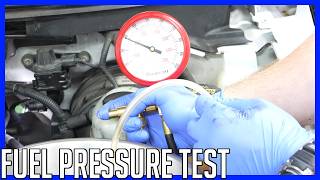
- Diagnosis requires a fuel pressure gauge to accurately measure the system's performance before replacing parts.
- When working on the fuel system, always disconnect the 12V battery and properly depressurize the fuel lines.
What's Unique About the 2001-2003 Toyota Prius
The first-generation Prius (2001-2003) uses a relatively conventional port fuel injection system for its 1NZ-FXE gasoline engine, unlike the more complex direct injection systems on many modern cars. The fuel system is a standard returnless type, with the fuel pump, filter, and sending unit housed in a single module inside the fuel tank. While the fuel system itself is straightforward, any work on it requires proper safety precautions due to the presence of both gasoline and the high-voltage hybrid battery system. It is critical to properly discharge the fuel system pressure before disconnecting any lines to prevent fuel spillage.
Symptoms You May Notice
- Check Engine Light is on
- Engine hesitation or stumbling during acceleration
- Reduced engine power
- Engine may stall, especially at idle
- Difficulty starting the engine
- Decreased fuel economy
- Rough idle
- Replacing the fuel injectors when the issue is low pressure from the pump or regulator.
- Replacing the mass airflow sensor due to stalling symptoms without first checking the fuel system pressure.
Most Likely Causes
- Failing Fuel Pump 🔴 High Probability → Shop Fuel Pump The electric fuel pump is a component with a finite lifespan. After two decades of service, wear and tear on the motor and internal components is common, leading to reduced pressure output. Owners on forums like PriusChat have documented fuel pump failures leading to no-start conditions or P0089.
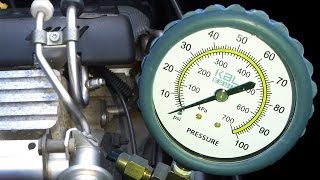
How to confirm: Listen for the fuel pump to prime (a faint hum from the rear seat area) when the key is turned to the 'ON' position. The definitive test is to connect a fuel pressure gauge to the fuel rail's test port and measure the pressure. At idle, pressure should be stable between 44-50 psi (304-343 kPa). If the pressure is low, fluctuates wildly, or drops off under acceleration, the pump is likely weak.
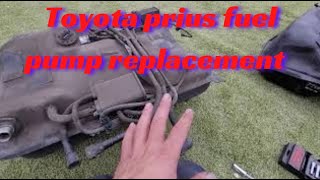
Typical fix: Replace the entire fuel pump module assembly, which includes the pump, fuel strainer (filter), and fuel level sending unit. The assembly is accessed through a panel under the rear seat cushion. 🎬 See this step-by-step Prius fuel pump replacement walkthrough
Est. part cost: $250-$450 - Faulty Fuel Pressure Regulator 🟡 Medium Probability → Shop Fuel Injection Pressure Regulator The regulator contains a diaphragm and spring that can weaken or rupture over time, causing it to maintain incorrect pressure in the fuel rail. This can lead to either too high or too low pressure.
How to confirm: After confirming the fuel pump is producing adequate pressure with a gauge, the regulator is the next suspect. If pressure is consistently too high, the regulator is likely stuck closed. If pressure bleeds off immediately after the engine is shut off, the regulator's internal check valve may have failed. The pressure should remain steady for at least 5 minutes after shutdown.
Typical fix: Replace the fuel pressure regulator, which is typically mounted on the fuel rail.
Est. part cost: $80-$120 - Clogged Fuel Filter/Strainer ⚪ Low Probability → Shop Fuel Filter While not a common failure point on its own, years of accumulated sediment from the fuel tank can restrict the fuel filter, which is part of the in-tank fuel pump assembly. This is more likely if the vehicle has been run on poor quality fuel.
How to confirm: This is typically diagnosed by observing low fuel pressure at the rail, even if the fuel pump motor sounds like it's working hard. There is no way to inspect the filter without removing the fuel pump assembly from the tank.
Typical fix: The fuel filter is integrated into the fuel pump module. The entire module must be replaced. It is not a separately serviceable part on this vehicle.
Est. part cost: $250-$450
Rare But Worth Checking
- Faulty Fuel Pump Relay (Circuit Opening Relay): → Shop Fuel Pump The relay that powers the fuel pump can fail intermittently, causing a sudden loss of fuel pressure that can set a P0089 code. Owners have reported swapping this relay with an identical one (like the horn relay) for a quick diagnosis. A PriusChat user noted a dealer parts employee mentioned a TSB may have been issued regarding this relay.
- Leaking Fuel Injector: → Shop Fuel Injector An injector that is stuck open or has a bad seal can cause a drop in fuel rail pressure, potentially triggering the code. This would often be accompanied by other codes, like a misfire (P030x) or a rich condition code (P0172).
- Faulty Fuel Pressure Sensor: → Shop Fuel Pressure Sensor Though less common than a mechanical failure of the pump or regulator, the fuel pressure sensor itself can fail and send incorrect readings to the ECM. This would cause the ECM to believe there is a pressure problem when there isn't one.
Diagnosis Steps
- Check for any other stored trouble codes that could provide more clues (e.g., misfire codes, lean/rich codes).
- Listen for the fuel pump priming for 2-3 seconds when the ignition is first turned on. If there is no sound, suspect the fuel pump relay or the pump itself.
- Connect a fuel pressure test gauge to the Schrader valve on the engine's fuel rail.
- Start the engine and observe the fuel pressure at idle. It should be stable and within the specified range of 44-50 psi (304-343 kPa).
- Briefly increase the engine RPM and watch the gauge. The pressure should hold steady or increase slightly. A significant drop indicates a problem with fuel delivery (weak pump or clogged filter).
- Turn the engine off and watch the gauge. The pressure should hold steady and not drop off quickly. A rapid drop indicates a leaking fuel pressure regulator, a leaking injector, or a faulty check valve in the fuel pump. The system should maintain pressure for at least 5 minutes.
- If fuel pressure tests are inconclusive, inspect the wiring and connector at the fuel pump module for corrosion or damage. This is located under the rear seat.
- Check the fuel pump relay (often labeled C/OPN or Circuit Opening Relay) in the under-hood fuse box. Consider swapping it with a known-good, identical relay (like the horn relay) to see if the problem resolves.
Parts You'll Likely Need
- Fuel Pump and Sender Assembly
(OEM #77001-47071)— This is the most likely culprit on a high-mileage vehicle. It is a complete module that includes the pump, strainer/filter, and level sender, addressing multiple potential failure points at once.
Trusted brands: Denso (OEM supplier), Aisin
OEM price range: $350-$500
Aftermarket price range: $150-$300 - Fuel Pump (Motor Only)
(OEM #Denso 951-0007)— For a more budget-conscious repair, the pump motor itself can be replaced within the assembly. Denso is the original equipment manufacturer. This requires more labor to disassemble the module but saves on parts cost.
Trusted brands: Denso
OEM price range: N/A
Aftermarket price range: $90-$120 - Fuel Injection Pressure Regulator
(OEM #23280-21010)— If the fuel pump tests strong but pressure is incorrect or bleeds down too quickly, the regulator is the next logical part to replace.
Trusted brands: Toyota Genuine, Standard Motor Products
OEM price range: $80-$120
Aftermarket price range: $40-$70
Related Codes That Often Appear With This One
- P0171 — If fuel pressure is too low, the engine will run lean (too much air, not enough fuel), which can trigger the 'System Too Lean' code. Service procedures note that this DTC may be set when discharging fuel pressure for service.
- P0300-P0304 — Low fuel pressure can lead to insufficient fuel in the cylinders, causing random or specific cylinder misfires.
Platform-Specific Known Issues
- Accessing the Fuel Pump: → Shop Fuel Pump The fuel pump is located under the rear seat cushion. The cushion must be removed, followed by a metal service cover, to access the top of the fuel tank and the pump module's lock ring. Care must be taken not to damage the high-voltage battery cables that may be routed nearby.
Diagnostic Flowchart
Other Known Issues on This Vehicle
Issues unrelated to this code that are worth knowing about as an owner of this generation:
- High Voltage (HV) Hybrid Battery Failure 🔴 High — Very common as the vehicle ages. The original NiMH battery packs have a finite lifespan, typically 10-15 years or 150,000-200,000 miles before degradation causes issues.
- Combination Meter (Dashboard Display) Failure 🟠 Medium — A common issue, particularly on the next generation (2004-2009), but also seen on Gen 1. The display for the speedometer and fuel gauge goes blank intermittently or permanently due to failing capacitors on the circuit board.
- Engine Oil Consumption 🟠 Medium — The 1NZ-FXE engine, particularly as it accumulates high mileage (150k+ miles), can begin to consume oil due to piston ring design. Toyota considers consumption of up to 1.1 quarts per 600 miles to be within specification, which many owners find excessive.
- Master Warning Light ('Red Triangle of Death') 🔴 High — This is a general master warning light, not a specific failure. However, its most frequent cause on high-mileage Gen 1 models is a failing HV battery pack, often accompanied by codes like P0A80 or P3000.
- Transaxle/Transmission Failure 🟡 Low — While not extremely common, premature failure of the hybrid transaxle has been reported by some owners.
Real Owner Stories
Aggregated from forums and TSBs cited above. Mileages and costs reflect what owners reported in those sources.
2001-2003 Toyota Prius 1.5L
Symptoms: Owner documented fuel pump failures leading to no-start conditions or the P0089 code, often attributed to the age of the original electric pump.
What fixed it: Replacement of the fuel pump module assembly.
Source hint: PriusChat.com thread titled 'fuel pump' URL: https://priuschat.com/threads/fuel-pump.22638/
Related OBD-II Codes
Frequently Asked Questions
Where is the fuel pump located on my 2001-2003 Prius, and is it hard to access?
Can I just replace the fuel filter to fix P0089 on my Gen 1 Prius?
What should the fuel pressure reading be for my 1NZ-FXE engine?
Is there a TSB for the fuel pump relay on the 2001-2003 Prius?
Could my 'Red Triangle of Death' (Master Warning Light) be related to P0089?
Can I test the fuel pump relay myself?
Helpful Videos
![What is P0089 Engine Code [Quick Guide]](https://img.youtube.com/vi/Azux8hjiS9U/mqdefault.jpg)

We Have This Part in Stock


The information in this article is provided for general reference and educational purposes only. Vehicle specifications, procedures, and part compatibility can vary by production date, trim level, and region. Always consult your vehicle's factory service manual and verify part numbers before purchasing or performing repairs. Safety-critical components such as airbags, seat belts, and braking systems should be installed by a qualified professional.
- Toyota Prius:
- 🧭 Diagnostic Flowchart
- 🎬 Helpful Videos
- 🛍️ Shop This Part
- What's Unique About the 2001-2003 Toyota Prius
- Symptoms You May Notice
- Most Likely Causes
- Rare But Worth Checking
- Diagnosis Steps
- Parts You'll Likely Need
- Related Codes That Often Appear With This One
- Platform-Specific Known Issues
- Other Known Issues on This Vehicle
- Real Owner Stories
- 2001-2003 Toyota Prius 1.5L
- Related OBD-II Codes
- Frequently Asked Questions
- 🎟️ Get 5% Off