

OBD-II Code P0094: Fuel System Leak Detected (Small Leak)
The Ultimate 2026 Guide to Meaning, Diagnosis, and Repair
- P0094 flags a small fuel leak or pressure drop in the high-pressure system, creating an immediate fire hazard that makes the vehicle unsafe to drive.
- A strong raw fuel odor is the primary symptom; if detected, shut off the engine immediately and tow the vehicle to a repair shop.
- Failed $30 injector O-rings or cracked rubber hoses cause most P0094 codes, though labor costs often exceed $500 due to difficult engine access.
- Never replace expensive fuel pumps or sensors without first performing a 5-minute fuel pressure leak-down test to confirm a physical pressure loss.
- On diesel engines like the Duramax or VW TDI, P0094 frequently warns of a failing high-pressure fuel pump (HPFP) or pressure relief valve requiring specialized diagnosis.
What Does P0094 Mean?
Your Powertrain Control Module (PCM) detected a pressure drop in the high-pressure fuel system. This means fuel is physically leaking, or a faulty component is bleeding pressure below the manufacturer's threshold. This code dominates diesel engines operating at 20,000+ PSI, but also triggers on gasoline direct injection (GDI) and port-injected vehicles.
Technical definition: Fuel System Leak Detected – Small Leak. This Diagnostic Trouble Code (DTC) sets when the PCM detects an unexpected decrease in fuel pressure in the high-pressure section of the fuel injection system below a calibrated threshold. The PCM monitors this via a fuel pressure sensor and expects pressure to hold steady when the system is off; a drop signifies a leak or internal pressure loss.
Can I Drive With P0094?
No — Do Not Drive. It is not safe to drive with a P0094 code. A fuel leak presents a significant fire hazard that leads to injury or total vehicle loss. Continuing to drive forces unburnt fuel into the exhaust, destroying the catalytic converter—an $800 to $2,500 repair. If you smell fuel or see drips, do not start the engine. Tow the vehicle to a qualified shop immediately.
Common Causes
- Leaking Fuel Injector Seals (O-rings) (Very Common) — Rubber O-rings or PTFE seals on fuel injectors harden, crack, and become brittle from constant heat and fuel exposure. This allows high-pressure fuel to seep out.
- Cracked or Corroded Fuel Lines/Hoses (Common) — Metal fuel lines rust from road salt, while rubber supply and return hoses crack, split, or loosen at connections. Chafing against engine components is a frequent failure point.
- Failing Fuel Pressure Regulator (Common) — This component manages system pressure. It fails internally by sticking open and bleeding pressure back to the tank, or leaks externally from a ruptured diaphragm.
- Clogged Fuel Filter (Common) — A severely clogged filter restricts flow from the tank, starving the high-pressure pump. This creates a pressure drop significant enough to trigger the code under load.
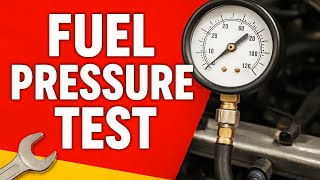
- Faulty Fuel Pressure Sensor (Uncommon) — The sensor measuring fuel pressure fails and sends inaccurate low-pressure readings to the PCM, triggering the code even if actual pressure is normal. 🎬 Watch: How to perform a fuel pressure and leak down test.
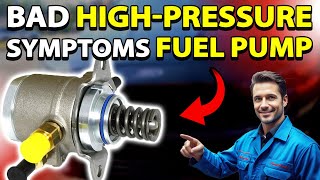
- Component Failure in High-Pressure Fuel Pump (HPFP) (Uncommon) — Internal seals within the high-pressure pump wear out, causing an internal pressure leak where fuel returns to the tank instead of pressurizing the rail.
- Damaged or Split Fuel Rail (Rare) — The fuel rail supplying the injectors develops hairline cracks from vibration or manufacturing defects, leading to a small, hard-to-detect leak.
- Damaged Wiring/Connectors (Rare) — Wiring to the fuel pressure sensor or regulator corrodes, frays, or shorts. This sends an erratic signal to the PCM, mimicking a pressure loss.
- Faulty Powertrain Control Module (PCM) (Very Rare) — The PCM suffers an internal fault in the leak-detection circuit or runs outdated software. Consider this only after exhausting all physical and electrical diagnostics.
Symptoms
- Check Engine Light On — The PCM illuminates the Malfunction Indicator Lamp (MIL) on the dashboard to alert the driver of the pressure fault.
- Sluggish Performance and Stalling — The engine hesitates on acceleration, enters a reduced power 'limp mode', or stalls unexpectedly at idle due to fuel starvation. This stalling causes an immediate loss of power steering and brakes.
- Hard Starting or Rough Idle — If the system cannot hold pressure when off, the engine requires extended cranking to start. A fluctuating fuel supply causes an unstable, rough idle.
- Decreased Fuel Economy — A physical leak wastes fuel, dropping miles per gallon (MPG) noticeably. Internal leaks force the PCM to overcompensate, richening the mixture and burning excess fuel.
- Strong Fuel Smell — A distinct smell of raw gasoline or diesel fuel is the primary and most dangerous symptom. It is most noticeable around the engine bay or under the parked vehicle.
- Readiness Monitor Failure (scan-tool only — no driver-felt sign) — The vehicle fails to complete onboard emissions tests, resulting in an automatic failure of state smog inspections.
Diagnostic Flowchart
Tap your situation to follow the diagnostic path that matches what you're seeing on this code.
Common Fixes & Costs
- Replace Fuel Injector O-Rings/Seals — Parts: $30-$90, Labor: $400-$1,200+, ~3.8 hr book time (Intermediate)
- Replace Clogged Fuel Filter — Parts: $20-$100, Labor: $50-$150, ~0.8 hr book time (DIY)
- Replace Leaking Fuel Line/Hose Section — Parts: $50-$200, Labor: $150-$400, ~1.8 hr book time (DIY)
- Replace Fuel Pressure Regulator — Parts: $130-$600, Labor: $200-$450, ~2.5 hr book time (Intermediate)
- Replace Fuel Injector(s) — Parts: $2,000-$4,000 (for a full set), Labor: $800-$1,500, ~8.5 hr book time (Professional)
Used vs. New Parts: Buying Guide
When a used part is worth it: For expensive electronic components like a Fuel Pressure Regulator, a used OEM part from a vehicle under 80,000 miles is a cost-effective alternative. Never buy used parts for items that wear with age, like injector O-rings or rubber hoses.
Donor-vehicle mileage cap: roughly under 80000 miles for the part to have meaningful remaining life.
Donor quality checklist:
- Verify the donor vehicle was not scrapped for a fuel system or engine fire.
- For injectors, 'remanufactured' by Bosch is superior to 'used', as remanufactured units contain new internal wear parts.
- Match part numbers exactly; visual similarities guarantee nothing.
Decision logic:
- If The part is a wear item like a seal, O-ring, or hose. → Always buy new. Cost savings are negligible and premature failure risk is absolute.
- If The part is a high-cost electronic module or complete injector set for an older vehicle. → A quality remanufactured or tested used part from a reputable supplier is acceptable.
- If The part has a known high failure rate (e.g., VW TDI high-pressure fuel pumps). → Buy a new OEM or updated aftermarket part to avoid repeating the exact same design flaw.
Warranty tradeoff: Used parts offer 30-90 day warranties. Aftermarket new parts include 1-year to lifetime warranties. OEM new parts carry 1-2 year manufacturer warranties.
Worst-case if a used part fails: $500-$1500 if a used major component fails, requiring repeat labor and a second replacement part.
What Happens If You Wait — Timeline
- 0-1 month: Check Engine Light illuminates. A faint fuel smell is noticeable after parking. No significant drivability issues occur. (MPG impact: 1-5%% · Added cost: $20-$60 in wasted fuel.)
- 1-3 months: Fuel smell becomes consistent. Engine hesitates on acceleration and idles roughly. Hard starting occurs frequently. (MPG impact: 5-10%% · Added cost: $60-$200 in wasted fuel. Leaking fuel damages asphalt.)
- 3-6 months: Engine stalls at stops. The leak becomes a visible drip. Raw fuel contaminates engine oil, washing cylinder walls and accelerating wear. (MPG impact: 10-20%% · Added cost: $800-$2,500 for catalytic converter damage. Severe fire hazard.)
- 6+ months: Catastrophic failure. The high-pressure fuel pump fails completely. Fuel washing melts pistons or scores cylinder walls. Vehicle fire probability is extreme. (MPG impact: 20-40%+% · Added cost: $5,000-$15,000+ for engine replacement or total vehicle loss due to fire.)
Cost of Not Fixing It
- Immediate (0-1 Month): Immediate fire hazard, especially when parked indoors. Fuel economy drops 5-15% alongside strong fuel odors. (Added cost: $50-$150 in wasted fuel.)
- Medium-Term (1-6 Months): Engine performance degrades into rough idling, stalling, and hesitation. Raw fuel damages engine oil, washes cylinder walls, and overheats the catalytic converter. (Added cost: $1,200-$2,800 for a catalytic converter replacement.)
- Long-Term (6+ Months): Catastrophic engine damage occurs, including melted pistons or scored cylinder walls from oil dilution. Complete engine failure or a total-loss vehicle fire is highly probable. (Added cost: $5,000-$15,000+ for engine replacement or total loss of vehicle.)
Diagnosis Steps
- Verify with a Visual and Smell Inspection
Carefully smell around the engine bay, frame rails, and fuel tank. Use a flashlight to locate wet spots, clean areas where fuel washed away grime, or visible drips. This is the most critical safety step.
Tools: Flashlight, Safety Glasses (Beginner) - Scan for All Diagnostic Trouble Codes (DTCs)
Read all stored codes. P0094 is frequently accompanied by P0087 (Fuel Rail Pressure Too Low) or P0089 (Fuel Pressure Regulator Performance), which pinpoint the root cause.
Tools: OBD-II Scanner (Beginner) - Check the Fuel Cap
A loose or faulty fuel cap contributes to fuel system pressure issues. Ensure it is tightened until it clicks and the rubber seal is intact.
Tools: None (Beginner) - Analyze Live Data & Command Fuel Pressure
Use a bidirectional scan tool to compare 'Desired Fuel Rail Pressure' to 'Actual Fuel Rail Pressure'. If actual pressure is consistently lower, a performance issue exists. Diesel idle pressure is 4,000-6,000 PSI; GDI idles at 500-900 PSI. Command the regulator on/off to verify response.
Tools: Advanced Bidirectional Scan Tool (Professional) - Perform a Fuel Pressure Leak-Down Test
Connect a fuel pressure gauge to the rail service port. Prime the system by turning the ignition 'On' (engine off) to build pressure (40-75 PSI for port injection). Turn the key off. Pressure must not drop more than 5-10 PSI over 5 minutes. A faster drop confirms a leak.
Tools: Fuel Pressure Gauge Kit, Safety Glasses (Intermediate) - Isolate the Leak with Hose Pinching
During the leak-down test, use hose-pinching pliers on flexible fuel return lines. If pinching the return line stops the pressure drop, the fuel pressure regulator is failing. If pressure still drops, the leak is at an injector, rail, or pump.
Tools: Hose Pinching Pliers (Advanced) - Perform a Fuel System Smoke Test
If a leak is confirmed but invisible, inject low-pressure, UV-dyed smoke into the fuel system (tank near empty). Smoke escapes from cracks or bad seals, making microscopic leaks visible under UV light.
Tools: Fuel System Smoke Machine, UV Light (Advanced) - Test Fuel Rail Pressure (FRP) Sensor Voltage
Back-probe the FRP sensor's signal wire. With Key On, Engine Off (KOEO), voltage is typically 0.5V to 1.4V. At idle, it reads 1.0-2.0V. Voltage stuck at 0V or 5V indicates a faulty sensor or wiring short, not a physical leak.
Tools: Digital Multimeter, Back-Probe Kit (Advanced) - Test Fuel Pressure Regulator Resistance
Disconnect the electronic regulator and measure resistance across its terminals. For example, VW/Audi regulators read 25-35 ohms. Infinite resistance (open) or zero resistance (short) confirms a dead regulator. Consult your service manual for exact specs.
Tools: Digital Multimeter, Service Manual (Advanced)
When This Code Triggers (Freeze-Frame Conditions)
- Engine Coolant Temp: 180-200°F (The engine is fully warmed up, expanding seals and components to their normal operating size.)
- RPM: 1500-2500 (The code sets during steady-state cruising, not necessarily during hard acceleration or idle.)
- Engine Load: 30-60% (A moderate, consistent engine load typical of highway driving where the PCM expects stable fuel pressure.)
- Vehicle Speed: 35-55 mph (The fault is detected at constant city or highway speeds where fuel demand is predictable.)
Related Codes
- P0093 — Indicates a 'Large Fuel System Leak'. P0094 is a small leak; P0093 is a major pressure drop causing immediate stalling and extreme fire risk.
- P0087 — 'Fuel Rail Pressure Too Low'. Sets when the pump cannot meet demanded pressure during operation. Appears with P0094 to indicate a weak pump or massive leak.
- P0191 — 'Fuel Rail Pressure Sensor Circuit'. Points to an electrical fault in the sensor. If present with P0094, diagnose the sensor wiring before searching for physical leaks.
- P0089 — 'Fuel Pressure Regulator Performance'. Indicates mechanical or electrical failure of the regulator itself, often the direct cause of the P0094 pressure loss.
Climate & Environmental Factors
- Cold Weather: Sub-zero temperatures cause rubber seals and hoses to harden and contract, creating temporary fuel seepage during cold starts. This triggered a massive recall on Subaru WRX models.
- Road Salt & Humidity: In the 'Salt Belt' or coastal areas, metal fuel lines suffer severe corrosion and rust-through, creating permanent leaks.
- High Altitude: High altitude skews the accuracy of older, atmosphere-referenced fuel pressure sensors, causing incorrect readings that mimic a leak.
How to Talk to a Mechanic About This Code
Say this: "I have a P0094 code and I smell fuel. I authorize one hour of diagnostic time for a visual inspection and a fuel pressure leak-down test to identify the pressure loss source. Please call me with the results before replacing any parts."
This proves you understand the diagnostic procedure. It forces the mechanic to find the actual leak source rather than guessing and replacing expensive pumps or sensors. It sets a strict budget and communication boundary.
Avoid saying:
- Just fix the P0094 code.
- My check engine light is on, can you look at it?
- I think I need a new fuel pump.
Questions to ask before authorizing the repair:
- What was the exact pressure drop in PSI over five minutes during the leak-down test?
- If you performed a smoke test, can you show me exactly where the smoke escaped?
- Is the leak coming from a failed mechanical part, or just a degraded seal or hose?
- What is the warranty on the proposed parts and labor?
Where to Take It: Dealer vs Independent vs Chain
- Dealer:
Recommended only for warranty work or specific catastrophic failures like the VW TDI pump. Otherwise, too expensive.
Best for: Vehicles under warranty., Vehicles with known manufacturer-specific issues (VW TDI HPFP, Ford 6.0L oil leaks)., Complex electrical issues related to the fuel system.
Downsides: Highest labor rates, often $180-$250+ per hour., Dealers frequently replace entire assemblies when only a $30 seal has failed. (Typical cost: +50% vs. baseline) - Independent Shop:
Best fit for most situations. A qualified independent shop handles fuel leaks effectively at a reasonable price.
Best for: Most out-of-warranty P0094 repairs., Shops specializing in your vehicle's make (e.g., a Euro specialist or Diesel shop).
Downsides: Quality varies. Vet shops to ensure they possess a smoke machine and bidirectional scan tools. (Typical cost: +0% vs. baseline) - Chain Shop:
AVOID for P0094 diagnosis. The risk of misdiagnosis and unnecessary parts replacement is extremely high.
Best for: Simple maintenance like an easily accessible fuel filter replacement.
Downsides: Technicians lack advanced diagnostic experience for hard-to-find high-pressure leaks., Not equipped with advanced bidirectional scan tools or smoke machines. (Typical cost: -10% vs. baseline)
When to Walk Away From the Repair
If the estimated repair cost exceeds 50% of the car's current private-party value, seriously consider selling or scrapping the vehicle.
- Car worth $4000, fix is $2200: Walk away. The repair is 55% of the car's value. It is not an economically sound investment.
- Car worth $15000, fix is $1800: Fix it. The repair is only 12% of the vehicle's value.
- Car worth $8000, fix is $7500: Walk away. Typical of a catastrophic VW TDI HPFP failure, the repair equals the car's value.
What Scan Tool You Need for This Code
Minimum: A scanner capable of reading live data, specifically Fuel Rail Pressure.
A basic $20 code reader only displays 'P0094'. It cannot show live fuel pressure data from the sensor, which is mandatory to verify if pressure is actually dropping or if the sensor is lying.
Budget: BlueDriver Pro Scan Tool (~$100) — Connects to your smartphone and provides live data, including fuel pressure PIDs. This is the absolute minimum required to diagnose P0094.
Mid-range: XTOOL D7 (~$350) — Offers full bidirectional control, allowing you to command the fuel pump and regulator on/off directly from the tool to isolate failures.
Professional: Autel MaxiCOM MK808S (~$500) — Provides OEM-level bidirectional controls and active tests, including guided direct injection fuel pressure tests that check both low and high-pressure pumps.
Rent vs buy: Auto parts stores offer free loaner scanners. However, these are usually basic code readers lacking the live data capability required for P0094. Call ahead to confirm live data features before relying on a rental.
How to Clear the Code After You Fix It
- Use an OBD-II scan tool to formally clear the Diagnostic Trouble Codes (DTCs).
- Disconnecting the battery is not a reliable method and clears readiness monitors.
- Perform a complete drive cycle to allow the ECU to re-run its internal tests.
Drive cycle (~25 minutes): Start the engine cold and idle for 3 minutes. Drive in mixed city/highway conditions for 20 minutes, including steady-state cruising between 45-60 mph. Idle for 2 minutes before shutting down. Let the vehicle cool for 30 minutes.
Readiness monitors affected: Evaporative System (EVAP), Catalyst (CAT), Oxygen (O2) Sensor
Before emissions retest: drive at least 100 miles to fully set monitors.
Watch out for:
- Clearing the code without a drive cycle results in an automatic emissions test failure due to 'Not Ready' monitors.
- P0094 returns immediately if the underlying physical fuel leak is not resolved.
Will This Fail Emissions / State Inspection?
Yes — this code typically fails an OBD-II emissions inspection.
- California: An active Check Engine Light or a visual fuel leak results in an automatic failure. All OBD readiness monitors must read 'Ready' before a retest.
- New York: Vehicles automatically fail NYS inspection if the Check Engine Light is on. Cleared codes require a full drive cycle to set readiness monitors before passing.
- Texas: In emissions-testing counties, an illuminated Check Engine Light is an automatic failure. The OBD-II fault must be repaired and cleared to pass.
Most Commonly Affected Vehicles
- Chevrolet/GMC Silverado/Sierra with Duramax Diesel (2001-2016) — Caused by cracked plastic fuel filter housings, failing CP3 pump regulators, or LB7 injector body leaks.
- Ford F-Series with Power Stroke Diesel (2003-2010) — On 6.0L engines, P0094 is frequently a misdiagnosis; the actual failure is high-pressure oil system leaks (standpipes/dummy plugs) causing weak injection.
- Dodge/Ram Ram Trucks with Cummins Diesel (2003-2012) — Common culprits include leaking injector connector tubes or a faulty fuel pressure relief valve (PRV) bleeding off rail pressure.
- Volkswagen Jetta, Golf, Passat with TDI Diesel (2009-2015) — P0094 is an early warning for a catastrophic high-pressure fuel pump (HPFP) failure that sends metal debris throughout the system, requiring a $7,000+ repair.
- Subaru Impreza WRX (2002-2007, 2015-2021) — 2002-2003 models were recalled (WVK-21) for fuel lines seeping under the intake manifold in extreme cold.
- BMW 3 Series, 5 Series, X3, X5 (N54/N55 Engines) (2006-2019) — Frequently related to high-pressure fuel pump (HPFP) failures, leaking injectors, or faulty pressure sensors.
- Honda Accord, Civic, CR-V (2003-2024) — Points to degraded fuel injector O-rings or brittle rubber fuel hoses in the engine bay.
- Mercedes-Benz Sprinter with Diesel Engine (2007-2021) — Caused by leaking injector seals ('black death'), high-pressure line leaks, or failing rail pressure regulators.
Manufacturer-Specific Notes
- GM (Duramax): On LLY, LBZ, and LMM engines, the Fuel Pressure Relief Valve (FPRV) weakens and bleeds pressure back to the tank below the 23,000 PSI spec, causing P0094 with no external leak. Owners often install a solid 'race plug' to eliminate this failure point.
- Ford (6.0L Power Stroke): A hot no-start is frequently misdiagnosed as a fuel issue. It is actually caused by leaks in the high-pressure oil system (standpipes/dummy plugs). Because HEUI injectors use oil pressure to inject fuel, an oil leak mimics low fuel pressure. Install updated standpipes (6E7Z-9A332-A).
- Volkswagen (TDI): On 2009-2015 TDIs, P0094 signals impending high-pressure fuel pump (HPFP) disintegration. The pump sends metal fragments through the tank, lines, and injectors, costing over $7,000 to fix. VW issued a 10-year/120,000-mile extended warranty (VWP-15-06) for this exact failure.
- Subaru (WRX): Recall WVK-21 addressed 2002-2003 WRX models where a fuel line under the intake manifold seeped raw fuel during sub-zero cold starts, triggering P0094. The fix requires replacing the line with an updated, temperature-resistant part.
Real Owner Stories
2008 Chevy Silverado 2500HD (Duramax LMM) at 155K miles
P0094 and P0087 codes appeared, with a strong diesel smell after towing. Engine hesitated under load.
What they tried:
- Replaced the fuel filter. The code returned within a day.
- A shop performed a visual inspection and found no obvious external leaks on the lines or injectors.
- A pressure test showed rail pressure bleeding down faster than spec. The shop suspected the fuel pressure regulator.
Outcome: The owner checked the fuel filter housing and found a hairline crack near the bleeder screw, weeping fuel only under high pressure. Replacing the $150 plastic housing assembly resolved the leak and cleared both codes.
Lesson: A leak isn't always a hose or seal. Plastic fuel filter housings on Duramax trucks are a known weak point that crack and cause pressure drops under load.
2010 VW Jetta TDI at 110K miles
Check Engine Light with P0094. No fuel smell initially, but developed a rough idle and hard starting over a few weeks.
What they tried:
- An independent mechanic suspected a leaking injector and performed a smoke test, finding no external leaks.
- The mechanic suggested replacing the fuel pressure sensor ($250), but the code returned.
- The owner took the car to a VW dealership.
Outcome: The dealership diagnosed a failing high-pressure fuel pump (HPFP) producing metal shavings. The entire fuel system (tank, lines, injectors, pump) required replacement to prevent contamination—a $7,500 repair covered under VW's extended warranty.
Lesson: On VW TDIs, P0094 is the first warning of catastrophic HPFP failure. Go to a dealer immediately to check for warranty coverage before the pump destroys the entire fuel system.
2006 Ford F-250 (6.0L Power Stroke) at 180K miles
Experienced a hot no-start condition accompanied by a P0094 code. Poor performance when running.
What they tried:
- A mechanic found low fuel pressure and replaced the fuel pressure regulator 'blue spring' kit ($70). The problem persisted.
- The mechanic recommended replacing the high-pressure fuel pump.
Outcome: The owner learned that hot no-starts on the 6.0L are classic symptoms of a high-pressure oil system leak, which actuates the HEUI injectors. An oil leak causes poor injection, misread by the PCM as a fuel pressure problem. Replacing the leaking dummy plugs and standpipes ($150 kit) solved the hot no-start and cleared the P0094.
Lesson: Always consider vehicle-specific quirks. On a Ford 6.0L, symptoms mimicking fuel issues are frequently caused by the high-pressure oil system. Misdiagnosing this costs thousands.
How to Prevent This Code From Triggering
- Replace fuel filter at recommended intervals. (Every 15,000-30,000 miles.) — Prevents dirt, rust, and water from destroying sensitive fuel injectors and high-pressure pumps.
- Use high-quality, Top Tier rated fuel. (Every fill-up.) — Top Tier fuels contain detergents that prevent deposit buildup on injector tips, ensuring proper operation and preventing sticking components.
- Use a fuel system corrosion inhibitor additive. (Every 3-6 months (especially for diesels or humid climates).) — Forms a protective film on metal surfaces, preventing rust that leads to line failure or abrasive particle contamination.
- Visually inspect under-hood fuel lines and injector seals. (During every oil change.) — Catches age-related cracking or chafing on rubber hoses early, preventing a small leak from becoming a major fire hazard.
- Keep the fuel tank at least 1/4 full. (Daily habit.) — Fuel cools the in-tank pump. Running low consistently overheats the pump, shortening its life and causing pressure issues.
Frequently Asked Questions
What is the most common misdiagnosis for a P0094 code?
The most common mistake is replacing an expensive fuel pressure sensor or regulator when the actual problem is a cheap, hard-to-see cracked hose or degraded injector O-ring. A thorough visual inspection and a smoke test are essential to avoid wasting money on unnecessary parts. Always confirm the leak's physical location before buying components.
How is P0094 diagnosis different for a diesel vs. a gasoline engine?
Diesel high-pressure systems run at 20,000-30,000+ PSI, making leaks a dangerous, high-pressure spray hazard. Diagnosis on diesels focuses on the robust high-pressure pump, injector bodies, and steel lines. Gasoline diagnosis looks at rubber hoses and injector seals first.
What is the difference between P0094 and P0093?
P0094 signifies a 'small' fuel leak, while P0093 signifies a 'large' leak. P0093 indicates a much faster pressure drop, causes immediate engine stalling, and represents a severe, urgent fire risk.
Can I fix a P0094 code myself?
Simple tasks like tightening a fuel cap or replacing an accessible fuel filter are DIY-friendly. However, opening high-pressure fuel lines on diesel and GDI engines presents an extreme fire and injection hazard. Stop DIY and tow to a shop if the leak requires removing the fuel rail or injectors.
Can bad or low-quality fuel cause a P0094 code?
Yes, indirectly. Contaminated fuel containing water or dirt causes premature wear of injector seals and the high-pressure fuel pump, leading directly to leaks and pressure loss.
Will a P0094 code clear itself?
No. This code indicates a physical failure with fuel pressure retention. The underlying fault—a leaking seal, cracked line, or faulty sensor—must be repaired, and the code manually cleared with a scan tool.
Will my car fail an emissions test with a P0094 code?
Yes. An active Check Engine Light is an automatic failure. Furthermore, a fuel system integrity issue increases hydrocarbon emissions and is a strict safety failure.
Key Takeaways
- P0094 flags a small fuel leak or pressure drop in the high-pressure system, creating an immediate fire hazard that makes the vehicle unsafe to drive.
- A strong raw fuel odor is the primary symptom; if detected, shut off the engine immediately and tow the vehicle to a repair shop.
- Failed $30 injector O-rings or cracked rubber hoses cause most P0094 codes, though labor costs often exceed $500 due to difficult engine access.
- Never replace expensive fuel pumps or sensors without first performing a 5-minute fuel pressure leak-down test to confirm a physical pressure loss.
- On diesel engines like the Duramax or VW TDI, P0094 frequently warns of a failing high-pressure fuel pump (HPFP) or pressure relief valve requiring specialized diagnosis.
Helpful Videos
Shop the Parts Behind P0094
Below are the parts most often responsible for code P0094, ranked by how frequently each one is the actual culprit (per the diagnosis above). Tap any to see what we have for your vehicle.



The information in this article is provided for general reference and educational purposes only. Vehicle specifications, procedures, and part compatibility can vary by production date, trim level, and region. Always consult your vehicle's factory service manual and verify part numbers before purchasing or performing repairs. Safety-critical components such as airbags, seat belts, and braking systems should be installed by a qualified professional.
- 🧭 Diagnostic Flowchart
- 🎬 Helpful Videos
- 🛍️ Shop This Part
- What Does P0094 Mean?
- Can I Drive With P0094?
- Common Causes
- Symptoms
- Common Fixes & Costs
- Used vs. New Parts: Buying Guide
- What Happens If You Wait — Timeline
- Cost of Not Fixing It
- Diagnosis Steps
- When This Code Triggers (Freeze-Frame Conditions)
- Related Codes
- Climate & Environmental Factors
- How to Talk to a Mechanic About This Code
- Where to Take It: Dealer vs Independent vs Chain
- When to Walk Away From the Repair
- What Scan Tool You Need for This Code
- How to Clear the Code After You Fix It
- Will This Fail Emissions / State Inspection?
- Most Commonly Affected Vehicles
- Manufacturer-Specific Notes
- Real Owner Stories
- 2008 Chevy Silverado 2500HD (Duramax LMM) at 155K miles
- 2010 VW Jetta TDI at 110K miles
- 2006 Ford F-250 (6.0L Power Stroke) at 180K miles
- How to Prevent This Code From Triggering
- Frequently Asked Questions
- What is the most common misdiagnosis for a P0094 code?
- How is P0094 diagnosis different for a diesel vs. a gasoline engine?
- What is the difference between P0094 and P0093?
- Can I fix a P0094 code myself?
- Can bad or low-quality fuel cause a P0094 code?
- Will a P0094 code clear itself?
- Will my car fail an emissions test with a P0094 code?
- Key Takeaways
- 🎟️ Get 5% Off