

P0100 on 2013-2016 Volkswagen GTI: MAF Circuit Malfunction Causes and Fixes
For a 2013-2016 VW GTI, code P0100 usually points to a faulty Mass Airflow (MAF) sensor, a wiring issue near the sensor's connector, or a vacuum leak. A very common failure point is a broken wire (often the brown ground wire) inside the harness right at the sharp bend near the MAF connector. Cleaning the sensor is a good first step, but checking the wiring is critical before replacing the sensor.
- P0100 on a 2013-2016 GTI points to a problem with the Mass Airflow sensor circuit.
- Before replacing the expensive MAF sensor, always inspect the wiring harness near the connector for broken wires, as this is a known VW issue.
- Cleaning the MAF sensor with a dedicated cleaner is a worthwhile first step.
- The issue is officially recognized by Volkswagen, as shown in TSBs for the 2016 model year.
- Check for vacuum leaks in the intake system, as they can also trigger this code.
What's Unique About the 2013-2016 Volkswagen GTI
On the EA888 engine used in the GTI, this code is fairly common. Volkswagen has even issued Technical Service Bulletins (TSBs) for the 2016 model year that include P0100 as a known fault. Forum discussions and mechanic reports frequently point to a specific weak point in the wiring harness leading to the MAF sensor, where wires (most commonly the brown ground wire) can break internally at a sharp 90-degree bend due to engine vibration and heat cycling. This wiring issue is a very common misdiagnosis for a failed MAF sensor.
🎬 Watch: Understanding the P0100 circuit malfunction and how to fix it.Diagnostic Flowchart
Tap your situation to follow the diagnostic path that matches what you're seeing on this vehicle.
Generation note: This range covers the end of the Mk6 generation (2013-2014) and the beginning of the Mk7 generation (2015-2016). The Mk6 uses an EA888 Gen 1/2 engine (200 hp), while the Mk7 uses the updated EA888 Gen 3 (210 hp). While the P0100 code's meaning is the same for both, the exact MAF sensor part number and wiring harness layout may differ. The wiring harness failure point near the connector is common to both generations.
Symptoms You May Notice
- Check Engine Light is on
- Rough or unstable idle
- Engine hesitation or bucking/surging, especially at low RPM
- Reduced engine power and acceleration
- Poor fuel economy
- Engine stalling, especially after starting
- Black smoke from the exhaust (if running rich)
- Replacing the oxygen (O2) sensor without proper diagnosis.
- Replacing spark plugs or ignition coils when the issue is air/fuel metering.
- Assuming the MAF sensor is bad and replacing it without first checking the wiring harness for breaks, which is a very common issue on this platform.
Most Likely Causes
- MAF Sensor Wiring or Connector Issue 🔴 High Probability → Shop Fuel Injection Air Flow Meter There are numerous documented cases for VWs where the wiring harness to the MAF sensor fails. Wires, particularly the brown ground wire, can break inside the protective loom right where the harness makes a sharp 90-degree bend near the connector. This is caused by repeated engine vibration and heat stress over time.
How to confirm: Visually inspect the wiring harness leading to the MAF sensor. Carefully cut back the protective tape or loom about 2-3 inches from the connector and gently pull on each individual wire. A broken wire will stretch or snap. Use a multimeter to test for proper power (often 5V or 12V) and ground (continuity to chassis ground) at the connector.
Typical fix: Repair the broken wire(s) by soldering in a new section of wire and sealing with heat shrink tubing. For a more robust repair, replace the connector with a new pigtail harness (e.g., Part # 1J0973705). When repairing, route the harness with a gentler curve to prevent a repeat failure.
Est. part cost: $5-$50 - Faulty or Dirty Mass Airflow (MAF) Sensor 🔴 High Probability → Shop Fuel Injection Air Flow Meter MAF sensors are sensitive components that can become contaminated with oil (especially from aftermarket oiled air filters) and dirt over time, or simply fail electronically. This is a common failure point on many modern vehicles, including the GTI.
How to confirm: Inspect the sensor for visible dirt or oil. You can try cleaning it with a dedicated MAF sensor cleaner. If cleaning doesn't work, test the sensor's output with a scan tool. A healthy EA888 engine at warm idle should show a MAF reading of approximately 2-4 g/s. This reading should increase smoothly and without flat spots as you increase engine RPM.
Typical fix: First, attempt to clean the sensor with MAF sensor cleaner. If the code returns, and wiring has been confirmed as good, replace the MAF sensor.
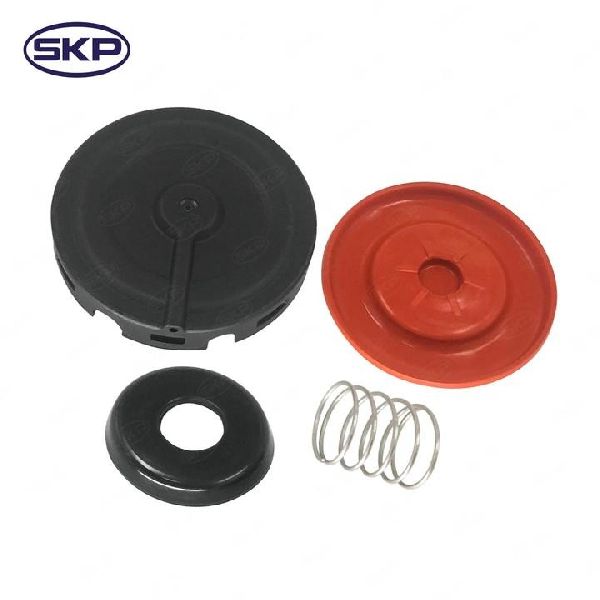
Est. part cost: $70-$350 - Vacuum Leak (e.g., failed PCV Valve) 🟡 Medium Probability Plastic and rubber components in the intake system can become brittle and crack. A particularly common failure on the EA888 engine is the diaphragm inside the PCV (Positive Crankcase Ventilation) valve/oil separator. A tear in this diaphragm creates a significant vacuum leak, allowing unmetered air into the engine.
How to confirm: Perform a smoke test on the intake system. Smoke will escape from any cracks or leaks. To check the PCV specifically, listen for a whistling or sucking noise from the engine bay at idle. Another test is to try to remove the oil filler cap while the engine is running; if there is extreme suction making it hard to remove, or the engine stumbles badly/stalls when it's removed, the PCV diaphragm has likely failed.
Typical fix: Replace the leaking hose, gasket, or component. If the PCV valve is faulty, it must be replaced. The diaphragm itself can sometimes be replaced, but replacing the entire PCV assembly is often recommended.
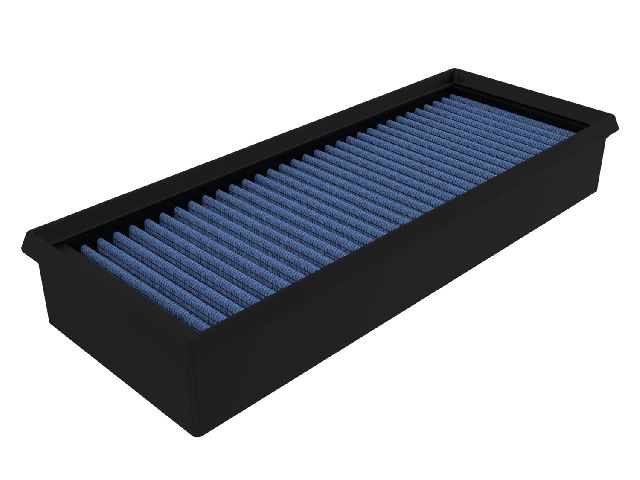
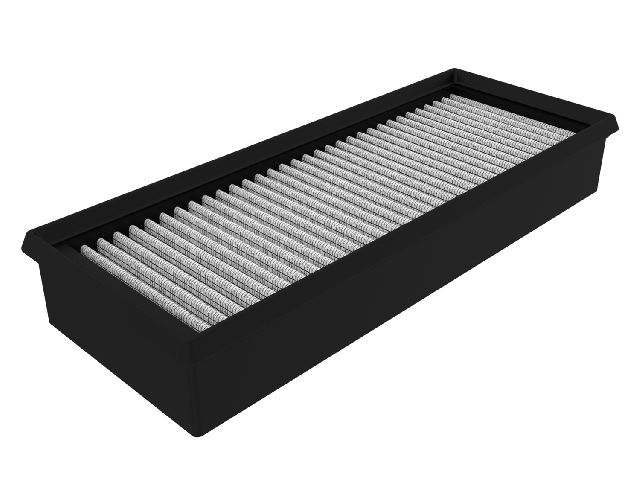
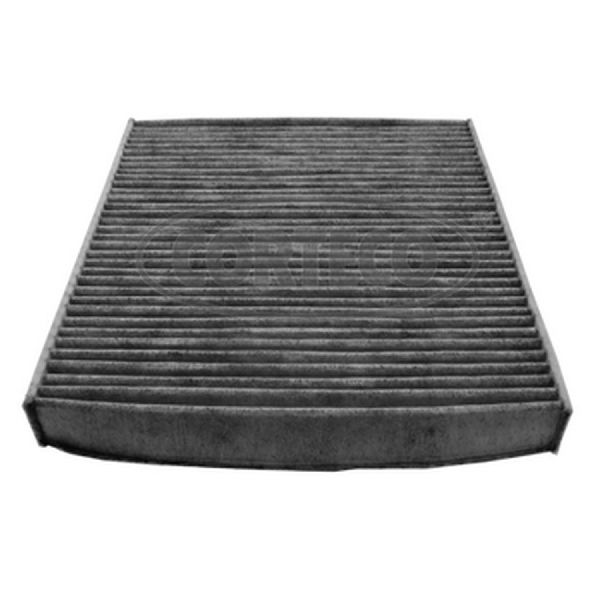
Est. part cost: $20-$200 - Dirty or Clogged Air Filter ⚪ Low Probability → Shop Air Cleaner Assembly A severely clogged air filter can restrict airflow enough to cause the MAF sensor to report readings that the ECU interprets as a fault. This is more likely if the filter has been neglected for an extended period.
How to confirm: Visually inspect the engine air filter. If it is visibly dirty, clogged with debris, or has not been changed in a long time, it should be replaced.
Typical fix: Replace the engine air filter.
Est. part cost: $15-$50
Rare But Worth Checking
- Faulty Engine Control Module (ECM): This is very rare. The ECM should only be considered a potential cause after all other possibilities (sensor, wiring, leaks) have been thoroughly tested and ruled out.
Diagnosis Steps
- Read the fault codes with an OBD-II scanner to confirm P0100 is present.
- Visually inspect the air intake system between the MAF sensor and the engine for any cracks, loose clamps, or disconnected hoses.
- Inspect the engine air filter and replace it if it's dirty or clogged.
- Carefully unplug the MAF sensor and inspect the electrical connector and pins for corrosion or damage.
- CRITICAL STEP: Inspect the wiring harness leading to the MAF sensor. Peel back the protective loom 2-3 inches from the connector and gently tug each wire individually. Pay close attention to the brown (ground) and yellow wires, which are known to break internally at the sharp bend.
- If the wiring looks good, remove the MAF sensor and clean it using only dedicated MAF sensor cleaner. Do not touch the sensing element.
- Reinstall the sensor, clear the codes, and drive the vehicle to see if the code returns.
- If the code returns, use a scan tool with live data to monitor the MAF sensor reading (g/s) at warm idle. The value should be stable and around 2-4 g/s. Rev the engine; the g/s value should increase smoothly without any dropouts or flat-lining.
- If the sensor signal is non-existent or erratic and wiring is confirmed to be good, replace the MAF sensor.
- If the MAF sensor and wiring are good, perform a smoke test to check for vacuum leaks, paying close attention to the PCV valve/oil separator.
Parts You'll Likely Need
- Mass Airflow (MAF) Sensor
(OEM #Mk6 (2013-2014): 06J906461D (Bosch); Mk7 (2015-2016): 06K906461 (Bosch))— This is a common component to fail or become too dirty to function correctly, directly causing the P0100 code. Always verify wiring is intact before replacing.
Trusted brands: Bosch (OEM), Hitachi, Duralast
OEM price range: $150-$350
Aftermarket price range: $70-$200 - MAF Sensor Connector Pigtail
(OEM #1J0973705 (5-pin connector housing))— If the wiring is broken right at the connector, or the connector itself is damaged, replacing it with a pigtail is the most effective repair.
Trusted brands: Volkswagen (OEM), URO Parts, Aftermarket kits
OEM price range: $25-$50
Aftermarket price range: $10-$25 - PCV Valve / Oil Separator
(OEM #06H103495AH (or later revisions))— A common source of vacuum leaks on the EA888 engine that can contribute to or cause air metering fault codes.
Trusted brands: Volkswagen (OEM), Vaico, Febi
OEM price range: $120-$180
Aftermarket price range: $40-$90 - Engine Air Filter — A clogged air filter can be a contributing cause and should be replaced as part of routine maintenance to protect the new MAF sensor.
Trusted brands: Mann-Filter, Mahle
OEM price range: $25-$50
Aftermarket price range: $15-$30
Related Codes That Often Appear With This One
- P0101 — P0101 indicates 'MAF Sensor Performance/Range,' which is often triggered along with P0100. The provided TSBs explicitly mention 'MIL-ON P0101 AND OR P0100,' indicating they often appear together.
- P0171 — This code means 'System Too Lean (Bank 1).' A vacuum leak from a bad PCV valve or a faulty MAF sensor under-reporting airflow can cause the engine to run lean, triggering this code.
Technical Service Bulletins (TSBs) & Recalls
- VIN-4-A-PIN AUGU (2016 ENGINE, dated 2016-08-30): Lists 'MIL-ON P0101 AND OR P0100' as a known issue among a list of other potential faults.
- VIN-4-A-PIN AUGU (2016 FUEL SYSTEM, OTHER, dated 2016-08-24): Lists 'MIL-ON P0101 AND OR P0100' as a known issue among a list of other potential faults.
Platform-Specific Known Issues
- Volkswagen issued Technical Service Bulletins for 2016 models that list 'MIL-ON P0101 AND OR P0100' as a known potential fault, confirming manufacturer awareness of the issue.
Mechanic-Grade Diagnostic Values
- MAF Sensor 5V Reference Supply — expected: 4.5V - 5.0V DC. Failure: Voltage significantly lower or absent indicates a wiring or ECM problem.
- MAF Sensor Ground Circuit Check — expected: 10V - 12V DC. Failure: Reading below 10V indicates a poor ground connection, likely an open circuit in the wire to the ECM.
- MAF Sensor Signal Voltage at Idle (Warm Engine) — expected: ~1.0V DC. Failure: Voltage is zero, stuck high, or does not change with RPM. A dirty sensor may show a slightly off but steady voltage, while a failed sensor or circuit will be erratic or zero.
- VCDS Advanced Measuring Values - Fuel Trims (Group 032 & 033) — expected: Values should be close to 0%, ideally within +/- 10%.. Failure: Consistently high positive values (e.g., >10%) suggest the engine is compensating for a lean condition, which can be caused by unmetered air from a vacuum leak or a MAF sensor under-reporting airflow.
Hidden / Shadow Codes Worth Checking
- 16484 / 000256: This is the Ross-Tech VCDS equivalent for P0100, specifically pointing to 'Mass Air Flow Sensor (G70): Supply Voltage'. It directly indicates a problem with the power supply to the sensor. (see via Ross-Tech VCDS or other advanced VW/Audi group diagnostic tools.)
Scan Tool Commands That Help
- VCDS (VAG-COM): Advanced Measuring Values — For Mk7 GTI (2015-2016) which use the UDS protocol, traditional 'Measuring Blocks' are not available for the engine controller. You must use 'Advanced Measuring Values' to select and log MAF (g/s), fuel trims, and other engine parameters to diagnose the fault.
- VCDS (VAG-COM): Measuring Blocks - Group 003 — For Mk6 GTI (2013-2014), you can log Group 003 while driving (e.g., a 3rd gear pull at full throttle) to check MAF sensor functionality. The g/s reading should increase smoothly and peak near the engine's horsepower rating. A sluggish or erratic reading indicates a problem.
Wiring & Ground Locations
- Primary Engine Bay Ground — On the chassis bulkhead, located above and behind the battery. It's a stud with multiple brown wires attached.. This is a main grounding point for many engine sensors. A loose or corroded connection here can cause a variety of difficult-to-diagnose electrical issues, including MAF circuit faults.
- Gearbox and Cylinder Head Grounds — There are dedicated ground points on the gearbox (14) and cylinder head (15) as per VW wiring diagrams.. While the MAF sensor ground is typically provided through the ECM, these major grounds ensure the entire engine block and its components have a solid reference to chassis ground. A compromised main engine ground can create floating voltages and sensor signal issues.
- MAF Connector Pinout (Typical 5-pin) — At the MAF sensor itself.. Knowing the pin functions is essential for testing. While colors can vary, a common configuration is: Pin 1: IAT Signal, Pin 2: 12V Power, Pin 3: Ground, Pin 4: 5V Reference, Pin 5: MAF Signal. Always confirm with a vehicle-specific diagram if possible.
Real Owner Repair Stories
- Things I'm Doing blog (Mk5 Volkswagen GTI (demonstrates the long-standing nature of this issue)) — Engine bucking/surging at low RPM, followed by a Check Engine Light with code P0100.
❌ Tried (didn't work) The owner was about to clean the MAF sensor but decided to check wiring first based on forum advice.
✅ What actually fixed it The owner peeled back the wiring loom near the MAF connector and found a broken brown (ground) wire and a broken yellow (DC voltage) wire right at the sharp 90-degree bend. Soldering the wires back together and re-routing the harness with a gentler curve resolved the issue completely.
OEM Part Supersession History
06H103495A, 06H103495E, 06H103495AC→06H103495AH (and later revisions)— The PCV valve / oil separator is a known high-failure item on the EA888 engine. Later revisions aim to improve the durability of the internal diaphragm which is prone to tearing and causing major vacuum leaks.
Heads up: While older parts may fit, it is highly recommended to use the latest available revision (e.g., AH or later) for improved reliability.
Model Year Variations Within This Range
- 2015-2016 (Mk7): The diagnostic protocol for the engine control module changed to UDS (Unified Diagnostic Services). This means that when using tools like VCDS, technicians must use the 'Advanced Measuring Values' function instead of the older 'Measuring Blocks' to view live data from the MAF sensor.
- 2013-2014 (Mk6): These models use the older KWP-2000 protocol, allowing the use of the traditional 'Measuring Blocks' (e.g., Group 003) in VCDS for diagnostics. The MAF sensor part number is also different from the Mk7.
Helpful Videos


We Have This Part in Stock

The information in this article is provided for general reference and educational purposes only. Vehicle specifications, procedures, and part compatibility can vary by production date, trim level, and region. Always consult your vehicle's factory service manual and verify part numbers before purchasing or performing repairs. Safety-critical components such as airbags, seat belts, and braking systems should be installed by a qualified professional.
- Volkswagen GTI:
- 🧭 Diagnostic Flowchart
- 🎬 Helpful Videos
- 🛍️ Shop This Part
- What's Unique About the 2013-2016 Volkswagen GTI
- Symptoms You May Notice
- Most Likely Causes
- Rare But Worth Checking
- Diagnosis Steps
- Parts You'll Likely Need
- Related Codes That Often Appear With This One
- Technical Service Bulletins (TSBs) & Recalls
- Platform-Specific Known Issues
- Mechanic-Grade Diagnostic Values
- Hidden / Shadow Codes Worth Checking
- Scan Tool Commands That Help
- Wiring & Ground Locations
- Real Owner Repair Stories
- OEM Part Supersession History
- Model Year Variations Within This Range
- 🎟️ Get 5% Off