

P0100 on 2016 Volkswagen Passat: MAF Circuit Malfunction Causes and Fixes
On a 2016 VW Passat, code P0100 indicates a Mass Air Flow (MAF) sensor circuit malfunction. The most common causes are a faulty or dirty MAF sensor, corroded connector pins, or damaged wiring near the sensor. For the 3.6L VR6, the OEM sensor is part number 03H906461A. For the 1.8T, it is often 06J906461D. Cleaning the sensor or replacing it is the typical fix, with a new OEM-quality sensor costing between $150 and $350.
- P0100 on your 2016 Passat points to an electrical fault in the Mass Air Flow (MAF) sensor circuit.
- Before buying a new sensor, always inspect the wiring and connector pins for corrosion or damage, as this is a known weak point.
- Attempting to clean the MAF sensor with a dedicated cleaner is a cost-effective first step.
- If the sensor needs replacement, using a quality OEM or reputable aftermarket brand like Bosch is recommended for longevity.
- Driving with this code can lead to poor performance and fuel economy, and should be addressed to prevent potential damage to other components like the catalytic converter.
What's Unique About the 2016-2016 Volkswagen PASSAT
For Volkswagen models of this era, including the Passat, electrical issues are a frequent cause of MAF-related codes. A VW technical document for 2016 models specifically highlights corrosion at the mass air flow connector terminals as a known cause for P0100 on the related 2.0T engine. Furthermore, on the EA888 engine family (which includes the 1.8T), the wiring harness is known to fatigue and break internally at the sharp bend near the MAF connector, causing an intermittent or total loss of signal. Before condemning the expensive sensor itself, it's critical to thoroughly inspect the wiring harness and connector pins, as this is a common and often overlooked point of failure on these vehicles.
Diagnostic Flowchart
Tap your situation to follow the diagnostic path that matches what you're seeing on this vehicle.
Symptoms You May Notice
- Check Engine Light is on
- Engine runs rough, especially at idle
- Hesitation or lack of power during acceleration
- Engine may stall intermittently, especially shortly after starting
- Reduced fuel economy
- Black smoke from the exhaust
- Difficulty starting the engine
- A deeper or bassy exhaust tone
- Whistling or sucking noise from the engine bay, indicating a related vacuum leak
- Replacing the MAF sensor without first thoroughly checking the wiring and connector for breaks or corrosion, which is a very common failure point on this platform.
- Replacing oxygen sensors, as symptoms can be similar (poor running, bad fuel economy).
- Ignoring a potential vacuum leak from a failed PCV valve, which can cause MAF codes on the 1.8T engine.
Most Likely Causes
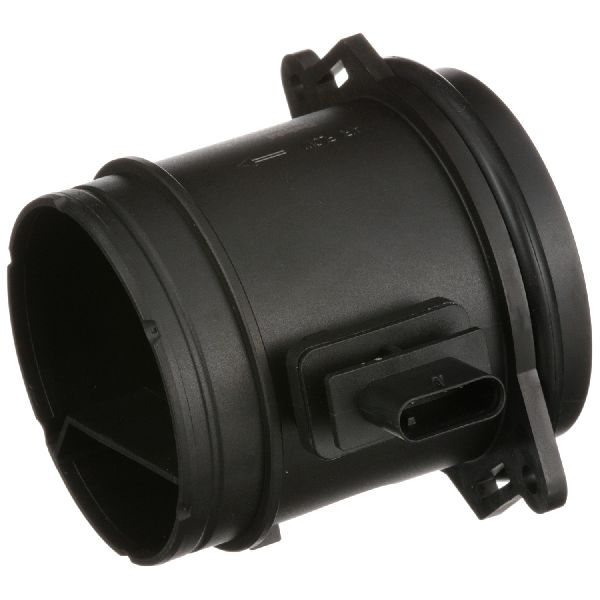
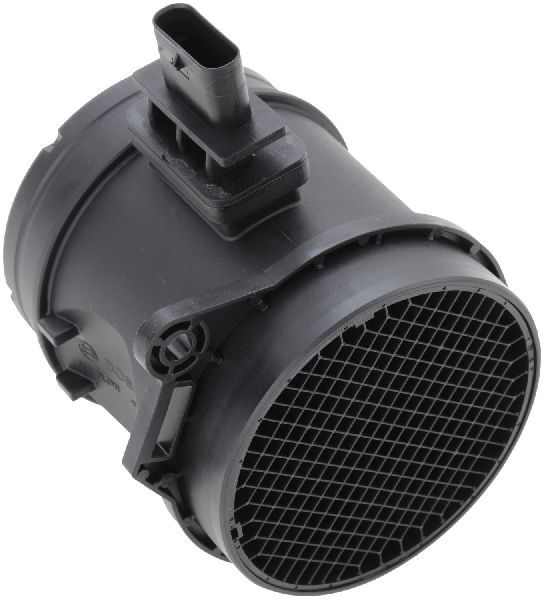
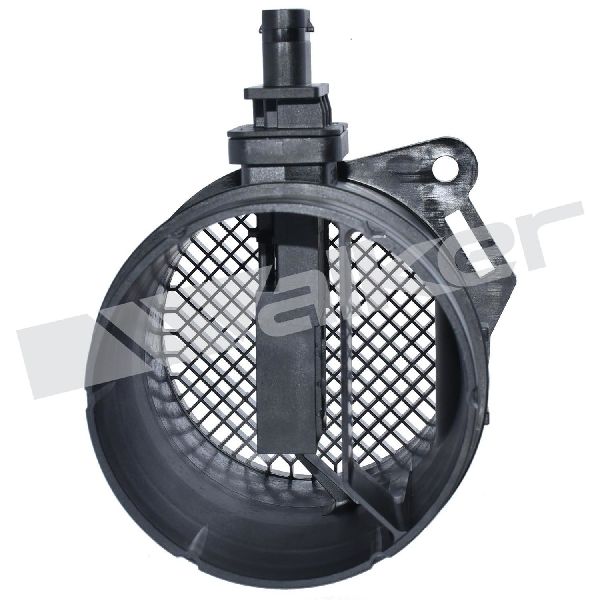
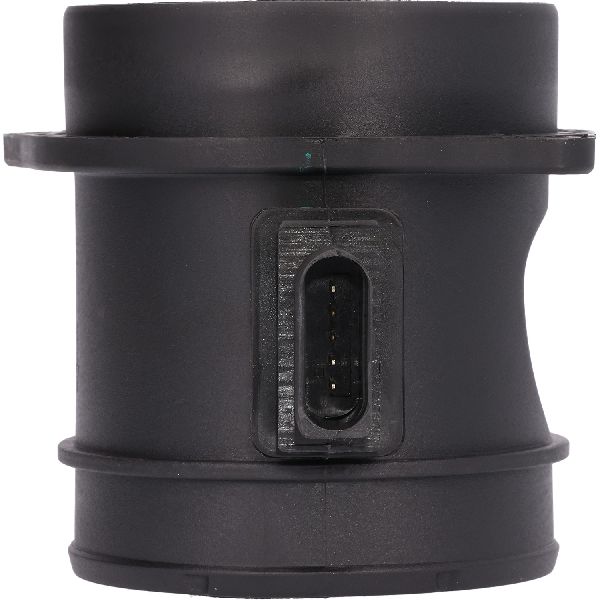
- Faulty or Dirty Mass Air Flow (MAF) Sensor 🔴 High Probability → Shop Fuel Injection Air Flow Meter MAF sensors are sensitive components that can become contaminated with oil and dirt over time, or fail electronically. On VW's EA888 engine (1.8T), a failing PCV valve can also spray oil onto the sensor, contaminating it.
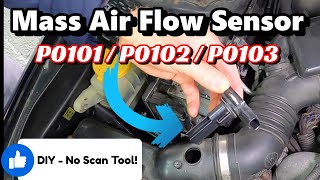
How to confirm: After checking wiring, try cleaning the sensor with dedicated MAF cleaner. 🎬 Watch: A quick guide on how to clean your sensor. If symptoms persist, test the sensor's output signal with a scan tool. At idle, the reading should be stable and typically between 2.0-5.0 g/s. For a 1.8T engine specifically, a healthy reading at idle with no loads should be approximately 3.0 to 3.4 g/s. If the value is stuck at zero or doesn't change when revving the engine, the sensor has likely failed.
Typical fix: First, attempt to clean the sensor element with a specialized MAF sensor cleaner spray. Do not touch the sensing elements. If cleaning doesn't work, the sensor must be replaced. It is highly recommended to use an OEM (Bosch) or Genuine VW part, as cheap aftermarket sensors are known to fail out of the box.
Est. part cost: $150-$350 - Damaged Wiring or Corroded Connector 🔴 High Probability VW issued internal documents for 2016 models pointing to corrosion at the MAF connector as a specific cause for P0100. The wiring harness, especially on the 1.8T engine, is known to chafe or break internally right at the connector due to engine vibration and heat.
How to confirm: Visually inspect the MAF sensor connector for green or white corrosion on the pins. Unplug the connector and check for a secure fit. Gently wiggle and tug on the wires leading to the connector while the engine is running and monitoring MAF data; a sudden change or dropout indicates an internal wire break.
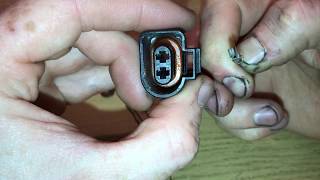
Typical fix: Clean the connector pins with an electrical contact cleaner and apply dielectric grease. If wires are broken, the connector pigtail must be replaced by soldering in a new one. 🎬 See how to repair VW wiring connectors without special tools. The common 5-pin connector pigtail is part number 4F0973705.
Est. part cost: $20-$50 - Vacuum Leak 🟡 Medium Probability On the 1.8T engine, the PCV (Crankcase Ventilation) valve is a very common failure item. When it fails, it creates a large vacuum leak, allowing unmetered air to enter the engine and can trigger lean codes (P0171) along with MAF codes.
How to confirm: Listen for a loud hissing or sucking sound around the engine bay at idle. A key test for a bad PCV on the 1.8T is to try and remove the oil cap while the engine is running. If there is extreme suction holding it down, the PCV diaphragm has failed. A professional smoke test is the most definitive way to find any intake leak.
Typical fix: Replace the cracked or leaking hose or gasket. If the PCV valve has failed, it must be replaced as a complete assembly. Using an OEM part is strongly recommended as aftermarket versions are known to fail quickly.
Est. part cost: $15-$200 - Clogged Engine Air Filter ⚪ Low Probability → Shop Air Cleaner Assembly
How to confirm: Visually inspect the engine air filter. If it is dark, full of debris, or you cannot see light through it, it is clogged.
Typical fix: Replace the engine air filter. This is a simple and inexpensive maintenance item that should be checked first.
Est. part cost: $20-$40
Rare But Worth Checking
- Faulty Powertrain Control Module (PCM): This is very rare. All other possibilities, especially the MAF sensor and its wiring, should be exhaustively ruled out before considering the PCM as the cause.
- Blown Fuse: The MAF sensor circuit is protected by a fuse. While not common, a blown fuse will cut power and trigger a P0100 code. For the Passat, this is often Fuse 10 (10A) in fuse holder C (SC10), labeled for the 'Air mass meter -G70-'.
Diagnosis Steps
- Read the codes: Use an OBD-II scanner to confirm P0100 is present and check for any other codes like P0101, P0171, or P0172.
- Inspect the Air Filter: Check the engine air filter and replace it if it's dirty or clogged.
- Inspect Wiring and Connector: This is a critical step for VWs. Visually inspect the MAF sensor wiring harness for any signs of damage, fraying, or melting. Unplug the connector and carefully check the pins for corrosion or damage. Gently tug on each wire at the back of the connector to check for an internal break.
- Check for Vacuum Leaks: Listen for any hissing sounds from the engine bay. On the 1.8T, check for strong suction at the oil filler cap, which indicates a failed PCV valve. A smoke test is the most effective way to find leaks in the intake system.
- Clean the MAF Sensor: If no visible issues are found, remove the MAF sensor and clean it using only a dedicated MAF sensor cleaner spray. Allow it to air-dry completely before reinstalling. Do not touch the sensing elements.
- Test the Sensor Circuit: Using a multimeter and wiring diagram, check for correct power (usually 12V), ground, and a 5V reference at the MAF connector. With the sensor plugged in and engine running, back-probe the signal wire to see if the voltage changes with RPM. 🎬 Watch: How to test and replace a mass air flow sensor. A dead or static signal points to a bad sensor or wiring.
- Replace the MAF Sensor: If the sensor fails electrical tests or if all other steps have failed to resolve the issue, replace the MAF sensor with a quality OEM part (Bosch is the original manufacturer).
- Clear Codes and Test Drive: After any repair, clear the trouble codes and perform a test drive to ensure the fix was successful.
Parts You'll Likely Need
- Mass Air Flow (MAF) Sensor
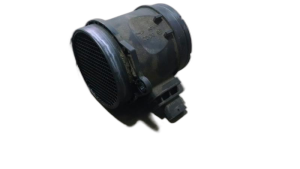
(OEM #For 3.6L VR6: 03H906461A. For 1.8T TSI: 06J906461D (verify by VIN).)— This is the most common component to fail or become too contaminated to clean, directly causing the P0100 code. Using the OEM Bosch part is strongly advised.
Trusted brands: Bosch (OEM), Genuine Volkswagen
OEM price range: $180-$350
Aftermarket price range: $80-$180 - MAF Sensor Connector Pigtail
(OEM #4F0973705)— Corrosion or broken wires at the connector are a known issue on VWs of this era and will cause a circuit malfunction code. This 5-pin connector is a common part across many VW/Audi models.
Trusted brands: Genuine Volkswagen, Aftermarket repair kits
OEM price range: $30-$60
Aftermarket price range: $15-$30
Related Codes That Often Appear With This One
- P0101 — P0101 indicates 'MAF Sensor Performance/Range'. It often appears with P0100 because a circuit fault (P0100) will lead to an out-of-range performance signal (P0101). VW TSBs often list them together.
- P0171 — This code means 'System Too Lean'. A vacuum leak (like a bad PCV valve) or a MAF sensor that is under-reporting airflow can cause the engine to run lean, triggering this code alongside P0100.
- P0172 — This code means 'System Too Rich'. A faulty MAF sensor that incorrectly reports high airflow can cause the ECM to inject too much fuel, leading to a rich condition.
- P0102, P0103, P0104 — These are all MAF circuit-related codes indicating low input (P0102), high input (P0103), or intermittent signal (P0104). They point to the same set of electrical problems as P0100.
Technical Service Bulletins (TSBs) & Recalls
- VIN-4-A-PIN AUGU (2016-08-30): Mentions MIL-ON P0101 AND OR P0100 as a possible fault.
- VIN-4-A-PIN AUGU (2016-08-24): Mentions MIL-ON P0101 AND OR P0100 as a possible fault.
Platform-Specific Known Issues
- Manufacturer TSBs VIN-4-A-PIN AUGU for the 2016 Passat confirm that the code P0100 is a known potential issue, although the bulletins are general and do not specify a direct cause or fix.
- A separate VW internal document from September 2016 identifies 'corrosion at the mass air connector terminals' as a specific cause for P0100 and P0101 on 2016 VW models with the 2.0T engine, which is highly relevant to the Passat platform.
- On the 1.8T engine, the wiring harness is known to break internally right at the sharp bend leading to the MAF sensor connector. This requires careful inspection of the wires themselves, not just the connector housing.
Mechanic-Grade Diagnostic Values
- MAF Live Data (g/s) at Idle (1.8T Engine) — expected: 3.0 g/s to 3.4 g/s (with no loads, A/C off, at sea level). Failure: A significantly lower value may indicate a vacuum leak; a higher value could indicate a contaminated sensor or airflow restriction.
- MAF Live Data (g/s) at 2500 RPM — expected: 15 g/s to 25 g/s (varies by engine). Failure: A reading that does not rise smoothly with RPM or is outside this range indicates a problem.
- MAF Signal Wire Voltage at Idle — expected: 0.5V to 1.5V. Failure: Voltage is static, zero, or does not increase smoothly as the engine is revved.
- MAF Connector Voltage (Key On, Engine Off) — expected: One pin should have ~12V (battery voltage), another should have a 5V reference voltage.. Failure: Missing either the 12V supply or the 5V reference indicates a wiring or ECU issue upstream of the sensor.
- MAF Ground Wire Resistance — expected: Less than 0.2 ohms between the ground wire pin at the connector and a known good chassis ground.. Failure: High resistance indicates a poor ground connection, which can cause incorrect sensor readings.
Scan Tool Commands That Help
- VCDS (VAG-COM) or ODIS: Engine (01) -> Basic Settings — For older control modules, this may include a specific channel (like 002) to test MAF sensor detection. For newer UDS modules, a drop-down list of tests is available. This can be used to perform calibrations or reset adaptations after cleaning or replacing the MAF sensor.
Wiring & Ground Locations
- Fuse SC10 — In Fuse Holder C, located in the dash panel on the driver's side.. This 10A fuse provides power to the Mass Air Meter (G70). A blown fuse will cause a P0100 circuit code.
- Ground Point 15 — On the cylinder head in the engine compartment.. This is a primary engine ground point. A poor connection here can affect various sensors, including the MAF sensor, by creating an unstable ground reference.
- Ground Point 652 — Main ground strap for the engine and gearbox assembly.. This is the main ground path for the entire engine block to the vehicle's chassis. Corrosion or damage to this strap can cause widespread electrical issues and sensor faults.
OEM Part Supersession History
06J906461D→N/A (Multiple cross-references exist)— This is the common OEM part number for the 1.8T TSI engine.
Heads up: While not a direct supersession, this part is cross-referenced with several aftermarket numbers including MA328, MAF0116, MAS0402, and 7450075. When replacing, ensure the new part is from a reputable OEM manufacturer like Bosch to avoid immediate or premature failure.
Helpful Videos

Used OEM Parts in Stock
New Aftermarket Parts Available



The information in this article is provided for general reference and educational purposes only. Vehicle specifications, procedures, and part compatibility can vary by production date, trim level, and region. Always consult your vehicle's factory service manual and verify part numbers before purchasing or performing repairs. Safety-critical components such as airbags, seat belts, and braking systems should be installed by a qualified professional.
- Volkswagen PASSAT:
- 🧭 Diagnostic Flowchart
- 🎬 Helpful Videos
- 🛍️ Shop This Part
- What's Unique About the 2016-2016 Volkswagen PASSAT
- Symptoms You May Notice
- Most Likely Causes
- Rare But Worth Checking
- Diagnosis Steps
- Parts You'll Likely Need
- Related Codes That Often Appear With This One
- Technical Service Bulletins (TSBs) & Recalls
- Platform-Specific Known Issues
- Mechanic-Grade Diagnostic Values
- Scan Tool Commands That Help
- Wiring & Ground Locations
- OEM Part Supersession History
- 🎟️ Get 5% Off