

P0101 on 2008-2016 Audi A4 2.0T: PCV, MAF, and Vacuum Leak Causes
On the 2.0T EA888 engine, P0101 is most often caused by a failed PCV valve creating a large vacuum leak, not a bad MAF sensor. Before buying parts, check for strong suction at the oil cap with the engine running. A new PCV assembly costs ~$150-$250 and is a common DIY fix. A failed PCV can also cause the rear main seal to fail due to excessive crankcase vacuum, a much more expensive repair.
- Before buying any parts for a P0101 code, test the PCV valve by checking for strong vacuum at the oil filler cap while the engine is running.
- A failed PCV valve is the most probable cause for P0101 on the 2.0T EA888 engine.
- If the PCV is okay, perform a smoke test to check for other vacuum leaks before assuming the MAF sensor is bad.
- Cleaning the MAF sensor with a dedicated cleaner is a worthwhile and inexpensive diagnostic step.
- If you must replace the MAF sensor, use a high-quality OEM brand like Bosch or Hitachi to avoid calibration issues.
What's Unique About the 2008-2016 Audi A4
While P0101 is a generic code, on the Audi A4 with the 2.0T EA888 engine, the root cause is very frequently a failed Positive Crankcase Ventilation (PCV) valve, also called an oil separator. The rubber diaphragm inside this valve is a known weak point that tears, creating a massive, unmetered vacuum leak. This leak introduces air that the MAF sensor doesn't measure, causing the discrepancy that triggers the code. Many owners mistakenly replace the MAF sensor first when the PCV valve is the true culprit. A critical secondary failure caused by a bad PCV is the failure of the rear main seal; the intense vacuum in the crankcase can suck the seal inward, causing a large oil leak and an even larger vacuum leak.
Generation note: This range covers the Audi A4 B8 generation (2008-2012) and the facelifted B8.5 generation (2013-2016). Both primarily use the 2.0T EA888 engine (Gen 2 and early Gen 3). The causes, particularly the high failure rate of the PCV valve, are common to both generations and across other vehicles using this engine.
Symptoms You May Notice
- Check Engine Light is on
- Rough or unstable idle
- Reduced engine power and sluggish acceleration
- Hesitation or stumbling during acceleration
- Poor fuel economy
- High-pitched whistling or sucking sound from the engine bay at idle
- ESP/traction control light may illuminate along with the Check Engine Light
- RPM surge when coming to a stop, before settling down to idle.
- Excessive oil consumption.
- Replacing the MAF sensor without first checking for vacuum leaks, especially from the PCV valve. Many owners replace the sensor multiple times only to find the problem was a torn PCV diaphragm or a cracked hose.
- Replacing the PCV valve but not realizing it has already caused the rear main seal to fail, leaving a massive vacuum leak in the system.
Most Likely Causes
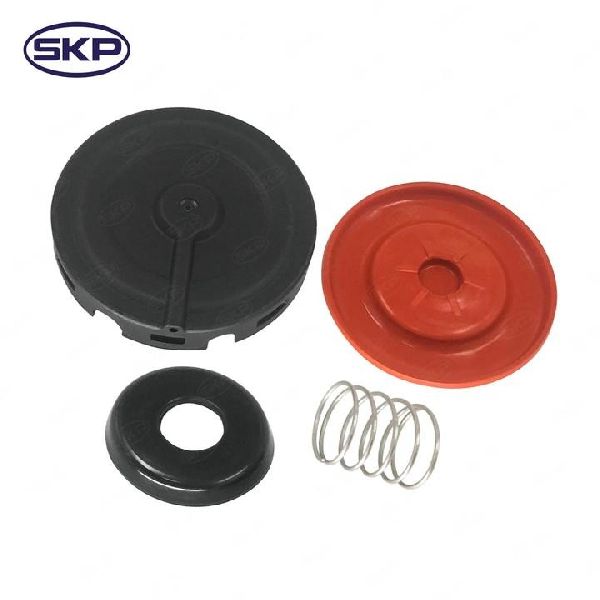
- Failed PCV Valve / Oil Separator 🔴 High Probability → Shop PCV Valve The rubber diaphragm inside the PCV valve assembly is a well-documented failure point on the EA888 engine. It becomes brittle and tears, creating a large internal vacuum leak that the ECU cannot compensate for.
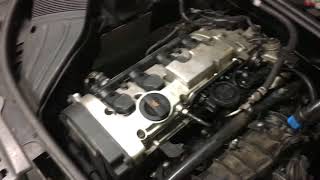
How to confirm: With the engine idling, try to remove the oil filler cap. If a strong vacuum holds the cap down, making it very difficult to remove, the PCV diaphragm has failed. You may also hear a loud whistling or sucking noise from the PCV assembly itself. This test is a hallmark of this specific failure 🎬 See how the PCV valve fails and causes these issues. on EA888 engines.
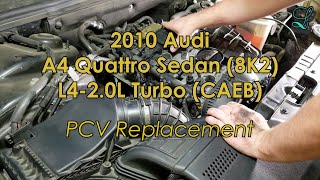
Typical fix: Replace the entire PCV valve assembly 🎬 Watch: Step-by-step guide to replacing the PCV valve assembly. (oil separator). Do not just replace the diaphragm; aftermarket diaphragms are unreliable, and other valves within the assembly can also fail. Always use a genuine OEM or high-quality OEM-supplier part, as many aftermarket units have high failure rates.
Est. part cost: $150-$250 - Failed Rear Main Seal (Often caused by PCV failure) 🟡 Medium Probability When the PCV valve fails, it can create extreme vacuum in the crankcase. This vacuum can pull the rear main seal (crankshaft seal) inward, causing it to fail. This results in a very large unmetered vacuum leak and often a significant oil leak.
How to confirm: A massive vacuum leak that isn't resolved by a new PCV valve points to the rear main seal. A smoke test with smoke introduced into the crankcase (via the oil fill cap) will show smoke exiting the bell housing area between the engine and transmission. There will also likely be oil leaking from this area.
Typical fix: This is a labor-intensive repair that requires removing the transmission to access and replace the seal. It is critical to also replace the failed PCV valve that caused the seal to fail in the first place.
Est. part cost: $50-$150 for the seal, but labor is very high. - Vacuum Leak (Intake System) 🟡 Medium Probability As a turbocharged engine, the intake system has many connections. Hoses can crack with age, and clamps can loosen. Cracked charge pipes, a damaged intercooler, or a leak in the flexible tubing between the MAF and turbo inlet are common sources.
How to confirm: A smoke test is the most effective method to find leaks in the intake tract, including hoses, gaskets, and the intercooler. Visually inspect all accessible hoses and clamps between the MAF sensor and the throttle body. Listen for hissing sounds under load.
Typical fix: Repair or replace the leaking component, such as a cracked hose, loose clamp, or damaged intercooler.
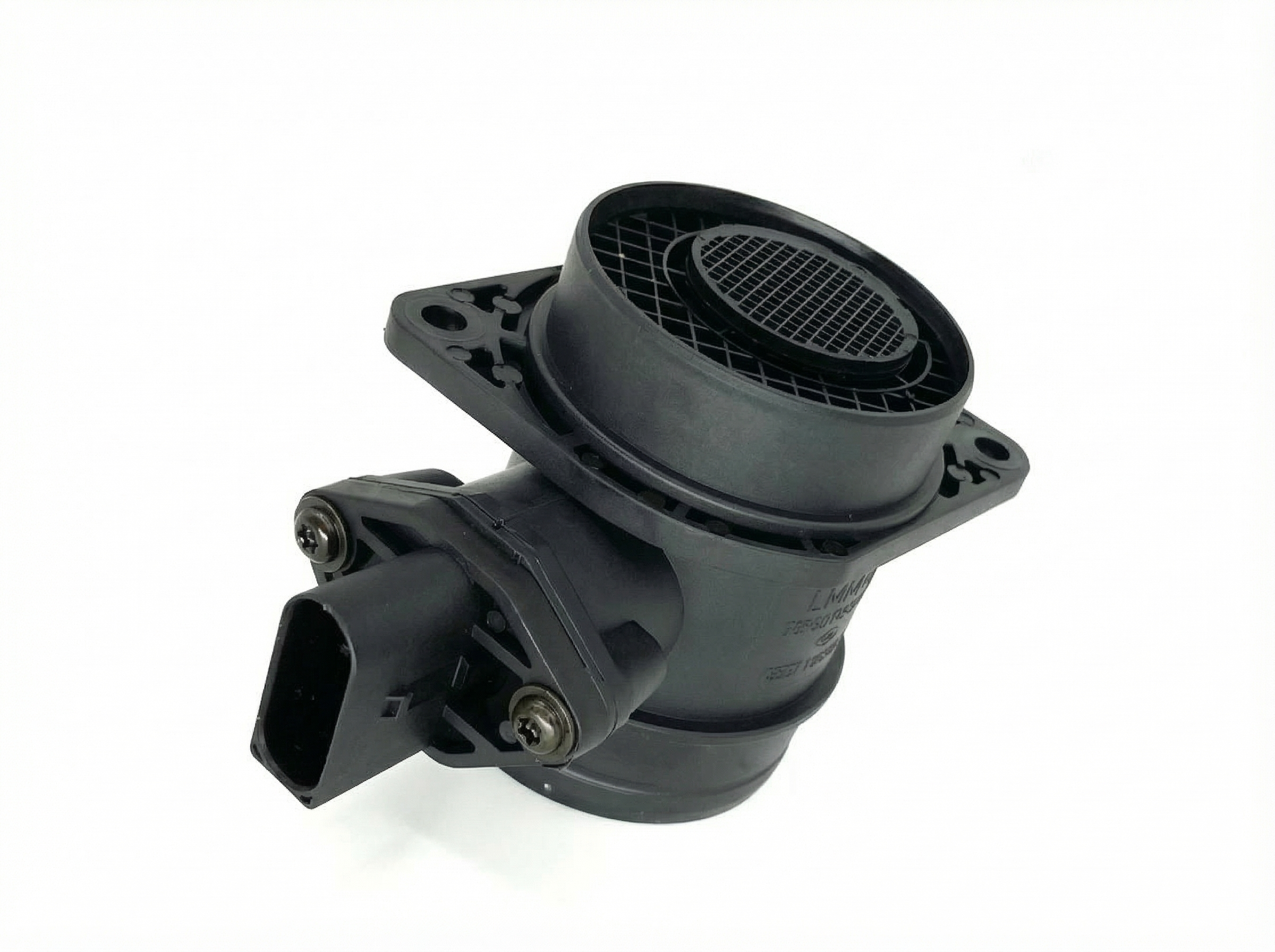
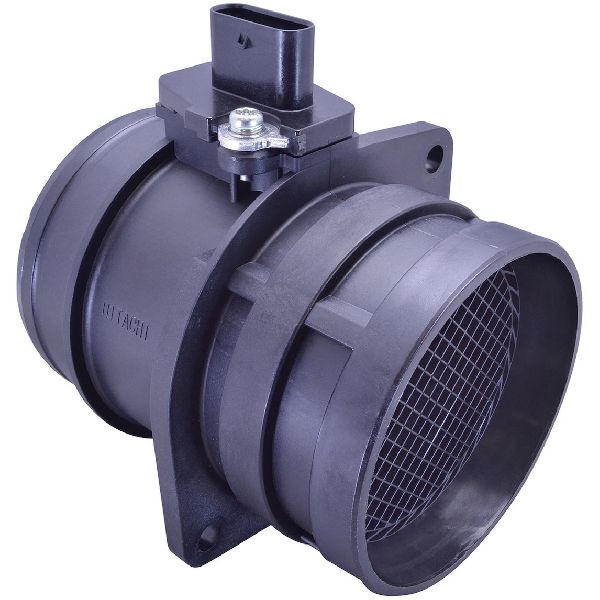
Est. part cost: $20-$500+ - Dirty or Contaminated MAF Sensor 🟡 Medium Probability → Shop Fuel Injection Air Flow Meter Oil vapor from a failing PCV system or oil from an over-oiled aftermarket air filter can coat the MAF sensor's sensitive wire, causing inaccurate readings.
How to confirm: Remove the MAF sensor and visually inspect the small wires inside. If they appear dirty, oily, or have debris on them, they need cleaning. With a scan tool, a healthy MAF should read approximately 2-7 g/s at idle. On a 2.0T engine, a reading of ~2.0 g/s at idle is a good baseline.
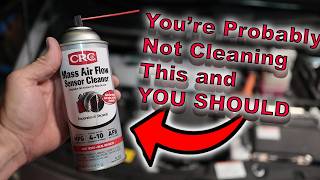
Typical fix: Clean the sensor using only dedicated MAF sensor cleaner spray. 🎬 Watch: How to safely clean your MAF sensor. Do not touch the wires with anything. Allow it to air dry completely before reinstalling.
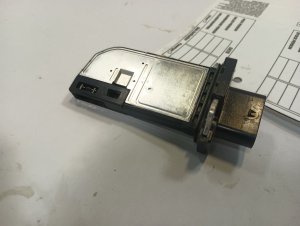
Est. part cost: $10-$15 - Faulty MAF Sensor ⚪ Low Probability → Shop Fuel Injection Air Flow Meter While the sensor can fail electronically, it is far less common than the other causes listed. It is frequently replaced by mistake when the actual problem is a vacuum leak.
How to confirm: After confirming there are absolutely no vacuum leaks and cleaning the sensor has not resolved the issue, you can monitor the sensor's output (in g/s) with a scan tool. If the readings are erratic, stuck at a fixed value, or do not increase smoothly with engine RPM, the sensor is likely faulty.
Typical fix: Replace the Mass Airflow (MAF) sensor. It is highly recommended to use an OEM or high-quality OE-brand part (like Bosch or Hitachi) as cheap aftermarket sensors are often poorly calibrated and can cause persistent issues.
Est. part cost: $150-$250
Rare But Worth Checking
- Clogged or Restricted Air Filter: → Shop Air Cleaner Assembly A severely clogged engine air filter can restrict airflow enough to cause the MAF readings to be lower than expected, triggering the code. Always check this simple item first.
- Cracked or Disconnected Intake Boot: Specifically check for leaks in the flexible intake tubing between the MAF sensor and the turbocharger inlet. A leak here will not be a pressurized boost leak but will allow unmetered air to enter and cause a P0101 code.
- Aftermarket Intake Issues: Some aftermarket cold air intakes can cause turbulent airflow across the MAF sensor, leading to erratic readings and a P0101 code. Some owners have successfully resolved this by installing an 'air straightener' or honeycomb screen before the MAF sensor.
Diagnosis Steps
- Read all fault codes with an OBD-II scanner. Note any other codes that are present, especially lean codes (P0171) or misfire codes (P030x).
- With the engine idling, listen for a distinct high-pitched whistling or sucking sound, which points to a vacuum leak.
- Perform the PCV test: Carefully try to remove the oil filler cap with the engine running. If it is held on by very strong suction, the PCV valve has almost certainly failed and should be replaced.
- If the PCV test is inconclusive, perform a thorough visual inspection of the entire air intake system. Check for cracked, disconnected, or loose hoses and clamps from the airbox to the throttle body.
- Inspect the engine air filter. Replace if it is dirty or clogged.
- If no obvious issues are found, the next step is a smoke test to definitively identify any hidden vacuum leaks. Introduce smoke into the intake system first. If no leaks are found, introduce smoke into the crankcase via the oil filler neck to check for a failed rear main seal.
- If no leaks are found, log MAF sensor readings (g/s) at idle and while driving. At idle, it should be around 2.0 g/s for this engine. The reading should increase smoothly with RPM.
- If readings are plausible, remove and clean the MAF sensor using only dedicated MAF sensor cleaner. Let it dry completely before reinstalling.
- If the code returns after cleaning, and you are certain there are no leaks, the MAF sensor itself is the likely suspect and should be replaced with a high-quality OEM part.
Parts You'll Likely Need
- PCV Valve / Oil Separator
(OEM #06H103495AK (or latest revision like AH, AJ, etc.))— This is the most common failure point on the EA888 engine that leads to a P0101 code due to its failure-prone internal diaphragm. Always check for the latest part number revision.
Trusted brands: Audi (Genuine), Vaico, Febi
OEM price range: $200-$250
Aftermarket price range: $120-$180 - Mass Airflow (MAF) Sensor
(OEM #06J906461D)— This part is replaced if it is confirmed to be faulty after all potential vacuum leaks have been ruled out. Using a cheap aftermarket sensor is a common source of continued problems.
Trusted brands: Bosch, Hitachi
OEM price range: $200-$280
Aftermarket price range: $100-$180 - MAF Sensor Cleaner — Often, cleaning a dirty MAF sensor is enough to fix the problem and is a cheap, effective first step before replacing parts.
Trusted brands: CRC Mass Air Flow Sensor Cleaner, Liqui Moly Air Flow Sensor Cleaner
Aftermarket price range: $10-$15 - Rear Main Seal
(OEM #06L103085B)— A potential, and severe, consequence of a failed PCV valve. The extreme crankcase vacuum sucks the seal in, causing a massive vacuum and oil leak. Requires transmission removal to replace.
Trusted brands: Audi (Genuine), Elring
OEM price range: $70-$100
Aftermarket price range: $40-$60
Related Codes That Often Appear With This One
- P0171 — System Too Lean. A vacuum leak (like a bad PCV) allows unmetered air into the engine, which the oxygen sensors detect as a lean condition.
- P0299 — Turbocharger Underboost. A significant leak in the intake or PCV system can also prevent the turbo from building the specified amount of boost pressure.
- P2279 — Intake Air System Leak. This code specifically points to an unmetered air leak, often triggered by the same failed PCV valve that causes P0101.
- P030x (e.g., P0300, P0301) — Random or specific cylinder misfires. The incorrect air-fuel mixture caused by the vacuum leak can lead to unstable combustion and misfires.
Technical Service Bulletins (TSBs) & Recalls
- TSB 2027731/5 — Relates to the oil consumption issue on 2.0T engines. It outlines the procedure for an official oil consumption test and the first step of the fix, which involves replacing the crankcase pressure regulating valve (PCV) and updating the ECM software.
Platform-Specific Known Issues
- The PCV valve diaphragm on the EA888 engine is a known pattern failure. Its failure creates a large vacuum leak that is the primary cause of P0101 on this platform.
- Aftermarket 'oiled' air filters can shed oil onto the MAF sensor, contaminating it and causing incorrect readings.
Mechanic-Grade Diagnostic Values
- Fuel Trims (Multiplicative, Partial Load) — expected: Within +/- 10% on VCDS Measuring Block 032, Field 2.. Failure: A large positive value (> +10%) indicates the ECU is compensating for unmetered air, strongly suggesting a vacuum leak or a faulty MAF sensor under-reporting airflow.
- MAF Sensor Signal Voltage (at connector) — expected: Key On, Engine Off: ~0.4V; Idle: 0.9V - 1.3V; At 2500 RPM: 1.3V - 2.1V.. Failure: Voltages outside these ranges, or readings that do not increase smoothly with engine RPM, point to a faulty sensor or a wiring issue.
- MAF Sensor Connector Pin Voltages (4-pin connector) — expected: Pin 1 (Pink/Red): ~4.9V (Sensor Supply); Pin 2 (Green): ~4.9V (Signal); Pin 3 (Gray/White): Ground; Pin 4 (Black): 12V (Heater Power).. Failure: Absence of these voltages with the key on indicates a wiring harness or ECU power supply issue, not a faulty sensor.
- Engine-to-Chassis Ground Voltage Drop — expected: Less than 0.15 volts at idle.. Failure: Readings higher than 0.15V between the engine block and a chassis ground point indicate a degraded primary ground strap, a common issue that can cause erratic sensor readings.
Scan Tool Commands That Help
- VCDS (VAG-COM) or OBDeleven: Live Data - Measuring Blocks (e.g., Group 002 or 003) — Use to monitor the live MAF sensor reading in grams per second (g/s) and compare specified vs. actual airflow. This is the primary method for determining if the sensor is reporting plausible data that responds correctly to engine RPM changes.
- VCDS (VAG-COM) or OBDeleven: Clear All DTCs & Reset Adaptations — After replacing a component like the MAF sensor or PCV valve, it is critical to clear all fault codes and reset the learned fuel trim adaptations. Failing to do so can cause the old compensation values to conflict with the new, properly functioning parts.
Wiring & Ground Locations
- G12 (Ground) — Located at the center of the firewall in the engine bay.. This is a primary engine-related ground point. Corrosion or looseness here can affect various sensors, including the MAF, leading to erratic signals and fault codes.
- G26 (Ground) — Located under the power steering reservoir in the engine bay.. Grounds the cooling fan control module, which shares data lines with the ECM. A bad ground here can introduce electrical noise that affects sensor readings.
- MAF Sensor Fuse — In the fuse holder in the engine compartment plenum chamber. For a 2015 model, this is often Fuse 7 on fuse holder B (SB7), a 5A fuse.. The MAF sensor is powered by a dedicated fuse. While rare, a blown fuse will cause an immediate P0101 and should be checked before diagnosing wiring.
- B300 (Positive Splice) — In the wiring harness in the passenger side trunk compartment, near the floor vent under the taillight.. This is a known corrosion point for a main 12V positive splice that is not well-sealed from the factory. Corrosion here can cause intermittent and widespread electrical issues, including low voltage to critical modules and sensors, which can manifest as a P0101 code among others.
Real Owner Repair Stories
- Ross-Tech Forums User (2013 Audi A4 Quattro) — Intermittent P0101 code with jerky hesitation, flashing TPMS and ETC lights, especially after driving in the rain. Car drives perfectly with MAF sensor unplugged.
❌ Tried (didn't work) Replaced MAF sensor (multiple times), Replaced High Pressure Fuel Pump (HPFP), Replaced fuel injectors
✅ What actually fixed it The owner concluded the issue was almost certainly a wiring problem between the MAF sensor connector and the ECU, as unplugging the sensor forced the ECU into a default fueling map and eliminated the drivability issues, strongly suggesting the sensor itself was not the root cause but rather the signal it was sending was being corrupted.
"I Checked Everything" — The Actual Cause
- A user on an Audi forum reported chasing a P0101 and lean codes (P0171) that persisted after a new PCV valve and a smoke test that showed no leaks. The ultimate cause was found to be a faulty N80 EVAP purge valve that was stuck partially open, creating a vacuum leak that the smoke test did not reveal because the valve is normally closed when the engine is off.
OEM Part Supersession History
06H 103 495 J→06H 103 495 AE, then 06H 103 495 AK, and later revisions for Gen 3 engines like 06K 103 495 AP/BM.— Revisions to improve the durability of the internal diaphragm and valve components to address the high failure rate.
Heads up: While many revisions are physically interchangeable, using the latest available part number for your specific engine code (e.g., CAEB, CPMA) is critical. Gen 2 and Gen 3 EA888 engines use different PCV designs.06J 906 461 B (Bosch)→06J 906 461 D (Bosch)— Minor internal revisions for improved accuracy and durability.
Heads up: Both parts are generally cross-compatible for the B8/B8.5, but it is always recommended to use the exact OEM part number specified for the vehicle's VIN to avoid calibration issues.
Model Year Variations Within This Range
- 2013-2016 (B8.5): The B8.5 models use the EA888 Gen 3 (or a Gen 2 revision depending on market/build date), which may have a different PCV part number (e.g., starting with 06K) than the earlier B8 models with the EA888 Gen 2 (typically 06H). While the failure mode is identical, the physical part and associated hoses may differ slightly.
Diagnostic Flowchart
Other Known Issues on This Vehicle
Issues unrelated to this code that are worth knowing about as an owner of this generation:
- Excessive Oil Consumption 🔴 High — Very common on 2009-2011.5 models with the CAEB engine code. Often requires 1 quart of oil every 500-1000 miles. Caused by faulty piston rings and PCV system design. (Ref: Subject of a class-action lawsuit. Audi addressed this with a multi-stage fix, starting with a new PCV and potentially ending with piston/ring replacement.)
- Timing Chain Tensioner Failure 🔴 High — Common on early EA888 Gen 2 engines (pre-2013). The original tensioner design can fail without warning, allowing the timing chain to jump, causing catastrophic engine damage. An updated tensioner was released. (Ref: No recall, but a well-known issue. A rattling noise on startup is a key warning sign.)
- Water Pump Failure 🟠 Medium — The plastic housing of the water pump is prone to cracking and leaking, typically between 60,000 and 100,000 miles. This will cause coolant loss and potential overheating.
- Intake Manifold Flap Failure 🟠 Medium → Shop Engine Intake Manifold — The runner control flaps inside the intake manifold can fail, causing a P2015 code ('Intake Manifold Runner Position Sensor/Switch Circuit Range/Performance'). This results in a check engine light and potential performance loss. (Ref: A warranty extension was offered for this issue on some vehicles.)
- Carbon Buildup on Intake Valves 🟠 Medium — As a direct-injection engine, fuel does not wash over the intake valves. This leads to carbon deposits accumulating over time (typically 50,000-80,000 miles), which can cause misfires, hesitation, and reduced performance.
Used vs. New Parts: Buying Guide for This Vehicle
When a used part is the smart pick: For this specific P0101 issue, used parts are generally a poor choice. The primary failure parts (PCV valve, MAF sensor) are wear items with a finite lifespan. A used MAF sensor from a low-mileage, rear-ended vehicle could be a viable budget option if tested, but the risk of it being contaminated or near failure is high.
Donor-vehicle mileage cap: roughly under 40000 miles for the part to have meaningful remaining life.
What to inspect on the donor part:
- For a MAF sensor, inspect the connector for corrosion and the sensor element for any visible oil contamination or physical damage.
- Ask for the donor vehicle's VIN to confirm it did not have existing engine-related fault codes.
- Avoid any parts from flood-damaged or front-end collision vehicles.
OEM-only on this vehicle (don't cheap out):
- PCV Valve / Oil Separator: Aftermarket PCV assemblies for the EA888 are notoriously unreliable, with high rates of immediate or premature failure. Always use a genuine OEM (VW/Audi) or a direct OEM supplier part.
- Rear Main Seal: Given the high labor cost to access this part, using a cheap aftermarket seal is extremely risky. Use only OEM or a top-tier supplier like Elring or Victor Reinz.
- MAF Sensor: While some high-quality aftermarket options exist, cheap, unbranded MAF sensors are often poorly calibrated and will cause persistent performance issues. Stick to Bosch, Hitachi, or genuine OEM.
Aftermarket brands forum-validated for this vehicle:
- Bosch (MAF Sensor - often the OEM supplier)
- Hitachi (MAF Sensor - OEM supplier)
- Elring (Seals and Gaskets)
- Victor Reinz (Seals and Gaskets)
Brands owners have reported issues with on this vehicle:
- Unbranded, 'no-name' PCV valve assemblies from online marketplaces.
- Cheap, sub-$50 MAF sensors that are not from a recognized OEM supplier.
Real Owner Stories
Aggregated from forums and TSBs cited above. Mileages and costs reflect what owners reported in those sources.
2008-2016 Audi A4 2.0T
Symptoms: P0101 code appeared after a charge pipe was damaged.
What fixed it: Checking and repairing all intake connections from the turbo to the throttle body for leaks.
Source hint: AudiWorld Forums: Code P0101
2008-2016 Audi A4 2.0T
Symptoms: P0101 and lean codes occurred immediately after performing a carbon service and injector seal replacement.
What fixed it: Checking for vacuum leaks caused by a reused gasket or improperly seated intercooler piping during the intake manifold re-installation.
Source hint: Audizine: P0101 code after carbon service/injector seal replacement.
2008-2016 Audi A4 2.0T
Symptoms: P0101 persisted even after a new turbo fixed other codes.
What fixed it: A smoke test identified a combination of a cracked intercooler and a leaking new aftermarket PCV valve.
Source hint: Reddit r/mechanics: audi a4 2.0t p0101, new turbo fixed other codes
2008-2016 Audi A4 2.0T
Symptoms: Rough idle and air intake faults; the engine was creating excess crankcase vacuum.
What fixed it: Replacing the failed PCV valve which was sucking in the rear main seal.
Source hint: YouTube: COMMON CAUSE OF ROUGH IDLE, LEAK IN AIR INTAKE FAULTS ON AUDI 2.0TFSI
Related OBD-II Codes
Frequently Asked Questions
Is there a TSB for the 2.0T engine regarding oil consumption and the PCV valve?
Why is my Audi A4 showing an ESP/traction control light along with the P0101 Check Engine Light?
Can I just clean the MAF sensor on my EA888 engine instead of replacing it?
How can I tell if my PCV valve failure has caused a rear main seal leak?
What is the baseline MAF reading I should see at idle for the 2.0T engine?
Why does my Audi A4 have a high-pitched whistling sound at idle?
Helpful Videos

Used OEM Parts in Stock
New Aftermarket Parts Available


The information in this article is provided for general reference and educational purposes only. Vehicle specifications, procedures, and part compatibility can vary by production date, trim level, and region. Always consult your vehicle's factory service manual and verify part numbers before purchasing or performing repairs. Safety-critical components such as airbags, seat belts, and braking systems should be installed by a qualified professional.
- Audi A4:
- 🧭 Diagnostic Flowchart
- 🎬 Helpful Videos
- 🛍️ Shop This Part
- What's Unique About the 2008-2016 Audi A4
- Symptoms You May Notice
- Most Likely Causes
- Rare But Worth Checking
- Diagnosis Steps
- Parts You'll Likely Need
- Related Codes That Often Appear With This One
- Technical Service Bulletins (TSBs) & Recalls
- Platform-Specific Known Issues
- Mechanic-Grade Diagnostic Values
- Scan Tool Commands That Help
- Wiring & Ground Locations
- Real Owner Repair Stories
- "I Checked Everything" — The Actual Cause
- OEM Part Supersession History
- Model Year Variations Within This Range
- Other Known Issues on This Vehicle
- Used vs. New Parts: Buying Guide for This Vehicle
- Real Owner Stories
- 2008-2016 Audi A4 2.0T
- 2008-2016 Audi A4 2.0T
- 2008-2016 Audi A4 2.0T
- 2008-2016 Audi A4 2.0T
- Related OBD-II Codes
- Frequently Asked Questions
- 🎟️ Get 5% Off