

P0101 on 2018-2022 Chevrolet Equinox 1.5L Turbo: Charge Pipe and MAF Sensor Guide
On a 2018-2022 Equinox with the 1.5L turbo, P0101 is almost always caused by the charge air cooler pipe blowing off the throttle body. Before buying a MAF sensor, inspect this connection. The fix is often as simple as re-securing the pipe, with a DIY difficulty of 2/5. For a more permanent fix, an updated retainer clip or a T-bolt clamp is recommended.
- For a 2018-2022 Equinox 1.5L, P0101 is most likely caused by the charge air cooler tube blowing off the throttle body, not a bad MAF sensor.
- Always perform a visual inspection of the intake piping, specifically where the large hose connects to the engine throttle body, before buying any parts.
- This code is often accompanied by P1101, P0172, P0299, and P0506, all pointing to the same root cause of a massive air leak.
- The fix is often simple and cheap: re-secure the pipe and consider installing an updated retainer clip (GM Part #13434668) for a permanent solution.
What's Unique About the 2018-2022 Chevrolet Equinox
For this specific generation of Equinox with the 1.5L turbo engine, P0101 is rarely caused by a failed MAF sensor itself. The platform is widely known for an issue where the charge air cooler (CAC) outlet tube separates from the throttle body. This creates a massive air leak downstream from the MAF sensor, causing the sensor's readings to become illogical and triggering the code. Multiple GM Technical Service Bulletins (TSBs) have been issued addressing this specific mechanical failure. For instance, TSB Bulletin #PIP5710A notes that the charge air cooler tube becoming disconnected from the throttle body can cause reduced power along with DTC P0101 and several other related codes.
Symptoms You May Notice
- Check Engine Light is on
- "Reduced Engine Power" message on the dash
- Significant loss of acceleration and sluggish performance
- Rough or unstable idle
- Engine stalling at low speeds
- Poor fuel economy
- Hissing noise from the engine bay
- Replacing the Mass Airflow (MAF) sensor without first inspecting the charge air cooler piping. The P0101 code is most often a symptom of the disconnected pipe, not a failed sensor.
Most Likely Causes
- Charge Air Cooler (CAC) Outlet Tube Disconnected 🔴 High Probability → Shop Intercooler This is a widely documented issue covered by multiple GM TSBs (#PIP5710A, #22-NA-224, #PIP5651G). The factory connection can weaken over time and separate under boost pressure. The issue is so common that it's the first thing to check. TSB Bulletin #PIP5651G specifically highlights the pipe connection becoming disconnected from the throttle body as a cause for reduced power and P0101.
How to confirm: Visually inspect the large rubber/plastic air hose where it connects to the metal throttle body on the engine. Physically pull on the pipe to see if it has popped off or is loose.
Typical fix: Re-seat the hose securely onto the throttle body. It is highly recommended to install an updated, stronger retainer clip (GM Part #13434668) to prevent it from happening again. Some owners opt for a more robust 2.5-inch T-bolt style clamp for a more permanent solution.
Est. part cost: $5-$20 for the clip - Leaking or Cracked Charge Air Cooler (Intercooler) 🟡 Medium Probability → Shop Intercooler The charge air cooler uses plastic end tanks crimped to an aluminum core. Over time, these can separate or crack, creating a boost leak. This can also be caused by freezing temperatures if moisture accumulates inside.
How to confirm: A smoke test of the intake system is the most effective method. Smoke will be seen escaping from the damaged area of the charge air cooler.
Typical fix: The charge air cooler must be replaced.
Est. part cost: $150-$350 - Dirty or Contaminated Mass Airflow (MAF) Sensor ⚪ Low Probability → Shop Fuel Injection Air Flow Meter While not the most common cause on this platform, oil vapors from the PCV system can still contaminate the sensor's delicate wires over time, leading to incorrect readings.
How to confirm: Remove the sensor and visually inspect the small wires inside. If they appear coated in dirt or oil, they need cleaning.
Typical fix: Clean the sensor using only dedicated MAF sensor cleaner spray. Do not touch the wires. Allow it to dry completely before reinstalling.
Est. part cost: $10-$15 for cleaner spray - Dirty Engine Air Filter ⚪ Low Probability → Shop Air Cleaner Assembly A severely clogged air filter can restrict airflow enough to cause the MAF sensor readings to deviate from the expected values.
How to confirm: Remove and inspect the engine air filter. If it is visibly black, filled with debris, or has not been changed in a long time, it should be replaced.
Typical fix: Replace the engine air filter.
Est. part cost: $20-$40
Rare But Worth Checking
- Plugged PCV Orifice in Camshaft Cover: → Shop PCV Valve This issue is more directly linked to code P1101 but is worth noting. TSB 20-NA-047 addresses a plugged PCV orifice causing excessive crankcase pressure, which can affect airflow dynamics and potentially contribute to a P0101 code. This can also lead to more severe issues like blown seals.
- Frozen Moisture in Charge Air Cooler: → Shop Intercooler In climates below freezing, moisture from the PCV system can accumulate and freeze inside the charge air cooler, creating a major airflow restriction. This typically sets a P0299 (Underboost) code but can also trigger P0101. GM issued TSB 21-NA-229 suggesting a winter grille cover to mitigate this.
- Cracked or Leaking Intake Duct: A crack or tear in the flexible intake tubing between the MAF sensor and the turbocharger can allow unmetered air to enter the system, causing a P0101 code. A smoke test is the best way to find such leaks.
Diagnosis Steps
- Read all fault codes from the ECM. Note any accompanying codes like P1101, P0299, P0172, or P0506, as their presence strongly points to a disconnected charge pipe. TSB Bulletin #22-NA-224 confirms that these codes often set together when a repair procedure is required for reduced engine power.
- Open the hood and perform a thorough visual inspection of the entire air intake tract, from the air filter box to the engine.
- Pay extremely close attention to the large diameter charge air cooler outlet pipe where it connects to the throttle body. Physically grab and pull on the hose to check if it has popped off or is loose.
- If the pipe is disconnected, inspect the tube end, O-ring seal, and throttle body for any damage before reconnecting. Re-secure it and consider installing the updated retainer clip (GM Part #13434668) or a T-bolt clamp for a more permanent repair.
- If the pipe is secure, inspect the engine air filter and replace if it is dirty.
- If the code persists, remove and inspect the MAF sensor. If it appears dirty, clean it with dedicated MAF sensor cleaner and allow it to dry completely before reinstalling. Do not touch the internal wires.
- If the problem is still not resolved, the next step is to perform an intake system smoke test to check for less obvious leaks from other hoses or a cracked charge air cooler. TSB Bulletin #PIE0569B suggests that technicians perform a specific checklist when encountering loss of power, hesitation, or stalls alongside P0101.
- As a final step, check the MAF sensor wiring and connector for any damage or corrosion using a multimeter to verify power, ground, and signal.
Parts You'll Likely Need
- Charge Air Cooler Outlet Pipe Retainer Clip
(OEM #13434668)— This is the most common failure point. The original clip can be weak, and this updated part provides a more secure connection to prevent the pipe from disconnecting from the throttle body.
Trusted brands: ACDelco, GM Genuine
OEM price range: $10-$20
Aftermarket price range: $5-$15 - Mass Airflow (MAF) Sensor
(OEM #12713125)— This part should only be replaced if it has been proven faulty through diagnostic testing, after all air leaks have been ruled out. It is rarely the cause of P0101 on this vehicle.
Trusted brands: ACDelco, Bosch, Delphi
OEM price range: $120-$180
Aftermarket price range: $50-$100 - Charge Air Cooler
(OEM #84534343)— Replaced if a smoke test reveals a leak from a crack or separated end tank, which is another known failure point causing a boost leak.
Trusted brands: ACDelco, Spectra Premium
OEM price range: $250-$400
Aftermarket price range: $150-$250
Related Codes That Often Appear With This One
- P1101 — This is a GM-specific code for 'Intake Air Flow System Performance' and is triggered by the same massive air leak that causes P0101. They are very frequently seen together.
- P0299 — This code for 'Engine Underboost' is set because the air pressure (boost) from the turbocharger is escaping through the disconnected pipe instead of reaching the engine.
- P0172 — This code for 'System Too Rich' occurs because the ECM injects fuel based on the large amount of air the MAF sensor measures, but much of that air never reaches the cylinders due to the leak. This results in an overly rich fuel mixture.
- P0506 — This code for 'Idle Control System RPM Lower Than Expected' can be set because the massive, unmetered air leak makes it impossible for the ECM to maintain a stable target idle speed.
Technical Service Bulletins (TSBs) & Recalls
- PIP5651G / 22-NA-224: Addresses the charge air cooler outlet tube separating from the throttle body, causing P0101 and other related codes. Provides diagnostic guidance and repair procedures.
- 20-NA-047: Addresses a plugged PCV orifice in the camshaft cover causing high crankcase pressure, which can lead to code P1101 and sometimes contribute to P0101.
- N192271200: An emissions recall that, for some vehicles, involved installing an improved retainer clip on the charge air cooler pipe. TSB Bulletin #N192271200 notes that when this condition occurs, the ECM will set codes including P0101, P0172, P0299, P1101, or P0506.
- 21-NA-229: Recommends installing a winter grille cover to prevent moisture from freezing in the charge air cooler in cold climates, which can cause airflow restrictions and trigger P0101.
- PIP5710A: Communicates the possibility of the charge air cooler tube becoming disconnected from the throttle body, causing reduced power and DTCs P0172, P0299, P0101, P0506, and P1101.
- PIE0569B: Provides a checklist for technicians to address loss of power, hesitation, and stalls associated with DTCs P0172, P0299, P0101, P0506, and P1101.
Platform-Specific Known Issues
- A disconnected charge air cooler (CAC) outlet tube from the throttle body is a widely documented issue for 2018-2022 Equinox models with the 1.5L turbo engine. TSBs PIP5651G and 22-NA-224 directly address this failure.
Mechanic-Grade Diagnostic Values
- Mass Air Flow (MAF) Rate at Idle — expected: Approximately 2.0-4.0 g/s at a stable, warm idle in Park/Neutral.. Failure: A reading of 0 g/s indicates a dead sensor or wiring issue. A reading that is excessively high (e.g., >10 g/s at idle) or does not increase with RPM points to a sensor or leak issue.
- MAF Sensor Signal Voltage — expected: Approximately 0.5V - 1.0V at idle, increasing smoothly to ~4.5V at wide-open throttle (WOT).. Failure: Voltage that is stuck, erratic, or does not correspond to engine load indicates a faulty sensor or wiring.
Scan Tool Commands That Help
- GM GDS2 or high-end bidirectional scanner: Idle Learn Reset / Throttle Body Relearn — After cleaning or replacing the throttle body, or after fixing a major vacuum leak like the charge pipe, the ECM may need to relearn the idle position. If the idle is high, low, or unstable after repairs, performing this function is necessary.
- GM GDS2: Output Control Functions — GDS2 allows for monitoring and controlling various outputs to test system integrity. While there isn't a direct 'test MAF' command, a technician can monitor MAF data alongside other PIDs (like commanded throttle vs actual) to diagnose discrepancies.
Wiring & Ground Locations
- MAF Sensor Connector (5-pin) — On the air intake tube, immediately downstream of the air filter housing.. This is the central connection point for all MAF sensor signals. Damage or corrosion here will directly cause P0101. The sensor integrates both the MAF and IAT (Intake Air Temperature) sensors.
- G107 (or similar engine block ground) — Typically located on the engine block or cylinder head, often near the starter or transmission bell housing.. The MAF sensor circuit relies on a solid ground connection to the engine block. A loose or corroded G107 ground can cause intermittent and incorrect readings, leading to a P0101 code that is difficult to diagnose as it may seem like a faulty sensor.
Real Owner Repair Stories
- Reddit user on r/chevyequinox (2018 Chevrolet Equinox Diesel (Note: While a diesel, the diagnostic thought process is relevant)) — Check Engine Light with P0101.
❌ Tried (didn't work) Cleaned the MAF sensor (light came back after 2 weeks)., Replaced the MAF sensor with a new one (light came back after 1 day).
✅ What actually fixed it The user was advised to check for vacuum leaks and a clogged exhaust (catalytic converter) as the next steps, as replacing the MAF sensor did not solve the recurring code, indicating the sensor itself was not the root cause. Another source notes that for GM vehicles specifically, a clogged catalytic converter can sometimes trigger a P0101 code.
OEM Part Supersession History
13434668→84828210— Standard part lifecycle update. The updated part serves the same function.
Heads up: The original part number 13434668 was the 'updated' clip recommended by TSBs and used in recall N192271200. It has since been superseded by 84828210. Both parts are interchangeable for this repair.
Model Year Variations Within This Range
- 2018-2022: There are no significant mechanical differences within the 2018-2022 model years for the 1.5L LYX engine that would alter the cause or diagnosis of a P0101 code. All vehicles in this range are susceptible to the charge air cooler pipe issue.
Diagnostic Flowchart
Other Known Issues on This Vehicle
Issues unrelated to this code that are worth knowing about as an owner of this generation:
- Brake Vacuum Pump Failure 🔴 High — Widespread issue, can occur at various mileages. Subject of a class-action lawsuit. (Ref: TSB #PIP5835)
- PCV System Clogging / Freezing 🟠 Medium — Common, especially in colder climates. Can lead to blown rear main seals if not addressed. (Ref: TSB 20-NA-047 (for related P1101 code))
- Excessive Oil Consumption 🟠 Medium — Frequently reported by owners of the 1.5L turbo engine.
- Start/Stop Transmission Accumulator Failure 🟠 Medium — Affects 2018-2020 models, can lead to oil leaks and loss of propulsion. (Ref: Recall #N202313440)
- Cracked Pistons 🔴 High — A known, though less frequent, catastrophic failure mode for the 1.5L LYX engine.
Used vs. New Parts: Buying Guide for This Vehicle
When a used part is the smart pick: For parts like the charge air cooler (intercooler) or the charge pipes, a used part from a low-mileage, accident-free donor vehicle can be a cost-effective option. These are generally durable components unless physically damaged.
Donor-vehicle mileage cap: roughly under 60000 miles for the part to have meaningful remaining life.
What to inspect on the donor part:
- For a Charge Air Cooler: Inspect for any bent or crushed fins, signs of cracks in the plastic end tanks, and look inside for excessive oil residue which could indicate engine problems on the donor car.
- For Charge Pipes: Check for cracks, brittleness, or deformation, especially around the connection points. Ensure all mounting tabs are intact.
OEM-only on this vehicle (don't cheap out):
- Mass Airflow (MAF) Sensor: It is highly recommended to use a genuine GM/ACDelco sensor or one from the original equipment manufacturer (e.g., Bosch, Delphi). Aftermarket sensors are known to have a higher failure rate or provide slightly inaccurate readings that can cause persistent issues.
Aftermarket brands forum-validated for this vehicle:
- Charge Air Cooler: Dorman (Part #918-527) and Spectra Premium are reputable aftermarket brands that offer direct-fit replacements.
- Charge Pipes: Some aftermarket suppliers offer upgraded silicone or metal pipes that can be more durable than the OEM plastic/rubber parts.
Brands owners have reported issues with on this vehicle:
- Unnamed, no-brand MAF sensors from online marketplaces should be avoided. While cheap, they are a common source of repeat diagnostic headaches.
Real Owner Stories
Aggregated from forums and TSBs cited above. Mileages and costs reflect what owners reported in those sources.
2020 Chevrolet Equinox 1.5L Turbo — 75000 miles
Symptoms: Sudden 'Reduced Engine Power' message on the dash and a hard brake pedal.
What fixed it: The vacuum pump had failed, which is a known issue for this model year.
Source hint: Chevy Equinox Forum - 2020 Equinox Vacuum Pump Failure / Hard Brake Pedal
2018 Chevrolet Equinox Diesel
Symptoms: Recurring P0101 error code; owner tried cleaning the MAF sensor and then replacing it, but the code returned.
What fixed it: The story highlights that the issue is often not the sensor itself, suggesting the need for deeper mechanical diagnosis of the intake tract.
Source hint: Reddit r/chevyequinox - P0101 error code- 2018 diesel
Related OBD-II Codes
Frequently Asked Questions
My 2019 Equinox 1.5L has a P0101 code and a 'Reduced Engine Power' message. Which TSB should I tell my mechanic to look at?
Is there a specific part I should use to prevent the charge pipe from popping off again?
I live in a very cold climate and keep getting P0101. Is there a vehicle-specific fix for winter weather?
Could my P0101 code be related to the emissions recall I heard about?
Can a problem with the PCV system cause a P0101 or related airflow codes on the 1.5L engine?
If the charge pipe is secure, what is the next most likely vehicle-specific failure for the 1.5L LYX?
Used OEM Parts in Stock
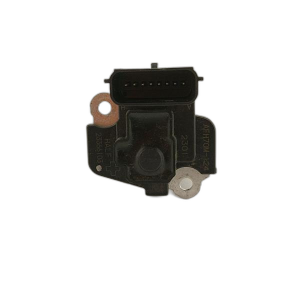
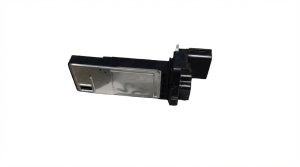
New Aftermarket Parts Available
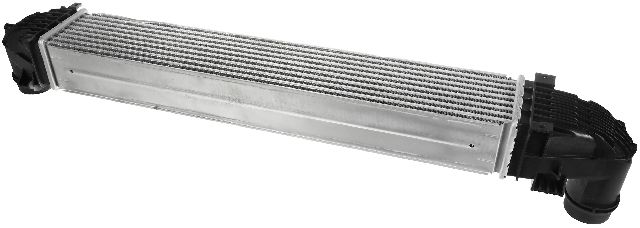


The information in this article is provided for general reference and educational purposes only. Vehicle specifications, procedures, and part compatibility can vary by production date, trim level, and region. Always consult your vehicle's factory service manual and verify part numbers before purchasing or performing repairs. Safety-critical components such as airbags, seat belts, and braking systems should be installed by a qualified professional.
- Chevrolet Equinox:
- 🧭 Diagnostic Flowchart
- 🛍️ Shop This Part
- What's Unique About the 2018-2022 Chevrolet Equinox
- Symptoms You May Notice
- Most Likely Causes
- Rare But Worth Checking
- Diagnosis Steps
- Parts You'll Likely Need
- Related Codes That Often Appear With This One
- Technical Service Bulletins (TSBs) & Recalls
- Platform-Specific Known Issues
- Mechanic-Grade Diagnostic Values
- Scan Tool Commands That Help
- Wiring & Ground Locations
- Real Owner Repair Stories
- OEM Part Supersession History
- Model Year Variations Within This Range
- Other Known Issues on This Vehicle
- Used vs. New Parts: Buying Guide for This Vehicle
- Real Owner Stories
- 2020 Chevrolet Equinox 1.5L Turbo — 75000 miles
- 2018 Chevrolet Equinox Diesel
- Related OBD-II Codes
- Frequently Asked Questions
- 🎟️ Get 5% Off