

P0101 on 2014-2020 Chevrolet Impala: MAF Sensor and Vacuum Leak Causes
On a 2014-2020 Impala, P0101 is most often caused by a dirty MAF sensor. Cleaning it with dedicated MAF cleaner for about $15 is the first step. If that fails, suspect a vacuum leak, especially loose intake manifold bolts on the 2.5L engine (per TSB PIP5529E), or a failed MAF sensor (~$70-$150).
- Always start by cleaning the MAF sensor with dedicated cleaner; this is the most common and cheapest fix for a P0101 code.
- If you have the 2.5L engine and the P0101 code is paired with P0171 (System Lean), there is a very high probability that your intake manifold bolts are loose.
- Before buying a new MAF sensor, rule out a dirty air filter and vacuum leaks. A smoke test is the best way to find a hidden air leak.
- Only use a quality replacement MAF sensor from brands like ACDelco or Delphi to avoid performance issues with cheaper alternatives.
What's Unique About the 2014-2020 Chevrolet Impala
For this generation of Impala, the cause of P0101 can be engine-specific. While a dirty MAF sensor is common on both the 2.5L and 3.6L engines, the 2.5L LCV engine is known to have issues with intake manifold bolts loosening over time due to engine vibration. This creates a vacuum leak that is a very common cause for a P0101 code, often accompanied by a P0171 (System Too Lean) and P0068 (MAP/MAF - Throttle Position Correlation) code, as documented in GM Technical Service Bulletin PIP5529E.
Symptoms You May Notice
- Check Engine Light illuminated
- Rough idle or stalling
- Hesitation or surging during acceleration
- Reduced engine power or 'Limp Mode'
- Poor fuel economy
- Black smoke from the tailpipe in some cases
- Popping noise from the engine on acceleration
- Replacing the throttle body or oxygen sensors before thoroughly checking for vacuum leaks or cleaning the MAF sensor.
- Replacing the MAF sensor when the actual problem is a significant vacuum leak, such as loose intake manifold bolts on the 2.5L engine.
Most Likely Causes
- Dirty or Contaminated MAF Sensor 🔴 High Probability → Shop Fuel Injection Air Flow Meter Oil vapors from the PCV system and fine dust can coat the sensor's delicate hot wire element over time, insulating it and causing inaccurate readings. This is a common issue on most modern vehicles and the easiest first step in diagnosis.
How to confirm: Remove the MAF sensor from the intake tube and visually inspect its wire elements. If they appear coated in grime or oil, they require cleaning. Do not touch the wires.
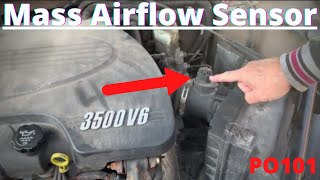
Typical fix: Clean the sensor using only dedicated Mass Airflow Sensor cleaner spray. Spray the wires liberally and allow it to air dry completely before reinstalling. 🎬 Watch: How to clean or replace your Impala's MAF sensor.
Est. part cost: $10-$20 for cleaner - Loose Intake Manifold Bolts (2.5L LCV Engine) 🔴 High Probability → Shop Engine Intake Manifold GM issued Technical Service Bulletin PIP5529E (and its prior versions) for the 2.5L engine due to a tendency for the intake manifold bolts to loosen, creating a significant vacuum leak. This is a widely recognized issue for this specific engine.
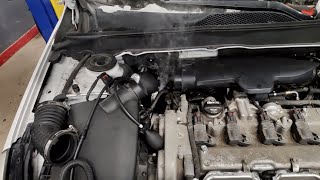
How to confirm: If other codes like P0171 or P0068 are present, this is the primary suspect. With the engine off, you may be able to physically feel movement in the intake manifold. 🎬 See how loose intake bolts cause this common 2.5L issue. A smoke test will definitively show a leak around the manifold gasket.
Typical fix: Per the TSB, remove one bolt at a time, apply medium-strength threadlocker (like Loctite Blue 242), and re-torque all bolts in sequence to the proper specification, which is 10 Nm (89 lb-in). The gasket is often reusable if not damaged.
Est. part cost: $10-$20 for threadlocker - Vacuum Leak (post-MAF) 🟡 Medium Probability The flexible rubber and plastic components of the air intake system, particularly the main intake boot between the MAF and throttle body, can crack or become loose with age and heat cycles.
How to confirm: Visually inspect the air intake tube for cracks or loose clamps. Listen for a hissing sound at idle. A smoke test is the most effective way to find hidden leaks in the intake boot, PCV hoses, or other vacuum lines.
Typical fix: Replace the cracked intake tube or tighten loose clamps.
Est. part cost: $40-$100 for an intake tube - Failed Mass Airflow (MAF) Sensor 🟡 Medium Probability → Shop Fuel Injection Air Flow Meter
How to confirm: If cleaning the sensor and verifying there are no vacuum leaks does not resolve the code, the sensor's internal electronics have likely failed. Monitoring the sensor's output (in g/s) with a scan tool will show erratic, stuck, or non-responsive readings when the throttle is applied.
Typical fix: Replace the MAF sensor. It is highly recommended to use an OEM GM or ACDelco part (PN 23262343) as aftermarket sensors can be unreliable.
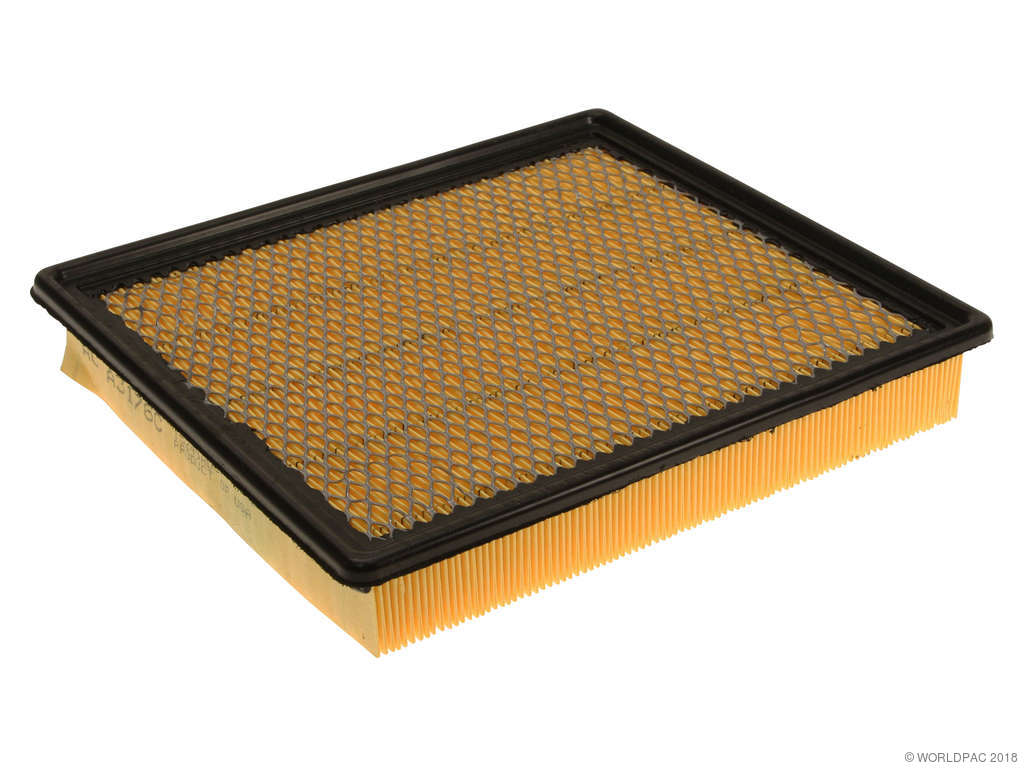
Est. part cost: $70-$200 - Dirty or Clogged Engine Air Filter ⚪ Low Probability → Shop Air Cleaner Assembly
How to confirm: Visually inspect the engine air filter. If it is visibly dirty, grey, or full of debris, it is restricting airflow and can cause the MAF to report lower-than-expected values.
Typical fix: Replace the engine air filter. This is a basic maintenance item that should be checked early in the diagnostic process.
Est. part cost: $20-$40
Rare But Worth Checking
- Clogged Catalytic Converter: A severely restricted exhaust can prevent the engine from drawing in the expected amount of air, causing MAF readings to be lower than anticipated and triggering P0101. This is usually accompanied by a significant loss of power, especially at high RPM, and potentially a rotten egg smell.
- Wiring Harness Chafing: On GM platforms of this era, the engine wiring harness can rub through on engine or transmission components, causing shorts in various sensor circuits, including the MAF sensor. This should be suspected if the code is intermittent and appears with other seemingly unrelated electrical codes.
- Dirty or Sticking Throttle Body: → Shop Fuel Injection Throttle Body Heavy carbon buildup can cause the throttle plate to stick or not open smoothly, creating a mismatch between the throttle position sensor reading and the actual airflow measured by the MAF sensor, which can trigger P0101 or P0068.
Diagnosis Steps
- Check for other stored trouble codes that could provide more context, especially P0171 and P0068.
- Visually inspect the engine air filter and replace it if it's dirty.
- Inspect the full air intake system between the air filter housing and the throttle body for any obvious cracks, loose clamps, or disconnected hoses.
- Carefully remove the MAF sensor. Inspect the sensing element for any dirt, oil, or debris.
- Clean the MAF sensor using only dedicated MAF sensor cleaner. Let it air dry completely before reinstalling. Clear the codes and perform a test drive.
- If the code returns, use a scan tool to monitor the MAF sensor reading in grams per second (g/s). The reading should be stable at idle (typically 3-6 g/s for the 2.5L, 4-7 g/s for the 3.6L) and increase smoothly and immediately as you increase engine RPM. A jumpy or lagging reading indicates a problem.
- FOR 2.5L ENGINES: Physically check the intake manifold for looseness. Use a torque wrench to verify the intake manifold bolts are tightened to 10 Nm (89 lb-in). If loose, perform the threadlocker and re-torque procedure.
- If the MAF sensor appears to be functioning and bolts are tight, perform a smoke test to check for other vacuum leaks. Pay close attention to the intake manifold gasket area, PCV hoses, and the main intake boot. 🎬 Watch a smoke test verify the intake manifold repair.
- If scan tool data is erratic or doesn't respond correctly after cleaning and confirming no leaks, the sensor is likely faulty and needs replacement.
Parts You'll Likely Need
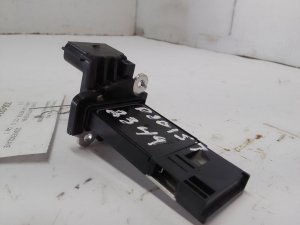
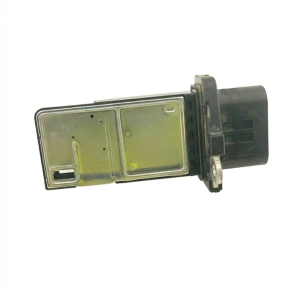
- Mass Airflow (MAF) Sensor
(OEM #23262343)— This is the primary component related to the code. It is either dirty and needs cleaning, or has failed electronically and requires replacement. Part number 23262343 supersedes 20787043 and 23118170 and fits both engines.
Trusted brands: ACDelco (GM Genuine), Delphi
OEM price range: $150-$220
Aftermarket price range: $70-$150 - Mass Airflow Sensor Cleaner — Often, the sensor is just contaminated. A can of specialized cleaner is the cheapest and most common first attempt at a fix.
Trusted brands: CRC, WD-40 Specialist
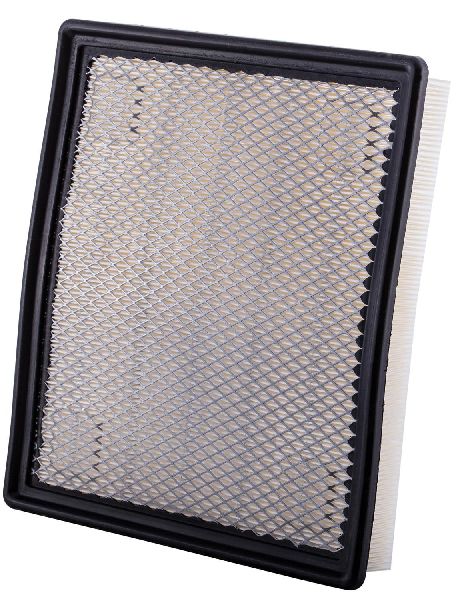
Aftermarket price range: $10-$20 - Engine Air Filter
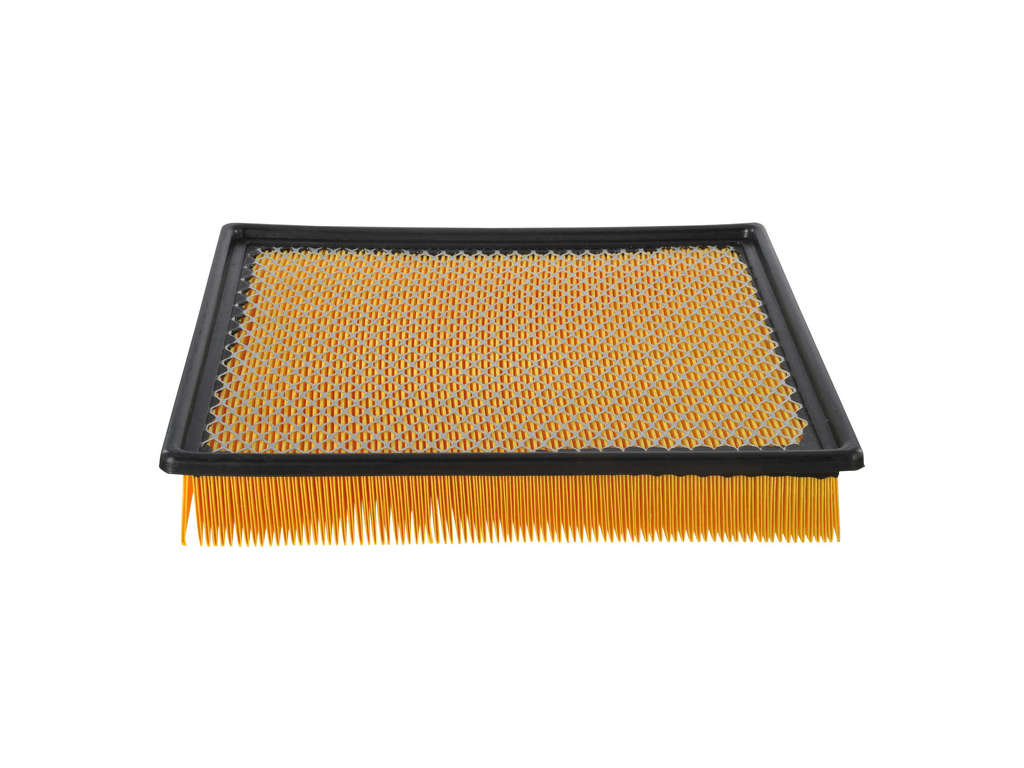
(OEM #ACDelco A3178C)— A clogged air filter can restrict airflow and contribute to or cause a P0101 code. It's a basic maintenance item that should be checked first.
Trusted brands: ACDelco, WIX, Fram
OEM price range: $30-$50
Aftermarket price range: $20-$40 - Medium-Strength Threadlocker — Required for the 2.5L engine intake manifold bolt fix per TSB PIP5529E to prevent the bolts from backing out again.
Trusted brands: Loctite Blue 242/243, Permatex Medium Strength
Aftermarket price range: $10-$20
Related Codes That Often Appear With This One
- P0171 — This code for 'System Too Lean (Bank 1)' is very common with P0101, especially when a vacuum leak is the cause. The leak allows unmetered air into the engine, and the MAF sensor reports less air than is actually present, leading to a lean condition detected by the oxygen sensors.
- P0068 — This code indicates a 'MAP/MAF - Throttle Position Correlation' error. It often appears with P0101 when there's a large vacuum leak (like loose intake bolts), as the data from the airflow sensors directly conflicts with what the throttle position sensor is reporting.
Technical Service Bulletins (TSBs) & Recalls
- PIP5529E: This is the most current version of a GM Technical Service Bulletin that addresses a combination of codes including P0101, P0068, and P0171 on the 2.5L LCV engine. It directs technicians to check for and correct loose intake manifold bolts before replacing any sensors.
- Bulletin #PIP5529A: This manufacturer bulletin provides additional diagnostics and repair guidance to resolve malfunction indicator lamp illumination caused by combinations of codes including P0101, P0068, P0106, P0171, P0131, P0137, P0324, P0326, P0331, and P0506.
- Bulletin #PIP5529B: An updated manufacturer record that assists in resolving check engine light issues related to P0101 and other codes such as P0068, P0106, P0171, P0131, P0137, P0324, P0326, P0331, and P0506 through specific diagnostic and repair steps.
Platform-Specific Known Issues
- On the 2.5L LCV engine, the most prominent and unique cause for P0101 is loose intake manifold bolts. This issue is so common that GM released TSB PIP5529E to address it. Technicians are advised to check bolt torque before replacing any parts when P0101 is present with P0171 and/or P0068.
- On the 3.6L LFX V6, while not prone to the intake bolt issue, P0101 is more likely to be a simple case of a dirty MAF sensor, a cracked flexible air intake boot, or a dirty throttle body causing airflow correlation issues.
Mechanic-Grade Diagnostic Values
- Mass Airflow (MAF) Sensor Reading at Idle (3.6L LFX V6) — expected: ~3.6 to 4.5 g/s. Failure: A reading significantly lower than 3.6 g/s can indicate a vacuum leak post-sensor. A reading significantly higher (e.g., 7-8 g/s) may indicate a faulty sensor over-reporting airflow.
- Mass Airflow (MAF) Sensor Reading at Idle (2.5L LCV I4) — expected: ~2.5 to 3.5 g/s. Failure: A reading of 2.5 g/s or lower when the engine is stumbling is a strong indicator of a faulty sensor or significant unmetered air.
- Mass Airflow (MAF) Sensor Reading at 2500 RPM (Both Engines) — expected: 15 to 25 g/s. Failure: Readings should increase smoothly with RPM. Jumpy, erratic, or lagging response points to a failing sensor or wiring issue.
- MAF Sensor Signal Voltage at Idle — expected: Approximately 1.0V. Failure: Significant deviation from 1.0V at idle suggests a sensor or wiring fault.
- MAF Sensor Ground Circuit Voltage Drop — expected: < 9mV (0.009V). Failure: Measuring from the MAF sensor ground wire to the negative battery terminal, a voltage reading higher than 9mV indicates high resistance in the ground circuit, which can skew sensor readings.
- Sensor Ground Wire Resistance to Chassis — expected: < 5 Ohms. Failure: High resistance indicates a poor ground connection for the sensor group, which can cause multiple correlation codes.
Scan Tool Commands That Help
- GDS2 / High-End Scan Tool: Fuel Trim Reset / Air-Fuel Adaptation Reset — After replacing a MAF sensor or fixing a major vacuum leak, the ECM's long-term fuel trim values will be adapted to the old, faulty condition. Performing a fuel trim reset forces the ECM to relearn the base fuel map immediately with the new, correct airflow data, which can resolve persistent drivability issues faster than waiting for the ECM to relearn on its own.
Wiring & Ground Locations
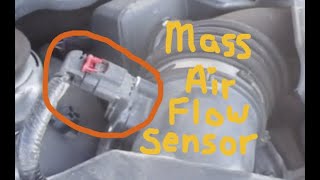
- MAF Sensor Connector (Both Engines) — On the air intake tube, between the air filter box and the throttle body.. This 5-pin connector provides power, ground, and signal lines for both the Mass Airflow and Intake Air Temperature (IAT) sensors. The Pink wire should have 12V with key on, the Black/White wire is the primary ground, and the signal wire sends data to the ECM. A poor connection here is a primary point of failure.
- G113 (Example from similar GM platform) — On a transaxle stud near the starter motor.. On many GM front-wheel-drive platforms, the MAF sensor shares a ground point with other critical engine sensors on a transmission housing stud. If this ground was disturbed during other maintenance (like replacing mounts or a starter), it can cause a P0101 or P0102 code. A test light connected to battery positive should illuminate brightly when touched to the MAF ground wire if the ground is good.
Real Owner Repair Stories
- Reddit user in r/AskAMechanic (2015 Chevrolet Malibu 2.5L (Same LCV engine as Impala)) — P0101 and P0068 codes, Stabilitrak/Traction Control lights, reduced power mode, sluggish acceleration.
❌ Tried (didn't work) A shop cleaned two dirty fuel injectors (fixed a P219B code, but not P0101/P0068)., The shop replaced the MAF sensor with a new one, which did not fix the issue.
✅ What actually fixed it The owner found a cracked PCV tube while inspecting the engine. Replacing this tube, which was causing a significant vacuum leak, was the likely solution to the P0101 and P0068 codes. - 2CarPros Forum User (2006 Pontiac Grand Prix (similar GM MAF logic)) — P0068 and P0101 codes, reduced engine power message.
❌ Tried (didn't work) Replacing the MAF sensor., Replacing the MAP sensor., Replacing the throttle body.
✅ What actually fixed it The user had replaced the MAP sensor with an aftermarket part. The problem was only resolved after replacing it again with a genuine ACDelco MAP sensor. This highlights the sensitivity of GM engine management systems to non-OEM electronic parts.
"I Checked Everything" — The Actual Cause
- In cases where a smoke test reveals no vacuum leaks and cleaning the MAF provides no fix, the issue can be a faulty MAF sensor that is under-reporting airflow but not failing in an obvious (stuck high/low) way. On a 3.6L LFX, a technician noted the scan tool showed a 'Calculated Air Flow' of 4.5 g/s at idle while the MAF reported only 2.5 g/s. This large discrepancy, without a vacuum leak, proved the sensor itself was faulty. Unplugging the MAF sensor, which forces the engine to run on default tables, resulted in better engine performance, confirming the diagnosis.
OEM Part Supersession History
20787043, 23118170→23262343— Standard part revision and consolidation by GM.
Heads up: The new part number 23262343 is the correct service replacement for the earlier numbers and is compatible with both the 2.5L and 3.6L engines in this vehicle range.
Model Year Variations Within This Range
- 2014-2020: The 3.6L V6 engine in this Impala generation is the LFX. Unlike other GM models (like the Camaro or Cadillac CTS) which transitioned to the newer LGX V6 around 2016, the Impala retained the LFX for its entire run. This means diagnostic procedures and parts for the V6 are consistent across all model years.
Diagnostic Flowchart
Other Known Issues on This Vehicle
Issues unrelated to this code that are worth knowing about as an owner of this generation:
- 6-Speed Automatic Transmission Shudder/Hesitation 🟠 Medium — Commonly reported, especially at low speeds or during light acceleration between 1st-3rd gears. Can occur at various mileages, sometimes as early as 25,000 miles. (Ref: Multiple TSBs exist for transmission issues, though owners report mixed success with dealer fixes. A fluid change to an updated fluid type is a common recommendation. Recall 14048 was issued for a shift cable adjuster issue on some 2014 models.)
- MyLink Infotainment System Failure 🟠 Medium — Failures include black screens, unresponsiveness, and dead media controls, often occurring out of warranty. The HMI module is a frequent point of failure. (Ref: No specific recall, but it is a widely discussed problem. Fixes range from software resets to expensive HMI module or screen replacement.)
- Carbon Buildup on Intake Valves (3.6L LFX V6) 🟠 Medium — As a direct-injection engine, the LFX is prone to carbon accumulation on the back of the intake valves over time (typically noticeable after 60,000-100,000 miles), which can lead to misfires and reduced performance.
- Excessive Oil Consumption (2.5L LCV I4) 🟡 Low — Some owners report higher-than-normal oil consumption between changes, a known trait of this Ecotec engine family. It is often linked to the PCV system.
- Cracked Catalytic Converter Flange (3.6L LFX V6) 🔴 High — The catalytic converter assembly is known to crack at the weld near the mounting flange, causing an exhaust leak and often a P0420 code. (Ref: TSB 17-NA-321 explicitly covers this issue for the 2014-2018 Impala.)
Used vs. New Parts: Buying Guide for This Vehicle
When a used part is the smart pick: For this repair, a used part is generally only advisable for the plastic/rubber air intake tube assembly if it is cracked. Electronic components like the MAF sensor are high-risk when purchased used due to unknown history and the delicate nature of the sensing element.
Donor-vehicle mileage cap: roughly under 80000 miles for the part to have meaningful remaining life.
What to inspect on the donor part:
- For an intake tube: check for any hairline cracks, especially at the accordion sections and connection points. Ensure the rubber is still pliable and not brittle or hardened.
- For a MAF sensor (if you must): visually inspect the connector for corrosion and the sensing wires for physical damage or signs of being touched. Avoid any sensor that looks like it has been physically mishandled.
OEM-only on this vehicle (don't cheap out):
- Mass Airflow (MAF) Sensor
- Manifold Absolute Pressure (MAP) Sensor
Aftermarket brands forum-validated for this vehicle:
- Delphi: Delphi was the original GM parts division before being spun off. Their parts are often identical to ACDelco/GM Genuine parts and are considered a top-tier alternative.
Brands owners have reported issues with on this vehicle:
- Unbranded or 'white-box' sensors from online marketplaces. Forum and repair shop anecdotes consistently show these parts have a high failure rate, may be improperly calibrated, and can cause persistent or new diagnostic codes.
Real Owner Stories
Aggregated from forums and TSBs cited above. Mileages and costs reflect what owners reported in those sources.
2014 Chevrolet Impala 2.5L
Symptoms: Check engine light with a P0171 lean code (directly related to P0101 causes on this engine).
What fixed it: Found and tightened loose intake manifold bolts.
Source hint: YouTube video '2014-2020 chevy impala malibu 2.5 ecotec P0171 fix!!! Loose intake manifold bolts.'
Related OBD-II Codes
Frequently Asked Questions
My 2.5L Impala has P0101 and P0171; is there a specific TSB I should tell my mechanic about?
What is the correct torque specification for the intake manifold bolts on the 2.5L LCV engine?
Should I use an aftermarket MAF sensor if mine has failed?
I'm hearing a popping noise from the engine when I accelerate; is this related to P0101?
Can a dirty air filter cause the P0101 code on my Impala?
Is the 3.6L LFX V6 engine also prone to the loose intake manifold bolt issue?
Helpful Videos
Used OEM Parts in Stock
New Aftermarket Parts Available


The information in this article is provided for general reference and educational purposes only. Vehicle specifications, procedures, and part compatibility can vary by production date, trim level, and region. Always consult your vehicle's factory service manual and verify part numbers before purchasing or performing repairs. Safety-critical components such as airbags, seat belts, and braking systems should be installed by a qualified professional.
- Chevrolet Impala:
- 🧭 Diagnostic Flowchart
- 🎬 Helpful Videos
- 🛍️ Shop This Part
- What's Unique About the 2014-2020 Chevrolet Impala
- Symptoms You May Notice
- Most Likely Causes
- Rare But Worth Checking
- Diagnosis Steps
- Parts You'll Likely Need
- Related Codes That Often Appear With This One
- Technical Service Bulletins (TSBs) & Recalls
- Platform-Specific Known Issues
- Mechanic-Grade Diagnostic Values
- Scan Tool Commands That Help
- Wiring & Ground Locations
- Real Owner Repair Stories
- "I Checked Everything" — The Actual Cause
- OEM Part Supersession History
- Model Year Variations Within This Range
- Other Known Issues on This Vehicle
- Used vs. New Parts: Buying Guide for This Vehicle
- Real Owner Stories
- 2014 Chevrolet Impala 2.5L
- Related OBD-II Codes
- Frequently Asked Questions
- 🎟️ Get 5% Off