

P0101 on 2007-2014 Chevrolet Tahoe: MAF Sensor and Vacuum Leak Guide
On a 2007-2014 Tahoe, code P0101 is most often caused by a dirty Mass Airflow (MAF) sensor or a vacuum leak from failed intake manifold gaskets. Start by cleaning the MAF sensor (~$15 for cleaner); if the code returns, especially with P0171/P0174, suspect the intake gaskets. A smoke test is the best way to confirm the gasket leak.
- Always start by cleaning the MAF sensor with dedicated cleaner before considering replacement; it's the most common and cheapest fix.
- If P0101 is accompanied by lean codes P0171 and P0174, a vacuum leak from the intake manifold gaskets is highly probable.
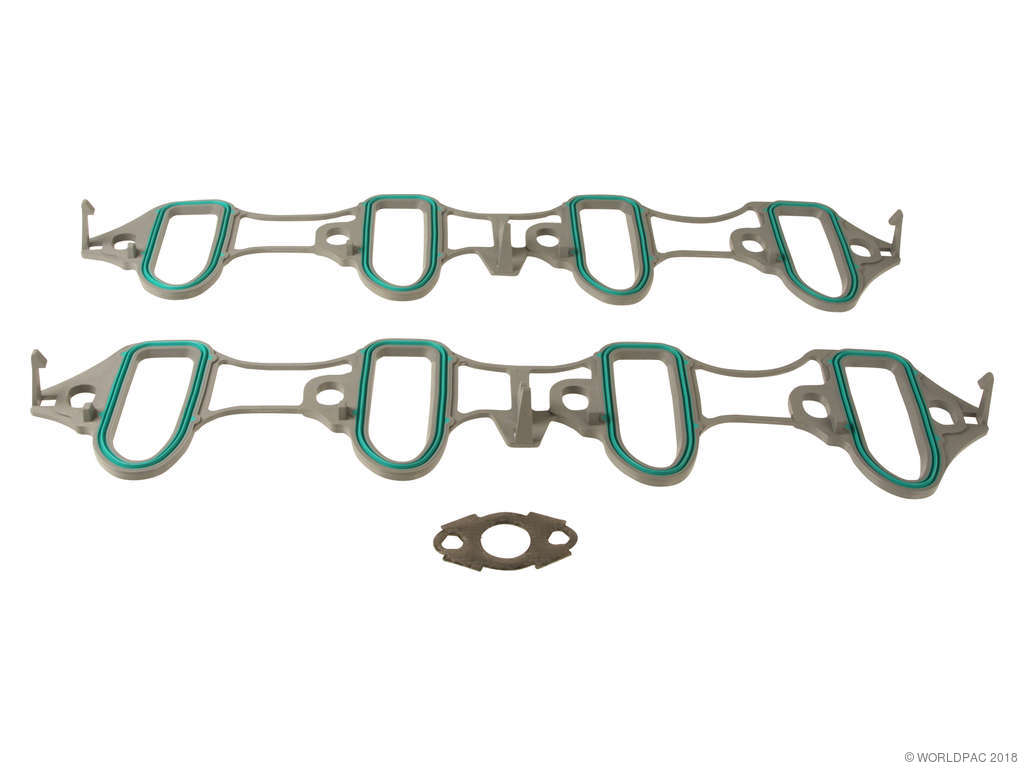
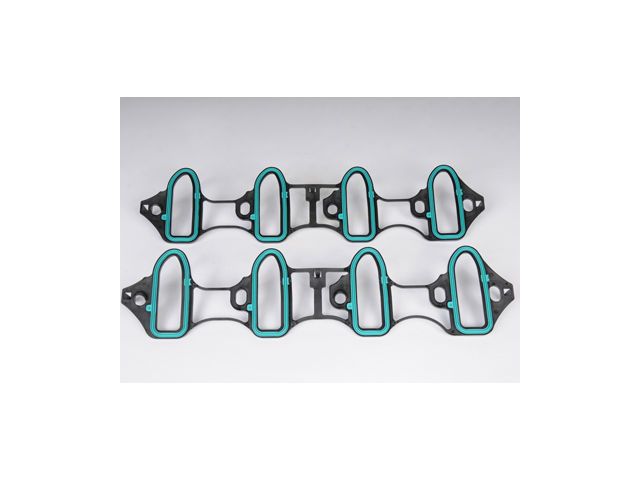
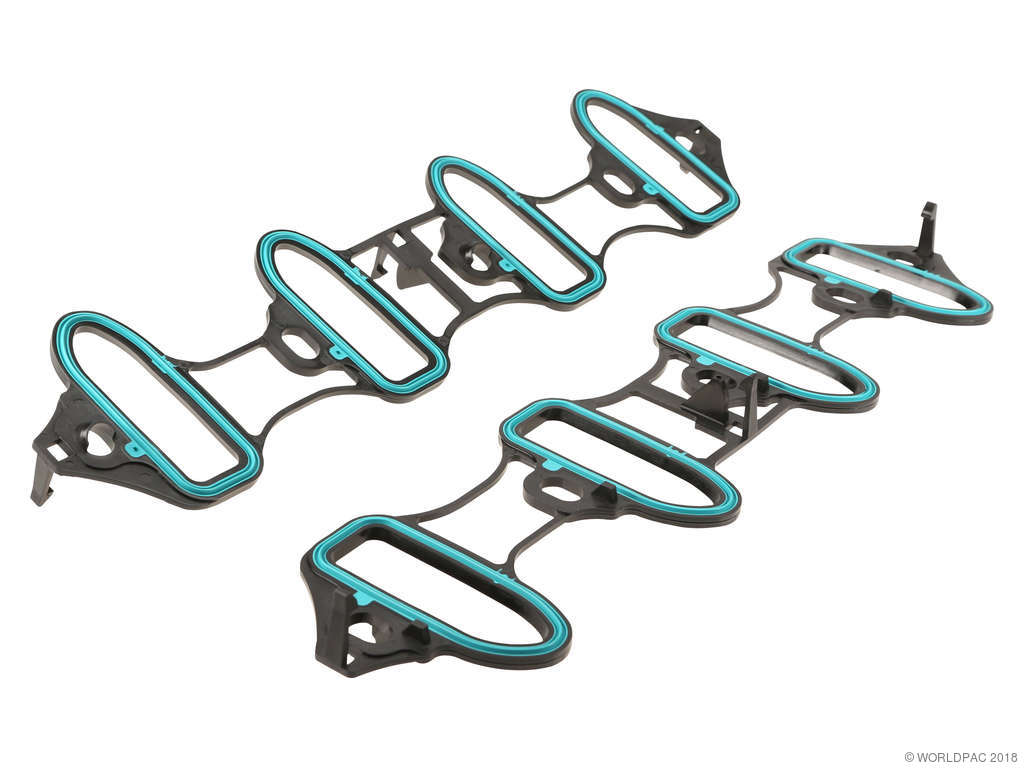
- When replacing intake gaskets, ensure you use the updated teal-colored version, not the failure-prone orange ones.
- Do not use cheap, no-name aftermarket MAF sensors, as they are known to cause performance issues. Stick with OEM (ACDelco) or reputable OE-equivalent brands like Hitachi or Denso.
What's Unique About the 2007-2014 Chevrolet Tahoe
For this generation of GM trucks and SUVs (GMT900 platform), including the Tahoe, the P0101 code is very frequently linked to a specific, well-documented failure: leaking intake manifold gaskets. While a dirty MAF sensor is a universal cause, the intake gasket issue is a known pattern failure on these V8 engines (4.8L, 5.3L, 6.0L, 6.2L). The original orange gaskets degrade from heat cycles and exposure to fuel/ethanol, become brittle, and cause unmetered air to enter the engine. This vacuum leak confuses the MAF sensor and sets the code, often accompanied by lean codes P0171 and P0174, especially during cold weather.
Symptoms You May Notice
- Check Engine Light is on
- Rough or erratic idle, sometimes stalling when coming to a stop.
- Hesitation, jerking, or surging during acceleration.
- Reduced engine power and sluggish performance.
- Poor fuel economy.
- Harsh or incorrect transmission shifting.
- A hissing sound from the engine bay, indicating a vacuum leak.
- On a cold start, the idle is rough but improves as the engine warms up and the gaskets expand to seal the leak.
- Immediately replacing the MAF sensor without first cleaning it or checking for vacuum leaks. Cleaning the sensor or fixing a vacuum leak is a much cheaper and often correct solution.
- Replacing O2 sensors when P0171/P0174 are present. The lean codes are typically a symptom of the unmetered air from a vacuum leak or an under-reporting MAF, not the cause.
Most Likely Causes
- Dirty or Contaminated MAF Sensor 🔴 High Probability → Shop Fuel Injection Air Flow Meter Over-oiled aftermarket air filters (like K&N) or simple accumulation of dust and PCV oil vapors can contaminate the sensor's delicate hot wire, insulating it and causing inaccurate readings.
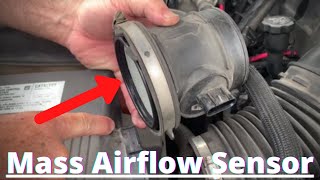
How to confirm: Remove the sensor from the intake tube (usually two Torx T-25 screws) and visually inspect the small wires inside. If they appear coated or dirty, cleaning is warranted. A scan tool may show g/s readings at a warm idle that are lower than expected (e.g., under 4.0 g/s for a 5.3L V8).
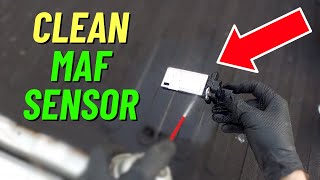
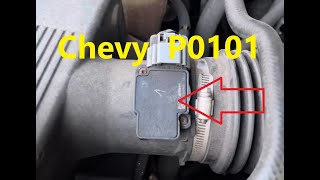
Typical fix: Spray the sensor elements thoroughly with a dedicated MAF sensor cleaner. 🎬 Watch: Step-by-step guide to cleaning your Tahoe's MAF sensor. Do not touch the elements or use brake/carb cleaner. Allow it to air dry completely before reinstalling. This is the cheapest and easiest first step.
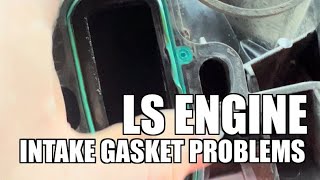
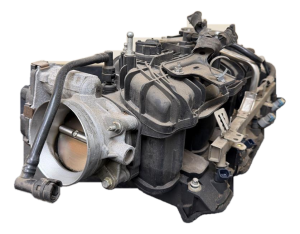
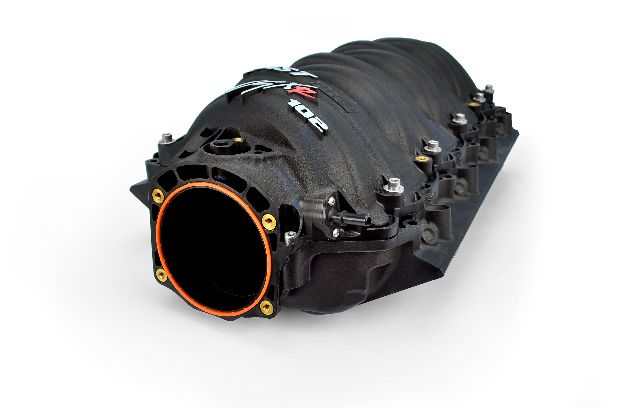
Est. part cost: $10-$15 - Leaking Intake Manifold Gaskets 🔴 High Probability → Shop Engine Intake Manifold The original orange-colored intake manifold gaskets on the 4.8L and 5.3L V8 engines are known to become brittle and fail, causing a significant vacuum leak. This is a very common pattern failure for this platform, often appearing with lean codes P0171 and P0174.
How to confirm: Listen for a hissing sound around the intake manifold. A professional can perform a smoke test to pinpoint the leak. A DIY method is to carefully spray short bursts of carb cleaner or even water from a spray bottle around the edge of the intake manifold where it meets the cylinder heads; a change in engine idle RPM or sound indicates a leak. High positive long-term fuel trims (+25%) at idle that decrease as RPMs increase are a strong indicator.
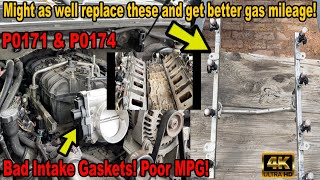
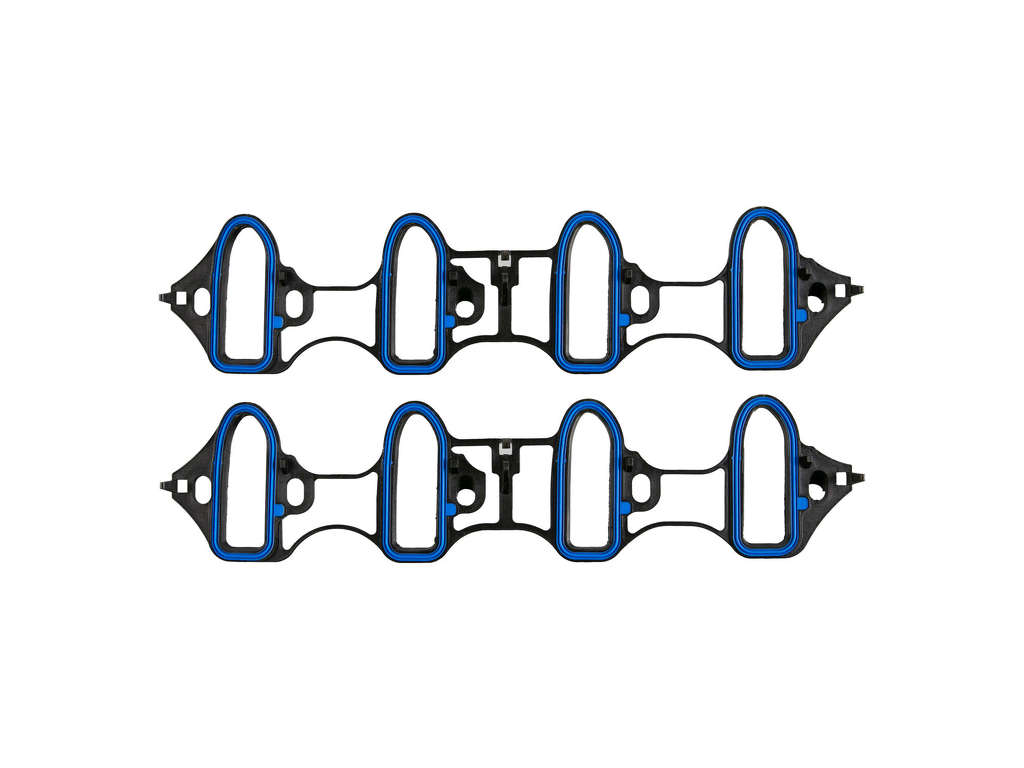
Typical fix: Replace the intake manifold gaskets with the updated, more durable teal-green colored gaskets. The GM part number for the gasket set is often cited as 19256623. A popular, high-quality aftermarket alternative is the Fel-Pro MS96440. 🎬 See this detailed walkthrough for replacing your intake manifold gaskets.
Est. part cost: $40-$80 - Vacuum Leak (Other) 🟡 Medium Probability PCV hoses and the main air intake duct can become brittle and crack over time. A known issue is the PCV tube on the driver's side rear of the intake manifold being rubbed through by the engine cover (see TSB PIP5341). Manufacturer Bulletin #PIP5446A also suggests inspecting for cast flashing near the Mass Air Flow sensor, which can cause rough idle and sputtering.
How to confirm: Visually inspect all air intake hoses and vacuum lines between the MAF sensor and the throttle body for cracks, loose connections, or deterioration. Pay close attention to the PCV hoses and the brake booster line. A smoke test is the most effective diagnostic method.
Typical fix: Replace the cracked hose or secure the loose connection.
Est. part cost: $20-$100 - Dirty or Clogged Engine Air Filter ⚪ Low Probability → Shop Air Cleaner Assembly
How to confirm: Visually inspect the engine air filter. If it is visibly black, filled with debris, or has not been changed in a long time, it is restricting airflow and should be replaced before further diagnosis.
Typical fix: Replace the engine air filter.
Est. part cost: $20-$40
Rare But Worth Checking
- Clogged Catalytic Converter: A restricted exhaust can prevent the engine from breathing properly, leading to an airflow correlation error that triggers P0101. This is usually accompanied by a noticeable loss of power, especially at higher RPMs, and potentially a P0420 or P0430 code.
- Faulty MAF Sensor Wiring: → Shop Fuel Injection Air Flow Meter Check the wiring harness and connector going to the MAF sensor for any signs of chafing, breaks, or corrosion on the pins. A bad ground wire can also cause this issue. Bulletin #PIP5729 notes that P0101 may be stored in history alongside DTC P1682, indicating potential issues within the Ignition 1 Switch Circuit 2.
- Dirty Throttle Body: → Shop Fuel Injection Throttle Body A throttle body heavily coated in carbon can stick or fail to open correctly, causing an airflow discrepancy that the PCM may flag as a P0101. This is more likely if the vehicle has a rough idle. Cleaning the throttle body is often recommended as part of a tune-up.
Diagnosis Steps
- Read all stored fault codes with an OBD-II scanner. Note any other codes present, especially P0171, P0174, or P0300. 🎬 Watch: Understanding lean condition codes on the GM 5.3L engine.
- With a scan tool, observe Long Term Fuel Trims (LTFT) at idle. Values near +25% on both banks strongly suggest a vacuum leak.
- Inspect the engine air filter and replace if dirty.
- Visually inspect the air intake ducting between the air filter housing and the throttle body for any cracks, loose clamps, or disconnected hoses. Check the PCV lines for damage.
- Remove the MAF sensor. It is held in by two Torx screws. Carefully inspect the sensor elements for contamination.
- Clean the MAF sensor using a dedicated MAF sensor cleaner spray. Let it dry completely before reinstalling.
- Clear the codes and test drive the vehicle. If the P0101 code returns, proceed to the next steps.
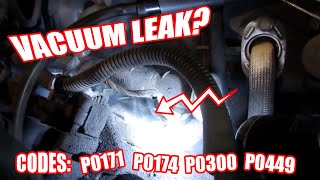
- Check for vacuum leaks. A professional smoke test is the most reliable method. Alternatively, carefully spray carb cleaner or water around the intake manifold gaskets and vacuum hose connections while the engine is idling. A change in idle speed or sound indicates a leak.
- If codes P0171/P0174 are present and a leak is confirmed at the manifold, replace the intake manifold gaskets.
- If no vacuum leaks are found, use a scan tool with live data to monitor the MAF sensor reading (in g/s) at a warm, stable idle. For a 5.3L V8, the reading should be approximately 5.0-6.0 g/s. A reading significantly lower (e.g., <4.0 g/s) points to a vacuum leak or a faulty sensor. The reading should increase smoothly and rapidly with throttle application.
- If the sensor readings are erratic, stuck, or do not respond correctly to RPM changes, and all wiring is confirmed to be good, the MAF sensor itself is likely faulty and should be replaced.
Parts You'll Likely Need
- Mass Airflow (MAF) Sensor Cleaner — This is the most common, cheapest, and easiest first step. A dirty sensor is a leading cause of P0101 on these trucks.
Trusted brands: CRC, Liqui Moly
Aftermarket price range: $10-$15 - Intake Manifold Gasket Set
(OEM #19256623)— A very common failure point on the 4.8L and 5.3L V8 engines, causing vacuum leaks that trigger P0101, P0171, and P0174. The updated teal-colored gaskets should be used.
Trusted brands: ACDelco (OEM), Fel-Pro (P/N: MS96440)
OEM price range: $60-$80
Aftermarket price range: $30-$50 - Mass Airflow (MAF) Sensor
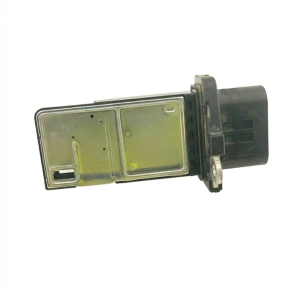
(OEM #213-4222)— If cleaning the sensor and fixing vacuum leaks does not resolve the code, the sensor itself has likely failed. It is highly recommended to use an OEM/ACDelco part, as these trucks can be sensitive to aftermarket electronics.
Trusted brands: ACDelco (OEM), Hitachi, Delphi, Bosch
OEM price range: $100-$150
Aftermarket price range: $50-$120
Related Codes That Often Appear With This One
- P0171 — System Too Lean (Bank 1). This code is very common with P0101 and strongly indicates a vacuum leak, such as from the intake manifold gaskets, is allowing unmetered air into the engine.
- P0174 — System Too Lean (Bank 2). Appears alongside P0171 and P0101 for the same reason on V8 engines, pointing to a vacuum leak affecting both cylinder banks.
- P0300 — Random/Multiple Cylinder Misfire. A lean air/fuel mixture caused by a vacuum leak or faulty MAF reading can lead to unstable combustion and misfires across multiple cylinders.
Technical Service Bulletins (TSBs) & Recalls
- TSB PIP5341: Notes that the PCV tube can be chafed by the engine cover, causing a vacuum leak that leads to lean codes (P0171/P0174) which are often seen with P0101.
- Bulletin #PIP5446A: Reports that vehicles may experience a harsh 1/2 and 2/3 shift, a sputter when applying throttle between 0 and 30%, and a rough idle. Technicians may find P0101 along with P0171, P0172, P0174, or P0175.
- Bulletin #PIP5729: Notes that P0101 may be active or stored in history alongside P1682, P0689, P16A7, or P16BC, sometimes related to an illuminated check engine light that subsequently turned off.
Platform-Specific Known Issues
- A known issue with the original orange intake manifold gaskets becoming brittle and failing, leading to vacuum leaks. This is a primary cause of P0101 on this platform, often accompanied by P0171 and P0174.
- The PCV tube on the driver's side can be rubbed through by the decorative engine cover, creating a vacuum leak. This is noted in GM TSB PIP5341 for related lean codes.
Mechanic-Grade Diagnostic Values
- MAF Sensor Signal (Hertz) — expected: Approximately 3.2 KHz at idle (~680 RPM), increasing smoothly with RPM to ~4.2 KHz at 1500 RPM and ~5.2 KHz at 2500 RPM.. Failure: The Hertz reading is stuck at one value or does not increase smoothly as the engine is accelerated.
- MAF Sensor Signal (g/s) — expected: A wide-open throttle (WOT) acceleration from a stop should cause the g/s reading to increase rapidly from 6-12 g/s at idle to 230 g/s or more at the 1-2 shift.. Failure: The g/s reading does not increase significantly or responds sluggishly during acceleration.
- MAF Sensor Power Supply Voltage — expected: 10 to 12 Volts DC with key on, engine off.. Failure: Voltage is significantly lower than 10V or absent.
- MAF Sensor Ground Circuit — expected: 10 to 12 Volts DC when testing between the ground wire at the connector and the positive battery terminal.. Failure: Voltage is significantly lower than 10V, indicating a poor ground connection.
- Long Term Fuel Trims (LTFT) — expected: Close to 0% at idle.. Failure: Consistently high positive values (e.g., +25%) on both banks at idle strongly suggest a vacuum leak.
Wiring & Ground Locations
- G103 — On the front of the right cylinder head.. This is a primary grounding point for the Engine Control Module (ECM) and several sensors, including the MAF sensor. A corroded or loose connection at G103 can cause erratic sensor readings and trigger a P0101 code.
- MAF Sensor Connector — On the air intake tube, between the air filter box and the throttle body.. The 5-pin connector provides power, ground, and signal lines for the MAF and integrated IAT sensor. The yellow wire is the MAF signal, the pink wire is the 12V ignition power, and the black/white wire is the ground. Checking for voltage and ground at these specific pins is a critical diagnostic step.
- ECM/IGN Fuse 56 (15A) — In the underhood fuse block.. This fuse provides ignition voltage to the ECM, which in turn powers the MAF sensor circuit. While a blown fuse is uncommon, it should be checked if there is no power at the MAF sensor connector.
Real Owner Repair Stories
- Chevrolet Forum user 'scrnchr' (2004 Chevrolet Tahoe) — P0101 code, rough/hunting idle on cold start that was previously smooth.
❌ Tried (didn't work) Cleaned the MAF sensor., Checked for vacuum leaks by spraying carb cleaner around the intake manifold (no change in idle detected)., Cleaned air filter box and filter., Checked for coolant in oil., Jiggled EVAP purge solenoid and vacuum lines.
✅ What actually fixed it Replacing the Mass Air Flow sensor. The user decided to replace the MAF before attempting the more labor-intensive intake manifold gasket replacement, and this resolved the code and symptoms. - NHTSA ODI #11591751 — An owner reported a situation where the vehicle would not accelerate past 9 mph. A technician identified code P0101 for the mass air flow sensor along with P0068 for the throttle body and P0089 for the high pressure fuel pump.
"I Checked Everything" — The Actual Cause
- In some cases, a P0101 can be set even if a smoke test reveals no vacuum leaks. One potential cause is a cracked exhaust manifold. The crack can pull in a small amount of air during the exhaust pulse, which is then detected by the upstream oxygen sensor. This causes the ECM to adjust fuel trims in a way that conflicts with the MAF sensor's readings, leading to a P0101 without a traditional intake vacuum leak.
When the Usual Fixes Don't Work
- While leaking intake manifold gaskets are an extremely common cause of P0101 on this platform, it should not be assumed to be the only cause. As seen in a documented repair story, a user exhibited classic symptoms of an intake gasket leak (rough cold idle, P0101) but the issue was ultimately a failed MAF sensor itself. This highlights the importance of not skipping diagnostic steps; cleaning the MAF is a valid first step, but testing or swapping the sensor can be a crucial diagnostic step before committing to the more involved intake gasket replacement.
OEM Part Supersession History
89017839→19256623— Updated design for improved durability and sealing. The original orange gaskets were prone to becoming brittle, while the new gaskets are a more robust material (often green or teal).N/A (Appeared as ACDelco OE)→GM 15865791 / ACDelco 213-4222— Part number standardization and branding changes. GM Genuine Parts are the true OE parts, and some may have previously been sold under the ACDelco GM Original Equipment name.
Heads up: While many aftermarket sensors exist, these vehicles are known to be sensitive to MAF sensor calibration. Using a genuine GM/ACDelco part is highly recommended to avoid persistent or new issues.
Diagnostic Flowchart
Real Owner Stories
Aggregated from forums and TSBs cited above. Mileages and costs reflect what owners reported in those sources.
Chevrolet Tahoe / Yukon
Symptoms: Experienced all three codes (P0101, P0171, P0174) simultaneously.
What fixed it: Performed a DIY smoke test to find the vacuum leak, then replaced the leaking intake manifold gaskets.
Source hint: Tahoe Yukon Forum thread titled 'P0101, P0171, P0174 help'
Chevrolet Tahoe / Yukon
Symptoms: Triggered P0101, P0171, and P0174 codes.
What fixed it: Used a water spray test to confirm the intake gaskets were leaking. Replaced the old gaskets with Fel-Pro gaskets and installed ACDelco sensors.
Source hint: Tahoe Yukon Forum thread titled 'Intake manifold gasket replacement advice needed'
Chevrolet Tahoe
Symptoms: Persistent issue where codes P0101, P0171, and P0174 would only appear during long highway trips.
What fixed it: Replaced the MAF sensor with a genuine ACDelco unit, as the engine is highly sensitive to off-brand electronics.
Source hint: Reddit r/ChevyTahoe thread titled 'P0101, P0171, and P0174. But only on long drives.'
5.3L V8 GM Truck/Tahoe
Symptoms: Check engine light on with P0101 and lean codes present.
What fixed it: Diagnosed the vacuum leak by spraying brake cleaner around the intake and watching fuel trims react on a scan tool, then replaced the intake manifold gaskets.
Source hint: YouTube video titled 'P0174 P0101 5.3L Intake Manifold Gasket How to Replace'
Related OBD-II Codes
Frequently Asked Questions
Why am I getting P0101 along with P0171 and P0174 on my 5.3L Tahoe?
Does TSB PIP5341 apply to my P0101 code?
What should the MAF sensor reading be at idle for a 5.3L V8 Tahoe?
Which intake manifold gaskets should I use to fix the vacuum leak?
Can my aftermarket K&N air filter cause a P0101 code?
If I need to replace the MAF sensor, does the brand matter?
Helpful Videos

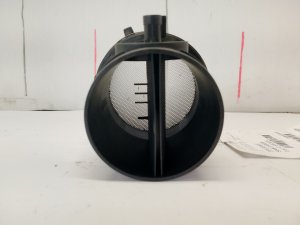
Used OEM Parts in Stock
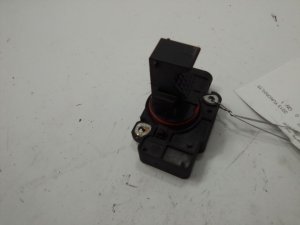
New Aftermarket Parts Available


The information in this article is provided for general reference and educational purposes only. Vehicle specifications, procedures, and part compatibility can vary by production date, trim level, and region. Always consult your vehicle's factory service manual and verify part numbers before purchasing or performing repairs. Safety-critical components such as airbags, seat belts, and braking systems should be installed by a qualified professional.
- Chevrolet Tahoe:
- 🧭 Diagnostic Flowchart
- 🎬 Helpful Videos
- 🛍️ Shop This Part
- What's Unique About the 2007-2014 Chevrolet Tahoe
- Symptoms You May Notice
- Most Likely Causes
- Rare But Worth Checking
- Diagnosis Steps
- Parts You'll Likely Need
- Related Codes That Often Appear With This One
- Technical Service Bulletins (TSBs) & Recalls
- Platform-Specific Known Issues
- Mechanic-Grade Diagnostic Values
- Wiring & Ground Locations
- Real Owner Repair Stories
- "I Checked Everything" — The Actual Cause
- When the Usual Fixes Don't Work
- OEM Part Supersession History
- Real Owner Stories
- Chevrolet Tahoe / Yukon
- Chevrolet Tahoe / Yukon
- Chevrolet Tahoe
- 5.3L V8 GM Truck/Tahoe
- Related OBD-II Codes
- Frequently Asked Questions
- 🎟️ Get 5% Off