

P0101 on 2011-2019 Ford Fiesta: MAF Sensor Range/Performance Causes and Fixes
On a 2011-2019 Ford Fiesta, P0101 is most often caused by a dirty Mass Airflow (MAF) sensor or a vacuum leak in the air intake hose. Before buying parts, first confirm your Fiesta has a MAF sensor (many don't), then try cleaning it with a dedicated cleaner. If that fails, inspect the intake system for cracks or loose clamps, which are common failure points.
- First, confirm if your Fiesta has a MAF sensor; many don't.
- If a MAF sensor is present, your first and cheapest step is to clean it with dedicated MAF sensor cleaner.
- Thoroughly inspect the entire air intake path for cracks or loose clamps, as vacuum leaks are a very common cause.
- Do not replace the MAF sensor until you have tried cleaning it and have ruled out vacuum leaks.
What's Unique About the 2011-2019 Ford Fiesta
The most critical point for the 2011-2019 Ford Fiesta is that not all models have a Mass Airflow (MAF) sensor. Specifically, naturally aspirated 1.6L Ti-VCT models from approximately 2011-2013 are equipped with a MAF sensor. However, many later non-turbocharged models and all turbocharged 1.0L EcoBoost and 1.6L EcoBoost (Fiesta ST) models use a speed-density system, relying on a Manifold Absolute Pressure (MAP) sensor and other inputs to measure engine load instead. Therefore, the absolute first step is to physically check if your vehicle has a MAF sensor, which is located in the air intake tube right after the air filter box. If no sensor is present, a P0101 code is likely triggered by a significant vacuum leak or a faulty MAP sensor providing illogical readings.
Generation note: This range covers the sixth generation of the Ford Fiesta (2011-2019 in the US). The diagnostic process for a P0101 code is consistent across these model years, with the key difference being whether the specific vehicle is equipped with a MAF sensor or a MAP-based system.
Symptoms You May Notice
- Check Engine Light is on
- Rough or unstable idle
- Hesitation or stumbling during acceleration
- Reduced engine power or 'limp mode'
- Poor fuel economy
- Black smoke from the exhaust if the engine is running rich
- Sluggish throttle response.
- Replacing the MAF sensor without first trying to clean it.
- Replacing the MAF sensor when the actual problem is a vacuum leak in the intake boot. A Reddit user shared an experience of replacing the sensor, only to have the code return until an intake leak was found and fixed.
- Purchasing a MAF sensor for a later-model Fiesta that does not use one.
Most Likely Causes
- Dirty or Contaminated MAF Sensor 🔴 High Probability → Shop Fuel Injection Air Flow Meter Oil vapors from the PCV system or fine dust that gets past an old or poorly sealed air filter can coat the sensor's delicate hot-wire or film element, insulating it and causing it to under-report airflow.
How to confirm: Visually inspect the MAF sensor's internal wires or film. If they appear dirty, oily, or coated in grime, they need cleaning.
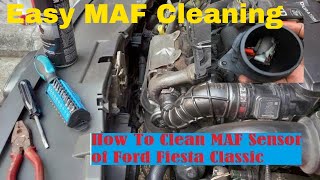
Typical fix: Remove the sensor and clean it using only a dedicated Mass Airflow Sensor cleaner spray. Let it air dry completely before reinstalling. Never touch the sensor elements. 🎬 See how to safely clean your MAF sensor to improve performance.
Est. part cost: $8-$15 for cleaner spray - Vacuum Leak 🟡 Medium Probability The plastic and rubber components of the air intake system can crack or become brittle with age and heat cycles. A leak allows unmetered air to enter the engine after the MAF sensor, causing the sensor's readings to be lower than the actual amount of air entering the cylinders.
How to confirm: Visually inspect the air intake tube between the air filter box and the throttle body for cracks, especially in the ribbed sections. Check for loose clamps or disconnected PCV hoses. A smoke test is the most definitive way to find a leak. A user on a Ford Fiesta forum traced their P0101 to a poorly sealed air filter housing. 🎬 Watch this breakdown of common intake issues causing the P0101 code.
Typical fix: Tighten loose clamps or replace the cracked/damaged intake hose or gasket. Ensure the air filter box is sealed correctly.
Est. part cost: $30-$100 for a new intake hose - Dirty or Clogged Air Filter ⚪ Low Probability → Shop Air Cleaner Assembly A severely clogged air filter can restrict airflow to the point that the MAF sensor's readings are outside the expected range for a given engine speed and throttle position.
How to confirm: Remove and inspect the engine air filter. If it is visibly dirty, clogged with debris, or has not been changed in a long time, it needs to be replaced.
Typical fix: Replace the engine air filter.
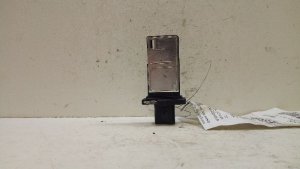
Est. part cost: $15-$30 - Failed MAF Sensor ⚪ Low Probability → Shop Fuel Injection Air Flow Meter
How to confirm: If cleaning the sensor and confirming there are no vacuum leaks does not resolve the code, the sensor's internal electronics may have failed. This can be confirmed by monitoring sensor data with an advanced scan tool (looking for erratic or flatlined readings) or by substituting a known-good sensor.
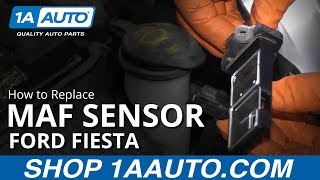
Typical fix: Replace the MAF sensor. The Motorcraft part for 2011-2013 models is a common replacement. 🎬 Watch: Step-by-step guide to replacing the MAF sensor on 2011-2013 models.
Est. part cost: $70-$150
Rare But Worth Checking
- Wiring or Connector Issue: A damaged wire, corroded connector pin, or loose connection at the MAF sensor can disrupt the signal to the PCM. One owner on a forum noted that P0101 appeared with other circuit codes (like P0010 for the camshaft actuator), pointing towards a wiring harness problem or a bad ground connection.
- Clogged Catalytic Converter: A severely restricted exhaust can cause a backup of pressure that affects the air flowing through the engine, potentially causing the MAF reading to be out of range. This is usually accompanied by other symptoms like a severe loss of power and possibly a P0420 code.
- Faulty Throttle Body: → Shop Fuel Injection Throttle Body A throttle body that is sticking or has a faulty position sensor can create a mismatch between expected and actual airflow, potentially triggering a P0101 code.
Diagnosis Steps
- Confirm your Fiesta model has a MAF sensor. Look for a small rectangular sensor with a wire connector in the air intake tube, right after the air filter housing. It is typically present on 2011-2013 1.6L naturally aspirated models. If it doesn't have one, shift diagnosis towards a major vacuum leak or a faulty MAP sensor.
- Inspect the engine air filter. A dirty, clogged filter can restrict airflow and cause this code. Replace if dirty.
- Inspect the air intake system thoroughly. Check the entire intake tract from the MAF sensor to the engine for any cracks, loose clamps, or disconnected hoses. Pay close attention to the flexible, ribbed sections of the intake boot and the seal of the air filter box.
- Remove and clean the MAF sensor. Disconnect the sensor, remove the two Torx screws (usually T20), and gently pull it out. Spray the sensor's wires/elements generously with a dedicated MAF sensor cleaner. Do not use brake cleaner or touch the delicate internal parts. Let it dry completely before reinstalling.
- Clear the code and test drive. After re-installing the sensor, clear the OBD-II code with a scanner and drive the vehicle under various conditions (idle, acceleration, cruise) to see if the light returns.
- Inspect the MAF sensor wiring and connector. Check for any visible damage, corrosion on the pins, or loose-fitting connections. Use a multimeter to check for proper voltage and ground at the connector if you have a wiring diagram.
- Perform a vacuum leak test. If the code persists, a vacuum leak is highly probable. A smoke test is the most effective method. Alternatively, you can carefully spray short bursts of carb cleaner or a propane torch (unlit) around suspected leak points with the engine idling; a change in idle RPM indicates a leak.
- If no other issues are found, the MAF sensor itself has likely failed and requires replacement.
Parts You'll Likely Need
- Mass Airflow Sensor
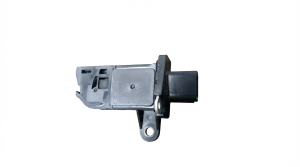
(OEM #Motorcraft AFLS131 (or Ford 3L3Z-12B579-BA) for 2011-2013 models)— This is the primary component related to the code. It is often replaced after cleaning fails to solve the issue.
Trusted brands: Motorcraft, Hitachi, Bosch
OEM price range: $120-$180
Aftermarket price range: $70-$150 - Mass Airflow Sensor Cleaner — Often, the sensor is just dirty and cleaning it is the only fix required. This should always be the first step.
Trusted brands: CRC, WD-40 Specialist, Liqui Moly
OEM price range: $8-$15
Aftermarket price range: $8-$15 - Engine Air Intake Hose
(OEM #e.g., BE8Z-9A675-B (verify by VIN))— This hose can crack with age, causing a vacuum leak that is a very common cause for P0101.
Trusted brands: Motorcraft, Various Aftermarket
Related Codes That Often Appear With This One
- P0171 — This 'System Too Lean' code often appears with P0101 when there is a vacuum leak. Unmetered air enters the engine that the MAF sensor did not measure, causing a lean condition.
- P0172 — This 'System Too Rich' code can appear if the MAF sensor is contaminated and under-reporting airflow, causing the PCM to inject too much fuel based on other sensor inputs.
- P0100, P0102, P0103, P0104 — These are all MAF-related codes indicating general circuit malfunctions, low input, high input, or intermittent faults, which can help pinpoint whether the issue is the sensor itself or its wiring.
- P0068 — This code indicates a 'MAP/MAF - Throttle Position Correlation' error. It can appear alongside P0101 if the PCM sees a disagreement between how much air the MAF sensor says is entering and what the throttle position sensor reports.
Platform-Specific Known Issues
- A significant number of 2011-2019 Ford Fiestas, particularly non-turbo models after ~2013 and all turbo models, do not use a MAF sensor and rely on a MAP sensor instead. It is essential to verify which system your car has before attempting diagnosis or purchasing parts.
- On models that do have a MAF sensor, a common owner experience shared on forums is chasing the P0101 code by replacing the sensor, only to find the root cause was a less obvious vacuum leak from a cracked intake hose or a poorly sealed airbox.
Mechanic-Grade Diagnostic Values
- MAF Sensor Live Data (g/s) at idle — expected: Approximately 3.6-4.0 g/s at stable idle. The value should increase sharply and immediately when the throttle is pressed, and decrease when released.. Failure: A sensor that is slow to respond, stuck at a specific number, or does not show a significant increase when revving the engine is likely faulty.
- MAF Sensor Connector Voltage - PIN 4 (Power) — expected: 12 Volts with key on, engine off (KOEO).. Failure: No voltage indicates a problem with the power supply to the sensor, likely a blown fuse or wiring issue.
- MAF Sensor Connector Voltage - PIN 3 (Ground) — expected: A low reference ground signal provided by the PCM.. Failure: A lack of proper ground will prevent the sensor from functioning correctly.
- MAF Sensor Connector Voltage - PIN 2 (IAT Power) — expected: 5 Volts with key on, engine off (KOEO). This pin powers the integrated Intake Air Temperature sensor.. Failure: No voltage suggests a fault in the 5V reference circuit from the PCM.
Scan Tool Commands That Help
- FORScan: Live Data Monitoring (PID: MAF) — Use this to observe the MAF sensor's output in grams per second (g/s). A healthy sensor will show a stable reading at idle that responds instantly to throttle changes. This is a primary method to test sensor responsiveness.
- FORScan: Clear All DTCs — After performing a repair like cleaning the MAF or fixing a vacuum leak, use this function to clear the P0101 code from the PCM.
- FORScan: TCM Reset — While not directly for the MAF, forum users have noted that electrical issues can cause multiple seemingly unrelated codes. If other transmission-related issues are present, performing a TCM reset (not a relearn) has been suggested to clear module glitches after fixing a ground fault.
Wiring & Ground Locations
- MAF Sensor Connector — Plugged into the MAF sensor, which is located in the air intake tube directly after the air filter housing on applicable models.. This is the primary connection point for the sensor. Corrosion, bent pins, or a loose connection here will directly cause MAF-related codes. The 6-pin connector on some models integrates the IAT sensor as well.
- G100 — Located on the LH (driver's side) inner fender in the engine compartment.. This is a major chassis ground point. A corroded or loose G100 can cause a variety of electrical issues, including unstable sensor readings.
- G101 — Located on the left front body support in the engine compartment.. This is a key ground point for components on the front of the vehicle. A bad ground here could affect the PCM or sensor ground circuits that run through the main harness.
- G102 — Located on the left front transmission support.. This ground connects the transmission case to the chassis, which is critical for the overall grounding of the powertrain. Poor grounding here can introduce electrical noise that affects sensitive sensors like the MAF.
- Ground under Air Intake Filter — A ground point is located on the chassis underneath the air filter box assembly.. This ground is in close proximity to the MAF sensor. Technicians or owners performing other work (like a clutch replacement) may disturb this ground, leading to post-repair electrical faults and codes like P0101.
Real Owner Repair Stories
- Ford Fiesta Forum user (Ford Fiesta, year not specified but within the generation.) — Lack of power, hesitation, poor acceleration, and a P0101 code.
❌ Tried (didn't work) Replaced both VVT solenoids (for other codes), Replaced the MAF sensor, Cleaned the throttle body
✅ What actually fixed it The user discovered the screws for the air filter housing were stripped, allowing the housing to draw in un-metered and unfiltered air from around the air filter seal. Repairing the housing seal and ensuring it was airtight resolved the code. - Reddit user r/FordFiesta (Ford Fiesta, year not specified.) — Persistent P0101 check engine light.
❌ Tried (didn't work) Replacing the Mass Airflow Sensor (code returned after 2 days)., Finding and fixing a separate intake leak (code returned after 1 day).
✅ What actually fixed it The story is a cautionary tale; the user was still stuck after trying the most common fixes. This highlights that the issue can sometimes be more complex than just the sensor or a simple vacuum leak, potentially involving wiring or the PCM itself.
"I Checked Everything" — The Actual Cause
- A common scenario is a leak at the air filter box itself. A technician might perform a smoke test by introducing smoke into the intake system *after* the MAF sensor, which would show no leaks in the intake boot. However, if the air filter box lid is not sealed correctly due to stripped screws or a bad gasket, un-metered air can be drawn in before the MAF sensor, causing a P0101 without the smoke test revealing the fault.
OEM Part Supersession History
3L3Z-12B579-BA→AFLS-131 (Motorcraft part number)— AFLS-131 is the service part number from Motorcraft, Ford's OEM parts brand, for the sensor assembly that corresponds to the Ford engineering number 3L3Z-12B579-BA.
Heads up: While this part fits a wide range of Ford vehicles, it is critical to confirm it is for a Fiesta model that actually uses a MAF sensor (typically 2011-2013 non-turbo). It will not work on later models that use a MAP-only system.
Model Year Variations Within This Range
- 2011-2013: Some naturally aspirated 1.6L models in this early period of the generation are equipped with a MAF sensor. This is the primary difference relevant to P0101 diagnosis.
- 2014-2019: Most non-turbo models and all EcoBoost (turbo) models in this period use a speed-density system with a MAP sensor instead of a MAF sensor. A P0101 code on these vehicles would point more strongly towards a massive vacuum leak or a faulty MAP sensor causing illogical correlation calculations in the PCM.
Diagnostic Flowchart
Other Known Issues on This Vehicle
Issues unrelated to this code that are worth knowing about as an owner of this generation:
- DPS6 PowerShift Automatic Transmission Failure 🔴 High — Extremely common on 2011-2016 models with automatic transmission. Issues include shuddering, jerking, hesitation, and complete failure to engage gears. (Ref: Multiple TSBS, warranty extensions, and class-action lawsuits have been issued.)
- Faulty Door Latch 🔴 High — Common on 2011-2014 models. A broken pawl spring tab can prevent the door from latching or cause it to open while driving. (Ref: Subject to multiple recalls, including Ford recalls 15S16, 16S30, and 20S30.)
- HVAC Blend Door Actuator Failure 🟡 Low — Common across all model years. A plastic gear inside the actuator strips, causing a repetitive clicking or knocking sound from the dashboard when the car is started or climate controls are adjusted.
- Cooling System Issues (Overheating) 🟠 Medium — Reported on various models, particularly early 1.0L EcoBoost engines which had coolant hose recalls. Failures of the water pump, thermostat, or radiator can lead to overheating. (Ref: Recalls existed for specific engine coolant hoses on EcoBoost models.)
- Electronic Throttle Body (ETB) Malfunction 🟠 Medium → Shop Fuel Injection Throttle Body — Can affect 2014-2019 models, causing sudden stalling, high idle, or lack of acceleration. Often requires cleaning or replacement.
Used vs. New Parts: Buying Guide for This Vehicle
When a used part is the smart pick: A used Engine Air Intake Hose from a junkyard can be a smart, cost-effective choice, provided it is inspected carefully. Electronic parts like the MAF sensor are a gamble when used, but may be considered if from a very low-mileage, verified donor vehicle.
Donor-vehicle mileage cap: roughly under 60000 miles for the part to have meaningful remaining life.
What to inspect on the donor part:
- For an intake hose, check for any hairline cracks, especially in the accordion sections. The rubber should still be pliable, not hard or brittle.
- For a MAF sensor, inspect the connector pins for corrosion or damage. Ensure the delicate sensor elements inside are physically intact and not covered in oil or debris.
OEM-only on this vehicle (don't cheap out):
- Mass Airflow Sensor
Aftermarket brands forum-validated for this vehicle:
- Delphi
- Hitachi
- Bosch
- NTK
- Walker Products
Brands owners have reported issues with on this vehicle:
- Unbranded, no-name sensors from online marketplaces are frequently reported on forums as being dead-on-arrival or failing within a few weeks.
Real Owner Stories
Aggregated from forums and TSBs cited above. Mileages and costs reflect what owners reported in those sources.
2011-2013 Ford Fiesta 1.6L
Symptoms: The owner replaced the MAF sensor to fix a P0101 code, but the code returned. They later discovered other codes indicating an intake leak.
What fixed it: The issue was a vacuum leak rather than a faulty sensor, highlighting that the sensor is often misdiagnosed.
Source hint: Reddit r/FordFiesta - P0101 code, Mass Airflow Sensor - Need help fixing the problem.
2011-2019 Ford Fiesta
Symptoms: P0101 and P0010 (camshaft actuator) codes appeared after replacing VVT solenoids.
What fixed it: The discussion identified a poorly sealed air filter housing causing an intake leak and suggested inspecting the wiring harness for circuit-related issues.
Source hint: Ford Fiesta Forum - P0101 Code Problems
Related OBD-II Codes
Frequently Asked Questions
Does my 2014 Ford Fiesta even have a MAF sensor to cause a P0101 code?
I replaced my MAF sensor but the P0101 code came back. What else should I check on my Fiesta?
Can I use any cleaner to fix a dirty MAF sensor on my 1.6L Fiesta?
What specific replacement part is recommended if my MAF sensor has actually failed?
Is there a specific tool needed to remove the MAF sensor on a 2012 Fiesta?
Helpful Videos
We Have This Part in Stock

The information in this article is provided for general reference and educational purposes only. Vehicle specifications, procedures, and part compatibility can vary by production date, trim level, and region. Always consult your vehicle's factory service manual and verify part numbers before purchasing or performing repairs. Safety-critical components such as airbags, seat belts, and braking systems should be installed by a qualified professional.
- Ford Fiesta:
- 🧭 Diagnostic Flowchart
- 🎬 Helpful Videos
- 🛍️ Shop This Part
- What's Unique About the 2011-2019 Ford Fiesta
- Symptoms You May Notice
- Most Likely Causes
- Rare But Worth Checking
- Diagnosis Steps
- Parts You'll Likely Need
- Related Codes That Often Appear With This One
- Platform-Specific Known Issues
- Mechanic-Grade Diagnostic Values
- Scan Tool Commands That Help
- Wiring & Ground Locations
- Real Owner Repair Stories
- "I Checked Everything" — The Actual Cause
- OEM Part Supersession History
- Model Year Variations Within This Range
- Other Known Issues on This Vehicle
- Used vs. New Parts: Buying Guide for This Vehicle
- Real Owner Stories
- 2011-2013 Ford Fiesta 1.6L
- 2011-2019 Ford Fiesta
- Related OBD-II Codes
- Frequently Asked Questions
- 🎟️ Get 5% Off