

P0101 on 2005-2010 Ford Mustang: MAF Sensor Range/Performance Causes and Fixes
On a 2005-2010 Ford Mustang, code P0101 is most often caused by a dirty Mass Airflow (MAF) sensor, which can be easily cleaned with a special spray. If cleaning doesn't work, a vacuum leak (check PCV hoses and intake gaskets) or a faulty MAF sensor is the next likely cause. A new sensor is relatively inexpensive and easy to replace. Aftermarket cold air intakes are a frequent contributor to this code.
- Start by cleaning the MAF sensor with dedicated cleaner; this is the most likely and cheapest fix.
- If you have an aftermarket oiled air filter, be careful not to over-oil it, as this is a primary cause of MAF contamination.
- Thoroughly inspect the intake tube between the MAF sensor and the engine for any cracks or loose connections, as vacuum leaks are the second most common cause.
- Replacing the MAF sensor is a very simple DIY job that requires minimal tools.
What's Unique About the 2005-2010 Ford Mustang
For the S197 generation Mustang, this code is frequently associated with aftermarket Cold Air Intakes (CAIs). The oiled filters used in many CAIs can contaminate the MAF sensor if they are over-oiled, leading to skewed readings. Furthermore, many CAIs require a specific tune to recalibrate the MAF sensor for the different diameter of the intake tube; running a CAI without the proper tune can cause a P0101 code even with a perfectly clean sensor. Stock vehicles are not immune, but the prevalence of these modifications in the Mustang community makes it a primary suspect. Additionally, vacuum leaks from improperly installed intakes or aged hoses are a common source of this code on these cars.
Symptoms You May Notice
- Check Engine Light is on
- Engine runs rough, especially at idle
- Hesitation or stumbling during acceleration
- Reduced engine power or 'limp mode'
- Poor fuel economy
- Black smoke from the exhaust (running rich)
- Engine may stall, especially when coming to a stop
- Hanging or surging idle RPM
- Replacing the MAF sensor without first attempting to clean it.
- Replacing oxygen (O2) sensors, as a bad MAF reading can cause lean (P0171, P0174) or rich (P0172, P0175) codes that might suggest an O2 sensor problem.
- Replacing the throttle body when the issue is an unmetered air leak elsewhere in the intake system.
Most Likely Causes
- Dirty or Contaminated MAF Sensor 🔴 High Probability → Shop Fuel Injection Air Flow Meter Very common, especially if an aftermarket oiled air filter is used. Oil and fine dust can coat the sensor's delicate hot wires, insulating them and causing inaccurate readings.
How to confirm: Visually inspect the MAF sensor wires (located inside the sensor housing after removing it). If they appear dirty, cleaning is the first step. The sensor is typically held in by two T20 security Torx screws.
Typical fix: Remove the sensor and clean it carefully using only dedicated Mass Airflow Sensor cleaner spray. Spray the wires and plate 10-15 times and let it air dry completely. Do not touch the wires with anything.
Est. part cost: $10-$15 for cleaner spray - Vacuum Leak 🟡 Medium Probability Aging rubber hoses and intake gaskets can crack. Common leak points on the S197 are the PCV hose elbow at the back of the intake manifold, the intake manifold gaskets themselves, and the main intake tube becoming loose or cracked.
How to confirm: Visually inspect all intake ducting and vacuum lines for cracks or loose clamps. Listen for a hissing sound at idle. A smoke test is the most effective way to find hidden leaks.
Typical fix: Replace the cracked hose or leaking gasket. Tighten loose clamps. The PCV elbow is a common and inexpensive part to replace.
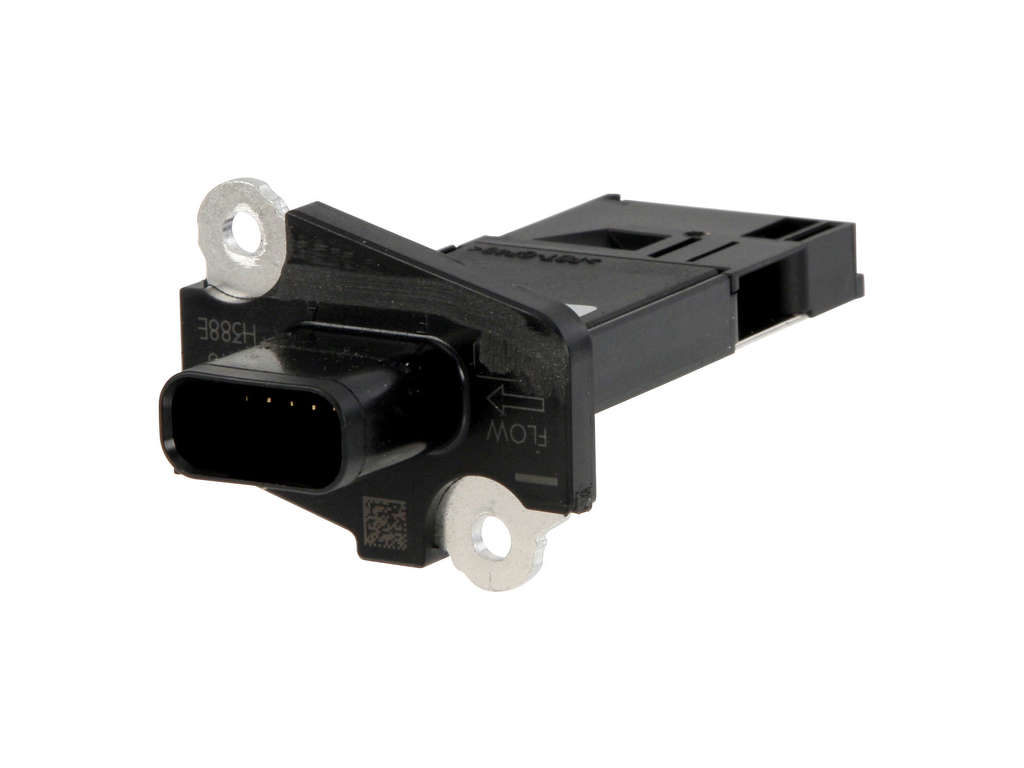
Est. part cost: $20-$150 depending on the leaking component - Faulty Mass Airflow (MAF) Sensor 🟡 Medium Probability → Shop Fuel Injection Air Flow Meter
How to confirm: If cleaning the sensor and confirming there are no vacuum leaks doesn't resolve the code, the sensor itself has likely failed. A diagnostic scan tool can monitor live MAF data (in lb/min or g/s) to confirm erratic readings or readings that don't correspond to engine RPM changes. Unplugging the MAF sensor can force the car into a default mode; if it runs better, the sensor is likely bad.
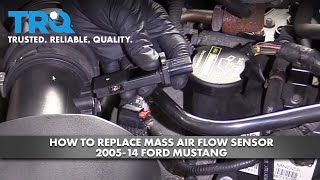
Typical fix: Replace the MAF sensor. It is held in by two screws and a single electrical connector. 🎬 Watch: How to replace the MAF sensor on your Mustang.
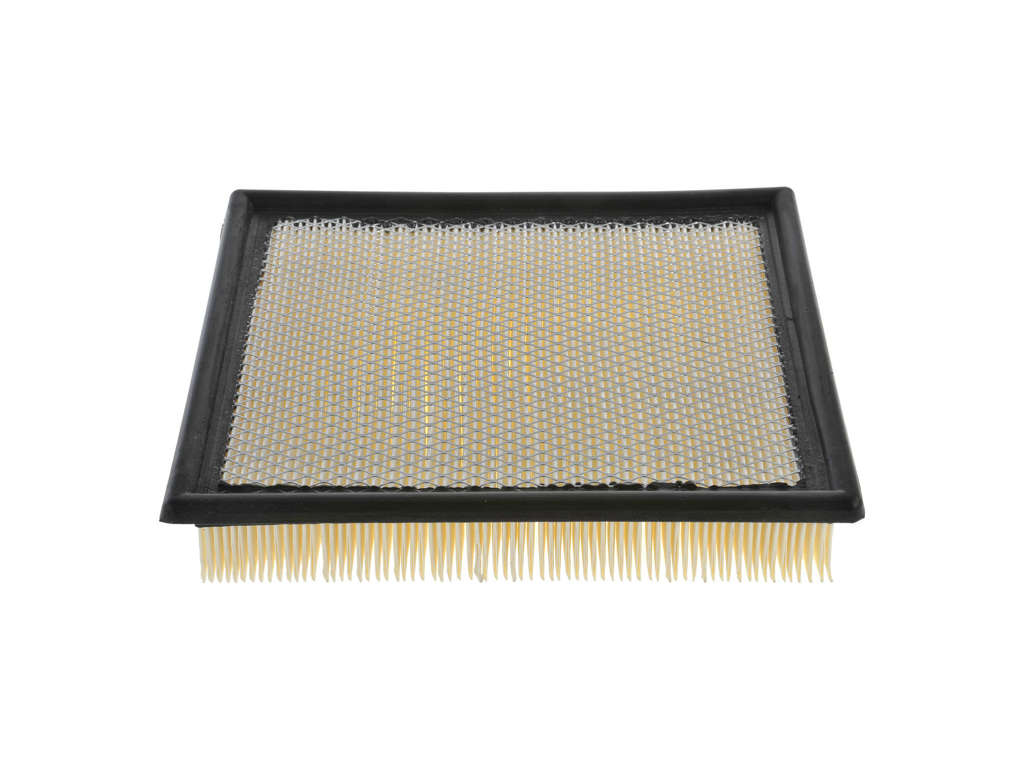
Est. part cost: $60-$150 - Clogged or Dirty Engine Air Filter ⚪ Low Probability → Shop Air Cleaner Assembly
How to confirm: Visually inspect the engine air filter. If it is black and full of debris, it's overdue for replacement.
Typical fix: Replace the engine air filter.
Est. part cost: $15-$40 - Damaged MAF Sensor Wiring or Connector ⚪ Low Probability → Shop Fuel Injection Air Flow Meter
How to confirm: Inspect the wiring harness and connector at the MAF sensor for any signs of corrosion, stretched or broken wires, or loose pins. Wiggle the connector with the engine running to see if it affects the idle.
Typical fix: Repair the damaged wire or replace the connector pigtail.
Est. part cost: $20-$50 for a pigtail
Rare But Worth Checking
- Clogged Catalytic Converter: A restricted exhaust can affect airflow dynamics and trigger a P0101 code. This is usually accompanied by other symptoms like a significant loss of power at high RPM, a rotten egg smell from the exhaust, and potentially glowing red converters after a hard run.
- Incorrect Aftermarket Intake Tune: Many aftermarket cold air intakes change the diameter of the MAF housing. This requires a corresponding software tune for the PCM to correctly interpret the airflow signal. Without the correct tune, the PCM will receive out-of-range data and set a P0101 code.
Diagnosis Steps
- Read the trouble codes with an OBD-II scanner and note any other codes present, especially P0171, P0174, P0172, or P0175.
- Inspect the engine air filter. If it's dirty, replace it.
- Visually inspect the air intake system from the air filter box to the throttle body. Look for any cracks in the plastic/rubber, loose clamps, or disconnected hoses. Pay close attention to the PCV hoses.
- Remove the MAF sensor. It is held in by two T20 security Torx screws. Unplug the electrical connector.
- Inspect the MAF sensor's internal wires. Are they visibly dirty or coated in oil?
- Thoroughly spray the sensor wires with a dedicated MAF sensor cleaner. Do not use brake or carb cleaner. Allow it to air dry for at least 20-30 minutes.
- While the sensor is out, check its O-ring seal for cracks or damage.
- Reinstall the sensor, ensure the intake tubing is secure, clear the codes with the scanner, and test drive the vehicle to see if the code returns.
- If the code returns, perform a smoke test to definitively check for vacuum leaks.
- If no vacuum leaks are found, use a scan tool to monitor live MAF sensor data (g/s). The reading should be steady at idle and increase smoothly with RPM. Compare readings to known-good values if possible. A reading that is erratic or doesn't respond is a sign of a bad sensor.
- As a final check, inspect the MAF sensor wiring and connector for damage. Test for power and ground at the connector with a multimeter.
Parts You'll Likely Need
- Mass Airflow Sensor
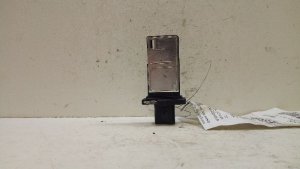
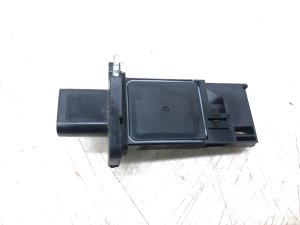
(OEM #3L3Z-12B579-BA (Motorcraft AFLS131) - Fits both 4.0L V6 and 4.6L V8.)— If cleaning the original sensor and checking for vacuum leaks doesn't solve the problem, the sensor has likely failed internally.
Trusted brands: Motorcraft, Hitachi, Bosch, Delphi
OEM price range: $120-$180
Aftermarket price range: $60-$120 - Mass Airflow Sensor Cleaner — This is the first and cheapest step in fixing a P0101, as a dirty sensor is the most common cause.
Trusted brands: CRC, Liqui Moly, WD-40 Specialist
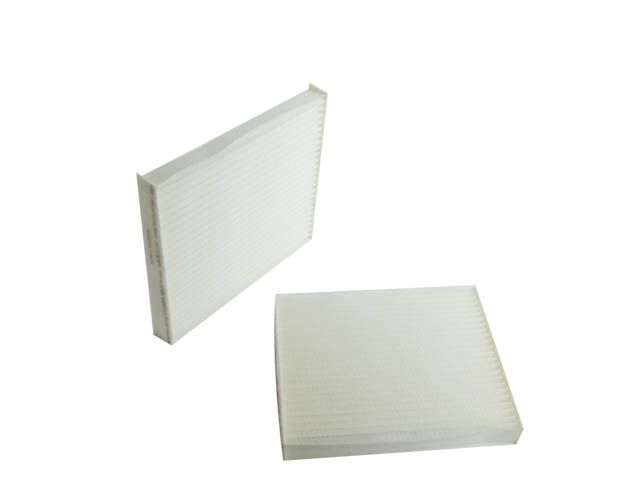
Aftermarket price range: $10-$15 - Engine Air Filter
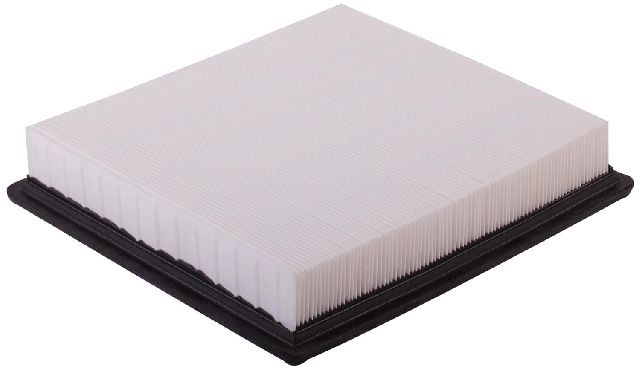
(OEM #FA1773 (Motorcraft - for V6/GT))— A clogged filter can restrict airflow and cause this code. It's a basic maintenance item that should be checked first.
Trusted brands: Motorcraft, Wix, Fram
OEM price range: $25-$40
Aftermarket price range: $15-$25
Related Codes That Often Appear With This One
- P0171 — System Too Lean (Bank 1) - A vacuum leak after the MAF sensor allows unmetered air in, or a dirty MAF under-reports airflow, causing the PCM to not inject enough fuel.
- P0174 — System Too Lean (Bank 2) - Same as P0171, but for the second bank of cylinders on V-engines. Often appears with P0171.
- P0172 — System Too Rich (Bank 1) - A faulty MAF sensor might incorrectly over-report airflow, causing the PCM to inject too much fuel.
- P0175 — System Too Rich (Bank 2) - Same as P0172, but for the second bank of cylinders. Often appears with P0172.
Technical Service Bulletins (TSBs) & Recalls
- TSB 05-3-1: While not a direct fix for P0101, this TSB for the 2005 model year advises technicians on proper diagnosis for driveability issues, noting that other failing sensors can be misdiagnosed as a MAF problem. This reinforces the need for thorough diagnosis before replacing the MAF sensor.
Platform-Specific Known Issues
- Aftermarket Cold Air Intake (CAI) Complications: → Shop Engine Air Intake Resonator Many owners install a CAI and either over-oil the filter, contaminating the MAF sensor, or fail to install the required PCM tune. The different diameter of the CAI tube requires a recalibration of the MAF sensor curve in the tune. Without it, the car will run lean or rich and throw P0101, P0171/P0174 codes. A user on StangNet forums experienced severe bucking and stalling after an aftermarket MAF upgrade, highlighting the sensitivity of the system.
- Vacuum Leak at PCV Hose: → Shop PCV Valve Hose A very common source of unmetered air on the S197 Mustang is a cracked or deteriorated PCV hose, particularly the elbow connecting to the back of the intake manifold. Age and heat cause the rubber to become brittle and split, creating a significant vacuum leak that the MAF sensor cannot account for, leading directly to P0171/P0174 lean codes alongside P0101.
Mechanic-Grade Diagnostic Values
- MAF Sensor Live Data (g/s) at Idle — expected: Approximately 4-7 g/s for a V8 (4.6L) and 3-5 g/s for a V6 (4.0L) on a fully warmed engine.. Failure: Readings significantly higher (suggesting a large vacuum leak if accompanied by lean codes) or lower (suggesting a clogged filter or bad sensor) than expected. A reading of 0.00 g/s with the engine running indicates a dead sensor or wiring issue.
- MAF Sensor Live Data (g/s) at 2500 RPM (no load) — expected: Approximately 15-25 g/s. The reading should be smooth and linear as RPMs increase.. Failure: Jerky, erratic readings, or values that do not increase proportionally with engine speed.
- MAF Sensor Signal Voltage at Idle — expected: Approximately 0.5V to 1.5V.. Failure: Voltage significantly outside this range, such as 1.2V at idle which could correspond to a false high airflow reading of 45 g/s, indicates a major issue.
- MAF Sensor Signal Voltage at Key-On, Engine-Off (KOEO) — expected: Should be very close to 0V. Some sources suggest 0.2V - 0.3V is acceptable.. Failure: Any significant voltage reading (e.g., >0.5V) indicates a sensor that is failed or has a wiring short.
- Mode $06, Test ID $81, Component ID $10 — expected: This test monitors the MAF sensor for rationality. The measured value should be below the maximum threshold set by the PCM.. Failure: A test result that fails or is near the maximum limit indicates the MAF sensor signal is becoming irrational, even if it hasn't triggered a P0101 code yet. This is an early warning sign.
Hidden / Shadow Codes Worth Checking
- P1101: Mass Airflow Sensor Out of Self-Test Range. This Ford-specific code can be set during a Key-On Engine-Off (KOEO) self-test if the MAF sensor's output voltage is not within the expected range (typically near 0V). It often points to a faulty sensor or wiring issue before the more general P0101 is set during engine operation. (see via Ford-specific scan tool (like IDS) or a scan tool capable of running manufacturer-specific self-tests.)
Wiring & Ground Locations
- G102 — On the radiator core support, near the Powertrain Control Module (PCM).. This is the primary chassis ground point for the MAF sensor's power ground (PWRGND) wire. A corroded or loose connection here will cause a floating ground, leading to erratic sensor readings and triggering P0101.
- MAF Connector Pinout (6-pin) — At the MAF sensor itself. Pins are numbered 1-6 in the direction of airflow.. Pin 1: IAT Signal, Pin 2: Signal Return (for IAT), Pin 3: MAF Return (Sensor Ground), Pin 4: MAF Signal (0-5V output), Pin 5: Power Ground (PWRGND), Pin 6: Vehicle Power (VPWR, 12V). Knowing the pinout is critical for testing power, ground, and signal integrity with a multimeter.
- Secondary Power Ground — A strap or cable between the back of the intake manifold and the driver's side firewall.. While not the MAF's direct ground, this is a critical engine-to-chassis ground. If it's loose or missing, the PCM and its sensors can experience electrical noise and unstable ground references, indirectly causing a P0101.
- PCM Connector E (Engine) — The bottom of the three connectors on the PCM, located in the passenger side engine bay.. The MAF sensor wires terminate here. For example, on a 4.6L GT, the MAF Signal wire (Gray/Red) goes to Pin 61 of this connector. This allows for continuity checks of the harness between the sensor and the PCM.
Real Owner Repair Stories
- StangNet Forums (2007 Mustang GT) — P0101 and P0102 codes, car would die, rough idle.
❌ Tried (didn't work) Cleaning the MAF sensor, Replacing the MAF sensor with a new one, Checking for vacuum leaks
✅ What actually fixed it The alternator was failing and creating electrical noise (AC ripple) on the DC system. This noise interfered with the sensitive MAF sensor signal, causing the PCM to see erratic readings. Replacing the alternator resolved all codes and drivability issues. - AllFordMustangs Forum (2006 Mustang V6) — P0101 code, hesitation, poor performance.
❌ Tried (didn't work) Replacing the MAF sensor, Replacing the fuel filter, Cleaning the throttle body
✅ What actually fixed it The fuel pump was failing. It was not providing enough pressure, which caused the engine to run lean. The PCM's attempt to compensate based on other sensor readings conflicted with the MAF sensor's (correct) airflow reading, leading the system to flag the MAF signal as out of range. Replacing the fuel pump fixed the lean condition and the P0101 code.
"I Checked Everything" — The Actual Cause
- A user on a Mustang forum reported chasing P0101 and lean codes (P0171/P0174). Multiple smoke tests showed no vacuum leaks. The final cause was a failing fuel pump that couldn't supply enough volume, causing a lean condition that the PCM misinterpreted as a MAF sensor range issue.
- In another case, a failing alternator was producing excessive AC ripple voltage, which introduced electrical noise into the MAF sensor's signal circuit. This made the signal appear erratic to the PCM, triggering P0101, even though there were no air leaks and the MAF sensor itself was good.
OEM Part Supersession History
3L3Z-12B579-BA→This part number remains the primary OEM replacement for the 2005-2010 model years. It has not been formally superseded for this application. It is also sold under the Motorcraft number AFLS131.— N/A
Heads up: Crucially, this sensor is NOT interchangeable with the sensor used on 2011-2014 Mustangs (Part # BR3Z-12B579-A), even though they may look similar. Using the wrong year range sensor will cause immediate drivability problems and codes.
Model Year Variations Within This Range
- 2005-2010: The MAF sensor, its wiring, and the diagnostic approach for P0101 are consistent across the entire 2005-2010 range for both V6 and V8 models. The 2010 model year refresh did not introduce any changes to the MAF system. The significant change occurred in the 2011 model year with the introduction of new engines and a different MAF sensor.
Diagnostic Flowchart
Real Owner Stories
Aggregated from forums and TSBs cited above. Mileages and costs reflect what owners reported in those sources.
2005-2010 Ford Mustang (S197)
Symptoms: Stalling, sputtering, and white smoke immediately after cleaning the MAF sensor.
What fixed it: Reseating the MAF sensor to fix a vacuum leak introduced during the cleaning process, or replacing the sensor if it was damaged during cleaning.
Source hint: StangNet forum thread titled 'Bad MAF sensor'
2005-2010 Ford Mustang (S197)
Symptoms: Severe bucking, stalling, and severe idle problems after installing an aftermarket C&L brand MAF upgrade.
What fixed it: Installing the required PCM tune to recalibrate the MAF sensor curve for the new intake diameter.
Source hint: StangNet forum thread titled 'Severe idle problem after MAF upgrade'
2005-2010 Ford Mustang 4.6L
Symptoms: P0101 code with suspected bad MAF sensor causing driveability issues.
What fixed it: Used fuel trim data and a specific formula to estimate correct MAF readings at idle for the 4.6L engine to confirm the sensor was bad, followed by replacement.
Source hint: S197Forum thread titled 'S197 Mass Air Flow issue'
Related OBD-II Codes
Frequently Asked Questions
Does TSB 05-3-1 apply to my 2005 Mustang for code P0101?
I installed an aftermarket Cold Air Intake (CAI) on my S197 Mustang. Could this cause the P0101 code?
Where is the most common vacuum leak located on the 2005-2010 Mustang that triggers this code?
What tools do I need to remove the MAF sensor for cleaning on my Mustang?
Can I unplug the MAF sensor to test if it's bad on my Mustang?
Helpful Videos
Used OEM Parts in Stock
New Aftermarket Parts Available

The information in this article is provided for general reference and educational purposes only. Vehicle specifications, procedures, and part compatibility can vary by production date, trim level, and region. Always consult your vehicle's factory service manual and verify part numbers before purchasing or performing repairs. Safety-critical components such as airbags, seat belts, and braking systems should be installed by a qualified professional.
- Ford Mustang:
- 🧭 Diagnostic Flowchart
- 🎬 Helpful Videos
- 🛍️ Shop This Part
- What's Unique About the 2005-2010 Ford Mustang
- Symptoms You May Notice
- Most Likely Causes
- Rare But Worth Checking
- Diagnosis Steps
- Parts You'll Likely Need
- Related Codes That Often Appear With This One
- Technical Service Bulletins (TSBs) & Recalls
- Platform-Specific Known Issues
- Mechanic-Grade Diagnostic Values
- Hidden / Shadow Codes Worth Checking
- Wiring & Ground Locations
- Real Owner Repair Stories
- "I Checked Everything" — The Actual Cause
- OEM Part Supersession History
- Model Year Variations Within This Range
- Real Owner Stories
- 2005-2010 Ford Mustang (S197)
- 2005-2010 Ford Mustang (S197)
- 2005-2010 Ford Mustang 4.6L
- Related OBD-II Codes
- Frequently Asked Questions
- 🎟️ Get 5% Off