

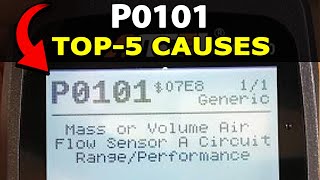
P0101 on 2010-2019 Ford Taurus 3.5L V6: MAF Sensor Causes and Fixes
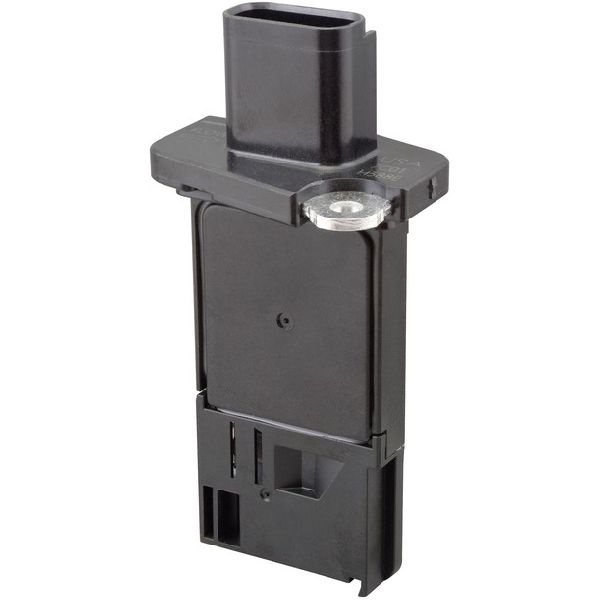
On a 2010-2019 Taurus with the 3.5L V6, code P0101 is most often caused by a dirty Mass Airflow (MAF) sensor. The fix is usually cleaning the sensor with a dedicated MAF cleaner spray (~$15). If cleaning doesn't work, a replacement Motorcraft sensor costs between $100 and $150. Occasionally, a dirty or failing electronic throttle body can also cause this code.
- Before buying any parts, spend $15 on a can of MAF Sensor Cleaner and clean the sensor. This resolves the P0101 code in most cases.
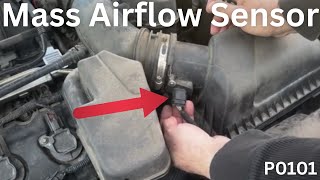
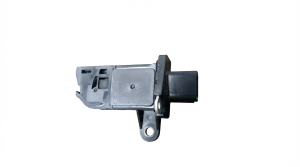
- The MAF sensor is located on the air intake tube right after the air filter box and is held in by two Torx screws, making it very easy to access.
- Always inspect the air intake hose for cracks and ensure the engine air filter is clean, as these are other common causes for the code.
- If you must replace the sensor, using an OEM Motorcraft part is highly recommended to avoid compatibility issues with cheaper aftermarket sensors.
What's Unique About the 2010-2019 Ford Taurus
The 3.5L Cyclone V6 platform, like many modern engines, can be susceptible to oil vapor being drawn through the Positive Crankcase Ventilation (PCV) system and into the air intake. This oil vapor can contaminate the delicate MAF sensor's sensing element, leading to inaccurate readings and triggering a P0101 code. While no TSB is specific to the Taurus for this, a related TSB for the 3.5L in the Ford Edge points to issues with oil accumulation in the intake system, suggesting this is a known characteristic of the engine family. Additionally, these vehicles are known for electronic throttle body (ETB) issues, which can also disrupt airflow and contribute to or be misdiagnosed as a MAF problem.
Symptoms You May Notice
- Check Engine Light is on
- Rough or erratic idle
- Hesitation or jerking during acceleration
- Reduced engine power and sluggish performance
- Decreased fuel economy
- Occasional stalling, especially when coming to a stop
- Black smoke from the exhaust if the engine is running excessively rich.
- Replacing the MAF sensor without first attempting to clean it. Contamination is far more common than outright failure.
- Replacing oxygen sensors. While lean/rich codes (P0171/P0174) can accompany P0101, the root cause is often the incorrect airflow reading, not the O2 sensors themselves.
Most Likely Causes
- Dirty or Contaminated MAF Sensor 🔴 High Probability → Shop Fuel Injection Air Flow Meter Oil vapor from the PCV system can coat the sensor's hot wire over time, insulating it and causing inaccurate readings. This is the most common cause by a wide margin.
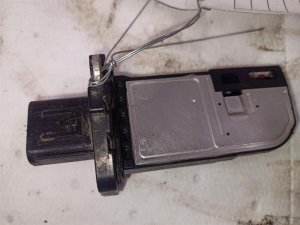
How to confirm: Visually inspect the MAF sensor's wires (located inside the sensor housing). If they appear dirty, oily, or have debris on them, they are contaminated. The issue is often not visible to the naked eye.
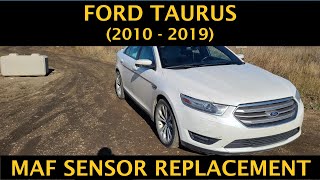
Typical fix: Remove the sensor and clean it thoroughly with a dedicated, electronics-safe MAF sensor cleaner spray. Do not use brake or carb cleaner, as they can damage the sensor. Do not touch the wires. 🎬 Watch: How to clean or replace your 3.5L MAF sensor. Allow it to dry completely before reinstalling.
Est. part cost: $10-$20 for MAF cleaner spray. - Vacuum Leak 🟡 Medium Probability Cracks in the plastic air intake tube or deteriorated vacuum hoses (especially PCV lines) can allow unmetered air to enter the engine after the MAF sensor, causing the PCM to see a mismatch between expected and actual airflow. 🎬 Watch this guide to understanding and fixing P0101 circuit codes.
How to confirm: Visually inspect all air intake ducting between the MAF sensor and the throttle body for cracks or loose clamps. Listen for a hissing sound at idle. A smoke test is the most definitive way to find a vacuum leak.
Typical fix: Replace the cracked intake tube or damaged vacuum hose.
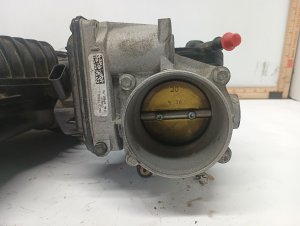
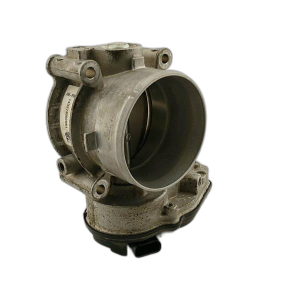
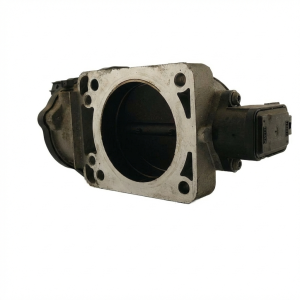
Est. part cost: $20-$100 for hoses or intake boot. - Dirty or Faulty Electronic Throttle Body (ETB) 🟡 Medium Probability → Shop Fuel Injection Throttle Body The ETB on this platform is known to accumulate carbon and oil residue, which can restrict airflow or cause the throttle plate to stick. This can create airflow readings that conflict with the MAF sensor's data. Electronic failure of the ETB is also common.
How to confirm: Remove the intake boot and inspect the throttle body bore and plate for black, gummy buildup. If cleaning the MAF sensor doesn't work, and the ETB is dirty, cleaning it is a logical next step. If the vehicle enters 'limp mode' with a wrench light, the ETB has likely failed electronically.
Typical fix: Clean the throttle body plate and bore with a dedicated throttle body cleaner. If the unit has failed electronically, it must be replaced.
Est. part cost: $10 for cleaner, $100-$250 for a replacement ETB. - Clogged or Dirty Engine Air Filter ⚪ Low Probability → Shop Air Cleaner Assembly
How to confirm: Remove and inspect the engine air filter. If it is visibly dirty, clogged with debris, or has not been changed in a long time, it is restricting airflow.
Typical fix: Replace the engine air filter.
Est. part cost: $20-$50 - Failed MAF Sensor ⚪ Low Probability → Shop Fuel Injection Air Flow Meter
How to confirm: If cleaning the sensor, cleaning the throttle body, and checking for vacuum leaks does not resolve the code, the sensor itself may have failed electronically. This can be confirmed by monitoring MAF sensor data (grams/sec) with an OBD-II scan tool to see if readings are erratic or do not change with engine RPM.
Typical fix: Replace the MAF sensor. It is highly recommended to use an OEM Motorcraft part to avoid compatibility issues with aftermarket sensors.
Est. part cost: $100-$180
Rare But Worth Checking
- Wiring or Connector Issue: A damaged wire or a loose/corroded connector pin for the MAF sensor can cause an intermittent or complete loss of signal, triggering the P0101 code. Wiggle the harness while the engine is running to see if it affects the idle.
- Clogged Catalytic Converter: A restricted exhaust can cause airflow back-pressure, leading to implausible readings from the MAF sensor. This is usually accompanied by other codes and a significant loss of power, especially at higher RPMs.
Diagnosis Steps
- Read the code: Use an OBD-II scanner to confirm P0101 is present and check for any other codes.
- Inspect the Air Filter: Check if the engine air filter is clean. A clogged filter can restrict airflow and cause this code. Replace if dirty.
- Inspect the Intake System: Carefully check the air intake tube between the air filter housing and the throttle body for any cracks, tears, or loose connections. Ensure all clamps are tight.
- Clean the MAF Sensor: Disconnect the battery. Unplug the MAF sensor connector (pull back the red safety tab first). Remove the two Torx T20 screws holding the sensor in place. Carefully lift the sensor out. Liberally spray the sensor's internal wires and elements with a dedicated MAF sensor cleaner. Do NOT touch the wires. Let it air dry completely for at least 30 minutes.
- Inspect and Clean the Throttle Body: While the intake tube is off, inspect the electronic throttle body for carbon buildup. If dirty, spray a clean rag with throttle body cleaner and wipe the bore and plate clean. 🎬 See a live demonstration of cleaning the Taurus throttle body. Do not spray directly into the throttle body excessively.
- Reinstall and Clear Codes: Reinstall the clean, dry sensor and the intake assembly. Reconnect the connector and the battery. Use the scanner to clear the trouble codes.
- Test Drive: Drive the vehicle for 10-15 minutes under various conditions to see if the code returns. If it does not, the problem is solved.
- Check for Vacuum Leaks: If the code returns, perform a smoke test to definitively check for vacuum leaks in the intake manifold, vacuum lines, and PCV system.
- Test/Replace the MAF Sensor: If no vacuum leaks are found and cleaning did not work, the sensor itself has likely failed. Replace it with a new, high-quality part, preferably from Motorcraft.
Parts You'll Likely Need
- Mass Airflow Sensor
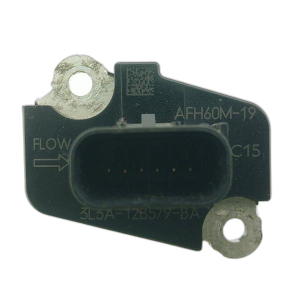
(OEM #BR3Z-12B579-A (also seen as BR31-12B579-AA or Motorcraft AFLS-165))— This is the part that fails or gets dirty. If cleaning doesn't fix the issue, replacement is necessary.
Trusted brands: Motorcraft, Hitachi, Delphi, Walker
OEM price range: $110-$180
Aftermarket price range: $50-$120 - MAF Sensor Cleaner — This is the first and most common fix. A can of dedicated cleaner is the only tool needed to resolve a contaminated sensor.
Trusted brands: CRC, Liqui Moly
Aftermarket price range: $10-$20 - Electronic Throttle Body
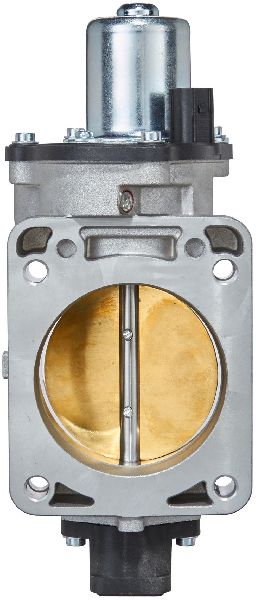
(OEM #AT4Z-9E926-B (Verify by VIN))— A common failure point on this platform that can cause or be misdiagnosed as a P0101. If cleaning doesn't work or if limp mode occurs, replacement is often needed.
Trusted brands: Motorcraft, Standard Motor Products (SMP)
OEM price range: $150-$250
Aftermarket price range: $80-$160
Related Codes That Often Appear With This One
- P0171 / P0174 — These 'System Too Lean' codes often appear with P0101. If the MAF sensor is dirty and under-reporting airflow, the PCM injects too little fuel, creating a lean condition that the oxygen sensors detect.
- P0172 / P0175 — Less commonly, 'System Too Rich' codes can occur if the MAF sensor fails in a way that causes it to over-report airflow, leading the PCM to inject too much fuel.
- P2111 / P2112 — These codes relate to the Throttle Actuator Control System. If they appear alongside P0101, it strongly suggests the problem is with the Electronic Throttle Body, not the MAF sensor.
Technical Service Bulletins (TSBs) & Recalls
- TSB #ASI-32211 (NHTSA ID: #10053358) - While for a 2012-2014 Ford Edge, this TSB notes potential engine oil accumulation in the intake system of the 3.5L engine, which corroborates the theory of MAF sensor contamination from PCV oil vapor.
- TSB #SSM 46085 (NHTSA ID: #10109070) - A service message advising technicians that certain diagnostic PIDs should not be used to diagnose electronic throttle body (ETB) concerns, indicating the ETB is a complex and frequently diagnosed component.
Platform-Specific Known Issues
- Owner Experience: Cleaning MAF and Throttle Body Solves P0101: → Shop Fuel Injection Throttle Body On a TaurusClub.com forum thread, a user with a 2013 Taurus experiencing P0101 with hesitation reported that cleaning the MAF sensor provided a temporary fix, but the code returned. They later cleaned the throttle body, which was significantly dirty, and reported that the combination of cleaning both components resolved the issue permanently.
- Reddit User Story: Aftermarket MAF Fails, Throttle Body Suspected: → Shop Fuel Injection Throttle Body A user on Reddit's r/Cartalk reported getting a P0101 code, cleaning the MAF, and then replacing it with an aftermarket sensor when the code returned. When the code appeared a third time, a dealership suggested the issue could be the throttle body or a faulty aftermarket MAF sensor, highlighting the importance of using OEM parts and considering the ETB as a cause.
Mechanic-Grade Diagnostic Values
- MAF Sensor Live Data (g/s) at Idle — expected: 4-7 g/s (for 3.5L V6).. Failure: Readings significantly lower than 4 g/s or that are stuck and do not change with RPM suggest a contaminated or failed sensor.
- MAF Sensor Live Data (g/s) at 2500 RPM — expected: 15-25 g/s.. Failure: A reading that does not increase smoothly with RPM or falls flat indicates a problem with the sensor or a major intake/exhaust restriction.
- MAF Sensor Signal Wire Voltage at Idle — expected: ~0.5V - 1.5V.. Failure: Voltage that is stuck high (near 5V) or low (near 0V) and doesn't respond to changes in engine speed points to a wiring or sensor fault.
Scan Tool Commands That Help
- Ford IDS / FORScan: Throttle Body Relearn / Reset All Adaptations — This function should be used after cleaning or replacing the electronic throttle body. Failing to perform the relearn can cause a persistent P0101 code, erratic idle, or stalling because the PCM's expected airflow calculations (based on throttle angle) do not match the new physical reality of the clean/new throttle plate.
Wiring & Ground Locations
- G105 — Located at the rear of the engine compartment, on the firewall/bulkhead.. This is a primary ground point for multiple engine control sensors. A loose or corroded G105 can introduce electrical noise or incorrect ground reference for the MAF sensor, causing erratic readings and triggering a P0101 code even if the sensor itself is good.
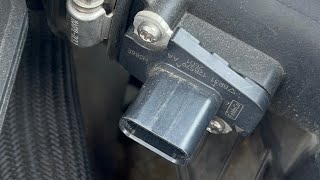
- MAF Sensor Connector — On the MAF sensor itself, which is located in the air intake tube directly after the air filter box.. The connector has pins for power, ground, and signal. Back-probing these pins is essential for diagnosis. You should find a 5V or 12V reference, a solid ground (<0.1 ohms to chassis ground), and a signal voltage that varies with airflow. A damaged connector or spread pins will cause a P0101.
Real Owner Repair Stories
- Reddit user in r/Nissan (2018 Nissan Rogue (Note: While not a Taurus, the electrical principle is universal and highly relevant)) — Solid Check Engine Light with code P0101.
❌ Tried (didn't work) Checked the air filter., Cleaned the MAF sensor., Inspected the air intake for leaks.
✅ What actually fixed it Replacing a 3-year-old, weak battery. The user noted that a dying battery can prevent the MAF sensor from communicating properly, leading to the P0101 code. After the new battery was installed, the code cleared itself after a short drive. - YouTube Commenter on 'Clean or replace Mass Air Flow Sensor 2013 3.5 Ford' (2013 Ford Taurus 3.5L) — P0101 code.
❌ Tried (didn't work) Purchasing and installing a Duralast (AutoZone brand) MAF sensor, part number DL-3088.
✅ What actually fixed it The user reported that the Duralast aftermarket sensor did not seal correctly, causing a large vacuum/evap leak and did not resolve the issue. They explicitly advised against this part and recommended using the OEM Motorcraft sensor.
OEM Part Supersession History
BR31-12B579-AA→BR3Z-12B579-A— Standard part number update and consolidation by Ford.
Heads up: These part numbers are generally interchangeable for the specified applications. However, always verify fitment with a VIN as minor calibration differences can exist.
Model Year Variations Within This Range
- 2013-2019: For the 2013 model year refresh, the standard 3.5L Cyclone V6 received a power increase from 263 hp to 288 hp. While the MAF sensor part number and P0101 diagnostic process remain the same, the PCM software and expected airflow values (g/s) may have slightly different calibrations compared to the 2010-2012 models.
Diagnostic Flowchart
Other Known Issues on This Vehicle
Issues unrelated to this code that are worth knowing about as an owner of this generation:
- Internal Water Pump Failure 🔴 High — Common after 80,000-120,000 miles. Failure can cause coolant to mix with engine oil, leading to catastrophic engine damage if not caught early.
- Electronic Throttle Body (ETB) Failure 🟠 Medium → Shop Fuel Injection Throttle Body — Widespread issue causing sudden 'limp mode,' rough idle, and stalling. Not always related to P0101 but a very common component failure on this platform. (Ref: Customer Satisfaction Program 13N03, TSB 16B32 (both expired))
- Power Transfer Unit (PTU) Failure (AWD Models) 🔴 High — The PTU is prone to overheating due to its location near the exhaust and lack of a drain plug, leading to fluid breakdown and gear failure. Symptoms include grinding/clunking noises and a burning smell.
- Transmission Failure (6F50/6F55) 🟠 Medium — Some owners report issues like harsh shifting, loss of reverse, or failure of specific gears, sometimes requiring a rebuild or replacement.
Used vs. New Parts: Buying Guide for This Vehicle
When a used part is the smart pick: Used parts like the plastic air intake tube/boot or the air filter housing are excellent candidates from a junkyard, as they are durable and their condition is easy to visually inspect for cracks or damage.
Donor-vehicle mileage cap: roughly under 80000 miles for the part to have meaningful remaining life.
What to inspect on the donor part:
- For an intake tube, check for any hairline cracks, especially around the accordion sections and connection points.
- Ensure all mounting tabs and hose connection nipples are intact and not brittle.
- Avoid parts from vehicles that show signs of a major engine fire or have been sitting with the hood open in the elements for a long time.
OEM-only on this vehicle (don't cheap out):
- Mass Airflow (MAF) Sensor
Aftermarket brands forum-validated for this vehicle:
- Hitachi (Often the OEM supplier)
- Delphi
Brands owners have reported issues with on this vehicle:
- Duralast (Store brand from AutoZone) - A user specifically reported that the Duralast MAF sensor (DL-3088) for this vehicle did not seal properly, leading to a vacuum leak and failure to fix the P0101 code.
Real Owner Stories
Aggregated from forums and TSBs cited above. Mileages and costs reflect what owners reported in those sources.
2013 Ford Taurus 3.5L V6
Symptoms: The car was experiencing a P0101 code along with engine hesitation.
What fixed it: A combination of cleaning the MAF sensor and thoroughly cleaning a significantly dirty throttle body resolved the issue permanently.
Source hint: TaurusClub.com forum thread
2010-2019 Ford Taurus 3.5L V6
Symptoms: The P0101 code returned multiple times even after cleaning the MAF and replacing it with an aftermarket unit.
What fixed it: The dealership suggested the issue was either the throttle body or the use of a non-OEM aftermarket MAF sensor.
Source hint: Reddit r/Cartalk thread 'Changed MAF Sensor a month ago, threw P0101 code again'
Related OBD-II Codes
Frequently Asked Questions
Can I use any cleaner to fix the MAF sensor on my 2010-2019 Ford Taurus?
Is there a specific TSB for the 3.5L Cyclone V6 regarding oil in the intake?
Should I use an aftermarket MAF sensor if mine has failed?
What should I check if cleaning the MAF sensor doesn't fix the P0101 code on my Taurus?
How can I tell if my Taurus's Electronic Throttle Body (ETB) has failed electronically?
Are there specific tools needed to remove the MAF sensor on this vehicle?
Helpful Videos

Used OEM Parts in Stock
New Aftermarket Parts Available


The information in this article is provided for general reference and educational purposes only. Vehicle specifications, procedures, and part compatibility can vary by production date, trim level, and region. Always consult your vehicle's factory service manual and verify part numbers before purchasing or performing repairs. Safety-critical components such as airbags, seat belts, and braking systems should be installed by a qualified professional.
- Ford Taurus:
- 🧭 Diagnostic Flowchart
- 🎬 Helpful Videos
- 🛍️ Shop This Part
- What's Unique About the 2010-2019 Ford Taurus
- Symptoms You May Notice
- Most Likely Causes
- Rare But Worth Checking
- Diagnosis Steps
- Parts You'll Likely Need
- Related Codes That Often Appear With This One
- Technical Service Bulletins (TSBs) & Recalls
- Platform-Specific Known Issues
- Mechanic-Grade Diagnostic Values
- Scan Tool Commands That Help
- Wiring & Ground Locations
- Real Owner Repair Stories
- OEM Part Supersession History
- Model Year Variations Within This Range
- Other Known Issues on This Vehicle
- Used vs. New Parts: Buying Guide for This Vehicle
- Real Owner Stories
- 2013 Ford Taurus 3.5L V6
- 2010-2019 Ford Taurus 3.5L V6
- Related OBD-II Codes
- Frequently Asked Questions
- 🎟️ Get 5% Off