

P0101 on 2015-2017 GMC Canyon: Causes and Fixes for MAF Sensor Issues
On a 2015-2017 GMC Canyon, code P0101 is most often caused by a dirty Mass Airflow (MAF) sensor or a heavily carboned throttle body. Cleaning both components with dedicated cleaners is a highly effective first step costing under $30. If other codes like P0171 are present on the 2.5L engine, check for loose intake manifold bolts and re-torque them with threadlocker per TSB #PIP5529B.
- Before buying any parts, spend $25 on a can of MAF sensor cleaner and a can of throttle body cleaner. This resolves the P0101 code in a majority of cases.
- If you have a 2.5L engine and the P0101 code is accompanied by codes like P0171 or P0068, check your intake manifold bolts for looseness before doing anything else, as this is a known issue covered by a TSB.
- Do not touch the delicate wires inside the MAF sensor with anything other than the spray cleaner.
- When cleaning the throttle body, it is best to remove it from the vehicle for a thorough cleaning of both sides of the throttle plate.
- Only consider replacing the MAF sensor after you have cleaned it, cleaned the throttle body, and ruled out any vacuum leaks.
What's Unique About the 2015-2017 Gmc CANYON
While a dirty MAF sensor is a common cause on any vehicle, the 2015-2017 GMC Canyon and its platform-mate, the Chevrolet Colorado, have specific, well-documented issues. On models with the 2.5L I4 (LCV) engine, GM issued Technical Service Bulletin #PIP5529B which identifies loose intake manifold bolts as a potential cause for P0101, especially when it appears with other codes like P0171 (System Too Lean). This creates a vacuum leak that confuses the engine's sensors. Additionally, these trucks are known for accumulating significant oil and carbon buildup on the throttle body due to the PCV system design, which can restrict airflow and trigger this code independently of the MAF sensor itself. Some owners also report that a faulty MAF sensor can lead to harsh or erratic transmission shifting, a symptom not always associated with this code.
Diagnostic Flowchart
Tap your situation to follow the diagnostic path that matches what you're seeing on this vehicle.
Symptoms You May Notice
- Check Engine Light is on
- Rough or unstable idle
- Engine hesitation or stumbling during acceleration
- Reduced engine power
- Poor fuel economy
- Engine stalling, especially at idle or when coming to a stop
- Difficulty starting the engine
- Harsh or erratic automatic transmission shifting
- Black smoke from the tailpipe on cold starts
- Replacing the MAF sensor without first attempting to clean it. Cleaning is successful in a high percentage of cases.
- Replacing the MAF sensor when the actual problem is a dirty throttle body or a vacuum leak, which are very common on this platform.
- Replacing the intake manifold gasket on a 2.5L engine for the TSB issue, when only re-torquing the bolts with threadlocker is required.
Most Likely Causes
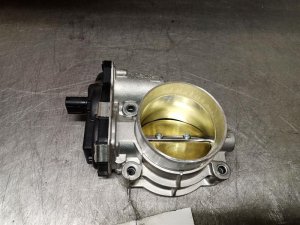
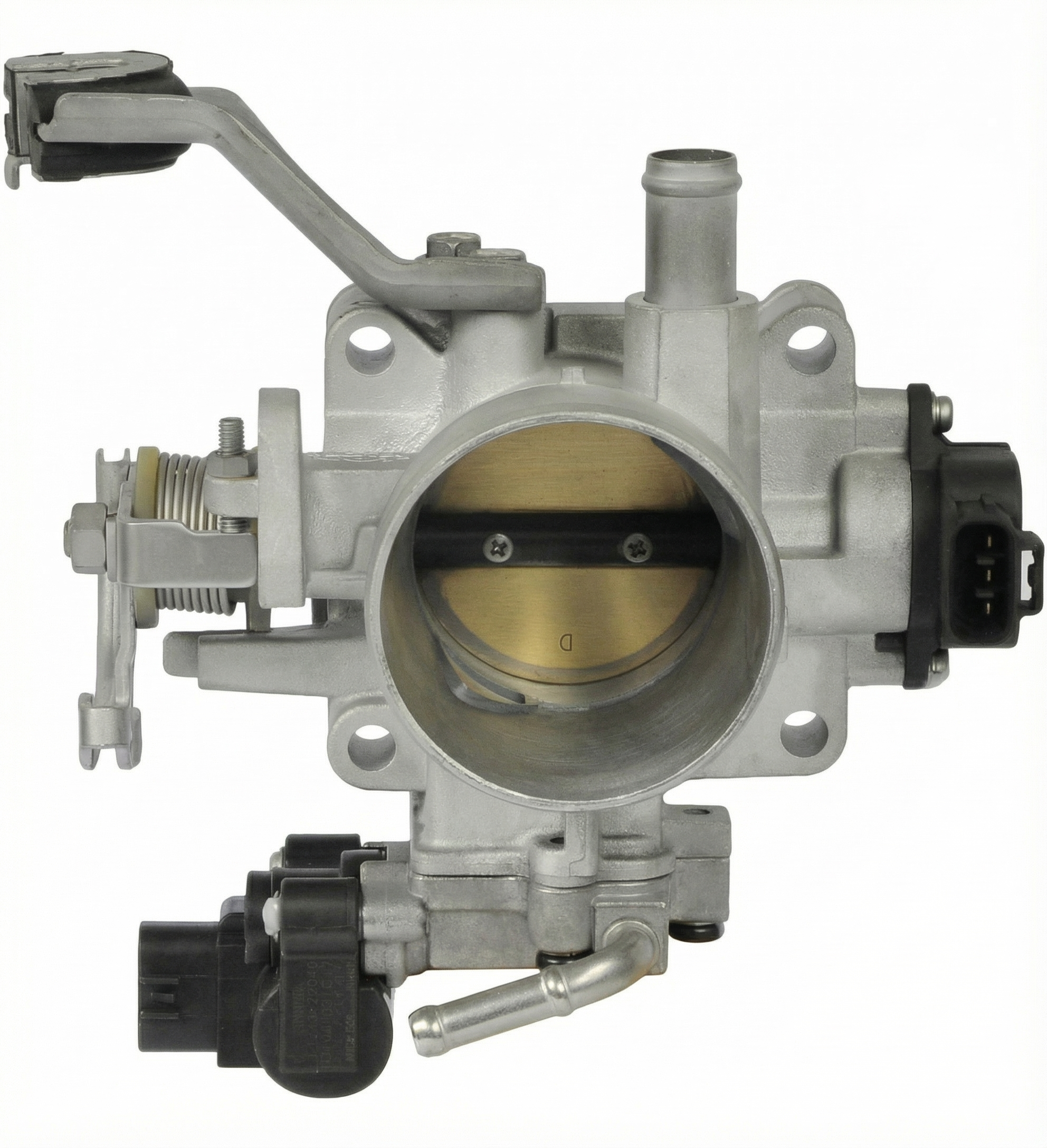
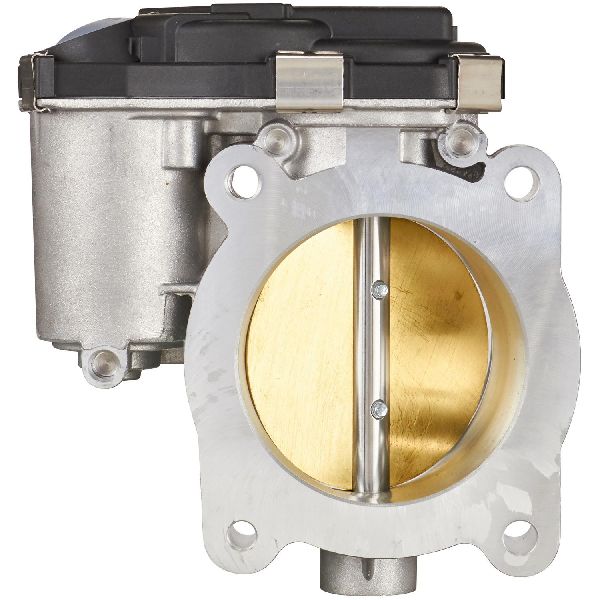
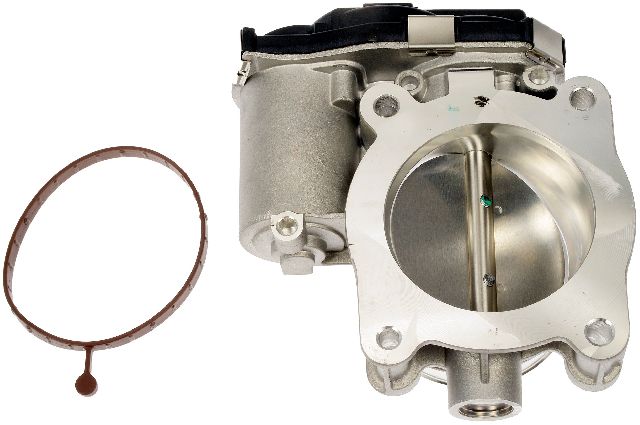
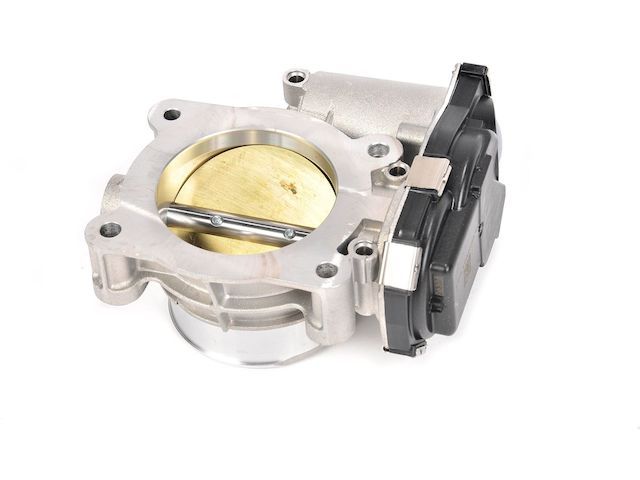
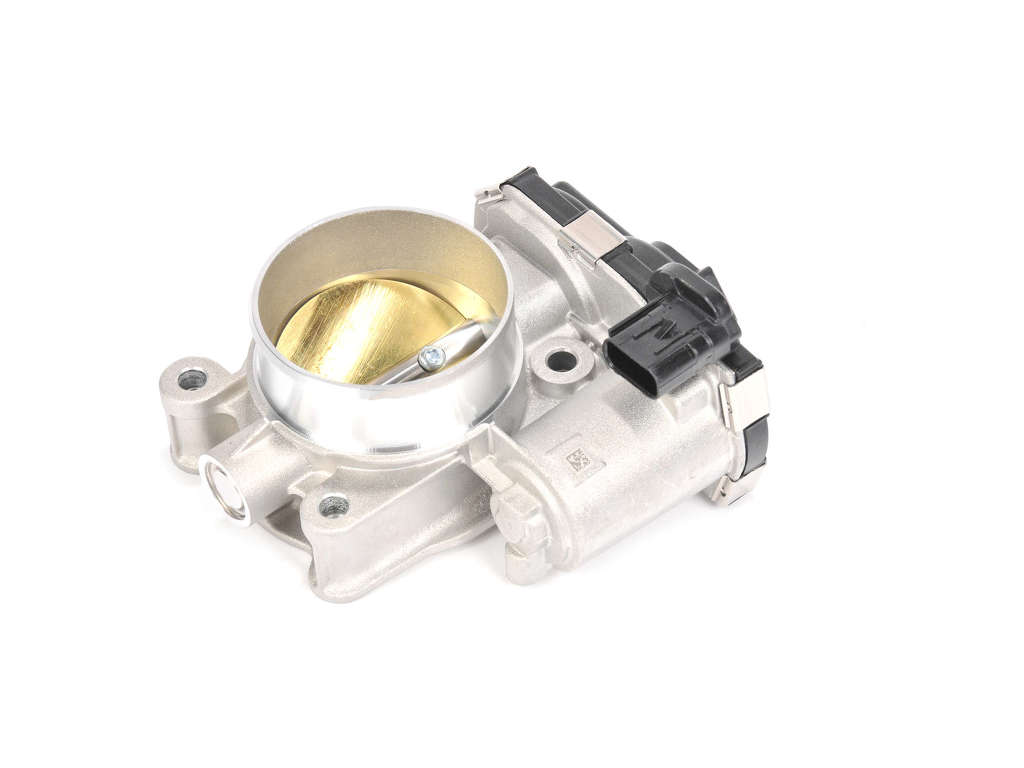
- Dirty Throttle Body 🔴 High Probability → Shop Fuel Injection Throttle Body The PCV system on these engines can allow oil vapor into the intake, which combines with dust to form significant carbon and grime buildup on the throttle plate and bore, impeding airflow and causing a mismatch in sensor readings.
How to confirm: Remove the air intake duct from the throttle body and visually inspect for a thick, black, sticky coating around the throttle plate and housing. The back side of the plate is often the dirtiest.
Typical fix: Remove the four 10mm bolts holding the throttle body to the intake manifold for a thorough cleaning on both sides using a dedicated throttle body cleaner and a soft brush or microfiber towel. A new gasket is highly recommended.
Est. part cost: $10-$25 for cleaner and a new gasket. - Dirty Mass Airflow (MAF) Sensor 🔴 High Probability → Shop Fuel Injection Air Flow Meter Fine dust and oil vapors that get past the air filter can coat the sensor's delicate hot wire, insulating it and causing inaccurate readings. Oiled aftermarket air filters can sometimes worsen this issue if over-oiled.
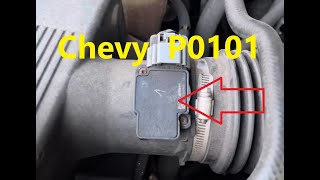
How to confirm: Remove the sensor (held by two T20 Torx screws) from the airbox lid and visually inspect the small wires inside the sensor housing. Any visible contamination indicates it needs cleaning.
Typical fix: Spray the sensor's wires liberally with 10-15 sprays of a dedicated MAF sensor cleaner. Do not touch the wires. Let it air dry completely before reinstalling.
Est. part cost: $10-$15 for MAF sensor cleaner. - Loose Intake Manifold Bolts (per TSB #PIP5529B) 🟡 Medium Probability → Shop Engine Intake Manifold This issue is specifically cited by GM for the 2.5L I4 (LCV) engine in the Canyon and Colorado. The bolts can back out over time, causing the intake manifold gasket to leak unmetered air (a vacuum leak), which directly causes the P0101 and related codes.
How to confirm: Check for the presence of other codes like P0068, P0106, and P0171. Carefully check the torque on the intake manifold bolts to see if they are loose. A smoke test will definitively show a leak from the gasket area.
Typical fix: Following TSB #PIP5529B, remove one bolt at a time, apply medium-strength threadlocker, and torque to 18 ft-lbs (24 Nm) in the correct sequence. The TSB states the gasket usually does not need replacement.
Est. part cost: $5-$10 for threadlocker. - Vacuum Leak (Other) 🟡 Medium Probability The air intake boot (the large rubber tube between the air filter box and throttle body) can crack with age and heat, allowing unmetered air to enter the engine. PCV hoses can also crack, become brittle, or disconnect.
How to confirm: Visually inspect all intake ducting for cracks or loose clamps. Listen for a hissing sound at idle. A smoke test is the most effective way to find hidden leaks from gaskets or hoses.
Typical fix: Replace the cracked intake boot or any leaking vacuum hoses.
Est. part cost: $20-$80 for a new intake boot or hoses.
Rare But Worth Checking
- Clogged Catalytic Converter: This is a known, though less common, cause on GM trucks. A clogged converter creates excessive exhaust backpressure, which can skew airflow readings. This is usually accompanied by a severe loss of power, a rotten egg smell, and potentially other exhaust-related codes like P0420.
- Damaged MAF Sensor Wiring or Connector: → Shop Fuel Injection Air Flow Meter The wiring harness to the MAF sensor can become damaged from heat or vibration, causing an intermittent or complete loss of signal. Inspect the connector for corrosion and the wires for any breaks or chafing.
Diagnosis Steps
- Read all stored trouble codes with an OBD-II scanner. Note if codes like P0171, P0068, or P0106 are present, which strongly suggests a vacuum leak on the 2.5L engine per TSB #PIP5529B.
- Inspect the engine air filter. A severely clogged filter can restrict airflow and cause this code.
- Visually inspect the entire air intake system from the airbox to the throttle body for any cracks, loose clamps, or disconnected hoses.
- Remove the MAF sensor (two T20 Torx screws). Carefully inspect the sensor wires for contamination. Clean it with dedicated MAF sensor cleaner and let it dry completely before reinstalling.
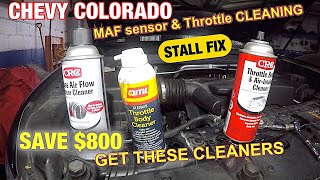
- Inspect the throttle body. If it is dirty (look for black carbon buildup), remove it (four 10mm bolts) and clean it thoroughly off the vehicle with throttle body cleaner. Replace the gasket. 🎬 See how to clean both the MAF and throttle body.
- If you have a 2.5L engine and suspect a vacuum leak, check the torque on the intake manifold bolts. If loose, follow the TSB procedure: remove one bolt at a time, apply threadlocker, and torque to 18 ft-lbs (24 Nm).
- After cleaning/repairs, clear the codes and perform a throttle body relearn procedure. A common method is to warm the engine, let it idle in Park for 3 minutes, shut it off for 1 minute, then restart and idle for another 3 minutes.
- If the code returns, perform a smoke test to definitively check for vacuum leaks from gaskets, the intake boot, or hidden cracks in hoses.
- Check the MAF sensor wiring and connector for damage, corrosion, or loose pins.
- As a final step, if all other possibilities have been ruled out, the MAF sensor itself may have failed and requires replacement.
Parts You'll Likely Need
- Mass Airflow Sensor Cleaner — This is the first and most important step for fixing a P0101 code, as the sensor is often just dirty, not broken.
Trusted brands: CRC, Liqui Moly, WD-40 Specialist
Aftermarket price range: $10-$15 - Throttle Body Cleaner — The throttle body on the Canyon is prone to heavy carbon buildup, which is a very common cause of this code.
Trusted brands: CRC, Berryman, Gumout
Aftermarket price range: $8-$12 - Throttle Body Gasket
(OEM #12637017 (2.5L), 12634371 (3.6L LFX))— It is best practice to replace the gasket whenever the throttle body is removed for cleaning to prevent future vacuum leaks.
Trusted brands: ACDelco, Mahle, Fel-Pro
OEM price range: $5-$15
Aftermarket price range: $4-$10 - Mass Airflow Sensor
(OEM #23262343)— If cleaning the sensor and throttle body, and confirming no vacuum leaks are present, does not resolve the code, the sensor itself may have failed and requires replacement.
Trusted brands: ACDelco (GM Genuine), Delphi, Denso
OEM price range: $90-$150
Aftermarket price range: $50-$110
Related Codes That Often Appear With This One
- P0171 — System Too Lean. This code is frequently paired with P0101 because a vacuum leak (from loose intake bolts or a cracked hose) or a dirty MAF sensor causes the engine to receive more air than it has measured, leading to a lean condition.
- P0068 — MAP/MAF - Throttle Position Correlation. This code appears when the data from the MAF, MAP, and throttle position sensors don't agree. A large vacuum leak is a common cause, as noted in TSB #PIP5529B.
- P0106 — Manifold Absolute Pressure (MAP) Sensor Performance. This is another code listed in TSB #PIP5529B that points to a vacuum leak issue, as the pressure inside the manifold is not what the ECM expects.
Technical Service Bulletins (TSBs) & Recalls
- TSB #PIP5529B: Stall Hesitation P0068 P0101 P0106 P0131 P0137 P0171 P0324 P0326 P0331 P0506: Issued by GM, this bulletin addresses a potential stall or hesitation accompanied by a combination of DTCs, including P0101. It identifies loose intake manifold bolts on the 2.5L LCV engine as the cause. The official fix is to remove each bolt one by one, apply medium-strength threadlocker, and re-torque in sequence. It explicitly states not to replace the gasket unless a leak is confirmed after torquing.
Platform-Specific Known Issues
- TSB #PIP5529B: For the 2.5L I4 engine, GM has identified that loose intake manifold bolts can cause a vacuum leak, leading to P0101 and a cluster of other diagnostic codes. The fix is to re-torque the bolts with threadlocker.
- Heavy Throttle Body Contamination: Owners and mechanics frequently report that the throttle body on all engine variants can become extremely dirty with oil and carbon, causing idle and performance issues that can trigger a P0101 code.
Mechanic-Grade Diagnostic Values
- MAF Sensor Reading (Scan Tool, g/s) — expected: V6/I4 Engine at warm idle: ~3-7 g/s. At 2500 RPM: ~15-25 g/s. Readings should increase smoothly with RPM.. Failure: Readings are stuck, jump erratically, or are significantly lower/higher than expected for the given RPM. A slow response to RPM changes can also indicate a dirty sensor.
- MAF Sensor Reading (Scan Tool, Hz) — expected: Newer GM vehicles: ~2.4-2.6 kHz (2400-2600 Hz) at warm idle. Frequency should rise smoothly and rapidly with acceleration, potentially exceeding 8.5 kHz (8500 Hz).. Failure: Frequency is stuck at a default value, shows erratic jumps or dropouts when wiggling the connector, or does not correspond linearly with engine RPM.
- MAF Sensor Power Supply (Multimeter) — expected: 10-12 Volts DC at the Pink w/ Black stripe wire with key on, engine off.. Failure: Voltage is low or absent, indicating a problem with the fuse, relay, or wiring from the PCM.
- MAF Sensor Ground Circuit (Multimeter) — expected: Good continuity to ground (near 0 ohms) or near 0 Volts DC on the Black w/ White stripe wire.. Failure: High resistance or presence of voltage on the ground wire indicates a bad ground connection (e.g., at G101).
Scan Tool Commands That Help
- GM GDS2 / Tech2 or equivalent professional scanner: Engine Control Module -> Service Functions -> Throttle/Idle Learn — This function should be used after cleaning or replacing the throttle body to reset learned idle and airflow values. Failing to do this can cause the P0101 code to persist or return even after the physical repair is complete.
Wiring & Ground Locations
- G101 — Located at the front of the engine on the lower block. It is often jumpered to ground G106, which is on the center of the frame cross rail under the crank pulley.. This is the primary ground point for the Engine Control Module (ECM) and the Mass Air Flow (MAF) sensor. A corroded or loose connection here can cause erratic sensor readings and trigger a P0101 code.
- MAF Sensor Connector — On the air filter housing lid, connecting to the MAF sensor.. Typical GM wire colors are: Pin A (Yellow) = MAF Signal, Pin B (Pink/Black) = Ignition Voltage, Pin C (Black/White) = Ground. Verifying power, ground, and signal on these specific wires is key to diagnosing a circuit fault vs. a faulty sensor.
Real Owner Repair Stories
- Reddit user, r/Nissan (2018 Nissan Rogue (Note: Not a GMC Canyon, but illustrates a valid electrical principle)) — Persistent P0101 code.
❌ Tried (didn't work) Cleaned the MAF sensor, Checked for vacuum leaks, Inspected air intake tube and filter
✅ What actually fixed it Replacing the aging 3-year-old battery. A weak or dying battery was providing unstable voltage, causing the MAF sensor to send irrational signals to the ECU. The code cleared after the new battery was installed.
"I Checked Everything" — The Actual Cause
- A common scenario is for a technician to perform a smoke test on the main air intake tract (from filter to throttle body) and find no leaks, yet the P0101 and lean codes (P0171) persist. The actual cause can be a stuck-open EVAP canister purge solenoid/valve. This valve introduces un-metered air/fuel vapor from the charcoal canister directly into the intake manifold, downstream of the MAF sensor. This 'hidden' vacuum leak will not be found unless the smoke test procedure is specifically adapted to test the EVAP system as well.
OEM Part Supersession History
N/A→23262343— This is the correct and current GM Genuine part number for the MAF sensor on 2015-2017 GMC Canyon models with the 2.5L I4 and 3.6L V6 engines.
Heads up: Do not use part number 12671624. While it is a common GM MAF sensor, it is intended for smaller displacement engines like the 1.4L and 1.8L found in the Chevy Cruze and Sonic, and is not calibrated for the Canyon's engines.
Model Year Variations Within This Range
- 2015-2017: The 3.6L V6 engine was updated in 2017 from the LFX to the LGZ. However, for the purposes of diagnosing P0101, this change is not significant as both V6 versions, along with the 2.5L I4, use the same MAF sensor (PN 23262343).
Helpful Videos
![[HOW TO] Clean Mass Air Flow Sensor (MAF) on 2015+ Colorado/Canyon](https://img.youtube.com/vi/uRQ3NkssDOc/mqdefault.jpg)
Used OEM Parts in Stock
New Aftermarket Parts Available


The information in this article is provided for general reference and educational purposes only. Vehicle specifications, procedures, and part compatibility can vary by production date, trim level, and region. Always consult your vehicle's factory service manual and verify part numbers before purchasing or performing repairs. Safety-critical components such as airbags, seat belts, and braking systems should be installed by a qualified professional.
- Gmc CANYON:
- 🧭 Diagnostic Flowchart
- 🎬 Helpful Videos
- 🛍️ Shop This Part
- What's Unique About the 2015-2017 Gmc CANYON
- Symptoms You May Notice
- Most Likely Causes
- Rare But Worth Checking
- Diagnosis Steps
- Parts You'll Likely Need
- Related Codes That Often Appear With This One
- Technical Service Bulletins (TSBs) & Recalls
- Platform-Specific Known Issues
- Mechanic-Grade Diagnostic Values
- Scan Tool Commands That Help
- Wiring & Ground Locations
- Real Owner Repair Stories
- "I Checked Everything" — The Actual Cause
- OEM Part Supersession History
- Model Year Variations Within This Range
- 🎟️ Get 5% Off