

P0101 on 2015-2017 GMC Canyon 2.5L: MAF Sensor, Vacuum Leak, and TSB Fixes
On a 2015-2017 GMC Canyon with the 2.5L engine, code P0101 is most often caused by a dirty MAF sensor, a contaminated throttle body, or loose intake manifold bolts. Start by cleaning the MAF sensor and throttle body. If other codes like P0171 are present, check and re-torque the intake manifold bolts per GM TSB #PIP5529B.
- Always start with the simplest fixes: clean the MAF sensor and the throttle body using their specific cleaners.
- On the 2.5L engine, if P0171 is also present, the loose intake manifold bolts described in TSB #PIP5529B are a highly probable cause.
- Do not replace the MAF sensor until you have cleaned it and ruled out vacuum leaks, as misdiagnosis is common.
- After cleaning the throttle body or replacing sensors, a throttle relearn procedure may be necessary to restore normal idle.
What's Unique About the 2015-2017 GMC Canyon
While a dirty MAF sensor can cause P0101 on any vehicle, this generation of Canyon with the 2.5L LCV engine has a specific, well-documented issue. GM issued a Technical Service Bulletin (TSB #PIP5529B) acknowledging that loose intake manifold bolts can create a vacuum leak. This unmetered air confuses the engine's sensors, frequently triggering P0101 along with other codes like P0171 (System Too Lean). Owners also frequently report heavy carbon and oil buildup on the throttle body, which can independently cause this code.
Symptoms You May Notice
- Check Engine Light illuminated
- Rough or unstable idle
- Engine hesitation or surging during acceleration
- Reduced engine power
- Poor fuel economy
- Stalling, especially when coming to a stop
- Black smoke from the tailpipe in some cases
- Replacing the MAF sensor without first cleaning it.
- Replacing the MAF sensor when the actual cause is a vacuum leak from the intake manifold.
Most Likely Causes
- Loose Intake Manifold Bolts 🔴 High Probability → Shop Engine Intake Manifold This is a known issue for the 2.5L LCV engine, as documented in GM Technical Service Bulletin #PIP5529B. The bolts can back out over time, creating a significant vacuum leak.
How to confirm: Check for codes P0171, P0106, or P0068 appearing alongside P0101. Physically check the torque on the intake manifold bolts; they will often be noticeably loose.
Typical fix: Remove each intake manifold bolt one at a time, apply medium-strength threadlocker, and re-torque to the factory specification of 10 Nm (89 lb-in).
Est. part cost: $5-$15 for threadlocker - Dirty or Contaminated Mass Airflow (MAF) Sensor 🔴 High Probability → Shop Fuel Injection Air Flow Meter The MAF sensor's hot wire is sensitive to contamination from dirt, oil vapor, and debris that gets past the air filter. Oiled aftermarket air filters can sometimes contribute to contamination.
How to confirm: Visually inspect the MAF sensor's wire elements inside the housing. If they appear dirty or coated, they need cleaning. You can also monitor live data on a scan tool; if the g/s reading is erratic or doesn't change with RPM, the sensor is suspect.
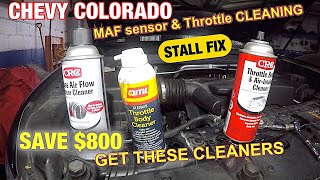
Typical fix: Remove the sensor and clean it carefully using only dedicated MAF sensor cleaner spray. 🎬 Watch: Step-by-step guide to cleaning your Canyon's MAF sensor. Do not touch the sensor wires.
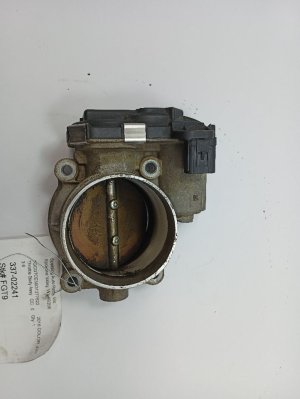
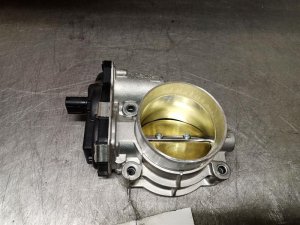
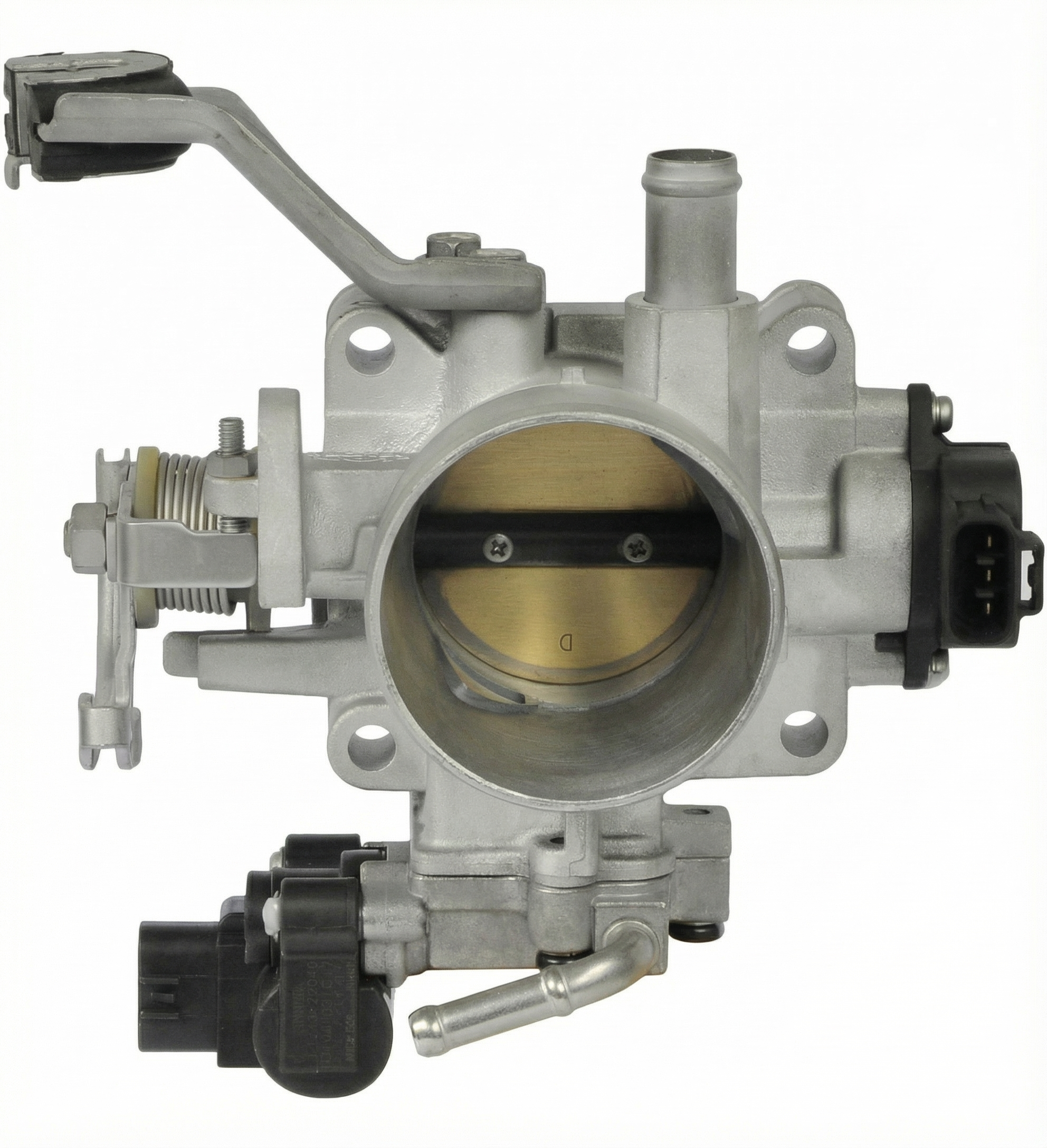
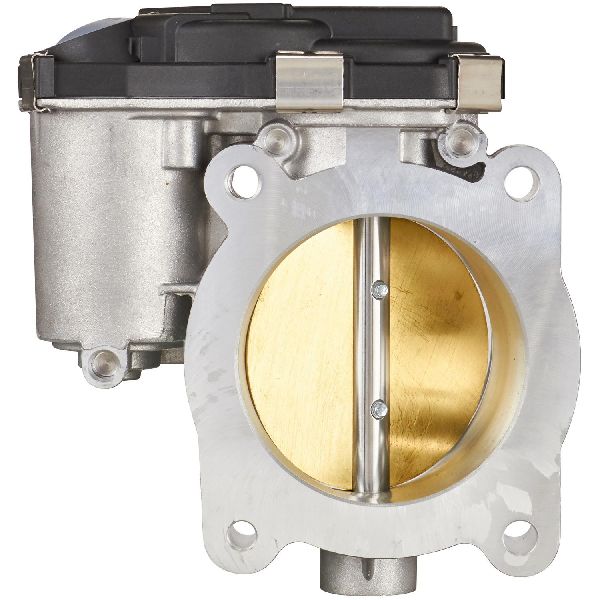
Est. part cost: $8-$15 for cleaner spray - Dirty Throttle Body 🟡 Medium Probability → Shop Fuel Injection Throttle Body The PCV (Positive Crankcase Ventilation) system can route oil and fuel vapors into the intake, which build up as carbon deposits around the throttle plate. This is a common issue on this platform.
How to confirm: Remove the intake duct from the throttle body and inspect the throttle plate and bore for black, sticky carbon buildup.
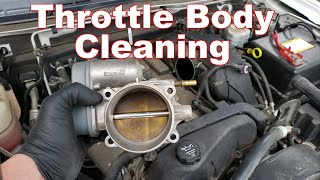
Typical fix: Clean the throttle body bore and plate thoroughly with a dedicated throttle body cleaner and a soft brush or rag. 🎬 See how to properly clean the throttle body and plate. This may require a throttle relearn procedure afterward.
Est. part cost: $10-$20 for cleaner spray - Cracked or Disconnected Intake Air Duct ⚪ Low Probability → Shop Engine Air Intake Duct
How to confirm: Visually inspect the entire air intake path between the MAF sensor and the throttle body for cracks, loose clamps, or disconnected hoses.
Typical fix: Tighten clamps or replace the damaged intake duct section.
Est. part cost: $50-$150 for a new duct
Rare But Worth Checking
- Engine Wiring Harness Chafing: A GM TechLink article noted that on 2016-2018 models with the 2.5L engine, the main engine harness can rub against the A/C pipe below the exhaust manifold, causing shorts and various DTCs, including P0101. This is worth checking if you have multiple, seemingly unrelated electrical codes.
- Clogged Catalytic Converter: A restricted exhaust can cause a lack of power and throw off the air-fuel calculations, sometimes triggering a P0101 code on GM trucks. This is usually accompanied by a significant loss of power under load and potentially a P0300 misfire code.
Diagnosis Steps
- Read all stored fault codes with an OBD-II scanner. Note any other codes that are present with P0101.
- Inspect the air filter and replace if it is dirty.
- Visually inspect the entire air intake system from the airbox to the throttle body for any cracks, loose clamps, or disconnected hoses.
- Remove and inspect the Mass Airflow (MAF) sensor. If it appears dirty, clean it with dedicated MAF sensor cleaner spray and let it dry completely before reinstalling. 🎬 Watch this video to see both cleaning procedures in action.
- Inspect the throttle body for heavy carbon buildup. If dirty, clean it with dedicated throttle body cleaner.
- If codes like P0171 or P0106 are present, check the intake manifold bolts for looseness. If they can be turned easily, perform the procedure outlined in TSB #PIP5529B (re-torque with threadlocker).
- Inspect the MAF sensor wiring harness and connector for any damage, corrosion, or loose pins. Check for harness chafing near the A/C pipe.
- If the problem persists after these steps, monitor the MAF sensor reading (g/s) on a scan tool. The reading should be steady at idle and increase smoothly with engine RPM. If it's erratic or stuck, the sensor itself may have failed.
- As a final check for a severe lack of power, perform an exhaust backpressure test to rule out a clogged catalytic converter.
Parts You'll Likely Need
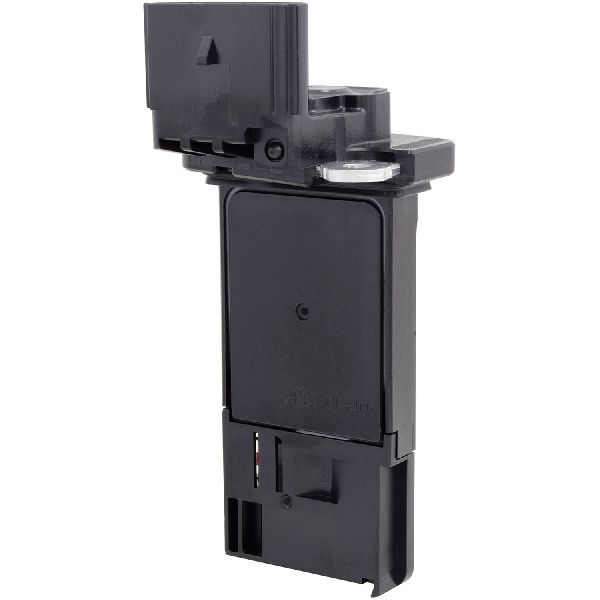
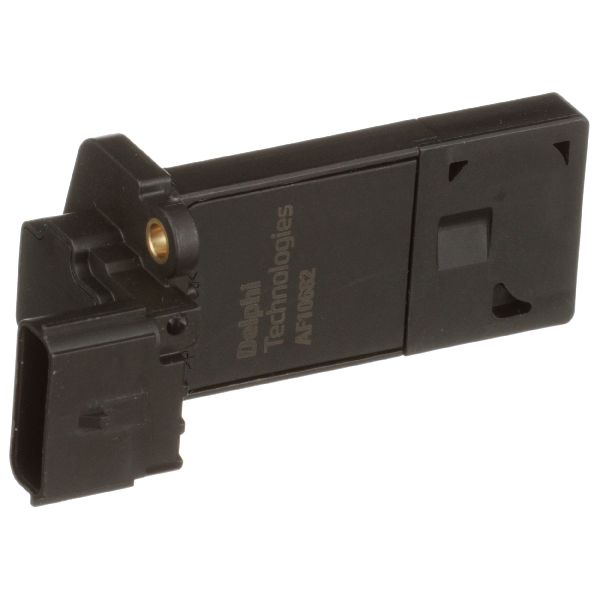
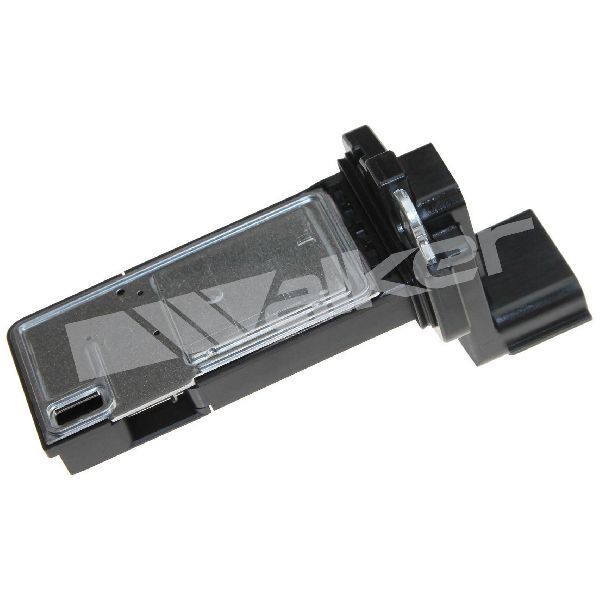
- Mass Airflow (MAF) Sensor
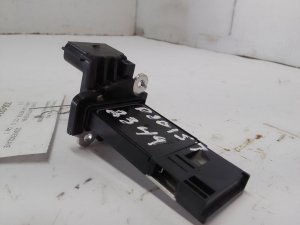
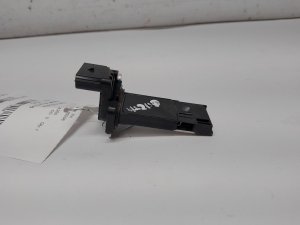
(OEM #23262343)— If cleaning the sensor does not resolve the issue and the wiring is intact, the sensor itself may have failed. The OEM part number for the 2.5L engine is commonly 23262343, which may have superseded older numbers like 12671624. Always verify with the vehicle's VIN.
Trusted brands: ACDelco, Delphi, Hitachi, Bosch, NGK
OEM price range: $90-$140
Aftermarket price range: $50-$100 - MAF Sensor Cleaner — This is the first and most crucial step in diagnosing a P0101 code, as a dirty sensor is a very common cause.
Trusted brands: CRC, Liqui Moly
OEM price range: N/A
Aftermarket price range: $8-$15 - Throttle Body Cleaner — Heavy carbon buildup on the throttle body is a known issue on this platform that can restrict airflow and cause P0101.
Trusted brands: CRC, Berryman
OEM price range: N/A
Aftermarket price range: $10-$20
Related Codes That Often Appear With This One
- P0171 — System Too Lean. This code is very common with P0101 on this engine because a vacuum leak (from loose intake bolts) allows unmetered air into the engine, creating a lean condition.
- P0106 — Manifold Absolute Pressure (MAP) Sensor Performance. This is another code listed in TSB #PIP5529B that points to a vacuum leak, as the pressure inside the manifold is not what the ECM expects.
- P0068 — MAP/MAF - Throttle Position Correlation. This code indicates the data from the key airflow sensors do not agree with each other, which is a direct result of a vacuum leak or faulty sensor.
- P1101 — Intake Air Flow System Performance. This is a similar GM-specific code that often has the same root causes.
Technical Service Bulletins (TSBs) & Recalls
- PIP5529B: Addresses loose intake manifold bolts causing vacuum leaks and setting codes P0101, P0171, P0106, and P0068 on the 2.5L LCV engine. This bulletin provides additional diagnostics and repair to assist in resolving a malfunction indicator lamp illumination.
- TSB Bulletin #PIP5529A: An earlier version of the manufacturer bulletin that also identifies P0101 in combination with codes like P0131, P0137, P0324, and P0506.
Platform-Specific Known Issues
- TSB #PIP5529B: GM has identified that loose intake manifold bolts on the 2.5L LCV engine can cause a vacuum leak, leading to P0101 and other related codes. The official fix is to re-torque the bolts to 10 Nm (89 lb-in) using threadlocker.
- GM TechLink Harness Chafing: A bulletin for technicians notes the engine wiring harness may rub on an A/C pipe on 2016-2018 models, which can cause a short and trigger P0101 among other codes.
Mechanic-Grade Diagnostic Values
- MAF Sensor Reading (g/s) — expected: At warm idle, the reading in grams/second should be approximately equal to the engine's displacement in liters (~2.5 g/s for the 2.5L engine). At 2500 RPM, it should be around 15-25 g/s.. Failure: Readings are stuck, jump erratically, are significantly different from the expected idle value, or respond slowly to RPM changes.
- MAF Sensor Reading (Hz) — expected: On modern GM vehicles, the frequency at warm idle should be stable around 2.4-2.6 kHz (2400-2600 Hz).. Failure: Frequency does not rise smoothly and rapidly with acceleration, or is stuck/erratic at idle.
- Long Term Fuel Trim (LTFT) — expected: Within +/- 5% at idle.. Failure: Sustained positive values above +10% to +12.5% strongly suggest unmetered air (a vacuum leak) is entering the engine, which is a common cause of P0101.
Scan Tool Commands That Help
- N/A (Manual Procedure): Idle Learn / Throttle Relearn Procedure — After cleaning the throttle body or disconnecting the battery, the idle may be unstable. This procedure helps the ECM relearn the idle position. A common method is to let the engine idle in Park for 3 minutes, turn the engine off for 1 minute, restart and idle for another 3 minutes.
Wiring & Ground Locations
- G105 — Located on the left side of the engine compartment.. This is a splice pack ground for multiple engine components, including the MAF/IAT sensor. A poor connection here can cause erratic sensor readings and trigger a P0101 code.
- MAF Sensor Connector — On the air intake tube, between the air filter box and the throttle body.. The connector itself or the wiring leading to it can become damaged, corroded, or loose, interrupting the signal from the sensor to the ECM.
"I Checked Everything" — The Actual Cause
- A common scenario is performing a smoke test on the main intake duct and finding no leaks, yet P0101 and P0171 persist. The actual cause can be a stuck-open EVAP canister purge solenoid. This introduces unmetered air/fuel vapor from the charcoal canister directly into the intake manifold, creating a 'hidden' vacuum leak that a standard intake smoke test will not find.
OEM Part Supersession History
12671624→23262343— Part consolidation and potential design updates across GM platforms.
Heads up: While 12671624 is listed for many GM vehicles, using the VIN to verify the exact required part number (likely 23262343 for this specific truck) is critical to avoid compatibility issues.
Diagnostic Flowchart
Used vs. New Parts: Buying Guide for This Vehicle
When a used part is the smart pick: For this repair, used parts are generally not recommended for the electronic sensors. However, a used intake air duct from a junkyard can be a cost-effective replacement if it is cracked, provided it is thoroughly inspected for brittleness and other cracks.
Donor-vehicle mileage cap: roughly under 75000 miles for the part to have meaningful remaining life.
What to inspect on the donor part:
- For an intake duct, check for flexibility; avoid any part that feels hard or brittle.
- Inspect the bellows/accordion section of a used intake duct very carefully for micro-cracks.
- If considering a used MAF sensor, ask for the donor vehicle's mileage and avoid any from high-mileage vehicles (>100k miles) as sensor accuracy degrades over time.
OEM-only on this vehicle (don't cheap out):
- Mass Airflow (MAF) Sensor: While some aftermarket brands are reliable, many owners report issues with cheap, no-name aftermarket MAF sensors causing the code to return. Sticking to OEM (ACDelco) or reputable OE-equivalent brands is the safest bet.
Aftermarket brands forum-validated for this vehicle:
- ACDelco (OEM)
- Delphi
- NGK/NTK
- Bosch
Brands owners have reported issues with on this vehicle:
- Unbranded, low-cost sensors from online marketplaces are frequently cited in forums as being poorly calibrated and a common cause of repeat failures.
Real Owner Stories
Aggregated from forums and TSBs cited above. Mileages and costs reflect what owners reported in those sources.
2015-2017 GMC Canyon 2.5L LCV
Symptoms: The vehicle was throwing P0101 along with P0171, P0106, or P0068. The intake manifold bolts were found to be noticeably loose, creating a vacuum leak.
What fixed it: Removed intake manifold bolts one at a time, applied medium-strength threadlocker, and re-torqued to 10 Nm (89 lb-in).
Source hint: TSB #PIP5529B
2016-2018 GMC Canyon
Symptoms: Code P0101 triggered due to a short in the engine wiring harness.
What fixed it: Repaired the wiring harness where it was chafing against the A/C pipe.
Source hint: GM TechLink Harness Chafing bulletin
Related OBD-II Codes
Frequently Asked Questions
My 2015 GMC Canyon 2.5L has a P0101 code; is there a specific TSB I should know about?
What is the official GM fix for the loose intake manifold bolts on the Canyon 2.5L?
Can a wiring issue cause a P0101 on my 2016 GMC Canyon?
Should I use a specific brand of MAF sensor if I need a replacement for my LCV engine?
Could a dirty throttle body be causing the stalling and P0101 code on my Canyon?
Are there any other tests I should perform if cleaning the MAF and tightening bolts doesn't fix the power loss?
Helpful Videos
![[HOW TO] Clean Mass Air Flow Sensor (MAF) on 2015+ Colorado/Canyon](https://img.youtube.com/vi/uRQ3NkssDOc/mqdefault.jpg)
![[HOW TO] Install a Ported Intake Manifold & Replace Spark Plugs on 2017-2022 Colorado/Canyon LGZ V6](https://img.youtube.com/vi/9uUB9O86pVY/mqdefault.jpg)
Used OEM Parts in Stock
New Aftermarket Parts Available


The information in this article is provided for general reference and educational purposes only. Vehicle specifications, procedures, and part compatibility can vary by production date, trim level, and region. Always consult your vehicle's factory service manual and verify part numbers before purchasing or performing repairs. Safety-critical components such as airbags, seat belts, and braking systems should be installed by a qualified professional.
- GMC Canyon:
- 🧭 Diagnostic Flowchart
- 🎬 Helpful Videos
- 🛍️ Shop This Part
- What's Unique About the 2015-2017 GMC Canyon
- Symptoms You May Notice
- Most Likely Causes
- Rare But Worth Checking
- Diagnosis Steps
- Parts You'll Likely Need
- Related Codes That Often Appear With This One
- Technical Service Bulletins (TSBs) & Recalls
- Platform-Specific Known Issues
- Mechanic-Grade Diagnostic Values
- Scan Tool Commands That Help
- Wiring & Ground Locations
- "I Checked Everything" — The Actual Cause
- OEM Part Supersession History
- Used vs. New Parts: Buying Guide for This Vehicle
- Real Owner Stories
- 2015-2017 GMC Canyon 2.5L LCV
- 2016-2018 GMC Canyon
- Related OBD-II Codes
- Frequently Asked Questions
- 🎟️ Get 5% Off