

P0101 on 2007-2013 GMC Sierra 1500: MAF Sensor Causes and Fixes
For a 2007-2013 GMC Sierra, code P0101 is most often caused by a dirty Mass Air Flow (MAF) sensor. The quickest and most common fix is to clean the sensor with a dedicated MAF sensor cleaner, which costs about $10-$15 and is a simple DIY task. If cleaning doesn't work, the next most likely cause is a cracked air intake hose between the air filter and the throttle body.
- Always start by cleaning the MAF sensor with dedicated MAF sensor cleaner; this fixes the problem in a majority of cases.
- Thoroughly inspect the flexible air intake boot for cracks, as this is the second most likely cause.
- Avoid using oiled aftermarket air filters (like K&N), as excess oil can contaminate the MAF sensor and cause this code.
- Use a scan tool to check MAF g/s readings at idle; the value should be very close to your engine's displacement in liters (e.g., 5.3L ≈ 5.3 g/s).
What's Unique About the 2007-2013 GMC Sierra 1500
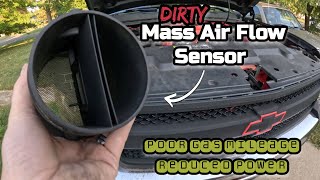
On this generation of GMC Sierra (GMT900), the P0101 code is a very common and well-documented issue. The primary culprits are simple: a dirty MAF sensor or a vacuum leak from a cracked intake boot. Unlike later generations which had TSBs for manufacturing defects in the airbox, these trucks are more straightforward to diagnose. Owners frequently report that a simple cleaning of the MAF sensor resolves the issue, often staving off an unnecessary and more expensive sensor replacement. 🎬 Watch: How a dirty MAF sensor causes poor gas mileage. A key diagnostic clue for these trucks is that non-GM or aftermarket oiled air filters can cause slightly higher MAF readings, leading to a P0101 code even without a true fault.
Generation note: The 2007-2013 model year range covers the second generation of the GMC Sierra 1500 (GMT900 platform). Note that for the 2007 model year, GMC produced both the new GMT900 body style and the older GMT800 platform, sold as the 'Classic'. This guide applies to the GMT900 models.
Symptoms You May Notice
- Check Engine Light is on
- Rough or unstable idle
- Engine hesitation or surging during acceleration
- Reduced engine power or entering 'limp mode'
- Poor fuel economy
- Difficulty starting the engine
- Black smoke from the exhaust
- Stalling at low speeds or when coming to a stop
- Replacing the MAF sensor before cleaning it or checking for vacuum leaks.
- Replacing oxygen (O2) sensors when fuel trim codes (P0171, P0174) appear alongside P0101, as the MAF issue or a vacuum leak is the likely root cause.
- Replacing the throttle body without proper diagnosis.
Most Likely Causes
- Dirty or Contaminated Mass Air Flow (MAF) Sensor 🔴 High Probability → Shop Fuel Injection Air Flow Meter The MAF sensor's hot wires are sensitive and can become contaminated by dirt, oil (especially from over-oiled aftermarket air filters like K&N), or even small insects, skewing its readings.
How to confirm: Remove the MAF sensor from the intake tube (typically held by two T25 Torx screws). Visually inspect the small wires inside for any debris, film, or contamination. A scan tool showing g/s readings significantly lower than the engine's displacement at hot idle (e.g., a 5.3L engine reading 3-4 g/s instead of the expected ~5.3 g/s) strongly points to a dirty or failing sensor.
Typical fix: Spray the sensor's wires and internal components thoroughly with a dedicated MAF sensor cleaner spray. Do not touch the wires. Allow it to dry completely before reinstalling.
Est. part cost: $10-$15 for cleaner - Vacuum Leak (Cracked Air Intake Boot) 🟡 Medium Probability The flexible rubber intake boot located between the air filter housing and the throttle body is exposed to engine heat and vibration, causing it to become brittle and crack over time, especially in the accordion sections. 🎬 See how a cracked intake boot causes lean codes. This allows unmetered air to enter the engine after the MAF sensor, causing a lean condition and a P0101 code, often accompanied by P0171 and P0174.
How to confirm: Visually inspect the entire air intake duct for cracks, tears, or loose clamps. With the engine running, you can carefully spray short bursts of brake cleaner or use an unlit propane torch around the boot; a change in engine idle RPM indicates a leak. A professional smoke test is the most definitive method.
Typical fix: Replace the cracked air intake boot. A temporary repair can be made with high-quality tape, but replacement is the correct long-term solution.
Est. part cost: $40-$100 - Dirty or Clogged Engine Air Filter ⚪ Low Probability → Shop Air Cleaner Assembly
How to confirm: Remove and inspect the engine air filter. If it is visibly dirty, clogged with debris, or has been in service beyond its recommended life, it can restrict airflow and cause an inaccurate MAF reading. Non-GM filters have been shown to cause slightly higher g/s readings which can trigger the code.
Typical fix: Replace the engine air filter with a new one. Using an OEM-quality filter (like ACDelco) is recommended to avoid issues sometimes caused by aftermarket filters.
Est. part cost: $20-$50
Rare But Worth Checking
- Faulty Mass Air Flow (MAF) Sensor: → Shop Fuel Injection Air Flow Meter While a dirty sensor is far more common, the sensor itself can fail electronically. This should only be considered after cleaning the sensor and ruling out all vacuum leaks. A technician on a forum noted it was rare, but they did have to replace one after cleaning failed to solve the issue.
- Clogged Catalytic Converter: A severely restricted exhaust can cause backpressure that affects the engine's ability to draw in air, leading to a P0101 code. This is usually accompanied by a significant loss of power, a rotten egg smell, and potentially P0420/P0430 codes.
- Wiring Harness or Ground Issue: Damage to the MAF sensor's wiring or connector (chafing, corrosion, loose pins) can cause an intermittent or total loss of signal. Poor ground connections, specifically at engine grounds G102/G103 located on the rear of the cylinder heads, can cause erratic sensor readings.
Diagnosis Steps
- Check for any other stored trouble codes. Address them first if they are not P0171/P0174.
- Visually inspect the entire air intake system, from the air filter box to the throttle body. Look for loose clamps, disconnected hoses, or cracks in the intake boot.
- Inspect the engine air filter. If it is dirty or clogged, replace it.
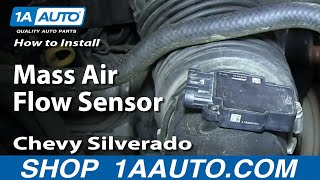
- Unplug and remove the MAF sensor. It is located on the intake tube after the air filter box and is typically held by two T25 Torx screws. 🎬 Watch this quick walkthrough on replacing the MAF sensor.
- Inspect the sensor wires for any debris, dirt, or oil film.
- Clean the MAF sensor using a dedicated MAF sensor cleaner spray. Do not use brake cleaner or carburetor cleaner. Let it air dry completely for at least 10-15 minutes.
- Reinstall the sensor, ensure the connector clicks into place, clear the codes with a scan tool, and perform a test drive to see if the code returns.
- If the code returns, use a scan tool to monitor the MAF sensor reading in grams per second (g/s) at a stable, warm idle with accessories off. A 5.3L engine should read approximately 5.3 g/s. A reading of 3-4 g/s is a strong indicator of a vacuum leak or a faulty sensor.
- If readings are still incorrect and you have confirmed there are no vacuum leaks (a smoke test is best), the MAF sensor itself may be faulty and require replacement.
Parts You'll Likely Need
- Mass Air Flow Sensor Cleaner — This is the most common and cost-effective first step, as the sensor is often just dirty and not actually faulty.
Trusted brands: CRC, Liqui Moly
Aftermarket price range: $10-$15 - Mass Air Flow (MAF) Sensor
(OEM #15865791 (ACDelco #213-4222))— If cleaning the sensor and checking for leaks does not resolve the code, the sensor itself has likely failed electronically.
Trusted brands: ACDelco, Delphi
OEM price range: $100-$150
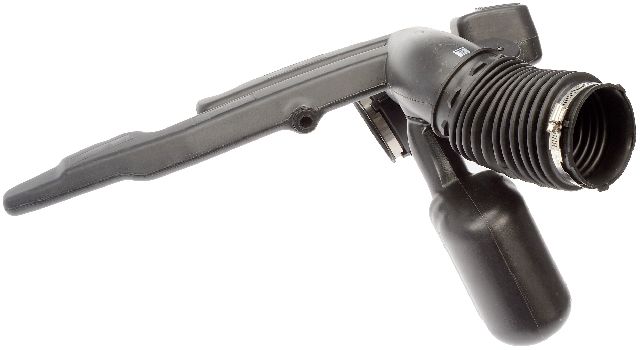
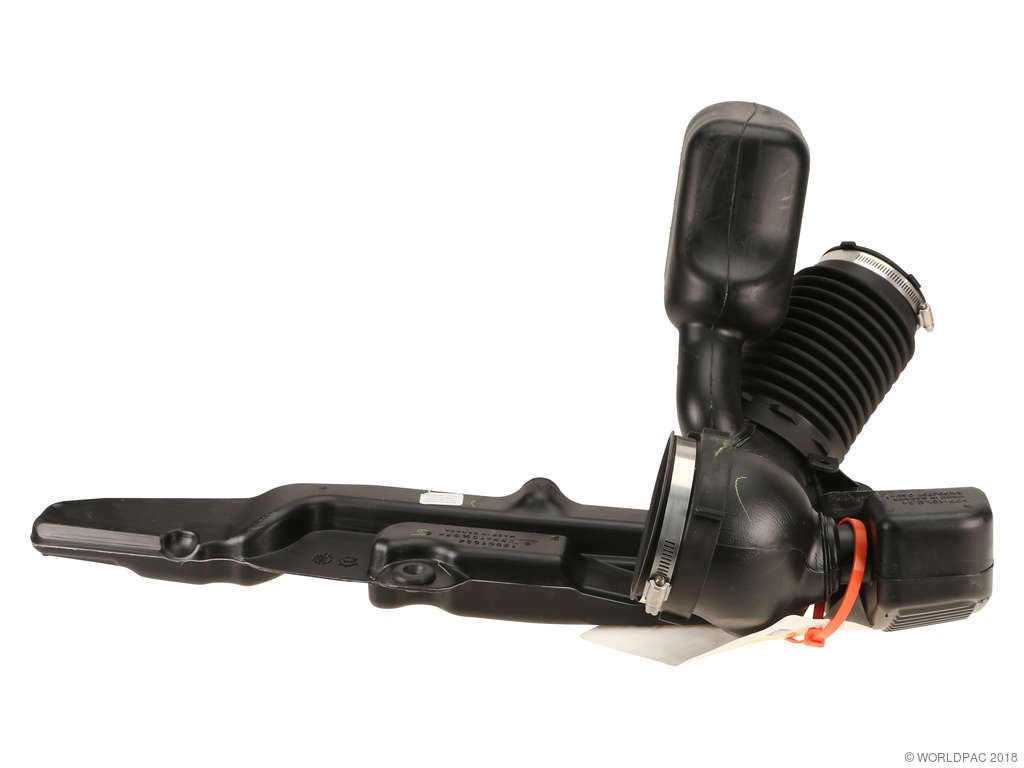
Aftermarket price range: $60-$120 - Engine Air Intake Hose
(OEM #15865789 (Example for 5.3L/6.0L))— This hose is a common failure point for vacuum leaks due to cracking from age and heat, which allows unmetered air to enter the engine.
Trusted brands: ACDelco, Dorman
OEM price range: $70-$120
Aftermarket price range: $40-$80
Related Codes That Often Appear With This One
- P0171 — System Too Lean (Bank 1) - A vacuum leak or under-reporting MAF sensor causes the engine to receive more air than it measured, leading to a lean condition that the PCM tries to correct by adding fuel.
- P0174 — System Too Lean (Bank 2) - Same reason as P0171; a vacuum leak or MAF issue will affect both cylinder banks on a V-engine.
Technical Service Bulletins (TSBs) & Recalls
- PIP4932C: A general bulletin advising technicians to follow standard diagnostic procedures for P0101, indicating no single special failure mode was identified at the time.
Mechanic-Grade Diagnostic Values
- MAF Sensor Reading (g/s) at Hot Idle — expected: Approximately the same as the engine displacement in liters (e.g., a 5.3L engine should read ~5.3 g/s).. Failure: A reading significantly lower than the engine displacement (e.g., 3-4 g/s on a 5.3L engine) indicates an under-reporting sensor, a vacuum leak downstream, or an upstream restriction.
- MAF Sensor Signal Voltage (at connector) — expected: Approximately 0.5V-1.0V at idle, increasing smoothly with RPM to ~4.5V at Wide-Open Throttle (WOT).. Failure: Voltage that is stuck, drops out, or does not increase smoothly with RPM points to a faulty sensor or wiring issue.
- MAF Sensor Power Supply (at connector) — expected: 12V (battery voltage) on the power supply wire (typically pink) with key on, engine off.. Failure: Low or no voltage indicates a blown fuse, wiring issue, or problem with the ECM power supply.
- MAF Sensor Ground Circuit (at connector) — expected: Near 0 Ohms of resistance between the ground wire (typically black/white) and a known good chassis ground.. Failure: High resistance indicates a poor ground connection, which can cause erratic sensor readings.
- Long-Term Fuel Trims (LTFT) — expected: Within +/- 10%.. Failure: High positive fuel trims (e.g., +25% or higher) on both banks, often with P0171/P0174, strongly suggest a vacuum leak or an under-reporting MAF sensor.
Scan Tool Commands That Help
- GDS2 / Tech2 (or advanced aftermarket scanner): Reset MAF/Fuel Adaptations or Learned Values — Use this after replacing a MAF sensor if the P0101 code returns immediately. The Engine Control Module (ECM) may retain the learned fuel trim values from the old, faulty sensor, causing it to reject the readings from the new, correct sensor. Resetting adaptations forces the ECM to relearn with the new part.
Wiring & Ground Locations
- G102 / G103 — On the rear of the driver's side and passenger's side cylinder heads, respectively. These are braided ground straps connecting the engine block to the firewall.. These are the main engine-to-chassis grounds. If they are loose, corroded, or broken, it can cause a floating ground reference for multiple sensors, including the MAF sensor, leading to erratic readings and codes like P0101.
- MAF Sensor Connector — On the MAF sensor itself, located in the intake tube just after the air filter box.. The 5-pin connector provides power, ground, and signal paths. The typical pinout is: Pin A (Pink): 12V Power, Pin B (Black/White): Ground, Pin C (Tan): IAT Sensor Signal, Pin D (Yellow): MAF Signal, Pin E (Purple): IAT Sensor Low Reference. A wiggle test on this connector while monitoring live data can identify intermittent connections.
Real Owner Repair Stories
- YouTube Channel 'Avilcar' (GMC Truck (specific model not stated, but GM platform)) — P0101 and P0641 (5-Volt Reference 'A' Circuit)
❌ Tried (didn't work) Initial focus on the MAF sensor itself.
✅ What actually fixed it The technician found the 5-volt reference signal, shared by the MAP sensor and oil pressure sensor, was reading low (around 3V instead of 5V). Disconnecting the faulty oil pressure sensor, which had an internal short, restored the 5V reference, and was expected to clear the P0101 code which was being set due to the bad reference voltage affecting other sensors in the system. - GM-Trucks.com Forum User (2003 Sierra 2500HD 8.1L) — Persistent P0101 code.
❌ Tried (didn't work) Cleaning the MAF sensor., Checking for air leaks between MAF and intake.
✅ What actually fixed it Another user suggested the problem was likely a vacuum leak in the PCV system. A disconnected or cracked PCV hose is a common source of unmetered air that is most significant at idle and can set a P0101 without other obvious lean codes.
"I Checked Everything" — The Actual Cause
- A cracked or disconnected PCV hose can introduce unmetered air into the crankcase, which is then drawn into the intake manifold, bypassing the MAF sensor. This 'internal' vacuum leak may not be easily found with a traditional smoke test of the intake boot but can be significant enough to set a P0101 code, often with high positive fuel trims.
- A faulty 5-volt reference circuit, caused by another sensor on the same circuit (like the oil pressure sensor or MAP sensor) shorting internally, can cause the PCM to receive skewed data and incorrectly flag a P0101. The MAF sensor itself is fine, but the system it relies on is compromised.
OEM Part Supersession History
15865791→This is the current GM part number. The associated ACDelco service part number is 213-4222.— Standard part lifecycle.
Heads up: While this sensor fits a very wide range of GM vehicles from 2005-2019, it's crucial to use a high-quality OEM (ACDelco) or top-tier aftermarket (Delphi) sensor. Cheaper, no-name sensors are often poorly calibrated and can fail to fix the code or cause other performance issues.
Diagnostic Flowchart
Other Known Issues on This Vehicle
Issues unrelated to this code that are worth knowing about as an owner of this generation:
- Active Fuel Management (AFM) Lifter Failure 🔴 High — Common, especially on 5.3L and 6.0L engines. Can occur at various mileages, often heralded by a ticking noise on startup. (Ref: Multiple TSBs exist, including #10-06-01-008G and others, which detail diagnostic steps and replacement of lifters.)
- Cracked Dashboard 🟠 Medium — Extremely common across the entire GMT900 platform. Cracks typically appear on the driver's side near the A-pillar and over the passenger airbag. (Ref: No recall was ever issued. It is considered a cosmetic flaw by GM, though class-action lawsuits were attempted.)
- Excessive Oil Consumption 🔴 High — A well-documented issue, particularly on 2010-2013 models with the 5.3L V8, often linked to the AFM system and piston ring design. (Ref: Subject of a class-action lawsuit. TSBs exist related to diagnosis and potential piston ring replacement.)
- HVAC Mode/Blend Door Actuator Failure 🟡 Low — Common failure leading to inability to change air direction (e.g., stuck on defrost) or control temperature. Characterized by a clicking sound from the dash.
- Steering Intermediate Shaft Clunk 🟡 Low — A common issue where the upper intermediate steering shaft develops a clunking noise or feeling, especially at low speeds. (Ref: TSBs exist for lubricating or replacing the shaft.)
Used vs. New Parts: Buying Guide for This Vehicle
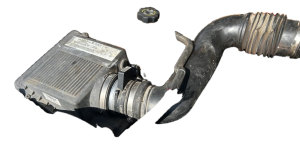
When a used part is the smart pick: For this repair, a used part from a junkyard is a reasonable choice for the 'Engine Air Intake Hose' if it is visually inspected and found to be pliable, free of cracks, and from a low-mileage donor. A used MAF sensor is generally NOT recommended due to its sensitivity and electronic nature.
Donor-vehicle mileage cap: roughly under 80000 miles for the part to have meaningful remaining life.
What to inspect on the donor part:
- For an intake hose, squeeze the rubber in multiple places, especially in the accordion sections. It should feel flexible, not hard or crunchy.
- Check for any signs of oil saturation on the inside or outside of the hose, which can accelerate rubber degradation.
- Ensure the clamps are present and not stripped or excessively rusted.
OEM-only on this vehicle (don't cheap out):
- Mass Air Flow (MAF) Sensor: While not strictly 'OEM-only', the strong consensus among technicians is to use the ACDelco part or a top-tier OEM supplier like Delphi. Cheap aftermarket sensors are a very common cause for the P0101 code to return immediately after 'repair'.
Aftermarket brands forum-validated for this vehicle:
- ACDelco (OEM)
- Delphi (often the original equipment manufacturer)
- Dorman (for the Air Intake Hose)
Brands owners have reported issues with on this vehicle:
- Unbranded, 'no-name', or suspiciously cheap MAF sensors from online marketplaces. These are frequently cited as being poorly calibrated and a waste of money.
Real Owner Stories
Aggregated from forums and TSBs cited above. Mileages and costs reflect what owners reported in those sources.
2006 GMC Sierra
Symptoms: The P0101 code appeared specifically after towing a load.
What fixed it: The owner had to replace the MAF sensor after cleaning it failed to resolve the issue.
Source hint: GM-Trucks.com - Thread: '06 Sierra P0101 code'
2007-2013 GMC Sierra 1500
Symptoms: Intermittent P0101 code that appeared under heavy load or during hard braking and acceleration events.
What fixed it: Not specified, but highlighted the intermittent nature of the fault under specific driving conditions.
Source hint: GM-Trucks.com - Thread: 'Intermittent P0101 code'
2007-2013 GMC Sierra 1500
Symptoms: P0101 code appeared while towing; sensor was likely contaminated by an over-oiled K&N filter.
What fixed it: Cleaning the MAF sensor with dedicated cleaner resolved the code.
Source hint: GM-Trucks.com - Thread: 'MY P0101 Code And MAF Sensor Experiance'
Related OBD-II Codes
Frequently Asked Questions
Is there a specific TSB for the P0101 code on my GMC Sierra?
Can my aftermarket K&N air filter cause a P0101 code on my 5.3L Sierra?
What should the MAF sensor reading be for a 5.3L engine at idle?
Will using a non-GM air filter cause issues with my MAF sensor?
I have a P0101 and my dashboard is cracked; are these related?
Can I use brake cleaner to clean my Sierra's MAF sensor?
Helpful Videos
Used OEM Parts in Stock
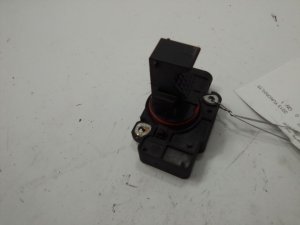
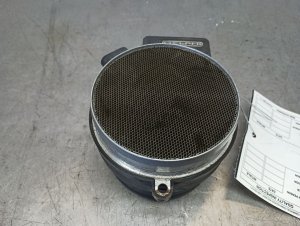
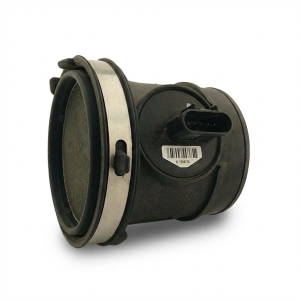
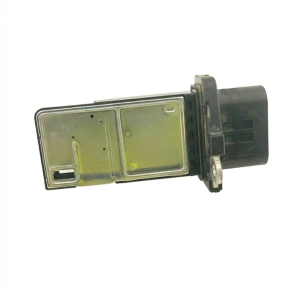
New Aftermarket Parts Available

The information in this article is provided for general reference and educational purposes only. Vehicle specifications, procedures, and part compatibility can vary by production date, trim level, and region. Always consult your vehicle's factory service manual and verify part numbers before purchasing or performing repairs. Safety-critical components such as airbags, seat belts, and braking systems should be installed by a qualified professional.
- GMC Sierra 1500:
- 🧭 Diagnostic Flowchart
- 🎬 Helpful Videos
- 🛍️ Shop This Part
- What's Unique About the 2007-2013 GMC Sierra 1500
- Symptoms You May Notice
- Most Likely Causes
- Rare But Worth Checking
- Diagnosis Steps
- Parts You'll Likely Need
- Related Codes That Often Appear With This One
- Technical Service Bulletins (TSBs) & Recalls
- Mechanic-Grade Diagnostic Values
- Scan Tool Commands That Help
- Wiring & Ground Locations
- Real Owner Repair Stories
- "I Checked Everything" — The Actual Cause
- OEM Part Supersession History
- Other Known Issues on This Vehicle
- Used vs. New Parts: Buying Guide for This Vehicle
- Real Owner Stories
- 2006 GMC Sierra
- 2007-2013 GMC Sierra 1500
- 2007-2013 GMC Sierra 1500
- Related OBD-II Codes
- Frequently Asked Questions
- 🎟️ Get 5% Off