

P0101 on 2012-2016 GMC Sierra: MAF Sensor, Air Leaks, and Fixes
On a 2012-2016 GMC Sierra, code P0101 is most often caused by a dirty Mass Airflow (MAF) sensor or a vacuum leak from a cracked air intake hose. Cleaning the sensor with dedicated MAF cleaner is a cheap first step (~$15), while a new ACDelco sensor costs $80-$200. For 2014-2016 models, inspect the air filter housing for plastic 'casting flash' per GM TSB PIP5446A, as this is a known manufacturing defect that can trigger the code. A cracked intake boot is another very common culprit.
- Always start by cleaning the MAF sensor with dedicated cleaner; this is the most common and cheapest fix.
- Thoroughly inspect the flexible air intake hose for cracks, as this is a very common source of vacuum leaks on these trucks.
- If you have a 2014-2016 model, specifically check for the plastic 'casting flash' inside the air filter housing as described in TSB PIP5446 before replacing any parts.
- Do not replace the MAF sensor until you have ruled out a dirty sensor and vacuum leaks.
What's Unique About the 2012-2016 Gmc SIERRA
For the 2014-2016 models (K2XX platform), there is a known issue documented in Technical Service Bulletin (TSB) PIP5446A where excess plastic 'casting flash' inside the air filter housing can disrupt airflow and trigger a P0101 code. This can lead to misdiagnosis of a faulty sensor when the housing itself is the problem. This TSB also applies to a wide range of other GM trucks and SUVs from the same era. Additionally, these trucks are prone to cracks in the flexible air intake duct, creating a common source of 'unmetered' air that throws off the sensor's readings. This is a frequent point of failure due to heat and age.
Diagnostic Flowchart
Tap your situation to follow the diagnostic path that matches what you're seeing on this vehicle.
Generation note: This range covers two generations: the end of the GMT900 platform (2012-2013) and the beginning of the K2XX platform (2014-2016). A key issue, TSB PIP5446A regarding casting flash in the air filter housing, specifically applies to the 2014-2016 K2XX models. Both generations, however, are highly susceptible to dirty MAF sensors and cracked intake boots, which are among the most common causes for P0101 across all years.
Symptoms You May Notice
- Check Engine Light is on
- Rough or unstable idle
- Engine hesitation or sputtering, especially on light acceleration or between 0-30% throttle.
- Reduced engine power or 'limp mode'
- Poor fuel economy
- Black smoke from the tailpipe
- Hard starting
- Surging while accelerating at cruising speeds.
- Replacing the MAF sensor when the actual problem is a vacuum leak from a cracked intake boot.
- Replacing oxygen sensors or the throttle body before thoroughly inspecting the entire air intake system for leaks or obstructions.
- On 2014+ models, replacing the MAF sensor when the root cause is the casting flash in the air filter housing as described in TSB PIP5446A.
Most Likely Causes
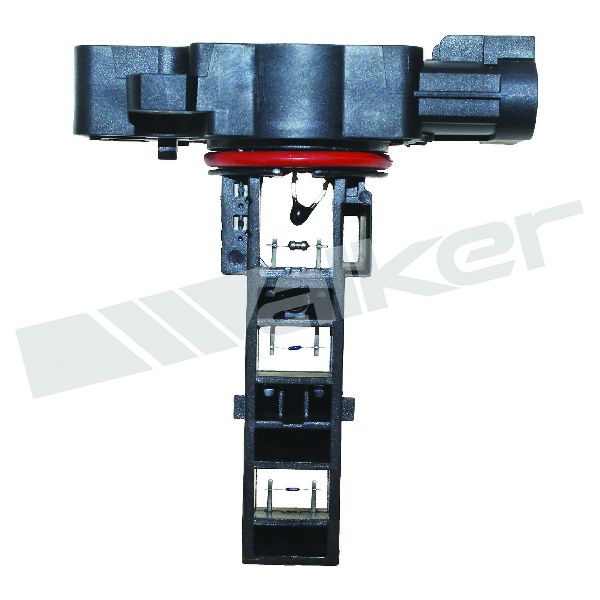
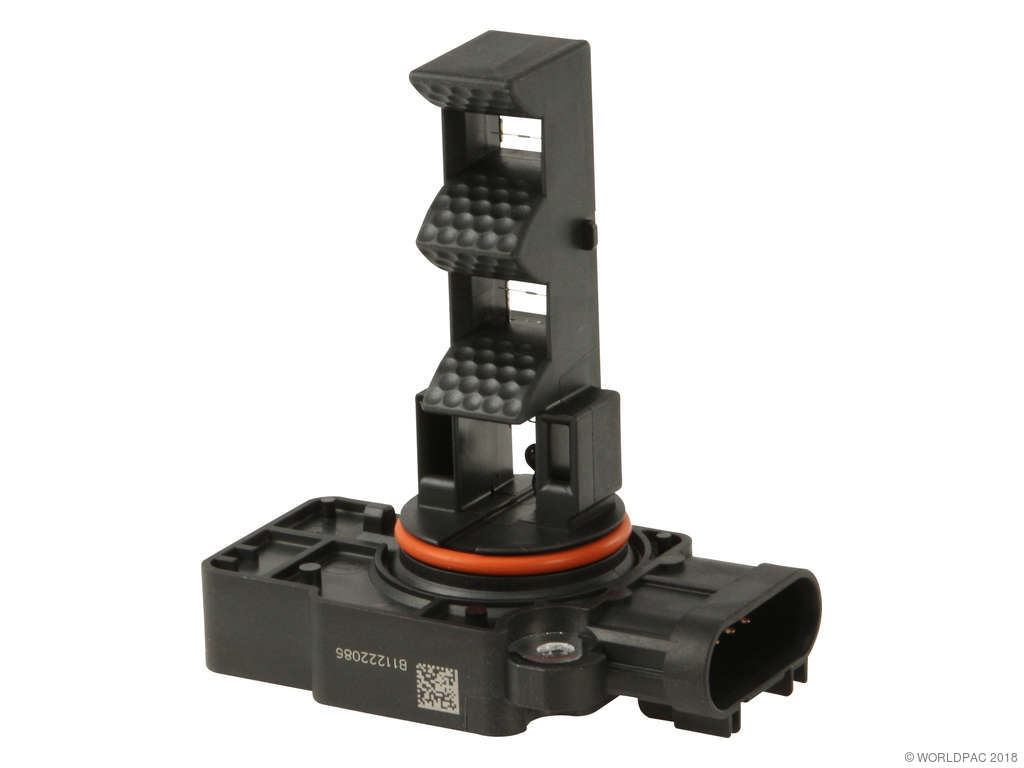
- Dirty or Contaminated Mass Airflow (MAF) Sensor 🔴 High Probability → Shop Fuel Injection Air Flow Meter The MAF sensor's sensitive hot wires can become contaminated by oil vapors from the PCV system, road debris, or fine dust that gets past the air filter, altering its readings. This is the most common and easiest-to-fix cause.
How to confirm: Remove the sensor (held by two T15 Torx screws) and visually inspect the small wires inside. If they appear dirty or coated, they need cleaning. A scan tool may show g/s readings significantly below the engine's displacement at hot idle (e.g., under 4.0 g/s for a 5.3L engine, which should be closer to 5.3 g/s).
Typical fix: Clean the sensor wires carefully using only dedicated MAF sensor cleaner spray. Do not touch the wires. Let it air dry completely for 5-10 minutes before reinstalling.
Est. part cost: $10-$20 for cleaner spray - Vacuum Leak (Cracked Air Intake Duct) 🔴 High Probability The flexible, ribbed air intake tube between the air filter box and the throttle body is made of plastic/rubber that becomes brittle with age and heat cycles, leading to cracks. This allows unmetered air to enter the engine after the MAF sensor, causing a discrepancy in airflow readings and often triggering lean codes (P0171/P0174) alongside P0101.
How to confirm: With the engine running, carefully listen for a hissing sound around the intake tube. Visually inspect the tube, especially in the ribbed sections, for cracks. A smoke test is the most definitive way to find a leak. High positive long-term fuel trims (+10% or higher) on a scan tool strongly suggest an unmetered air leak. 🎬 Watch this guide on finding and fixing lean conditions.
Typical fix: Replace the cracked air intake duct. A temporary fix can be made with high-quality tape.
Est. part cost: $50-$150 - Excessive Casting Flash in Air Filter Housing (2014-2016 models) 🟡 Medium Probability → Shop Air Cleaner Assembly As identified in GM TSB #PIP5446A, some air filter housings were manufactured with excess plastic molding (flash) near the MAF sensor mount, which disrupts airflow and causes erratic readings. This turbulence leads the PCM to set a P0101 code and can also cause harsh shifting and sputtering.
How to confirm: Remove the air filter housing lid and inspect the area where the MAF sensor mounts. Look for any rough or excess plastic ridges inside the tube that could interfere with airflow. The TSB provides images for comparison.
Typical fix: Replace the air filter housing lid/cover with a new part that is free of the defect. GM advises checking the new part for the same defect before installation.
Est. part cost: $70-$120 - Faulty Mass Airflow (MAF) Sensor 🟡 Medium Probability → Shop Fuel Injection Air Flow Meter
How to confirm: If cleaning the sensor and confirming there are no vacuum leaks does not resolve the code, the sensor's electronics may have failed. This can be confirmed by monitoring the sensor's output in grams/second with a scan tool; at hot idle on a 5.3L V8, it should be around 5.0-5.5 g/s. A reading that is consistently low (e.g., 3 g/s) or does not increase smoothly with RPM points to a bad sensor.
Typical fix: Replace the MAF sensor. It is highly recommended to use an OEM ACDelco or Delphi part to avoid compatibility issues.
Est. part cost: $80-$200 - Dirty or Clogged Engine Air Filter ⚪ Low Probability → Shop Air Cleaner Assembly
How to confirm: Inspect the engine air filter. If it is visibly dirty and clogged, it can restrict airflow enough to trigger the code. Over-oiled aftermarket filters (like K&N) are also a known cause of MAF sensor contamination and P0101 codes.
Typical fix: Replace the engine air filter, preferably with an OEM-style paper filter.
Est. part cost: $20-$50
Rare But Worth Checking
- Clogged Catalytic Converter: On GM trucks, a severely restricted exhaust can cause backpressure that affects the engine's ability to draw in air, leading to a P0101 code. This is usually accompanied by a significant loss of power, a P0300 (random misfire), and potentially a P0420 or P0430 code.
- Wiring Harness Issues: Damage to the MAF sensor's wiring or connector can cause an open or short in the circuit. Inspect the harness for any signs of chafing, corrosion, or loose pins at the connector. The connector itself can become brittle and fail to make a solid connection.
- PCV System Issues: A stuck-open PCV valve or a leak in the PCV hose can create an internal vacuum leak, introducing unmetered air and potentially triggering a P0101. This can be difficult to diagnose without a smoke test.
Diagnosis Steps
- Read the code with an OBD-II scanner and note any other codes present, especially P0171, P0174, or P0300.
- Visually inspect the entire air intake system from the air filter to the throttle body. Look for loose clamps, disconnected hoses, and cracks in the flexible intake duct, paying close attention to the accordion ribs.
- Remove and inspect the engine air filter. Replace if it is dirty, clogged, or an over-oiled aftermarket type.
- Remove the MAF sensor (usually two T15 Torx screws). Inspect the sensor elements for dirt, debris, or oil contamination.
- Clean the MAF sensor using only dedicated MAF sensor cleaner spray. Spray the delicate wires and let it air dry completely for at least 10 minutes before reinstalling.
- If you have a 2014-2016 model, inspect the inside of the air filter housing for plastic casting flash near the MAF sensor location, as noted in TSB PIP5446A.
- With the engine running, monitor live data on a scan tool. Check Long Term Fuel Trims (LTFT). High positive numbers (e.g., > +10%) suggest a vacuum leak.
- If a vacuum leak is suspected, perform a smoke test to pinpoint the source. Common areas are the intake boot, PCV hoses, and intake manifold gaskets.
- If no leaks are found and the sensor has been cleaned, monitor the MAF sensor's g/s reading on a scan tool. At hot idle with accessories off, a 5.3L V8 should read approximately 5.0-5.5 g/s. A significantly lower reading points to a faulty sensor.
Parts You'll Likely Need
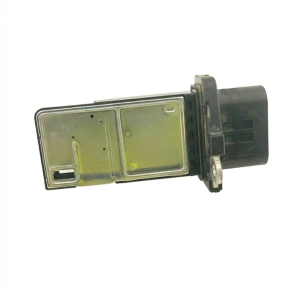
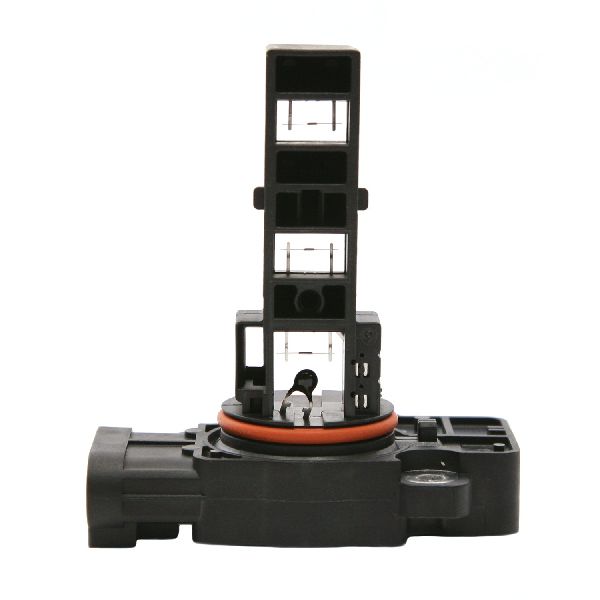
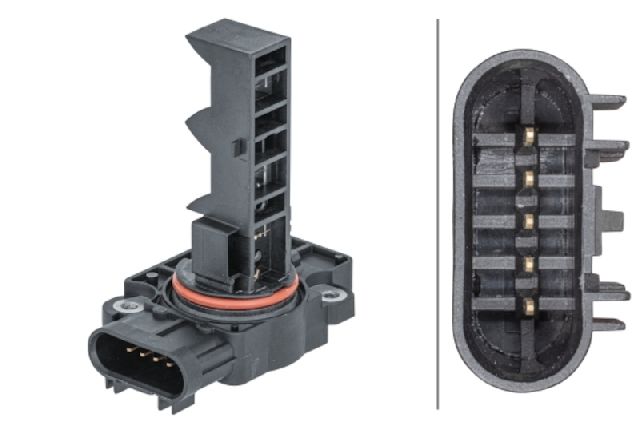
- Mass Airflow (MAF) Sensor
(OEM #23256991)— This sensor fails electronically or becomes too contaminated to clean. It's the primary electronic component related to this code. - MAF Sensor Cleaner — Often the sensor is just dirty. This is the first and most cost-effective fix to attempt.
- Air Intake Duct Hose — Cracks in this hose are a very common source of vacuum leaks that trigger P0101.
- Air Cleaner Housing Cover — Required to fix the 'casting flash' issue identified in TSB PIP5446A for 2014-2016 models if the defect is present.
Related Codes That Often Appear With This One
- P0171 — System Too Lean (Bank 1) - Often caused by a vacuum leak or a dirty MAF sensor under-reporting airflow, leading the PCM to inject too little fuel.
- P0174 — System Too Lean (Bank 2) - Same reason as P0171. Both codes together strongly suggest a problem affecting the entire engine, like a MAF issue or intake leak.
- P0172 / P0175 — System Too Rich (Bank 1 / Bank 2) - Can occur if the MAF sensor is faulty and over-reporting airflow, causing the PCM to inject too much fuel. TSB PIP5446A also lists these codes as potential companions to P0101.
- P0300 — Random/Multiple Cylinder Misfire Detected - An incorrect air/fuel mixture from a faulty MAF reading or vacuum leak can cause misfires across multiple cylinders.
Technical Service Bulletins (TSBs) & Recalls
- PIP5446A: Addresses harsh shifting, sputtering, rough idle, and DTCs P0101, P0171, P0172, P0174, P0175 caused by excessive casting flash in the air filter housing on 2014-2018 GM trucks and SUVs. The fix is to inspect and, if necessary, replace the air filter housing lid.
- PIP4932C: A more general bulletin that advises technicians to follow standard service information diagnostics for code P0101, suggesting no single special procedure at the time of its writing.
Platform-Specific Known Issues
- Intake Manifold Gasket Leaks (GMT900): → Shop Engine Intake Manifold While less common than the intake boot, the intake manifold gaskets on the 2012-2013 GMT900 trucks can fail, causing a vacuum leak that triggers P0101 and lean codes. This is a more involved repair.
- Aftermarket Cold Air Intakes: → Shop Engine Air Intake Resonator Installing an aftermarket cold air intake (CAI) can sometimes trigger a P0101 code. The different airflow characteristics can confuse the stock MAF sensor calibration. Oiled filters included with these kits are also a frequent source of sensor contamination.
Mechanic-Grade Diagnostic Values
- MAF Sensor Reading (g/s) at warm idle — expected: Approximately equal to engine displacement in liters (e.g., a 5.3L engine should be ~5.3 g/s).. Failure: A reading significantly lower than displacement (e.g., 3-4 g/s on a 5.3L) paired with high positive fuel trims suggests unmetered air (vacuum leak) or a contaminated sensor.
- MAF Sensor Signal Voltage at idle — expected: ~0.5V to 1.5V.. Failure: Voltage outside this range, or voltage that does not increase smoothly with RPM, indicates a problem with the sensor or wiring.
- MAF Sensor Signal at 2500 RPM — expected: 15 to 25 g/s.. Failure: A reading that does not rise into this range under acceleration suggests a faulty sensor or a severe air restriction.
- Long-Term Fuel Trims (LTFT) at idle — expected: Close to 0% (+/- 10%).. Failure: Sustained high positive values (e.g., +20% or higher) on both banks strongly suggest a vacuum leak or a MAF sensor that is under-reporting airflow.
Scan Tool Commands That Help
- GDS2 / Tech2: PCM Relearn/Software Update — Use after replacing the MAF sensor, especially if a P0101 code appears immediately after replacement (sometimes with a P1682). The PCM may need its learned values reset or updated to be compatible with the new sensor, as noted in TSB #21NA032 for similar GM platforms.
Wiring & Ground Locations
- G101 — Located at the front of the engine, on the lower block.. This is a primary ground point for the Engine Control Module (ECM) and the Mass Air Flow (MAF) Sensor. A poor or corroded connection here can cause erratic sensor readings and trigger a P0101.
- G102 / G103 — Located on the rear of the cylinder heads, near the firewall.. These are critical engine-to-chassis grounds. Corrosion or looseness at these points can cause a host of electrical issues, including unstable sensor readings that rely on a stable ground reference.
- MAF Sensor Connector — On the MAF sensor itself, in the intake tube just after the air filter box.. The 5-pin connector provides power, ground, and signal lines. The Black/White wire is typically the ground circuit. Check for corrosion, backed-out pins, or harness damage near the connector.
Real Owner Repair Stories
- YouTube Channel 'Pro Auto Diagnostics & Repair' (GMC Sierra with 5.3L V8) — Check Engine Light with codes P0101, P0171 (System Too Lean Bank 1), and P0174 (System Too Lean Bank 2).
❌ Tried (didn't work) Initial diagnosis confirmed symptoms via scan tool, showing low MAF reading (~3 g/s) and maxed out fuel trims (+30%).
✅ What actually fixed it A physical bug was found lodged inside the MAF sensor housing, obstructing the sensing elements. After removing the bug with compressed air and cleaning the sensor, the MAF reading at idle returned to a normal ~5 g/s and the short-term fuel trims immediately began to correct, confirming the fix.
OEM Part Supersession History
10393948, 20787043, 23118170→23256991— Part has been updated or consolidated by the manufacturer over time.
Heads up: While multiple part numbers exist for this year range, using a direct replacement for the number on the existing sensor is the safest approach. Aftermarket sensors are known to cause compatibility issues.13432262, 13505433→12671624— Part has been updated or consolidated by the manufacturer over time.
Heads up: This is another valid part number for some vehicles in this range. Always verify the correct part number for your specific VIN before purchasing.
Helpful Videos


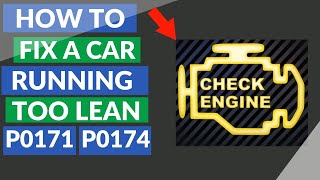
Used OEM Parts in Stock
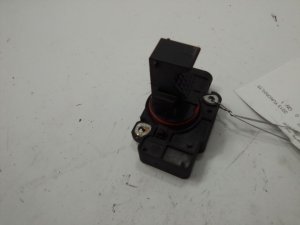
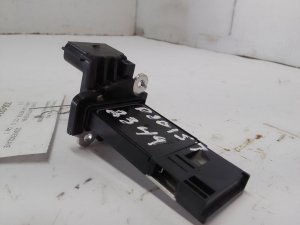
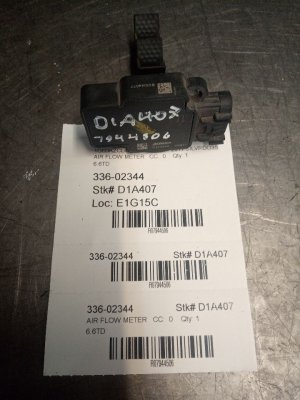
New Aftermarket Parts Available


The information in this article is provided for general reference and educational purposes only. Vehicle specifications, procedures, and part compatibility can vary by production date, trim level, and region. Always consult your vehicle's factory service manual and verify part numbers before purchasing or performing repairs. Safety-critical components such as airbags, seat belts, and braking systems should be installed by a qualified professional.
- Gmc SIERRA:
- 🧭 Diagnostic Flowchart
- 🎬 Helpful Videos
- 🛍️ Shop This Part
- What's Unique About the 2012-2016 Gmc SIERRA
- Symptoms You May Notice
- Most Likely Causes
- Rare But Worth Checking
- Diagnosis Steps
- Parts You'll Likely Need
- Related Codes That Often Appear With This One
- Technical Service Bulletins (TSBs) & Recalls
- Platform-Specific Known Issues
- Mechanic-Grade Diagnostic Values
- Scan Tool Commands That Help
- Wiring & Ground Locations
- Real Owner Repair Stories
- OEM Part Supersession History
- 🎟️ Get 5% Off