

P0101 on 2018-2022 GMC Terrain: MAF Sensor Performance, Causes and Fixes
On a 2018-2022 GMC Terrain, code P0101 is almost always caused by the charge air cooler pipe disconnecting from the throttle body. This is a well-documented factory flaw. The fix is often free and takes minutes: simply re-attach the pipe and tighten the clamp. For a permanent solution, replace the weak factory clamp with a T-bolt style clamp. If the pipe is secure, the MAF sensor may need cleaning or replacement.
- Before buying any parts for a P0101 code on a 2018-2022 Terrain, ALWAYS check the large air pipe connected to the engine's throttle body. It has very likely popped off.
- The fix is often as simple as re-attaching the pipe and tightening the clamp. Consider spending a few dollars on a stronger T-bolt clamp for a permanent solution.
- This code is rarely caused by a faulty MAF sensor on this vehicle. Only consider cleaning or replacing the MAF sensor after you have confirmed the entire air intake system is secure and leak-free.
- P0101 is often accompanied by codes P1101, P0299, P0172, and P0506, all pointing to the same massive air leak from the disconnected charge pipe.
What's Unique About the 2018-2022 Gmc TERRAIN
The 2018-2022 GMC Terrain, along with its sibling the Chevrolet Equinox, equipped with either the 1.5L or 2.0L turbocharged engine, has a well-documented weakness in its intake plumbing. The connection where the charge air cooler outlet pipe meets the throttle body is prone to failure. The factory clamp can be insufficient, allowing the pipe to blow off under boost pressure. This creates a massive unmetered air leak after the MAF sensor, which is the primary reason for P0101 codes on this specific platform. The issue is so common that GM released multiple Technical Service Bulletins (TSBs) and a customer satisfaction program (N192271200) to address it by providing an improved retainer.
Diagnostic Flowchart
Tap your situation to follow the diagnostic path that matches what you're seeing on this vehicle.
Symptoms You May Notice
- Check Engine Light is on
- "Reduced Engine Power" message on the dash (limp mode)
- Poor acceleration or hesitation
- Engine stalling, especially at idle or low speeds
- Rough idle
- Loud 'thunk', 'pop' or 'whoosh' sound from the engine bay upon acceleration, followed immediately by the symptoms above
- Replacing the MAF sensor without first checking for the disconnected charge air cooler pipe. Given the prevalence of the pipe issue on this platform, it should always be the first check. TSBs explicitly warn against replacing the MAF unless it is confirmed to be the cause after checking the pipe.
Most Likely Causes
- Disconnected Charge Air Cooler Pipe 🔴 High Probability → Shop Intercooler As documented in multiple GM TSBs (#22-NA-224, #PIP5710A, #PIP5651G) and Customer Satisfaction Program #N192271200, the clamp securing the charge air cooler outlet pipe to the throttle body is a known failure point. Under boost, the pressure can force the pipe to disconnect. Owners on forums frequently report this exact failure.
How to confirm: Open the hood and visually inspect the large-diameter black plastic or rubber tube that connects to the metal throttle body on the top-front of the engine. If it has popped off or is loose enough to be wiggled by hand, this is your problem. There may be oily residue around the connection point.
Typical fix: Re-seat the pipe onto the throttle body and securely tighten the clamp. Many owners and technicians recommend replacing the factory spring or worm-gear clamp with a more robust T-bolt style clamp (approx. 2.75" or 70mm diameter) to prevent recurrence. GM also issued an updated retainer clip (Part No. 13434668, now superseded by 84828210) under recall N192271200.
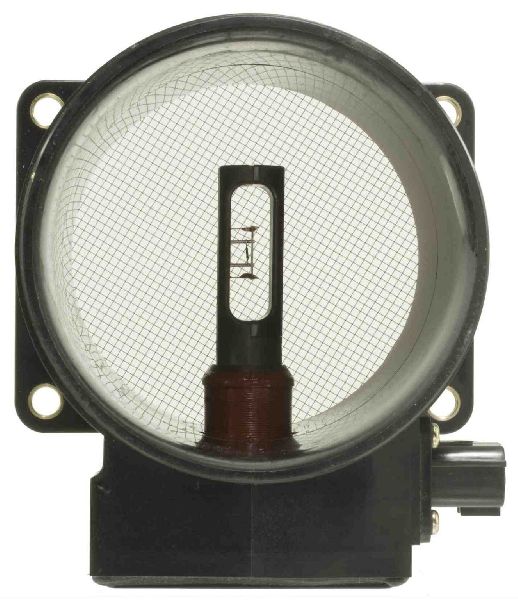
Est. part cost: $0-$25 - Dirty or Contaminated MAF Sensor 🟡 Medium Probability → Shop Fuel Injection Air Flow Meter The MAF sensor uses a sensitive element to measure airflow. Over time, dirt, oil vapor from the PCV system, or residue from aftermarket oiled air filters can coat this element, insulating it and causing inaccurate readings. The PCV system on these turbo engines is known to pass oil/water mix into the intake tract, which can contribute to this.
How to confirm: Remove the MAF sensor from the intake tube (usually held by two T20 Torx screws). Visually inspect the small wires or film inside the sensor housing for any grime or debris.
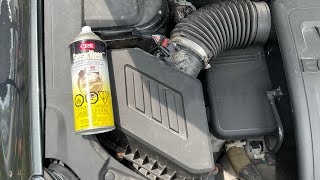
Typical fix: Clean the sensor elements carefully using only dedicated Mass Airflow Sensor cleaner spray. Do not touch the sensor elements with anything. 🎬 See how to safely clean your MAF and IAT sensors. Allow it to dry completely before reinstalling.
Est. part cost: $10-$15 - Faulty MAF Sensor ⚪ Low Probability → Shop Fuel Injection Air Flow Meter
How to confirm: If the intake pipe is secure, the sensor is clean, and the code returns after being cleared, the sensor itself may have failed. This can be confirmed by monitoring its output with a scan tool (looking for erratic g/s readings) or by substituting a known-good sensor.
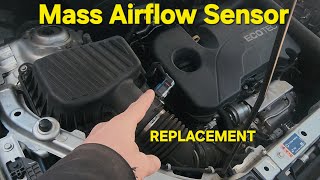
Typical fix: Replace the MAF sensor. It is highly recommended to use an OEM ACDelco part (23262344) or a high-quality equivalent from brands like Delphi or Hitachi. 🎬 Watch this walkthrough for replacing the mass airflow sensor.
Est. part cost: $75-$165
Rare But Worth Checking
- Frozen Charge Air Cooler (Intercooler): → Shop Intercooler In extremely cold climates (typically below 0°F / -18°C), moisture from the PCV system and ambient air can freeze inside the charge air cooler, creating a blockage. This restricts airflow and can trigger P0101, P0299, and misfire codes. Owners report this recurring winter issue. GM has a TSB (#21-NA-216) addressing this, which may involve installing a grill cover to reduce cold air exposure to the intercooler.
- Clogged Catalytic Converter: A severely restricted exhaust can cause backpressure that skews airflow readings, sometimes triggering a P0101 on GM vehicles. This is usually accompanied by a severe loss of power, a 'rotten egg' smell, and potentially other codes like P0420.
- Vacuum Leak: A crack in the air intake duct between the MAF sensor and the turbocharger, or a leak in any vacuum line (including PCV hoses), can allow unmetered air to enter the system and cause this code. A smoke test is the best way to diagnose these less obvious leaks.
Diagnosis Steps
- Read all diagnostic trouble codes from the ECM. Note if codes P1101, P0299, P0172, or P0506 are present with P0101, as this strongly indicates a massive intake leak.
- Perform a thorough visual inspection of the engine's air intake system. Pay extremely close attention to the connection of the charge air cooler pipe at the throttle body. Physically push and pull on the pipe to check if it is loose or has completely disconnected.
- If the pipe is disconnected, inspect the pipe end, O-ring seal, and throttle body inlet for damage or excessive oil before reconnecting. Securely re-attach the pipe and clamp. Consider upgrading the clamp.
- If the pipe is secure, inspect the air filter to ensure it is clean and properly installed.
- Remove and inspect the MAF sensor (T20 Torx driver usually required) for any visible dirt, oil, or debris on the sensing elements.
- If dirty, clean the MAF sensor using only dedicated MAF sensor cleaner spray. Let it air dry completely before reinstalling.
- Clear the trouble codes and perform a test drive that includes building boost (e.g., merging onto a highway). If the code returns, proceed to the next steps.
- Using a scan tool with live data, monitor the MAF sensor reading (in grams/second or Hertz) at idle and while driving to see if the readings are erratic or illogical for the engine load.
- If no obvious faults are found, perform a smoke test on the entire intake system from the airbox to the throttle body to check for less obvious cracks or leaks.
- If all other possibilities are exhausted and the MAF sensor readings are confirmed to be faulty via scan tool data, replace the MAF sensor.
Parts You'll Likely Need
- Charge Air Cooler Outlet Hose Clamp
(OEM #84828210 (Supersedes 13434668))— The original clamp is a known weak point. Re-securing the pipe is often a temporary fix if the clamp itself is weak. Upgrading to a T-bolt style clamp of the appropriate diameter (typically around 2.75 inches or 70mm) is a robust, long-term solution. GM's updated part was provided under a customer satisfaction program.
Trusted brands: Generic T-Bolt Clamp, GM
OEM price range: $10-$20
Aftermarket price range: $10-$25 - Mass Air Flow Sensor
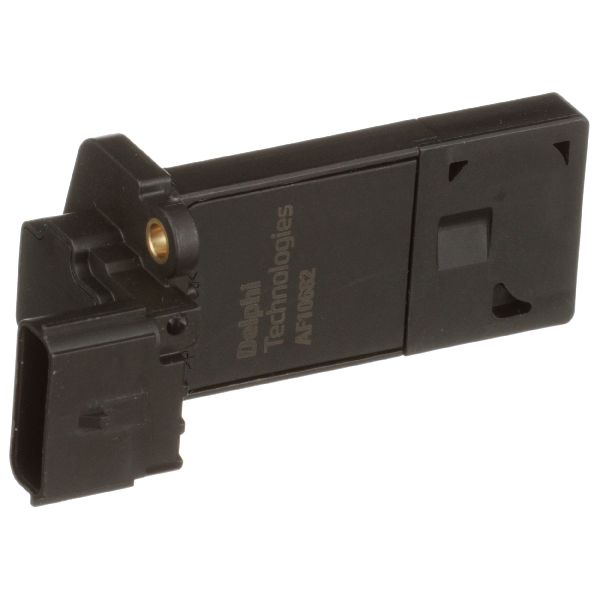
(OEM #23262344)— If cleaning the sensor doesn't resolve the issue and the intake tract is secure, the sensor itself has likely failed. This part is used for both the 1.5L and 2.0L engines in the Terrain, as well as many other GM vehicles like the Equinox, Malibu, and Camaro.
Trusted brands: ACDelco, Hitachi, Delphi
OEM price range: $85
Aftermarket price range: $75-$165
Related Codes That Often Appear With This One
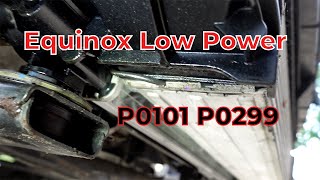
- P1101 — A GM-specific code for 'Intake Air Flow System Performance,' which directly relates to the MAF sensor's readings not matching expectations. It is frequently set alongside P0101 for the exact same root causes, especially the charge pipe failure. 🎬 Watch: Diagnosing low power and boost codes on this platform.
- P0299 — 'Engine Underboost.' When the charge air cooler pipe blows off, the compressed air from the turbo escapes into the engine bay instead of entering the engine, preventing it from reaching its target boost pressure.
- P0172 — 'System Too Rich.' The MAF sensor measures a large volume of air, and the ECM commands a corresponding amount of fuel. However, a significant portion of that measured air is lost through the disconnected pipe before combustion. This results in too much fuel for the actual amount of air entering the cylinders, creating a rich condition.
- P0506 — 'Idle Air Control System RPM Lower Than Expected.' A massive air leak from the charge pipe severely destabilizes the engine's idle, causing it to drop below the target speed or stall completely.
Technical Service Bulletins (TSBs) & Recalls
- 22-NA-224: Supersedes PIP5651G. Provides a repair procedure for Reduced Engine Power with DTCs P0101, P0172, P0299, P0506, and/or P1101, confirming the cause is often the CAC outlet tube separating from the throttle body.
- N192271200: A voluntary emissions recall/customer satisfaction program for 2019 models with the 1.5L engine to install an improved charge air cooler retainer (part no. 13434668) to prevent the duct from disconnecting.
- PIP5710A: Communicates the possibility of the charge air cooler tube becoming disconnected from the throttle body and causing reduced power with DTCs P0172, P0299, P0101, P0506, P1101.
- PIP5651G: Precursor to 22-NA-224, describes the charge pipe connection failure causing reduced power and multiple DTCs.
- PIE0569B: An Engineering Information bulletin requesting data from vehicles with P0101 and related codes to help root-cause the issue prior to repair.
- Bulletin for CAC Freezing (e.g., 22-NA-212): Describes how moisture can freeze in the intercooler in extreme cold, causing restricted flow and codes like P0299 and P0101.
Platform-Specific Known Issues
- A disconnected charge air cooler outlet pipe is the most common cause of P0101 on this vehicle. GM has issued multiple TSBs for this issue, including #22-NA-224, #PIP5710A, and #PIP5651G. Customer Satisfaction Program #N192271200 was also initiated to install an improved retainer.
- In cold weather (below 0°F/-18°C), moisture in the PCV system can freeze inside the charge air cooler, causing an airflow restriction that triggers P0101, P0299, and other codes. A specific TSB addresses this and may recommend installing a grille cover.
Mechanic-Grade Diagnostic Values
- MAF Sensor Live Data (Scan Tool PID) — expected: 2 to 7 grams/second (g/s) at idle, rising to 15 to 25 g/s at 2500 RPM. The value should increase smoothly with engine RPM.. Failure: Readings are stuck, erratic, or do not rise linearly with engine speed.
- MAF Sensor Frequency (DVOM or Scope) — expected: Approximately 2.0 to 3.7 kHz at idle, depending on engine size and conditions. The frequency should increase with airflow.. Failure: Frequency is absent or does not change with engine RPM.
- MAF Sensor Power Supply (Key On, Engine Off) — expected: 10 to 12 Volts DC at the power wire (typically pink) on the sensor's electrical connector.. Failure: Voltage is significantly lower than 10V or is absent, indicating a wiring or fuse issue.
- MAF Sensor Ground Circuit — expected: A good ground connection at the ground wire on the sensor's electrical connector.. Failure: High resistance to ground, indicating a corroded or broken ground wire.
Scan Tool Commands That Help
- Manual Procedure or Scan Tool: Idle Learn / Throttle Body Relearn — This procedure is necessary after the battery has been disconnected, or the throttle body has been cleaned or replaced. Failure to perform a relearn can cause an unstable idle or stalling, which can mimic symptoms of a MAF issue. A common manual procedure is to let the engine idle from cold to normal operating temperature for several minutes, turn it off for 60 seconds, and then let it idle again for another 3 minutes without touching the accelerator.
Wiring & Ground Locations
- MAF Sensor Connector — On the air intake tube, immediately following the air filter box.. The connector has 5 or 8 pins and provides power, ground, and signal paths for the MAF and integrated IAT sensor. A loose connection, corrosion, or damaged wires at this connector will directly cause P0101.
Real Owner Repair Stories
- NHTSA ODI #11424237 (2019 GMC Terrain) — "Engine Power is Reduced" light and Check Engine Light on.
✅ What actually fixed it The throttle body edge was found to be worn. Replacing the throttle body resolved the P0101 code. - Reddit user post (2019 GMC Terrain SLE 1.5L) — Every winter, the vehicle enters 'Reduced Power Mode'.
❌ Tried (didn't work) Multiple dealer visits.
✅ What actually fixed it The owner identified the recurring problem as the turbo/intercooler freezing up in cold weather. This aligns with GM TSB #21-NA-216, which suggests installing a grill cover as a fix.
"I Checked Everything" — The Actual Cause
- According to GM TSB #21-NA-216, if a smoke test reveals no leaks in the intake system but the vehicle sets codes P0299 (and often P0101) specifically in extreme cold (below 0°F / -18°C), the actual cause is likely moisture freezing inside the Charge Air Cooler (CAC). Technicians are advised to then install a winter grille cover to block cold air from the CAC, rather than continuing to search for leaks.
OEM Part Supersession History
13434668→84828210— Updated design for the charge air cooler retainer kit provided under a customer satisfaction program to fix the disconnecting pipe issue.22895480, 23144941→23262344— Standard part evolution and design updates for the Mass Air Flow sensor.
Model Year Variations Within This Range
- 2021-2022: The optional 2.0L Turbo (LTG) engine was discontinued after the 2020 model year. All 2021 and 2022 Terrains are equipped with the 1.5L Turbo (LYX) engine.
- 2022: The 2022 model year received a significant facelift, including a new front fascia with a larger, bolder grille and redesigned headlights. This changes the front-end airflow and the physical mounting for any potential dealer-installed winter grille covers intended to prevent intercooler freezing.
Helpful Videos
Used OEM Parts in Stock
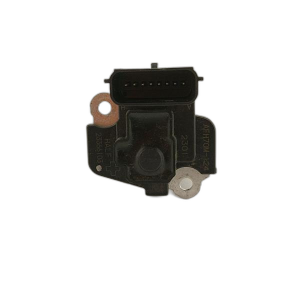
New Aftermarket Parts Available
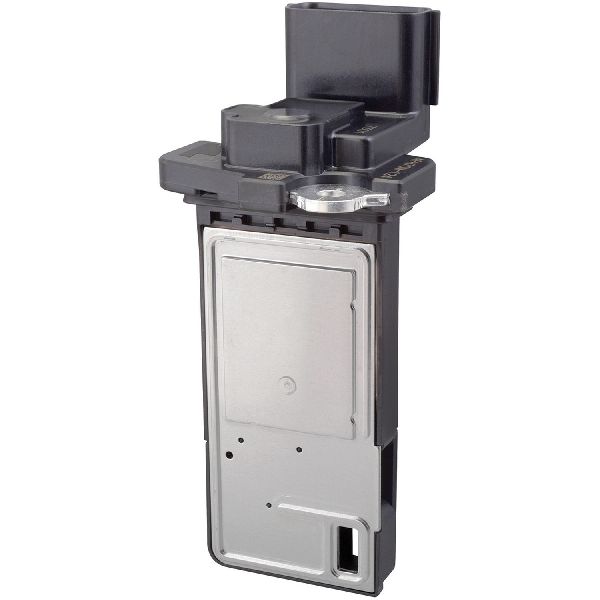


The information in this article is provided for general reference and educational purposes only. Vehicle specifications, procedures, and part compatibility can vary by production date, trim level, and region. Always consult your vehicle's factory service manual and verify part numbers before purchasing or performing repairs. Safety-critical components such as airbags, seat belts, and braking systems should be installed by a qualified professional.
- Gmc TERRAIN:
- 🧭 Diagnostic Flowchart
- 🎬 Helpful Videos
- 🛍️ Shop This Part
- What's Unique About the 2018-2022 Gmc TERRAIN
- Symptoms You May Notice
- Most Likely Causes
- Rare But Worth Checking
- Diagnosis Steps
- Parts You'll Likely Need
- Related Codes That Often Appear With This One
- Technical Service Bulletins (TSBs) & Recalls
- Platform-Specific Known Issues
- Mechanic-Grade Diagnostic Values
- Scan Tool Commands That Help
- Wiring & Ground Locations
- Real Owner Repair Stories
- "I Checked Everything" — The Actual Cause
- OEM Part Supersession History
- Model Year Variations Within This Range
- 🎟️ Get 5% Off