

P0101 on 2015-2020 GMC Yukon: MAF Sensor, Air Leaks, and Fixes
On a 2015-2020 GMC Yukon, code P0101 is most often caused by a dirty MAF sensor, a cracked air intake hose, or a known manufacturing defect (casting flash) in the air filter housing on 2015-2018 models. Start by cleaning the MAF sensor (~$15 for cleaner) and inspecting the intake for leaks.
- Always start diagnosis by cleaning the MAF sensor with dedicated cleaner and inspecting the air filter.
- Thoroughly inspect the flexible air intake hose for cracks; this is a very common failure point.
- If you have a 2015-2018 model, you MUST check for the 'casting flash' defect inside the air filter housing as described in TSB PIP5446A before replacing the MAF sensor.
- If you have a 2019-2020 model and also see a P1682 code, investigate the ignition relay before replacing the MAF sensor.
- Only use a high-quality OEM (ACDelco) or OE-supplier (Delphi) MAF sensor if replacement is necessary, as these trucks can be sensitive to cheaper aftermarket parts.
What's Unique About the 2015-2020 GMC Yukon
For this generation of GMC Yukon (and its siblings like the Tahoe and Sierra), P0101 is frequently caused by specific, documented issues beyond a simple dirty sensor. A key problem, covered by GM Technical Service Bulletin (TSB) #PIP5446A, involves excess plastic 'casting flash' from the manufacturing process inside the air filter housing on 2015-2018 models. This defect disrupts airflow, causing a P0101 code and symptoms like harsh shifting. Additionally, the flexible air intake duct on these trucks is a common failure point, often developing cracks that create hard-to-see vacuum leaks.
Symptoms You May Notice
- Check Engine Light illuminated
- Rough or unstable idle
- Engine hesitation or stumbling on acceleration
- Harsh shifting, particularly between 1-2 and 2-3 gears
- Reduced engine power or 'limp mode'
- Poor fuel economy
- Stalling, especially when shifting from Park to Reverse
- Immediately replacing the MAF sensor without cleaning it first or checking for vacuum leaks.
- Replacing oxygen (O2) sensors when lean codes (P0171/P0174) appear alongside P0101. The lean condition is usually a symptom of the unmetered air or bad MAF reading, not the cause.
- Replacing the throttle body when the issue is a simple vacuum leak from a cracked intake hose.
Most Likely Causes
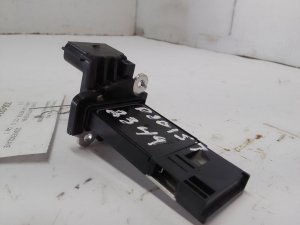
- Dirty or Contaminated Mass Airflow (MAF) Sensor 🔴 High Probability → Shop Fuel Injection Air Flow Meter Oil from aftermarket reusable air filters or fine dust bypassing a worn stock filter can coat the sensor's delicate hot wire, insulating it and causing inaccurate readings. This is the most common first step in diagnosis.
How to confirm: Visually inspect the sensor's wires after removal (requires a Torx security bit). If they appear coated or dirty, cleaning is warranted. This is the easiest and cheapest first step.
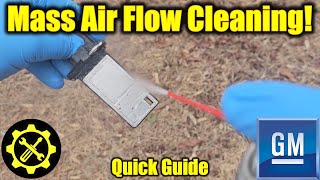
Typical fix: Remove the sensor and clean it thoroughly with a dedicated MAF sensor cleaner spray. 🎬 Watch: A step-by-step guide to cleaning your MAF sensor. Do not use brake or carburetor cleaner, as they can damage the sensor. Allow to dry completely before reinstalling.
Est. part cost: $10-$20 for cleaner spray - Cracked or Loose Air Intake Duct 🔴 High Probability → Shop Engine Air Intake Resonator The flexible, ribbed rubber duct between the air filter housing and the throttle body is exposed to significant engine heat and vibration, causing it to become brittle and crack over time, especially in the accordion-like sections. Leaks can also occur in the integrated PCV tubing.
How to confirm: With the engine running, carefully listen for hissing sounds around the intake duct. Flex the duct by hand and visually inspect all folds for cracks. A smoke test is the most definitive way to confirm a leak.
Typical fix: Replace the entire air intake duct assembly. A common replacement part is GM #23143068 or equivalent.
Est. part cost: $40-$120 - Excessive Casting Flash in Air Filter Housing (2015-2018 models) 🟡 Medium Probability → Shop Air Cleaner Assembly A known manufacturing defect documented in TSB #PIP5446A. Rough plastic bits left from the molding process are present inside the air filter housing lid, right where the MAF sensor is mounted, creating air turbulence.
How to confirm: Remove the MAF sensor and the air filter housing lid. Visually and physically inspect the inside of the housing, particularly the tube section, for rough plastic seams or flashing that could disturb airflow.
Typical fix: Replace the air filter housing lid with a new part (e.g., GM #84155923). Be sure to inspect the new part for the same defect before installation.
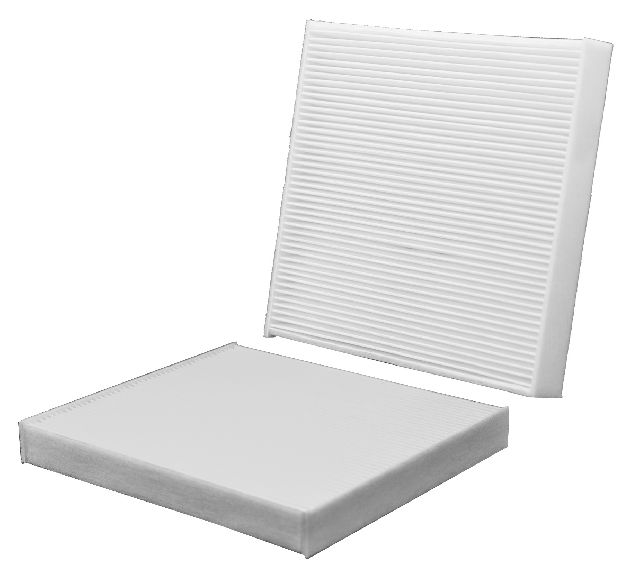
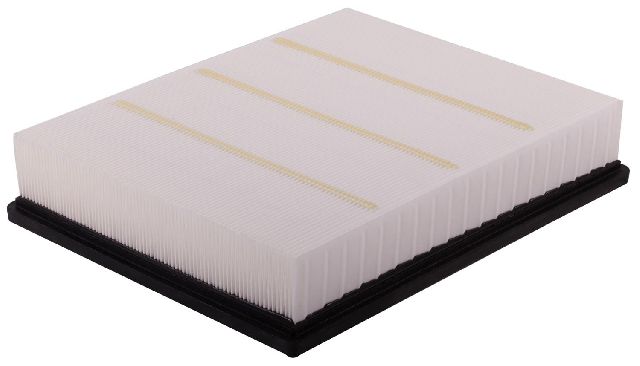
Est. part cost: $75-$120 - Clogged Engine Air Filter 🟡 Medium Probability → Shop Air Cleaner Assembly
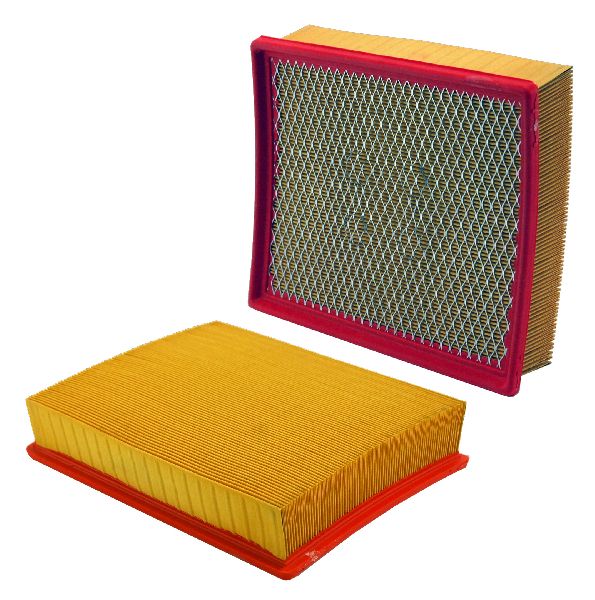
How to confirm: Remove and inspect the engine air filter. If it is visibly dirty, clogged with debris, or has not been replaced in a long time, it can restrict airflow enough to trigger the code.
Typical fix: Replace the engine air filter. Using an OEM ACDelco filter is recommended as some aftermarket filters can cause issues.
Est. part cost: $20-$50
Rare But Worth Checking
- Faulty Ignition Relay or Fuse Block Issue (2019-2020 models): Per TSB #PIP5729, if P0101 is set along with code P1682, the root cause may be an electrical issue in the underhood fuse block or a bad ignition relay, not the MAF sensor itself. 🎬 Watch: Diagnosing P0101 alongside lean codes P0171 and P0174. This can lead to misdiagnosis if not considered.
- Leaking Intake Manifold Gaskets: → Shop Engine Intake Manifold While a very common issue on the previous generation of GM trucks, the intake manifold gaskets on the L83/L86 engines can still fail, creating a vacuum leak that introduces unmetered air and triggers P0101. This is often accompanied by lean codes (P0171/P0174).
- Clogged Catalytic Converter: On GM trucks, a severely restricted exhaust can create backpressure that affects the engine's ability to draw in air, leading to an irrational MAF reading. This is usually accompanied by a severe loss of power, especially at higher RPMs, and sometimes a 'rotten egg' smell.
- Dirty or Faulty Throttle Body: → Shop Fuel Injection Throttle Body Carbon buildup around the throttle plate can restrict airflow or cause the plate to stick, leading to a mismatch between expected and actual airflow reported by the MAF sensor, triggering a P0101 code.
Diagnosis Steps
- Read all stored fault codes with an OBD-II scanner. Note any other codes that are present, especially P0171/P0174 or P1682.
- Inspect the engine air filter. Replace if dirty.
- Thoroughly inspect the entire air intake system from the airbox to the throttle body. Pay close attention to the flexible duct for cracks and ensure all clamps are tight. Check PCV hoses for cracks or disconnection.
- Remove the MAF sensor. Inspect the connector and wiring for damage. Clean the sensor elements using only dedicated MAF sensor cleaner. Allow it to dry completely before reinstalling.
- For 2015-2018 models, remove the air filter housing lid and inspect the inside of the tube for 'casting flash' per TSB #PIP5446A.
- If a leak is suspected but not visible, perform a smoke test on the intake system to pinpoint the source of unmetered air.
- Using a scan tool with live data, monitor the MAF sensor reading in grams per second (g/s) at idle and while revving the engine. The reading should be smooth and correspond to engine RPM changes. A healthy 5.3L or 6.2L engine should read approximately 4-7 g/s at a warm idle in park.
- If symptoms point to a clogged exhaust (severe power loss), a backpressure test can be performed to check the health of the catalytic converters.
- For 2019-2020 models showing P1682, investigate the ignition relay and underhood fuse block circuits per TSB #PIP5729 before replacing the MAF.
- If all other possibilities have been exhausted and the sensor reading is still erratic or incorrect, replace the MAF sensor with a high-quality OEM part.
- After any repair, clear the codes and perform a test drive to ensure the issue is resolved. 🎬 See this walkthrough on diagnosing and fixing P0101 codes.
Parts You'll Likely Need
- Mass Airflow (MAF) Sensor
(OEM #23256991 (superseded by 23262343))— This sensor is the primary electronic component for this code. It is often replaced after cleaning fails to resolve the issue or if it fails electronically.
Trusted brands: ACDelco (OEM), Denso, Hitachi - Air Intake Duct / Hose
(OEM #23143068)— This flexible rubber hose is a very common failure point, developing cracks that cause vacuum leaks.
Trusted brands: ACDelco (OEM), Dorman, Mishimoto - Air Cleaner Outlet Duct (Air Filter Housing Lid)
(OEM #84155923)— Required replacement for 2015-2018 models if the 'casting flash' defect is found, as per TSB PIP5446A.
Trusted brands: ACDelco (OEM)
Related Codes That Often Appear With This One
- P0171 / P0174 — These 'System Too Lean' codes are often triggered with P0101 because a vacuum leak (cracked intake, bad gaskets) allows unmetered air into the engine that the MAF sensor doesn't measure, leading to a lean air/fuel mixture.
- P0172 / P0175 — These 'System Too Rich' codes can appear if the MAF sensor is failing and under-reporting airflow, causing the ECM to inject too much fuel for the actual amount of air entering the engine. TSB PIP5446A notes these can also be caused by the airbox casting flash.
- P1682 — On 2019-2020 models, this code points to an ignition switch circuit problem. TSB #PIP5729 indicates it can appear with P0101 when the root cause is an electrical issue in the fuse block, not the MAF sensor.
Technical Service Bulletins (TSBs) & Recalls
- PIP5446A: Harsh Shift, Sputter, Rough Idle, and DTC P0101 caused by excessive casting flash in air filter housing near MAF sensor.
- PIP5729: DTC P0101 and P1682 set together may be caused by a faulty ignition relay or fuse block terminal concern, not the MAF sensor.
Platform-Specific Known Issues
- title: Casting Flash in Airbox (2
Mechanic-Grade Diagnostic Values
- MAF Sensor Live Data at Idle — expected: 4-7 grams/second (g/s) for a fully warmed-up 5.3L or 6.2L engine at idle in Park.. Failure: Readings that are significantly lower (e.g., <3 g/s) may indicate a sensor or wiring issue. Readings that are significantly higher (e.g., >8 g/s) at idle often point to a vacuum leak (unmetered air).
- MAF Sensor Signal Voltage — expected: Approximately 0.6-1.0 volts at idle, increasing smoothly with engine RPM to over 4.0 volts at wide-open throttle.. Failure: Voltage that is stuck, erratic, or does not respond to changes in engine load indicates a faulty sensor or wiring problem.
Wiring & Ground Locations
- MAF Sensor Connector (5-wire) — On the air filter housing outlet duct, where the sensor is mounted.. Damage to these wires or corrosion in the connector will directly cause P0101. The 5 wires serve distinct functions: 12V power, power ground, signal ground, MAF signal, and IAT (Intake Air Temp) signal.
- G103 / G104 (Engine Block Grounds) — On the engine block, typically on the cylinder heads. One major ground strap runs from the negative battery terminal to the passenger side cylinder head.. The ECM and its sensors rely on a solid ground connection to the engine block. A loose or corroded engine ground can introduce electrical noise and voltage offsets, causing sensors like the MAF to send incorrect data to the ECM.
- Chassis/Body Grounds — Multiple points exist. A key ground is located on the frame rail behind the driver's side front wheel. Another strap often connects the firewall to the engine block.. While less direct, poor body-to-frame or body-to-engine grounds can create system-wide electrical gremlins that can manifest as sensor performance codes. Ensuring all major grounds are clean and tight is a critical step in diagnosing persistent electrical issues.
Real Owner Repair Stories
- Tahoe Yukon Forum user (2001 Tahoe (exhibits a similar failure pattern)) — Initially P0101, then P0300 (random misfire), rough idle, stumbling on acceleration.
❌ Tried (didn't work) Replacing the MAF sensor alone
✅ What actually fixed it The final resolution involved replacing the throttle body and discovering and repairing broken exhaust manifold bolts, which were likely causing an exhaust leak that affected sensor readings.
OEM Part Supersession History
23256991→23262343— Standard part number update by GM. The original part number 23256991 is discontinued.
Heads up: The new part number is a direct replacement for the old one. No known incompatibility issues.10393948→23256991— Part number consolidation and update.
Diagnostic Flowchart
Other Known Issues on This Vehicle
Issues unrelated to this code that are worth knowing about as an owner of this generation:
- 8-Speed (8L90/8L45) Transmission Shudder/Harsh Shifting 🔴 High — Very common issue, often referred to as the 'Chevy Shake'. Can occur at various mileages. Multiple TSBs exist, often recommending fluid flushes with updated fluid or torque converter replacement. (Ref: Multiple TSBs, including 18-NA-355 (recommending a fluid flush).)
- Leaking A/C Condenser 🟠 Medium — Widespread failure on 2015-2017 models due to cracks caused by thermal stress. Leads to loss of A/C function. (Ref: GM Special Coverage Adjustment #17336 extends the warranty for this specific failure.)
- AFM/DFM Lifter Failure (L83/L86 Engines) 🔴 High — A known potential failure point in the Active/Dynamic Fuel Management system. A collapsed lifter can cause misfires, a ticking noise, and potentially lead to catastrophic engine damage if not addressed. (Ref: Multiple TSBs address diagnosis and repair, e.g., N212353840 for 2021 models, but the issue exists in this generation.)
- Brake Vacuum Pump Failure / Hard Brake Pedal 🔴 High — The engine-driven vacuum pump can fail, resulting in a loss of power brake assist and a very hard pedal feel. This was subject to a safety recall. (Ref: NHTSA Recall 19V761000.)
- Cracked Dashboard 🟡 Low — Cosmetic issue where the dashboard develops cracks, particularly around the passenger airbag area and corners. More common in vehicles exposed to high heat and sun.
Used vs. New Parts: Buying Guide for This Vehicle
When a used part is the smart pick: For this repair, a used Air Cleaner Outlet Duct (the airbox lid) from a junkyard is a reasonable choice, especially for 2015-2018 models, provided you inspect it carefully for the 'casting flash' defect. A used Air Intake Duct (the flexible hose) can also be a cost-effective option if it is in excellent physical condition.
Donor-vehicle mileage cap: roughly under 75000 miles for the part to have meaningful remaining life.
What to inspect on the donor part:
- For the Air Intake Duct (hose): Must be flexible with no signs of dry rot, brittleness, or cracking, especially in the accordion sections. Ensure the PCV connection port is intact.
- For the Air Cleaner Outlet Duct (lid): Inspect the interior surface where the MAF sensor mounts. It must be perfectly smooth, with no plastic flashing or rough seams. Check that the screw bosses for the MAF sensor are not cracked.
- Check the vehicle year of the donor. Avoid airbox lids from 2015-2018 donors unless you can verify it's a defect-free part.
OEM-only on this vehicle (don't cheap out):
- Mass Airflow (MAF) Sensor
Aftermarket brands forum-validated for this vehicle:
- ACDelco (OEM for sensor, duct, and lid)
- Denso (for MAF Sensor)
- Hitachi (for MAF Sensor)
- Dorman (for Air Intake Duct)
Brands owners have reported issues with on this vehicle:
- Unbranded, no-name MAF sensors from online marketplaces. These are notorious for being poorly calibrated, causing persistent performance issues and codes even when new.
Real Owner Stories
Aggregated from forums and TSBs cited above. Mileages and costs reflect what owners reported in those sources.
2015 Yukon XL Denali 6.2L
Symptoms: Transmission shuddering and harsh shifting issues.
What fixed it: Fluid flushes with updated fluid or torque converter replacement as per TSB 18-NA-355.
Source hint: https://www.gm-trucks.com/forums/topic/239087-2015-yukon-xl-denali-with-6l80-myc-transmission-shuddering/
2015-2020 GMC Yukon
Symptoms: Harsh shifting between 1-2 and 2-3 gears, sputtering, and rough idle with DTC P0101.
What fixed it: Replacing the air filter housing lid to remove excessive casting flash near the MAF sensor.
Source hint: PIP5446A: Harsh Shift, Sputter, Rough Idle, and DTC P0101
2019-2020 GMC Yukon
Symptoms: DTC P0101 and P1682 set together.
What fixed it: Repairing the ignition relay or fuse block terminal concern.
Source hint: PIP5729: DTC P0101 and P1682 set together
Related OBD-II Codes
Frequently Asked Questions
My 2016 Yukon has a rough idle and P0101; could it be the airbox lid mentioned in TSB #PIP5446A?
I have both P0101 and P1682 on my 2019 Yukon. Should I replace the MAF sensor?
Can I use any cleaner to fix a dirty MAF sensor on my 5.3L Yukon?
Is there a specific air intake part that fails on the 2015-2020 GMC Yukon?
Why does my Yukon stall when shifting from Park to Reverse?
Does the type of air filter I use affect the P0101 code?
Helpful Videos


Used OEM Parts in Stock
New Aftermarket Parts Available


The information in this article is provided for general reference and educational purposes only. Vehicle specifications, procedures, and part compatibility can vary by production date, trim level, and region. Always consult your vehicle's factory service manual and verify part numbers before purchasing or performing repairs. Safety-critical components such as airbags, seat belts, and braking systems should be installed by a qualified professional.
- GMC Yukon:
- 🧭 Diagnostic Flowchart
- 🎬 Helpful Videos
- 🛍️ Shop This Part
- What's Unique About the 2015-2020 GMC Yukon
- Symptoms You May Notice
- Most Likely Causes
- Rare But Worth Checking
- Diagnosis Steps
- Parts You'll Likely Need
- Related Codes That Often Appear With This One
- Technical Service Bulletins (TSBs) & Recalls
- Platform-Specific Known Issues
- Mechanic-Grade Diagnostic Values
- Wiring & Ground Locations
- Real Owner Repair Stories
- OEM Part Supersession History
- Other Known Issues on This Vehicle
- Used vs. New Parts: Buying Guide for This Vehicle
- Real Owner Stories
- 2015 Yukon XL Denali 6.2L
- 2015-2020 GMC Yukon
- 2019-2020 GMC Yukon
- Related OBD-II Codes
- Frequently Asked Questions
- 🎟️ Get 5% Off