

P0101 on 2006-2012 Hyundai Santa Fe: MAF Sensor Range/Performance Causes and Fixes
On a 2006-2012 Hyundai Santa Fe, code P0101 is most often caused by a cracked rubber air intake hose or a dirty Mass Airflow (MAF) sensor. Before buying parts, inspect the intake hose for splits between the air filter box and the throttle body, and try cleaning the MAF sensor with dedicated cleaner.
- Always inspect the rubber air intake hose for cracks before buying any parts; this is the most likely culprit.
- If the hose is intact, the next step is to try cleaning the MAF sensor with a dedicated cleaner, which is an inexpensive potential fix.
- Only replace the MAF sensor if the intake hose is confirmed to be good and cleaning the sensor does not solve the problem.
- Ensure the engine air filter is clean and the housing is sealed correctly, as this can also affect airflow readings.
What's Unique About the 2006-2012 Hyundai Santa Fe
For the second generation (CM) 2006-2012 Santa Fe, the most frequently reported cause of P0101 isn't the sensor itself, but a physical failure of the air intake system. The flexible rubber intake hose between the air filter box and the throttle body is known to develop cracks over time, allowing unmetered air to enter the engine and trigger this code. This is a widely documented failure point in owner forums. While the code is generic, this specific point of failure is a common experience for Santa Fe owners. For diesel models (CRDi), the MAF sensor also plays a key role in controlling the EGR system, which is a slight difference from its primary function on gasoline engines where it mainly determines fuel injection quantity.
Generation note: The 2006-2012 range covers the end of the first generation (SM, through 2006) and the entire second generation (CM, 2007-2012). The causes and diagnostic procedures for P0101 are very similar for both generations, with the cracked air intake hose being a common problem across the model years. The second generation CM platform is particularly noted for this issue in online communities. A significant update occurred for the 2010 model year, where the 2.7L and 3.3L V6 engines were replaced by a 2.4L I4 and a 3.5L V6. This may result in different part numbers for the MAF sensor and intake hose between pre- and post-facelift models.
Symptoms You May Notice
- Check Engine Light is on
- Poor or hesitant acceleration
- Lack of power, especially under load like towing or going uphill
- Rough or unstable idle
- Engine stalling, especially after starting
- Reduced fuel economy
- Black smoke from the exhaust (less common)
- For diesel models, a feeling of 'no boost' or a significant power dip
- Replacing the MAF sensor without first checking for a cracked intake hose. The hose is a very common failure point and much cheaper to replace.
- Replacing the O2 sensors when lean codes (P0171/P0174) appear alongside P0101. The lean condition is often a symptom of the unmetered air from an intake leak, not a faulty O2 sensor.
Most Likely Causes
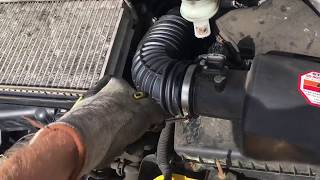
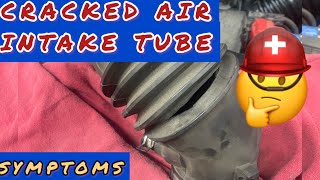
- Cracked or Loose Air Intake Hose 🔴 High Probability → Shop Engine Air Intake Resonator The rubber hose is exposed to constant heat and vibration, causing it to become brittle and crack over time, particularly in the flexible, ribbed sections. 🎬 Watch: See how a cracked intake tube causes these symptoms. This is a well-documented failure point on Santa Fe models.
How to confirm: With the engine off, visually inspect the entire flexible air intake hose between the air filter housing and the engine's throttle body. Squeeze the hose, especially the accordion-like sections, to reveal hidden cracks or splits. A temporary fix with duct tape and aluminum foil has been suggested by owners while waiting for a new part.
Typical fix: Replace the air intake hose.
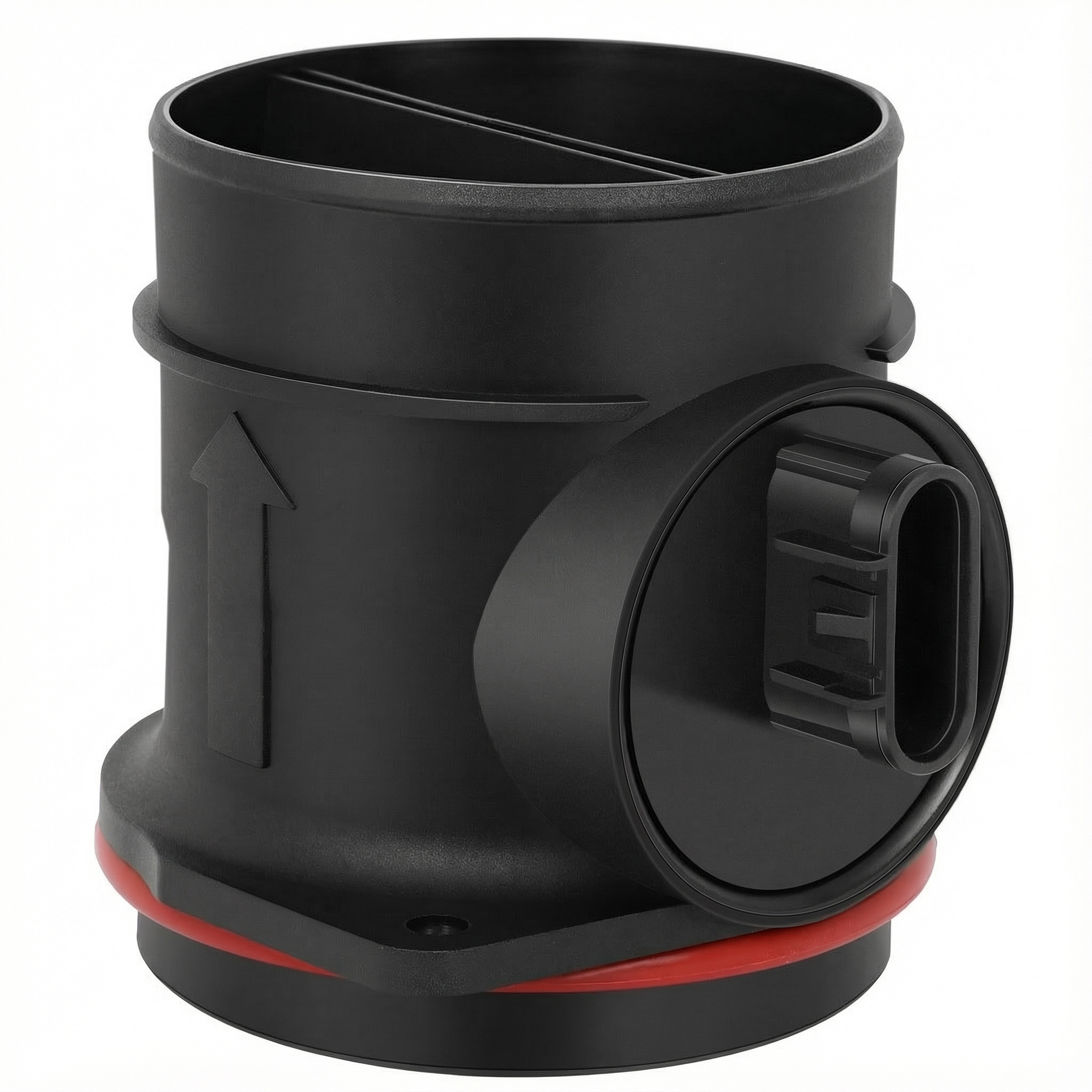
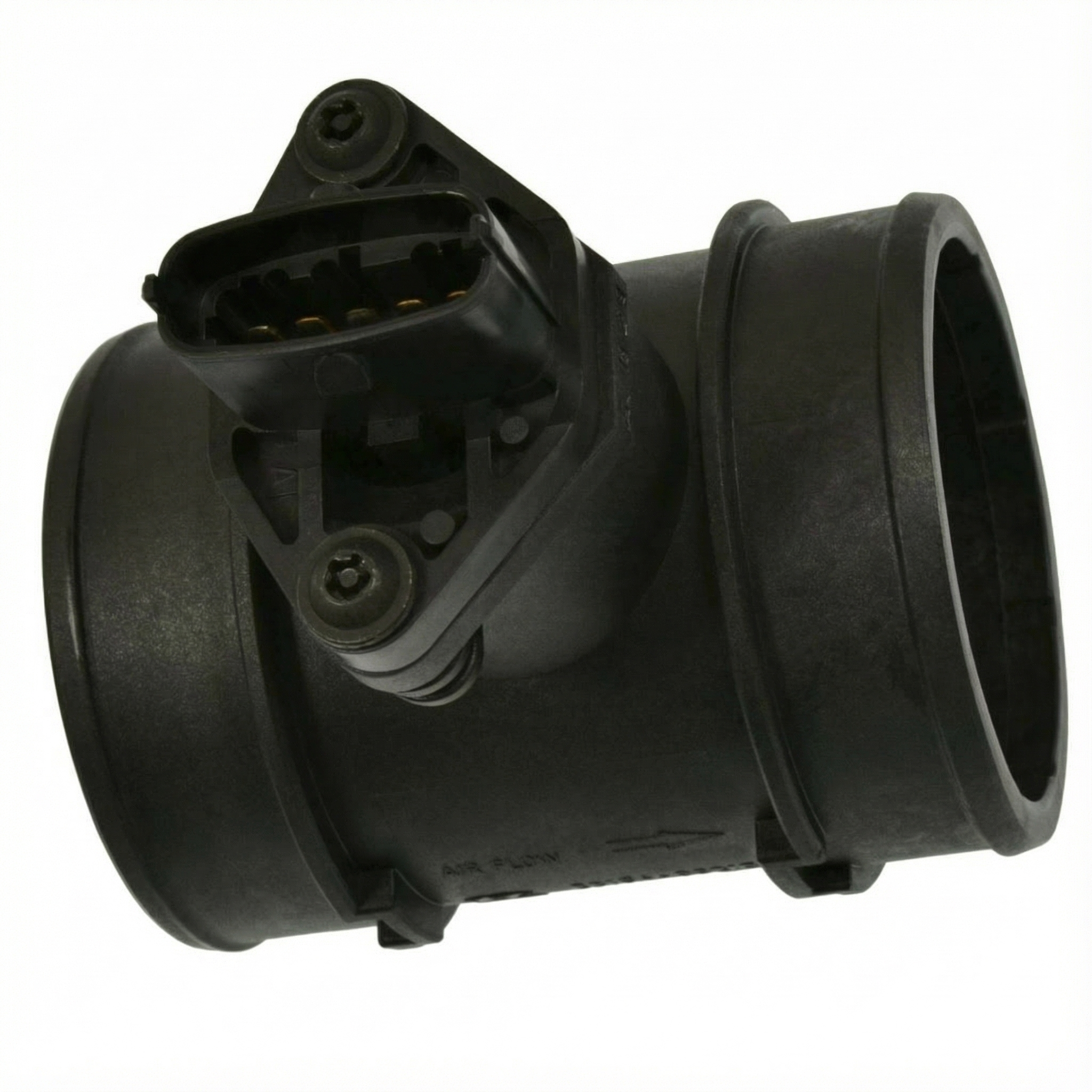
Est. part cost: $20-$90 - Dirty or Contaminated MAF Sensor 🔴 High Probability → Shop Fuel Injection Air Flow Meter Over time, dirt, oil vapor from the PCV system, and other contaminants can build up on the sensor's delicate hot wire or film, insulating it and causing inaccurate readings.
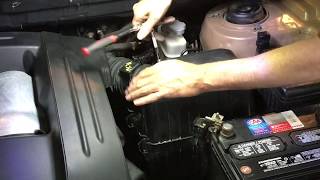
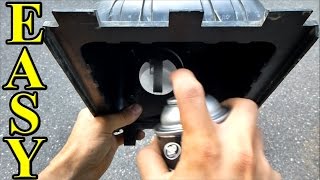
How to confirm: Carefully remove the MAF sensor (usually held by two screws) and visually inspect the small wires or film inside. If they appear dirty or coated, cleaning is warranted. 🎬 See this walkthrough on cleaning a Santa Fe MAF sensor.
Typical fix: Clean the sensor using only a dedicated Mass Airflow Sensor cleaner spray. Do not touch the sensor elements or use other chemicals like brake or carb cleaner, as they will damage it. Let it air dry completely before reinstalling. If cleaning doesn't work, replace the sensor.
Est. part cost: $10-$15 for cleaner, $70-$200 for a new sensor - Clogged or Improperly Installed Air Filter 🟡 Medium Probability → Shop Air Cleaner Assembly
How to confirm: Remove and inspect the engine air filter. If it is visibly dirty, clogged with debris, or if the air filter housing is not sealed correctly, it can disrupt airflow and cause the P0101 code.
Typical fix: Replace the engine air filter and ensure the air filter housing is properly sealed.
Est. part cost: $15-$40 - Other Vacuum Leaks ⚪ Low Probability
How to confirm: Listen for hissing sounds around the engine bay at idle. A professional can perform a smoke test, which involves filling the intake system with smoke to visually identify the source of any leaks from gaskets or vacuum lines. Leaks can occur at the intake manifold gasket or PCV hoses.
Typical fix: Replace the leaking vacuum hose or gasket.
Est. part cost: $5-$100 depending on the source
Rare But Worth Checking
- Faulty MAF Sensor Wiring or Connector: → Shop Fuel Injection Air Flow Meter Check for damage to the wiring harness leading to the sensor or corrosion inside the electrical connector before replacing the sensor itself. Wiggle the connector with the engine running to see if the idle changes.
- Clogged Catalytic Converter: A severely restricted exhaust can create backpressure that throws off airflow readings. This is usually accompanied by a significant loss of power, especially at high RPMs, and potentially other codes related to catalyst efficiency.
- Faulty Powertrain Control Module (PCM): This is extremely rare and should only be considered after all other possibilities have been exhaustively ruled out by a professional.
Diagnosis Steps
- Read the code with an OBD-II scanner to confirm P0101 is present. 🎬 Watch: A mechanic explains what P0101 means and how to fix it.
- Visually inspect the entire air intake system between the air filter and the throttle body. Pay extremely close attention to the flexible rubber hose for any cracks, splits, or loose connections. Squeeze the bellows sections to expose hidden tears.
- Inspect the engine air filter to ensure it is clean and properly seated in its housing.
- If no intake leaks are found, carefully remove the MAF sensor. Inspect the sensing element for dirt or contamination.
- If dirty, clean the sensor using only dedicated MAF Sensor Cleaner spray. Let it dry completely before reinstalling.
- If the above steps do not resolve the issue, inspect the MAF sensor's wiring and connector for any damage, looseness, or corrosion. Check for a blown fuse related to the sensor circuit.
- With a scan tool that can view live data, monitor the MAF sensor reading (in grams/second) at idle and while raising the RPM. For a V6 engine, a typical reading at idle is 3-5 g/s. The reading should be stable and increase smoothly with engine speed. A jumpy or non-responsive reading suggests a faulty sensor.
- If all else fails, consider a professional diagnosis, which may include a smoke test for hard-to-find vacuum leaks or testing of the sensor circuit with a multimeter.
Parts You'll Likely Need
- Air Intake Hose
(OEM #28138-2G100 (Verify for your specific engine/year))— This is a very common failure point on the 2006-2012 Santa Fe, leading to unmetered air and a P0101 code.
Trusted brands: Hyundai (OEM), Dorman, MTC
OEM price range: $60-$120
Aftermarket price range: $20-$90 - Mass Airflow (MAF) Sensor
(OEM #28164-37200 (For 2.7L V6) or 28164-3C100 (For 3.3L/3.5L V6). Always verify with VIN.)— If the sensor is dirty beyond cleaning or has failed electronically, it will need to be replaced. The part number is cited for the 2.7L and 3.3L/3.5L engines; verification is critical.
Trusted brands: Bosch, Delphi, Denso, Hyundai (OEM)
OEM price range: $150-$250
Aftermarket price range: $70-$150 - MAF Sensor Cleaner — Often, the sensor is just dirty and cleaning it is a cheap and effective first step before replacing parts.
Trusted brands: CRC, Liqui Moly, WD-40 Specialist
Aftermarket price range: $10-$15
Related Codes That Often Appear With This One
- P0171 — System Too Lean (Bank 1) - A vacuum leak after the MAF sensor allows unmetered air in, causing the engine to run lean.
- P0174 — System Too Lean (Bank 2) - Same as P0171, but for V6 engines which have two cylinder banks.
- P0102 — MAF Circuit Low Input - Often points to a wiring issue or a complete failure of the sensor, whereas P0101 is a performance/range issue.
- P0103 — MAF Circuit High Input - Can indicate a wiring short or a faulty sensor sending an abnormally high signal.
Technical Service Bulletins (TSBs) & Recalls
- While no TSBs directly address P0101 for this model range, TSBs 10-FL-003 and 10-FL-004 involved ECM updates for other issues that inadvertently changed how the ECU reports EGR/VVT readiness, which can be relevant during emissions testing. Always check for the latest ECU software updates with a dealer, as logic improvements can sometimes resolve range/performance codes.
- Manufacturer TSB Bulletin #21-01-041H notes that updated logic has been released for several DTCs, including P0101 for the MAF sensor range/performance, to improve diagnostic accuracy.
- Manufacturer TSB Bulletin #20-01-028H and Campaign T5B Dea describe ECU software updates intended to resolve conditions where P0101 may be stored alongside other sensor correlation codes like P0106 and P0068.
Platform-Specific Known Issues
- source — A user on hyundai-forums.com with a 2007 Santa Fe 2.2 CRDi reported a power dip when towing uphill, which was traced back to a large leak in the air intake hose. Another user in the same thread confirmed a similar cracked hose on their 2004 2.7L model, stating it affects drivability because unmetered air bypasses the MAF sensor.
- Repair Story: Hesitation and P0101 on 3.3L V6: An owner of a 2005 Santa Fe with a 3.3L V6 experienced hesitation and a persistent P0101 code. After cleaning the throttle body didn't solve the issue, the root cause
Mechanic-Grade Diagnostic Values
- MAF Sensor Live Data (Scan Tool) — expected: 2 to 7 g/s at idle, rising to 15 to 25 g/s at 2500 RPM, depending on engine size. The increase should be smooth and linear with RPM.. Failure: Readings are jumpy, do not increase with RPM, or are stuck at a specific value. A reading that rises too slowly can indicate a dirty sensor or an air leak downstream.
- MAF Sensor Signal Voltage at Idle (Multimeter) — expected: Approximately 0.5V to 1.0V at idle. A 2001-2006 2.7L model should be around 0.5V. A later model may be closer to 1.0V.. Failure: Voltage is near zero or significantly higher than 1.0V at idle.
- MAF Sensor Signal Voltage Under Acceleration (Multimeter) — expected: Voltage should increase smoothly as the engine is revved, typically reaching 2.0V or higher around 2000-2500 RPM.. Failure: Voltage does not increase, or increases erratically, when the engine is revved.
- MAF Sensor Power Supply Voltage (KOEO) — expected: 12V (Battery Voltage) at the power supply pin on the sensor connector.. Failure: No voltage or significantly less than 12V indicates a wiring or fuse issue.
Scan Tool Commands That Help
- Hyundai GDS (Global Diagnostic System): MAF Sensor Learning/Adaptation Reset — After replacing the MAF sensor on some models, particularly diesels, the new sensor may need to be learned by the system using the dealer scan tool to prevent performance issues.
Wiring & Ground Locations
- SENSOR #2 Fuse (15A) — Located in the engine compartment fuse box.. This fuse provides power to the Mass Air Flow Sensor on gasoline models. If this fuse is blown, the sensor will have no power, leading to codes P0101, P0102, or P0103.
- MAF Sensor Connector (Gasoline V6) — On the MAF sensor, mounted to the air intake tube between the air filter box and the throttle body.. Testing for power, ground, and signal voltage occurs at this connector. A typical 5-pin connector pinout is: Pin 1 (Signal), Pin 2 (Power Supply), Pin 3 (Ground). Always verify with a vehicle-specific diagram.
- Engine Ground Strap (G-xx) — There are multiple engine ground points. A key ground strap for 2007-2009 models is part number 91860-0W210, connecting the engine to the chassis. For 2010-2012 models, a relevant part is 91865-0W510. A poor engine ground can cause erratic sensor readings.. The MAF sensor relies on a clean ground signal provided by the PCM, which in turn relies on a solid engine-to-chassis ground. A corroded or loose main ground strap can cause fluctuating sensor voltages and trigger a P0101 code.
Real Owner Repair Stories
- DiagnoseDan YouTube Channel (Hyundai (model not specified, but general diagnostic applies)) — Check engine light, loss of power, P0101 and P0102 codes stored.
❌ Tried (didn't work) The vehicle was fitted with a new aftermarket MAF sensor before being brought to the technician.
✅ What actually fixed it The aftermarket MAF sensor provided incorrect readings compared to an OEM sensor. At 3000 RPM, the aftermarket sensor read 6.9 g/s while the OEM sensor read 9.2 g/s. Replacing the new, faulty aftermarket sensor with a known-good OEM sensor resolved the issue.
"I Checked Everything" — The Actual Cause
- In cases where a smoke test reveals no vacuum leaks and cleaning/replacing the MAF sensor doesn't fix the code, the issue can sometimes be a faulty aftermarket MAF sensor providing incorrect, but not completely failed, data. The ECU sees a performance range error because the aftermarket sensor's output curve doesn't match the expected OEM curve, even with no leaks present.
OEM Part Supersession History
28164-3C100→N/A - Still active— This part number covers a wide range of Hyundai V6 engines from roughly 2006 to 2014, including the 2.7L, 3.3L, 3.5L, and 3.8L.
Heads up: While the part number has broad application, it is critical to verify fitment with the vehicle's VIN. There can be variations based on production date and specific engine calibration.
Model Year Variations Within This Range
- 2010-2012: For the 2010 model year facelift, Hyundai replaced the 2.7L and 3.3L V6 engines with a new 2.4L I4 and a 3.5L 'Lambda II' V6. While the MAF sensor part number (28164-3C100) may have remained the same for the V6, the air intake hose and its associated failure points are different due to the new engine architecture. Always verify part numbers for the specific engine (2.4L, 3.5L) in these later years.
- 2007-2009: These models primarily used the 2.7L 'Delta' V6 and 3.3L 'Lambda' V6. The common failure of the cracked intake hose is particularly well-documented for these years. The engine ground wiring assembly has a specific part number for this range (91860-0W210).
Diagnostic Flowchart
Other Known Issues on This Vehicle
Issues unrelated to this code that are worth knowing about as an owner of this generation:
- Faulty Fuel Level Sending Unit 🟠 Medium — Very common issue. The fuel gauge becomes erratic or reads empty, often triggering a Check Engine Light (code P0463). The vehicle has two sending units, and both are often replaced at the same time.
- Valve Cover Gasket Oil Leak (3.3L V6) 🔴 High — A well-documented leak from the front valve cover gasket, which drips oil directly onto the alternator, causing it to fail. This can lead to a no-charge condition and engine stalling. (Ref: Service Campaign 936 (TSB 15-01-031) and Service Campaign 976 (TSB 23-01-076H) were issued to inspect and repair the leak and/or install an oil protector.)
- Failing Oil Pressure Switch 🟠 Medium — The oil pressure switch can fail and leak oil, sometimes significantly. On some engines, replacement is labor-intensive as it may require removing the intake manifold for access. (Ref: A recall (19V-063) was issued for some Santa Fe Sport models for a related oil pan sealing issue, which also involved replacing the oil pressure switch.)
- Crankshaft Position Sensor Failure 🔴 High — Failure can cause engine cranking but no start, or stalling while driving. It's a common failure point on many Hyundai models of this era.
Used vs. New Parts: Buying Guide for This Vehicle
When a used part is the smart pick: A used air filter housing or other plastic intake components are generally safe bets if they are not cracked. A used OEM MAF sensor from a low-mileage vehicle can be a better choice than a new, non-OEM aftermarket sensor, as many aftermarket sensors have been reported to cause performance issues or fail prematurely.
Donor-vehicle mileage cap: roughly under 75000 miles for the part to have meaningful remaining life.
What to inspect on the donor part:
- For an Air Intake Hose: Inspect the rubber for any signs of dry rot, brittleness, or hairline cracks, especially in the accordion sections. Squeeze it firmly.
- For a MAF Sensor: Check that the connector pins are clean and not corroded. Look inside the sensor bore; if it's coated in oil or heavy dirt, it's best to avoid it.
- Check the donor vehicle's history if possible to ensure it wasn't involved in a front-end collision that could have damaged the sensor or wiring.
OEM-only on this vehicle (don't cheap out):
- Mass Airflow (MAF) Sensor - This is the most critical part to buy OEM or from a direct OEM supplier (like Bosch, Denso, etc., if applicable). Many forum and technician accounts state that cheap, no-name aftermarket MAF sensors are often calibrated incorrectly and can cause the P0101 code to persist or return, even when the part is brand new.
Aftermarket brands forum-validated for this vehicle:
- For sensors, if not buying Hyundai OEM, stick to the original equipment supplier if it can be identified (e.g., Bosch, Delphi, Denso, Hitachi).
- For the air intake hose, brands like Dorman are generally considered acceptable and widely available.
Brands owners have reported issues with on this vehicle:
- Avoid unbranded, 'white-box' MAF sensors from online marketplaces. These are frequently cited as being improperly calibrated and a common cause of repeat P0101 codes after a replacement.
Real Owner Stories
Aggregated from forums and TSBs cited above. Mileages and costs reflect what owners reported in those sources.
2007 Hyundai Santa Fe 2.2 CRDi
Symptoms: Power dip when towing uphill; feeling of 'no boost'.
What fixed it: Replacement of the air intake hose which had a large leak.
Source hint: hyundai-forums.com thread titled 'air-intake-hose'
2004 Hyundai Santa Fe 2.7L
Symptoms: Drivability issues caused by unmetered air bypassing the sensor.
What fixed it: Identified and replaced a cracked air intake hose.
Source hint: hyundai-forums.com thread titled 'air-intake-hose'
2005 Hyundai Santa Fe 3.3L V6
Symptoms: Hesitation and a persistent P0101 code; cleaning the throttle body did not resolve the issue.
What fixed it: The root cause analysis pointed toward the MAF sensor system after throttle body cleaning failed.
Source hint: vehicle_specific_issues: Repair Story: Hesitation and P0101 on 3.3L V6
Related OBD-II Codes
Frequently Asked Questions
I have a 2007 Santa Fe 2.2 CRDi and I'm losing power going uphill. Could this be the P0101 code?
Can I use any cleaner to fix the MAF sensor on my Santa Fe?
Is there a specific TSB for P0101 software updates on the 2006-2012 models?
What is the typical MAF reading I should see on my Santa Fe V6 at idle?
My 3.3L V6 has a P0101 and the engine is stalling; could it be related to an oil leak?
Can a bad air filter cause the P0101 code on this vehicle?
Helpful Videos

We Have This Part in Stock

The information in this article is provided for general reference and educational purposes only. Vehicle specifications, procedures, and part compatibility can vary by production date, trim level, and region. Always consult your vehicle's factory service manual and verify part numbers before purchasing or performing repairs. Safety-critical components such as airbags, seat belts, and braking systems should be installed by a qualified professional.
- Hyundai Santa Fe:
- 🧭 Diagnostic Flowchart
- 🎬 Helpful Videos
- 🛍️ Shop This Part
- What's Unique About the 2006-2012 Hyundai Santa Fe
- Symptoms You May Notice
- Most Likely Causes
- Rare But Worth Checking
- Diagnosis Steps
- Parts You'll Likely Need
- Related Codes That Often Appear With This One
- Technical Service Bulletins (TSBs) & Recalls
- Platform-Specific Known Issues
- Mechanic-Grade Diagnostic Values
- Scan Tool Commands That Help
- Wiring & Ground Locations
- Real Owner Repair Stories
- "I Checked Everything" — The Actual Cause
- OEM Part Supersession History
- Model Year Variations Within This Range
- Other Known Issues on This Vehicle
- Used vs. New Parts: Buying Guide for This Vehicle
- Real Owner Stories
- 2007 Hyundai Santa Fe 2.2 CRDi
- 2004 Hyundai Santa Fe 2.7L
- 2005 Hyundai Santa Fe 3.3L V6
- Related OBD-II Codes
- Frequently Asked Questions
- 🎟️ Get 5% Off