

P0101 on 2013-2018 Hyundai Santa Fe: MAF Sensor Causes and Fixes
On a 2013-2018 Santa Fe, code P0101 is most often caused by a dirty Mass Airflow (MAF) sensor or a vacuum leak from a cracked air intake hose. Start by cleaning the MAF sensor with a dedicated cleaner and inspecting the intake tube for damage before replacing any parts. On V6 models, the hose P/N 28130-2W100 is a common culprit.
- P0101 on your Santa Fe means the MAF sensor reading is out of spec, usually due to a dirty sensor or a vacuum leak.
- The most cost-effective first step is to buy a can of MAF sensor cleaner and clean the sensor. This fixes the problem a majority of the time.
- Thoroughly inspect the flexible air intake hose between the air filter and the engine for cracks. This is the second most likely cause.
- Do not replace the MAF sensor until you have cleaned it and confirmed there are no air leaks in the intake system.
- Driving with this code will result in poor performance and fuel economy, and should be addressed promptly to avoid more costly repairs.
What's Unique About the 2013-2018 Hyundai Santa Fe
The 2013-2018 Santa Fe (third generation) came in two versions: the 5-seat 'Sport' with 2.4L or 2.0L Turbo engines, and the 7-seat 'LWB' (or Santa Fe XL) with a 3.3L V6. While P0101 is a generic code, on these specific GDI (Gasoline Direct Injection) engines, the primary causes are almost always related to unmetered air leaks or sensor contamination. Before suspecting a faulty sensor, owners most frequently find the issue is a simple-to-fix cracked intake hose, particularly on the 3.3L V6 model.
Symptoms You May Notice
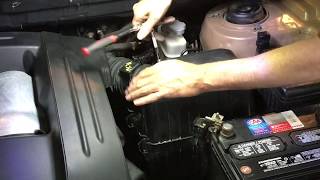
🎬 Watch: A breakdown of P0101 causes and common fixes.- Check Engine Light is on
- Reduced engine power and sluggish acceleration.
- No turbo boost on 2.0T models.
- Rough or unstable idle.
- Engine hesitation or stumbling during acceleration.
- Poor fuel economy.
- Black smoke from the exhaust in some cases.
- Replacing the MAF sensor without first cleaning it or checking for vacuum leaks. A cracked intake hose is a very common cause and is much cheaper to fix than replacing a sensor that may not be bad.
Most Likely Causes
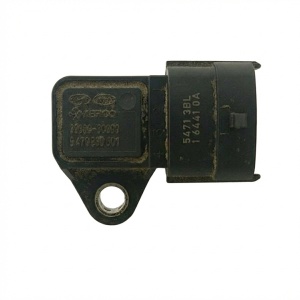
- Dirty or Contaminated MAF Sensor 🔴 High Probability → Shop Fuel Injection Air Flow Meter The MAF sensor's heated wire is sensitive and can become contaminated by dust, oil vapors from the PCV system, or oil from an over-oiled aftermarket air filter. The Theta II engines can have higher oil consumption, increasing the likelihood of oil vapor contamination.
How to confirm: Visually inspect the MAF sensor's wire elements (located inside the sensor housing in the intake tube). If they appear dirty, coated in grime, or oily, they need cleaning.
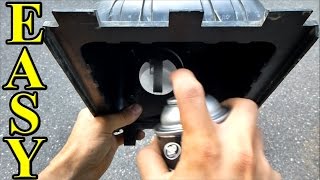
Typical fix: Remove the sensor and clean it carefully using only dedicated Mass Airflow Sensor cleaner. 🎬 See this in-depth guide on how to clean your sensor. Do not touch the wires. Allow it to dry completely before reinstalling. 🎬 Watch: A quick demonstration of the cleaning process.
Est. part cost: $10-$15 for MAF cleaner - Vacuum Leak (Cracked Air Intake Hose) 🔴 High Probability The flexible rubber or plastic air intake hose located between the air filter box and the throttle body can become brittle with age and heat, leading to cracks, especially in the accordion-like flex sections. This allows 'unmetered' air to enter the engine after the MAF sensor, causing a conflict in sensor readings and often triggering lean codes (P0171/P0174) alongside P0101.
How to confirm: With the engine running, carefully listen for a hissing sound around the intake area. Visually inspect the entire intake boot, flexing it to reveal any hidden cracks. A smoke test is the most definitive way to find a leak.
Typical fix: Replace the cracked or torn air intake hose. (P/N for 3.3L V6 is 28130-2W100).
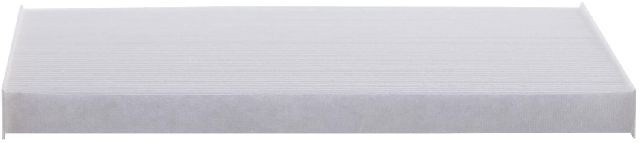
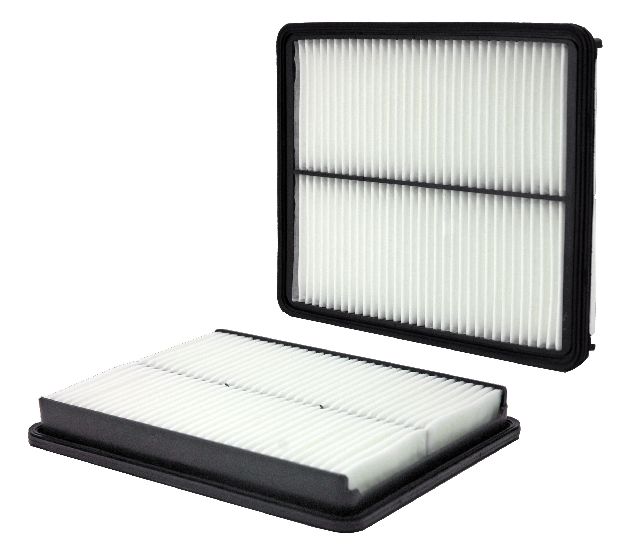
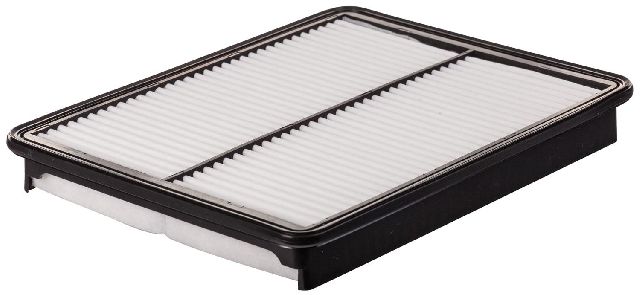
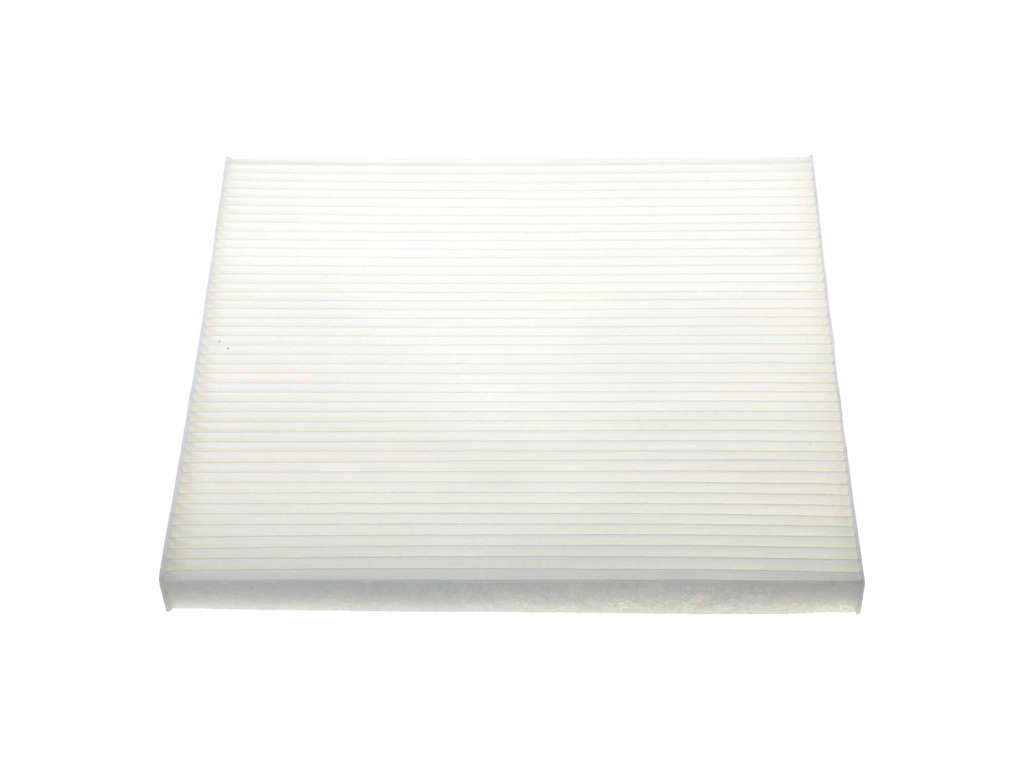
Est. part cost: $40-$120 - Clogged or Improperly Installed Engine Air Filter 🟡 Medium Probability → Shop Air Cleaner Assembly A severely clogged air filter restricts airflow, causing the MAF sensor to report lower-than-expected values, which can trigger the code under certain load conditions.
How to confirm: Remove and inspect the engine air filter. If it is visibly dirty, clogged with debris, or has not been changed in a long time, it should be replaced.
Typical fix: Replace the engine air filter.
Est. part cost: $20-$40 - Faulty MAF Sensor ⚪ Low Probability → Shop Fuel Injection Air Flow Meter While less common than being dirty, the sensor's internal electronics can fail entirely. This should only be considered after cleaning the sensor and verifying there are no air leaks.
How to confirm: If cleaning the sensor, replacing the air filter, and confirming there are no vacuum leaks does not resolve the code, the sensor itself is likely faulty. A mechanic can confirm this by monitoring the sensor's output voltage or frequency with a scan tool and comparing it to specifications.
Typical fix: Replace the Mass Airflow Sensor.
Est. part cost: $70-$250
Rare But Worth Checking
- Wiring or Connector Issue: Check the MAF sensor's electrical connector for corrosion or loose pins. Inspect the wiring harness for any visible damage, as this can mimic a failed sensor.
- Restricted Exhaust: A clogged catalytic converter can reduce the engine's ability to breathe, affecting airflow readings and potentially triggering a P0101 code, though this would typically be accompanied by other codes like P0420.
Diagnosis Steps
- Read the code with an OBD-II scanner to confirm P0101 is present. Note any other codes, especially P0171 or P0174.
- Visually inspect the entire air intake system from the air filter box to the throttle body. Look for loose clamps or disconnected hoses.
- Specifically inspect the flexible intake boot for cracks or tears. Flex the hose to expose hidden damage, paying close attention to the ribbed sections.
- Remove and inspect the engine air filter. Replace if it is dirty or clogged.
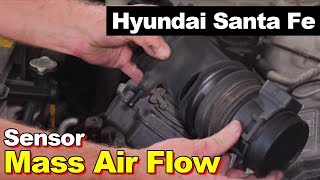
- Locate the MAF sensor on the air intake tube. Disconnect it, remove it, and inspect the sensing elements. If dirty, clean it ONLY with dedicated MAF sensor cleaner. Do not use other chemicals and do not touch the wires.
- Reinstall the clean, dry sensor, clear the codes, and perform a test drive to see if the code returns.
- If the code persists, perform a smoke test to definitively check for vacuum leaks in the intake manifold, gaskets, and vacuum lines.
- If no vacuum leaks are found, check the MAF sensor connector for damage or corrosion. Use a multimeter to verify power and ground signals at the connector.
- If all other steps fail to resolve the issue, the MAF sensor is likely faulty and should be replaced.
Parts You'll Likely Need
- Mass Airflow (MAF) Sensor
(OEM #28164-3C100 (Primarily for 3.3L V6, verify for 2.0T/2.4L))— This is the part that fails or gets dirty, causing the code. Replacement is the final step after cleaning and checking for leaks proves unsuccessful.
Trusted brands: Hyundai (OEM), Bosch, Delphi, Walker Products
OEM price range: $180-$250
Aftermarket price range: $70-$150 - Engine Air Intake Hose
(OEM #28130-2W100 (for 3.3L V6) / 28138-4Z000 (for 2.0T) / 28139-2W500 (for 2.4L))— This flexible hose is a common failure point, developing cracks that cause vacuum leaks and trigger the P0101 code. Part number is engine-specific.
Trusted brands: Hyundai (OEM), Dorman
OEM price range: $60-$120
Aftermarket price range: $40-$80 - Engine Air Filter
(OEM #28113-2W100 (verify by VIN))— A clogged filter can restrict airflow and is a common cause. It's a routine maintenance item that should be checked first.
Trusted brands: Hyundai (OEM), WIX, Purolator, Fram
OEM price range: $30-$45
Aftermarket price range: $20-$35 - Mass Airflow Sensor Cleaner — This is a special solvent required for safely cleaning the delicate MAF sensor elements. It's the first and most cost-effective repair attempt.
Trusted brands: CRC, WD-40 Specialist
OEM price range: $10-$15
Aftermarket price range: $10-$15
Related Codes That Often Appear With This One
- P0171 — System Too Lean (Bank 1) - A vacuum leak allows unmetered air, causing a lean condition that the MAF sensor reading doesn't account for. This is common on the 2.4L and 3.3L engines.
- P0174 — System Too Lean (Bank 2) - Same as P0171, but for the second bank on V6 engines (3.3L). Often appears with P0171 when a large vacuum leak is present.
- P0102 — MAF Circuit Low Input - This often points more directly to an electrical issue, a major vacuum leak, or a completely failed sensor, but can appear with P0101.
Technical Service Bulletins (TSBs) & Recalls
- 17-ST-001 / 17-ST-002 (TXX7) — Motor Driven Power Steering (MDPS) Coupling Replacement / Warranty Extension — While not related to P0101, this is a critical TSB for the 2013-2018 Santa Fe. It addresses a clicking or thud noise from the steering wheel caused by the failure of a flexible rubber coupler (P/N 56315-2K000-FFF). The warranty for this part was extended to 10 years/100,000 miles. This is a very common owner complaint.
- Bulletin #21-01-041H — This manufacturer bulletin addresses updated logic for the ECU regarding the P0101 Mass Air Flow (MAF) Sensor - Range/Performance code, as well as correlation codes like P0068 and P0106.
- Bulletin #20-01-028H / Campaign T5B Dea — Manufacturer records indicate that ECU DTC codes including P0101, P0106, and P0068 may be present in conjunction with transmission-related conditions that require software updates to resolve.
Platform-Specific Known Issues
- The air intake hose (P/N 28130-2W100) is a frequent failure point, developing cracks on the ribbed sections, especially near the throttle body, which causes unmetered air to enter and trigger P0101, often accompanied by P0171 and P0174.
- On the turbo models, a P0101 code is almost always accompanied by a significant loss of power and a complete lack of turbo boost. The symptoms are often more dramatic than on the naturally aspirated engines. The cause is still typically a vacuum leak or a dirty sensor.
Mechanic-Grade Diagnostic Values
- MAF Sensor Signal (g/s) at Idle — expected: Approx. 2.5 - 4.0 g/s for a healthy, warm engine (varies by engine size).. Failure: Readings significantly lower than 2.5 g/s (e.g., 1.2 g/s) can indicate a faulty sensor or a major vacuum leak.
- MAF Sensor Signal (g/s) at 2500 RPM (no load) — expected: Approx. 15 - 25 g/s, depending on engine size.. Failure: A reading that rises too slowly or not in a linear fashion with RPM can indicate a contaminated sensor or an air restriction.
- MAF Sensor Signal Voltage at Idle (warm engine) — expected: Approx. 0.7V - 1.5V.. Failure: Voltage significantly outside this range, or a voltage that is erratic.
- ECM Code Trigger Condition 1 (High Reading) — expected: Voltage should be below 2.2V at idle.. Failure: If the ECM sees MAF voltage greater than 2.2V for more than 10 seconds while the throttle is closed and engine speed is below 900 RPM, it will set the P0101 code.
- ECM Code Trigger Condition 2 (Low Reading) — expected: Voltage should be above 0.4V.. Failure: If the ECM sees MAF voltage less than 0.4V for more than 6 seconds when engine speed is below 1,500 RPM, it will set the P0101 code.
Scan Tool Commands That Help
- Hyundai GDS (Global Diagnostic System): Current Data (Live Data) — This is the primary function used to diagnose P0101. A technician will monitor the MAF sensor's output in grams/second (g/s) or Voltage while the engine is at idle, held at various RPMs (e.g., 2500), and during a snap throttle test to see if the readings are logical and match specifications.
- Hyundai GDS (Global Diagnostic System): Flight Record — For intermittent P0101 codes that don't appear immediately. This function allows the technician to record engine data during a test drive. When the fault occurs, the technician can trigger the recording to save the data from the moments leading up to the event, which can be analyzed later to find the anomaly.
- Hyundai GDS (Global Diagnostic System): DTC Diagnosis Guide — After retrieving the P0101 code, the GDS software provides a direct link to the official troubleshooting procedure, including wiring diagrams, component locations, and step-by-step diagnostic tests for that specific code.
Wiring & Ground Locations
- MAF Sensor Signal Wire — On the MAF sensor connector at the air intake tube.. Probing this wire is necessary to check for correct voltage or frequency signals back to the ECM. Based on similar models, the signal wire color for the 2.4L may be Blue/Orange, and for the 3.5L (similar to 3.3L) may be Black. However, a model-specific wiring diagram should always be used for confirmation.
- MAF Sensor Power and Ground Wires — On the MAF sensor connector.. A lack of 12V power or a bad ground will cause the sensor to malfunction and set a P0101 or related code. These must be verified with a multimeter at the connector before condemning the sensor. A 5-wire MAF may also have separate ground and reference voltage wires for an integrated IAT sensor.
Real Owner Repair Stories
- YouTube Channel 'Pro-Active Car Care' (Hyundai i30 Diesel (demonstrates a failure pattern applicable to GDI engines)) — Check engine light with code P0101, lack of power, no boost.
❌ Tried (didn't work) Initial thought was a bad MAF sensor., A smoke test was performed and showed no vacuum leaks.
✅ What actually fixed it The technician inspected inside the intake manifold past the throttle body and found a massive wall of carbon buildup from the EGR system, completely blocking airflow. This restriction, not a leak or bad sensor, was causing the out-of-range reading. The issue was resolved with an on-car chemical intake and EGR cleaning service, which restored power and cleared the code.
"I Checked Everything" — The Actual Cause
- A common diagnostic dead-end is when a smoke test reveals no vacuum leaks, yet the P0101 code persists. A high-level cause for this is a severe internal restriction in the intake manifold itself, often from carbon buildup. On GDI engines, especially those with EGR systems, carbon can accumulate past the throttle body to the point where it physically chokes off airflow under load. This causes the MAF sensor to report airflow values that are illogically low for a given throttle position and RPM, triggering the P0101 code. This condition will not be found by a smoke test and requires visual inspection inside the intake manifold.
OEM Part Supersession History
28164-3C100→28164-3C100— No supersession found.
Heads up: This part number appears to be stable for the 3.3L V6 across the generation. Always verify with VIN, but no major compatibility issues are commonly reported.28130-2W100→28130-2W100— No supersession found.
Heads up: This intake hose part number for the 3.3L V6 is listed as fitting the entire 2013-2019 model range, indicating no design changes that would affect compatibility.
Model Year Variations Within This Range
- 2017-2018: These model years received a mid-cycle refresh with updated styling and technology. However, the core powertrain options (2.4L, 2.0T, 3.3L) and their associated intake systems, including the MAF sensor and intake hoses, remained fundamentally the same. The diagnosis and common failure points for P0101 are consistent with the earlier 2013-2016 models.
Diagnostic Flowchart
Other Known Issues on This Vehicle
Issues unrelated to this code that are worth knowing about as an owner of this generation:
- Theta II Engine Failure 🔴 High — Widespread across 2.4L and 2.0T engines. Subject to multiple recalls (e.g., Recall 162) and a major class-action lawsuit. Failure is due to premature connecting rod bearing wear from manufacturing debris. (Ref: NHTSA Recall 17V226000 (Recall 162), Hyundai Campaign TXXI)
- MDPS Steering Coupler Failure 🟠 Medium — Extremely common. Owners report a distinct clicking or clunking sound when turning the steering wheel. The flexible rubber coupler disintegrates over time. (Ref: TSB 17-ST-002 (Warranty Extension TXX7))
- ABS Module Fire Risk 🔴 High — Affects multiple model years. An internal fault in the Anti-Lock Brake System (ABS) module can cause an electrical short, potentially leading to an engine compartment fire, even when the vehicle is parked and off. (Ref: NHTSA Recall 20V520000 (Recall 195))
- Secondary Hood Latch Corrosion 🟠 Medium — Common enough to warrant a recall. The secondary hood latch cable can corrode and bind, preventing it from securing the hood if the primary latch fails. (Ref: NHTSA Recall 17V225000 (Recall 163))
- Excessive Oil Consumption 🟠 Medium — Frequently reported by owners of the 2.4L and 2.0T Theta II engines, often as a precursor to more serious engine problems.
Used vs. New Parts: Buying Guide for This Vehicle
When a used part is the smart pick: For this repair, sourcing a used Engine Air Intake Hose from a reputable salvage yard is a smart way to save money. It is a simple molded rubber/plastic part without complex electronics.
Donor-vehicle mileage cap: roughly under 60000 miles for the part to have meaningful remaining life.
What to inspect on the donor part:
- For a used intake hose, thoroughly inspect it off the vehicle.
- Flex and squeeze the entire length of the hose, especially the accordion or ribbed sections, looking for fine cracks.
- Ensure the rubber is still pliable and not hard or brittle.
- Check that all mounting points and connection ends are intact and not torn.
OEM-only on this vehicle (don't cheap out):
- Mass Airflow (MAF) Sensor
Aftermarket brands forum-validated for this vehicle:
- For the intake hose, Dorman is a widely available aftermarket alternative to OEM.
- For the MAF sensor, if not buying Hyundai OEM, stick to the original equipment manufacturer, which is often Bosch or Delphi. Verify the brand on the original part if possible.
Brands owners have reported issues with on this vehicle:
- Avoid unbranded, 'white-box' MAF sensors from online marketplaces. These are frequently cited in forums as being defective out of the box or having a very short lifespan, causing the P0101 code to return quickly.
Real Owner Stories
Aggregated from forums and TSBs cited above. Mileages and costs reflect what owners reported in those sources.
2013 Hyundai Santa Fe
Symptoms: Sudden loss of power and no boost with a P0101 code present.
What fixed it: The mechanic suggested checking the MAF connector and then replacing the Mass Airflow Sensor.
Source hint: JustAnswer: 2013 Santa Fe P0101 code no acceleration no boost
2013-2018 Hyundai Santa Fe 3.3L V6
Symptoms: Check engine light with P0101, P0171, and P0174 codes; unmetered air entering the engine.
What fixed it: Replacement of the cracked air intake hose (P/N 28130-2W100).
Source hint: vehicle_specific_issues: 3.3L V6 (LWB / Santa Fe)
Hyundai Santa Fe (General)
Symptoms: Check engine light with a P0171 lean code; suspected dirty MAF or vacuum leak.
What fixed it: The dealer replaced the canister purge valve under warranty.
Source hint: Hyundai Forums: CEL code P0171
Related OBD-II Codes
Frequently Asked Questions
My 2013 Santa Fe 3.3L V6 has a P0101 code; is there a specific part I should check first?
I have a Santa Fe Sport 2.0T and the car has no turbo boost along with the P0101 code. Is this normal?
Can I use any cleaner to fix a dirty MAF sensor on my Santa Fe?
Is the clicking noise in my steering wheel related to the P0101 code?
Could my aftermarket oiled air filter be causing this code?
Why does my Santa Fe have P0101 along with P0171 and P0174?
Helpful Videos

Used OEM Parts in Stock
New Aftermarket Parts Available



The information in this article is provided for general reference and educational purposes only. Vehicle specifications, procedures, and part compatibility can vary by production date, trim level, and region. Always consult your vehicle's factory service manual and verify part numbers before purchasing or performing repairs. Safety-critical components such as airbags, seat belts, and braking systems should be installed by a qualified professional.
- Hyundai Santa Fe:
- 🧭 Diagnostic Flowchart
- 🎬 Helpful Videos
- 🛍️ Shop This Part
- What's Unique About the 2013-2018 Hyundai Santa Fe
- Symptoms You May Notice
- Most Likely Causes
- Rare But Worth Checking
- Diagnosis Steps
- Parts You'll Likely Need
- Related Codes That Often Appear With This One
- Technical Service Bulletins (TSBs) & Recalls
- Platform-Specific Known Issues
- Mechanic-Grade Diagnostic Values
- Scan Tool Commands That Help
- Wiring & Ground Locations
- Real Owner Repair Stories
- "I Checked Everything" — The Actual Cause
- OEM Part Supersession History
- Model Year Variations Within This Range
- Other Known Issues on This Vehicle
- Used vs. New Parts: Buying Guide for This Vehicle
- Real Owner Stories
- 2013 Hyundai Santa Fe
- 2013-2018 Hyundai Santa Fe 3.3L V6
- Hyundai Santa Fe (General)
- Related OBD-II Codes
- Frequently Asked Questions
- 🎟️ Get 5% Off