

P0101 on 2011-2014 Hyundai Sonata: MAF Sensor, Vacuum Leaks, and Carbon Buildup Fixes
On a 2011-2014 Hyundai Sonata, P0101 is most often caused by a dirty Mass Airflow (MAF) sensor or a vacuum leak from a cracked air intake hose. Cleaning the MAF sensor is the easiest first step. If that doesn't work, inspect the large rubber intake hose for tears, a very common failure point. Finally, consider carbon buildup on the intake valves, a notorious issue for these GDI engines that requires professional cleaning.
- Start with the simplest fix: buy a can of MAF sensor cleaner and clean the sensor. This resolves the issue more than half the time.
- Thoroughly inspect the air intake hose for cracks. Any unmetered air that gets in after the MAF sensor will trigger this code.
- If cleaning the MAF and checking for leaks doesn't work, the next likely cause on this specific car is carbon buildup on the intake valves, which may require professional service.
- Always check that your engine has the latest software updates from Hyundai, specifically related to Service Campaign 953, to protect the engine.
What's Unique About the 2011-2014 Hyundai Sonata
The 2011-2014 Sonata uses Gasoline Direct Injection (GDI) engines (both the 2.4L and 2.0T). Unlike traditional engines, GDI engines are known to develop significant carbon deposits on the intake valves over time because fuel is injected directly into the cylinder and no longer washes over the valves. This buildup can restrict airflow, causing the MAF sensor's readings to be inaccurate compared to the actual air entering the engine, which can be a specific cause for P0101 on this vehicle. While a dirty MAF sensor or a cracked intake hose are primary suspects, this underlying GDI issue is a critical factor to consider if simple fixes don't work.
Symptoms You May Notice
- Check Engine Light is on
- Rough or unstable idle
- Engine hesitation or stumbling on acceleration
- Reduced engine power and poor performance
- Decreased fuel economy
- Engine stalling, especially when coming to a stop
- Black smoke from the exhaust in some cases
- Hissing or whistling noises from the engine bay, indicating a vacuum leak
- Replacing the MAF sensor without cleaning it first or checking for a cracked intake hose.
- Replacing oxygen sensors, as the symptoms can sometimes seem similar to a fuel mixture issue.
- Assuming the problem is electronic without first checking for the common mechanical failures (intake hose, carbon buildup).
Most Likely Causes
- Cracked Air Intake Hose 🔴 High Probability → Shop Engine Air Intake Resonator The rubber air intake hose between the air filter box and the throttle body is notorious for developing cracks and tears due to heat and age. This introduces unmetered air into the engine after the MAF sensor, directly causing the P0101 code.
How to confirm: Visually inspect the entire length of the flexible rubber hose, paying close attention to the accordion-like sections and the connection points at the throttle body and airbox. Squeeze the hose to reveal hidden cracks. A professional can perform a smoke test to confirm.
Typical fix: Replace the cracked hose. This is a simple DIY job with basic tools.
Est. part cost: $40-$90 for a new OEM or aftermarket hose. - Dirty Mass Airflow (MAF) Sensor 🔴 High Probability → Shop Fuel Injection Air Flow Meter The MAF sensor's sensitive wire can become contaminated with dirt, oil, and other debris from the intake system, which is a common issue on all modern vehicles.
How to confirm: Visually inspect the sensor's wire element after removal. If it appears dirty or coated, it needs cleaning. The sensor is located in the intake tube just after the air filter box.
Typical fix: Remove the sensor and clean it carefully using only dedicated Mass Airflow Sensor cleaner spray. 🎬 See this guide on cleaning and fixing MAF circuit issues. Do not touch the delicate sensor wires. Let it dry completely before reinstalling.
Est. part cost: $10-$15 for a can of MAF cleaner. - Carbon Buildup on Intake Valves 🟡 Medium Probability The Sonata's GDI engine injects fuel directly into the cylinder, so fuel doesn't wash over and clean the intake valves. Oil vapor from the PCV system and exhaust gases bake onto the valves, severely restricting airflow and causing a mismatch with what the MAF sensor expects.
How to confirm: This requires removing the intake manifold to visually inspect the intake ports and valves. A borescope can also be used. This is typically done after a cracked hose and dirty MAF are ruled out.
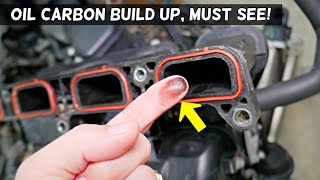
Typical fix: The valves must be manually cleaned. The most effective method is walnut blasting, which is a job for a professional shop. Chemical cleaning services are also available but may be less effective for heavy buildup. 🎬 Watch: Why Hyundai GDI engines develop such heavy carbon buildup. Costs can range from $400-$800.
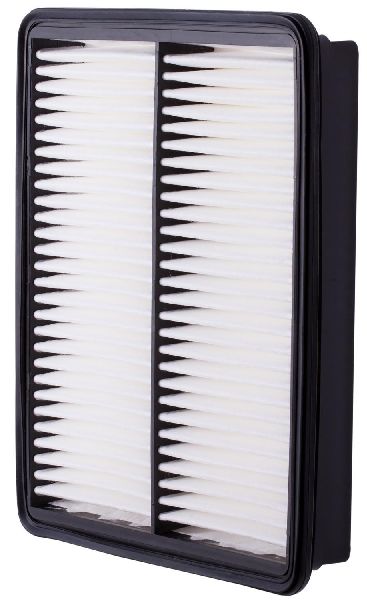
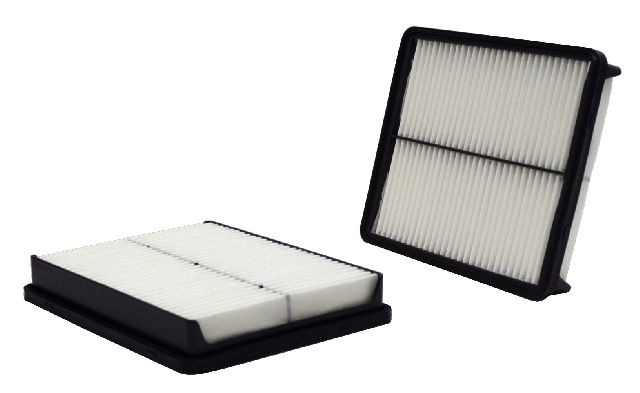
Est. part cost: $0 for inspection if doing it yourself, but the cleaning service can cost several hundred dollars. - Clogged Engine Air Filter 🟡 Medium Probability → Shop Air Cleaner Assembly
How to confirm: Remove and inspect the engine air filter. If it is visibly dirty, dark, or clogged with debris, it needs to be replaced.
Typical fix: Replace the engine air filter. This is a simple maintenance item that should be checked regularly.
Est. part cost: $15-$30
Rare But Worth Checking
- Faulty MAF Sensor: → Shop Fuel Injection Air Flow Meter While a dirty sensor is very common, the sensor itself can fail electronically. This should only be considered after cleaning the original sensor and ruling out all other causes.
- Clogged Catalytic Converter: A restricted exhaust can disrupt airflow dynamics and trigger a P0101 code. This is usually accompanied by a significant loss of power, especially at high RPMs, and potentially other exhaust-related codes like P0420.
- Wiring or Connector Issue: Check the wiring harness and connector going to the MAF sensor for any damage, corrosion, or loose pins. This is less common but can cause an intermittent or failed signal.
Diagnosis Steps
- Read the Codes: Use an OBD-II scanner to confirm P0101 is present and check for any other codes, especially P0171 (System Too Lean).
- Inspect the Air Filter: Check the engine air filter. If it's dirty, replace it, clear the code, and see if it returns.
- Inspect the Intake Boot: Carefully inspect the flexible rubber air intake hose between the air filter housing and the throttle body for any cracks, tears, or loose clamps. This is a very common failure point. 🎬 Watch: How to identify the most common P0101 cause. A leak here is a very common cause.
- Clean the MAF Sensor: Disconnect the battery. Unplug and remove the MAF sensor. Spray the sensor's wire/element generously with a dedicated MAF sensor cleaner. Let it dry completely before reinstalling. Do not use other cleaners like brake or carb cleaner.
- Check for Vacuum Leaks: With the engine running, listen for hissing sounds around the intake manifold. A professional smoke test is the most effective way to find hard-to-see leaks from gaskets or vacuum lines.
- Inspect for Carbon Buildup: If the code persists, the next step for a GDI engine like the Sonata's is to inspect the intake valves for carbon buildup. This requires removing the intake manifold and is best done by a professional.
- Test the MAF Sensor Circuit: If all else fails, use a multimeter to check for proper voltage and ground at the MAF sensor connector to rule out a wiring issue.
- Consider a Faulty MAF Sensor: If all other possibilities are exhausted, the MAF sensor itself may have failed and require replacement.
Parts You'll Likely Need
- Engine Air Intake Hose
(OEM #28130-3Q160 (for 2.4L Federal/Canada emissions), 28130-3Q180 (for 2.4L Manual Trans), 28130-4R100 (fits some 2.4L models). Verify with VIN.)— The rubber hose can crack with age and heat, creating a vacuum leak after the MAF sensor, which is a very common cause for P0101.
Trusted brands: Hyundai (OEM), Dorman, Gates
OEM price range: $50-$90
Aftermarket price range: $25-$50 - Mass Airflow Sensor
(OEM #28164-2E000)— This is the sensor that directly measures airflow. It often gets dirty, but can also fail electronically. Cleaning is the first step, but replacement is the ultimate fix if the sensor is faulty.
Trusted brands: Bosch, Delphi, Hitachi, Hyundai (OEM)
OEM price range: $100-$180
Aftermarket price range: $50-$120 - Engine Air Filter
(OEM #28113-3S000)— A clogged air filter can restrict airflow and cause the MAF sensor to report out-of-range values.
Trusted brands: WIX, Fram, Purolator, K&N
OEM price range: $20-$35
Aftermarket price range: $15-$25
Related Codes That Often Appear With This One
- P0171 — System Too Lean (Bank 1). A vacuum leak from a cracked intake hose or a faulty MAF sensor reading causes the engine to run lean, triggering both codes.
- P0174 — System Too Lean (Bank 2). Similar to P0171, this indicates a lean condition, often stemming from the same root causes as P0101. (Note: P0174 applies to V6/V8 engines; the 4-cylinder Sonata would primarily show P0171).
Technical Service Bulletins (TSBs) & Recalls
- TSB 17-ST-002-1: Details the procedure for replacing the flexible steering coupler, a common non-engine-related issue on this platform.
- NHTSA Recall 15V-568: Addresses the premature rod bearing wear in the Theta II engine, which can lead to catastrophic engine failure.
- Bulletin #21-01-041H: A manufacturer service bulletin for related Hyundai models notes updated logic for the ECU regarding DTC P0101 (Mass Air flow Sensor - Range/Performance).
- Bulletin #20-01-028H: This bulletin describes updates to the ECU and TCU to resolve conditions involving several codes, including P0101.
- Bulletin #Campaign T5B Dea: A manufacturer bulletin regarding the Intelligent Variable Transmission also references ECU DTC P0101 as part of the diagnostic logic for this condition.
Platform-Specific Known Issues
- This generation of Sonata was subject to a major engine recall (and subsequent TSBs like 953) for connecting rod bearing failure. While not directly related to P0101, it's a critical issue for this platform. Any drivability problem should be taken seriously.
- The GDI engines in these cars are known for carbon buildup on the intake valves, which can restrict airflow and be a root cause of P0101 if not addressed.
Mechanic-Grade Diagnostic Values
- MAF Sensor Signal Voltage (Key On, Engine Off) — expected: 0.2V to 1.0V, with some specific sensors near 1.0V.. Failure: A reading of 0V or 5V indicates a defective sensor or wiring fault.
- MAF Sensor Signal Voltage at Idle — expected: 1.5V to 2.0V with the engine fully warmed up.. Failure: Voltage that is unstable, significantly higher, or lower than the expected range can indicate a sensor or vacuum leak issue.
- MAF Sensor Signal Voltage during quick throttle snap — expected: Voltage should quickly rise above 3.5V, peaking between 4.2V and 4.7V under load.. Failure: A slow or weak voltage response indicates a failing or dirty sensor that cannot correctly measure rapid changes in airflow.
- MAF Sensor Ground Circuit Resistance — expected: Approx. 0Ω. Failure: Any significant resistance indicates a poor ground connection, which can cause incorrect sensor readings.
Wiring & Ground Locations
- MAF Sensor Signal Wire — On the MAF sensor connector at the intake tube. For 2011-2012 2.4L models, the signal wire is reported to be BLUE.. This is the wire to back-probe with a multimeter to test for correct voltage readings from the sensor to the ECM. A break or short in this wire will cause P0101.
- GE01 / GHG01 — Main engine compartment ground points, typically located on the chassis rail in the left front of the engine bay.. The PCM and its sensors rely on clean ground connections. A corroded or loose main ground can cause floating voltages and erratic sensor behavior, leading to codes like P0101.
- Gf03 / Gf04 — Ground points located on the 'B' or 'C' pillars inside the cabin.. While less likely to be the primary cause, these grounds are part of the vehicle's overall electrical system. In cases of strange, multi-system electrical issues accompanying a P0101, checking all major ground points is a valid deep-diagnostic step.
Model Year Variations Within This Range
- 2013-2014: The six-speed manual transmission was no longer offered on the popular GLS trim starting in 2013. This has no impact on the P0101 diagnosis, which is identical across automatic and manual models.
- 2014: The 2014 model year received a facelift with revised front and rear styling. Engine and intake system components related to the P0101 code remained the same as the 2011-2013 models.
Diagnostic Flowchart
Other Known Issues on This Vehicle
Issues unrelated to this code that are worth knowing about as an owner of this generation:
- Theta II Engine Failure (Rod Bearing Wear) 🔴 High — Widespread. Can occur at various mileages, often under 100k miles. Led to multiple recalls and class-action lawsuits. (Ref: NHTSA Recall 15V-568 (and others). Hyundai extended engine warranties.)
- Steering Coupler Disintegration 🟠 Medium — Extremely common. Owners typically notice a clicking or ticking sound from the steering column when turning the wheel at low speeds. (Ref: TSB 17-ST-002-1; Warranty Extension (TXX7) to 10 years/100,000 miles for the part.)
- Excessive Oil Consumption 🔴 High — Very common, often related to the Theta II engine's piston ring design and can be a precursor to more serious engine failure. (Ref: Part of the broader engine settlement, but often diagnosed separately.)
- Peeling Paint (Especially White) 🟡 Low — Commonly reported issue, particularly for vehicles with original white paint, leading to large flakes peeling off. (Ref: No specific recall, but numerous owner complaints and a class-action lawsuit were filed.)
Used vs. New Parts: Buying Guide for This Vehicle
When a used part is the smart pick: For this specific repair, buying used parts is generally not recommended. The primary failure items are a rubber hose that degrades with age and a sensitive electronic sensor. A used hose will have similar age and heat exposure as the failed part, and a used sensor's history and remaining lifespan are unknown.
Donor-vehicle mileage cap: roughly under 30000 miles for the part to have meaningful remaining life.
What to inspect on the donor part:
- For a MAF sensor, ensure the donor vehicle was not in a front-end collision.
- Visually inspect the sensor for any physical damage or signs of heavy contamination.
- For an intake hose, do not buy used. The rubber hardens and cracks from heat cycles, and a used part is likely near failure.
OEM-only on this vehicle (don't cheap out):
- While not strictly 'OEM-only', using a genuine Hyundai (OEM) intake hose is often the safest bet for perfect fitment and material quality.
Aftermarket brands forum-validated for this vehicle:
- For MAF Sensor: Delphi, NGK, Hella are noted as trusted OE-equivalent brands.
- For Intake Hose: Dorman, Gates
Brands owners have reported issues with on this vehicle:
- Avoid unbranded, no-name electronic sensors from online marketplaces, as their calibration may be inaccurate and cause persistent issues.
Real Owner Stories
Aggregated from forums and TSBs cited above. Mileages and costs reflect what owners reported in those sources.
2011 Hyundai Sonata
Symptoms: Check Engine Light on with codes P0101 and P0171.
What fixed it: Inspection of the intake system and addressing airflow/sensor issues.
Source hint: Hyundai-Forums: 2011 Sonata P0101 and P0171
2011-2014 Hyundai Sonata (Theta II Engine) — ~95000 miles
Symptoms: Premature rod bearing wear and potential catastrophic engine failure.
What fixed it: Engine inspection and/or replacement under recall protocols.
Source hint: NHTSA Recall 15V-568
Related OBD-II Codes
Frequently Asked Questions
Is there a recall for the engine issues on my 2011-2014 Sonata that might be related to the P0101 code?
My 2011 Sonata has a P0101 and a P0171 code; are these related?
Can I use any cleaner to fix the MAF sensor on my Sonata?
Does the steering clicking sound have anything to do with my Check Engine Light?
Why is my Sonata's GDI engine more prone to P0101 than other cars?
How much does it cost to fix the common 'cracked hose' issue on this model?
Helpful Videos

We Have This Part in Stock


The information in this article is provided for general reference and educational purposes only. Vehicle specifications, procedures, and part compatibility can vary by production date, trim level, and region. Always consult your vehicle's factory service manual and verify part numbers before purchasing or performing repairs. Safety-critical components such as airbags, seat belts, and braking systems should be installed by a qualified professional.
- Hyundai Sonata:
- 🧭 Diagnostic Flowchart
- 🎬 Helpful Videos
- 🛍️ Shop This Part
- What's Unique About the 2011-2014 Hyundai Sonata
- Symptoms You May Notice
- Most Likely Causes
- Rare But Worth Checking
- Diagnosis Steps
- Parts You'll Likely Need
- Related Codes That Often Appear With This One
- Technical Service Bulletins (TSBs) & Recalls
- Platform-Specific Known Issues
- Mechanic-Grade Diagnostic Values
- Wiring & Ground Locations
- Model Year Variations Within This Range
- Other Known Issues on This Vehicle
- Used vs. New Parts: Buying Guide for This Vehicle
- Real Owner Stories
- 2011 Hyundai Sonata
- 2011-2014 Hyundai Sonata (Theta II Engine) — ~95000 miles
- Related OBD-II Codes
- Frequently Asked Questions
- 🎟️ Get 5% Off