

P0101 on 2016-2023 Infiniti Q50: MAF Sensor Circuit Range/Performance Fixes
On a 2016-2023 Q50 with the 3.0L twin-turbo engine, P0101 is most often caused by dirty MAF sensors, an aftermarket air intake, or outdated engine software. Before replacing parts, clean both MAF sensors and check with an Infiniti dealer about TSBs ITB23-001 or ITB17-017a, which call for an ECM software update. Using non-OEM or Amazon/eBay MAF sensors is a known cause of repeat failures.
- P0101 on a 2016-2023 Q50 3.0t points to the passenger side (Bank 1) MAF sensor, but the issue often affects both sides.
- Always clean both MAF sensors with dedicated cleaner before considering replacement. This is a cheap and highly effective first step.
- Check for applicable TSBs. Many P0101 issues on this specific car are due to software calibration errors and are fixed with an ECM update from an Infiniti dealer.
- If you have aftermarket air intakes, they are a very likely cause. You may need to revert to the stock airboxes or get a custom ECU tune.
- Do not replace the MAF sensor without ruling out dirty sensors, intake leaks, and the need for a software update.
What's Unique About the 2016-2023 Infiniti Q50

The 2016+ Infiniti Q50 predominantly uses the VR30DDTT 3.0L twin-turbo V6 engine, which has two separate air intakes, two turbochargers, and two MAF sensors—one for each bank. P0101 refers to Bank 1 (passenger side), while a corresponding code, P010B, refers to Bank 2. It's common to see both codes together. This platform is also highly sensitive to airflow changes, making aftermarket intakes a frequent cause of P0101. Most notably, Infiniti has issued multiple Technical Service Bulletins (TSBs) indicating the code can be triggered by overly sensitive software calibration, requiring an ECM reprogram rather than a part replacement. 🎬 See why this common Nissan/Infiniti issue often requires a software update. [ITB23-001, P9329_P9344_P934, 18]
Diagnostic Flowchart

Tap your situation to follow the diagnostic path that matches what you're seeing on this vehicle.
Symptoms You May Notice
- Check Engine Light (MIL) ON
- Reduced engine power or hesitation during acceleration
- Rough or unstable idle
- Engine stalling, especially when coming to a stop
- Decreased fuel economy
- Black smoke from the exhaust under acceleration
- Slightly erratic engine operation
- In some cases, the Forward Collision Warning and traction control lights may also illuminate, as these systems can be disabled when a powertrain fault is detected.
- Replacing the MAF sensor without first attempting to clean it.
- Replacing the MAF sensor when the actual root cause is an ECM software issue that requires a dealer reprogram as per TSBs.
- Replacing an O2 sensor, as MAF issues can sometimes affect air/fuel ratio and mimic symptoms of a bad oxygen sensor.
- Using a cheap, non-OEM MAF sensor, which often fails to resolve the code and leads to further confusion.
Most Likely Causes

- Outdated ECM Software 🔴 High Probability Infiniti has released multiple TSBs (ITB23-001, ITB17-017a, ITB19-027a) to address P0101. Forum discussions confirm the root cause is often an 'induction map in the ECM firmware that's too tight', causing the ECM to throw a code when it shouldn't. This requires a dealer reprogram, not a new part.
How to confirm: Contact an Infiniti dealership or a qualified shop with access to OEM service information (CONSULT-III plus). They can check your vehicle's VIN against the applicable TSBs to see if the reprogram has been performed.
Typical fix: Reprogramming the Engine Control Module (ECM) to the latest software version. This is a dealer-only or specialized shop fix.
Est. part cost: $0 - Dirty Mass Air Flow (MAF) Sensors 🔴 High Probability → Shop Fuel Injection Air Flow Meter The MAF sensor's delicate wires can become contaminated with oil from the PCV system or aftermarket oiled filters, as well as dust and other debris, causing inaccurate readings. This is often the first and easiest thing to check.
How to confirm: Visually inspect the two small wires inside the MAF sensor housing after removing it. If they appear coated or dirty, they need cleaning.
Typical fix: Clean both MAF sensors using a dedicated MAF sensor cleaner spray. Do not touch the wires and allow them to air dry completely before reinstalling.
Est. part cost: $10-$15 - Aftermarket Air Intakes 🔴 High Probability → Shop Engine Air Intake Resonator The VR30DDTT's engine management system is highly sensitive to airflow characteristics. Many aftermarket intakes alter the diameter of the MAF housing or airflow turbulence, causing sensor readings to go outside the expected range and triggering P0101. This is a very common topic in owner forums.
How to confirm: Check if the vehicle is equipped with non-OEM air intake systems. The code may appear immediately after installation or after some time.
Typical fix: Reinstall the factory OEM air intake system or obtain a custom ECU tune calibrated for the specific aftermarket intake.
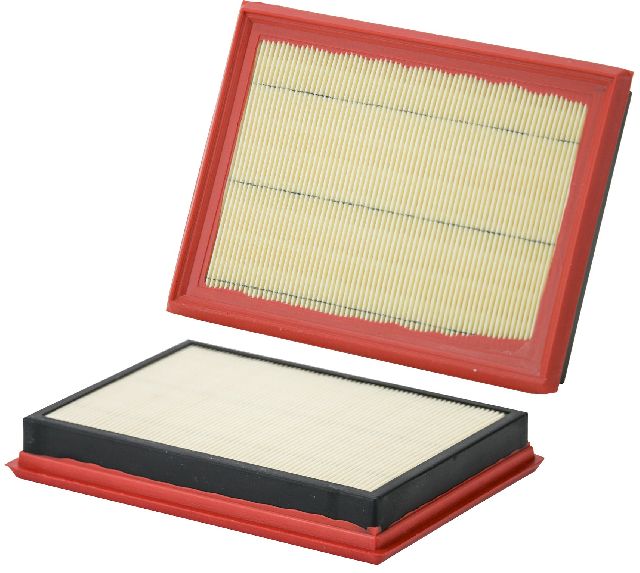
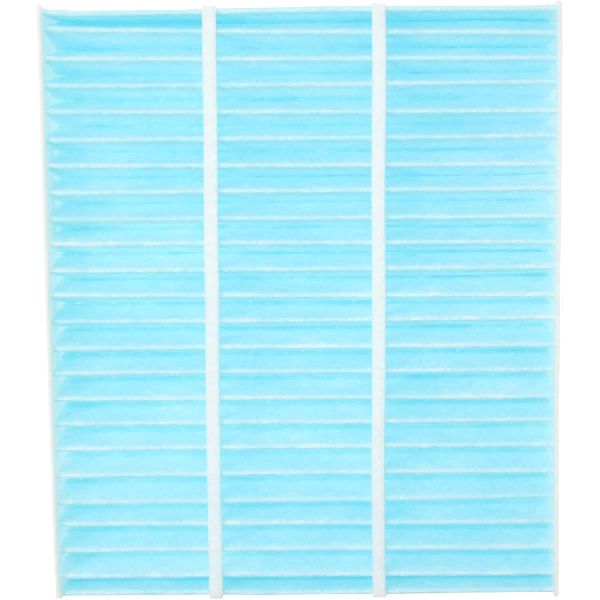
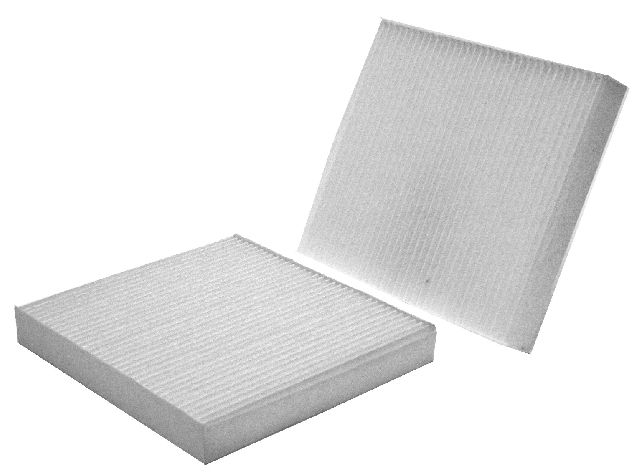
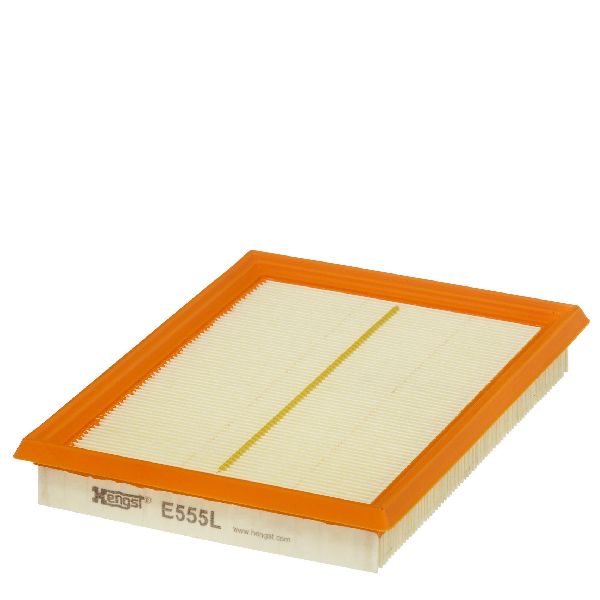
Est. part cost: $0 if reverting to stock - Dirty or Clogged Air Filters 🟡 Medium Probability → Shop Air Cleaner Assembly
How to confirm: Inspect both engine air filters. If they are visibly dirty, dark, or clogged with debris, they are restricting airflow and can cause the code.
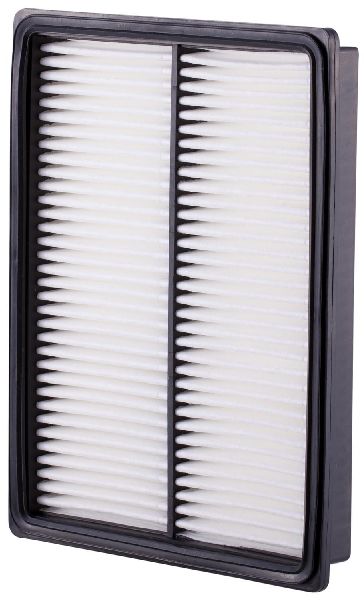
Typical fix: Replace both engine air filters. This should be done as regular maintenance.
Est. part cost: $40-$80 - Air Intake or Vacuum Leaks 🟡 Medium Probability → Shop Engine Air Intake Resonator
How to confirm: Inspect all intake piping between the MAF sensors and the throttle bodies for cracks, loose clamps, or disconnected hoses. The clamps near the throttle bodies are a known point of failure. A professional can perform a smoke test to find leaks that are not visually apparent.
Typical fix: Tighten loose clamps or replace the cracked/damaged intake boot or vacuum hose.
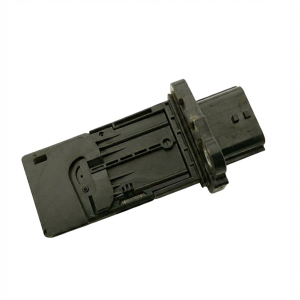
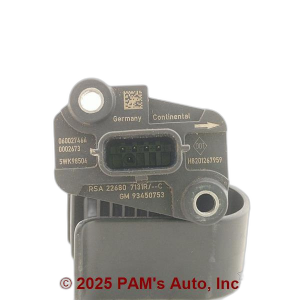
Est. part cost: $20-$200 - Failed MAF Sensor ⚪ Low Probability → Shop Fuel Injection Air Flow Meter While less common than a dirty sensor, the sensor itself can fail. A critical mistake is replacing it with a cheap aftermarket part. Owners frequently report that non-OEM sensors (especially from Amazon/eBay) do not work correctly and cause the code to return immediately. Always use genuine OEM (Hitachi) sensors.
How to confirm: After confirming the sensor is clean, wiring is intact, no leaks exist, and the ECM is updated, the sensor may be faulty. A common diagnostic step is to swap the Bank 1 and Bank 2 sensors and see if the code changes to P010B. If it does, the sensor is bad.
Typical fix: Replace the faulty MAF sensor with a genuine OEM Hitachi sensor (Part No. 22680-7131R).
Est. part cost: $150-$300 - Dirty Throttle Bodies ⚪ Low Probability As a direct injection engine, the VR30DDTT can suffer from carbon buildup on the intake valves and throttle bodies. This buildup can restrict airflow or cause the throttle plate to stick, leading to readings that conflict with the MAF sensor data.
How to confirm: Remove the intake tubes leading to the throttle bodies and visually inspect for a ring of black carbon buildup around the throttle plate and bore.
Typical fix: Clean both throttle bodies using a dedicated throttle body cleaner and a soft cloth. Do not spray directly into the unit. An Idle Air Volume Relearn procedure using a tool like CONSULT-III plus is required after cleaning.
Est. part cost: $10-$20
Rare But Worth Checking
- Restricted Exhaust: A clogged catalytic converter can increase exhaust backpressure, which can affect the air entering the engine and throw off MAF sensor readings. This is usually accompanied by other codes and more severe performance loss.
- MAF Sensor Wiring Issue: → Shop Fuel Injection Air Flow Meter Damage to the wiring harness or connector for the Bank 1 MAF sensor can cause an intermittent or total loss of signal. Check for damaged pins or corrosion in the connector. This is less common than other causes but should be checked if the code persists.
Diagnosis Steps
- Read the trouble codes using an OBD-II scanner and note any other codes present.
- Inspect the engine air filters. Replace them if they are dirty or clogged.
- Inspect the full intake tract from the air filter boxes to the turbochargers for any cracks, loose clamps, or disconnected hoses. Pay close attention to the flexible couplers.
- Carefully remove both MAF sensors. They are held in by two 7mm bolts. Visually inspect the sensor elements for dirt or oil contamination.
- Clean both MAF sensors using a dedicated MAF sensor cleaner spray. Do not use brake cleaner or touch the sensor wires. Let them air dry completely.
- Reinstall the sensors, clear the codes, and perform a test drive to see if the code returns.
- If the code returns, contact an Infiniti dealer to check if your vehicle's VIN is covered by TSBs ITB23-001, ITB17-017a, or ITB19-027a for an ECM reprogram. This is a very common fix.
- If the software is up to date and the code persists, consider swapping the Bank 1 and Bank 2 MAF sensors. Clear the codes and drive again. If the code changes to P010B, the sensor you moved to Bank 2 is faulty and needs replacement.
- If the code remains P0101 after the swap, the problem is likely in the wiring for Bank 1, a vacuum leak found only with a smoke test, or dirty throttle bodies.
- If replacing a sensor, ONLY use a genuine OEM Hitachi part (22680-7131R). Aftermarket sensors are known to cause persistent issues.
Parts You'll Likely Need
- Mass Air Flow Sensor Cleaner — This is the first and most cost-effective step. Often, the sensor is just dirty, not broken.
Trusted brands: CRC, Liqui Moly
Aftermarket price range: $10-$15 - Engine Air Filter
(OEM #16546-HG00B (example, confirm with VIN))— Dirty filters restrict airflow and are a common cause. Should be replaced regularly. The VR30DDTT requires two.
Trusted brands: OEM Nissan/Infiniti, Purolator, Wix
OEM price range: $25-$40 each
Aftermarket price range: $20-$30 each - Mass Air Flow Sensor
(OEM #22680-7131R)— If cleaning and software updates fail, the sensor itself may need replacement. It is critical to use the OEM Hitachi brand to avoid persistent issues.
Trusted brands: Hitachi (OEM)
OEM price range: $180-$250
Aftermarket price range: $50-$120 (Not Recommended)
Related Codes That Often Appear With This One
- P010B — P010B is the corresponding MAF sensor code for Bank 2. Since the VR30DDTT engine has two MAF sensors, issues like dirty filters, intake leaks, or software problems often affect both banks simultaneously. [ITB23-001]
- P0106 — This code for the Manifold Absolute Pressure (MAP) sensor can appear with P0101 because the ECM uses both sensors to verify correct engine airflow. A discrepancy between them can trigger both codes. [ITB17-017a]
- P0087, P0448, P2008 — Infiniti TSBs ITB19-027a and P9329_P9344_P934 group these codes with P0101 as being potentially caused by an ECM calibration error, solvable with a software update.
Technical Service Bulletins (TSBs) & Recalls

- ITB23-001: Addresses MIL ON with DTC P0101 and/or P010B. Points towards a potential software update.
- ITB17-017a: An amended bulletin for MIL ON with DTCs P0101, P010B, and/or P0106, indicating an ECM reprogram is the likely solution.
- ITB19-027a: Groups P0101 with other codes (P0087, P0448, P2008) that can be resolved with an ECM software update on vehicles outside California.
- P9329_P9344_P934: Specifically mentions that 'calibration errors on the affected vehicles' can cause the ECM to improperly store a P0101 code, requiring a reprogram.
Platform-Specific Known Issues
- Owner Warning: Cleaning MAF Sensors Can Be Risky: → Shop Fuel Injection Air Flow Meter A Reddit user on r/q50 reported that after cleaning their MAF sensors (while still in the intake tube), their 2018 Q50 began to sputter, stall, and threw a P0101 code. The eventual fix was costly: replacing both MAF sensors with OEM units and having the dealer reprogram the ECM, totaling around $1500. The dealer service department noted this is a common issue and that MAF sensors are often on backorder. This suggests that improper cleaning or fluid contamination of the sensor electronics can permanently damage them.
- Aftermarket Intakes and Tuning: Numerous threads on infinitiq50.org confirm that installing aftermarket cold air intakes is a primary trigger for the P0101 code. The change in airflow dynamics is often too much for the stock ECU calibration to handle. The consensus fix is to either revert to the stock airboxes or get a custom ECU tune designed specifically for the installed intake.
Mechanic-Grade Diagnostic Values
- Mass Air Flow Rate at Idle — expected: Approximately 3.0-5.0 g/s for each sensor at normal operating temperature with no electrical load. The values for Bank 1 and Bank 2 should be very close to each other.. Failure: A reading significantly higher or lower than the expected range, or a large discrepancy between the two banks, indicates a problem with a sensor or an air leak.
- Short-Term (STFT) and Long-Term (LTFT) Fuel Trims — expected: Within +/- 10% at idle and under steady load.. Failure: High positive fuel trims (e.g., +15% or more) suggest the engine is running lean, which can be caused by unmetered air from a vacuum leak or a MAF sensor that is under-reporting airflow.
Scan Tool Commands That Help
- Infiniti CONSULT-III Plus: ECM Reprogramming — Used to apply the software updates specified in TSBs like ITB23-001 and ITB17-017a. This is the definitive fix when the P0101 code is caused by overly sensitive factory software calibration.
- Infiniti CONSULT-III Plus or capable aftermarket scanner: Idle Air Volume Learn — This function is mandatory after cleaning or replacing the throttle bodies. Failure to perform this relearn will result in an unstable or high idle and can trigger other fault codes. It resets the ECM's baseline for the throttle plate position at idle.
- Manual Procedure (no scan tool): Idle Air Volume Learn (Pedal Dance) — For DIYers without a professional scan tool, a specific sequence of turning the ignition on/off and pressing the accelerator pedal can be used to trigger the relearn procedure. This can be tricky to time correctly and may require several attempts.
Wiring & Ground Locations
- MAF Sensor Connector (Bank 1) — On the air intake tube just after the passenger side air filter box.. This is the direct electrical connection for the sensor. Check for corrosion, bent pins, or damage to the harness pigtail. The typical 5-pin layout includes Power, Ground, Signal, IAT Signal, and another Ground.
- ECM Grounds (E135, E137) — On the left rear side of the engine compartment.. The ECM relies on clean ground connections to accurately interpret sensor data. A poor ground at these points can introduce electrical noise or voltage offsets, causing the ECM to misinterpret the MAF sensor's signal and trigger a P0101 code.
- Chassis/Engine Grounds — Key grounding points include the negative battery terminal to the chassis, the engine block to the chassis, and various points on the front frame rails.. Overall vehicle electrical stability depends on these main grounds. While less likely to cause an isolated P0101, a corroded or loose main ground can cause a variety of intermittent electrical issues, including sensor performance codes.
Real Owner Repair Stories
- Reddit user @melodiqe (Infiniti Q50 (year not specified)) — Car kept stalling.
❌ Tried (didn't work) Replacing the MAF sensor with a new part.
✅ What actually fixed it The new MAF sensor required the ECU to be reprogrammed. A diagnostic shop charged $300 for the reprogram, turning a '$20 piece into a $320 job'. - Reddit user @ABradley90 (Infiniti Q50 (year not specified)) — P0101 code present.
❌ Tried (didn't work) Replacing the MAF sensor.
✅ What actually fixed it The code was resolved by replacing a non-OEM air filter with an 'authentic air filter for £60'. This highlights the system's sensitivity to airflow characteristics. - YouTube channel 'Best Car Fixes' (2014-2017 Infiniti Q50) — Persistent P0101 code that came back immediately after clearing, rough running, potential misfires.
❌ Tried (didn't work) Clearing the code.
✅ What actually fixed it The engine air filters were found to be extremely dirty and deformed, to the point of being sucked into the intake tract. Replacing the severely clogged air filters and the MAF sensor (as a precaution) resolved the issue and improved engine operation immediately.
"I Checked Everything" — The Actual Cause
- In many cases for the 2016-2023 Q50, a technician may find no vacuum leaks after a smoke test, confirm the MAF sensor is clean and the wiring is intact, yet the P0101 code persists. This exact scenario is addressed by Infiniti's Technical Service Bulletins (ITB23-001, ITB17-017a, etc.), where the actual cause is not a physical leak but an overly sensitive software calibration in the Engine Control Module (ECM). The fix is an ECM software update performed by a dealer, not a mechanical repair. [ITB23-001, ITB17-017a]
OEM Part Supersession History
N/A→22680-7131R— This is the correct OEM Hitachi part number for the VR30DDTT engine used in 2016+ Q50/Q60 models.
Heads up: Crucially, other Q50 engines use different MAF sensors. For example, the 3.7L V6 (VQ37VHR) may use part number 22680-7S000, and the 3.5L Hybrid may use 22680-1MG0A. These parts are not interchangeable. Using a sensor for the wrong engine will cause persistent P0101/P010B codes.
Model Year Variations Within This Range
- 2016-2023: The most significant variation within this range is the ECM software. Infiniti released multiple TSBs over the years to update the software and correct the overly sensitive logic that triggers P0101. For example, TSB ITB17-017a was released in 2019 for 2016-2018 models, and TSB ITB23-001 was released in 2023 for 2017 models. This indicates an ongoing effort to refine the calibration. A newer vehicle may have a more refined factory calibration than an early model that has never been updated.
Helpful Videos

Used OEM Parts in Stock
New Aftermarket Parts Available

The information in this article is provided for general reference and educational purposes only. Vehicle specifications, procedures, and part compatibility can vary by production date, trim level, and region. Always consult your vehicle's factory service manual and verify part numbers before purchasing or performing repairs. Safety-critical components such as airbags, seat belts, and braking systems should be installed by a qualified professional.
- Infiniti Q50:
- 🧭 Diagnostic Flowchart
- 🎬 Helpful Videos
- 🛍️ Shop This Part
- What's Unique About the 2016-2023 Infiniti Q50
- Symptoms You May Notice
- Most Likely Causes
- Rare But Worth Checking
- Diagnosis Steps
- Parts You'll Likely Need
- Related Codes That Often Appear With This One
- Technical Service Bulletins (TSBs) & Recalls
- Platform-Specific Known Issues
- Mechanic-Grade Diagnostic Values
- Scan Tool Commands That Help
- Wiring & Ground Locations
- Real Owner Repair Stories
- "I Checked Everything" — The Actual Cause
- OEM Part Supersession History
- Model Year Variations Within This Range
- 🎟️ Get 5% Off