

P0101 on 2016-2017 Jeep Cherokee: MAF (3.2L V6) vs. MAP (2.4L I4) Causes and Fixes
For the 3.2L V6 engine, P0101 usually means the Mass Airflow (MAF) sensor is dirty and needs cleaning. For the 2.4L I4 engine, which has no MAF sensor, this code points to a problem with the MAP sensor or a vacuum leak that is confusing the engine's computer.
- First, determine if your Cherokee has the 3.2L V6 or 2.4L I4 engine, as the diagnosis is completely different.
- For the 3.2L V6, the most common and cheapest first step is to clean the MAF sensor with dedicated cleaner.
- For the 2.4L I4, P0101 means there is a calculated airflow error; inspect for vacuum leaks and check the MAP sensor.
- Before replacing any parts, inspect the entire air intake hose for cracks or loose clamps, as this is a common failure point.
- Be aware that this code, especially when paired with others, may require a software update from a Jeep dealer to be permanently fixed.
What's Unique About the 2016-2017 Jeep CHEROKEE
The 2016-2017 Jeep Cherokee (KL generation) presents a unique challenge for code P0101 because the diagnostic approach depends entirely on the engine. The 3.2L Pentastar V6, a derivative of the more common 3.6L Pentastar, uses a traditional Mass Airflow (MAF) sensor in the intake tube. However, the 2.4L MultiAir I4 Tigershark engine does not have a MAF sensor; it uses a 'speed density' system that calculates airflow based on readings from the Manifold Absolute Pressure (MAP) sensor and the Intake Air Temperature (IAT) sensor. Therefore, seeing a P0101 code on a 2.4L model means the PCM is flagging a calculated airflow problem, likely stemming from a faulty MAP sensor, a vacuum leak, or a software issue mentioned in manufacturer bulletins.
Diagnostic Flowchart
Tap your situation to follow the diagnostic path that matches what you're seeing on this vehicle.
Symptoms You May Notice
- Check Engine Light is on
- Reduced engine power and poor acceleration
- Engine hesitates or surges, especially under load
- Rough idling or stalling at stops
- Decreased fuel economy
- Black smoke from the exhaust, indicating a rich fuel mixture
- Gasoline smell inside the cabin
- Replacing the MAF sensor on a 3.2L V6 when the actual problem is a cracked intake boot (vacuum leak).
- Searching for a non-existent MAF sensor on the 2.4L I4 engine instead of diagnosing the MAP and IAT sensor circuits.
- Replacing sensors multiple times without checking for underlying wiring issues or vacuum leaks, as seen in owner forum discussions.
Most Likely Causes
- Dirty or Contaminated MAF Sensor 🔴 High Probability → Shop Fuel Injection Air Flow Meter Applies only to the 3.2L V6 engine. Oil and debris from the air filter or crankcase ventilation system can coat the sensor's delicate wire, causing inaccurate readings. Aftermarket oiled air filters are a known contributor to this contamination.
How to confirm: Visually inspect the sensor's wire/element. If it appears dirty, cleaning is the first step. Use a scan tool to monitor MAF g/s readings; they should increase smoothly with RPM.
Typical fix: Remove the sensor and clean it carefully using only dedicated Mass Airflow Sensor cleaner spray. 🎬 Watch: How to test and replace a MAF sensor Do not touch the internal elements.
Est. part cost: $10-$15 for cleaner spray - Vacuum Leak / Cracked Intake Air Duct 🟡 Medium Probability → Shop Engine Air Intake Duct The rubber or plastic intake ducting can become brittle and crack with age and heat, allowing unmetered air to enter the engine after the MAF sensor (on the 3.2L) or affecting manifold pressure (on the 2.4L). The accordion section of the intake hose is a common failure point.
How to confirm: Visually inspect the entire air intake system from the air filter box to the throttle body for cracks, tears, or loose clamps. A smoke test is the most effective way to find small leaks.
Typical fix: Replace the cracked or damaged intake duct.
Est. part cost: $50-$150 - Faulty MAP Sensor 🟡 Medium Probability → Shop Manifold Absolute Pressure Sensor This is a primary suspect for the 2.4L I4 engine, as it is the main sensor used to infer airflow. The 2.4L Tigershark engine is known for various sensor and oil consumption issues which can indirectly cause performance codes.
How to confirm: Use a scan tool to monitor MAP sensor voltage or pressure readings with the key on, engine off, and compare it to the barometric pressure. Readings should be similar and change with engine vacuum when running.
Typical fix: Replace the Manifold Absolute Pressure (MAP) sensor.
Est. part cost: $40-$100 - Dirty or Clogged Engine Air Filter ⚪ Low Probability → Shop Air Cleaner Assembly A severely restricted air filter can limit airflow enough to cause the sensor's readings to be lower than expected by the PCM.
How to confirm: Visually inspect the engine air filter. If it is visibly dirty or clogged, it needs replacement.
Typical fix: Replace the engine air filter.
Est. part cost: $20-$40 - PCM Software Update Required ⚪ Low Probability Multiple Technical Service Bulletins (TSBs) for the 2016-2017 Cherokee list P0101 among a group of DTCs that can be triggered by software logic errors. TSB 18-110-20 specifically addresses reprogramming the PCM on 2017 models with the 2.4L engine for this and other codes.
How to confirm: A Jeep dealership or a qualified shop with access to OEM software can check if the vehicle's PCM has the latest calibration by referencing its VIN against TSBs.
Typical fix: Update or re-flash the Powertrain Control Module (PCM) with the latest software.
Est. part cost: $0 under warranty, or $100-$250 for labor
Rare But Worth Checking
- Clogged Catalytic Converter: A restricted exhaust can cause a lack of airflow through the engine, leading the PCM to believe the MAF sensor reading is implausibly low. This usually presents with a severe lack of power.
- Faulty Wiring or Connector: Damaged wiring or a corroded/loose connector at the MAF (3.2L) or MAP (2.4L) sensor can cause an intermittent or incorrect signal. A case study on a platform-mate Chrysler 200 with the 2.4L engine and P0101 was traced to a loose connection at a wiring splice (SK900A) on top of the motor.
- Dirty Throttle Body: → Shop Fuel Injection Throttle Body A throttle body clogged with carbon can restrict airflow, especially at idle, potentially confusing the PCM's expected airflow calculations and triggering a P0101 code.
Diagnosis Steps
- Identify your engine. This is the most critical first step. Check if you have the 3.2L V6 or the 2.4L I4.
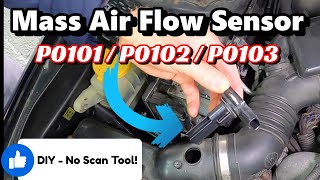
- If you have the 3.2L V6: Inspect the air intake hose between the air filter box and the engine for any cracks, tears, or loose connections. Pay special attention to the flexible accordion sections. 🎬 See this walkthrough for removing the 3.2L air intake
- Check the engine air filter and replace if dirty.
- Inspect the MAF sensor's electrical connector for damage or corrosion. The sensor is located on the intake tube right after the air filter box.
- Carefully remove the MAF sensor and spray the internal elements with dedicated MAF sensor cleaner. Let it dry completely before reinstalling.
- If you have the 2.4L I4: Inspect the air intake system for vacuum leaks. A smoke test is the most definitive method. Pay close attention to all hoses connected to the intake manifold.
- Locate the MAP sensor on the intake manifold and inspect its wiring and connector.
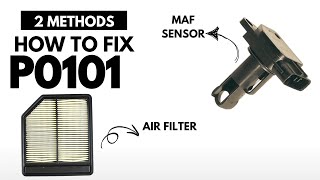
- For both engines: Clear the code with a scanner and perform a test drive. If the code returns, proceed. 🎬 Watch: Two methods to fix a P0101 error code
- Use a scan tool to monitor live data. For the 3.2L, watch the MAF sensor reading (in g/s) as you rev the engine; it should increase smoothly. For the 2.4L, monitor the MAP sensor reading and compare it to barometric pressure with the key on, engine off.
- If a physical cause cannot be found, contact a Jeep dealer to check for available PCM software updates, citing TSBs like #18-110-20 (for 2017 2.4L) or #18-014-16 REV. A.
Parts You'll Likely Need
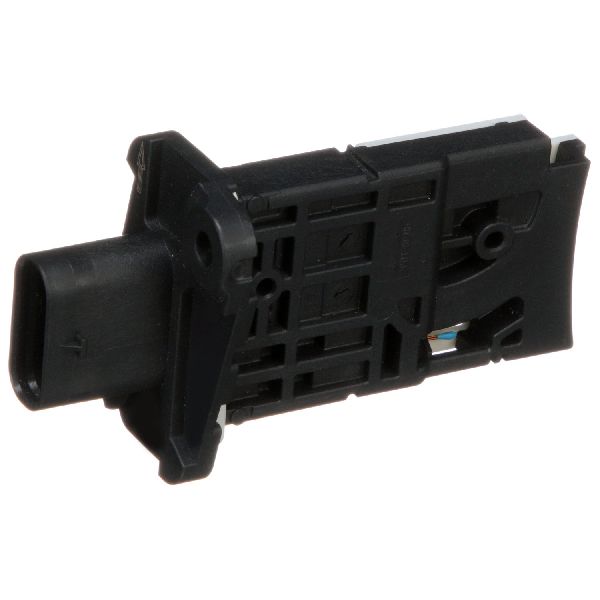
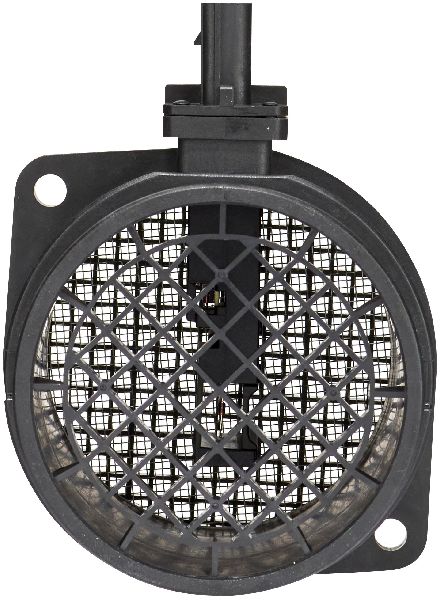
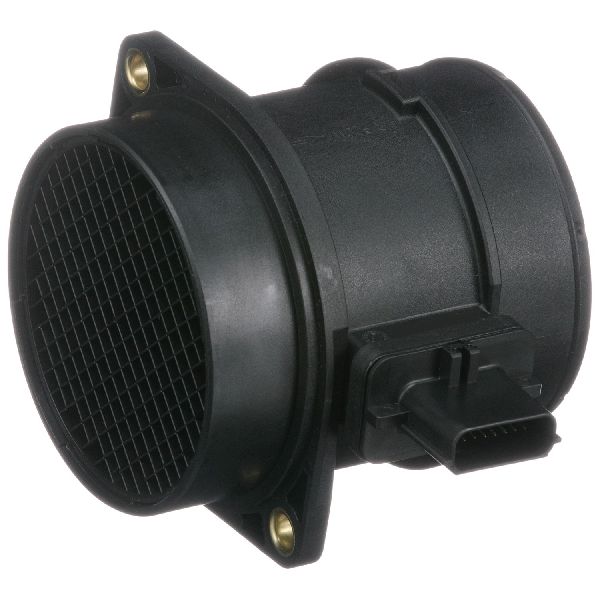
- Mass Air Flow (MAF) Sensor
(OEM #68144197AA)— This is the part that fails or gets dirty on the 3.2L V6 engine, causing the code.
Trusted brands: Mopar, Bosch, Denso
OEM price range: $130-$200
Aftermarket price range: $60-$120 - Manifold Absolute Pressure (MAP) Sensor
(OEM #68364659AB)— This is the most likely hardware culprit on the 2.4L I4 engine, which uses this sensor to calculate airflow. An alternative Mopar part number is 68199324AB.
Trusted brands: Mopar, Standard Motor Products, Delphi
OEM price range: $45-$70
Aftermarket price range: $25-$50 - MAF Sensor Cleaner — Often, the MAF sensor on the 3.2L V6 is just dirty, and a simple cleaning is all that's needed to fix the issue.
Trusted brands: CRC, Liqui Moly
Aftermarket price range: $10-$15
Related Codes That Often Appear With This One
- P0300 — An incorrect airflow reading from P0101 can cause the wrong fuel mixture, leading to random/multiple cylinder misfires. TSB #18-110-20 lists these codes together as being resolved by a PCM flash.
- P0128 — This code for Thermostat Rationality often appears alongside P0101 in TSBs, suggesting a PCM software update may be needed to address multiple sensor logic issues.
- P0133 — An O2 Sensor Slow Response code can be triggered because the incorrect air-fuel mixture caused by the P0101 fault makes it appear as if the oxygen sensor is not reacting correctly. TSB #18-014-16 REV. A links these codes.
- P0335 — A Crankshaft Position Sensor Circuit code appearing with P0101 is another indicator, per TSBs, that a PCM software issue may be the root cause.
Technical Service Bulletins (TSBs) & Recalls
- 18-110-20: Specifically for the 2017 Cherokee with the 2.4L engine, this TSB involves a PCM software update to correct logic for P0101 and a host of other codes, including misfires (P0300) and thermostat rationality (P0128).
- 18-032-17: Mentions P0101 in a list of codes, but the primary focus is on wheel and oil supply solenoid issues. Its relevance is secondary.
- 18-014-16 REV. A: This bulletin for 2016 models also points to a PCM re-flash as a solution for P0101 when it appears with codes like P0335 (Crank Sensor) and P0133 (O2 Sensor), indicating a software logic problem rather than a primary sensor failure.
Platform-Specific Known Issues
- 2.4L Tigershark Engine Context: The 2.4L Tigershark engine in the Cherokee has a broader history of issues, including high oil consumption and other sensor failures. While P0101 is a calculated code on this engine, its appearance can sometimes be an indirect symptom of these other underlying engine problems that affect manifold pressure and overall performance.
- 3.2L Pentastar V6 Simplicity: For the 3.2L V6, the P0101 fault is typically more straightforward, usually pointing directly to the MAF sensor itself or a physical leak in the intake boot between the sensor and the throttle body.
Mechanic-Grade Diagnostic Values
- 3.2L V6 MAF Sensor Live Data (Scan Tool) — expected: 3-5 g/s at idle; 15-25 g/s at 2,000 RPM.. Failure: Readings are significantly lower, higher, or do not increase smoothly with engine RPM.
- 2.4L I4 MAP Sensor Signal Wire Voltage (Multimeter) — expected: Approximately 4.5-5.0 volts with Key On, Engine Off (KOEO). Drops to 1-2 volts at idle.. Failure: Voltage at KOEO is low, or voltage does not drop significantly when the engine is started and idling.
- 2.4L I4 MAP Sensor 5V Reference Wire (Multimeter) — expected: A steady 4.5 to 5.0 volts with Key On, Engine Off or running.. Failure: Voltage is significantly lower than 4.5V or is absent, indicating a PCM or wiring issue.
- 2.4L I4 MAP Sensor Ground Wire (Multimeter) — expected: Less than 0.1 volts (100 millivolts).. Failure: Voltage is higher than 0.1V, indicating a poor ground connection which can skew sensor readings.
Hidden / Shadow Codes Worth Checking
- Mode $06: This is not a code but a diagnostic mode on advanced scan tools that shows the raw results of the vehicle's self-tests before a fault code is officially set. A technician can view the test values for the MAF or MAP sensor's rationality checks to see if the component is borderline failing, even if the Check Engine Light is not on. (see via Requires a scan tool with Mode $06 capability. The specific Test ID (TID) and Component ID (CID) for airflow monitoring must be selected.)
Scan Tool Commands That Help
- OEM-level (e.g., Witech) or advanced aftermarket (e.g., iCarsoft CR MAX): Intake System Test / MAF Calibration / Reset Adaptations — After replacing a MAF/MAP sensor or fixing a vacuum leak, these functions can be used to reset the PCM's learned fuel trim and airflow values, which can help resolve the code faster than waiting for the system to relearn on its own.
Wiring & Ground Locations
- MAP Sensor Connector (2.4L I4) — On the intake manifold.. The sensor has three wires: a 5-volt reference from the PCM, a ground, and a signal wire that sends pressure data back to the PCM. A fault in any of these three circuits can cause P0101.
- MAF Sensor Connector (3.2L V6) — On the air intake tube, immediately following the air filter housing.. Corrosion or damage to the connector or wiring harness at this location will cause incorrect or lost signals from the MAF sensor, directly triggering a P0101 code.
- Engine Block / Inner Fender Grounds — Key grounding points are often found on studs on the engine block (sometimes near the dipstick tube or motor mounts) and on the inner fenders behind the airbox or power distribution center.. The PCM and its sensors rely on clean ground connections. A corroded or loose main engine or chassis ground can introduce electrical noise and voltage offsets, causing sensors like the MAP to send erroneous data and trigger a P0101.
OEM Part Supersession History
68364659AA, 68428449AA→68364659AB— Standard part revision by the manufacturer for improved performance, reliability, or manufacturing process.
Heads up: The new part number (68364659AB) is the correct and direct replacement for the older numbers on the 2.4L engine.
Model Year Variations Within This Range
- 2017: TSB #18-110-20 specifically targets the 2017 Cherokee with the 2.4L engine for a PCM software update to resolve P0101, among other codes. This indicates a known software logic issue present in this model year that may not be fixed by hardware replacement alone.
- 2016: TSBs #18-014-16 and #18-032-17 apply to the 2016 model year, also indicating software updates were available to address P0101 in combination with other codes, but under different bulletin numbers than the 2017 model.
- 2017: High-Intensity Discharge (HID) headlamps became standard on Latitude, Limited, and Trailhawk trims. This is a general vehicle change, not directly related to P0101.
Helpful Videos


Used OEM Parts in Stock
New Aftermarket Parts Available


The information in this article is provided for general reference and educational purposes only. Vehicle specifications, procedures, and part compatibility can vary by production date, trim level, and region. Always consult your vehicle's factory service manual and verify part numbers before purchasing or performing repairs. Safety-critical components such as airbags, seat belts, and braking systems should be installed by a qualified professional.
- Jeep CHEROKEE:
- 🧭 Diagnostic Flowchart
- 🎬 Helpful Videos
- 🛍️ Shop This Part
- What's Unique About the 2016-2017 Jeep CHEROKEE
- Symptoms You May Notice
- Most Likely Causes
- Rare But Worth Checking
- Diagnosis Steps
- Parts You'll Likely Need
- Related Codes That Often Appear With This One
- Technical Service Bulletins (TSBs) & Recalls
- Platform-Specific Known Issues
- Mechanic-Grade Diagnostic Values
- Hidden / Shadow Codes Worth Checking
- Scan Tool Commands That Help
- Wiring & Ground Locations
- OEM Part Supersession History
- Model Year Variations Within This Range
- 🎟️ Get 5% Off