

P0101 on 2001-2005 Kia Rio: MAF Sensor and Vacuum Leak Guide
For a 2001-2005 Kia Rio, code P0101 is most often caused by a dirty Mass Airflow (MAF) sensor, a vacuum leak from a cracked hose, or a dirty air filter. Start by cleaning the MAF sensor with a dedicated cleaner (~$10) and inspecting the intake hoses for cracks before replacing any parts. A vacuum leak is a very high probability on these aging vehicles.
- Always start with the cheapest and easiest fixes: check the air filter and clean the MAF sensor with dedicated cleaner.
- Thoroughly inspect all vacuum hoses and the main intake boot for cracks. This is a very common problem on the 2001-2005 Rio.
- Do not replace the MAF sensor until you have ruled out vacuum leaks and wiring issues.
- If you hear a hissing sound from the engine bay at idle, you almost certainly have a vacuum leak that needs to be found and fixed.
What's Unique About the 2001-2005 Kia Rio
On the first-generation Kia Rio (2001-2005), the 1.5L A5D engine is a relatively simple DOHC 16-valve unit. While the P0101 code is generic, these specific models are highly prone to vacuum leaks from aging rubber hoses and the main intake air boot. Owners and technicians frequently report that a cracked intake hose or other vacuum leak is the true cause, even after the MAF sensor has been replaced multiple times. Therefore, a thorough inspection for cracked or disconnected hoses using methods like a smoke test is just as important, if not more so, than addressing the MAF sensor itself.
Symptoms You May Notice
- Check Engine Light is on
- Rough or erratic idle
- Hesitation or stumbling during acceleration
- Reduced engine power and sluggish performance
- Poor fuel economy
- Engine stalling, especially when coming to a stop
- Black smoke from the exhaust in some cases
- Engine revving up and down on its own (bucking)
- Replacing the MAF sensor without first checking for vacuum leaks. A forum user with a 2003 Rio replaced the sensor three times (including one from the dealer) before realizing the problem was elsewhere.
- Overlooking a cracked air intake boot. The cracks can be hidden in the accordion-like folds of the hose and may not be visible without removing and flexing the part.
Most Likely Causes
- Dirty or Contaminated Mass Airflow (MAF) Sensor 🔴 High Probability → Shop Fuel Injection Air Flow Meter Over time, dust, oil vapor from the PCV system, and other contaminants can coat the sensor's delicate hot wire or film, insulating it and causing inaccurate readings. This is a very common issue on most vehicles of this era.
How to confirm: Visually inspect the sensor elements inside the MAF housing. If they appear dirty, oily, or coated, they need cleaning. A quick diagnostic test is to unplug the MAF sensor with the engine idling; if the idle smooths out or changes significantly, the sensor is likely providing bad data and forcing the ECU into a default (limp) mode.
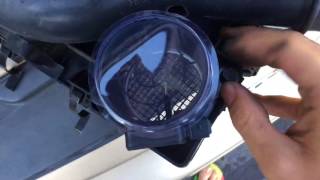
Typical fix: Remove the MAF sensor and clean it ONLY with a dedicated MAF sensor cleaner spray. 🎬 Watch: How to properly clean your MAF sensor Do not use brake cleaner or carb cleaner, as they can damage the sensitive components. Do not touch the sensor wires. Let it dry completely before reinstalling.
Est. part cost: $8-$15 for a can of MAF cleaner. - Vacuum Leak Downstream of the MAF Sensor 🔴 High Probability → Shop Fuel Injection Air Flow Meter The rubber and plastic hoses in the engine bay become brittle and crack with age and countless heat cycles. The large, ribbed air intake boot between the MAF sensor and the throttle body is a particularly common failure point, often cracking in the folds. This allows unmetered air to enter the engine, which the MAF sensor didn't measure, causing the PCM to receive conflicting information and trigger P0101.
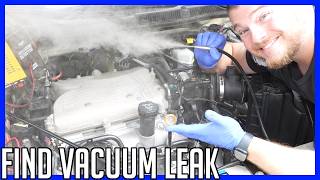
How to confirm: Visually inspect all vacuum lines and the main air intake boot for cracks, splits, or loose connections. Listen for a hissing sound at idle. For a more definitive test, a mechanic can perform a smoke test, which fills the intake system with smoke and makes any leaks easy to spot. You can also carefully spray carburetor cleaner around suspected leak areas with the engine running; a change in engine idle indicates a leak. 🎬 See this guide on finding vacuum leaks
Typical fix: Replace the cracked or leaking hose or gasket. Tighten any loose clamps. The air intake boot is a frequent culprit.
Est. part cost: $20-$60 for a replacement intake hose. - Clogged or Dirty Engine Air Filter 🟡 Medium Probability → Shop Air Cleaner Assembly A severely clogged air filter restricts airflow, causing the MAF sensor to report a lower-than-expected value, which can trigger the P0101 code. This is a basic maintenance item that is often overlooked.
How to confirm: Visually inspect the engine air filter. If it is visibly dirty, dark, or full of debris, it needs to be replaced.
Typical fix: Replace the engine air filter.
Est. part cost: $15-$30 - Faulty Mass Airflow (MAF) Sensor ⚪ Low Probability → Shop Fuel Injection Air Flow Meter While sensors can fail electronically, it is less common than being dirty or having a vacuum leak. Many owners mistakenly replace the sensor when the actual problem is a simple vacuum leak. Aftermarket sensors can also be of poor quality and may not perform to OEM specifications, causing the code to return.
How to confirm: After confirming the wiring is good, the sensor is clean, and there are absolutely no vacuum leaks, the sensor itself is the likely culprit. A scan tool can be used to monitor the MAF sensor's output in grams per second (g/s). At idle, it should be stable, and during a wide-open throttle acceleration, it should increase rapidly and smoothly.
Typical fix: Replace the MAF sensor, preferably with an OEM or high-quality aftermarket part.
Est. part cost: $70-$150 for an aftermarket sensor, $180-$250 for an OEM part.
Rare But Worth Checking
- Clogged Catalytic Converter: A severely restricted exhaust can cause backpressure that affects the airflow reading at the MAF sensor. This would typically be accompanied by other codes (like P0420) and a more severe loss of power, especially at high RPMs.
- Wiring Harness or Connector Issue: The wiring to the MAF sensor can become damaged, or the pins in the connector can become corroded or loose, causing an intermittent signal. Check for 12V power, ground, and a 5V signal wire at the connector with a multimeter. Wiggling the harness while monitoring the signal can help identify intermittent faults. NHTSA ODI #11019470, while involving a different Kia model, highlights how electrical issues like a burned fuse box circuit or cooling fan relay can coincide with MAF electrical codes.
- Blown Fuse: The MAF sensor circuit is often protected by a fuse. If this fuse blows, the sensor will lose power and trigger a code. Check the vehicle's fuse diagram for a fuse labeled for the ECU, sensors, or emission controls.
Technical Service Bulletins (TSBs) & Recalls
- TSB Bulletin #TSB_FUE047: Although issued for newer Kia models like the Forte, this bulletin notes that the Electronic Throttle Control (ETC) system may exhibit a MIL with DTC P0101, P0106, or P0068, suggesting that throttle-related issues can sometimes trigger airflow-related codes across the Kia lineup.
- Kia Manufacturer Bulletin: As noted in NHTSA ODI #10016560 regarding another Kia model, the manufacturer has previously issued bulletins specifically addressing diagnostic procedures for the P0101 code, emphasizing that the fix for this circuit range performance problem is a documented concern for the brand.
Diagnosis Steps
- Check for any other stored trouble codes with an OBD-II scanner. Note any codes like P0171 or P0172.
- Inspect the engine air filter. Replace if it is dirty or clogged.
- Thoroughly inspect the large, flexible air intake hose between the air filter box and the throttle body. Remove it if necessary and bend it to reveal any hidden cracks in the folds.
- Inspect all accessible vacuum hoses connected to the intake manifold for cracks or disconnection. Pay attention to the PCV hose and brake booster line.
- Locate the MAF sensor on the air filter housing. Unplug it and inspect the connector pins for corrosion or damage.
- Remove the MAF sensor (typically two screws) and carefully spray the sensing elements with a dedicated MAF sensor cleaner. Do not touch the elements. Allow it to air dry completely.
- Reinstall the sensor, clear the codes with the scanner, and perform a test drive to see if the code returns.
- If the code returns, perform a smoke test to find hard-to-see vacuum leaks. This is the most effective method.
- If no vacuum leaks are found, use a scan tool to monitor the MAF sensor reading in g/s at idle and during acceleration to see if it responds logically. Compare to known-good values if available.
- With the ignition on and engine off, test the MAF sensor wiring for proper power (12V), ground, and a reference voltage (typically 5V) with a multimeter.
- If all other steps fail and the wiring is confirmed to be good, the MAF sensor is likely faulty and should be replaced.
Parts You'll Likely Need
- Mass Airflow (MAF) Sensor
(OEM #0K32A13210)— This is the primary sensor involved in the code. It is often replaced after cleaning fails and vacuum leaks are ruled out. This part number is confirmed for the 2001-2005 Kia Rio. 🎬 Watch: How to replace a Mass Air Flow sensor
Trusted brands: Siemens (OEM), Cardone, Delphi, Walker
OEM price range: $180-$250
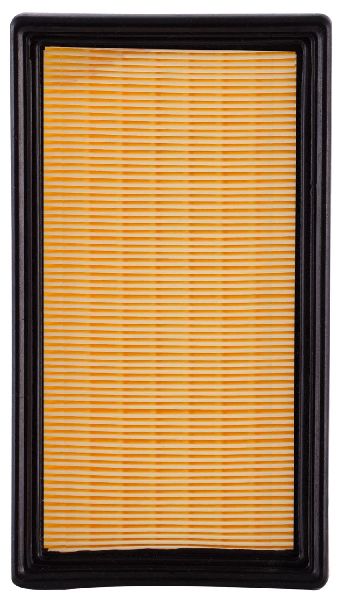
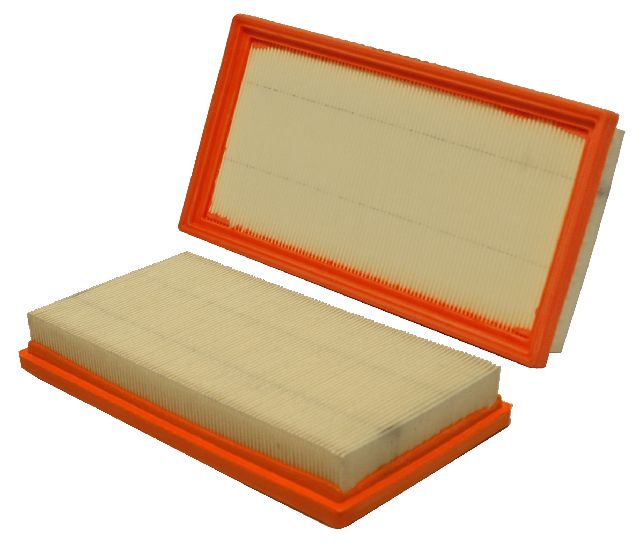
Aftermarket price range: $70-$150 - Engine Air Filter — A clogged air filter is a simple and common cause that restricts airflow and can trigger this code.
Trusted brands: WIX, Fram, Purolator, Kia Genuine
OEM price range: $20-$40
Aftermarket price range: $15-$30 - Air Intake Hose — The large rubber boot between the MAF sensor and the throttle body is a very common failure point, cracking from age and causing vacuum leaks.
Trusted brands: Kia Genuine, Dorman
OEM price range: $40-$70
Aftermarket price range: $20-$50
Related Codes That Often Appear With This One
- P0171 — System Too Lean (Bank 1). A vacuum leak allows unmetered air into the engine, creating a lean condition that the oxygen sensors detect, often triggering P0171 alongside P0101.
- P0172 — System Too Rich (Bank 1). Less common, but can occur if the MAF sensor is faulty and over-reporting airflow, causing the PCM to inject too much fuel.
- P1166 — HO2S (Heated Oxygen Sensor) Control Lambda Controller at Limit. This code indicates the fuel trim has reached its maximum adjustment limit, which can be caused by a severe vacuum leak or a faulty MAF sensor that P0101 also points to.
Platform-Specific Known Issues
- High Likelihood of Cracked Intake Boot: Numerous owner accounts emphasize that the flexible, ribbed air intake boot is the most common point for a vacuum leak on the 1.5L A5D engine. The cracks often form in the valleys of the ribs and can be difficult to see without removing and flexing the hose. This should be one of the first parts inspected.
Mechanic-Grade Diagnostic Values
- MAF Sensor Reading at Idle (Scan Tool) — expected: 3.4 g/sec (approx. 0.9 V). Failure: Significantly higher or lower readings, or readings that are erratic and unstable at a steady idle.
- MAF Sensor Connector Pin 3 (Signal) — expected: ~0.9 V at idle. Failure: Voltage that is 0V, 5V, or does not change with engine RPM.
- MAF Sensor Connector Pin 4 (Power) — expected: Battery Voltage (12V+). Failure: 0V or significantly low voltage, indicating a fuse or wiring issue.
- MAF Sensor Connector Pin 2 (Ground) — expected: Near 0V. Failure: Any significant voltage reading, indicating a bad ground connection.
Wiring & Ground Locations
- G35, G36, G39, G40 — These are engine control system ground points shown in wiring diagrams for the 2001-2003 Kia Rio. Their exact physical location on the chassis or engine block should be confirmed with a service manual, but they are critical for the proper operation of sensors like the MAF.. A poor ground connection at any of these points can cause erratic sensor readings, including from the MAF sensor, leading to a P0101 code even if the sensor and its direct wiring are good.
- MAF Sensor Connector — On the MAF sensor itself, located on the air filter housing outlet tube, between the air filter and the flexible intake boot.. This 3-pin connector provides power, ground, and signal return for the MAF sensor. Corrosion or damage to these pins is a common point of failure. Pin 3 is the signal wire, Pin 4 is power, and Pin 2 is ground.
Real Owner Repair Stories
- Car Talk Community Forum (2003 Kia Rio 1.6L DOHC, 130,000 miles) — P0101 code returns after clearing, slight hesitation on takeoff right before the Check Engine Light comes on.
❌ Tried (didn't work) Replaced MAF sensor with two different aftermarket parts., Replaced MAF sensor with an OEM part from the dealer., Replaced the Throttle Position Sensor (TPS)., Replaced air filter., Could not find any vacuum leaks visually.
✅ What actually fixed it The user did not post a final resolution, but professional advice given was to use a scan tool to monitor g/s readings during a wide-open throttle acceleration to check for restrictions in the intake or exhaust, as simply replacing parts was not working. This highlights the importance of data-driven diagnosis over parts swapping. - NHTSA ODI #10316328 — An owner reported that the check engine light comes on intermittently with error P0101 detected. The report notes that this "Mass Air Flow Circuit Range Performance Problem" can be corrected by replacing the mass air flow sensor.
OEM Part Supersession History
0K32A13210→None (Discontinued)— Part is no longer manufactured by Kia.
Heads up: As the OEM part is discontinued, reliance on aftermarket parts is necessary. Quality can vary significantly between brands. Interchange part numbers include 5WK9625, SU5544, and AF10207.
Model Year Variations Within This Range
- 2001-2002: These model years in the US market were equipped with the 1.5L A5D DOHC engine (96 hp).
- 2003-2005: For the 2003 model year facelift, the engine was upgraded to a 1.6L DOHC four-cylinder (104 hp). While the P0101 diagnosis is similar, the MAF sensor and other engine components may have different part numbers and specifications. This article focuses on the 1.5L engine.
Diagnostic Flowchart
Other Known Issues on This Vehicle
Issues unrelated to this code that are worth knowing about as an owner of this generation:
- Short Timing Belt Interval and Interference Engine 🔴 High — The timing belt requires replacement as frequently as every 50,000-60,000 km. If it breaks, it will cause catastrophic engine damage (bent valves) as this is an interference engine.
- Premature Front Wheel Bearing Failure 🟠 Medium — The front hub bearings are a known weak point and can fail in as little as 70,000 km (approx. 43,000 miles), causing a roaring or grinding noise that changes with vehicle speed.
- Suspension Component Wear 🟠 Medium — Early models had issues with suspension durability. Front shock absorbers, ball joints, and rear shock absorber bushings are common wear items that can lead to a harsh, bumpy ride.
- Ignition System Faults 🟡 Low — The ignition system, including spark plugs, coils, and wiring, is cited as a weak point that can cause misfires and poor running conditions.
- Erroneous Check Engine Lights (Transmission Control Module) 🟡 Low — Some owners have reported persistent, erroneous Check Engine Lights caused by a faulty automatic transmission control computer, requiring reprogramming or replacement to fix.
Used vs. New Parts: Buying Guide for This Vehicle
When a used part is the smart pick: A used part from a junkyard is a reasonable choice for the plastic air filter housing or the large, flexible rubber intake boot, provided they are not cracked or damaged. These are simple structural parts where age is less critical than physical condition.
Donor-vehicle mileage cap: roughly under 80000 miles for the part to have meaningful remaining life.
What to inspect on the donor part:
- For an intake boot: Squeeze and flex the rubber thoroughly. Look for any small cracks, especially in the accordion folds. It should still be pliable, not hard and brittle.
- For a MAF sensor: Avoid used sensors. They are sensitive electronic components and it's impossible to know their remaining lifespan or if they were the reason the donor car was junked.
- Check the donor vehicle's air filter. A very dirty filter suggests poor maintenance, which could have stressed components like the MAF sensor.
OEM-only on this vehicle (don't cheap out):
- While the OEM MAF sensor is discontinued, if a New Old Stock (NOS) one can be found, it is preferable. Otherwise, a high-quality aftermarket brand is the next best choice.
Aftermarket brands forum-validated for this vehicle:
- Delphi
- Spectra Premium
- Walker Products
- NTK
Brands owners have reported issues with on this vehicle:
- Unbranded, no-name sensors from online marketplaces are frequently reported on forums as being dead-on-arrival or failing quickly. A user in a cited repair story tried two different generic auto parts store sensors before buying an OEM one, indicating potential issues with non-premium aftermarket quality.
Real Owner Stories
Aggregated from forums and TSBs cited above. Mileages and costs reflect what owners reported in those sources.
2003 Kia Rio 1.5L
Symptoms: Owner could not fix the P0101 mass air flow sensor code despite replacing the sensor three times, including one sourced directly from the dealer.
What fixed it: The context suggests that in cases where multiple sensors fail to fix the code, the actual cause is typically a vacuum leak or wiring issue rather than the sensor itself.
Source hint: Car Talk Community - 'Cant fix P0101 mass air flow sensor'
2001 Kia Rio 1.5L
Symptoms: MIL Lamp on with freeze frame data showing significant negative long-term fuel trim (-20.3%).
What fixed it: The technician identified a condition where the ECU perceived too much air or unmetered fuel, potentially related to MAF or sensor ground issues.
Source hint: iATN - '2001 Kia Rio 1.5L MIL Lamp on'
2001 Kia Rio 1.5L
Symptoms: A long battle with P0101, occasionally accompanied by codes for running too rich and oxygen sensor issues.
What fixed it: The computer struggled to compensate for a faulty MAF signal, leading to related fuel trim and oxygen sensor codes.
Source hint: Kia Club (Russia) - 'Ошибка-P0101'
Related OBD-II Codes
Frequently Asked Questions
Why does my 2001-2005 Kia Rio 1.5L keep throwing P0101 even after I replaced the MAF sensor?
Can I use any cleaner to fix the MAF sensor on my Kia Rio?
Is there a specific part of the intake I should check first on the A5D engine?
How can I tell if my Kia's MAF sensor is actually bad or just dirty?
Could a dirty air filter cause the P0101 code on my 2003 Rio?
What are the symptoms of a P0101 on the 1.5L Kia Rio?
Helpful Videos

We Have This Part in Stock




The information in this article is provided for general reference and educational purposes only. Vehicle specifications, procedures, and part compatibility can vary by production date, trim level, and region. Always consult your vehicle's factory service manual and verify part numbers before purchasing or performing repairs. Safety-critical components such as airbags, seat belts, and braking systems should be installed by a qualified professional.
- Kia Rio:
- 🧭 Diagnostic Flowchart
- 🎬 Helpful Videos
- 🛍️ Shop This Part
- What's Unique About the 2001-2005 Kia Rio
- Symptoms You May Notice
- Most Likely Causes
- Rare But Worth Checking
- Technical Service Bulletins (TSBs) & Recalls
- Diagnosis Steps
- Parts You'll Likely Need
- Related Codes That Often Appear With This One
- Platform-Specific Known Issues
- Mechanic-Grade Diagnostic Values
- Wiring & Ground Locations
- Real Owner Repair Stories
- OEM Part Supersession History
- Model Year Variations Within This Range
- Other Known Issues on This Vehicle
- Used vs. New Parts: Buying Guide for This Vehicle
- Real Owner Stories
- 2003 Kia Rio 1.5L
- 2001 Kia Rio 1.5L
- 2001 Kia Rio 1.5L
- Related OBD-II Codes
- Frequently Asked Questions
- 🎟️ Get 5% Off